
Accessibility-Seeking Guests: Market Only What You Can Prove

Updated: Aug 27
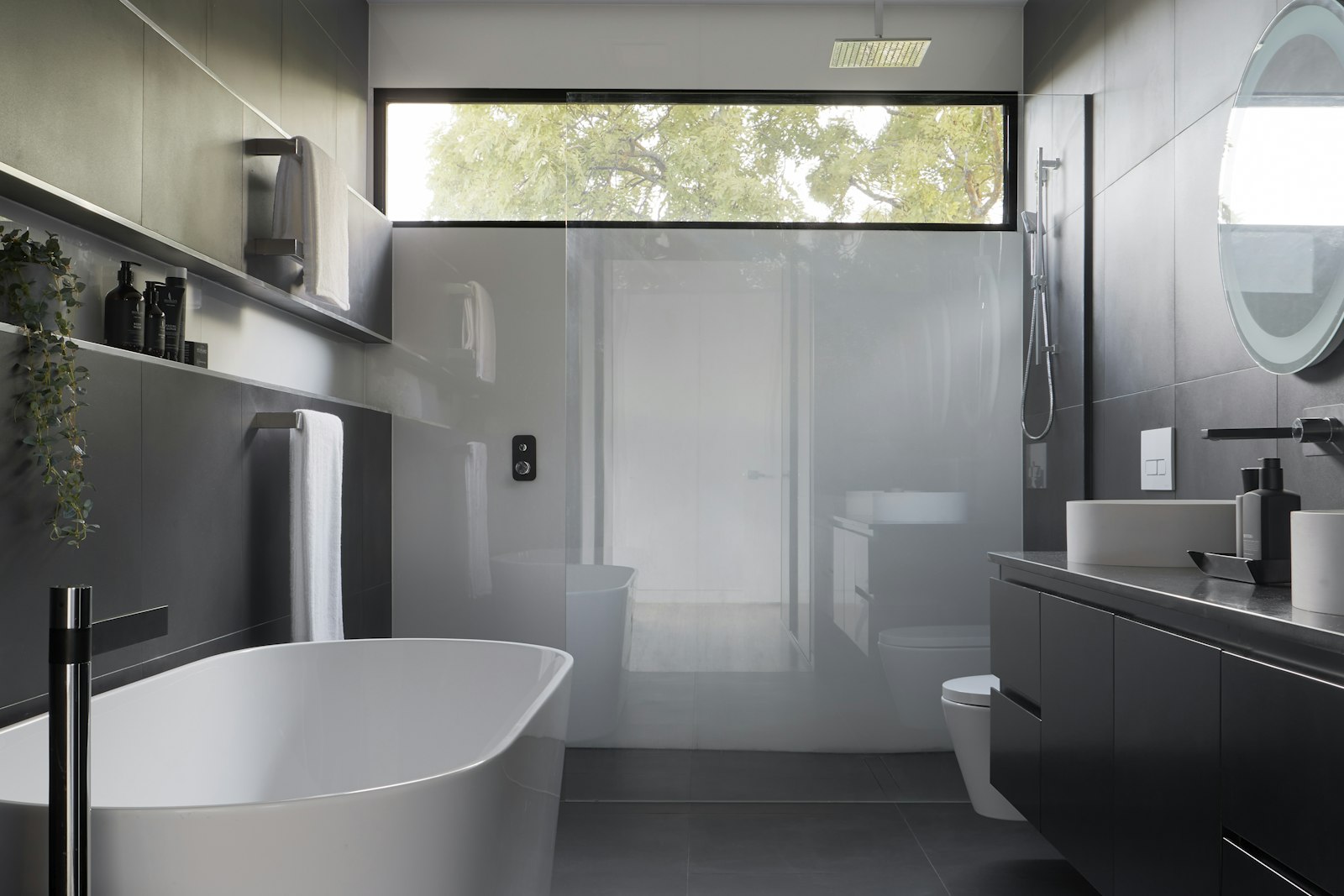
A guest who uses a wheelchair does not book a symbol. She books a doorway she can measure against her own chair, a bathroom she can picture herself using, and a bedroom she will not have to negotiate stairs to reach. When a host turns on an "accessible" filter without checking any of those three things against the actual house, the mismatch does not surface until the car is already in the driveway and the front steps are staring back at both of them.
This page is about the gap between what a listing claims and what a host can actually show a guest in a photo. It is not legal advice, and it does not attempt to define what qualifies as accessible under the ADA, a state building code, or any insurance policy , those are questions for a licensed contractor, an attorney, or the platform's own compliance team, not a marketing page. What follows is narrower and more useful to a working host: how to describe a physical space honestly enough that a guest can self-select before booking, instead of after arriving.
The standard here is simple to state and harder to hold to under pressure to fill a calendar: publish only what a photo or a tape measure can back up, and route everything else , medical suitability, insurance questions, what a guest's specific equipment needs , into a direct conversation before the reservation confirms.
None of this requires special software, a consultant, or a rewrite of the whole listing. It requires a host to walk the property once with a tape measure and a camera, treating the front door, the hallway, and the bathroom the way an inspector would rather than the way a photographer looking for a flattering angle would, and then to write down exactly what was found. This is not legal advice.
Why the Icon Fails Where the Photo Succeeds
Booking platforms let hosts toggle a small set of accessibility features on a listing, and the toggle looks like a fact once it is switched on. It isn't one. "Step-free entrance" as a checkbox says nothing about whether the path from the driveway to that entrance is gravel, whether there's a four-inch lip at the threshold, or whether the walkway floods after rain. A guest evaluating whether a house works for them is not reading a checkbox; she is trying to picture the actual approach, and a toggle gives her nothing to picture.
A photograph does the job a checkbox cannot. A wide-angle shot of the front walkway taken at ground level, showing the transition from driveway to porch to door, tells a guest more in one frame than any badge the platform offers. The same is true of a bathroom: a photo showing the actual clearance beside the toilet and the type of shower entry (curbless, low curb, or a step over a tub wall) lets a guest do her own comparison against her own chair or walker, which is the only comparison that matters.
The practical shift is to stop treating the accessibility badge as the deliverable and start treating it as, at best, a pointer toward photos and measurements that live in the listing description. A badge invites a guest in. Only specific, photographed detail tells her whether she should actually come.
This is also where most of the disappointment in guest reviews traces back to, once you read past the star rating to the actual sentence. It is rarely "the house lied about being accessible" in so many words; it is closer to "the listing said accessible and there were three steps I wasn't told about." That phrasing is the tell that the badge, not the host's dishonesty, created the gap , the host likely believed the checkbox was accurate because nobody had defined what it was supposed to mean beyond the toggle itself.
What a Host Can Honestly Publish
Four categories of claim survive scrutiny because they describe something fixed and observable: the number of steps at each entrance, the width of doorways a guest would need to pass through (interior and exterior), whether the primary bedroom and a full bathroom sit on the entry level, and the type of shower or tub in that bathroom. Each of these can be measured with a tape measure and confirmed with a photo, and each answers a real question a guest is actually asking before she books.
Publishing a doorway width only helps if it's the narrowest doorway on the path a guest would use, not the widest one in the house. A host who measures the primary bedroom's door and lists that number while a hallway bathroom door two inches narrower goes unmentioned has technically told the truth and functionally misled the guest. The rule that keeps this honest: measure and publish the tightest constraint on the route, not the most flattering one.
The same discipline applies to steps. "No steps at the main entrance" is a specific, checkable claim. "Accessible" standing alone is not , it invites a guest to assume a broader standard than a step-free front door actually delivers, and the disappointment lands on arrival day, not before. Naming the exact feature and stopping there is more useful to the guest than a broader label would ever be, even though it feels like saying less.
What Belongs in a Phone Call, Not a Listing Field
Some questions a host genuinely cannot answer from a listing description, and pretending otherwise is where overclaiming starts. Whether a specific guest's mobility equipment will clear a specific doorway depends on the equipment as much as the doorway; a host who has never seen the guest's wheelchair cannot certify the fit from a listing page, and shouldn't try to. The honest move is to publish the doorway width and invite the guest to compare it against her own equipment, or to call and ask.
Medical suitability sits in the same category. A host is not positioned to say whether a given layout is safe for a guest with a particular condition, and a listing description that implies that judgment , even with good intentions , is making a claim nobody asked the host to make. Where a guest raises a specific medical or mobility concern in a pre-booking message, the honest response names what the host can confirm (measurements, photos, the layout) and defers the suitability judgment to the guest and, where relevant, her own physician or care team.
Insurance and liability questions belong to a different professional entirely. If a guest asks whether a modified shower chair or a portable ramp is permitted, or what happens if equipment damages a floor, that is a question for the host's insurance carrier or an attorney, not an answer improvised in a message thread. None of this is legal or medical advice, and a host who is unsure where a specific question lands should say so plainly rather than guess at a reassuring answer.
A short, honest reply template covers most of these situations without a host needing to become an expert in disability law overnight: state the measurement or feature you can confirm, say plainly which part of the question you cannot answer, and name who the guest should ask instead if it's not you. Guests asking these questions are usually doing careful trip planning, not testing the host, and a direct "here's what I know, here's what I don't" answer reads as more trustworthy than a vague reassurance ever will.
A Worked Example: Ground-Floor Bedroom, Steps at the Door
Picture a real, common layout: a ground-floor primary bedroom and full bathroom, reached through a front door with three steps and no ramp. Turning on a generic "accessible" toggle for this house overclaims badly , a guest relying on a wheelchair cannot get past the front steps to reach the ground-floor bedroom that would otherwise suit her fine. The house has one genuinely useful accessibility feature and one genuine barrier, and a single badge cannot hold both facts at once.
The honest listing text separates the two facts instead of averaging them into a vague claim: "Primary bedroom and full bath are on the main level. The front entrance has three steps with no ramp; a back entrance from the driveway has one step." That sentence gives a guest exactly what she needs to decide for herself, including the detail that might make the house workable anyway , the lower-step back entrance , which a blanket "not accessible" label would have hidden just as badly as a blanket "accessible" label would have overpromised.
This is the pattern worth generalizing: describe the specific rooms and the specific entrances, and let the guest do the arithmetic her own situation requires. A host does not need to resolve whether the house counts as accessible in some overall sense , that framing is the trap. She needs to describe the rooms and the steps accurately enough that the guest reaches her own correct answer before she pays a deposit.
Photograph It or Don't Claim It
A workable test before publishing any accessibility line: could a stranger verify this claim from a photo already in the listing? If the answer is no, the claim is either too vague to be useful or not yet backed by evidence the host has actually gathered. "Wide doorways throughout" fails this test unless the listing photos or a measurement note make clear what "wide" means in inches. "34-inch bedroom doorway, photographed below" passes it.
This test also catches claims that quietly age out. A ramp gets removed during a renovation, a shower gets replaced with one that has a curb where it used to be curbless, and the listing description keeps saying what used to be true. Photograph-backed claims are easier to audit on a schedule because the photo itself is a date-stamped record; a host reviewing listing accuracy once a season can check whether the photo still matches the house.
The test also works in the other direction, as a check on a host's own instinct to hedge. Some hosts, worried about overclaiming, strip every accessibility detail from a listing rather than risk getting it wrong, which trades one failure for another: a guest who could have booked confidently now has nothing to go on at all. The photograph-or-don't-claim test doesn't ask a host to say less; it asks a host to say only what a photo already backs up, which for most houses is still a meaningful amount of specific, useful detail.
The upside of this discipline is not only fewer disappointed guests. A listing that names specific, verifiable features reads as more credible to every guest, not just the ones who need the accessibility detail , specificity is generally what separates a trustworthy listing from a templated one, and this is simply that same principle applied to a category where the cost of vagueness is unusually high.
Keeping the Listing Current as the House Changes
Accessibility features are more likely to change quietly than most other listing details, because they often change as a side effect of an unrelated project. A host who replaces a tub with a walk-in shower for aesthetic reasons has also changed an accessibility fact and needs to update the listing text and photos in the same week, not whenever the next seasonal refresh happens to fall.
The same applies in reverse: adding a ramp, widening a doorway during a remodel, or converting a den into a ground-floor bedroom are all events that should trigger an immediate listing update, because a guest searching specifically for that feature is being underserved by a listing that hasn't caught up to a genuine improvement the host already paid for.
A simple habit closes most of the gap: whenever a physical change touches an entrance, a doorway, a bathroom, or the location of a sleeping space, treat the listing text and photos as part of that project's punch list, not a separate task to remember later.
It also helps to keep a short, private measurement log separate from the guest-facing listing: the current step count at each entrance, the narrowest doorway width on the guest path, and the bathroom entry type, each with the date it was last checked. Comparing that log against the live listing text once a season takes a few minutes and catches the slow drift that turns an accurate listing into an outdated one nobody noticed changing.
Related Reading
More independent-host niche guest and persona reading already live on Crest & Cove.
Frequently Asked Questions
Is it ever okay to use the platform's "wheelchair accessible" toggle?
Only if every room and entrance a guest would use genuinely meets that standard, not just the one room a host is thinking of when checking the box. If the house has a step-free entrance but a narrow bathroom doorway, the toggle overclaims. The safer approach is to skip the blanket toggle and describe the specific features — entrance, doorway widths, bathroom layout — in the listing text, where a guest can weigh each fact herself.
What should a host measure before writing any accessibility claim?
Doorway widths on the actual path a guest would use (not the widest doorway in the house), the number and height of steps at each entrance, and the clearance and entry type in the bathroom a guest would use. These four measurements answer most of what a guest is actually trying to find out, and each one can be confirmed with a tape measure and a photo rather than a guess.
Can a host say a listing is good for guests with disabilities?
It's safer to describe the specific feature than to make a general claim, since "good for guests with disabilities" implies a judgment about medical suitability the host is not positioned to make. Naming the step-free entrance or the ground-floor bedroom lets a guest reach her own conclusion about fit, which is more useful to her than a general reassurance would be.
What if a guest asks whether their wheelchair will fit through a doorway?
Give the exact doorway width and let the guest compare it against her own equipment's width, since only she knows that measurement. Offering a yes-or-no answer without knowing the equipment's dimensions is a guess dressed up as a fact, and a wrong guess is worse for the guest than an honest "here's the number, you tell me."
Does a ground-floor bedroom alone make a listing accessible?
Not by itself. A ground-floor bedroom solves one common barrier, but the entrance path, the bathroom, and interior doorways each carry their own separate constraints that a single feature doesn't resolve. Describe the bedroom as a ground-floor feature and describe the entrance and bathroom separately, rather than letting one strong feature imply a broader claim about the whole house.
Is this page giving legal advice about ADA compliance for short-term rentals?
No. This page is about honest marketing language, not legal compliance, and it makes no claim about what the ADA, a state building code, or a booking platform's own policy requires of a given property. Questions about legal compliance belong with a licensed attorney or a qualified compliance professional, not a marketing description.
How often should a host re-check accessibility claims on a listing?
Any time a renovation touches an entrance, doorway, or bathroom, and otherwise on the same seasonal schedule used to review other listing details. Because these features tend to change as a side effect of unrelated remodeling, tying the review to renovation projects catches more real changes than a fixed calendar reminder does on its own.
Should a host ask a guest directly about their mobility needs before booking?
A host can invite a guest to share what would help her decide — doorway widths, photos, entrance details — without asking about a diagnosis or medical condition, which isn't the host's business and isn't necessary to answer the practical question. Keeping the conversation about the physical space rather than the guest's health respects her privacy and still gets both sides the information they need.
What's the risk of overclaiming accessibility on a listing?
A guest who books based on an inflated claim discovers the mismatch on arrival, when there is no good option left — she has already traveled, and the host has already turned away other bookings for those dates. That outcome damages trust far more than a guest simply not booking because the honest description told her the house wasn't the right fit.
What's the risk of underclaiming or leaving accessibility features off the listing entirely?
A guest who would have booked confidently with the right detail either books elsewhere or arrives uncertain and anxious about whether the space will work, when a specific, accurate description could have reassured her in advance. Leaving out a genuine step-free entrance or ground-floor bedroom because it feels safer to say nothing costs bookings from exactly the guests a host would most want to welcome.
Work with Crest & Cove Creative
Hosts keep flipping an accessibility toggle that promises more than a single photo can prove, and guests keep discovering the gap at the front steps. The fix is not a better badge; it's a tape measure and a camera pointed.
We help independent hosts rewrite accessibility copy so every claim on the page matches something a guest can already see in a photo, not a checkbox nobody double-checked. Bring your current listing text and photos to crestcove.co/audit or call (256) 998-7502, and we'll go feature by feature before anything goes back live.
Reach out at crestcove.co or (256) 998-7502.


Comments