
Build a Direct Booking Engine for Your Charleston Vacation Rental

Updated: Aug 28
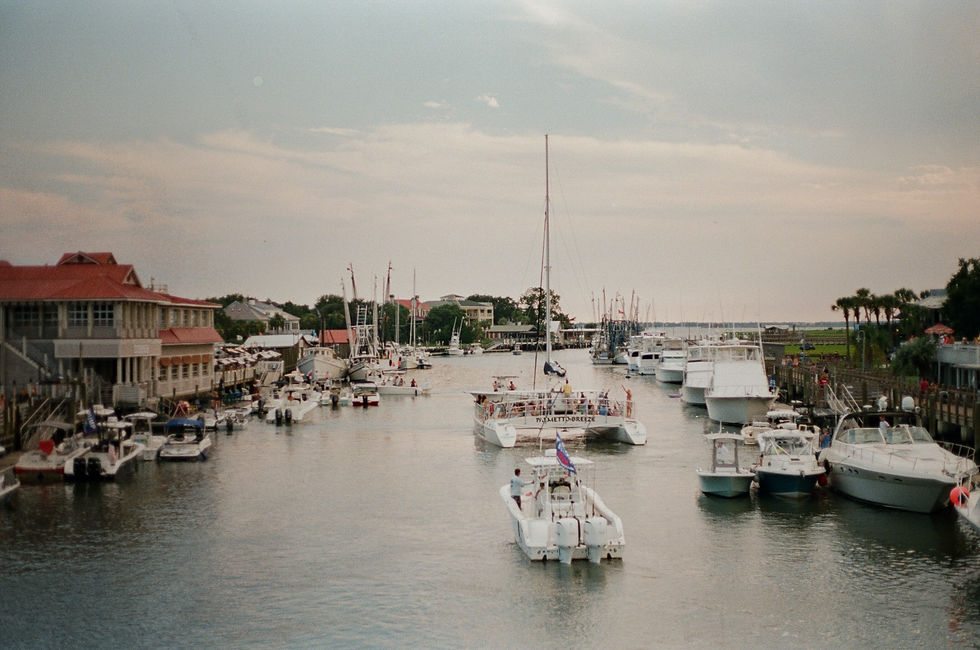
Charleston-area hosts leave real money on OTA tables. At $762 Isle of Palms ADR and $613 Folly ADR, a 15.5% Airbnb host fee on a $90,000 gross year is roughly $14,000 — plus Vrbo's pay-per-booking structure on a second channel. Charleston's repeat-visit culture — families rebooking the same IOP week, golfers returning to Kiawah, couples revisiting downtown — makes a direct-booking flywheel more realistic here than in one-and-done commodity beach markets. Compliance-heavy rules including four-adult caps, occupancy limits, and gate passes also reward direct channels where you control disclosures without platform template friction.
The engine's job is to shift share over two to three seasons — target 20–40% direct alongside OTAs — not to exit platforms overnight. A direct site with no traffic, no SEO, and no repeat-guest email habit is a brochure, not a channel. Explore Charleston's 2025 data shows approximately 7.9 million visitors with rising per-trip spend, and island guests average five-plus-night stays on AirROI for IOP, Kiawah, and Folly — long enough to form vacation traditions that direct booking can capture on the second and third trip.
This post lays out the direct-booking stack and Charleston-specific tactics for hosts ready to graduate from pure Airbnb and Vrbo dependence — website architecture, channel-manager discipline, compliance checkout, demand engines, launch sequence, and the fee math that proves the investment pencils on premium Lowcountry ADRs. Peninsula owner-occupied hosts can run a simpler stack where repeat-guest email is the primary direct channel — but even a four-adult carriage house benefits from a booking-enabled site that displays permit numbers and parking proof without platform character limits.
The Direct-Booking Stack — Website, Channel Manager, and Payments
The foundation is a fast, mobile-first direct booking site with integrated payments through Lodgify, Hostfully, OwnerRez-class tools, SSL, and clear cancellation and damage-deposit policies matching OTA polish. A channel manager syncs calendars and rates across Airbnb, Vrbo, Google Vacation Rentals, and your direct site — preventing double bookings on capped-night inventory like Johns Island 144-day Extended Home Rental and Folly OSTR 72-day caps. Charleston guests booking $4,000-plus weeks abandon checkout on slow mobile sites; non-negotiable requirements include real-time sync, tax line display, and SSL on every checkout page.
OwnerRez and Lodgify suit single-property island owners prioritizing calendar integrity on capped inventory. Hostfully and Guesty suit multi-property Johns Island wedding estates needing guest CRM, group booking, and owner statements. Peninsula owner-occupied hosts can run a simpler stack where repeat-guest email is the primary direct channel — but even a four-adult carriage house benefits from a booking-enabled site that displays permit numbers and parking proof without platform character limits.
Site architecture requires one property per hero page with booking widget above the fold on mobile. Required pages include property detail, policies, compliance with permit number and max guests, local guide, and contact. Weeks five and six of a typical launch: sync all channels before taking a single direct booking and mirror minimum-night rules from OTA calendars — a direct booking that pushes you over a Johns Island day cap is a compliance violation, not a revenue win.
Compliance Checkout — Permits, Taxes, and Gate Communities
The compliance layer on direct checkout displays STR permit and license numbers, occupancy limits including Charleston four-adult cap and IOP 12-max formula, gate-pass instructions for Kiawah and Seabrook, and approximately 14% tax line items so guests are not surprised. Tax surprises drive chargebacks and bad reviews on premium ADR inventory. Marketplace bookings often auto-collect accommodations taxes; direct bookings require host registration and remittance on state, county, and municipal layers — re-verify Avalara and MyLodgeTax rates by address at publish.
Legal pages must include privacy policy for email capture, rental agreement matching OTA terms, damage deposit authorization, occupancy limit acknowledgment, and SC accommodations tax registration number. Gate-community properties add KICA and SIPOA gate-pass instructions as a downloadable PDF to reduce 10pm arrival panic texts. Hurricane and evacuation policies belong on direct checkout too — direct guests lack OTA extenuating-circumstances mediation; pre-written rebooking-credit language for named-storm evacuations reduces chargebacks.
Charleston guests book on trust — a missing permit number on a direct site reads as illegal inventory in a market where enforcement headlines are weekly news. Folly ISTR hosts should display license class and number; IOP hosts should show business license; county day-capped inventory should state 72-day or 144-day limits in checkout confirmation. Chargeback prevention requires full tax breakdown, occupancy limits, and cancellation policy in confirmation emails — a disputed $4,000 IOP week is not a rounding error.
Charleston-Specific Demand Engines — Repeat Guests, Weddings, and SEO
Repeat-guest email capture within platform rules is the leading indicator of direct-booking health in Charleston. Island guests average five-plus-night stays on AirROI for IOP, Kiawah, and Folly — long enough to form vacation traditions. Offer five-to-ten percent off peak weeks for returning families who book direct — still cheaper than a 15.5% Airbnb host fee on the same reservation. Frame email subject lines as welcome back to the same IOP week, not generic discount codes.
Wedding and reunion funnels suit Johns Island estates and large IOP homes — landing pages for group queries with multi-property options if you manage several units. Kiawah and Seabrook hosts with multi-bedroom inventory should build a simple group-inquiry form separate from instant book; groups booking three-plus units through a single direct funnel avoid OTA fees on tens of thousands in gross. Referral credits of $100–$250 on direct checkout convert at higher margin than paid ads in this relationship-driven market.
SEO long-tail pages own queries OTAs rank for but you can brand: dog-friendly Folly Beach licensed rental, Kiawah golf villa direct book, owner-occupied Charleston piazza. Google Vacation Rentals surfaces direct inventory in Google Travel and Maps results — critical for high-intent planners. Event campaigns tied to SEWE, Charleston Wine + Food, Cooper River Bridge Run, and Spoleto convert high-intent guests who already know Charleston and need a trusted direct channel after a first OTA stay.
Google Vacation Rentals and Long-Tail Discovery
Google Vacation Rentals surfaces your direct inventory in Google Travel and Maps results for high-intent planners searching specific property types — critical alongside branded SEO pages for long-tail Lowcountry queries. Submit through supported PMS partners — OwnerRez, Hostfully, Lodgify, and others offer integration paths; verify current setup for your stack at publish. Weeks seven and eight of a typical launch: submit Google Vacation Rentals through your PMS partner, install Google Analytics 4, and baseline traffic before judging ROI.
Most new direct sites see roughly 80% of year-one bookings from email and repeat guests, not organic search. Year two adds event landing pages for SEWE, Wine + Food, and Bridge Run. Year three compounds when Google Vacation Rentals and long-tail SEO pages start carrying planners who already know Charleston. GVR is not a substitute for repeat-guest email — it is the discovery layer that catches planners who search "Isle of Palms oceanfront pool direct book" after a friend recommended the island.
Mirror key phrases across OTA listings, direct site, and GVR feed for consistency — pool, oceanfront, pet-friendly, golf cart, piazza walk — so platform search and Google Travel reinforce the same topical signal. Corporate managers own branded search; independent hosts win named-market long-tail that corporate templates do not pursue. Google Vacation Rentals surfaces your direct inventory in Google Travel and Maps results for high-intent planners searching specific property types — critical alongside branded SEO pages for long-tail Lowcountry queries.
Launch Sequence — Build the Engine in the Right Order
Charleston hosts who launch a direct site before the operational layer is ready create chargeback problems and double-booking nightmares on capped inventory. Weeks one and two: confirm STR permit class and choose a PMS with confirmed Google Vacation Rentals integration, Stripe or similar payments, and channel-manager sync. Peninsula owner-occupied hosts can run a simpler stack where repeat-guest email is the primary direct channel.
Weeks three and four: build site architecture with one property per hero page and booking widget above the fold on mobile. Required pages include property detail, policies, compliance with permit number and max guests, local guide, and contact. Weeks five and six: sync all channels before taking a single direct booking and mirror minimum-night rules from OTA calendars — a direct booking that pushes you over a Johns Island day cap is a compliance violation, not a revenue win.
Weeks seven and eight: submit Google Vacation Rentals through your PMS partner, install Google Analytics 4, and baseline traffic before judging ROI. Ongoing work is email capture segmented by feeder market — Atlanta drive families for IOP, Northeast golf groups for Kiawah, Charlotte couples for peninsula carriage houses — plus event landing pages and digital guidebooks naming Shem Creek dinners, Folly Center Street maps, and Kiawah gate-pass video. You cannot port Airbnb reviews verbatim, but testimonial snippets, Google Business reviews, and direct-booking guest quotes build social proof on the site.
Capped Inventory and Calendar Integrity
Real-time channel-manager sync across Airbnb, Vrbo, Google Vacation Rentals, and direct site before accepting any direct reservation is non-negotiable on county day-capped inventory. Minimum-night and available-night rules must mirror OTA calendars — especially on 72-day Folly OSTR and 144-day Johns Island Extended Home Rental permits. A direct booking that pushes you over the annual day cap is an enforcement trigger under Charleston County's 2026 enforcement push, not a revenue win.
Close calendar entirely outside permitted days on all channels. Channel-manager sync errors that accept a 73rd or 145th day invite county enforcement documented by Live 5 News on Johns and James islands. Treat direct booking on capped inventory as high-stakes calendar management — the marketing funnel only works if the operational layer prevents compliance violations.
Folly's 800-permit cap and full-summer calendars on premium licenses mean some hosts have limited marginal demand to shift direct — prioritize repeat guests who already know your property over cold organic traffic in year one. IOP hosts facing 30.5% year-over-year supply growth need direct booking to protect margin on nights they would have sold on platform anyway.
Repeat-Guest Economics and Platform Fee Math
Airbnb's host-only service fee runs approximately 15.5% on the booking subtotal for most US listings. Vrbo's pay-per-booking model typically charges hosts near 8%, varying by subscription tier. On a $90,000 gross year at IOP ADRs, Airbnb fees alone approach $14,000; splitting 60/40 Airbnb and Vrbo adds thousands more. Direct booking recaptures margin on nights you would have sold anyway.
*Table 1 — Illustrative annual OTA fee exposure (Charleston island homes, 2026 fee structures — re-verify at publish).*. Repeat-guest email capture within platform rules is the leading indicator of direct-booking health in Charleston. GVR is not a substitute for repeat-guest email — it is the discovery layer that catches planners who search "Isle of Palms oceanfront pool direct book" after a friend recommended the island.
Gross annual revenue | Airbnb ~15.5% host fee | Vrbo ~8% host fee | Blended 60/40 Airbnb/Vrbo est. |
$60,000 | ~$9,300 | ~$4,800 | ~$7,500+ |
$80,000 | ~$12,400 | ~$6,400 | ~$10,000+ |
$90,000 | ~$14,000 | ~$7,200 | ~$11,200+ |
$100,000 | ~$15,500 | ~$8,000 | ~$12,500+ |
*Source: Houfy and platform documentation, 2026; blended assumes 60% Airbnb / 40% Vrbo night mix.*. Track monthly: direct sessions in GA4, booking engine conversion rate, email list size, repeat-guest booking count, and fee savings equal to direct gross times blended OTA fee rate avoided. Track monthly KPIs beyond direct booking percentage: direct sessions in GA4, booking engine conversion rate, email list size, repeat-guest booking count, and fee savings equal to direct gross times blended OTA fee rate avoided.
Track monthly KPIs beyond direct booking percentage: direct sessions in GA4, booking engine conversion rate, email list size, repeat-guest booking count, and fee savings equal to direct gross times blended OTA fee rate avoided. A healthy Charleston engine shows rising repeat-guest share before rising organic traffic — families rebooking the same IOP week are the leading indicator; Google ranking follows.
KPI Tracking and Year-One Expectations
Most operators see year-one volume from repeat-guest email and referrals, not organic search. Plan 20–40% direct share over two to three seasons alongside OTAs — not launch-week platform exit. Established operators often target 20–40% direct share over two to three seasons alongside OTAs — year one typically runs heavy on repeat-guest email, not organic SEO.
A healthy Charleston engine shows rising repeat-guest share before rising organic traffic. Track monthly: direct sessions in GA4, booking engine conversion rate, email list size, repeat-guest booking count, and fee savings equal to direct gross times blended OTA fee rate avoided. One $5,376 Isle of Palms week rebooked direct saves approximately $833 in Airbnb host fees at 15.5% — shoulder email campaigns pay for themselves on a single conversion.
Segment email capture by feeder market — Atlanta drive families for IOP, Northeast golf groups for Kiawah, Charlotte couples for peninsula carriage houses — and run a three-send annual rhythm: September book your same week before rates rise for tradition families, January SEWE and Wine + Food early-bird for downtown owner-occupied listings, and February Sea & Sand Festival and Oyster Festival windows for Folly and Mount Pleasant inventory.
Platform rules limit OTA guest email capture — prioritize direct-booking list growth from prior direct stays and post-stay sequences within platform messaging rules for OTA-origin guests. The Charleston host who captures consent at check-in on a first OTA stay and offers a five-to-ten percent returning-guest direct discount on the second trip is running the highest-ROI demand engine in this market — not waiting for organic SEO to deliver cold traffic in year one.
Keep going on Crest & Cove: OTA fees without leftover occupancy lifts · Isle of Palms against AirROI $76,690 · the Crest & Cove intro · local SEO keywords that actually book · the five elements of a converting hero · how to compare STR marketing agencies · Asheville paddling spots worth the drive · Folly Beach against AirROI $76,573.
Related Reading
Keep reading on same-cluster Crest & Cove pages that stay on labeled local lines without costume-corridor copy.
Building Accessibility Content for Your Website and AI Answers
Website Builders and Booking Engines for Direct Bookings, Explained
The Annual Report We Actually Build for Hosts (And the One We Won't)
A Direct-Booking Site Only Works if the OTA Listing Already Tells the
Building Trust with Condo Management: Market Only What the HOA Allows
Work with Crest & Cove Creative
OTA fees are published clocks. Crest & Cove does not invent leftover occupancy lifts. Nationwide. crestcove.co or (256) 998-7502.
We help Charleston-area hosts with booking-enabled website builds, Google Vacation Rentals integration, compliance-forward checkout with permit numbers and tax lines, seasonal event landing pages, and returning-guest email flows tuned to IOP, Kiawah, and peninsula segments. If you want hands-on help implementing any of that on your property, our team takes a limited number of new engagements per quarter — start at crestcove.co or call (256) 998-7502. Reach out at crestcove.co or (256) 998-7502.
Frequently Asked Questions
Is direct booking worth it in Charleston?
Often yes for legal whole-home island rentals with repeat guests and ADRs high enough that 8–15% platform fees hurt in dollar terms. Weaker fit for brand-new listings with no reviews, capped-and-full Folly permits with little marginal demand, and peninsula four-adult units with thin night counts. Explore Charleston's 2025 data shows approximately 7.9 million visitors with rising per-trip spend, and island guests average five-plus-night stays on AirROI for IOP, Kiawah, and Folly — long enough to form vacation traditions that direct booking can capture on the second and third trip.
How much are Airbnb host fees in 2026?
Approximately 15.5% host-only fee on the booking subtotal for most US listings — re-verify current rate at publish. On $90,000 gross, that is roughly $14,000 annually before Vrbo or cleaning passthroughs. Airbnb's host-only service fee runs approximately 15.5% on the booking subtotal for most US listings. At $762 Isle of Palms ADR and $613 Folly ADR, a 15.5% Airbnb host fee on a $90,000 gross year is roughly $14,000 — plus Vrbo's pay-per-booking structure on a second channel.
Do I collect taxes on direct bookings in South Carolina?
Yes — register and remit accommodations taxes on direct bookings. OTAs often collect as marketplace facilitators; direct checkout must display the full approximately 14% Charleston County stack plus applicable municipal and preservation fees. Marketplace bookings often auto-collect accommodations taxes; direct bookings require host registration and remittance on state, county, and municipal layers — re-verify Avalara and MyLodgeTax rates by address at publish.
What must a Charleston direct site display at checkout?
STR permit or license numbers, occupancy limits, gate-pass information for Kiawah and Seabrook, full tax breakdown, cancellation and damage-deposit policies, and hurricane or evacuation language appropriate to coastal inventory. The compliance layer on direct checkout displays STR permit and license numbers, occupancy limits including Charleston four-adult cap and IOP 12-max formula, gate-pass instructions for Kiawah and Seabrook, and approximately 14% tax line items so guests are not surprised.
How do I list on Google Vacation Rentals?
Through supported PMS and channel partners — OwnerRez, Hostfully, Lodgify, and others offer integration paths; verify current setup for your stack at publish. Submit through supported PMS partners — OwnerRez, Hostfully, Lodgify, and others offer integration paths; verify current setup for your stack at publish. Weeks seven and eight: submit Google Vacation Rentals through your PMS partner, install Google Analytics 4, and baseline traffic before judging ROI.
What percentage of bookings should shift to direct over time?
Established operators often target 20–40% direct share over two to three seasons alongside OTAs — not an overnight platform exit. Year one typically runs heavy on repeat-guest email, not organic SEO. Established operators often target 20–40% direct share over two to three seasons alongside OTAs — year one typically runs heavy on repeat-guest email, not organic SEO.
Which PMS fits a single-property Isle of Palms owner versus a Johns Island wedding estate?
OwnerRez or Lodgify for single-property island owners prioritizing calendar integrity on capped inventory. Hostfully or Guesty for multi-unit wedding estates needing guest CRM, group booking, and owner statements. Hostfully and Guesty suit multi-property Johns Island wedding estates needing guest CRM, group booking, and owner statements. OwnerRez and Lodgify suit single-property island owners prioritizing calendar integrity on capped inventory.
How do I prevent double bookings on county day-capped inventory?
Real-time channel-manager sync across Airbnb, Vrbo, Google Vacation Rentals, and direct site before accepting any direct reservation. Minimum-night and available-night rules must mirror OTA calendars — especially on 72-day Folly OSTR and 144-day Johns Island Extended Home Rental permits. A channel manager syncs calendars and rates across Airbnb, Vrbo, Google Vacation Rentals, and your direct site — preventing double bookings on capped-night inventory like Johns Island 144-day Extended Home Rental and Folly OSTR 72-day caps.
About the Authors
Crest & Cove Creative is a nationwide short-term rental marketing agency founded by Thomas Garner and Jacob Mishalanie. We build direct-booking brands, listing optimization systems, and market-specific content strategies for independent STR operators across the Gulf Coast, Appalachian Mountains, Coastal Georgia, the Carolinas, Virginia, and Southeast lake country. You cannot port Airbnb reviews verbatim, but testimonial snippets, Google Business reviews, and direct-booking guest quotes build social proof on the site.
Sources
Hostfully and TabiVista direct versus OTA comparisons. City of Charleston accommodations tax page. AirROI ADR by sub-market. Google Vacation Rentals host documentation. Avalara SC STR tax guide. Houfy Airbnb host fee analysis 2026. Real-time channel-manager sync across Airbnb, Vrbo, Google Vacation Rentals, and direct site before accepting any direct reservation is non-negotiable on county day-capped inventory. A channel manager syncs calendars and rates across Airbnb, Vrbo, Google Vacation Rentals, and your direct site — preventing double bookings on capped-night inventory like Johns Island 144-day Extended Home Rental and Folly OSTR 72-day caps.


Comments