
Cape Elizabeth Maine STR Market Report for Independent Hosts

Updated: Aug 28

On the morning of January 10, 1791, sixteen whale-oil lamps were lit for the first time inside a stone tower on a rocky point south of Portland Harbor. George Washington had ordered the tower's construction in 1787, and the lighthouse he commissioned , Portland Head Light, Maine's oldest , has been guiding vessels into the harbor for 235 years. Today it sits inside Fort Williams Park, a 90-acre former Army post owned outright by the Town of Cape Elizabeth, and it is, by a wide margin, the town's biggest tourism asset.
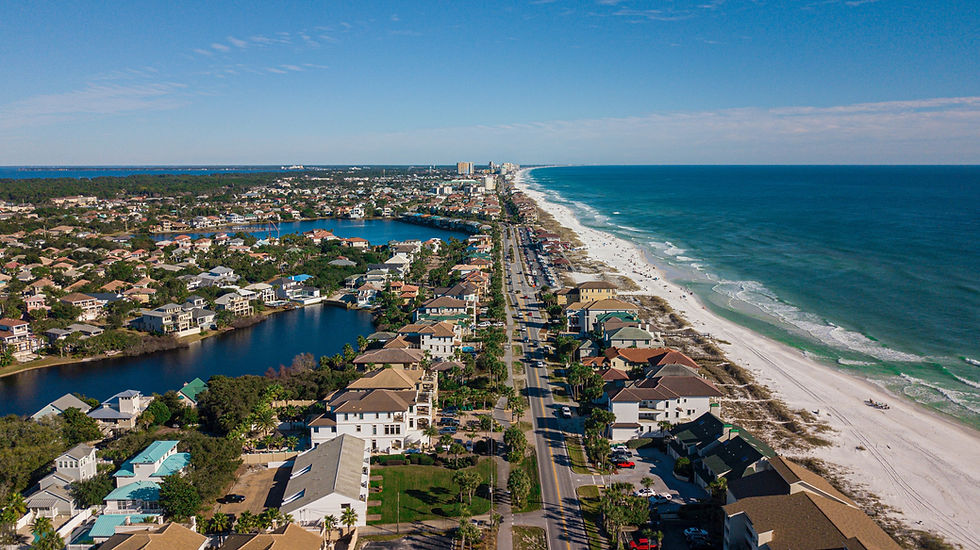
That asset is almost absurdly large relative to the town's size. Fort Williams Park draws somewhere between 800,000 and roughly one million visitors a year, and fewer than 15% of them are town residents. For a town of about 9,000 people, that is a tourism footprint most vacation-rental markets would envy , and it costs a visitor nothing. There's no gate, no timed-entry ticket, no admission fee. You park, you walk to the light, you take the photo everyone in New England has seen a version of. That single fact , a free, globally recognizable attraction pulling the better part of a million people a year, most of them from outside New England , is the foundation this entire market report rests on. Cape Elizabeth doesn't have a large short-term rental supply. It has a demand base that's disproportionate to its size, and that combination is what makes it worth analyzing on its own rather than folding it into a generic "Greater Portland Maine STR investment" conversation.
A Demand Base Built on More Than One Attraction
Portland Head Light is the headline, but it isn't the whole story, and a market that depended on a single lighthouse photo-op would be a fragile one. Cape Elizabeth stacks several genuinely different demand drivers on top of each other, which is part of why the town supports year-round booking activity rather than a hard seasonal on/off switch.
Two Lights State Park, a few miles down the coast, adds a second oceanfront draw with its own dramatic rock formations and open headland. Right next to it, the Lobster Shack at Two Lights has been serving lobster rolls with a view of the Atlantic for more than 50 years , the kind of destination-restaurant pull that generates its own visitor traffic independent of the lighthouse crowd. Crescent Beach State Park gives the town a genuine sand-beach draw, pulling swimmers and families who have nothing to do with lighthouses or lobster at all.
Then there's Inn by the Sea, Cape Elizabeth's own oceanfront resort, which functions as more than a hotel for STR purposes , it's a wedding venue with capacity for events up to 175 guests, and every wedding of that scale throws off overflow lodging demand that a resort alone can't absorb. That's a lead type worth understanding for anyone marketing a Cape Elizabeth vacation rental: wedding guests booking a week out, often at a premium, are a different (and often less price-sensitive) guest than a weekend lighthouse tourist.
And then there's the one demand driver on this list with a fixed date on the calendar. The TD Beach to Beacon 10K, founded in 1998 by Cape Elizabeth native and Olympic gold medalist Joan Benoit Samuelson, runs a course from Crescent Beach State Park to Fort Williams Park every first Saturday in August , August 1 in 2026 , and draws roughly 6,500 runners, plus the friends, family, and spectators who come with them. A single-day event that size, landing on the same weekend every year, is a plausible and fairly clean explanation for why August is this market's confirmed peak month. It's the kind of demand signal that's easy for an independent operator to plan pricing around, because unlike general summer tourism, it has an exact date.
Put together, lighthouse tourists, beachgoers, wedding guests, and race weekend all draw from different traveler pools with different booking windows. That diversification is arguably a bigger deal for a small-inventory market like this one than any single attraction, because it's what keeps demand from collapsing into a three-month window. Then there's Inn by the Sea, Cape Elizabeth's own oceanfront resort, which functions as more than a hotel for STR purposes , it's a wedding venue with capacity for events up to 175 guests, and every wedding of that scale throws off overflow lodging demand that a resort alone can't absorb.
The Regulatory Picture: Residence-Based, Not a Numeric Cap
Here is the fact that should shape how any operator or investor thinks about entering this market: Cape Elizabeth's Short Term Rental Ordinance does not cap the number of STR permits the town will issue. There is no town-wide ceiling on total permits, at least none that turned up in this research. What the ordinance does instead is narrower and, in practice, more restrictive for a certain kind of investor , it defines who is eligible to operate at all.
The ordinance was adopted April 12, 2021, effective July 1, 2021, following a 2020 moratorium on new STR permits while the town worked out its approach. It sets up four permit categories, and in three of the four, the property must be the owner's documented primary residence. There's a narrow exception , the "Seven-Plus-Acres" lot category , that allows a genuinely non-owner-occupied rental, but even that comes capped at 182 days of rental use per year, or exactly half the calendar.
A July 10, 2024 amendment tightened things further by closing an accessory-dwelling-unit loophole that many comparable coastal Maine towns still leave open , the kind of gap that, in other markets, lets an owner rent out a detached ADU as a de facto separate investment unit while still technically satisfying an owner-occupancy rule for the main house. Cape Elizabeth closed that door. The direction of travel here is unambiguous: this is a town that has been actively tightening its STR regime since 2021, not loosening it.
The practical result is that virtually every legally operating host in Cape Elizabeth is a self-managing owner-operator by definition, not a portfolio landlord running multiple non-owner-occupied units. That's structurally different from towns that regulate STRs through a numeric permit cap , Rockland and Camden, further up the coast, both cap total permit counts, which creates a scarcity-driven secondary market for existing permits. Cape Elizabeth's eligibility-based model doesn't work that way; it's not that permits are scarce and valuable to trade, it's that the pool of people who qualify to hold one at all is narrow by design. (A full comparison of how Cape Elizabeth's approach stacks up against other regulated coastal Maine towns belongs in a market-by-market comparison, not this report , see our companion piece on Kennebunkport for that side-by-side.).
What the Numbers Actually Say
Two independent data sources give slightly different reads on Cape Elizabeth's STR economics as of June 2026, and the honest move is to show both rather than cherry-pick the more flattering one. A third estimate near AirROI Cape Elizabeth $32,140 as of 2026-07-31 a year surfaced in research as well, but given the spread between the two primary sources, that number reads as the optimistic edge of the range rather than a confirmed center.
AirDNA puts at an average of AirROI Cape Elizabeth $32,140 as of 2026-07-31 in annual revenue, AirROI 40.3% occupancy as of 2026-07-31, and an AirROI $387 as of 2026-07-31. AirROI, drawing from a smaller and likely differently sampled set of 39 active listings, shows AirROI Cape Elizabeth $32,140 as of 2026-07-31 in average annual revenue, 45.4% occupancy, and a $368 ADR. A third estimate near AirROI Cape Elizabeth $32,140 as of 2026-07-31 a year surfaced in research as well, but given the spread between the two primary sources, that number reads as the optimistic edge of the range rather than a confirmed center. On a strict reading, both of the two main data sources land modestly under a named-town AirROI pins-a-year threshold , worth stating plainly rather than rounding up.
The more useful number for anyone evaluating this market isn't the annual average, though , it's the seasonality curve underneath it, because that's what determines whether Cape Elizabeth is a viable year-round operation or a three-month sprint. AirROI's month-by-month data shows real booking activity in every single month of the year. The December-March low season averages 24.7% occupancy and roughly in monthly revenue, and even the single worst month, March, still posts 19.1% occupancy and about in revenue. That is a meaningfully different market than a hard seasonal shutdown where occupancy effectively goes to zero for a quarter. Winter is slow in Cape Elizabeth. It is not dead.
And the trend line is pointing the right direction. AirDNA's year-over-year figures show revenue up 9.3% and occupancy up 4.5%, even as the count of active listings fell 13.2%. That's a specific and fairly favorable pattern , a shrinking supply base paired with strengthening per-listing performance , which typically points to softer competition for the operators who remain, not a market in decline.
A Competitive Landscape With Almost No One in It
For a market sitting a few miles from downtown Portland, Cape Elizabeth is remarkably uncontested by the big professional-management brands. Vacasa's own "Coastal Maine" market page lists Boothbay, Bar Harbor, and York , Cape Elizabeth doesn't appear on it at all. No Avant Stay presence turned up in this research either. That's a notable absence for a town with a nearly million-visitor anchor attraction sitting inside it.
The three local property firms that do show up in a Cape Elizabeth search , Apex Luxury Rentals, Drinan Properties, and Bayley Vacation Rentals , all read, on closer inspection, as furnished monthly-or-longer leasing operations rather than sub-30-day vacation rental managers. They're serving a different customer: relocating professionals and seasonal renters, not weekend lighthouse tourists. AirROI's own platform data backs this up independently: the only named professional management company appearing in the market is a single-listing operator identified on-platform as "Chris," generating roughly a leftover occupancy ranking we do not published market year in annual revenue , a negligible share of total market revenue, confirming there's no meaningful professional-management footprint here. The top individual host by revenue runs two properties to a combined a leftover occupancy ranking we do not published market year a year, a figure independently confirmed directly against AirROI's public host-revenue table for Cape Elizabeth.
What that adds up to is a market with essentially no professional STR management presence and, structurally, almost no room for one to emerge given the ordinance's owner-occupancy requirements. The competitive question for a Cape Elizabeth host isn't "how do I out-market Vacasa's local portfolio" , there isn't one. It's closer to "how do I stand out in Portland Head Light Airbnb search results against a handful of other owner-operators," which is a far more winnable position for an independent host willing to invest in direct-booking visibility and listing quality.
Who This Market Fits
Cape Elizabeth rewards a specific kind of operator: someone who already lives in or is willing to live in the property, is comfortable self-managing rather than handing off to a portfolio manager (because the ordinance leaves few of those to hand off to), and is playing a long game rather than chasing a single blowout summer. The demand is real and diversified , lighthouse tourists, beachgoers, wedding overflow, and a calendar-fixed race weekend , but the revenue ceiling under current data is realistic, not spectacular, and the regulatory framework is the reason why: this was never designed to support large-scale investment ownership. For the right owner-operator, that's not necessarily a downside. It's a market with a genuinely durable demand base, strengthening year-over-year performance, and almost no professional competition standing in the way.
The top individual host by revenue runs two properties to a combined a leftover occupancy ranking we do not published market year a year, a figure independently confirmed directly against AirROI's public host-revenue table for Cape Elizabeth.
Related Reading
Keep reading on same-cluster Crest & Cove pages that stay on labeled local lines without costume-corridor copy.
Cape Elizabeth Remote Worker Shoulder Season Strategy for STR Hosts
Cape Elizabeth STR Off Season Strategy for Independent Hosts
Cape Elizabeth STR Marketing Agency Worth It for Independent Hosts
Cape Elizabeth vs Kennebunkport STR Investment for Independent Hosts
Cape Elizabeth STR Seasonality Short-Term Rental Pricing Calendar
DIY vs Hire Marketing for Independent Hosts for Independent Hosts
How to Market a Short-Term Rental in Ocracoke, NC Independent Hosts
Frequently Asked Questions
Does Cape Elizabeth cap the total number of short-term rental permits it issues?
No confirmed town-wide numeric ceiling exists. Instead, Cape Elizabeth's Short Term Rental Ordinance restricts eligibility, requiring owner-occupancy in most permit categories, rather than limiting the total count of permits available. That's the fact that should shape how any operator or investor thinks about entering this market.
Can I operate a non-owner-occupied short-term rental in Cape Elizabeth?
Only under the ordinance's Seven-Plus-Acres lot exemption, and even then rental use is capped at 182 days per year, exactly half the calendar. Outside that narrow category, three of the four permit types require the property to be the owner's documented primary residence.
When did Cape Elizabeth's current STR ordinance take effect?
The ordinance was adopted April 12, 2021, and took effect July 1, 2021, following a 2020 moratorium on new permit issuance while the town developed its regulatory framework. The framework was never designed to support large-scale investment ownership, which is why demand here is real but the revenue ceiling under current data stays realistic rather than spectacular.
What changed with the July 2024 amendment?
The July 10, 2024 amendment closed a loophole that had allowed accessory dwelling units to be rented separately in ways that undermined the owner-occupancy requirement, a gap many comparable coastal Maine towns still leave open. It tightened the effective owner-occupancy rule rather than adding a new permit category.
How does Cape Elizabeth's regulatory approach compare to Rockland or Camden?
Rockland and Camden regulate through numeric permit caps, creating scarcity around a fixed number of licenses. Cape Elizabeth instead regulates through owner-occupancy eligibility, with no confirmed cap on total permit count, which produces a different competitive dynamic than the scarcity-driven secondary market for permits seen further up the coast.
Is Cape Elizabeth a year-round vacation rental market or a summer-only one?
Data shows real booking activity in every single month, including a December-through-March low season averaging 24.7% occupancy, well above a full seasonal shutdown, though clearly softer than summer. Several distinct demand drivers stack on top of each other here, which is part of why the town supports year-round booking rather than a hard seasonal on-off switch.
What drives peak demand, and when does it happen?
August is the confirmed peak month. The TD Beach to Beacon 10K, held the first Saturday of August, draws roughly 6,500 runners to a course between Crescent Beach State Park and Fort Williams Park, and is a plausible, calendar-precise driver of that spike alongside general summer lighthouse and beach tourism.
Are large property management companies active in Cape Elizabeth?
No meaningful institutional presence was found. Vacasa's Coastal Maine listings include Boothbay, Bar Harbor, and York, but not Cape Elizabeth, and no Avant Stay presence was found either. The only named professional management company visible in AirROI's platform data operates a single listing, a negligible share of the market, confirming the absence of institutional competition.
About the Authors
Crest & Cove Creative is a short-term rental marketing agency founded by Thomas Garner and Jacob Mishalanie. We build direct-booking brands, listing optimization systems, and market-specific content strategies for independent STR operators nationwide, including emerging corridors like Maine. It's closer to "how do I stand out in Portland Head Light Airbnb search results against a handful of other owner-operators," which is a far more winnable position for an independent host willing to invest in direct-booking visibility and listing quality.
Sources
Work with Crest & Cove Creative
Cape Elizabeth listings that lean on one lighthouse photo miss the real story: four separate demand pools, from Portland Head Light to Inn by the Sea weddings to Beach to Beacon race weekend, each booking on its own calendar.
We help Cape Elizabeth hosts write listing copy that names the specific draws guests are searching for, instead of one generic coastal caption. Send us your photos and calendar and we'll help you separate the pools your listing pulls from.
Reach out at crestcove.co or (256) 998-7502.


Comments