
239 Listings, $36,762 a Year: Fairhope, AL STR Market Report 2026

Updated: Aug 25
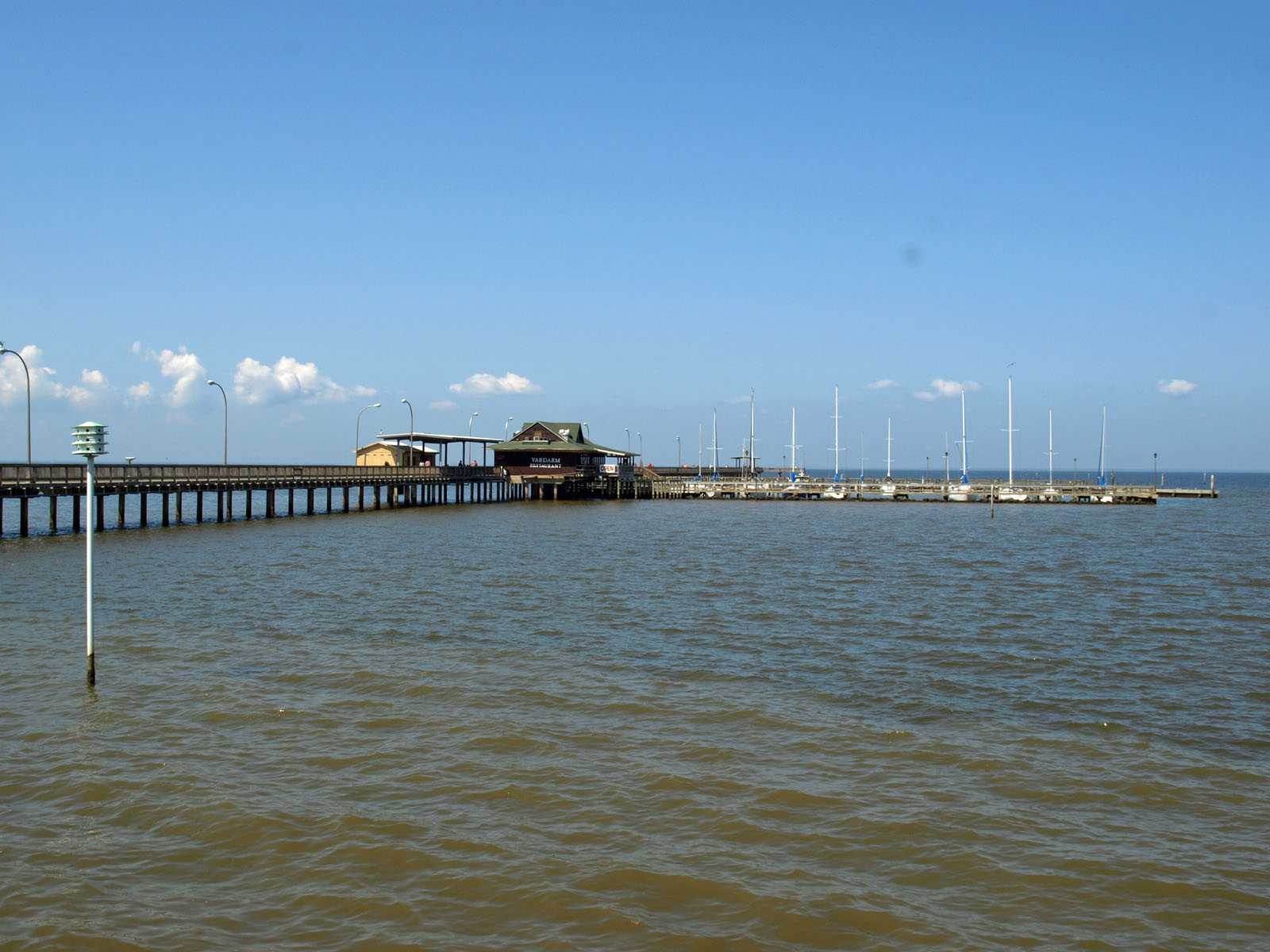
Fairhope, Alabama runs a genuinely two-sided short-term rental story: a healthy-looking revenue picture on the AirROI side, and a narrow, zone-specific permitting picture on the City of Fairhope side, and the two do not answer the same question. A host or buyer who only reads the revenue number is missing the zoning gate; a host who only reads the ordinance is missing what a compliant listing here actually earns.
This report separates the two cleanly. The market figures - 239 listings, $36,762 typical annual revenue, and the seasonal pattern behind it - come from the published AirROI extract for the trailing year. The zoning and licensing facts come from the City of Fairhope's own ordinance structure. Neither substitutes for the other, and this is not legal advice: a specific parcel's zoning status should be confirmed directly with the City of Fairhope's business-license desk or, for unincorporated Baldwin County land, the county's own registration process. This is not legal advice.
What the Fairhope Extract Actually Reports
The competitive set behind this report holds 239 active listings for the trailing year. Across that pool, a typical active unit earns $36,762 in annual revenue, with a median month of $3,506 and an average month of $3,063 - the gap between median and average is itself informative, since it means a handful of stronger-performing months or listings are pulling the average above what the typical month actually looks like.
The same pool posts an ADR of $313, occupancy of 40.6 percent, and RevPAR of $125. Those are Fairhope-specific numbers, describing this specific 239-listing market on the eastern shore of Mobile Bay - not a blended Baldwin County figure, and not a number that includes Gulf Shores or Orange Beach's much larger beach-tourism lodging totals.
Revenue for the market moved minus 0.5 percent year-over-year while supply grew 32.8 percent over the same period - a market where more listings entered but the typical dollar outcome per listing held essentially flat rather than growing with demand. That combination is worth sitting with before treating $36,762 as a number that will keep climbing on its own.
Where Short-Term Rentals Are Actually Legal in Fairhope
Under the current ordinance structure, Ordinance 1233, the city limits short-term rental eligibility to six specific zoning designations: R-4, R-5, B-1, B-2, B-3a, and B-3b. The city's standard residential zones - R-1, R-2, and R-3 - cannot list a short-term rental at all, regardless of the property's condition, size, or owner's intent. A property's zoning designation, not its neighborhood's general character or its proximity to downtown, is what determines whether it can legally operate.
This creates a real split between downtown-adjacent parcels, many of which fall inside the permitted commercial and higher-density residential zones, and quieter residential streets a few blocks further out, many of which sit inside R-1, R-2, or R-3 and cannot list under any circumstance. A host or buyer evaluating a Fairhope property needs the parcel's actual zoning designation before assuming a downtown-adjacent address is automatically eligible.
This is not legal advice. Confirming a specific parcel's zoning designation, and whether it falls inside one of the six permitted zones, is a question for the City of Fairhope's own planning and business-license desk, not something an AirROI-style market extract can answer.
City License and County Registration Are Two Different Desks
Revenue and licensing questions for a Fairhope city-limits property go through the city's own business-license desk. Property on unincorporated Baldwin County land near Fairhope, but outside the actual city limits, follows a separate process - Baldwin County's own short-term vacation rental (STVR) registration, run by a different clerk with different requirements.
This distinction matters because a host who assumes "Fairhope" describes one uniform jurisdiction may be operating on the wrong desk's rules entirely. A property physically near downtown Fairhope but technically outside the city's incorporated limits does not go through the city's zoning-and-license process at all - it goes through the county's STVR registration instead, with its own separate compliance requirements.
Confirm which jurisdiction - city or county - actually governs a specific parcel before assuming either process applies. This is not legal advice, and the city license and the county STVR registration are not interchangeable paperwork covering the same ground.
April, March, and June Carry the Fairhope Calendar
The published seasonal pattern names April, March, and June as the market's peak months, alongside July as part of the broader warm-season run. January and February show up as the named soft months, consistent with a bay-town market whose draw is built around spring and early-summer weather, downtown events, and Mobile Bay access rather than a single mega-event weekend.
Fairhope's own character - a walkable downtown, the municipal pier and bluff overlooking Mobile Bay, and a mix of art-walk and festival programming through the spring - supports that peak pattern directly. A listing description that leans into pier views, a downtown walk, and a spring or early-summer arrival window is describing the actual demand driver behind these three peak months, not a generic "Gulf Coast getaway" pitch that could apply to any bay town.
Birmingham shows up in the market data as a named origin market for a planned weekend trip - useful for a host thinking about who is actually driving to Fairhope during these peak months, and worth reflecting in outbound marketing aimed at drive-market guests rather than fly-in beach tourists.
Occupancy at 40.6 Percent Describes an Arts-and-Bay Town, Not a Beach Resort
Fairhope's 40.6 percent occupancy sits well below what a beachfront Gulf Shores or Orange Beach property typically posts, and that gap is the point rather than a flaw in the data. Fairhope sells a walkable arts-and-bay-town weekend, not a beachfront resort stay, and its occupancy pattern reflects a market built around weekend and event-driven demand rather than a steady beach-vacation fill rate across the whole calendar.
A host benchmarking a Fairhope listing against Gulf Shores or Orange Beach occupancy figures is comparing two structurally different products. The $313 ADR paired with 40.6 percent occupancy describes a market where guests pay a meaningful nightly rate for a shorter, more concentrated set of peak weekends rather than booking a steady eight-week beach season.
Nineteen Percent of the Market Already Runs 30-Plus Night Minimums
Within the 239-listing pool, 19 percent of listings already carry a 30-night-plus minimum-stay setting. That is a meaningful minority of the market already positioned toward extended stays rather than weekend or short getaways, and it says something concrete about product mix in Fairhope: this is not a market where every listing competes on the same two-to-four-night booking window.
A host deciding whether to test a longer minimum-stay setting can treat that 19 percent figure as evidence that the extended-stay format already has real traction here, without needing to guess a rationale from scratch. It does not, on its own, say whether a 30-night minimum performs better or worse than a standard weekend-length listing - that comparison isn't in the published dataset, and this report will not guess at it.
Superhost Share Runs 78 Percent, and One Local Operator Manages 14 Homes
Superhost status sits at 78 percent across the 239-listing pool, a high share that suggests most hosts in this specific market have accumulated enough reviews and consistency to clear that bar - useful context for a new host trying to gauge how competitive the review and reputation baseline already is here.
The market also includes at least one local operator running a 14-home portfolio, a detail worth noting because it means part of the 239-listing pool is professionally managed at meaningful scale rather than entirely independent single-property hosts. A new host entering this market is competing against both a high average review bar and at least one operator with the resources of a multi-property book behind their listings.
AirROI's "Low" Competition Label Is Not a Zoning Status
The AirROI extract tags this market with a "Low" competition label and reports a zero-licensed share figure on the extract itself. Neither of those is the same thing as R-4 zoning, Ordinance 1233 compliance, or a Baldwin County STVR registration - they are vendor-side market labels describing how the extract categorizes competitive density and reported licensing, not a substitute for the actual municipal record.
A host should not read "Low" competition as permission to skip confirming zoning, and should not read a zero-licensed-share figure on a market extract as evidence that licensing doesn't matter here. The ordinance path - confirming zoning against R-4, R-5, B-1, B-2, B-3a, or B-3b, and securing the city business license or county STVR registration as applicable - runs through the city or county clerk's desk, not through a market-data vendor's competitive-set label.
Downtown Versus Bay: The Product Split Inside 239 Listings
Fairhope's 239-listing pool is not one uniform product. A downtown-adjacent listing, walkable to the pier, the bluff, and Fairhope's restaurant and shopping strip, competes for a guest planning an arts-weekend or event-driven trip. A bay-facing listing further from downtown, without the same walkability, competes on water views and quiet rather than foot traffic to Fairhope's commercial core.
Both fall inside the same $36,762 typical-year figure, which means that number alone does not tell a host which specific product they are actually pricing against. A downtown-walkable, festival-season listing may reasonably outperform the average during the named peak months of April, March, and June, while a quieter bay-facing property may earn more evenly across a longer stretch of the calendar with less dramatic peak-season concentration.
A host or buyer comparing a specific Fairhope address against the market average should first place that address on the downtown-versus-bay spectrum, then judge its performance against a comparable subset rather than the blended 239-listing figure alone.
What a Buyer Underwriting a Fairhope Purchase Should Confirm First
Before using $36,762 in a DSCR calculation, a buyer should confirm the specific parcel's zoning designation against the six permitted zones - R-4, R-5, B-1, B-2, B-3a, or B-3b - since a property outside those designations cannot legally generate short-term rental income at all, no matter how strong the surrounding market's published figures look. An underwriting model built on the market average for a parcel that cannot legally operate as a short-term rental is not a conservative estimate; it is a model built on income the property is not permitted to earn.
A buyer should also confirm whether the parcel sits inside Fairhope's incorporated city limits or on unincorporated Baldwin County land nearby, since that determines whether the applicable compliance path runs through the city's business-license desk or the county's separate STVR registration process. This is not legal advice - both of these confirmations belong with the relevant city or county office, not with a market-data extract, and neither should be assumed from the property's general Fairhope-area location alone.
Finally, a buyer should weigh the market's own trend line honestly: revenue moved minus 0.5 percent year-over-year while supply grew 32.8 percent. A pro forma that assumes continued revenue growth at the same pace as recent supply growth is projecting a trend the market's own most recent year did not actually produce.
Building an Honest Fairhope Listing Description
A Fairhope listing description should name the actual product - downtown-walkable or bay-facing, whichever genuinely applies - rather than defaulting to generic "Eastern Shore getaway" language that could describe any town on Mobile Bay. It should name the pier, the bluff, or the specific downtown streets that are actually walkable from the property, and it should price toward the named peak months of April, March, and June with confidence, since those dates are published rather than estimated.
It should not claim zoning eligibility, licensing status, or a specific revenue outcome as settled facts the way this report's own market figures are settled - those remain confirmations a host or buyer makes with the actual city or county desk, not claims to make in guest-facing or investor-facing marketing copy without that confirmation already in hand.
What This Report Is Not
This report is not a promise that any specific Fairhope address will earn $36,762 in its first year, and it is not a ranking of Fairhope against Gulf Shores, Orange Beach, or any other Baldwin County or Mobile Bay market. It reports one market's own trailing-year figures and one city's own zoning structure, on their own separate lines.
It is also not legal advice on zoning, licensing, or ordinance compliance. Every zoning and licensing claim above should be confirmed directly with the City of Fairhope's business-license desk, or with Baldwin County for STVR registration on unincorporated land, before a host or buyer makes a purchase, listing, or pricing decision based on it.
Related Reading
More Fairhope and Eastern Shore reading already live on Crest & Cove.
Frequently Asked Questions
How many active short-term rental listings does Fairhope have?
The published trailing-year competitive set holds 239 active listings. That is the sample size behind every other figure in this report - the $36,762 typical annual revenue, the $313 ADR, and the 40.6 percent occupancy all describe this same 239-listing pool, not a wider Baldwin County or Mobile Bay figure.
What does a typical Fairhope short-term rental earn per year?
A typical active unit earns $36,762 in annual revenue, with a median month of $3,506 and an average month of $3,063. The gap between median and average suggests a smaller number of stronger months or listings are lifting the overall average above what a typical month actually looks like for most operators.
Can any Fairhope property become a short-term rental?
No. The City of Fairhope permits short-term rentals only in zones R-4, R-5, B-1, B-2, B-3a, and B-3b under Ordinance 1233. Standard residential zones R-1, R-2, and R-3 cannot list a short-term rental at all, regardless of the property's proximity to downtown or the bay - this is a zoning question, not a market-demand question, and it should be confirmed with the city before any purchase or listing decision.
Does a city business license cover a property outside Fairhope's city limits?
No. A property physically near Fairhope but outside the incorporated city limits, on unincorporated Baldwin County land, goes through the county's own short-term vacation rental (STVR) registration instead of the city's business-license process. These are two separate desks with two separate requirements, and confirming which one governs a specific parcel is a necessary first step, not an assumption to make from the address alone.
When is Fairhope's peak short-term rental season?
April, March, and June are the named peak months, with July also part of the broader warm-season run, and January and February as the named soft months. The pattern reflects Fairhope's spring and early-summer draw - the municipal pier, downtown art-walk and festival programming, and Mobile Bay access - rather than a single beach-season peak.
Why is Fairhope's occupancy lower than a Gulf Shores or Orange Beach listing?
Fairhope's 40.6 percent occupancy reflects a walkable arts-and-bay-town market built around weekend and event-driven demand, not a beachfront resort market with a steady multi-week summer fill rate. The two are structurally different products - Fairhope pairs a meaningful $313 ADR with a shorter, more concentrated set of peak weekends rather than a long, steady beach season.
What does the 19 percent long-stay figure mean for a new Fairhope host?
It means 19 percent of the 239-listing pool already carries a 30-night-plus minimum-stay setting, showing the extended-stay format already has real traction in this market. It does not indicate whether a long-stay listing outperforms a standard weekend-length one financially - that specific comparison isn't part of the published dataset.
Does the 'Low' competition label on the market extract mean licensing doesn't matter here?
No. "Low" competition and a zero-licensed-share figure are vendor-side labels describing how the market extract categorizes competitive density and reported licensing - they are not the same as R-4 zoning approval, Ordinance 1233 compliance, or a Baldwin County STVR registration. Zoning and licensing status has to be confirmed with the actual city or county desk, not inferred from a market-data label.
How competitive is the review and reputation bar in Fairhope's short-term rental market?
Superhost status sits at 78 percent across the 239-listing pool, a high share that signals most active hosts here have already built consistent review histories. The market also includes at least one local operator managing a 14-home portfolio, meaning part of the competitive set is professionally managed at real scale rather than entirely single-property, independent hosts.
Is this report legal advice on Fairhope's short-term rental ordinance?
No. This report separates published market-revenue figures from the City of Fairhope's zoning and licensing structure, but it is not legal advice on either. A specific parcel's zoning designation and licensing requirement should be confirmed directly with the City of Fairhope's business-license desk, or Baldwin County for unincorporated land, before making a purchase, listing, or pricing decision.
Work with Crest & Cove Creative
Fairhope posts a $36,762 typical year across 239 listings, but the city only permits short-term rentals in six named zones. Revenue and zoning answer two different questions, and this report keeps them on separate lines.
We help Fairhope hosts and buyers separate the AirROI revenue picture from the City of Fairhope's actual zoning gate before a purchase or listing decision gets made. Send us the parcel and we will tell you which of the two questions your address still needs answered.
Reach out at crestcove.co or (256) 998-7502.


Comments