
Gold Rush Days: Dahlonega Event Dollars Hosts Need to Know

Updated: Aug 28
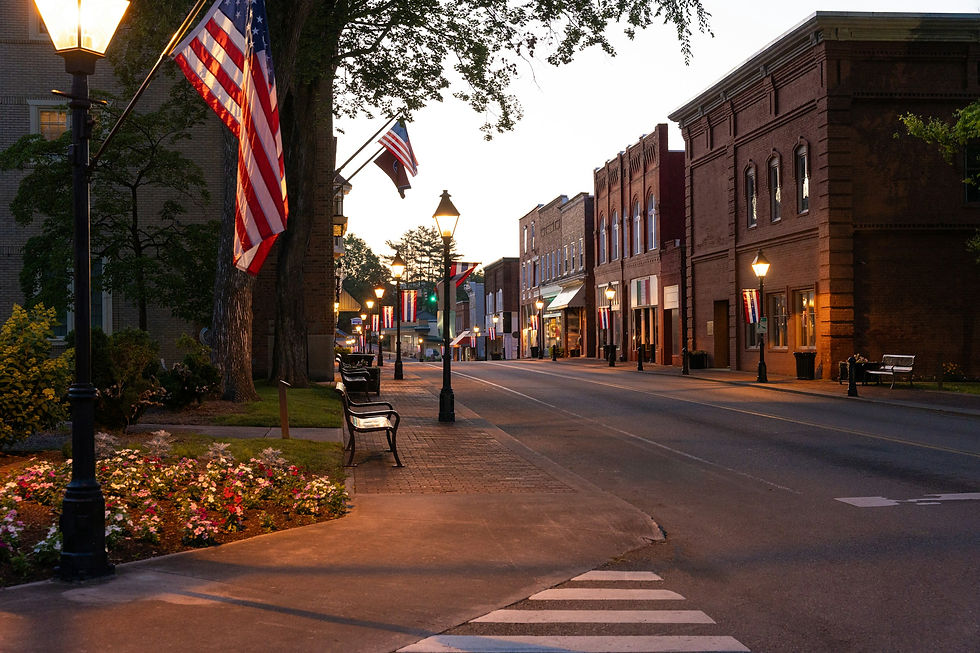
Dahlonega's Gold Rush Days is one of the largest single-weekend festival events in North Georgia — an annual celebration of the 1828 gold discovery that draws an estimated 200,000+ visitors to the Lumpkin County historic square on the third weekend of October. In a county of roughly 33,000 permanent residents, a festival that draws 200,000+ visitors in a single weekend creates a demand spike of a character that most small-market STR operators in the Southern Appalachians never experience. Understanding how to position and price for that spike — and how to build the surrounding October calendar around Dahlonega's event ecosystem — is the highest-leverage single skill an Ellijay operator can develop.
We treat Gold Rush Days data and its STR impact with the caution appropriate to a market where event-specific STR performance figures aren't systematically published. The visitor attendance estimates and STR demand implications are directional reads from operator reports and available market research; the specific pricing and occupancy patterns described reflect what we observe in operator benchmarking rather than formally tracked data.
The Scale of the Event in Context
200,000+ visitors to Lumpkin County's third October weekend is a figure worth putting in context. Dahlonega itself has a permanent population of approximately 7,500 (including University of North Georgia students); Lumpkin County has about 33,000 residents. The Gold Rush Days attendance effectively multiplies the county's population by six in a single weekend. The accommodation infrastructure — approximately 282–484 active STR listings by available estimates, plus a handful of inns and B&Bs in the market — accounts for only a small fraction of that visitor volume; the majority of Gold Rush Days attendees are day-trippers from Atlanta and surrounding counties who do not overnight in Dahlonega.
The day-trip majority doesn't diminish the event's STR impact — it concentrates it. The visitors who do choose to overnight in Dahlonega for Gold Rush Days are specifically seeking the extended experience: arriving Friday evening to beat the Saturday crowds, spending Saturday fully engaged in the festival, taking Sunday for the vineyard trail or a hike before returning home. This overnight visitor profile — willing to pay a premium for proximity, motivated to stay multiple nights, and specifically choosing Dahlonega over Atlanta — is the highest-value guest profile in the market's annual calendar.
The Wine Tourism Overlay: A Uniquely Dahlonega Demand Structure
What distinguishes Dahlonega's event economy from comparable mountain festival markets is the wine tourism infrastructure that operates independently of and in parallel with the Gold Rush Days demand. Dahlonega holds an official state designation as Georgia's Wine Tasting Room Capital — a 2015 Georgia General Assembly resolution acknowledging the concentration of vineyard tasting rooms in Lumpkin County. The wine trail that connects downtown Dahlonega to the surrounding vineyard properties (including Cavender Creek Vineyards, Montaluce Winery, Three Sisters Vineyards, and others) draws a visitor cohort distinct from the Gold Rush Days crowd: wine enthusiasts who travel specifically for the tasting experience, often midweek, often in smaller groups, and often planning multi-night stays to cover multiple vineyards.
The wine tourism dimension explains one of the more unusual characteristics of Dahlonega's STR market: its December ADR peak. Available data show market-wide ADR peaking in December — not in October with Gold Rush Days, nor in summer — at approximately $306. This December peak reflects wine trail holiday programming, Old Fashioned Christmas events on the historic square, and the wine-adjacent holiday gift and dining market that draws Atlanta visitors to Dahlonega specifically in December, when most mountain markets are running shoulder rates. An STR operator in Dahlonega who understands this December dynamic and prices the holiday window appropriately is capturing demand that exists nowhere else in the North Georgia market.
University of North Georgia: The Year-Round Demand Floor
The University of North Georgia's Dahlonega campus contributes a consistent demand floor that insulates the market from the dramatic off-season collapse that purely recreation-dependent mountain STR markets experience. UNG serves approximately 20,000 students across its campuses, with the Dahlonega campus as its flagship. University-related visitor traffic — family weekends, graduation ceremonies, homecoming, parents' visits throughout the semester — fills Dahlonega's calendar with demand that doesn't care whether the foliage is peaking or the apple harvest is underway.
The UNG visitor is a specific and underserved guest profile in Dahlonega's STR market. A family visiting a UNG student wants to be close to campus, wants a kitchen to cook in rather than paying for three meals a day at restaurants, and is flexible enough in timing that they'll book whatever dates the student has a family event on. Listings that explicitly mention UNG proximity and speak to the family-visit use case — 'five minutes from UNG's Dahlonega campus, ideal for family weekends and graduation' — capture this demand more effectively than listings that market exclusively to the tourism visitor. This demographic doesn't appear prominently in most Dahlonega listing descriptions, despite being one of the most consistent sources of demand in the market.
October Pricing: Festival, Foliage, and the Calendar Between Them
The Gold Rush Days third-weekend pricing structure requires the same tiered discipline as Ellijay's Apple Festival weekends, but with a different foliage overlay. October in Dahlonega involves three distinct demand layers arriving simultaneously: the Gold Rush Days festival demand, concentrated on the third weekend; the fall foliage demand, distributed across the broader October calendar; and the wine trail demand, which persists through October independently of both events. This layering creates the most complex pricing problem in the Dahlonega annual calendar and the biggest opportunity for operators who manage it correctly.
A tiered October pricing structure for Dahlonega should, at minimum, distinguish the following: the Gold Rush Days weekend (highest rates, two-night minimum), the remaining October weekends (peak foliage rates, one-night minimum, flexible), and the October mid-week nights (maintained rates supported by wine trail mid-week demand, no aggressive discounting). The most common mistake Dahlonega operators make is applying a flat 'October premium' that doesn't distinguish between a Gold Rush Days weekend and a quiet midweek stretch — either overpricing midweek nights beyond what demand supports or underpricing the Gold Rush Days weekend relative to what concentrated demand will bear.
The Bear on the Square Mountain Festival in April — a music, arts, and mountain culture event on the historic square — is the second major event in the Dahlonega calendar and warrants its own pricing discipline separate from the standard spring shoulder-season rates. April in Dahlonega is already shoulder season; Bear on the Square creates a specific weekend premium within that shoulder that operators who don't set event pricing for it will miss.
Want a free audit of your listing's visibility?Get your free visibility scoreto see exactly where your property stands.
How Hosts Should Adjust Their Listings and Calendar
First, Gold Rush Days pricing should be published in July — not September or October. The guests who are planning a Gold Rush Days stay are researching and booking for July and August as they plan their fall calendar. A listing whose October pricing isn't updated until September is competing with listings whose Gold Rush Days premium was already set and whose most desirable inventory may already be reserved.
Second, the listing description should explicitly name all three of Dahlonega's demand anchors — the festival (Gold Rush Days and Bear on the Square dates), the wine trail (specific vineyard names within driving distance), and the university (UNG Dahlonega campus proximity) — rather than leading only with outdoor recreation and mountain scenery that every North Georgia market can claim. The guest who is planning around any one of those anchors will be converted more effectively by a listing that specifically acknowledges the anchor than by one that covers only generic mountain content.
Third, the December holiday programming opportunity — the Old Fashioned Christmas events, the wine trail holiday scheduling, and the holiday gift shopping on the historic square — is the most underpriced seasonal window in most Dahlonega STR calendars. Operators who recognize the December ADR peak in their market data and price December holiday weekends at or above their fall foliage rates are capturing the demand generated by the market's wine trail and holiday event ecosystem. Operators who discount December as a shoulder month are leaving significant revenue on the table.
Ready to reposition?Start with our free visibility audit— a complete read on where your listing wins and where it leaves money on the table.
Keep going on Crest & Cove:the Dahlonega AirROI market file·what Dahlonega recovery actually measures·wine-trail visitor spend is not host year·the Crest & Cove intro·local SEO keywords that actually book·the five elements of a converting hero·Dahlonega overlooks off the square·how to compare STR marketing agencies.
Frequently Asked Questions
How many visitors attend Dahlonega's Gold Rush Days?
An estimated 200,000+ visitors over a single weekend -- the third weekend of October -- effectively multiplying Lumpkin County's roughly 33,000-resident population by six. Dahlonega's Gold Rush Days is one of the largest single-weekend festival events in North Georgia — an annual celebration of the 1828 gold discovery that draws an estimated 200,000+ visitors to the Lumpkin County historic square on the third weekend of October.
How many STR listings does Dahlonega have to absorb Gold Rush Days demand?
AirROI Dahlonega at 40.1% — not leftover 282–484 listings as the town file -- only a small fraction of visitor volume, since most attendees are Atlanta-area day-trippers who don't overnight. The accommodation infrastructure — approximately 282–484 active STR listings by available estimates, plus a handful of inns and B&Bs in the market — accounts for only a small fraction of that visitor volume; the majority of Gold Rush Days attendees are day-trippers from Atlanta and surrounding counties who do not overnight in Dahlonega.
When does Dahlonega's STR market see its highest ADR?
December, not October -- market-wide ADR peaks at approximately $306, driven by wine trail holiday programming and Old Fashioned Christmas events on the historic square. This December peak reflects wine trail holiday programming, Old Fashioned Christmas events on the historic square, and the wine-adjacent holiday gift and dining market that draws Atlanta visitors to Dahlonega specifically in December, when most mountain markets are running shoulder rates.
How does the University of North Georgia affect Dahlonega's STR demand?
UNG's Dahlonega campus serves about 20,000 students, generating a year-round demand floor from family weekends, graduation, and homecoming that's independent of the tourism calendar. Listings that explicitly mention UNG proximity and speak to the family-visit use case — 'five minutes from UNG's Dahlonega campus, ideal for family weekends and graduation' — capture this demand more effectively than listings that market exclusively to the tourism visitor.
What is Georgia's Wine Tasting Room Capital designation?
A 2015 Georgia General Assembly resolution officially designating Dahlonega as the state's Wine Tasting Room Capital, recognizing the concentration of vineyard tasting rooms in Lumpkin County. Dahlonega holds an official state designation as Georgia's Wine Tasting Room Capital — a 2015 Georgia General Assembly resolution acknowledging the concentration of vineyard tasting rooms in Lumpkin County.
What guest profile books Dahlonega for Gold Rush Days specifically?
Overnight visitors seeking the extended experience -- arriving Friday to beat Saturday crowds, engaging fully Saturday, and using Sunday for the vineyard trail or a hike -- the highest-value guest profile in the market's annual calendar. The visitors who do choose to overnight in Dahlonega for Gold Rush Days are specifically seeking the extended experience: arriving Friday evening to beat the Saturday crowds, spending Saturday fully engaged in the festival, taking Sunday for the vineyard trail or a hike before returning home.
How Hosts Should Adjust Their Listings and Calendar?
Understanding how to position and price for that spike — and how to build the surrounding October calendar around Dahlonega's event ecosystem — is the highest-leverage single skill an Ellijay operator can develop. Operators who recognize the December ADR peak in their market data and price December holiday weekends at or above their fall foliage rates are capturing the demand generated by the market's wine trail and holiday event ecosystem.
How should a host read this: The Scale of the Event in Context?
The Scale of the Event in Context. Crest & Cove Creative — Dahlonega operator benchmarking and event pricing case studies. Keep going on Crest & Cove:the Dahlonega AirROI market file·what Dahlonega recovery actually measures·wine-trail visitor spend is not host year·the Crest & Cove intro·local SEO keywords that actually book·the five elements of a converting hero·Dahlonega overlooks off the square·how to compare STR marketing agencies.
Related Reading
Keep reading in the Dahlonega market spine and nearby towns in the same region: same-cluster pages hosts can use without costume-corridor copy.
Dahlonega Their Own Gold DIY Ceiling: AirROI Pins, Not Leftover
Dahlonega's Shoulder Season: What Hosts Do When Gold Rush Weekend Is
Gold Panning in Dahlonega: A Cabin Guest's Guide to North Georgia's
Financing a Dahlonega Cabin: DSCR vs Second-Home for Lumpkin County
How Tourism Recovery Is Reshaping Dahlonega GA's Economy in 2026
Who Books a Dahlonega Rental: Square Walker, Gold, and Wine Trail
A Walk Around Dahlonega's Public Square: What Guests Actually Do
Work with Crest & Cove Creative
Write this town's year. Do not file another market's number as this stay.
Reach out at crestcove.co or (256) 998-7502.


Comments