
Finance Purchase Charleston Peak Occupancy Is Not the Year

Updated: Aug 28
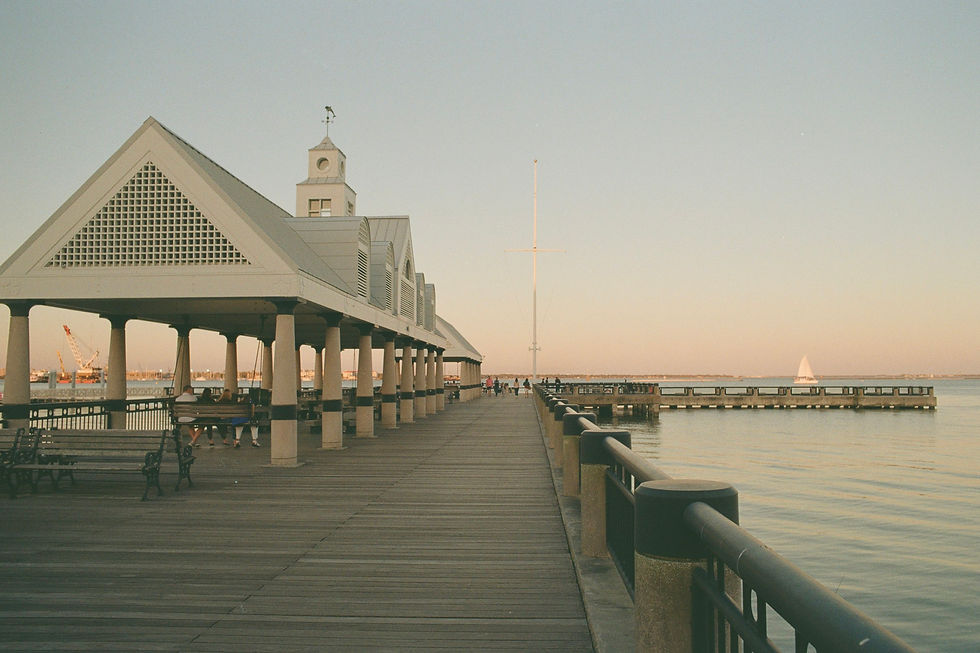
Financing a Charleston short-term rental isn't the same conversation as financing a primary residence, and it isn't quite the same conversation as financing a long-term rental either. The property has to earn like an STR on paper before most lenders will treat it like one, the down payment math shifts once a loan is classified as investment or non-owner-occupied, and the city's own STR permit process -- three categories, one unit per property -- can slow or speed a closing depending on where the property sits and what paperwork already exists. Add in an unusually old housing stock and a flood map that touches a meaningful share of the peninsula and the surrounding islands, and financing becomes its own project alongside finding the right property. None of the specifics below substitute for a conversation with a lender who underwrites Charleston short-term rentals regularly -- treat this as a map of the terrain, not a quote.
The Financing Landscape: Matching the Loan to the Property
Charleston STR buyers generally choose from five financing paths, and picking the right one comes down to how you'll qualify and how quickly you need to close. Many Charleston STR buyers purchase through an LLC for liability and bookkeeping reasons, but not every lender and loan product treats an LLC purchase the same way -- some DSCR and portfolio lenders are built for entity ownership, while a conventional Fannie/Freddie loan generally requires the borrower to close in their personal name.
Conventional investment-property mortgages are the most familiar, run through Fannie Mae or Freddie Mac guidelines, and generally require the buyer to qualify using their own income, tax returns, and debt-to-income ratio, with the property's rental potential considered only in a limited way. These tend to carry the strictest underwriting but often the most competitive terms for a well-qualified buyer.
DSCR loans (debt-service coverage ratio loans) are the workhorse for a lot of STR buyers, because they qualify the property instead of the buyer -- the lender looks at projected or actual rental income against the mortgage payment rather than W-2s or tax returns. That makes DSCR financing attractive for buyers who are self-employed, already carry several mortgages, or are buying through an LLC, though it usually comes with its own down payment and reserve requirements.
Portfolio loans, held by the lending bank rather than sold to Fannie or Freddie, give the lender more flexibility to underwrite outside a standard rulebook -- useful for buyers financing multiple STRs, buying through an entity, or working with a property that doesn't fit conventional guidelines, like a historic structure with condition issues. As a general pattern across the industry, conventional investment-property loans tend to require a meaningfully higher down payment than an owner-occupied purchase, and DSCR and portfolio loans often sit higher still, with the exact figure depending on the lender, the property's debt-service coverage ratio, your credit profile, and current program guidelines that move with the broader lending market.
Cash-out refinances and HELOCs on an existing property -- a primary residence or another investment property -- are how a meaningful share of Charleston STR buyers fund the down payment on a new purchase rather than the purchase itself, tapping built-up equity instead of liquid savings. Down payment requirements shift as soon as a property is classified as a non-owner-occupied investment purchase rather than a primary residence, and they shift again depending on which loan type you use.
Entity structuring is worth deciding early rather than mid-transaction. Many Charleston STR buyers purchase through an LLC for liability and bookkeeping reasons, but not every lender and loan product treats an LLC purchase the same way -- some DSCR and portfolio lenders are built for entity ownership, while a conventional Fannie/Freddie loan generally requires the borrower to close in their personal name. If an LLC purchase matters to you, confirm which loan products actually support it before you fall in love with a specific financing path.
Which path fits depends on your income documentation, how many financed properties you already hold, and how the specific property underwrites -- a conversation worth having with a lender before you're under contract, not after. That's a real, ongoing cost that belongs in your operating budget alongside your mortgage payment, property insurance, and STR-specific costs, and it's worth pricing before you're under contract rather than discovering it during underwriting.
How Lenders Treat Projected Short-Term Rental Income
This is where Charleston STR financing gets specific. A conventional lender evaluating a straight rental property typically leans on a Fannie Mae Form 1007 comparable rent schedule -- a long-term-lease estimate that has little to do with what a legally operating Charleston short-term rental can actually generate on the platforms. That mismatch is the reason DSCR and portfolio lending exist as a category: they're built to credit short-term rental income the way it actually shows up.
For an existing STR with an operating history, most DSCR lenders will ask for actual booking platform statements, tax returns showing rental income, or a property management report covering a meaningful trailing period -- often 12 months, though requirements vary by lender. For a property with no STR history yet -- a straight residential purchase you intend to convert -- lenders typically rely on a short-term rental income projection from an appraiser using AirDNA or a similar market-data source, sometimes attached as a 1025 or short-term rental addendum, rather than the traditional long-term comparable.
The debt-service coverage ratio itself is simply projected or actual rental income divided by the proposed mortgage payment -- principal, interest, taxes, insurance, and often HOA dues where applicable. Lenders set a minimum ratio a property has to clear; some require the property to more than cover the payment, others allow a ratio closer to breakeven with tradeoffs elsewhere in the file, like a larger down payment or additional cash reserves. Where your specific ratio needs to land, and which income sources a given lender will accept, varies enough by lender that it's worth getting pre-underwriting guidance from two or three specifically before you write an offer -- DSCR minimums, reserve requirements, and even willingness to finance a Charleston STR at all differ meaningfully from one lender to the next.
Down Payment Norms for a Charleston STR Purchase
Down payment requirements shift as soon as a property is classified as a non-owner-occupied investment purchase rather than a primary residence, and they shift again depending on which loan type you use. As a general pattern across the industry, conventional investment-property loans tend to require a meaningfully higher down payment than an owner-occupied purchase, and DSCR and portfolio loans often sit higher still, with the exact figure depending on the lender, the property's debt-service coverage ratio, your credit profile, and current program guidelines that move with the broader lending market.
Rather than publish a specific percentage here that could be stale by the time you read it, treat down payment as a range you confirm directly with a lender underwriting Charleston STR purchases specifically -- it's one of the fastest-moving variables in this financing conversation, and it's also one lenders are usually willing to quote early, before you're far enough into a deal to need firm numbers. A stronger debt-service coverage ratio, a larger cash reserve position, or a shorter loan term can sometimes buy down the required percentage, so it's worth asking a lender what levers you have rather than accepting the first quote as fixed.
How Charleston's Three STR Permit Categories Affect Your Financing Timeline
Charleston's short-term rental permit process interacts with financing in a way that's easy to underestimate until you're mid-transaction. The city runs three STR permit categories, capped at one unit per property: Category 1 covers properties on the peninsula inside locally designated historic districts or on the National Register; Category 2 covers peninsula properties that are at least 50 years old but outside those historic designations; and Category 3 covers off-peninsula properties in areas like Daniel Island, James Island, Johns Island, and West Ashley. Where a property falls determines which permit application applies, what review it goes through, and -- practically speaking -- how long it takes to get a permit in hand. Full permit-category detail, including the review process for each, is in our City of Charleston Short-Term Rental Rules guide, linked below.
For financing, the timing question comes down to whether you need an existing STR permit to get the income treatment you want from a lender. A property that already holds a valid Charleston STR permit and has an operating history gives a DSCR or portfolio lender real numbers to underwrite against -- actual bookings, actual revenue -- which is generally the cleanest file to finance. A property you're buying with the intent to apply for a permit after closing is a different conversation: the lender is underwriting projected income on a property that isn't yet legally operating as an STR in Charleston, and some lenders are more comfortable with that gap than others.
That gap matters most for Category 1 properties, where historic district review can add time to the permit timeline beyond what a straightforward Category 3 off-peninsula application might take. If your closing timeline is tight and the permit isn't in hand yet, it's worth asking your lender directly whether they'll close on projected income alone, whether they want to see a submitted permit application in the file, or whether they need the permit approved before funding -- that answer varies by lender and it can reshape your contract timeline, contingency language, and how much cushion you build into your closing date.
Financing Quirks of Charleston's Historic Housing Stock
A meaningful share of Charleston's STR inventory sits in genuinely old housing stock -- antebellum single houses, Victorian-era construction, and buildings that predate modern electrical, plumbing, and structural codes by a century or more. That history is part of what makes these properties valuable as short-term rentals, and it's also what makes them show up differently in an inspection and underwriting file than a newer build.
Lenders financing an older Charleston structure typically want a full inspection that looks specifically at the systems most likely to need attention in a historic building: outdated wiring, older plumbing materials, foundation and pier condition given the region's soil and moisture, roof age, and termite activity -- a termite bond or clear wood-destroying-organism inspection is close to standard practice in the Lowcountry given the climate. Any of these can trigger a lender to require repairs before closing, hold funds in escrow for post-closing repairs, or in some cases decline to finance the property as-is until issues are addressed.
Properties in Category 1's historic districts or on the National Register can carry an additional layer: exterior modifications may be subject to Board of Architectural Review approval, which matters if your renovation or repair plan -- including anything a lender requires -- touches the building's exterior. That review process runs on its own timeline, separate from both your mortgage underwriting and your STR permit application, and it's worth checking early whether any lender-required repairs would trigger it.
None of this means historic Charleston properties are hard to finance -- plenty close every month -- but it does mean budgeting time and a contingency line for inspection findings that a newer property in a different market simply wouldn't surface, and confirming with your lender early whether they have experience financing historic-district STR purchases specifically.
Flood Zones and Flood Insurance: A Real Cost of Closing in Charleston
Flood risk is a real, recurring line item in Charleston STR financing, not a hypothetical. A significant portion of the Charleston peninsula and the surrounding islands and waterfront areas sit within FEMA-designated flood zones, and if a property you're financing falls into a Special Flood Hazard Area, most lenders will require flood insurance as a condition of the loan -- not an optional add-on. That's a real, ongoing cost that belongs in your operating budget alongside your mortgage payment, property insurance, and STR-specific costs, and it's worth pricing before you're under contract rather than discovering it during underwriting.
Flood zone status is checked at the individual property level, not by neighborhood generally, since elevation and FEMA mapping can vary meaningfully within a few blocks -- two properties on the same street can carry different flood zone designations depending on elevation and how the flood maps have been drawn. Get the specific flood zone determination for any property you're seriously considering, and get an actual flood insurance quote for that address before you finalize an offer, since the cost varies enough by zone, elevation, and structure type that a rough estimate isn't reliable enough to budget against.
Some buyers also find that older, elevated, or well-maintained Charleston properties carry more favorable flood insurance pricing than newer construction closer to grade, but that's property-specific enough that it's not something to assume -- confirm it for the specific address, with an insurance agent who writes flood policies in the Charleston market regularly, alongside your lender's own flood zone determination during underwriting.
Getting Financing-Ready Before You Talk to a Lender
Before you talk to a lender about a specific Charleston property, a few things speed up the conversation and strengthen your file:. Which path fits depends on your income documentation, how many financed properties you already hold, and how the specific property underwrites -- a conversation worth having with a lender before you're under contract, not after. Where your specific ratio needs to land, and which income sources a given lender will accept, varies enough by lender that it's worth getting pre-underwriting guidance from two or three specifically before you write an offer -- DSCR minimums, reserve requirements, and even willingness to finance a Charleston STR at all differ meaningfully from one lender to the next.
Pull your own credit and address anything fixable before a lender does
Gather two years of tax returns and, if you already own rental property, current leases or booking platform statements
Decide upfront whether you're buying personally or through an LLC, since that affects which loan products are available
Line up cash reserves beyond the down payment -- most STR-specific lenders want reserves covering several months of payments
Get a flood zone determination and a rough insurance quote for any property you're seriously considering
Ask a Charleston-specific STR permit question early: which category the property falls into and what that means for your timeline
It also helps to budget closing costs and reserves separately from the down payment itself. Lender fees, title work, appraisal costs (including any short-term rental income addendum), a historic-property inspection, a flood determination, and prepaid insurance and taxes all land before or at closing, on top of the down payment -- and STR-specific lenders often want post-closing reserves held back as cash, not just available credit. None of this replaces a real conversation with a lender who finances Charleston short-term rentals regularly -- the specifics above are meant to help you ask better questions in that conversation, not to substitute for it.
Frequently Asked Questions
What's the difference between a conventional investment mortgage and a DSCR loan for a Charleston STR?
A conventional investment mortgage qualifies you as the buyer, using your income, tax returns, and debt-to-income ratio. A DSCR loan qualifies the property instead, using its actual or projected rental income against the mortgage payment. Which fits better depends on your income documentation and how many financed properties you already hold -- a lender can tell you which you'd likely qualify for faster than working through both applications yourself.
Can I get a mortgage on a Charleston property before I have an STR permit?
Often yes, but how a lender treats projected income on a property that isn't yet permitted as an STR varies. Some will underwrite based on a market-data income projection; others want to see a submitted or approved permit application in the file first. Ask this specifically before you're under contract, since it affects your closing timeline and contingencies.
Does Charleston's historic district status affect financing?
Category 1 properties in the peninsula's historic districts or on the National Register may face Board of Architectural Review requirements for exterior work, which runs on a separate timeline from your mortgage underwriting. It doesn't make a property unfinanceable, but it's worth confirming your lender has experience with historic-district STR purchases. Properties in Category 1's historic districts or on the National Register can carry an additional layer: exterior modifications may be subject to Board of Architectural Review approval, which matters if your renovation or repair plan -- including anything a lender requires -- touches the building's exterior.
How much of Charleston is in a flood zone?
A meaningful share of the peninsula and surrounding waterfront areas fall within FEMA-designated flood zones, but it's determined property by property, not neighborhood-wide -- elevation and mapping vary enough that two nearby properties can carry different designations. Get a flood zone determination for the specific address before finalizing an offer. Flood zone status is checked at the individual property level, not by neighborhood generally, since elevation and FEMA mapping can vary meaningfully within a few blocks -- two properties on the same street can carry different flood zone designations depending on elevation and how the flood maps have been drawn.
Can I use a HELOC or cash-out refinance to buy a Charleston STR?
Yes -- tapping equity in an existing primary residence or investment property through a cash-out refinance or HELOC is a common way Charleston STR buyers fund a down payment, separate from financing the purchase itself. Whether it makes sense depends on your existing property's equity position and the rate and terms on that loan versus a new purchase loan.
Do lenders count Airbnb or Vrbo income the same as long-term rental income?
A standard long-term-lease comparable, which many conventional lenders start from, doesn't reflect what a legally operating Charleston short-term rental can earn. DSCR and portfolio lenders are generally built to credit short-term rental income specifically, using actual booking data or a market-based projection, which is why many STR buyers end up in that lending category rather than a standard conventional product.
Should I get pre-approved before or after I find a Charleston property?
Before, ideally with a lender who finances STRs specifically. Charleston's permit categories, flood insurance requirements, and historic-property inspection findings can all affect a deal's timeline, and knowing your DSCR or conventional qualification range in advance lets you move faster once you find a property that fits. None of this means historic Charleston properties are hard to finance -- plenty close every month -- but it does mean budgeting time and a contingency line for inspection findings that a newer property in a different market simply wouldn't surface, and confirming with your lender early whether they have experience financing historic-district STR purchases specifically.
Do portfolio loans make sense for a first Charleston STR purchase?
Sometimes, but they're most often used by buyers financing multiple properties, buying through an entity, or working with a property that doesn't fit conventional or standard DSCR guidelines -- a historic structure with condition issues, for instance. For a single, straightforward first purchase, a DSCR or conventional investment loan is often the simpler starting point, though it's worth asking a portfolio lender for a comparison if your situation is at all nonstandard.
Keep going on Crest & Cove:the Crest & Cove intro·local SEO keywords that actually book·the five elements of a converting hero·how to compare STR marketing agencies·Asheville paddling spots worth the drive·this cluster against named-town AirROI pins·Destin against AirROI, not leftover year·prior cluster against AirROI pins.
Related Reading
Keep reading on same-cluster Crest & Cove pages that stay on labeled local lines without costume-corridor copy.
How to Market a Geneva-on-the-Lake Rental (Without Generic Lake Copy)
Market Holland by Eighth Street and De Zwaan, Not Generic Lakeshore
How to Market a Sonoita Stay: The AVA, Not a Tucson Wine Caption
How to Market a Union Pier, MI STR With a Fixed Permit Field
Market Marathon by Seven Mile Bridge, Not Key West's Sunset Costume
How to Market a Rochester, NY Rental Around Lilacs, Jazz, and Eastman
How to Market a Lubec, Maine Rental to the Guest Who Already Knows
How to Market a Winterset Stay: Roseman, Holliwell, and Cedar
Work with Crest & Cove Creative
Peak occupancy is not the year. Named-town AirROI pins only.crestcove.coor(256) 998-7502.
Peak occupancy is not the year. Named-town AirROI pins only.crestcove.coor(256) 998-7502.



Comments