
How to Market a Short-Term Rental in Beaufort, SC Independent Hosts

Updated: Aug 28
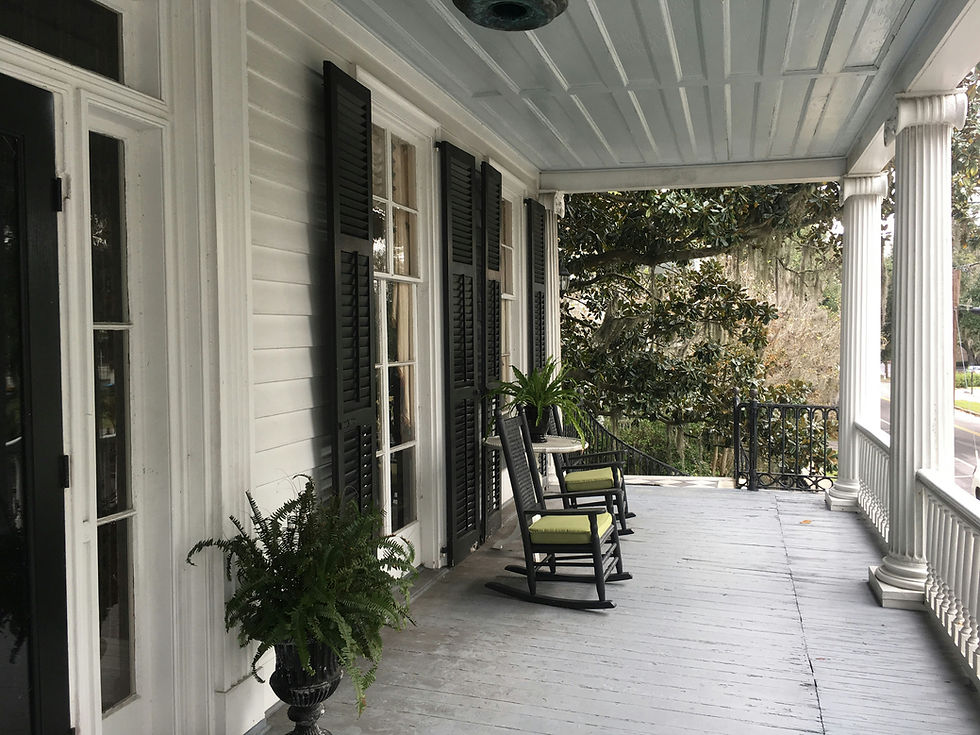
Beaufort is not a beach town — and hosts who market a downtown carriage house with "steps from the sand" set up the mismatch reviews that sink otherwise solid listings. The City of Beaufort is a National Historic Landmark district with approximately 475 contributing antebellum structures, film-location tourism spanning 15+ major productions, and AirROI metrics showing approximately 349 active listings, 41.7% occupancy, $237 ADR, and $29,978 average annual revenue per listing on the June 2025–May 2026 window. Your guest is a history traveler, film pilgrim, or slow-Lowcountry seeker — not primarily a beachgoer. The nearest swimming beaches sit on Hunting Island and Fripp Island, roughly 20 miles out.
That positioning demands storytelling-first marketing: convert the high volume of day-trippers walking Bay Street, touring antebellum homes, and photographing movie sites into overnight bookings. Feeder markets are Southeast drive-in metros plus Savannah (~45 minutes) and Charleston (~1.5 hours) — and Beaufort frequently sells as a quieter, more intimate alternative to crowded Charleston. City STR rules cap rentals at 6% of residentially zoned parcels per neighborhood (The Point excluded by its 2018 ban), require Conditional Use Application with $100 fee, and monitored fire alarm per floor — compliance is part of the brand story.
This is the marketing playbook for independent operators in Beaufort in 2026 — what the demand actually looks like, the compliance facts that belong in your listing materials, the property-manager competitive landscape you are working against, and the concrete moves that separate a licensed historic-district listing earning premium Lowcountry revenue from one that looks identical to the next "charming cottage" on the platform.
The Beaufort Market in Plain Numbers
Beaufort sits on Port Royal Island in the South Carolina Lowcountry, roughly 20 miles from Hunting Island State Park and Fripp Island beaches, with downtown Bay Street, the Henry C. Chambers Waterfront Park, and a National Historic Landmark antebellum district forming the core STR demand geography. On AirROI's market-wide averages (June 2025–May 2026), Beaufort carries approximately 349 active short-term rental listings, 41.7% trailing-12-month occupancy, a $237 ADR, and roughly $29,978 in average annual revenue per listing — with +13.8% revenue growth on the trailing window.
The property mix is overwhelmingly entire-home (94.8% on AirROI), house-heavy (75.4% houses), and mid-format: 3BR is most common at 34.4%. Quality signals run high — 60.7% Superhost share and 4.85 average guest rating on AirROI signal a market where guests filter for credibility, not bargain pricing. Average booking lead time is 48 days with 5.4-night stays — shorter than Hilton Head's 78 days, more weekend-and-festival oriented than island family-week rhythm.
Beaufort's demand curve differs from Hilton Head's July-peaked beach rhythm. AirROI shows peak revenue month in March with strongest demand in June, trough in December — spring and fall peaks driven by mild sightseeing weather and festivals, not pure summer beach demand. The comparison that matters for marketing strategy is Beaufort versus Charleston overflow and Hilton Head beach product, not Beaufort versus itself as a generic Lowcountry rental. Provider methodologies will disagree; name the source every time you quote a figure and use AirROI as the primary spine for market-wide averages.
The 6% neighborhood STR cap means permit availability is finite — a supply constraint Charleston and Hilton Head do not share at the same intensity. For compliant operators inside the cap, that constraint supports rate integrity when you market the history-and-film story correctly. The Point neighborhood remains the most restricted STR zone in the city — essentially no new STRs since 2018. Do not market Point properties as STR opportunities without verifying grandfather status.
Tax, Regulatory, and Listing Compliance
City of Beaufort STRs require Conditional Use Application ($100), $50 safety inspection, business license, and monitored fire alarm per floor. Rentals under 30 days require conditional use approval. The 6% neighborhood cap applies to residentially zoned parcels per neighborhood; The Point is excluded by its 2018 ban. For hosts inside the cap, merchandising "licensed City of Beaufort STR" builds trust with guests and investors increasingly filtering for licensed, capped-inventory legitimacy.
City of Beaufort combined lodging tax approximates 13% (7% state + 3% county + 3% city accommodations fee). Marketplace platforms may remit on your behalf depending on channel; direct bookings require self-remittance. State plainly in host-facing materials that the property operates under current City of Beaufort conditional-use approval and that guests should expect standard occupancy and noise compliance — compliance credibility supports direct-booking trust, not because regulatory trivia drives bookings, but because guests booking a $1,500+ weekend want a licensed operation inside a capped market.
The city has been reviewing whether to shift the cap basis to "rooftops" and raise caps to approximately 8–10% — MUST RE-VERIFY at publish as this may have changed. For prospects evaluating Beaufort STR investment, the cap is the supply story — inventory stays constrained while Charleston and Hilton Head add supply. For operating hosts, the cap is a marketing advantage once you are licensed.
Read deed restrictions and HOA rules before you publish stay rules. Historic-district properties often carry architectural review requirements and parking constraints that platform defaults ignore. Publishing two-night minimums against a seven-night festival-week strategy creates cancellation risk and erodes the downtown-immersion merchandising this market rewards. Make your Airbnb, Vrbo, and direct-booking calendar match the stricter of HOA requirements and your revenue strategy.
The Property Management Competitive Landscape
Beaufort's inventory sits under regional Lowcountry managers, Charleston-extending firms, and independent hosts merchandising historic-district and film-trail identity. Corporate managers win on distribution, owner portfolios, and cross-market Lowcountry reach. Independent hosts win on per-listing attention, Bay Street walk-time specificity, festival-calendar pricing, Parris Island graduation-week merchandising, and the willingness to sell Beaufort's history-and-film story at a granularity corporate property pages rarely match.
Your marketing job is not to out-list regional property managers on inventory count. It is to out-position the commodity "charming Beaufort cottage" that has no story beyond vague Lowcountry charm. The realistic path for an independent operator is narrower and deeper: block-level walk times to Bay Street, named film-location proximity with honest exterior-only language, spring-and-fall peak pricing tiers, direct-booking capture for repeat Charleston-alternative guests, and named-search content on your own site targeting phrases like "historic Beaufort vacation rental" and "Forrest Gump Beaufort lodging.".
Beaufort frequently sells as a quieter, more intimate alternative to crowded Charleston (~1.5 hours north). Win the guest who wants antebellum charm with less crowding and walkable Bay Street dining, not the guest who wants plantation beach weeks and RBC Heritage on Hilton Head. Military-family travel tied to MCRD Parris Island (minutes away in Port Royal) provides year-round demand streams most history towns lack — merchandise graduation-week proximity without overpromising beach access.
Who Books Beaufort and Why
The Beaufort guest is overwhelmingly a Southeast drive-market history traveler, film pilgrim, or slow-Lowcountry seeker from feeder metros plus Savannah (~45 minutes) and Charleston (~1.5 hours) overflow. Peak demand runs spring (March–May) and fall (September–November) for history tourism — not Hilton Head's July beach apex. The booking lead window that matters is 48 days average on AirROI, with festival weekends and film-festival weeks driving compressed shoulder demand.
Listings optimized with spring-and-fall peak tiers index for March revenue and October Shrimp Festival weekends; listings still running generic "charming cottage" copy in February fight for scraps in a quality-conscious market averaging 4.85 guest ratings. Price spring and fall at premium tiers; manage humid summer as a softer stretch with AC, pool, and family-value positioning rather than copying island July rates.
Military-family travel tied to MCRD Parris Island provides year-round demand streams. Merchandise graduation-week proximity without overpromising — many graduation families book Port Royal for lower ADR, but Beaufort downtown listings command premium for restaurant walkability and festival access. The Beaufort International Film Festival (February 16–21, 2027) and spring garden season convert shoulder months into premium weekends.
Beach-expecting guests are the mismatch risk. Build an FAQ addressing "is Beaufort near the beach," "what movies were filmed in Beaufort," and "best time to visit Beaufort" — confusion points that generate one-star reviews when guests arrive expecting Coligny sand. Market Hunting Island and Fripp Island as honest ~20-minute day trips, not implied doorstep beach access.
Merchandise Bay Street, Film Tourism, and the Day-Tripper-to-Overnight Play
Generic Beaufort listings fail because they say "charming cottage" without naming the experiential hooks guests search. The winning copy leads with walkability — Bay Street dining and galleries, Henry C. Chambers Waterfront Park festival hub, Tidalholm (the 1853 mansion from *The Big Chill* and *The Great Santini*), the Lewis Reeves Sams House (*Prince of Tides*), and the broader Forrest Gump / Pat Conroy film-and-literary trail. Guests searching "historic Beaufort vacation rental," "Forrest Gump Beaufort," and "walk to Bay Street Airbnb" filter for intent; your title should answer with block-level walk times and historic-district identity.
Package the day-tripper into an overnight with sunset-on-the-water copy, golf-cart-tour pickup mentions, and festival-week availability surfaced in titles. "Beaufort Historic District | Walk to Bay Street | Film Locations | Sleeps 6" outperforms "Cozy Beaufort Cottage" because it pre-qualifies the guest who wants downtown immersion, not a suburban house 15 minutes from the district. Strong patterns include "Beaufort SC | Historic District | Walk to Bay Street | Film Trail | Sleeps 4" and "Downtown Beaufort | Antebellum Cottage | Water Festival | Parris Island 15 Min | Sleeps 6." Weak patterns like "Charming Beaufort Cottage" or "Cozy Lowcountry Retreat" contain no filterable information and blend into generic inventory.
Film-location proximity is a copy asset, not a gimmick: state "5-minute walk to Tidalholm exterior (private residence — view from street)" rather than implying access to private property. Reference exteriors only — do not promise access to private homes. The film-and-literary trail converts day-trippers who photographed movie sites into multi-night guests when you merchandise what they cannot get on a day trip: Bay Street dinner walks, waterfront sunset from the porch, and festival-week availability.
Merchandise what guests cannot get on a day trip — walk-to-Bay-Street convenience, festival weekend packages, sunset marsh views, and multi-night minimums during film festival and spring garden season. Confusion points that generate mismatch bookings from beach-expecting guests are preventable with honest copy architecture upfront. The film-and-literary trail converts day-trippers who photographed movie sites into multi-night guests when you merchandise what they cannot get on a day trip: Bay Street dinner walks, waterfront sunset from the porch, and festival-week availability.
Seasonal Calendar, Festivals, and Rate Architecture
Beaufort's demand curve differs from Hilton Head's July-peaked beach rhythm. AirROI shows peak revenue month in March with strongest demand in June, trough in December — spring and fall peaks driven by mild sightseeing weather and festivals, not pure summer beach demand. The Beaufort Water Festival (July 17–26, 2026; verify 2027 dates at publish) lifts mid-summer downtown demand for ten days.
The Beaufort Shrimp Festival (October 1–5, 2027) anchors fall pricing. Penn Center Heritage Days on nearby St. Helena Island (November) layers heritage-tourism overflow. The Beaufort International Film Festival (February 16–21, 2027) converts the deepest winter shoulder into a premium event week. The Beaufort International Film Festival (February 16–21, 2027) and spring garden season convert shoulder months into premium weekends.
Build rate calendars around named dates — not generic seasonal discounts. Raise minimum nights for Film Festival week, Water Festival peak days, and Shrimp Festival weekend. Price spring (March–May) and fall (September–November) at premium tiers; manage humid summer as a softer stretch with AC, pool, and family-value positioning rather than copying island July rates. Price spring and fall at premium tiers; manage humid summer as a softer stretch with AC, pool, and family-value positioning rather than copying island July rates.
City of Beaufort combined lodging tax approximates 13% (7% state + 3% county + 3% city accommodations fee). Display conditional-use compliance and neighborhood cap status — guests and investors increasingly filter for licensed, capped-inventory legitimacy. For hosts inside the cap, merchandising "licensed City of Beaufort STR" builds trust; for prospects, the cap is the supply story supporting rate integrity.
Photography, Copy Architecture, and Historic-District Credibility
The default mistake in Beaufort marketing is photographing interiors without the antebellum streetscape guests pay for. Lead with live-oak canopy and porch columns at golden hour, Bay Street walkability for downtown properties, marsh-and-waterfront sunset shots, and interior staging that respects historic character — not generic beach-house staging. Guests choosing Beaufort over Charleston or Hilton Head are choosing antebellum immersion and film-trail identity, not sand at the doorstep.
Film-location proximity is a copy asset, not a gimmick: state "5-minute walk to Tidalholm exterior (private residence — view from street)" rather than implying access to private property. For waterfront and marsh properties, lead with sunset-on-the-water frames that sell the overnight stay day-trippers cannot capture. For downtown carriage houses, lead with porch columns, live-oak shade, and a Bay Street walk-time graphic.
Title architecture functions as a search filter. Strong patterns include "Beaufort SC | Historic District | Walk to Bay Street | Film Trail | Sleeps 4" and "Downtown Beaufort | Antebellum Cottage | Water Festival | Parris Island 15 Min | Sleeps 6." Weak patterns like "Charming Beaufort Cottage" or "Cozy Lowcountry Retreat" contain no filterable information and blend into generic inventory.
Build an FAQ addressing "is Beaufort near the beach," "what movies were filmed in Beaufort," and "best time to visit Beaufort" — confusion points that generate mismatch bookings from beach-expecting guests. Mirror title phrases on your direct site and own named-market search corporate managers do not pursue. Build an FAQ addressing "is Beaufort near the beach," "what movies were filmed in Beaufort," and "best time to visit Beaufort" — confusion points that generate one-star reviews when guests arrive expecting Coligny sand.
Seven Marketing Moves That Separate a Beaufort Listing
Lead with photography that sells the history-and-film identity — live-oak canopy and porch columns at golden hour, Bay Street walkability, marsh sunset from the porch, and interior staging that respects antebellum character — not generic wide-angle living rooms that could be any Lowcountry subdivision. Your first three frames should make the downtown-immersion choice obvious before a guest reads a word of description copy.
Build anchor density in the listing description and welcome book: name Bay Street, Henry C. Chambers Waterfront Park, Tidalholm exterior, Lewis Reeves Sams House, Beaufort International Film Festival (February 16–21, 2027), Water Festival (July 17–26, 2026), Shrimp Festival (October 1–5, 2027), and Hunting Island day-trip distance — with walk times and honest drive times, not vague "near attractions" language. Merchandise Parris Island graduation-week proximity for military families without overpromising beach access — "Parris Island 15 Min | Walk to Bay Street | Sleeps 6" filters for graduation-week intent where vague "near military base" language attracts the wrong guest profile.
Rebuild a spring-and-fall peak rate tier every January — update March through May and September through November availability, refresh shoulder-season photography, and signal to history travelers that the property is actively operated year-round, not closed after Labor Day. Capture email with consent at check-in, offer returning guests first access to Film Festival week and Shrimp Festival weekends, and run a clean weekly direct calendar — repeat Charleston-alternative guests represent lifetime value that exceeds almost any paid-acquisition channel you could buy.
Own named-market search on your direct site: "historic Beaufort vacation rental," "Forrest Gump Beaufort lodging," "walk to Bay Street Beaufort Airbnb," and "Beaufort Film Festival rental" carry low volume, high commercial intent, and thin competitive content. Display "licensed City of Beaufort STR" and conditional-use compliance in listing copy and direct-booking pages — inside a 6% capped market, legitimacy is a conversion asset independent hosts can build organic visibility around without outspending regional managers on platform reach.
How Beaufort Differs From Hilton Head, Bluffton, and Port Royal
Beaufort sells antebellum history, Bay Street walkability, and film-and-literary tourism — not plantation golf, not Old Town Bluffton square footage, not Port Royal's lower-ADR graduation-week convenience. Hilton Head commands higher ADR with July-peaked beach rhythm and RBC Heritage on-island compression; Bluffton sells mainland island-overflow value 30 minutes north; Port Royal sits adjacent with MCRD Parris Island proximity at lower downtown premiums. A guest who wants Sea Pines and Coligny sand should book the island; a guest who wants Tidalholm and Bay Street dinner walks should book Beaufort.
Position positively: this is the Lowcountry market where a 6% neighborhood cap constrains supply while Charleston and Hilton Head add inventory — supporting rate integrity for compliant operators who market the history-and-film story correctly. Selling Beaufort as a beach town or as discounted Charleston without naming the film trail and festival calendar confuses the guest who searched "historic Beaufort vacation rental" with specific intent.
Front-load listing description copy with filterable facts — historic-district identity, sleeps count, Bay Street walk time, named film-location proximity, Parris Island drive time, and licensed STR status — and mirror those phrases on your direct site and Google Vacation Rentals feed if you run one. Consistency across surfaces builds the topical signal platform search and AI citation reward.
Keep going on Crest & Cove: Lowcountry against AirROI pins · Port Royal against AirROI $25,885 · the Crest & Cove intro · local SEO keywords that actually book · the five elements of a converting hero · how to compare STR marketing agencies · Asheville paddling spots worth the drive · Beaufort County clerks you can prove.
Frequently Asked Questions
Is Beaufort a beach STR market?
No — unless you state honest drive times to Hunting Island (~20 min) and Fripp Island. Beaufort wins on history, film tourism, festivals, and downtown walkability. Market beaches as day trips. Chambers Waterfront Park, Tidalholm exterior, Lewis Reeves Sams House, Beaufort International Film Festival (February 16–21, 2027), Water Festival (July 17–26, 2026), Shrimp Festival (October 1–5, 2027), and Hunting Island day-trip distance — with walk times and honest drive times, not vague "near attractions" language.
What is Beaufort STR revenue potential?
AirROI shows approximately $29,978 average annual revenue, $237 ADR, 44.2% occupancy, and +13.8% revenue growth. On AirROI's market-wide averages (June 2025–May 2026), Beaufort carries approximately 349 active short-term rental listings, 41.7% trailing-12-month occupancy, a $237 ADR, and roughly $29,978 in average annual revenue per listing — with +13.8% revenue growth on the trailing window.
What film locations should I reference?
Tidalholm (*The Big Chill*, *The Great Santini*), Lewis Reeves Sams House (*Prince of Tides*), and the broader Forrest Gump / Pat Conroy trail. Reference exteriors only — do not promise access to private homes. Chambers Waterfront Park festival hub, Tidalholm (the 1853 mansion from *The Big Chill* and *The Great Santini*), the Lewis Reeves Sams House (*Prince of Tides*), and the broader Forrest Gump / Pat Conroy film-and-literary trail.
What are City of Beaufort STR rules?
Rentals under 30 days require conditional use approval, $100 application fee, $50 safety inspection, business license, and monitored fire alarm per floor. Capped at 6% of residential parcels per neighborhood; The Point excluded. City STR rules cap rentals at 6% of residentially zoned parcels per neighborhood (The Point excluded by its 2018 ban), require Conditional Use Application with $100 fee, and monitored fire alarm per floor — compliance is part of the brand story.
When is peak season for Beaufort rentals?
Spring (March–May) and fall (September–November) for history tourism. Water Festival (July) and Shrimp Festival (October) spike event weeks. Summer is softer than Hilton Head for beach demand. Peak demand runs spring (March–May) and fall (September–November) for history tourism — not Hilton Head's July beach apex. Price spring (March–May) and fall (September–November) at premium tiers; manage humid summer as a softer stretch with AC, pool, and family-value positioning rather than copying island July rates.
How do I convert day-trippers to overnight guests?
Lead with walk-to-Bay-Street convenience, festival weekend packages, sunset marsh views, and multi-night minimums during film festival and spring garden season. Merchandise what guests cannot get on a day trip. Merchandise what guests cannot get on a day trip — walk-to-Bay-Street convenience, festival weekend packages, sunset marsh views, and multi-night minimums during film festival and spring garden season.
Is Beaufort a good alternative to Charleston?
Yes for guests wanting antebellum charm with less crowding. Position as "quieter Charleston alternative" with honest drive times — Charleston is ~1.5 hours north. The realistic path for an independent operator is narrower and deeper: block-level walk times to Bay Street, named film-location proximity with honest exterior-only language, spring-and-fall peak pricing tiers, direct-booking capture for repeat Charleston-alternative guests, and named-search content on your own site targeting phrases like "historic Beaufort vacation rental" and "Forrest Gump Beaufort lodging.".
What events drive Beaufort demand?
Beaufort International Film Festival (February), Water Festival (July), Shrimp Festival (October), and Penn Center Heritage Days (November, nearby St. Build rate calendars around named dates. The Beaufort Water Festival (July 17–26, 2026; verify 2027 dates at publish) lifts mid-summer downtown demand for ten days. Build rate calendars around named dates — not generic seasonal discounts.
Who Books Beaufort and Why?
Beaufort is not a beach town — and hosts who market a downtown carriage house with "steps from the sand" set up the mismatch reviews that sink otherwise solid listings. Build an FAQ addressing "is Beaufort near the beach," "what movies were filmed in Beaufort," and "best time to visit Beaufort" — confusion points that generate one-star reviews when guests arrive expecting Coligny sand.
What should I photograph first?
The City of Beaufort is a National Historic Landmark district with approximately 475 contributing antebellum structures, film-location tourism spanning 15+ major productions, and AirROI metrics showing approximately 349 active listings, 41.7% occupancy, $237 ADR, and $29,978 average annual revenue per listing on the June 2025–May 2026 window. On AirROI's market-wide averages (June 2025–May 2026), Beaufort carries approximately 349 active short-term rental listings, 41.7% trailing-12-month occupancy, a $237 ADR, and roughly $29,978 in average annual revenue per listing — with +13.8% revenue growth on the trailing window.
How Beaufort Differs From Hilton Head, Bluffton, and Port Royal?
Beaufort is not a beach town — and hosts who market a downtown carriage house with "steps from the sand" set up the mismatch reviews that sink otherwise solid listings. Hilton Head commands higher ADR with July-peaked beach rhythm and RBC Heritage on-island compression; Bluffton sells mainland island-overflow value 30 minutes north; Port Royal sits adjacent with MCRD Parris Island proximity at lower downtown premiums.
Related Reading
Keep reading on same-cluster Crest & Cove pages that stay on labeled local lines without costume-corridor copy.
Is an STR Marketing Agency Worth It for Hilton Head Beaufort Hosts
When to Book a Beaufort SC Vacation Rental a STR Seasonality Hosts
Short Term Rental Rules in Beaufort County SC a Host Guide Short-Term
How to Choose a Vacation Rental Photographer in In Hilton Head
DIY vs. Hire in Many, LA: Why Independent Hosts Still Run Most Listings
DIY or Hire in Depoe Bay: What the Numbers Say for STR hosts
DIY vs Hire in Seattle: Independents Still Write Most Listings
Financing a Springfield, MA Rental Without a Neighbor City Year
Financing a Grove, OK Rental: What a DSCR Underwriter Actually Wants
What It Actually Costs to Start a Grove OK STR: The One Published Fee
Work with Crest & Cove Creative
Write this town's year. Do not file another market's number as this stay.
Reach out at crestcove.co or (256) 998-7502.


Comments