
How to Market a Short-Term Rental in Durango Selling Heritage Rail

Updated: Aug 28
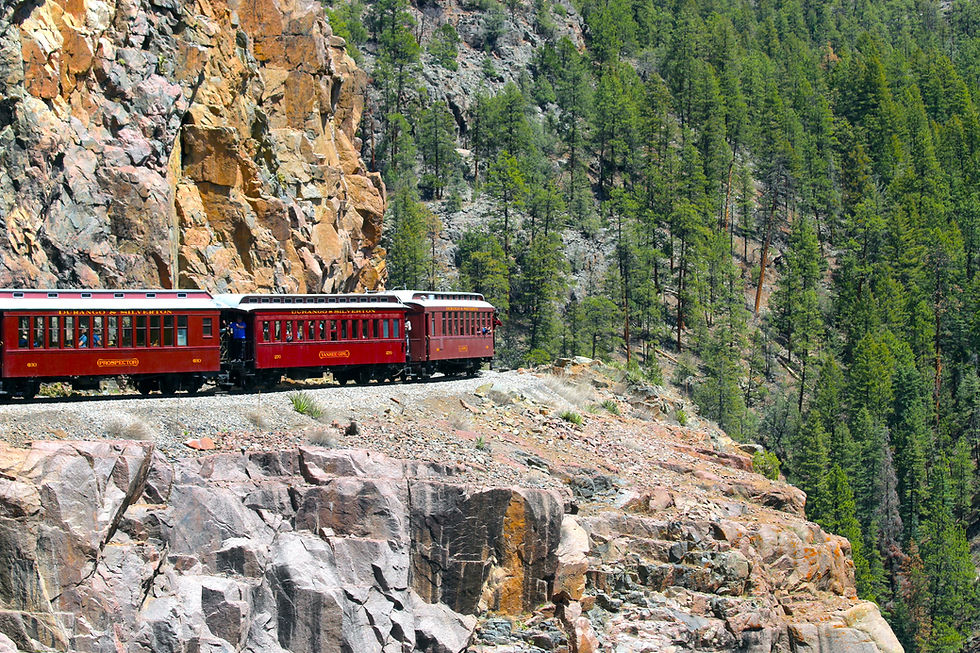
Most Durango short-term rental listings read like a template built for Breckenridge and lightly reskinned. "Steps from downtown." "Mountain views." "Close to skiing." That copy could describe a hundred Colorado towns, and it wastes the one thing Durango has that almost nowhere else does: a working, National Historic Landmark steam railroad that hauls real passengers 45 miles into the San Juan Mountains every summer, plus a historic downtown built by that same railroad in 1880 that still looks the part.
Durango owners tend to fall into one of two camps. Either they ignore the Durango & Silverton Narrow Gauge Railroad entirely and market the property as a generic mountain-town base, or they mention it once in a bullet point — "5 minutes from the train depot" — and move on to photos of the living room. Both approaches leave real search volume and real booking intent on the table, because "Durango Silverton railroad rental marketing" is exactly the kind of long-tail, high-intent phrase that a generic listing will never rank for or convert against.
This post breaks down how to build listing copy, photography direction, and seasonal campaigns around Durango's actual differentiators — the railroad, the walkable historic core, and a genuine four-season outdoor calendar — instead of competing on the same "cozy mountain retreat" language everyone else is using. Owners who build their listing around "walk to the train, then wander historic Main Avenue" are speaking directly to that guest's actual itinerary — not a generic "mountain getaway" pitch that could be selling Estes Park.
Why Durango's Rail Heritage Is an Underused Marketing Asset
The Durango & Silverton Narrow Gauge Railroad isn't a theme-park attraction dressed up to look old — it's the same coal-fired, steam-powered, 3-foot narrow-gauge line that the Denver & Rio Grande Railroad built to move silver and gold ore out of the San Juan Mountains, with continuous operation on the Durango-to-Silverton route since 1881–1882. The line earned National Historic Landmark status in 1961, and the American Society of Civil Engineers separately designated it a National Historic Civil Engineering Landmark in 1968. That's not marketing copy — that's federal and professional-society recognition of a genuinely rare asset.
Here's the part most owners miss: the railroad is also a search and discovery engine for your property. Guests planning a Durango trip search for the train first and the lodging second. If your listing copy, blog content, or photo captions never mention proximity to the depot, the historic district, or the railroad's own experience offerings — Cascade Canyon Winter Train runs, the seasonal Silverton round-trip, the Polar Express holiday ride — you're invisible to a guest whose entire trip is being planned around that train ticket.
Ridership data backs this up. The railroad has historically moved somewhere in the range of roughly 140,000 to 197,000 passengers a year on the Durango-to-Silverton run, with June through August as the confirmed busiest stretch and fall foliage weekends in September and October selling out well in advance. Every one of those riders needs a place to sleep the night before and after. Owners who build their listing around "walk to the train, then wander historic Main Avenue" are speaking directly to that guest's actual itinerary — not a generic "mountain getaway" pitch that could be selling Estes Park.
What "Leaning Into Rail Heritage" Actually Looks Like
This isn't about slapping a train photo in the gallery. It's a full repositioning of the listing around a "step back in time" narrative:. Splitting these into distinct seasonal pushes — rewritten headlines, refreshed hero photos matched to the season, and separate ad or email creative — consistently outperforms a single "great for all seasons" listing, because it lets you speak to what that specific guest is actually booking around.
Listing title and opening line reference the depot, the historic district, or the railroad by name — not just "downtown Durango," which is generic, but "two blocks from the Durango train depot on Main Avenue," which is specific and searchable.
Photography includes at least one hero-adjacent shot that ties the property to the heritage story: a porch or window with the historic district visible, a short walk-to-depot shot at golden hour, or (if the unit allows it) a framed nod to the railroad's 1880s origin in the interior styling.
House guide and welcome content point guests toward the D&S Roundhouse Museum, the self-guided historic walking tour that starts at the depot, and Main Avenue's surviving Victorian-era storefronts — content most listings never provide, which becomes a review-driving differentiator.
Blog and pre-arrival email content (if you're running direct-booking marketing) target phrases like "Durango historic downtown vacation rental" rather than competing head-on for saturated terms like "Durango vacation rental."
Downtown Walkability vs. Mountain Access: Choosing Your Hero Framing
Every Durango STR owner eventually hits this fork: do you sell the property on walkable, historic downtown access, or on proximity to the mountains and Purgatory Resort? The honest answer is that your property's actual location should decide this for you — but too many owners try to claim both in the headline and end up diluting both.
Downtown Durango is genuinely walkable — Main Avenue, the depot, and the Animas River corridor sit inside a compact historic core that was largely rebuilt in brick and stone after a fire tore through seven blocks of downtown on July 1, 1889, which is what gives Main Avenue the 1880s-to-early-1900s architecture that still defines it today. If your unit is within a few blocks of Main Avenue, that walkability is your headline, full stop. Lead with it: no car needed for dinner, the train, the galleries, or the river trail. That framing wins with the guest who wants a town-based trip with day-trip flexibility, and it's a distinct enough pitch that it doesn't compete with every ski-in/ski-out listing in Colorado.
If your property sits closer to Purgatory Resort — roughly 25 to 27 miles north of downtown, about a 30-to-40-minute drive — trying to also claim "walk to downtown" in your hero photo and headline is misleading and will hurt your reviews. Lead with mountain access instead: ski season proximity to Purgatory, summer trailhead access, and quiet over walkability. The two positioning strategies shouldn't be blended into one mushy "close to everything" pitch. Pick the one your address actually supports, put it in the headline and hero photo, and let secondary bullet points carry the other angle as a bonus, not the lead.
Building Separate Seasonal Campaigns Instead of One Evergreen Listing
Durango is a genuine four-season market, which means a single, static listing description is leaving bookings on the table in at least two seasons. The fix isn't a full rewrite every quarter — it's building two or three seasonal content layers on top of a stable base listing. This post breaks down how to build listing copy, photography direction, and seasonal campaigns around Durango's actual differentiators — the railroad, the walkable historic core, and a genuine four-season outdoor calendar — instead of competing on the same "cozy mountain retreat" language everyone else is using.
Winter: Ski Season and Purgatory Access
Winter campaigns should center on Purgatory Resort drive time, road conditions, and gear logistics — the practical questions a skier actually has before booking. This is also the season to use the Durango & Silverton's own winter offerings as content: the Cascade Canyon Winter Train runs select dates roughly late November through the following spring, and the seasonal Polar Express ride is one of the town's biggest holiday draws. A property marketed purely as "close to Purgatory" misses the guest who's booking a longer winter trip and wants a Polar Express night mixed in with ski days — pair both in your seasonal content and email/SMS campaigns if you're running direct-booking outreach.
Summer and Shoulder Season: Rail, River, and Trail
Summer is when the railroad itself becomes the campaign anchor. The Silverton round-trip runs daily from roughly early May through late October or November, with June through August as the highest-ridership stretch and multiple daily departures. Layer in the Animas River's rafting season — generally April or May into September, with big spring snowmelt water in late May and June giving way to calmer, family-friendly flows in July and August — and San Juan National Forest trail access, including the train-assisted backpacker drop-offs into Chicago Basin that serious hikers specifically search for. Shoulder season (September into October) deserves its own push built around fall foliage train rides, which reliably sell out and reward owners who start that campaign in July or August, not September.
Splitting these into distinct seasonal pushes — rewritten headlines, refreshed hero photos matched to the season, and separate ad or email creative — consistently outperforms a single "great for all seasons" listing, because it lets you speak to what that specific guest is actually booking around. Shoulder season (September into October) deserves its own push built around fall foliage train rides, which reliably sell out and reward owners who start that campaign in July or August, not September.
A Practical Starting Checklist
Confirm which hero framing (downtown walkability or mountain access) your address actually supports, and commit to it in the title and hero photo.
Add at least one heritage-specific detail to your listing description: distance to the depot, a nod to the 1880 town founding, or the historic walking tour.
Build a simple seasonal photo and copy rotation: ski/Purgatory (winter), rail/river/trail (summer), foliage train (fall).
If your unit is inside or near the historic core, verify your zoning and permit status with the City of Durango before marketing downtown proximity — vacation rentals require a Limited Use Permit, are restricted to specific zones, and the Established Neighborhood zones are capped at 22 permits in EN-1 and 17 in EN-2 (both typically full, with a waitlist for new applicants), plus density limits on how many can operate on the same street segment. That cap applies only inside Durango city limits — unincorporated La Plata County runs a separate set of rules with no matching permit ceiling, so confirm which jurisdiction your address actually falls under.
Point guests toward the D&S Roundhouse Museum and Main Avenue walking tour in pre-arrival content — free, high-value local knowledge most competing listings skip.
Keep going on Crest & Cove: the Crest & Cove intro · local SEO keywords that actually book · the five elements of a converting hero · how to compare STR marketing agencies · Asheville paddling spots worth the drive · Durango against AirROI $33,759 · Colorado mountain towns against AirROI pins · Destin against AirROI, not leftover year.
Related Reading
Keep reading in the Durango market spine and nearby towns in the same region: same-cluster pages hosts can use without costume-corridor copy.
Pagosa Springs STR Market Report: Hot Springs, Wolf Creek Powder, and
How to Market a Short-Term Rental in Pagosa Springs Selling Hot
Is Pagosa Springs a Good Short Term Rental Investment in 2026
Is Ouray Silverton a Good Short Term Rental Investment in 2026
Is an STR Marketing Agency Worth It for Pagosa Springs Hosts
Is an STR Marketing Agency Worth It for Ouray Silverton Hosts
DIY vs Hire Marketing for Should Pagosa Springs Hosts Manage Their
DIY vs Hire Marketing for Should Ouray Silverton Hosts Manage Their
DIY vs Hire Marketing for Should Durango Hosts Manage Their Own STR
Frequently Asked Questions
Is the Durango & Silverton Narrow Gauge Railroad running year-round, or just in summer?
It runs in some form nearly year-round, but the schedule changes significantly by season. The full Durango-to-Silverton round trip runs roughly May through October or November with daily departures, June through August is the busiest stretch, and winter shifts to the shorter Cascade Canyon Winter Train along with seasonal events like the Polar Express. Always confirm current dates on the railroad's own site before building seasonal content around a specific window, since exact start and end dates shift year to year.
How far is Purgatory Resort from downtown Durango, and does that matter for my listing?
Purgatory Resort sits roughly 25 to 27 miles north of downtown Durango, about a 30-to-40-minute drive depending on conditions. It matters because it determines your honest hero framing: properties near downtown should lead with walkability, while properties closer to Purgatory should lead with mountain access and drive time. Trying to claim both dilutes your positioning and can mislead guests about what their stay will actually look like.
Should I mention the train in my listing even if my property isn't downtown?
Yes, but frame it accurately. If you're not walking distance to the depot, don't imply that you are — instead, mention drive time to the depot and note that the railroad is an easy day trip from your location. The goal is relevance to a guest who's planning their trip around the train, not false proximity claims that generate bad reviews.
What's the best time of year to push a "historic downtown" angle versus a "rafting and hiking" angle?
Historic downtown and rail-heritage framing works essentially year-round since the depot, Main Avenue, and the Roundhouse Museum are open regardless of season. Rafting and hiking content is strongest from roughly May through September, tracking the Animas River's rafting season and San Juan National Forest trail conditions. Run heritage content as your evergreen base layer and rotate rafting/hiking, ski/Purgatory, and fall-foliage content on top of it by season.
Do I need any special permit to operate a short-term rental near downtown Durango?
The City of Durango requires a Limited Use Permit for vacation rentals, restricts them to specific zones (including the Central Business Zone, certain Mixed-Use zones, and Established Neighborhoods 1 and 2), caps the Established Neighborhood zones at 22 permits in EN-1 and 17 in EN-2 — both typically at capacity with a waitlist — and limits how many vacation rentals can operate on the same street segment. That permit cap applies only inside Durango city limits; unincorporated La Plata County has its own separate rules with no matching ceiling. This directly affects whether you can legally market downtown proximity, so confirm your property's jurisdiction, zoning, and permit status with the.
How much does ridership on the train actually affect my booking demand?
Meaningfully, especially in summer and during fall foliage weekends. The railroad has historically carried somewhere in the range of roughly 140,000 to 197,000 passengers annually on the Durango-to-Silverton run, concentrated heavily in June through August with fall weekends also selling out well in advance. Those travelers need lodging before and after their ride, which makes rail-heritage-adjacent marketing a direct line to a guest who has already committed to visiting Durango — they just haven't picked where to stay yet.
Why Durango's Rail Heritage Is an Underused Marketing Asset?
Both approaches leave real search volume and real booking intent on the table, because "Durango Silverton railroad rental marketing" is exactly the kind of long-tail, high-intent phrase that a generic listing will never rank for or convert against. Keep going on Crest & Cove: the Crest & Cove intro · local SEO keywords that actually book · the five elements of a converting hero · how to compare STR marketing agencies · Asheville paddling spots worth the drive · Durango against AirROI $33,759 · Colorado mountain towns against AirROI pins · Destin against AirROI, not leftover year.
What "Leaning Into Rail Heritage" Actually Looks Like?
Most Durango short-term rental listings read like a template built for Breckenridge and lightly reskinned. "Steps from downtown." "Mountain views." "Close to skiing." That copy could describe a hundred Colorado towns, and it wastes the one thing Durango has that almost nowhere else does: a working, National Historic Landmark steam railroad that hauls real passengers 45 miles into the San Juan Mountains every summer, plus a historic downtown built by that same railroad in 1880 that still looks the part.
Work with Crest & Cove Creative
Write this town's year. Do not file another market's number as this stay.
Reach out at crestcove.co or (256) 998-7502.


Comments