
How to Market a Short-Term Rental in Torrey, UT: Selling Dark Skies, Capitol Reef Access, and Scenic Byway 12
- Thomas Garner

- 2 days ago
- 11 min read
Updated: 1 day ago
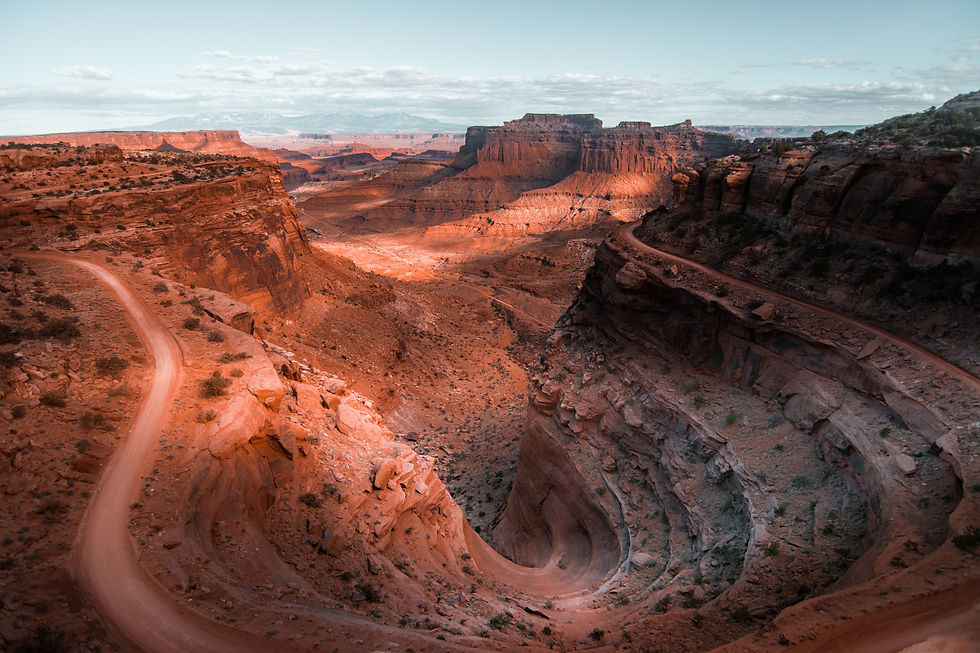
Torrey, Utah has a population you could fit in a single Moab hotel wing, and that is exactly the point. While Moab absorbs river-rafting crowds and Springdale funnels tour buses toward Zion's shuttle line, Torrey sits at the western gate of Capitol Reef National Park with almost none of that congestion — and three assets no other Utah gateway town can claim together: the state's first International Dark Sky Community designation, the western terminus of an All-American Road, and walk-in access to some of the best beginner-to-intermediate canyoneering terrain in the Colorado Plateau.
If your listing description still leads with "close to Capitol Reef" and a photo of a red rock formation at noon, you're competing on the same generic terms as every other cabin in Wayne County. Torrey's differentiators are specific, verifiable, and — most importantly — searchable by name. Guests planning a Utah national park loop are typing "dark sky community," "Scenic Byway 12," and "canyoneering near Capitol Reef" into Google and Instagram long before they ever see your listing on Airbnb. This post covers how to build content and amenities around each of those three hooks, and how to sequence your marketing calendar around Torrey's real peak season.
Why Torrey Is a Different Market Than Moab or Springdale
Moab markets adrenaline: Jeep trails, mountain biking, the Colorado River. Springdale markets convenience: walk to the Zion shuttle, wake up under the Watchman. Torrey markets something neither can offer at the same intensity — stillness. Capitol Reef set a new all-time visitation record in 2024 at roughly 1.4 million visits, according to National Park Service data reported by KUER, capping several years of steady growth for the park. It remains dramatically less crowded per-acre than Zion or Arches. There's no shuttle system, no timed-entry pilot, and no wall-to-wall lodging strip. That gap between "increasingly popular" and "still uncrowded" is your positioning, and it won't last as a secret advantage forever — which is the argument for building content equity now rather than in three years when every operator in Wayne County has caught on.
The practical implication for your marketing: don't write copy that competes with Moab's adventure-sports audience or Springdale's convenience audience. Write for the traveler who has already done one of those parks and specifically wants the quieter, darker, less-programmed alternative. That traveler searches differently, books further in advance for shoulder-season stargazing events, and is far more receptive to editorial content — blog posts, long-form Instagram captions, YouTube walkthroughs — than to a plain listing photo set.
Building Content Around Dark Sky Tourism
Torrey earned Utah's first International Dark Sky Community designation from the International Dark-Sky Association (now rebranded DarkSky International) in January 2018, following a multi-year effort by the town council and the Torrey-based Entrada Institute to pass a shielded-lighting ordinance and replace high-pressure sodium streetlights with dark-sky-friendly LEDs. Capitol Reef itself had already been designated an International Dark Sky Park back in 2015. That combination — a certified dark-sky town sitting next to a certified dark-sky park — is rare enough that DarkSky International's own materials cite Torrey as one of only a small number of communities worldwide to hold the community-level certification. That's a specific, citable credential, not a marketing adjective, and it deserves to be treated as one in your content.
Practically, this means your photography and copy need to do more than mention "stargazing." Build a content set around it:
Photograph the amenity, not just the view. If your property has a fire pit, an unobstructed sky view, or a telescope, shoot it at blue hour and again at full dark with a long exposure. A single well-exposed Milky Way shot over your property's fire pit will outperform a dozen daytime exterior photos for the dark-sky-motivated traveler, because it proves the amenity exists rather than just claiming proximity to it.
Write a dedicated blog post or listing section on stargazing logistics. New moon dates, the best on-property viewing spot, whether you provide a telescope or star chart, and a mention of the annual Heritage Starfest — an established dark-sky celebration that the Entrada Institute and Capitol Reef National Park have co-hosted in Wayne County since 2010, predating and now continuing alongside Torrey's 2018 designation. Specificity here (dates, equipment, exact sky-facing direction) converts better than "amazing stargazing" as a bullet point.
Use the DarkSky designation as an SEO anchor, not just a brand flourish. "Torrey dark sky rental" and "International Dark Sky Community Utah lodging" are underused search terms compared to generic "Capitol Reef cabin" queries. A blog post or FAQ page built around those terms captures search intent your competitors in Moab and Springdale structurally cannot compete for — they don't have the designation.
Positioning Against Capitol Reef's Fruita Historic District and Canyoneering Terrain
Capitol Reef's Fruita Historic District is a working orchard landscape first planted by Mormon pioneer settlers starting around 1880 along the Fremont River, later acquired by the National Park Service in 1955, and now maintained using the same heritage flood-irrigation and grafting techniques as the original orchardists. The roughly 1,900 heirloom fruit trees — cherry, apricot, peach, pear, apple, and more — are open to public u-pick harvesting in season, with self-pay stations at the orchard gates. This is a genuinely differentiated content angle: no other Utah gateway market has a National Register-listed working orchard inside the park boundary. A June blog post or Instagram reel timed to cherry season, or a September post timed to apple harvest, gives your property a seasonal hook that Moab's slickrock trails and Springdale's canyon narrows simply don't offer.
On the adventure side, Torrey and nearby Hanksville are home to several established canyoneering and guiding operations — Capitol Reef Adventure Company, Sleeping Rainbow Adventures, and Get In the Wild Adventures among them — offering guided slot-canyon descents ranging from beginner-friendly to technical, typically launching from meeting points in downtown Torrey. Position your listing as basecamp for that experience specifically: a gear-drying area, a mudroom or outdoor shower for post-canyon guests, and a listing description that names the terrain (slot canyons, technical rappels, guided vs. self-guided routes) rather than a vague "hiking nearby" line. If you can, build a short partnership post or cross-link with a local guide outfit — even an informal "our favorite local guides" blog mention — since canyoneering travelers research guides and lodging together, often in the same search session.
Using Scenic Byway 12 as a Road-Trip Hook
Scenic Byway 12 is one of only a small number of roads in the country designated an All-American Road by the Federal Highway Administration, the highest tier in the National Scenic Byway program. The byway runs roughly 124 miles between US-89 near Panguitch and SR-24 near Torrey, connecting Bryce Canyon and Capitol Reef national parks through Escalante, Boulder, and Grand Staircase-Escalante terrain along the way. Torrey sits at its eastern end. That means every traveler doing the classic Bryce-to-Capitol-Reef loop — a very common Utah itinerary — passes directly through or near your market, whether or not they were originally planning to stay there.
This is a road-trip content opportunity, not just a location fact. Write posts and social content aimed at travelers planning that specific route: "What to see driving Scenic Byway 12 from Bryce to Capitol Reef," with your property positioned as the logical overnight stop at the Torrey end rather than pushing through to Moab the same day. Include drive-time specifics (roughly three hours point-to-point without stops, per byway guides), named viewpoints along the route, and a clear call-out that Torrey is the byway's Capitol Reef-side terminus. Travelers planning multi-day loops book lodging around drive fatigue and scenic stops; content that maps directly onto their planning process converts better than generic "near Capitol Reef" copy.
Planning Your Content Calendar Around Peak Season
The National Park Service names March through June and September through October as Capitol Reef's most popular travel months, citing favorable hiking and backpacking conditions and lower odds of snow or summer monsoon rain. Independent visitation data backs that up in an important way for content planning: May and September are consistently the single busiest months, and attendance actually eases somewhat during the hottest stretch of July and August rather than peaking there. For Torrey operators, that translates to a practical May–September content and booking window — not a single summer peak — with two sub-peaks worth planning around directly: late spring wildflower and early-orchard-bloom content, and a fall shoulder push (September–October) built around apple harvest at Fruita and cooler canyoneering conditions, which also happens to be prime new-moon stargazing weather.
Front-load your dark-sky and stargazing content in the deep-winter months when search volume for "best places to see the Milky Way" spikes but before spring booking windows open — new moon dates and cold, dry air actually produce some of the best viewing conditions of the year, giving you a legitimate off-season content angle that also drives shoulder-season bookings. Time canyoneering and Fruita orchard content to early summer, when guided-tour operators ramp up their season and cherries start coming in. And treat Scenic Byway 12 road-trip content as evergreen, refreshing it seasonally, since it captures travelers at the trip-planning stage months before their actual visit.
Work with Crest & Cove Creative
Torrey is a market where a handful of specific, verifiable differentiators — a dark-sky designation, an All-American Road, a national historic orchard district, working canyoneering guides — can do more marketing work than a generic listing ever will, if they're built into real content instead of left as bullet points. Crest & Cove Creative builds direct-booking content systems for independent STR operators in exactly this kind of market: places with a real story that isn't being told well online yet. If you operate in Torrey or anywhere along the Capitol Reef corridor and want a content and listing strategy built around what actually makes your property different, start with a free audit at crestcove.co, email info@crestcove.co, or call (256) 998-7502.
Frequently Asked Questions
Is Torrey, Utah actually a certified Dark Sky Community, or is that just marketing language? It's a real, verifiable certification. Torrey received Utah's first International Dark Sky Community designation from the International Dark-Sky Association (now DarkSky International) in January 2018, after the town passed a shielded-lighting ordinance and converted its streetlights to dark-sky-compliant LEDs. Capitol Reef National Park next door holds a separate Dark Sky Park designation from 2015.
What's the difference between marketing a Torrey property and a Moab or Springdale property? Moab and Springdale market adrenaline and convenience — Jeep trails, mountain biking, walk-to-the-shuttle access to Zion. Torrey's advantage is relative quiet next to a major, increasingly popular national park (Capitol Reef set a visitation record in 2024), plus three specific credentials — the dark-sky designation, the Scenic Byway 12 terminus, and Fruita's historic orchards — that neither of those markets can claim.
Do I need my own telescope to market stargazing as an amenity? No, but you do need to be specific. A fire pit with an unobstructed sky view, a printed star chart, or new-moon date recommendations are all legitimate amenities to photograph and describe. What underperforms is a vague "amazing stargazing" bullet with no supporting detail or photo evidence.
How do I write content around Scenic Byway 12 without it just being generic scenery description? Anchor it to the traveler's actual itinerary. Most Byway 12 travelers are doing a specific Bryce Canyon-to-Capitol Reef loop. Content that names the drive time (roughly three hours point-to-point), specific viewpoints along the route, and positions Torrey as the logical overnight stop at the byway's Capitol Reef end will outperform generic "scenic drive nearby" copy.
When should I schedule canyoneering-related content and photography? Early summer, aligned with when local guide operators (such as Capitol Reef Adventure Company and Sleeping Rainbow Adventures) ramp up their season. If your property has gear-drying space, a mudroom, or an outdoor shower, that's worth photographing and naming specifically, since canyoneering travelers search for lodging and guides in the same planning session.
What's the actual peak season for a Torrey short-term rental, and how does that affect
my content calendar? Capitol Reef's busiest window runs roughly May through September, but it isn't a single summer peak — the NPS names March through June and September through October as its most popular travel months, and May and September are consistently the single busiest months, with attendance actually easing somewhat during the hottest stretch of July and August. Winter is quiet for park visitation but strong for dark-sky content, since clear, dry winter air often produces the year's best stargazing conditions — a legitimate off-season hook most operators skip.
About the Authors
Crest & Cove Creative is a short-term rental marketing agency founded by Thomas Garner and Jacob Mishalanie. We build direct-booking brands, listing optimization systems, and market-specific content strategies for independent STR operators nationwide, including emerging corridors like Torrey, Utah.
Related Reading
Explore more Utah & Northern Arizona short-term rental insights and host guides:
Utah & Northern Arizona's Independent Gateway Towns STR Market Report 2026
How to Market a Short-Term Rental in Kanab, UT: Selling the Basecamp-to-Everything Position
Utah & Arizona's STR Rules in 2026: Kanab, Torrey, Heber Valley, Prescott & Flagstaff
DIY vs. Hire: Should Prescott Hosts Manage Their Own STR Marketing or Bring in Help?
DIY vs. Hire: Should Heber Valley & Midway Hosts Manage Their Own STR Marketing or Bring in Help?
DIY vs. Hire: Should Kanab Hosts Manage Their Own STR Marketing or Bring in Help?
Is a Short-Term Rental Marketing Agency Worth It for Prescott Owners?
Is Heber Valley & Midway a Good Short-Term Rental Investment in 2026?
Is a Short-Term Rental Marketing Agency Worth It for Heber Valley Owners?
Is Torrey & Capitol Reef a Good Short-Term Rental Investment in 2026?
Is a Short-Term Rental Marketing Agency Worth It for Torrey & Capitol Reef Owners?
Is a Short-Term Rental Marketing Agency Worth It for Kanab Owners?
Sources
Town of Torrey Earns Utah's First International Dark Sky Community Designation — DarkSky International, confirms January 2018 designation and Utah "first" status.
Torrey earns Utah's first International Dark Sky community designation — Fox 13, corroborates 2018 date and ordinance/LED conversion details.
Dark Sky Community | Stargazing in Torrey, Utah — Town of Torrey official page.
We have a new name and logo — DarkSky International, confirms 2022–2023 rebrand from "International Dark-Sky Association" to "DarkSky International." Note: brief clarifies designation year (2018) predates the rebrand, so original name is used for historical accuracy alongside the current org name.
All-American Road: Scenic Byway 12 — Visit Utah, confirms All-American Road designation, the Panguitch (US-89)/Torrey (SR-24) endpoints, and a ~123-mile route length (122.863 miles) drivable in about 3 hours point-to-point without stops.
Guide to Scenic Byway 12 — Capitol Reef Country, general route/attractions overview; used for regional context rather than the specific mileage figure (mileage is sourced to Visit Utah above).
Scenic Byway 12 – National Scenic Byway Foundation — corroborates ~123–124-mile length and Panguitch-to-Torrey endpoints.
Capitol Reef National Park Orchards In Fruita — Visit Utah, confirms u-pick orchard program and self-pay stations.
Capitol Reef Orchards (NPS) — National Park Service, confirms ~1,900 trees and that Fruita was settled starting in 1880; continued heritage-technique maintenance.
Fruita, Utah – Wikipedia — corroborates 1955 National Park Service acquisition of the Fruita orchard land.
Canyoneering Trips – Capitol Reef Adventure Company, Sleeping Rainbow Adventures, and Get In The Wild Adventures — confirm active local canyoneering guide operations based in Torrey and Hanksville.
Mighty indeed: Capitol Reef has a record 2024, Zion is now America's No. 2 park — KUER, confirms Capitol Reef's all-time-record 2024 visitation of more than 1.4 million visits (per NPS data; corroborated by the park's Wikipedia infobox figure of 1,422,490).
Visiting During the Busy Season (NPS) — National Park Service, confirms March–June and September–October as the park's most popular travel months; page does not state a specific temperature range.
Heritage StarFest (NPS) and Entrada Institute Heritage Starfest event page — confirm the annual Heritage Starfest is a Capitol Reef NPS/Entrada Institute co-hosted event running since 2010 (16th annual as of the most recent listed event), predating Torrey's 2018 dark-sky designation
Still not independently re-verified for 2026: Exact current-year scheduling (specific 2026 dates) for the Heritage Starfest was not confirmed — verify before citing specific dates in guest-facing content. Fruita orchard tree-count sources vary slightly across the web (roughly 1,900 to 2,700 depending on source); this publish uses the NPS's own figure (nps.gov/places/fruita-orchards.htm, ~1,900 trees) as the authoritative number.


Comments