
Huntsville & North Alabama STR Market Report: Tech-Driven Demand in a Southern Space Economy
- Thomas Garner

- Apr 13
- 26 min read
Updated: Jul 15
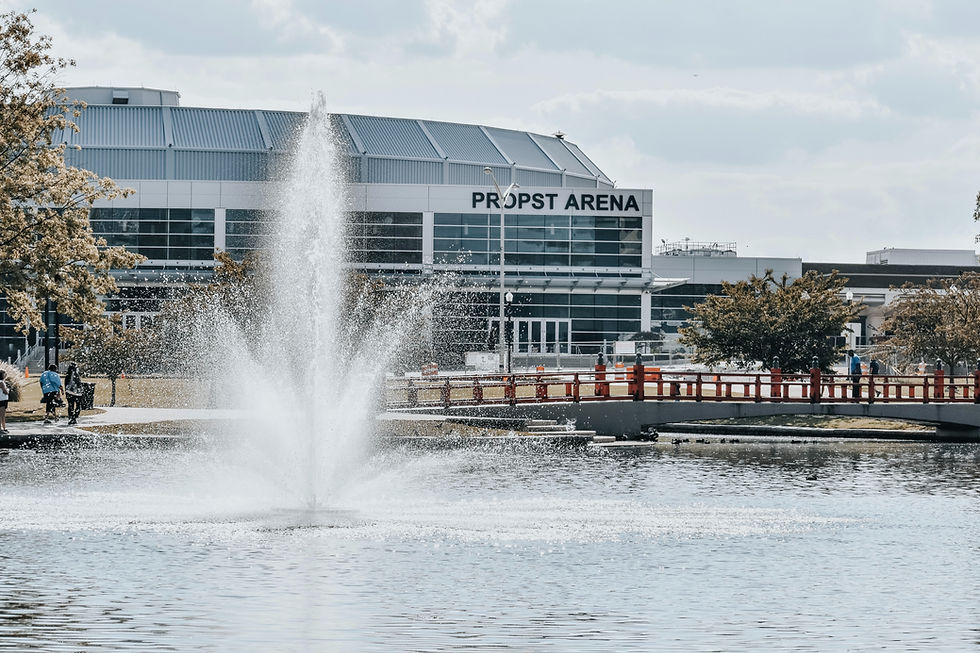
The Market That Doesn't Look Like Anything Else in the Southeast
Every STR market in the Southeast eventually gets described in terms of mountains, cabins, or overflow from somewhere else. Huntsville, Alabama, genuinely doesn't fit any of those frames — and that's the single most important thing to understand about it. Madison County's visitor economy is anchored by a technology and defense base that behaves more like a business travel market than a leisure one, while the surrounding geography quietly layers in Space Camp traffic, an unusually deep youth-sports tournament calendar, and a North Alabama outdoor-recreation stream most regional operators can't even see from where they sit. The 2026 report is about what that combination actually produces in the STR numbers, not what it looks like from a distance.
Huntsville doesn't tell that story. Huntsville tells a story about rocket scientists, defense contractors, extended corporate assignments, and a metro area that's been adding population faster than any city in Alabama for the better part of a decade — not because people discovered a charming mountain town, but because NASA, Redstone Arsenal, Blue Origin, Boeing, Raytheon, and a constellation of defense subcontractors need somewhere to house the engineers, program managers, and technical specialists they keep importing from across the country. The short-term rental market that exists here isn't a tourism market wearing a hospitality hat. It's a corporate-housing market with a tourism bonus, and the hosts who understand that distinction are operating in a completely different financial reality than those posting "Cozy cabin near Huntsville!" on Airbnb and wondering why their calendar has holes.
North Alabama's STR corridor stretches from the Tennessee River towns of Decatur and Athens east through Huntsville's urban tech core, north to the Tennessee state line, east again to Lake Guntersville and Scottsboro, and south into the Lookout Mountain communities of Fort Payne and Mentone. That geography encompasses at least four distinct STR submarkets, each operating under different demand drivers, guest profiles, and revenue patterns. A lakefront fishing cabin on Guntersville doesn't compete with a furnished two-bedroom near Cummings Research Park, and neither competes with a mountaintop retreat in Mentone. But they're all "North Alabama STRs" in the data, which is why the data tells you almost nothing useful unless you know how to disaggregate it.
Here's what the aggregated numbers show: North Alabama's STR market is young,
undersupplied, and dramatically under-marketed. The region has fewer active STR listings per capita than any comparable metro in the Tennessee Valley. Platform dependency is high — the vast majority of hosts rely exclusively on Airbnb, with no independent web presence, no Google Business Profile, and no strategy to capture corporate travel demand that drives the region's economy. Property management companies from Chattanooga and Nashville are moving in, building branded portfolios and professional websites while individual hosts remain invisible to local search. The window for independent operators to establish a market position is open. It won't stay open long.
This report breaks down every submarket in the North Alabama corridor, maps demand drivers against the defense and aerospace employment cycles that make this market unique, builds investment models grounded in real acquisition costs and revenue projections, and explains why the hosts earning premium returns here have more in common with corporate housing operators than with mountain cabin hosts.
Four Distinct Submarkets Inside the Huntsville Metro, and Why Each One Behaves Like a Separate Business
Submarket One: Huntsville and the Rocket City Tech Corridor
Huntsville is the economic engine of North Alabama and the reason this market exists in its current form. The city's population has grown from roughly 180,000 in 2010 to over 220,000 today, with the metro area approaching 500,000 — growth driven almost entirely by federal defense spending and the aerospace industry that clusters around it. Redstone Arsenal, the U.S. Army's primary missile and space command installation, employs over 40,000 military and civilian workers. NASA's Marshall Space Flight Center develops the Space Launch System and manages billions in annual contract spending. Cummings Research Park — the second-largest research park in the United States — houses over 300 companies and 30,000 employees, including operations for Boeing, Raytheon (now RTX), Northrop Grumman, Lockheed Martin, Blue Origin, and dozens of specialized defense subcontractors.
This employment base creates an STR demand profile unlike anything else in the Southeast. The primary guest isn't a tourist. It's a defense contractor on a 30- to 90-day temporary duty assignment, a relocating engineer who needs furnished housing while their family searches for a permanent home, a program manager flying in from Huntsville's defense-company motherships in Arlington, Los Angeles, or St. Louis for weekly meetings, or a technical specialist rotating through a test cycle at Redstone or Marshall. These guests book longer stays, prefer furnished apartments over hotel rooms, expense their lodging through corporate accounts, and care about reliable wifi, workspace, proximity to their job site, and a kitchen far more than they care about hot tubs or mountain views.
The secondary demand layer comes from Space and Rocket Center tourism — the U.S. Space & Rocket Center draws roughly 800,000 to 900,000 visitors annually, including Space Camp participants (families and school groups), museum visitors, and aerospace enthusiasts. This segment is shorter-stay (two to four nights), family-oriented, and price-sensitive relative to corporate travelers. It provides a meaningful leisure base that fills gaps left by corporate bookings, particularly during the summer, when Space Camp operates at peak capacity.
ADR in the Huntsville submarket ranges from $110 to $190 for standard residential properties, with furnished corporate-positioned units in Research Park–adjacent neighborhoods commanding $130 to $200. Extended-stay pricing (28-plus nights) typically discounts to $80 to $120 per night but generates higher total revenue per booking cycle due to zero turnover costs and guaranteed occupancy. A well-positioned two-bedroom near Cummings Research Park that attracts corporate extended stays can achieve 65 to 75 percent occupancy year-round — dramatically higher than the corridor's overall average — because defense contract cycles don't follow leisure-seasonality. Projects staff up and wind down on fiscal-year and contract-milestone timelines, not on summer vacation schedules.
Acquisition costs in Huntsville proper range from $200,000 to $375,000 for two- to three-bedroom properties suitable for STR conversion. The most desirable locations are within a 15-minute drive of Cummings Research Park, Redstone Arsenal's main gates, or the downtown core around Big Spring Park and the Von Braun Center. Newer construction in Madison (Huntsville's fast-growing western suburb) runs $250,000 to $400,000 but captures demand from the Army's Materiel Command and Boeing's expanded campus. Older homes in established neighborhoods like Five Points, Twickenham, and Monte Sano offer character-driven positioning at $175,000 to $325,000 with lower per-square-foot costs.
The competitive landscape is evolving quickly. Regional property management companies from Chattanooga and Nashville have begun building Huntsville portfolios over the past 18 to 24 months, recognizing the same corporate-demand dynamics that make the market attractive to individual investors. These companies bring professional photography, branded websites, and distribution across multiple platforms. Individual hosts relying solely on Airbnb are increasingly disadvantaged in search rankings and corporate-guest discovery. The window for independent operators to build competitive web presence and corporate-channel distribution is measured in months, not years.
Submarket Two: Lake Guntersville and the Tennessee River Corridor
Thirty miles east of Huntsville, the Tennessee River widens into Lake Guntersville — Alabama's largest lake at over 69,000 acres with more than 900 miles of shoreline. This is a water-recreation market driven by competitive bass fishing, family lake weekends, and seasonal boating tourism. The demand pattern here looks nothing like Huntsville's corporate cycle. It looks like a tournament calendar overlaid with summer family travel.
Lake Guntersville hosts dozens of B.A.S.S. and FLW bass fishing tournaments per year, each one booking out every lakefront property within 30 miles for three to five days. Tournament weekends are the market's revenue anchors — occupancy pushes to 85 to 95 percent for properties with dock access, boat ramps, or marina proximity, with ADRs of $150 to $250 depending on property size and waterfront positioning. The challenge is the calendar between tournaments: without proactive marketing to the broader lake-recreation market, many hosts see occupancy drop to 25-35 percent during non-tournament periods, creating a feast-or-famine revenue pattern that makes annual financial planning difficult.
The guest profile during non-tournament periods is predominantly families from Birmingham (90 minutes south), Nashville (two hours north), and Huntsville (30 minutes west) seeking weekend lake getaways. They search "lakefront cabin Alabama," "lake house with dock Guntersville," and "family lake vacation north Alabama." They book two- to four-night stays, typically Friday through Sunday or Thursday through Sunday on holiday weekends. They care about water access, outdoor cooking areas, dock and boat-lift availability, and kid-friendly amenities. They do not care about Mountain Dew–colored accent walls or "rustic charm" — they want a clean, functional lake house with reliable water access and enough beds for their group.
ADR for lake-access properties ranges from $130 to $220 during standard weekends and $150 to $280 during tournament peaks and holiday weekends. Non-waterfront properties in Guntersville and surrounding communities price at $90 to $150 and struggle to justify the STR conversion economics without aggressive marketing to capture spillover demand. The ADR spread between waterfront and non-waterfront is the widest of any submarket in the North Alabama corridor — water access is the single most important amenity driver in this market.
Acquisition costs for lakefront properties with STR-suitable improvements run $275,000 to $550,000, with premium waterfront parcels on the main channel commanding $400,000 to $650,000. Non-waterfront homes in Guntersville proper or nearby Grant and Scottsboro trade for $150,000 to $275,000 but require stronger marketing to generate competitive STR returns. The yield-on-cost math on lakefront properties — a $350,000 acquisition generating $42,000 to $58,000 in annual gross at 55 to 65 percent occupancy — produces yields of 7.5 to 10 percent that compare favorably with similar waterfront STR markets in Tennessee and Georgia.
Scottsboro, the Jackson County seat on the eastern shore, adds a secondary demand driver through Goose Pond Colony resort, antique tourism, and the First Monday trade days, which draw thousands of bargain hunters each month. The STR inventory around Scottsboro is thin enough that a single well-positioned property can capture a disproportionate share of organic search traffic. Market entry costs run $125,000 to $250,000 — some of the lowest in the entire North Alabama corridor.
Submarket Three: Mentone, Fort Payne, and the Lookout Mountain Corridor
South of Huntsville, DeKalb County rises into the southern terminus of Lookout Mountain — the same geological formation that creates the Chattanooga and Lookout Mountain, Tennessee STR markets 90 minutes to the east. Here, the Alabama side of Lookout Mountain hosts Mentone, a tiny village perched at 1,800 feet that has quietly built one of the most loyal repeat-guest bases in the entire Southeast.
Mentone is a different kind of STR market. It's small — the permanent population barely clears 400 — and it doesn't scale the way Huntsville or Guntersville can. What it does is generate fiercely loyal repeat visitors who discover the town's combination of elevation, quiet, DeSoto Falls, Little River Canyon National Preserve (sometimes called "the Grand Canyon of the East"), and a main street that genuinely feels like it hasn't changed in 40 years. Guests don't come to Mentone because of aggressive marketing. They come because someone told them about it, and they keep coming back because it delivers something the Smokies and Blue Ridge can't: actual solitude.
The guest profile skews heavily toward couples seeking romantic mountain getaways, families wanting "unplugged" weekends (the cell service is genuinely limited, and many hosts market this as a feature), and hikers using Mentone as a base for Little River Canyon, DeSoto State Park, and the various trail systems along the mountain's western escarpment. They search "mountain cabin Alabama," "quiet retreat near DeSoto Falls," and "romantic cabin near waterfalls." These are the same search terms that drive Blue Ridge and Dahlonega demand, but with dramatically less competition — because almost nobody in Mentone markets professionally.
ADR in the Mentone-Fort Payne corridor ranges from $120 to $225, with premium cabins offering mountain views or creek frontage commanding the high end. Occupancy patterns are more seasonal than Huntsville but less volatile than Guntersville: spring and fall are strongest (55 to 70 percent), driven by wildflowers, fall foliage, and the Mentone Arts & Crafts Festival that brings thousands to the mountain. Summer runs 50 to 60 percent as families use the elevation and canyon swimming holes to escape the heat. Winter drops to 30 to 40 percent, mitigated by holiday weekend demand and the occasional snow event that actually helps occupancy (guests love a mountain cabin in the snow, and Mentone is one of the few places in Alabama that gets it).
Acquisition costs in Mentone are remarkably accessible — $125,000 to $300,000 for cabin properties with character, with the occasional premium listing reaching $350,000 for exceptional views or acreage. Fort Payne, at the base of the mountain, offers even lower entry at $100,000 to $225,000 for residential properties suitable for STR conversion. The yield-on-cost math is compelling: a $175,000 Mentone cabin generating $28,000 to $38,000 in annual gross revenue at a 36 percent operating cost ratio produces NOI of $17,920 to $24,320 — a 10.2 to 13.9 percent yield-on-cost that rivals the best returns anywhere in the Appalachian STR corridor.
The competitive landscape in Mentone is virtually nonexistent in terms of professional marketing. No hosts have branded websites. No hosts run Google Ads. No hosts have SEO strategies targeting the "mountain cabin Alabama" keyword cluster. The first operator to build professional visibility here will capture a wildly disproportionate share of organic search traffic — and in a market with loyal repeat guests, that first-mover advantage compounds over years as direct-booking relationships and email lists build.
Fort Payne adds adventure-recreation demand anchored by Little River Canyon National Preserve, which is gaining national attention as an alternative to overcrowded national parks. Rock climbing, whitewater kayaking, and backcountry hiking draw a younger, more active guest demographic that books less expensive properties more frequently. The STR inventory near the canyon is extremely thin, creating an opportunity for operators who position explicitly as "canyon base camp" lodging.
Submarket Four: Decatur, Athens, and the Western Corridor
West of Huntsville, the Tennessee River corridor continues through Decatur and Athens — two smaller cities that function as affordable alternatives to Huntsville's rising costs while capturing spillover demand from the same corporate and institutional employers. Crest & Cove Creative is based in Decatur, which gives us particular insight into this submarket's dynamics.
Decatur (population roughly 55,000) sits on the Tennessee River with Wheeler Lake access, a revitalizing downtown anchored by the Old State Bank and a growing restaurant scene, and proximity to both Huntsville's employment base (25 minutes east) and the Shoals music heritage corridor (Florence and Muscle Shoals, 45 minutes west). The STR demand in Decatur draws from multiple streams: Wheeler Lake recreation, corporate travelers who prefer a quieter alternative to Huntsville hotels, Spirit of America Festival visitors (July), and a growing base of remote workers attracted by the cost of living and river access.
Athens (population roughly 27,000) adds a college-town dynamic — Athens State University and Alabama A&M University generate event-driven demand from graduations, homecomings, and athletic events. Athens also functions as an affordable bedroom community for Huntsville, with defense contractors and tech workers increasingly settling here, creating a social network that drives visiting friends and family (VFR) tourism.
ADR in the western corridor runs $85 to $150 — the lowest in the North Alabama corridor — reflecting smaller-city economics and less differentiated positioning. But acquisition costs are correspondingly low: $100,000 to $225,000 for STR-suitable properties in Decatur, $90,000 to $200,000 in Athens. At these price points, even modest annual gross revenue of $18,000 to $30,000 yields 9 to 14 percent yield-on-cost ratios for self-managed operators. The math works because the entry cost is so low that the revenue bar for positive returns is within reach of almost any competent host.
The shared challenge across the western corridor is the depth of demand. These are small markets with thin STR inventory and thin visitor volume. A single well-marketed property can dominate local search, but the total addressable demand limits the revenue ceiling in ways Huntsville's corporate market doesn't. The western corridor is best suited for investors seeking low-capital entry with strong yield-on-cost returns rather than high absolute revenue numbers.
A Demand Calendar Driven by Defense Cycles, Tournament Weekends, and Launch Windows
North Alabama's demand calendar is a composite of three overlapping patterns that create year-round revenue opportunities for operators positioned to capture them all. Understanding the overlay is what separates the 65 percent-occupancy hosts from the 40 percent-occupancy hosts.
The Defense and Aerospace Contract Cycle (Year-Round, Huntsville-Centered)
Federal defense contracts operate on fiscal-year timelines (October 1 through September 30), with predictable staffing surges during contract competition periods, program milestones, and test cycles. Huntsville sees its heaviest corporate travel demand during the fiscal year's first and fourth quarters (October through December and July through September) when contract decisions concentrate, and program reviews intensify. A new contract award at Redstone Arsenal or Marshall Space Flight Center can generate 50 to 200 temporary personnel deployments within weeks, each one needing 30 to 90 days of furnished housing.
The practical implication: Huntsville STR demand doesn't follow leisure seasonality. It follows Pentagon budget cycles and Redstone Arsenal program schedules. A host with a furnished two-bedroom, positioned for corporate extended stays, can maintain 60 to 75 percent occupancy year-round because demand regenerates continuously — when one contractor's assignment ends, another begins. The hosts who achieve this consistency are the ones listed on corporate housing platforms (Furnished Finder, Landing, Corporate Housing by Owner), maintain relationships with defense-company relocation coordinators, and price 28-plus-night stays that corporate per diem allowances cover.
Government per diem for Huntsville-Madison County runs approximately $109 to $130 per night for lodging (rates adjust annually and vary by season). Smart operators price their extended-stay rates just below the per diem ceiling, making their property the obvious choice for contractors whose companies reimburse at government rates. A $120-per-night extended stay for 30 days generates $3,600 in gross revenue with zero turnover cost — equivalent to ten nightly bookings at $160 ADR after cleaning and turnover expenses. The math strongly favors extended stays in this market.
The Tournament and Lake Recreation Calendar (Seasonal, Guntersville-Centered)
Lake Guntersville's tournament calendar creates eight to twelve high-demand weekends per year, concentrated between March and November. Major B.A.S.S. and FLW events draw 200 to 400 competitors each, plus families, support crews, and spectators. The total economic impact of major tournaments ranges from $2 to $5 million for the local economy, with STR properties capturing a significant share of lodging spend from participants who prefer lake houses to hotels.
Between tournaments, the lake recreation calendar follows predictable seasonal patterns. Spring (March through May) brings pre-summer boating activity, crappie fishing, and warming-weather weekend trips at 45 to 55 percent occupancy. Summer (June through August) is peak family lake season, with waterfront properties at 65 to 80 percent occupancy. Fall (September through November) combines tournament demand with fall color and cooling-weather recreation at 55 to 70 percent. Winter (December through February) drops to 25 to 35 percent as water temperatures and shorter days suppress recreation demand, though duck hunting season provides a niche demand layer for properties positioned near wildlife management areas.
The Nashville Leisure Pipeline (Weekend-Concentrated, Region-Wide)
Nashville's explosive growth over the past decade has created a secondary demand driver for North Alabama that didn't exist ten years ago. With Nashville's metro population approaching two million and housing costs climbing, North Alabama — 90 minutes south via I-65 — has become a weekend escape destination for Nashville residents seeking outdoor recreation, lake access, and small-town authenticity at prices well below what Middle Tennessee now commands.
This demand manifests primarily on weekends and holidays. Nashville families drive to Guntersville for lake weekends. Nashville couples discover Mentone for anniversary getaways. Nashville professionals exploring relocation use STRs in the Huntsville area for scouting trips. The Nashville pipeline adds 10 to 15 percentage points of occupancy during peak weekends across the entire corridor, and it's growing as Nashville's cost-of-living differential with North Alabama widens.
The hosts capturing this demand are the ones who market to Nashville — Google Ads targeting "weekend getaway from Nashville," "lake house near Nashville," and "mountain cabin south of Nashville" reach a two-million-person metro actively looking for exactly what North Alabama offers. The hosts missing this demand are the ones whose Airbnb listings
mention "North Alabama" but never "90 minutes from Nashville."
Competitive Positioning: The Market Nobody Else Is Marketing To
North Alabama's competitive position in the Southeast STR landscape is defined by a single, overwhelming fact: almost nobody is marketing here professionally. The region is significantly less saturated than Western North Carolina, the Smokies, or Chattanooga — both in STR inventory per capita and in marketing sophistication per host. This creates a competitive dynamic where professional visibility isn't just advantageous; it's transformational.
North Alabama vs. Chattanooga
Chattanooga, 90 minutes east, is the nearest comparable metro STR market. Chattanooga has 800 to 1,400 active listings, an average ADR of $224, 67 percent market-wide occupancy, and an established ecosystem of professional hosts with branded websites and multi-channel distribution. Chattanooga's market is mature — the easy gains from basic marketing have already been captured, and new entrants compete against sophisticated operators.
North Alabama looks like Chattanooga did three to four years ago: growing demand, thin professional competition, high platform dependency, and enormous upside for first movers who invest in visibility. The difference is that Huntsville's corporate demand driver gives the market a higher occupancy floor than Chattanooga had at the same stage of development. Defense contracts don't disappear during recessions the way leisure tourism does. That economic resilience makes North Alabama's STR fundamentals arguably stronger than Chattanooga's were at a comparable point in the market cycle.
North Alabama vs. The Smokies
Comparing North Alabama to Gatlinburg, Pigeon Forge, or Sevierville is almost misleading because they're fundamentally different market types. The Smokies are a mature leisure-tourism market with 4,000-plus listings, compressed cap rates (5 to 7 percent), acquisition costs of $350,000 to $700,000, and intense PM company competition. North Alabama is a young multi-driver market with thin inventory, accessible acquisition costs ($100,000 to $375,000), and almost no professional marketing competition.
The relevant comparison isn't headline ADR or occupancy — it's yield on cost and risk-adjusted return. A $175,000 Mentone cabin generating $32,000 annually at 13 percent yield-on-cost objectively outperforms a $500,000 Gatlinburg cabin generating $50,000 annually at 6.2 percent yield-on-cost, even though the Gatlinburg property has a higher absolute revenue number. Investors fixated on gross revenue miss this. Investors focused on returns per dollar deployed do not.
North Alabama vs. Birmingham
Birmingham, 90 minutes south, is Alabama's largest city but has a weaker STR market than its population would suggest. Limited leisure tourism appeal, a less concentrated employment base, and a lack of outdoor recreation access make Birmingham's STR demand primarily business-travel and event-driven, without the high-frequency tournament and recreation layer that North Alabama captures. Huntsville's defense-sector demand is also more reliable than Birmingham's more diversified corporate base, as defense spending is relatively recession-proof and geographically tied to Redstone Arsenal.
Want to know what's holding your listing back? Get a free STR visibility audit.
The Real Competition: PM Companies
The most relevant competitive threat in the Huntsville submarket isn't other individual hosts — it's the property management companies expanding from Chattanooga and Nashville. These operators offer professional photography, branded websites with direct booking capabilities, dynamic pricing algorithms, distribution through corporate housing platforms, and operational infrastructure to manage 20 to 50 properties simultaneously. They're building the professional marketing presence that individual hosts have neglected.
Individual hosts competing against PM companies need to understand what PMs can't easily replicate: local character, personal guest relationships, unique property narratives, and the flexibility to accommodate guest requests that standardized PM operations reject (early check-in, late checkout, pet exceptions, custom arrangements for corporate guests). The hosts who build professional web presence and maintain personal service quality occupy a competitive niche that PM companies can't cost-effectively enter.
What the Numbers Actually Support: Yield Math in a Non-Cabin Southeast Market
Acquisition Costs by Submarket
Huntsville metro (Research Park proximity): $200,000 to $375,000. Madison suburban: $250,000 to $400,000. Lake Guntersville waterfront: $275,000 to $550,000. Guntersville non-waterfront: $150,000 to $275,000. Mentone cabins: $125,000 to $300,000. Fort Payne residential: $100,000 to $225,000. Scottsboro: $125,000 to $250,000. Decatur: $100,000 to $225,000. Athens: $90,000 to $200,000.
These are the most accessible entry points in the entire Southeast Appalachian STR corridor. An investor who needs $350,000 to $700,000 to enter the Smokies cabin market can deploy the same capital across two to three North Alabama properties, diversifying across submarkets and demand drivers while maintaining total yield-on-cost returns that match or exceed single-property Smokies investments.
Revenue Modeling by Position
Model One — Huntsville Corporate Extended Stay: A $275,000 furnished two-bedroom within 15 minutes of Cummings Research Park, listed on Furnished Finder, Corporate Housing by Owner, and Airbnb with 28-day minimum pricing. Average nightly rate of $115 (below government per diem), target occupancy of 70 percent through rolling 30- to 90-day corporate bookings. Projected annual gross: $29,400 to $35,000. At 30 percent operating costs (minimal turnover, low cleaning frequency), NOI runs $20,580 to $24,500. Yield-on-cost: 7.5 to 8.9 percent — lower than some corridor alternatives but with the lowest occupancy volatility and most predictable cash flow.
Model Two — Huntsville Hybrid (Corporate + Nightly): A $300,000 two-bedroom in Five Points or downtown Huntsville, operated as corporate extended stays during weekdays and nightly bookings during weekends and event periods. Average blended rate of $140, target occupancy of 60 percent. Projected annual gross: $36,500 to $42,000. At 35 percent operating costs, NOI runs $23,725 to $27,300. Yield-on-cost: 7.9 to 9.1 percent.
Model Three — Guntersville Waterfront: A $375,000 three-bedroom with dock access on the main channel, positioned for tournament-weekend premium pricing and summer family lake stays. Tournament weekends (10 per year) at $225 average ADR, three nights each: $6,750. Summer peak (June through August) at 70 percent occupancy, $185 ADR: $11,655. Shoulder seasons at 50 percent occupancy, $150 ADR: $16,425. Winter at 30 percent occupancy, $120 ADR: $3,240. Projected annual gross: $38,000 to $48,000. At 36 percent operating costs, NOI runs $24,320 to $30,720. Yield-on-cost: 6.5 to 8.2 percent.
Model Four — Mentone First-Mover: A $175,000 cabin with mountain views or creek frontage, positioned as a romantic retreat and hiking base camp. Year-round average occupancy of 52 percent at $155 blended ADR, with fall and spring peaks at 65 percent and $180 ADR. Projected annual gross: $29,400 to $35,000. At 34 percent operating costs (lower maintenance on smaller property, rural cost structure), NOI runs $19,404 to $23,100. Yield-on-cost: 11.1 to 13.2 percent — the corridor's highest return on invested capital.
Model Five — Athens/Decatur Budget Entry: A $140,000 two-bedroom positioned for Huntsville corporate spillover, university events, and Wheeler Lake recreation. Occupancy of 50 percent at $105 blended ADR. Projected annual gross: $19,200 to $24,000. At 34 percent operating costs, NOI runs $12,672 to $15,840. Yield-on-cost: 9.1 to 11.3 percent.
Operating Cost Reality
North Alabama operating costs run lower than comparable markets for several reasons: lower property tax rates than Tennessee (Alabama's property tax burden is among the lowest in the nation), lower insurance costs in non-flood-zone properties, lower labor costs for cleaning and maintenance services, and lower utility costs outside Huntsville's urban core. The all-in operating cost ratio for a self-managed North Alabama STR runs 30 to 36 percent of gross revenue for extended-stay properties and 34 to 40 percent for nightly-stay properties.
The breakdown: cleaning and turnover at 8 to 14 percent (lower for extended stays, higher for nightly), maintenance and repairs at 5 to 8 percent, insurance at 2 to 3 percent (Alabama's comparatively low rates), property taxes at 2 to 4 percent (Alabama's low millage rates), utilities at 4 to 6 percent, supplies and consumables at 2 to 3 percent, and platform fees at 3 to 5 percent (assuming partial direct-booking channel). Full-service property management in North Alabama runs 20 to 28 percent of gross — slightly below the 25 to 35 percent typical in Smokies markets — but still compresses yields to the point where it's hard to justify on properties generating under $35,000 annually.
The Fee Leakage Calculation
Airbnb's combined fee structure — a 3 percent host commission plus a 14.2 percent guest service fee — means a $140 nightly listing actually costs the guest approximately $160, while the host receives roughly $136. For a property generating $35,000 in annual gross through 100 percent Airbnb, direct host fees run $1,050, and guest-side fee inflation adds $4,970 in price premium that suppresses conversion rates.
Shifting 30 percent of bookings to direct channels (corporate housing platforms, your own
website, repeat-guest email campaigns) saves approximately $315 in direct host fees and eliminates $1,490 in guest-facing fee inflation on those bookings, allowing you to price 10 to 14 percent lower while netting the same revenue. Over five years, cumulative fee savings on a $35,000-per-year property run $8,000 to $12,000 — funded by a $500 website setup and $200 to $400 per month in targeted Google Ads during peak booking windows.
For corporate extended-stay operators, the math is even more compelling. A 30-day corporate booking at $115 per night through Airbnb generates $3,345 after the 3 percent host fee. The same booking through Furnished Finder or a direct website generates $3,450 — a $105 difference per booking cycle. An operator filling eight to ten 30-day corporate stays annually through direct channels recovers $840 to $1,050 per year in fees alone, before counting the conversion-rate improvement from eliminating guest-side Airbnb fees.
The Web Void: North Alabama's Biggest Market Inefficiency
The web void in North Alabama is more severe than in any Tennessee market that Crest & Cove has analyzed. This isn't surprising — the region's STR market is younger, the host population is less experienced, and the competitive pressure that forces Smokies hosts to at least consider professional marketing doesn't exist here yet. But the severity of the void creates a proportionally larger opportunity for the hosts who close it.
The vast majority of North Alabama's individual STR hosts have no independent web presence whatsoever. No Google Business Profile. No direct-booking website. No active social media tied to their property. No listing on corporate housing platforms. No email list for repeat guests. They exist only on Airbnb.
In Huntsville, this means corporate relocation coordinators can't find independent STRs when they search "corporate housing Huntsville, Alabama." They find PM companies with branded websites and hotels. The individual host with a furnished two-bedroom perfectly suited for a three-month contractor assignment sits invisible while the PM company down the street — offering a comparable property at a 20 to 30 percent markup — captures the booking through a Google search the independent host doesn't appear in.
In Lake Guntersville, this means families searching for "lakefront cabin Alabama" or "fishing cabin near Guntersville" find a handful of results — mostly PM-managed properties and resort listings — while dozens of individual lakefront hosts go unseen. Those families either book the PM property at a premium, book a hotel, or choose a different lake entirely. The demand existed. The host existed. The connection didn't, because nobody built the bridge between search intent and listing availability.
In Mentone, the void is so complete that it constitutes a market failure. The search volume for "mountain cabin Alabama," "quiet retreat near waterfalls Alabama," and "DeSoto Falls cabin" is meaningful — not massive, but meaningful for a market with only 20 to 30 active STR listings. Yet almost zero individual hosts appear in those search results. The first Mentone operator to build an SEO-optimized direct-booking website targeting these keywords will capture traffic that currently goes unserved.
The Google Business Profile gap is particularly acute in Huntsville. In an urban market where "near me" searches and Google Maps results drive local discovery, a Google Business Profile is the minimum viable digital presence. It's free to create, takes 30 minutes to set up, and makes your property immediately visible to anyone searching for "short term rental near Cummings Research Park" or "furnished apartment Huntsville." The hosts who have Google Business Profiles — estimated at under 25 percent of North Alabama's STR operators — report measurably higher inquiry rates and booking volumes than those without, regardless of property quality or pricing.
Operational Best Practices for the North Alabama Corridor
Extended-Stay Operations as a Core Competency
The single highest-impact operational decision a Huntsville STR host can make is structuring for extended stays. The math overwhelmingly favors it: a 30-day booking at $115 per night generates $3,450 with one cleaning turnover. Ten nightly bookings at $150 per night (achieving the same 30 occupied nights) generate $4,500 but require ten cleaning turnovers at $100 each, reducing net revenue to $3,500 — essentially identical to the extended stay, but with ten times the operational complexity, ten times the guest communication overhead, and ten times the wear-and-tear on the property.
Extended-stay operations require a different setup than nightly STR operations. The property needs a functional workspace (desk, ergonomic chair, monitor-friendly setup), a fully equipped kitchen (not a minibar-and-microwave kitchenette), reliable high-speed internet (defense contractors videoconference constantly), a washer and dryer (essential for 30-plus-day stays), and sufficient storage for a month's worth of personal belongings. These additions cost $1,500 to $3,000 in one-time investment and permanently expand the property's addressable market.
Distribution for extended stays requires platforms beyond Airbnb. Furnished Finder is the dominant platform for traveling medical professionals and corporate housing. Landing and Zeus Living serve tech workers and relocating professionals. Corporate Housing by Owner targets defense contractors and government employees specifically. Airbnb's own "Monthly Stays" filter captures some extended-stay demand, but at lower conversion rates than purpose-built platforms. The best Huntsville operators list on all four or five channels simultaneously, accepting that some double-booking management overhead is worth the expanded access to demand.
Tournament-Weekend Revenue Maximization
For Guntersville hosts, tournament weekends are the revenue events that make annual numbers work. Maximizing tournament revenue requires preparation that starts weeks before the event: confirming your listing appears in relevant search results ("Guntersville fishing cabin," "Lake Guntersville tournament lodging"), adjusting pricing to tournament-weekend premiums ($150 to $250 versus standard $130 to $170), setting three-night minimums to capture full-weekend bookings rather than single-night stays, and proactively marketing to fishing communities through Facebook groups, BassFishin.com forums, and regional tournament websites.
Hosts who build email lists from past tournament guests compound their advantage over time. A bass fisherman who stayed at your lake house for a March tournament and had a good experience is a near-certain repeat booking for the next Guntersville event — if you can reach them directly. An annual email sent to past tournament guests with upcoming tournament dates and a "book direct, save 10 percent" offer converts at rates that no Airbnb algorithm can match.
Mentone's Repeat-Guest Flywheel
Mentone's STR economy runs on repeat guests. The market is small enough and distinctive enough that visitors who discover it develop genuine loyalty — they come back for anniversaries, holiday weekends, fall color, and whenever they need to disconnect. This creates a business model in which year-one revenue from a new listing is significantly lower than year-three revenue because the repeat-guest base hasn't yet been built.
Operators who accelerate the repeat-guest flywheel — through email collection, personal follow-up after stays, seasonal booking offers, and a direct-booking website that makes rebooking easy — compress the ramp from three years to 18 months. A Mentone host with a 100-person email list, sending 5 seasonal offers per year, generates $4,000 to $8,000 in direct bookings annually from repeat guests alone. That's revenue captured at zero platform commission, zero marketing cost, and near-perfect guest satisfaction because the guest already knows and likes the property.
The Nashville Marketing Angle
Every North Alabama host should incorporate Nashville proximity into their marketing, regardless of submarket. The Nashville metro's two-million-person population represents the largest concentration of potential weekend-getaway guests within 90 minutes of the corridor, and Nashville residents are actively seeking affordable outdoor recreation options as their own metro's costs climb.
The practical application: Google Ads targeting "weekend getaway from Nashville," "lake house near Nashville," and "mountain cabin south of Nashville" reach a high-intent audience searching for exactly what North Alabama offers. A $300 to $500 monthly Google Ads budget during peak booking windows (March through May, September through November) generates measurable booking increases for hosts across all four submarkets. The hosts running these campaigns capture demand that corridor-only marketing completely misses.
What Crest & Cove Sees That the Spreadsheets Don't Show
We're based in Decatur. North Alabama isn't a market we've studied from a distance — it's the market we live in. We've fished Guntersville Lake and watched tournament weekends book out every lakefront property for miles while non-waterfront hosts sat empty because nobody could find them online. We've driven to Mentone on fall weekends and seen the line of cars from Birmingham and Nashville winding up the mountain, then checked Airbnb and found only a handful of listings visible for one of Alabama's most distinctive weekend destinations. We've toured Cummings Research Park and watched defense contractors cycle through hotel rooms for months, even though furnished STR alternatives were ten minutes away and invisible on every platform they actually use.
The pattern across every North Alabama submarket is the same: demand exists, supply exists, but the connection between them is broken because hosts aren't building the visibility infrastructure that makes it work. In the Smokies, where 4,000-plus listings compete for attention, this infrastructure is table stakes — you build it, or you perish. In North Alabama, this infrastructure is a competitive advantage because almost no one else has it.
The hosts earning premium returns in this corridor aren't doing it with superior properties. They're doing it with superior visibility. A furnished two-bedroom in Huntsville with a Furnished Finder listing, a Google Business Profile, and a LinkedIn presence captures corporate demand that 80 percent of the market can't see. A lakefront Guntersville cabin with a direct-booking website and a tournament-guest email list fills between tournament weekends when Airbnb-only hosts go dark. A Mentone cabin with an SEO-optimized website ranking for "mountain cabin Alabama" captures search traffic that currently produces zero results for the searcher.
This is what Crest & Cove builds. Not property management — we don't take a percentage of your bookings or manage your calendar. We build the search visibility, direct-booking infrastructure, and brand positioning that turns an invisible Airbnb listing into a findable, bookable, branded property. In a market as under-marketed as North Alabama, that's the difference between a property that earns its keep and a property that sits half-empty while the demand flows to whoever Google can actually find.
If you're operating an STR in the Huntsville metro, on Lake Guntersville, in Mentone, or anywhere in the North Alabama corridor, and you recognize your property in the patterns described in this report — the platform dependency, the invisible digital footprint, the corporate demand you're not capturing, the repeat guests you're not reaching — the path forward is specific and it starts with getting found.
Start with a free visibility audit at crestcove.co/audit.
Work with Crest & Cove Creative
Ready to put this strategy to work in the Southeast?
Crest & Cove Creative partners with a select group of independent hosts in the Southeast each quarter — focused on listing quality, organic search visibility, and direct booking growth. If your property isn't reaching the guests it should be, that's exactly the kind of problem we solve. Reach out directly at crestcove.co or call (256) 998-7502 — we'll take an honest look at where your listing stands and tell you plainly whether we can help.
Frequently Asked Questions
About the Authors
Crest & Cove Creative is a Southeast-focused short-term rental marketing agency founded by Thomas Garner and Jacob Mishalanie. We build direct-booking brands, listing optimization systems, and market-specific content strategies for independent STR operators across the Gulf Coast, Appalachian Mountains, Coastal Georgia, and Southeast lake country.
Related Reading
Explore more North Alabama short-term rental insights and guest guides:
Urban vs. Cabin STR Markets in the Southern Appalachians: Yield, Risk, and Regulatory Trade-Offs
Inside the Numbers: Ocoee Visitor Spending Patterns Paint a Surprising Picture
We Compared Brevard and Nantahala on Listing Saturation — One Market Has a Clear Edge
Robbinsville, NC Visitor Spending and Tourism: Inside Graham County's Niche Adventure Market
Ocoee River Corridor STR Market Report: Whitewater, Weekend Warriors, and Seasonal Revenue Spikes
We Compared Waynesville and Ocoee on Budget Property Profitability — One Market Has a Clear Edge
Revenue Per Available Night Compared: Black Mountain Properties vs. Robbinsville Properties
The Murphy NC – Ocoee TN Divide: An ADR Comparison Across the State Line
Repeat Guest Rates Face-Off: Hendersonville Properties vs. Ocoee Properties
Blairsville GA Visitor Spending — Strategic Implications for STR Operators in 2026
Blue Ridge GA STR Market Report: Downtown Walkability, Lake Blue Ridge, and High-End Cabin ADRs
Maryville TN STR Market 2026: The Smokies Gateway Most Operators Overlook
Knoxville TN STR Market 2026: University Events, Game Weekends, and Urban-Cabin Yield
Asheville Metro STR Market Report: What Operators and Investors Need to Know Now


Comments