
Idaho Springs Shoulder Season Strategy for STR Hosts

Updated: Aug 28
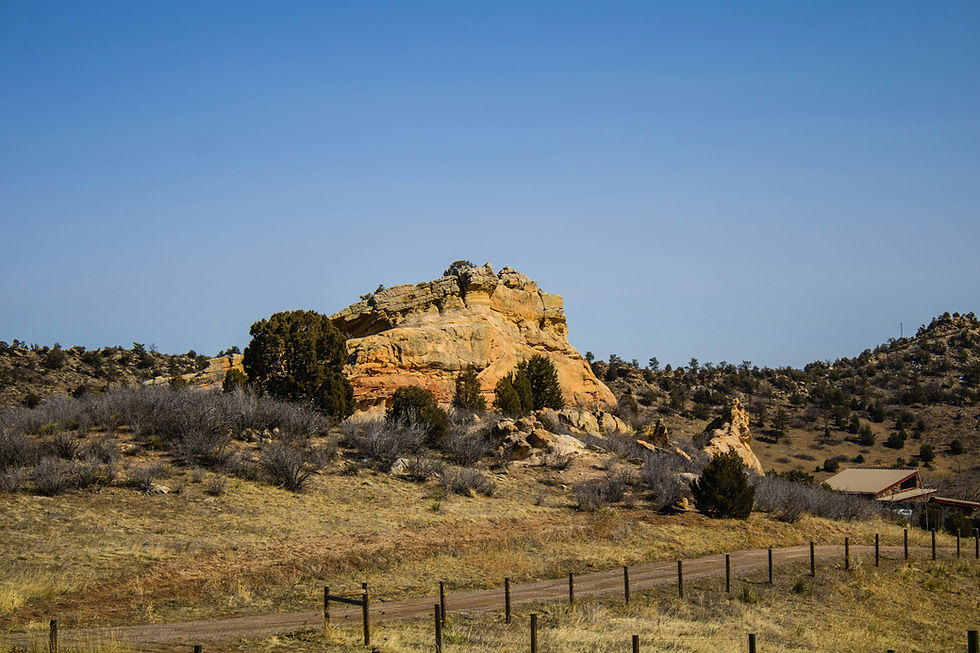
Idaho Springs sits at roughly 7,500 feet in Clear Creek County, wedged into the I-70 canyon 30 miles west of Denver. That elevation and that highway exit are the two facts that shape everything about demand here. Guests come for the mountain, and the mountain has a calendar of its own , snowpack, runoff, wildflowers, aspen color, and the return of snow , that doesn't line up neatly with a 12-month rental calculator. Most owners in this market already sense the calendar has soft spots. Fewer have mapped exactly when those spots fall, how deep they run, and what to actually do about them.
This guide works through the two real dead zones in the Idaho Springs short-term rental calendar, why winter itself is not one of them, and the specific pricing and positioning moves that turn slow weeks into break-even weeks instead of empty ones. This guide was produced by the Crest & Cove Creative content and strategy team, which works with short-term rental hosts across mountain and coastal markets on listing positioning, seasonal pricing strategy, and search visibility.
Why Idaho Springs Has Two Real Dead Zones, Not Three
It's tempting to assume a mountain town's slow season is just "winter, then everything else." Idaho Springs doesn't work that way, because it has genuine, marketed ski infrastructure sitting almost on top of it. Echo Mountain, a small day-use ski area with a base around 10,050 feet, is about 8 miles up the canyon from town, a 20-to-25-minute drive. Loveland Ski Area , a full-size, high-elevation resort with terrain running from roughly 10,400 feet to over 13,000 feet at the top of the Basin , is a bit farther out, a drive of about 26 minutes and roughly 25 miles. Both are actively promoted by Clear Creek County's own tourism arm as part of what makes staying in Idaho Springs worthwhile, not as distant afterthoughts.
Loveland typically opens in early-to-mid November (recent seasons have opened November 8th and 9th) and often runs into early May thanks to snowmaking and its elevation. Echo Mountain, being lower-key, tends to open a bit later in November. Between the two, Idaho Springs has a real, demand-driving ski season that starts before Thanksgiving and holds through the heart of winter. That means winter is not a dead zone for this market , it's closer to a secondary peak, and pricing it like an off-season is leaving money on the table.
What Idaho Springs actually has are two honest gaps, both created by the same mountain that drives winter and summer demand: a spring mud season, and a shorter fall lull between the leaves and the lifts. Between the two, Idaho Springs has a real, demand-driving ski season that starts before Thanksgiving and holds through the heart of winter.
Mud Season, Mid-April Through Early June
The classic Colorado mud-season window runs from roughly late April through May statewide, but at Idaho Springs' elevation and given the local ski season's tail, the practical dead zone for hosts stretches a bit wider , call it mid-April through early June. It starts as the local slopes wind down and lingering snow turns access roads and trailheads to slop, and it doesn't fully clear until high-country trails dry out and become hikeable again, which at 8,000-10,000+ feet routinely takes until late May or early June.
This is the window where the mountain is actively working against you on two fronts: it's too late for committed skiers, who've moved on once lower-elevation runs go icy and thin, and too early for hikers, who show up to trailheads still packed with snow or running with mud and runoff. Local tourism groups in Clear Creek County describe this stretch candidly , it's the season small businesses brace for, not the one they market around. That's useful information for a host: if the destination marketing itself treats these weeks as a lull, your calendar shouldn't pretend otherwise.
Turning Runoff Into Revenue: Fishing, Waterfalls, and Quiet High Country
The instinct in a slow window is to drop price and wait. The better move is to change what you're selling. Spring runoff that keeps hikers away is exactly what whitewater rafters and fly anglers are chasing , Clear Creek itself, along with nearby stretches of the Arkansas and Colorado Rivers within a short drive, sees some of its best flows during this exact window, and outfitters in the corridor build their season around it. A listing description that leans into "peak runoff for rafting and fly fishing on Clear Creek" reframes April and May from "off-season" to "in-season for a different guest.".
Waterfall hikes are the other underused angle. Snowmelt is what makes waterfalls dramatic, and lower-elevation trails near Idaho Springs that would be underwhelming by August are running at full force in May. Pair that with genuinely empty trailheads and quiet town streets, and you have a real "quiet high-country escape" pitch for guests who specifically want to avoid summer crowds , a segment that exists and searches for exactly that phrase.
The Minimum-Stay and Discount Fix for Spring
Positioning gets a listing noticed; pricing mechanics get it booked. For the mud-season window, two changes matter more than a blanket rate cut:. If Idaho Springs or nearby Clear Creek County towns run any harvest, oktoberfest, or historic-district fall events, those specific weekends deserve their own short-term-stay minimum and even a modest rate bump , they're the exception weekends inside an otherwise soft month, and pricing tools that auto-discount an entire month can accidentally undercut a weekend that would have sold at full rate anyway.
Drop minimum-stay requirements to 2-3 nights.A 5- or 7-night minimum makes sense in July when demand is deep enough to fill every calendar slot with long stays. In April and May, that same minimum turns a guest who wants a 2-night runoff-season getaway into a guest who books somewhere else. Shortening the minimum stay doesn't just add bookings , it makes the calendar more liquid, so gaps get filled by shoulder-length trips instead of sitting empty waiting for a full week to book.
Add a real 15-20% weekly discount, not a token one.Guests booking longer stays in the off-peak window are price-sensitive by definition , they're choosing this month because it's cheaper, so the discount needs to be big enough to actually change their decision. A 5% weekly discount doesn't move behavior; 15-20% does, and it still nets more revenue than an empty week at full nightly rate.
Both changes are Airbnb and VRBO settings-page adjustments, not a full relist , worth reviewing on a recurring basis rather than setting once and forgetting, since the exact dates shift slightly year to year with snowpack. The pattern across both dead zones is the same: shorten minimum stays, offer a discount deep enough to actually move behavior, and reposition the property around what's genuinely available in that window rather than what's missing.
The Second Lull: Late September Through Mid-November
Idaho Springs' fall color is genuinely good and genuinely early relative to lower-elevation Colorado towns. At this elevation, aspens typically begin turning in early-to-mid September, with peak color in Clear Creek County landing anywhere from late September through the first week or so of October depending on the year , some recent forecasts have put peak color for the immediate Idaho Springs area right around the September 21-27 window. That's a tight, high-value peak, and it's followed by a real gap.
Once the aspens drop, there's a stretch , roughly late September through mid-November , where the leaf-peepers have gone home but the ski season hasn't started. Loveland's typical November 8-9 opening and Echo Mountain's slightly later start mean this gap can run six to seven weeks in a normal year. It's shorter than mud season, but it's just as real, and it catches hosts who assume "fall in Colorado" is one long uniform season.
The October Play: Leaf-Peeper Pricing That Actually Works
The fix here isn't to discount the whole gap evenly , it's to price the front half (the actual color window) aggressively for demand, then extend a real discount through the back half. A 20-25% rate reduction that runs from early October through Thanksgiving, positioned explicitly around leaf-peeping and fall hiking, does two things at once: it captures the tail end of foliage tourists who are booking later than the absolute peak, and it keeps the calendar attractive straight through to the point where ski demand picks back up.
The key is treating early October and mid-November as different guests with the same discount. Early-October guests are still chasing color and want listing photos and descriptions that say so specifically , named trailheads, drive times to the best aspen groves, mentions of Clear Creek Canyon's fall drive. By November, the pitch shifts to "last quiet weeks before ski season," which is a legitimate draw for guests who want off-season mountain-town rates before winter pricing (and winter crowds) return.
Filling the Post-Foliage, Pre-Snow Gap
Beyond pricing, this window is where secondary demand generators matter most. Hot springs and spa-style attractions in the immediate area (Idaho Springs has long marketed itself around its natural hot springs heritage) hold up regardless of leaf color or snow cover, and they're worth featuring prominently in a listing description precisely because they're not seasonal. Same with brewery and distillery stops along the I-70 corridor, and the town's mining-history attractions , none of these depend on trail conditions or snowpack, which makes them the most reliable content for a listing photo set and description during a lull.
Local events matter too. If Idaho Springs or nearby Clear Creek County towns run any harvest, oktoberfest, or historic-district fall events, those specific weekends deserve their own short-term-stay minimum and even a modest rate bump , they're the exception weekends inside an otherwise soft month, and pricing tools that auto-discount an entire month can accidentally undercut a weekend that would have sold at full rate anyway.
Use Slow Windows for Deep Cleans and Maintenance
There's a second kind of return on these two windows beyond direct booking revenue: they're the only stretches of the year with enough open calendar to do work that a fully booked July or February simply won't allow. Deep carpet and upholstery cleaning, HVAC servicing before winter demand hits, exterior touch-ups before or after a Colorado winter, and any furniture or appliance replacement all belong in mud season and the fall lull specifically, timed around , not competing with , the discounted nights you're trying to sell.
This is also the smart window to refresh listing photos. A property photographed with fall color in the background, or with spring wildflowers and rushing creek water, does more to sell the shoulder season than any description alone , and multi-day open calendar stretches are exactly when a photographer can get in and out without disrupting a guest stay.
Building a Shoulder-Season Calendar That Works Year-Round
The pattern across both dead zones is the same: shorten minimum stays, offer a discount deep enough to actually move behavior, and reposition the property around what's genuinely available in that window rather than what's missing. Mud season sells quiet, runoff-fed rivers and empty trailheads. The fall lull sells color first, then the last quiet weeks before ski season returns. Winter and summer, by contrast, don't need this kind of intervention , Echo Mountain and Loveland alone are enough to keep winter demand real, and high season needs no help filling a calendar.
Getting this right generally means running slightly different pricing rules on the same platform tools most hosts already have , dynamic pricing software still needs a human setting the floor, the minimum-stay windows, and the discount depth, because automated tools tend to smooth over exactly the kind of two-distinct-lull pattern Idaho Springs has. This guide works through the two real dead zones in the Idaho Springs short-term rental calendar, why winter itself is not one of them, and the specific pricing and positioning moves that turn slow weeks into break-even weeks instead of empty ones.
Keep going on Crest & Cove:the Crest & Cove intro·local SEO keywords that actually book·the five elements of a converting hero·how to compare STR marketing agencies·OTA fees without leftover occupancy lifts·this cluster against named-town AirROI pins·Destin against AirROI, not leftover year·prior cluster against AirROI pins. Winter and summer, by contrast, don't need this kind of intervention , Echo Mountain and Loveland alone are enough to keep winter demand real, and high season needs no help filling a calendar.
Related Reading
Keep reading in the Idaho market spine and nearby towns in the same region: same-cluster pages hosts can use without costume-corridor copy.
Idaho City, Idaho STR Market Report 2026: What a $16,176 Year on 41
Sandpoint Coeur D Alene STR Market Report for Independent Hosts
How to Market a Short-Term Rental in Teton Valley Selling Teton
Is North Idaho Sandpoint Coeur D Alene a Good Short Term Rental
Is an STR Marketing Agency Worth It for North Idaho Sandpoint Cda
Buying an Idaho City, ID Rental: The $16,176 Year for STR hosts
DIY vs Hire Marketing for Should North Idaho Sandpoint Cda Hosts
Frequently Asked Questions
Is winter actually a slow season for Idaho Springs short-term rentals?
No. Echo Mountain (about 8 miles away) and Loveland Ski Area (about a 26-minute, 25-mile drive) both provide real, actively marketed ski access, and Loveland typically opens in early-to-mid November and often runs into early May. Winter functions as a secondary peak for this market, not a dead zone, so it shouldn't be priced like the true shoulder-season windows.
When exactly is mud season in Idaho Springs?
The practical dead zone runs roughly mid-April through early June — after local ski terrain winds down but before high-elevation trails (many above 8,000 feet) have fully dried out from snowmelt. The exact edges shift year to year depending on snowpack, so it's worth checking trail and road conditions each spring rather than relying on a fixed calendar date.
What's the second slow season, and when does it happen?
There's a shorter lull roughly from late September through mid-November, after peak aspen color fades and before ski areas open. Peak fall color in the immediate area often lands in the last week of September, and Loveland typically opens around November 8th or 9th, so this gap usually runs six to seven weeks.
Should I discount my whole calendar evenly during these windows?
No. A flat discount across an entire slow month can undercut days that would have sold at full rate anyway, like a foliage-peak weekend or a local fall event. Discount the genuinely soft stretch by 15-25% and shorten minimum stays there, but keep pricing tools from auto-discounting known high-demand pockets inside the same month.
What minimum-stay length works best during shoulder season?
Two to three nights, down from whatever longer minimum works during peak summer or winter weeks. A 5- or 7-night minimum makes sense in July when demand is deep enough to fill every calendar slot with long stays; in shoulder season, a shorter minimum lets more guests actually book.
What should I highlight in my listing description during mud season?
Lean into what's genuinely strong that time of year: spring runoff for whitewater rafting and fly fishing on Clear Creek and nearby rivers, waterfall hikes fed by snowmelt, and the quiet, uncrowded high-country feel that disappears once summer crowds arrive. These are real, season-specific draws, not just an apology for the off-peak rate.
Are there local events worth pricing around during the fall lull?
Yes — any harvest, oktoberfest, historic-district, or fall festival weekends in Idaho Springs or nearby Clear Creek County towns deserve their own minimum-stay and pricing treatment separate from the surrounding slow weeks, since they can perform closer to peak-season demand even inside an otherwise soft month.
Is mud season a good time for maintenance and deep cleaning?
Yes, and it's often the only realistic window. Both slow seasons offer open calendar stretches long enough for deep cleaning, HVAC servicing, exterior repairs, and photo refreshes — work that a fully booked summer or winter month won't accommodate without displacing paying guests.
About the Authors
This guide was produced by the Crest & Cove Creative content and strategy team, which works with short-term rental hosts across mountain and coastal markets on listing positioning, seasonal pricing strategy, and search visibility. Same with brewery and distillery stops along the I-70 corridor, and the town's mining-history attractions , none of these depend on trail conditions or snowpack, which makes them the most reliable content for a listing photo set and description during a lull.
Sources
Loveland Ski Area, CO, Announces Saturday, November 8 Opening Date for 2025-26 Season , Snow Brains
Loveland Ski Area, CO, Will Open on Saturday, November 9, for the 2024-25 Season , Snow Brains
Learn About Echo Mountain Resort and Loveland Ski Area , Clear Creek County Tourism Bureau
Colorado's Mud Season , Here's How to Make the Most of It , Colorado Info
Idaho Springs businesses weather low holiday tourism, prepare for summer rush
Colorado Places, Trails to See Fall Leaves at Peak Colors Sept. 21-27 , FOX31 Denver
Work with Crest & Cove Creative
Idaho Springs only has two real dead zones — a mud-season stretch from mid-April through early June and a short fall lull — not the three-season slump generic mountain-town content assumes.
We build pricing and positioning that target those two specific gaps instead of writing off the whole shoulder season.
Reach out at crestcove.co or (256) 998-7502.



Comments