
Inside the Numbers: Old Fort's Tourism Recovery Trajectory Paints a Surprising Picture
- Thomas Garner

- May 8
- 5 min read
Updated: 3 days ago
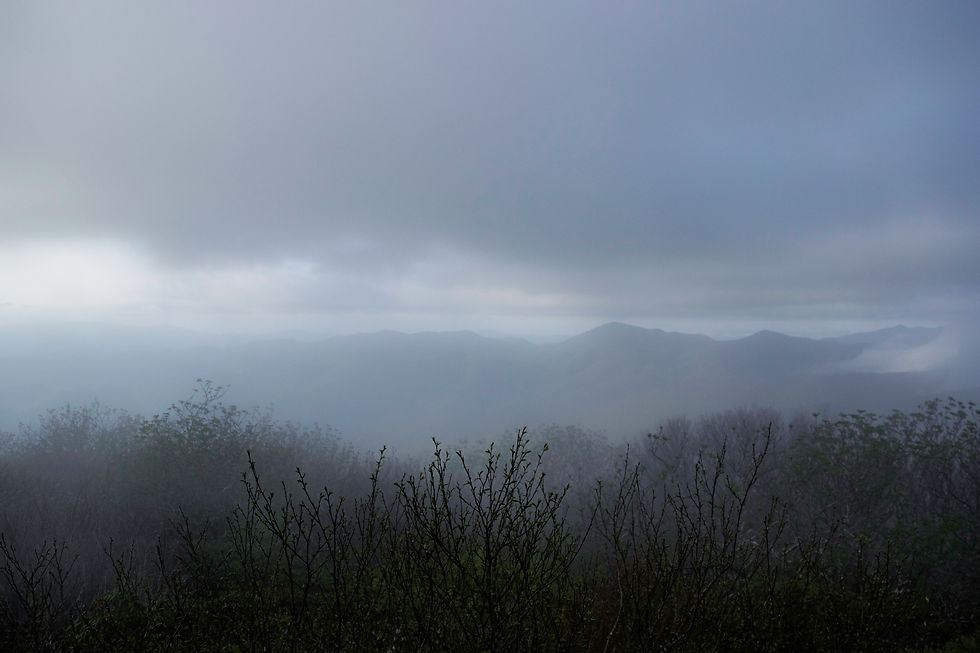
Old Fort, North Carolina, is one of the most under-discussed small-town tourism stories in Western NC's recovery narrative. The McDowell County town, sitting at the eastern edge of the Pisgah National Forest with the Catawba River running through it, absorbed real Hurricane Helene's impact along with the broader region — and the recovery trajectory now visible in 2025 and into 2026 carries patterns that hosts and small-business operators should plan around rather than assume from the regional headlines.
This is a directional read on what Old Fort hosts and small-business operators should plan around. We're cautious with precise figures — public visitor and revenue data for a town this size carries real measurement noise quarter to quarter, and operator-level benchmarking varies by sub-segment. Treat the patterns below as a planning context.
Why Old Fort's Recovery Is a Surprising Story
Most of the regional recovery narrative has focused on the larger Western NC tourism markets — Asheville, Black Mountain, and Lake Lure. Old Fort sat outside that headline coverage but absorbed meaningful Helene impacts and saw a recovery story that runs on its own timeline and shape. The patterns visible in 2025 and into 2026 are more positive than many in-region observers expected, and the reasons matter for both operators and investors.
The town's tourism economy was building meaningfully through 2023 and into 2024 around the Catawba River, the I-40 corridor visibility, the growing brewery and outdoor-recreation positioning, and the proximity to both Asheville and the broader Pisgah Forest. The recovery period has reshaped some of that growth narrative, but not eliminated it. The emerging market in 2026 differs from both the pre-2024 baseline and the immediate post-disruption context.
Demand Mix Has Shifted Toward Outdoor Recreation
Through 2025 and into 2026, Old Fort's share of outdoor recreation demand has strengthened relative to the baseline. Mountain biking visitors using Old Fort as a basecamp, hikers accessing the Pisgah trails network, and Catawba River paddlers and tubers have all returned at meaningful rates. The recreation-economy demand has proven more durable than passive scenic tourism.
This shift favors STR positioning that's specific rather than generic. Properties that explicitly market 'walkable to Pisgah trailheads,' 'minutes from Catawba River access,' or 'biking-and-hiking basecamp' are pulling demand at meaningful rates. Generic mountain-cabin framing has become less effective in this market over the recovery period because the demand pool is increasingly anchored to specific outdoor activities.
The Brewery and Downtown Story
Old Fort's small downtown and brewery scene has continued to develop through the recovery period rather than retreat. New and renewed concepts in the food and drink space, alongside continued investment in walkable downtown infrastructure, have produced visitor experiences that travelers are actively seeking out. The narrative isn't 'recovering to a baseline' — it's 'building forward.'
Hood Tight Brewing, Hillman Beer, and the broader brewery cluster anchor a meaningful slow-tourism economy that hosts can credibly market in property descriptions. Properties referencing specific brewery walkability or proximity convert better than properties using generic 'small-town atmosphere' framing.
Stay Length Has Lengthened
One of the clearer patterns since the recovery period began is the lengthening of average stay. Where the pre-2024 norm was heavily weighted toward 2- and 3-night weekend stays, 2025 and into 2026 have seen a meaningful share of stays land in the 4–7 night range. The shift structurally favors STRs over hotels.
Properties enforcing 2-night minimums during shoulder seasons may be leaving revenue on the table. Properties using thoughtful 3- and 4-night minimums in higher-demand windows are doing better than they would have under pre-2024 demand patterns.
Visitor Spending Per Trip Has Risen
Public economic-impact reporting for McDowell County and the broader region suggests that visitor spending per trip is running above the pre-disruption baseline. Travelers are spending more per trip on dining, brewery visits, gear and outfitter purchases, and small-attraction experiences.
For STRs, this reframes the value of an in-town or near-town stay. Listings that articulate connections to the brewery economy, outdoor outfitter cluster, and downtown character convert better than listings focused only on the property itself.
Want a free audit of your listing's visibility? Get your free visibility score to see exactly where your property stands.
Mountain Biking Has Grown as a Year-Round Driver
Old Fort's growing mountain bike trail network — including the developing Old Fort Trails system — has continued to expand during the recovery period and now serves as a year-round demand driver in a way few comparable WNC small towns can match. The trails are rideable across more of the year than activity-anchored markets dependent on warm-water recreation.
STR hosts in Old Fort who actively market to mountain bikers — bike-storage features, washing stations, gear-friendly setups, and content explicitly addressing trail proximity — capture demand that competitors miss during shoulder and winter seasons. The compounding effect over the years is meaningful.
Hotel and STR Have Recovered Differently
Hotel inventory in Old Fort proper is limited, and STRs make up a disproportionate share of total visitor lodging. The recovery has accentuated this — STR demand has grown faster than hotel demand for properties in walkable proximity to downtown or with strong outdoor recreation positioning.
Reading hotel performance reports as a proxy for STR behavior is misleading in Old Fort, specifically because the two products serve different demand pools and recover on different schedules.
Real Estate and Investor Behavior
Old Fort real estate has remained more accessible than the more saturated nearby markets (Black Mountain, Asheville) through the recovery period. STR investors evaluating the area are finding entry costs that work for properly underwritten pro formas, with meaningful upside if the area's tourism story continues to build.
Several investor patterns have emerged. Buyers are explicitly committed to recovery and rebuilding. STR managers are expanding from Asheville and Black Mountain into Old Fort at lower entry points. Local operators are converting older inventory to higher-positioning STR products. Each pattern has different time horizons.
What Hosts and Small Businesses Should Take Away
First, the recovery isn't restoring the prior market — it's building forward. Plan around the current shape and trajectory, not the pre-2024 baseline.
Second, lean into specificity in marketing. Generic mountain-town framing is less effective than concrete attraction-anchored framing — Pisgah, Catawba River, the Old Fort Trails network, the brewery economy.
Third, treat the recovery narrative as a marketing asset. Travelers actively choosing Old Fort to support recovery and small-town economies are a real demand layer; properties that articulate this credibly capture more of it.
Fourth, the longer-stay shift is real. Minimum-stay logic should reflect it where seasonality permits.
Ready to reposition? Start with our free visibility audit — a complete read on where your listing wins and where it leaves money on the table.
Sources
McDowell County Tourism Development Authority — visitor research
Visit McDowell County / Visit NC visitor profile data
Town of Old Fort comprehensive planning documents
North Carolina Department of Commerce — Western NC travel research
AirDNA — Old Fort market summaries
Visit NC — annual tourism reports
US Travel Association — quarterly travel trends data
Pisgah National Forest visitation reports
Old Fort Trails / Camp Grier mountain biking visitation data
Hurricane Helene recovery briefings — NC Department of Emergency Management
McDowell County Chamber of Commerce visitor profile
Catawba River paddling and recreation data
Skift — Southeast travel recovery analyses
Crest & Cove Creative — Old Fort operator benchmarking
Asheville Citizen Times and regional press — Old Fort reporting
Related Reading
Southern Appalachian STR Market Outlook 2027: Where the Smart Money Is Moving Next
How Tourism Recovery Trajectories Are Reshaping Maggie Valley's Economy
The Brevard Tourism Recovery Trajectory: Patterns Hosts Should Watch in 2026
Tourism Recovery in Hendersonville: Patterns That Should Change How Hosts Think
Asheville's Tourism Recovery Trajectory: What Hosts Should Read Into the Latest Patterns
Should You Invest in Black Mountain or Chattanooga? The 2-Bedroom Sweet Spot Compared
Inside the Numbers: Ocoee Visitor Spending Patterns Paint a Surprising Picture
Why Lookout Mountain's Visitor Spending Patterns Matter More Than Most Hosts Realize
You Built Something Great. Here's Why Guests Still Can't Find It
How Crest & Cove Thinks About STR Marketing: Our Working Playbook
Google Business Profile for STR Owners: Free Visibility Most Hosts Ignore


Comments