
Selling the Drive: How Shannondale Hosts Should Market a DC Weekend

Updated: Aug 27
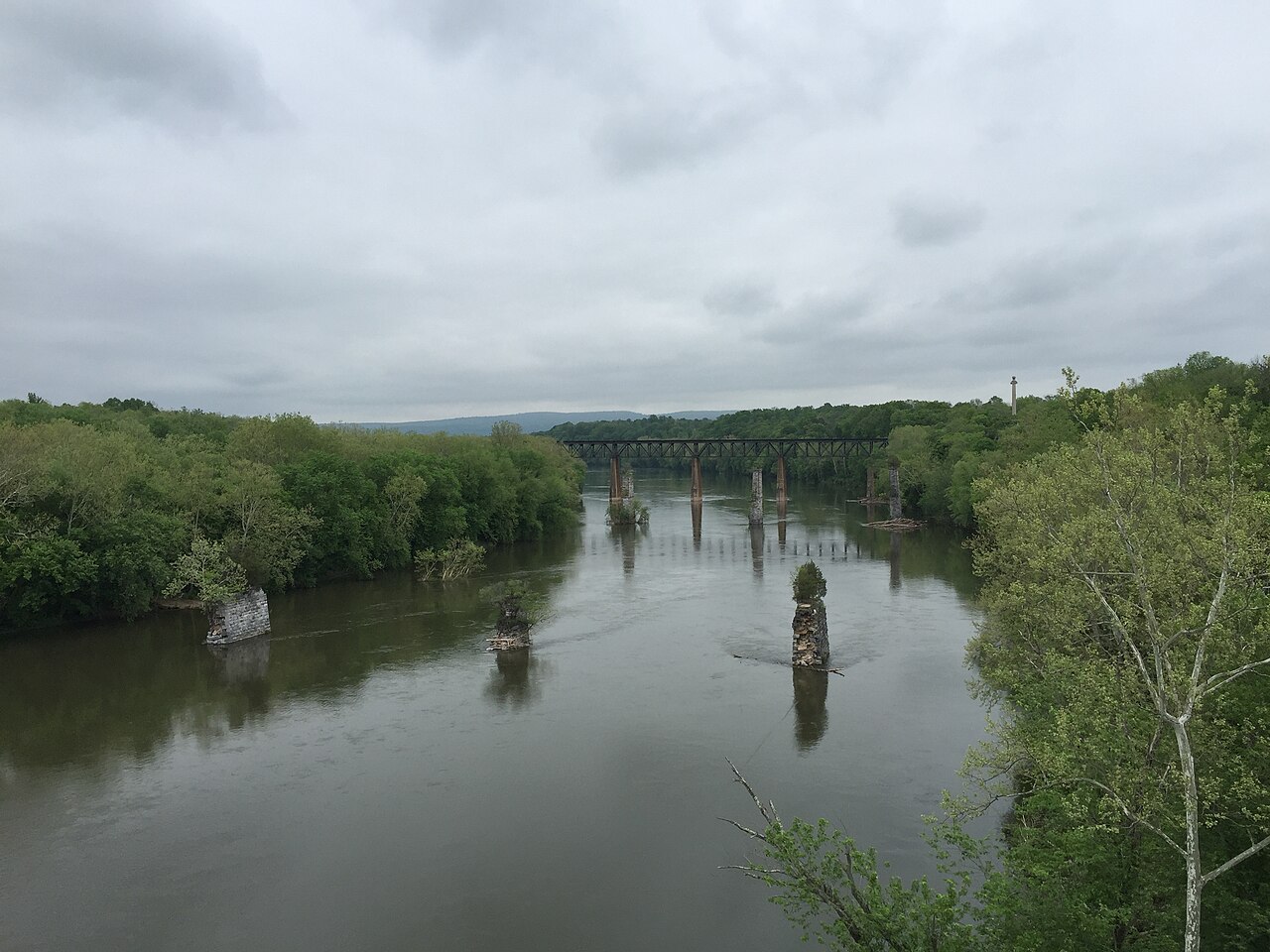
A Shannondale listing aimed at Washington and Northern Virginia guests has one real advantage over most weekend-drive markets competing for the same audience: an honest, specific answer to the question every guest asks before they book, which is simply how long is the drive. Rome2Rio's uncongested estimate puts the trip at roughly one hour and twenty-four minutes and about 58.1 miles from Washington up US-340 to Shannondale — a number worth stating plainly rather than rounding into a vague 'just over an hour' that could describe half a dozen competing towns.
Hosts marketing this drive already treat something closer to sixty to seventy-five minutes as the realistic working band, which accounts for the fact that 340 isn't always kind and the river bridge occasionally becomes its own small story on a Friday afternoon. That honesty is the selling point, not a liability to soften. A guest who reads a real, slightly-hedged drive-time estimate trusts the rest of the listing more than one who reads a suspiciously round number.
Washington and Northern Virginia are the only origin this listing copy should defend. Stretching the pitch to include Baltimore as a second audience, or padding the itinerary with a third night nobody actually booked, dilutes a message that works precisely because it's specific to one drive, one bridge, and one realistic clock. This is not legal advice.
The published clock, not a Friday-afternoon guess
The number that belongs on the listing is the published one — Rome2Rio's roughly 58.1-mile, one-hour-twenty-four-minute uncongested estimate from Washington to Shannondale via US-340 — stated as exactly that: an uncongested estimate, not a guaranteed door-to-door time. Hosts should pull that estimate fresh from the map the week of the trip, and again on the Friday they actually drive, rather than relying on a number that was accurate the last time someone checked it months ago.
The working marketing band that experienced hosts in this corridor actually use is sixty to seventy-five minutes, which builds in the honest caveat that 340 traffic and the river bridge crossing aren't always as clean as the uncongested estimate suggests. Presenting that range instead of a single optimistic number is what keeps the listing credible with a DC-area audience that already knows better than to trust a suspiciously precise drive-time claim.
Friday: grocery, porch, or lake, depending on what the drive actually allows
A Friday-evening arrival from Washington on the realistic sixty-to-seventy-five-minute working drive leaves a guest with a real but limited window before dark, depending on the season and how late in the day they actually left the city. The listing copy that respects this reality gives guests three honest, low-stakes options for that first evening — a grocery run to stock up, time on the porch, or a short window at the lake if the light and the day allow it — rather than promising a full evening itinerary that assumes an earlier, unrealistic arrival.
This is also where overselling the first evening backfires hardest. A guest who arrives at 7:30 after a slower-than-expected drive and finds listing copy that promised a sunset lake outing they can no longer fit in is going to notice the gap between the pitch and the reality immediately, on the first night of the stay. Setting the honest, modest expectation for Friday protects the credibility of everything the listing says about Saturday.
Saturday is one real product, not a death march through a checklist
The strongest Saturday pitch for a Shannondale weekend is built around a single genuine activity block rather than an exhausting list of everything within driving distance. A guest who drove up from DC for a weekend is buying rest and a change of pace as much as they're buying activities, and listing copy that tries to cram a full day of driving between attractions works against that. The stronger structure treats Saturday afternoon as its own shorter stretch — a few hours, not a full day's itinerary — and Saturday evening as the anchor for staying on the property itself, particularly given the draw of the lake setting.
This is also where the listing needs discipline about naming specifics: without a confirmed local business list in hand, copy should describe the kind of afternoon a guest can expect — porch time, lake access, a shorter local outing — rather than guessing a named restaurant, shop, or kitchen that may not exist or may have changed by the next season. A wrong business name in listing copy is a small credibility hit the first time a guest checks it against reality, and it's an easy one to avoid by describing the experience honestly instead of naming a place that hasn't been verified.
Sunday is the return trip, not an afterthought
The mistake in a lot of weekend-drive listing copy is treating Sunday as a footnote — checkout, then silence — when for a DC-based guest, the Sunday drive back on 340 is just as real a planning consideration as the Friday drive up. Reversing the same honest framing used for Friday, with a note about the return trip and realistic timing for a Sunday-afternoon departure, closes the loop the way an experienced weekend-drive listing should.
This is also the natural place to reinforce, one more time, that the trip being sold is a two-night weekend built around one solid Saturday, not a stretched three-night version of the same pitch. Adding a third night to the itinerary description without an actual confirmed booking behind it is exactly the kind of overreach that makes an otherwise honest listing start to sound like every other generic lake-town pitch competing for the same DC audience.
Why February, June, August, and October are the months to lean into hardest
Booking demand for this DC-to-Shannondale drive concentrates most heavily around four points on the calendar: February, June, August, and October. That pattern lines up naturally with when a Washington or Northern Virginia guest is already thinking about exactly this kind of short escape — a February weekend answers post-holiday cabin fever with a drive short enough to fit into a single weekend without burning vacation days, June captures the early-summer window before school schedules and bigger vacations take over, August offers a late-summer reset once the peak of summer travel congestion has thinned out, and October brings the obvious pull of fall color within a drive that stays under ninety minutes each way.
The listing copy that performs best doesn't treat all four of these months identically — it should speak to the specific reason a DC-area guest is looking at a short mountain-and-lake escape in that particular month, rather than running one generic 'peaceful getaway' pitch year-round. A February listing description can lean into the short, easy drive as a low-commitment way to escape the city in the dead of winter. An October description can lean into the same drive-time honesty paired with the seasonal color that makes the destination worth the trip that particular month. The core facts about the drive stay the same across all four; the framing around why now should change with them.
Building the listing description as one honest paragraph, not four separate pitches
None of this means writing four entirely different listings for four different seasons — it means building one honest core description of the drive and the weekend structure, then adjusting the seasonal hook at the top rather than rewriting the whole pitch each time. The core facts that should stay constant across every version: the honest sixty-to-seventy-five-minute working drive-time band from Washington and Northern Virginia via US-340, the modest and realistic Friday-evening arrival window, the single genuine Saturday activity block instead of a packed itinerary, and the Sunday return drive treated with the same honesty as the Friday one.
What should change with the season is the opening hook — the specific reason this particular weekend, in this particular month, is worth the drive. A listing that keeps its factual core consistent while adapting only the seasonal framing at the top reads as more trustworthy over repeat views than one that seems to reinvent its own story every time a guest checks back, and it's considerably easier for a host to maintain accurately across a full year than four completely separate seasonal listings would be.
The math a Washington-area guest is actually running before they book
A guest scrolling weekend-getaway listings from inside the Beltway is running a quiet mental calculation that a lot of hosts underestimate: how many of my two days off does this trip actually cost me in driving. A destination with a genuinely honest sixty-to-seventy-five-minute drive each way costs that guest roughly two to two-and-a-half hours of total driving across the whole weekend — a small enough number that it barely eats into the actual time spent at the destination. A competing listing three hours away, even a beautiful one, is asking that same guest to spend six hours round-trip, which on a two-night weekend can mean nearly a third of the total trip is spent in the car.
That math is Shannondale's real structural advantage over a lot of the more heavily marketed Blue Ridge and Shenandoah destinations competing for the same DC audience, and it's worth stating in the listing copy directly rather than assuming a guest will do the comparison themselves. A line that plainly states the drive costs a guest roughly two hours total for the whole weekend does more selling than a paragraph of atmospheric description, because it answers the actual question a time-constrained DC-area guest is asking before they even open the photos.
What happens when the drive-time promise doesn't match the actual experience
The flip side of leading with an honest, specific drive-time claim is that it has to hold up when a guest actually makes the trip. A listing that promises a sixty-minute drive and delivers a genuinely frustrating hour-and-forty-five-minute slog because of unaccounted Friday traffic or bridge congestion isn't just disappointing a guest on arrival — it's undermining the credibility of every other specific claim in the listing, because the guest's first real data point about whether this host tells the truth just failed.
This is precisely why the sixty-to-seventy-five-minute range, rather than a single optimistic number, is the more defensible claim to make publicly. A range that occasionally runs at its upper edge still matches what the listing promised. A single confident number that regularly gets beaten by real Friday traffic trains guests to distrust the next specific claim the listing makes, whether that claim is about the drive, the amenities, or anything else.
Writing listing copy that actually matches the drive
The through-line across all of the above is narrower than it might seem: write copy for the trip a Washington or Northern Virginia guest is actually going to take, not a generic template that happens to mention a lake. That means naming the real origin market specifically, stating the honest drive-time range rather than a rounded-down number, and structuring the weekend around one real Saturday activity block instead of an exhausting checklist borrowed from a different kind of destination.
It also means being disciplined about what the copy refuses to claim. Licenses tied to a rental property usually don't transfer automatically with a change in ownership, so any specific permit or licensing claim needs confirmation with the local desk the tax map actually names for that parcel, rather than an assumed number carried over from a previous owner or a different property nearby. The same discipline applies to any local business name in the copy — if it hasn't been personally confirmed as current, it doesn't belong in the listing, because a wrong name is a small, avoidable trust break with a guest who's about to drive over an hour based partly on what that copy promised.
The origin-market discipline, applied to photos and headline copy too
The same discipline that keeps the drive-time claim honest should extend to every other specific claim on the listing, including the photos chosen to lead with and the headline itself. A headline built around a generic phrase like 'peaceful lake retreat' does nothing to capture a DC-area guest specifically searching for a short drive — it competes on the same vague terms as every other lake listing within three states. A headline that plainly names the short drive from Washington, or leads with the specific weekend structure this piece describes, speaks directly to the guest actually running the two-hours-of-driving math described above, rather than hoping a generic phrase happens to resonate.
The same logic applies to photo selection. Lead images that show the porch, the lake access, and the kind of quiet evening a guest can expect on Friday night reinforce the honest, modest framing this piece recommends for that first evening. Lead images that oversell — a dramatically staged sunset shot implying every guest gets that exact moment — set an expectation the honest Friday-evening copy then has to walk back, which is the same credibility problem as an inflated drive-time claim, just expressed visually instead of in text.
What this framework does not try to claim
It's worth being explicit about what this piece deliberately leaves out, because the omissions are as much a part of the discipline as what's included. There's no specific restaurant, shop, or local business named anywhere in this framework, because none has been confirmed current and accurate for this specific property and season. There's no specific permit fee or licensing cost cited, because licenses generally don't transfer with a deed and the actual figure depends on confirming with the desk the tax map names for the parcel in question — a number this piece isn't in a position to state without that confirmation. And there's no guessed occupancy or booking-lift percentage attached to any of the seasonal framing above, because the research behind this piece doesn't include one.
None of those omissions weaken the actual pitch. A DC-area guest deciding whether to book a Shannondale weekend cares about the drive, the arrival experience, the Saturday plan, and the return trip — all of which this framework addresses honestly and specifically. The things left out were never going to be the reason a guest booked in the first place, and guessing at them risks the one thing an honest, specific drive-time claim is designed to build: trust in everything else the listing says.
Related Reading
More Shannondale, Lake Shannondale, and Jefferson County, West Virginia reading already live on Crest & Cove.
Forty-Five Lake Houses, Not a Downtown: Shannondale WV Short-Term Rental Report 2026
Shannondale STR Rules: Jefferson County, the Lake HOA, and Town of Harpers Ferry
How to Market a Shannondale Airbnb: A Lake House 60–75 Minutes From DC
DIY vs Hire in Shannondale: Photos Against a 14-Listing Local Brand
Mountain Mama's 14 Listings: Is an Agency Worth It in Shannondale?
Is Shannondale a Good Short-Term Rental Investment in 2026? Median $5,086 and Concentration Risk
Shannondale Shoulder Season: January, February, and March Between August, October, and June
A 28-Night Shannondale Lake House for DC and Baltimore Remote Workers
Who Books a Shannondale House: Lake Weekend, Harpers Ferry Day Trip, Leaf Weekend
Jefferson County WV Tourism Spending and Shannondale Hosts: What the WVDT Number Measures
What It Actually Costs to Start an Airbnb in Shannondale, WV
Financing a Shannondale Lake House: DSCR vs Second-Home on $5,086 and 48% Occupancy
Lake Shannondale Access and Amenities: What Guests Can Actually Use
Harpers Ferry as a Day Trip From Shannondale: Parking, Shuttle, and Fees
Frequently Asked Questions
How long does the drive from Washington to Shannondale actually take?
The published uncongested estimate from Rome2Rio is about one hour and twenty-four minutes over roughly 58.1 miles via US-340. Hosts marketing this route generally treat sixty to seventy-five minutes as the realistic working band, since 340 traffic and the river bridge crossing don't always match the clean uncongested estimate.
Should listing copy include Baltimore as a second origin market alongside DC?
No — Washington and Northern Virginia are the origin this listing copy should defend specifically. Stretching the pitch to also cover Baltimore as a second audience dilutes a message that works because it's built around one specific drive and one specific clock, not a generic regional pitch trying to cover multiple cities at once.
What should Friday-evening listing copy actually promise a guest?
Keep it modest and honest: a grocery run, porch time, or a short lake window if the season and arrival time allow it. Promising a full evening itinerary assumes an earlier arrival than a realistic Friday drive from DC typically allows, and a guest who arrives later than expected will notice the gap between the pitch and reality immediately.
How should Saturday be structured in the listing description?
Around one genuine activity block rather than a packed checklist of everything within driving distance. Treat Saturday afternoon as a shorter few-hour stretch and Saturday evening as time anchored on the property itself, particularly given the lake setting — guests booking a weekend drive from DC are buying a change of pace, not a second job's worth of scheduled activities.
Is it safe to name a specific local restaurant or shop in the listing copy?
Only if it's been personally confirmed as current. A local business name that turns out to be closed or changed by the time a guest checks it is a small but real credibility hit. Describing the kind of experience available — porch time, lake access, a short local outing — is safer than naming an unverified business.
Should the listing mention Sunday at all, or just focus on Friday and Saturday?
Sunday deserves real attention, not silence. For a DC-based guest, the Sunday return drive on 340 is just as much a planning consideration as the Friday drive up, so closing the loop with a note on realistic Sunday-afternoon departure timing matches the same honest framing used for the arrival day.
Is it okay to market this as a three-night trip if most guests only book two?
No — describing a third night in the marketing copy without an actual confirmed booking pattern behind it turns an honest, specific two-night weekend pitch into a stretched, generic version of the same claim every other weekend-drive listing makes. Keep the copy matched to the trip guests are actually taking.
Do STR permits or licenses transfer automatically with a property sale near Shannondale?
Generally no — licenses usually do not transfer with the deed, so any specific permit or licensing claim in listing copy needs to be confirmed directly with the desk the tax map names for that parcel rather than assumed from a previous owner's paperwork or a nearby property's situation.
Why do February, June, August, and October matter more than other months for this drive?
Booking demand for this route concentrates most heavily around those four months, which lines up with when a DC-area guest is already thinking about a short mountain-and-lake escape — post-holiday cabin fever in February, an early-summer window in June, a late-summer reset in August, and fall color in October.
Should the listing be rewritten completely for each season?
No — keep one honest core description of the drive and weekend structure constant year-round, and adjust only the opening seasonal hook. Rewriting the whole pitch every season is harder to maintain accurately and reads as less consistent than a stable core with a rotating seasonal frame.
Work with Crest & Cove Creative
The trip that sells is the one hour and twenty-four minutes up US-340, stated honestly — not a rounded-down number borrowed from a competing lake town. Name the failure mode the guest can check on the listing.
Need a DC-to-Shannondale weekend pitch that actually matches the US-340 drive instead of a generic lake-town template? Reach out at crestcove.co or call (256) 998-7502. Send the live listing draft and the facts you can actually cite.
Reach out at crestcove.co or (256) 998-7502.


Comments