
Buying Three Rivers in 2026: Read What the Permit File Says

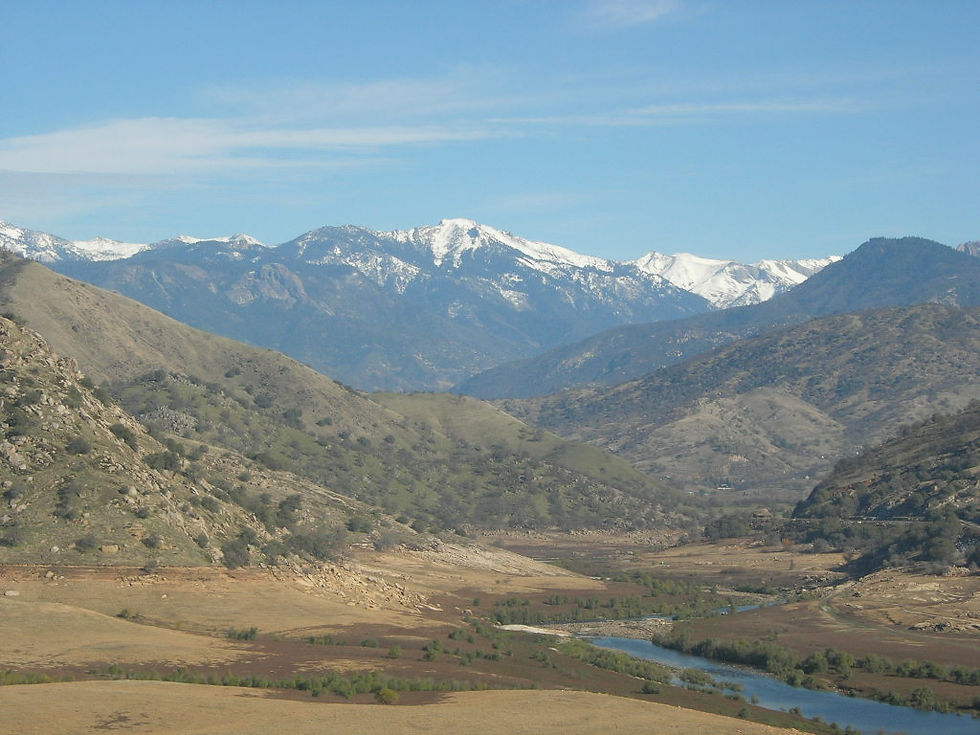
Buying a short-term rental in Three Rivers means underwriting a specific gateway CDP's own file, not a Sequoia-region blend and not a number borrowed from a nearby incorporated city. This piece works through what's actually confirmed about that file, the revenue picture, the registration picture, and the geography, so a buyer walks into a purchase decision with the real numbers rather than whichever figure a listing agent's packet happens to lead with.
One thing to be clear about up front: Crest & Cove does not underwrite properties, and this piece isn't a substitute for your own financial or legal due diligence. It's a plain accounting of what this research confirmed about Three Rivers, and where a buyer still needs to go directly to the county or a real comp source before closing.
A useful way to read what follows is as four separate questions a buyer needs answered before signing: what does this specific property likely earn, what happens to registration at closing, which regulatory desk actually governs this parcel, and what does a defensible buyer's packet look like once all three of those are answered honestly. Each gets its own section.
This is not legal advice. Registration status, tax obligations, and any zoning or land-use conditions specific to a parcel should be confirmed directly with Tulare County before a purchase decision, not assumed from this piece.
The through-line across all of this is simple: Three Rivers has real, current numbers worth taking seriously as a buyer, but several of the details that matter most, the certificate's nontransferable status, the county's unsettled regulatory history, the absence of a confirmed sale-price comp, only show up when you go looking for them specifically. This piece is that specific look.
The Revenue Picture You're Actually Buying Into
Two current vendor files clear $45,000 in typical annual revenue for Three Rivers: AirDNA shows $65,100 across 572 listings, and AirROI shows $56,383 across 453 listings. Both are real numbers describing this specific town, not a Sequoia-region average, and both should be part of a buyer's underwriting file, cited separately rather than averaged into a single blended figure neither vendor actually produced.
A third figure, from Rabbu, shows $58,723, but its stated 24 percent occupancy doesn't reconcile mathematically with its own revenue and rate figures. Set that number aside for underwriting purposes; it's not a reliable third data point to average in alongside AirDNA and AirROI, and a buyer's packet is stronger for excluding it with an explanation than for including it without checking its own arithmetic.
It's worth running the coverage math with both real figures rather than just the more optimistic one. A financing structure that only pencils out against AirDNA's $65,100 and falls short against AirROI's more conservative $56,383 is a structure with less margin for error than it might first appear, and a buyer is better served knowing that gap exists before closing than discovering it after the first slow month.
What this research doesn't include is a current median sale price or a Zillow-style home-value figure for Three Rivers specifically. Don't guess one, and don't let a seller's packet substitute a Sequoia-region or countywide figure for a real, current Three Rivers comp. Pull actual recent comparable sales for this specific unincorporated community before finalizing an offer, since neither AirROI nor AirDNA's rental-revenue data tells you anything about what the property itself should cost to acquire.
It's worth naming that gap plainly rather than glossing over it, because a buyer's own instinct in the absence of a clear number is often to anchor on whatever figure a listing agent or seller mentions first. That's exactly the situation where a borrowed or unsourced number quietly becomes the working assumption for an entire purchase decision. Insist on a sourced, dated, Three-Rivers-specific comp before that number gets baked permanently into your offer.
Sample size is also worth keeping in view here. AirDNA's 572 listings and AirROI's 453 listings are meaningful samples for a town this size, but a purchase decision is about one specific property, not the town-wide average. Two properties with identical square footage in Three Rivers can perform very differently depending on their actual proximity to the Ash Mountain gate and their actual relationship to the Kaweah forks, details a market-wide revenue figure can't capture.
What You Inherit, and What You Don't, at Closing
This is the detail that catches buyers off guard most often: the Tulare County TOT Certificate of Authority is explicitly nonassignable and nontransferable. It does not pass to a buyer with the deed. The seller's certificate must be surrendered within five days of the sale or transfer, and whoever takes over operating the property, meaning you, needs to register for an entirely new Certificate of Authority under your own name.
That means a buyer's closing checklist should include starting the TOT registration process, not assuming the property comes pre-registered and ready to rent the day escrow closes. Budget the time for that step into your post-closing plan, particularly if you're hoping to have the listing live for a specific season or booking window shortly after purchase.
If your plan depends on having the listing live before the confirmed June peak, work backward from that date and build in the registration timeline as a hard dependency, not an afterthought squeezed in after the closing paperwork is done. A property that closes in April but isn't registered until July has missed the town's own confirmed strongest month entirely, an avoidable cost if the registration step is planned for carefully from the very start of the process.
Beyond the tax certificate, confirm the property's actual zoning and land-use status directly with the county rather than assuming a prior owner's rental activity means the parcel is automatically cleared for continued short-term rental use. This research focused on the TOT framework because that's the confirmed, applicable requirement; it did not audit individual parcel zoning, and that's a separate line of due diligence a buyer needs to run in parallel.
It's also worth asking the seller directly for their own certificate registration date and remittance history as part of due diligence, not because that history transfers to you, it doesn't, but because a seller who can produce a clean, current registration record is a better signal about the overall condition of the property's compliance picture than one who can't answer the question at all.
A seller who can't or won't produce that history is worth a closer look, not necessarily a dealbreaker, but a prompt to ask more pointed questions about how the property has actually been operated. A rental history that generated the revenue figures a listing agent is quoting, without a matching TOT remittance record, is a gap worth understanding fully before you inherit whatever compliance picture comes along with the property itself.
Buying Unincorporated Tulare County, Not Visalia
Geographically and regulatorily, buying in Three Rivers means buying into unincorporated Tulare County GIS territory, governed by the county Resource Management Agency and the Treasurer-Tax Collector, not Visalia city limits and not Visalia's own municipal STR ordinance under VMC 17.32.166. Those are two entirely different regulatory desks, and a buyer should confirm which one actually governs the specific parcel before assuming either framework applies.
This distinction matters beyond just compliance paperwork. Visalia's owner-only permit structure, its per-parcel unit limits, and its required on-site response time simply don't apply to a Three Rivers property, and a buyer who assumes they do, or who assumes the opposite, that Three Rivers' lighter TOT-only framework applies inside Visalia, is underwriting the wrong regulatory picture for whichever property they're actually looking at.
This matters especially for a buyer considering properties in both towns simultaneously, weighing a Three Rivers gateway cabin against a Visalia in-town rental. Treat each as its own underwriting file with its own regulatory framework and its own revenue figures rather than assuming a shared county gives them a shared rulebook; the incorporation-line distinction is the one detail that changes almost everything else about how each property should be evaluated.
A practical way to keep the two straight during a search: label every comp, every regulatory note, and every revenue figure with the specific town it came from as soon as you pull it, rather than trusting yourself to remember which number belonged to which property once you're comparing several listings across an afternoon of research. A mislabeled figure is an easy, avoidable way to end up underwriting the wrong desk entirely, and it's cheap to prevent.
There's also a real compliance-risk dimension worth weighing into the purchase decision itself: the Tulare County Board of Supervisors rejected a draft STR operating ordinance 3-2 in July 2024, which means the county's regulatory posture toward short-term rentals in unincorporated areas, Three Rivers included, has been genuinely unsettled recently. A buyer should weigh that history into their risk assessment rather than assuming the current, lighter TOT-only framework is permanently locked in.
A 3-2 vote against a draft ordinance is a closer margin than it might first appear, and a buyer holding a Three Rivers property for several years should treat future county action as a real, if unquantifiable, possibility rather than a remote one. That doesn't mean avoiding the purchase; it means building in the awareness that the light-touch framework you're buying into today could look different a few years into ownership, and pricing that possibility into your longer-term hold assumptions rather than treating today's rules as fixed forever.
Building a Buyer's Packet That Holds Up
A clean Three Rivers buyer's packet should lead with both current revenue figures, AirDNA's $65,100 and AirROI's $56,383, cited separately and dated, with the unreliable Rabbu figure excluded and explained rather than silently omitted. It should note that neither figure is your specific property's guaranteed performance, market-wide averages describe hundreds of listings, not the one you're buying.
It should carry the TOT certificate's nontransferable status as a closing-checklist item, not a footnote, along with a plan to register a new certificate promptly after closing. And it should note the unincorporated-Tulare-County regulatory picture explicitly, including the 2024 ordinance rejection, as context for a buyer weighing how settled or unsettled the current light-touch framework really is going forward.
Finally, it should be honest about what it doesn't contain: a confirmed purchase-price median or comp figure. That's the piece every buyer needs to pull independently, from actual recent sales in this specific unincorporated community, before finalizing an offer. A packet that's honest about that gap is more useful than one that quietly papers over it with a borrowed, unrelated regional number.
A packet built this way, precise about what it knows and equally precise about what it doesn't, is the version worth bringing to a lender, a partner, or your own second-guessing self before you sign. It won't read as impressively as one that leads with the biggest available number, but it's the version that actually survives a careful second look once real money is genuinely on the line and someone else is checking your work.
Working Backward From a Target Launch Date
Once you know the TOT registration has to happen fresh under your own name after closing, it's worth building an actual working timeline rather than a vague sense that registration will happen sometime after escrow closes. Start with your target launch date, whether that's the start of the confirmed peak season or simply as soon as reasonably possible, and work backward from there to figure out when closing itself needs to happen.
That backward-planning exercise often reveals that a purchase timeline which looked comfortable on paper is actually tighter than it first appeared, once you account for registration processing time, any furnishing or setup work, and the county's own response times for a new Certificate of Authority application. A buyer who only starts thinking about this sequencing after closing has already lost whatever lead time could have been built in by planning it alongside the purchase itself.
This same backward-planning discipline is worth applying to any other pre-launch requirement you uncover during zoning and land-use due diligence, not just the TOT certificate. Building one combined timeline, rather than tracking each requirement's timing separately and hoping they don't conflict, gives you a realistic picture of when the property can actually start generating revenue, rather than an optimistic assumption based on the closing date alone.
Related Reading
More Buying a Three Rivers, CA Rental in 2026 host reading on desks, calendars, and listing clarity.
Killington, VT Short-Term Rental Market Report: Read the Range
Killington, VT Remote Worker Rentals: Sell a Desk, Not a Discount
Who Actually Books a Killington, VT Rental: Three Real Guests
Buying a Killington, VT Rental in 2026: Underwrite the Range
Killington VT Tourism Data for Hosts: State Numbers, Filed Honestly
Financing a Killington, VT Rental: Reading DSCR Numbers Honestly
Killington vs Neighbor Towns: Which STR Desk Actually Applies
Killington vs Stowe: Two Vermont Ski Towns, Two Different Files
Independent vs Resort-Managed: Who Runs Your Killington Condo
Frequently Asked Questions
What revenue figures should I use to evaluate a Three Rivers purchase?
Two current, real figures: AirDNA's $65,100 across 572 listings and AirROI's $56,383 across 453 listings. Cite them separately rather than averaging them together, and treat a third Rabbu figure of $58,723 with caution, since its stated occupancy doesn't reconcile mathematically with its own numbers. That's the version of the fact this research actually supports, not a smoothed-over approximation borrowed from a different market.
Does the seller's Transient Occupancy Tax certificate transfer to me at closing?
No. This research confirms the certificate is nonassignable and nontransferable, and must be surrendered within five days of a sale. You'll need to register for your own new Certificate of Authority after closing rather than assuming the property comes pre-registered. Confirm the current process directly with the Tulare County Treasurer-Tax Collector.
Is there a median sale price for Three Rivers rentals I can use?
This research did not find a confirmed current median sale price or Zillow-style home-value figure specific to Three Rivers. Don't rely on a Sequoia-region or countywide substitute; pull actual recent comparable sales for this specific unincorporated community from a real estate source before finalizing an offer. It's a narrow point, but narrow, specific points are exactly what separate this market's real file from a guess dressed up as research.
Is Three Rivers governed by the same rules as Visalia, since they're both in Tulare County?
No. Three Rivers is unincorporated Tulare County territory, governed by the county's TOT framework and Resource Management Agency. Visalia is a separate incorporated city with its own municipal STR ordinance under VMC 17.32.166. Confirm which jurisdiction actually governs your specific parcel; these are two different regulatory desks. That's the answer worth repeating accurately, since a slightly different version of it circulates easily once it gets paraphrased a few times.
Should I worry about Tulare County's regulatory posture changing after I buy?
It's worth weighing into your risk assessment. The Board of Supervisors rejected a draft STR operating ordinance 3-2 in July 2024, a close vote that suggests the current light-touch, TOT-only framework isn't necessarily permanent. A buyer should factor that regulatory uncertainty into their purchase decision rather than assuming today's framework is locked in indefinitely.
Does Crest & Cove help underwrite a Three Rivers purchase?
No. Crest & Cove does not underwrite properties or provide financial or legal due diligence services. This piece lays out what the available research confirms about Three Rivers so a buyer can do their own underwriting with accurate market context, not as a substitute for professional financial or legal review. Keep that framing intact rather than letting a shorter, vaguer version of it stand in for the real, sourced detail.
What should be the first item on my post-closing checklist for a Three Rivers purchase?
Starting your own TOT Certificate of Authority registration with Tulare County, since the seller's certificate doesn't transfer and must be surrendered within five days of the sale. Don't assume the property is ready to rent the day escrow closes; budget the registration timeline into your plan for getting the listing live. That's a small enough fact to misquote by accident, which is exactly why it's worth stating precisely rather than from memory.
Can I assume a property's zoning already allows short-term rental use because the seller was renting it?
Not automatically, based on this research. This research confirmed the TOT tax framework but didn't audit individual parcel zoning. Confirm the specific parcel's zoning and land-use status directly with Tulare County rather than assuming prior rental activity guarantees continued eligibility under your ownership. It's worth treating that as settled unless a future, dated research pass specifically updates it with new information.
How much weight should I put on the Rabbu revenue figure when underwriting a purchase?
Very little. Rabbu's $58,723 figure comes with a stated 24 percent occupancy that doesn't mathematically produce that revenue at the accompanying ADR. Exclude it from your underwriting file and note why, rather than quietly averaging it in with the more reliable AirDNA and AirROI figures. That distinction is easy to lose in casual conversation, so it's worth restating carefully whenever the topic comes up again.
What's the biggest underwriting mistake a buyer could make with Three Rivers data?
Blending Three Rivers' numbers with a neighboring town's, whether that's averaging AirDNA and AirROI into one figure, substituting a Visalia comp for a Three Rivers one, or assuming Visalia's regulatory framework applies here. Every one of these markets and figures is genuinely distinct, and treating them as interchangeable produces an underwriting file that looks cleaner than it actually is.
Work with Crest & Cove Creative
Two vendors clear the $45K gate for Three Rivers, but the TOT certificate you'd inherit doesn't transfer with the deed. Here's what a buyer's file should actually contain before closing.
Once you've closed on a Three Rivers property, let's build the listing around what this gateway town's own data actually shows, not a generic Sequoia caption. We'll help you position the property honestly from your first day of hosting.
Reach out at crestcove.co or (256) 998-7502.


Comments