
A Host's Visitor Guide to Grand Coulee and Banks Lake, Washington

Updated: Aug 27
A guest booking a stay near Grand Coulee and Banks Lake is not booking a Seattle side trip. Most arrive by car from Spokane, eighty-five to one hundred minutes out on US-2 and SR-155, and the questions they show up asking are specific: where's the dam, when's the laser show, what's Steamboat Rock like, and how far is Dry Falls. This guide answers those questions with the facts a host can actually confirm and hand off.
Two lakes and two towns sit at the center of this area, and mixing them up is the easiest way to send a guest to the wrong overlook. Grand Coulee Dam creates Lake Roosevelt, upstream; Banks Lake is a separate, twenty-seven-mile reservoir downstream, fed through the Keys plant and held back by Dry Falls Dam. The towns of Grand Coulee and Electric City each have their own main street, and a host's guide should treat them as two distinct places, not one blended name.
Everything below is written to be handed to a guest as-is, with the specific numbers, addresses, and hours a host should confirm the week of arrival rather than assume are still current. This is not legal advice.
Start at the Dam, Not a Seattle Mash
Most car arrivals reach this area from Spokane, eighty-five to one hundred minutes out on US-2 and then SR-155. A host's directions should say that plainly, with the last turns written from the guest's actual driveway, rather than a vaguer regional description that assumes familiarity with western Washington.
The concrete face of Grand Coulee Dam is enough of a first-day destination on its own. A guest who's driven ninety minutes from Spokane doesn't need a Seattle comparison to understand the scale of what they're looking at; they need to know where to park and when the site is open.
Check current visitor hours the week guests actually arrive rather than repeating a fixed schedule year over year. Sites like this can adjust hours seasonally, and a host who checks before the stay avoids sending a guest to a closed gate.
Confirm Visitor Center Hours Before Guests Arrive
The Grand Coulee Dam Visitor Center runs on an 8:30 a.m. Pacific Time opening, and it closes for Thanksgiving, Christmas, and New Year's Day. Those are the specific closure dates worth flagging to a guest planning a holiday-week visit, since arriving on one of those days to a closed Visitor Center is an easy disappointment to prevent.
A host guide that states the opening time and the three closure dates directly gives a guest something concrete to plan a morning around, rather than a general "check hours before you go" note that requires the guest to do the research a host could have already done.
Confirming hours the specific week of a stay, rather than relying on a guide written months earlier, matters most around those holiday dates and any seasonal hour shifts a federal or state-run site might make.
Watch the Laser From a Named Overlook
Grand Coulee Dam's laser light show is one of the specific draws guests search for by name, and a host guide is more useful when it names an actual, confirmed viewing spot near the property rather than a vague "you can see it from town" line. If a host has personally verified a good overlook, naming it directly saves a guest from wandering after dark trying to find one.
Because show timing and seasonal scheduling can shift, a host should confirm the current schedule before passing dates along to a guest, rather than repeating a season from a prior year. A guest who plans an evening around a specific showtime deserves an accurate one.
This is also a good moment to remind guests that a laser-show evening is a single night's activity, not a multi-night draw on its own; pairing it with the daytime dam visit and a nearby hike gives a fuller weekend without overselling one feature.
Banks Lake Is a 27-Mile Reservoir, Not the Dam's Own Lake
Banks Lake is a twenty-seven-mile reservoir sitting behind Dry Falls Dam, fed by water pumped up from Lake Roosevelt through the Keys plant. It is a separate body of water from the lake Grand Coulee Dam itself creates, which is Lake Roosevelt, upstream and to the north.
This distinction is worth stating clearly in any host guide, because guests planning a boat launch or a lakeside afternoon need to know which lake they're actually headed to. Confusing the two sends a guest to the wrong access point or the wrong stretch of shoreline entirely.
For guests planning a boat trip, the practical details are the launch location, the drive time from the property, and whether they'll need their own hose or gear on hand; a Saturday afternoon at the ramp is ordinary visitor traffic here, not evidence of anything beyond a busy summer weekend.
Steamboat Rock Is the Electric City Hike
Steamboat Rock State Park covers about 5,043 acres with roughly 50,000 feet of shoreline, at 51052 Highway 155 in Electric City. The park's namesake butte rises about 800 feet above Banks Lake, and it's the area's signature hike for a guest who wants a half-day outdoor destination.
A host guide should note the address directly, along with driving minutes from the property, rather than describing the park only by a general "nearby" reference. Guests planning gear and timing appreciate a specific number of minutes over a vague estimate.
Park hours and any burn bans should be confirmed live before a stay, particularly during dry summer months when access or fire restrictions can change on short notice. A host who checks ahead can pass along accurate, current information instead of a static description.
Dry Falls Sits South, Not Downtown Grand Coulee
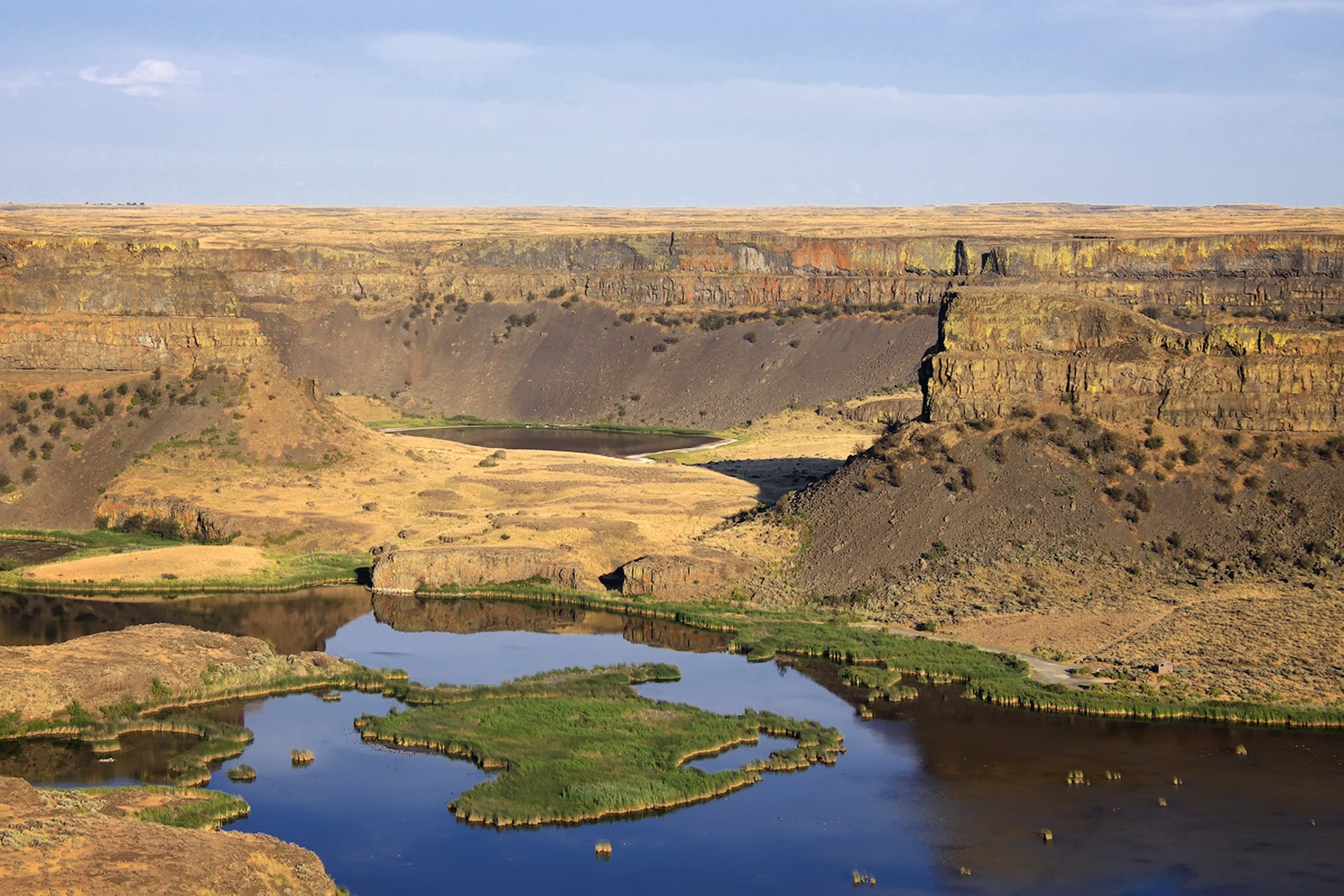
Dry Falls, the dam and dry waterfall feature that holds back Banks Lake's southern end, sits south of the towns of Grand Coulee and Electric City, not within downtown Grand Coulee itself. A guest expecting a short in-town walk to Dry Falls will be surprised by the actual drive required.
Giving accurate driving minutes from the guest's specific rental, rather than a regional distance, is the most useful thing a host guide can do here. Two properties in the same general area can have meaningfully different drive times to a destination like this depending on which side of the towns they sit on.
Treating Dry Falls as its own separate stop, distinct from both the dam and Steamboat Rock, helps a guest build a realistic day-by-day plan rather than assuming all three sites are within a short walk of each other.
Two Cities, Two Main Streets
Grand Coulee and Electric City are two separate towns, each with its own main street, and a host guide that treats them as interchangeable risks sending a guest to the wrong side of the area for dining, parking, or lodging-adjacent errands.
Steamboat Rock State Park's address places it in Electric City specifically, while the dam and its Visitor Center sit closer to Grand Coulee proper. Knowing which town a specific destination belongs to helps a guest plan a realistic route between stops rather than assuming a single compact downtown covers everything.
A host who names both towns explicitly, rather than defaulting to whichever name is more familiar, gives guests a clearer mental map of the area before they arrive.
What Guests Search That Hosts Should Actually Name
The searches that bring guests to this area cluster around four specific things: the dam, the laser show, Steamboat Rock, and Dry Falls. A host guide built around naming these four directly, with real hours, addresses, and drive times, answers the questions guests are actually asking rather than a broader, less specific regional pitch.
None of these four should be described through a Seattle comparison or a generic Pacific Northwest framing. Guests searching for this area already know roughly where it is; what they need from a host is the practical detail that turns a search into a plan.
A host who keeps this list of four front and center in their own listing description and guest guide will match what guests are actually typing into a search bar, rather than describing the property in terms that don't connect to the reason most guests are coming.
Keep Soap Lake and Moses Lake on Their Own Desks
Soap Lake and Moses Lake are nearby Washington markets with their own published figures, and both should stay on their own separate lines in any host's market research rather than getting blended into a Grand Coulee-Banks Lake guest guide or revenue estimate. Soap Lake's figure and Moses Lake's figure describe different towns with different draws.
A guest guide focused on Grand Coulee and Banks Lake doesn't need to reference either neighboring town at all unless a guest specifically asks about day-trip options beyond the immediate area. Keeping the guide focused on the four core attractions above serves most guests better than expanding scope.
For hosts doing their own comparative research across the region, treating Soap Lake and Moses Lake as separate, labeled markets, rather than folding them into a single regional average, keeps any planning based on those figures accurate to the specific town it describes.
A Weekend That Matches the Drive
Given the eighty-five-to-hundred-minute drive from Spokane, a realistic weekend itinerary starts with arrival and the dam on day one, Steamboat Rock's hike on day two morning, and Dry Falls or a lake afternoon on day two, rather than trying to pack every feature into a single rushed day.
A host guide that acknowledges the actual travel time guests put in to get here, and paces the weekend accordingly, respects both the trip a guest has already made and the time they have left to enjoy it. Overpacking the itinerary risks a guest leaving having seen less than they'd hoped.
This pacing also gives a host natural, specific things to recommend at check-in: confirmed Visitor Center hours for day one, a Steamboat Rock start time based on park hours for day two, and a Dry Falls stop timed around the drive back if that fits the guest's departure.
Related Reading
More Grand Coulee and Banks Lake, Washington reading already live on Crest & Cove.
Frequently Asked Questions
How do most guests get to Grand Coulee and Banks Lake?
Most car arrivals come from Spokane, eighty-five to one hundred minutes out via US-2 and then SR-155. A host guide should give the last turns from the guest's actual driveway rather than a general regional description.
What are the Grand Coulee Dam Visitor Center's hours?
It opens at 8:30 a.m. Pacific Time and closes for Thanksgiving, Christmas, and New Year's Day. Confirm current hours the week of a guest's stay, since seasonal adjustments can happen beyond those three fixed closure dates.
Is Banks Lake the same body of water Grand Coulee Dam creates?
No. Grand Coulee Dam creates Lake Roosevelt, upstream. Banks Lake is a separate, twenty-seven-mile reservoir downstream, held back by Dry Falls Dam and fed by water pumped from Lake Roosevelt through the Keys plant.
What is Steamboat Rock State Park, and where is it?
It's a roughly 5,043-acre park with about 50,000 feet of shoreline, located at 51052 Highway 155 in Electric City. Its namesake butte rises about 800 feet above Banks Lake, and it's the area's main hiking destination for visitors.
Is Dry Falls within walking distance of downtown Grand Coulee?
No. Dry Falls sits south of the towns of Grand Coulee and Electric City and requires its own drive. A host guide should give actual driving minutes from the specific property rather than implying it's a short in-town walk.
Are Grand Coulee and Electric City the same town?
No, they're two separate towns, each with its own main street. Steamboat Rock State Park's address places it in Electric City, while the dam and Visitor Center sit closer to Grand Coulee proper, so knowing which town a destination belongs to helps guests plan routes accurately.
What are the four things guests most commonly search for in this area?
The dam, the laser light show, Steamboat Rock, and Dry Falls. A host guide built around naming these four directly, with real hours, addresses, and drive times, matches what guests are actually searching for when they book a stay here.
Should a host describe this area by comparing it to Seattle?
No. Most guests arrive from Spokane, not Seattle, and a Seattle comparison doesn't match the actual geography or travel pattern most visitors follow. Naming the real driving route and destinations serves guests better than a distant-city reference.
Should Soap Lake or Moses Lake be included in a Grand Coulee guest guide?
Generally not, unless a guest specifically asks about day-trip options. Both are separate markets with their own figures and draws, and folding them into a Grand Coulee-Banks Lake guide can blur what's actually nearby versus what requires a separate trip.
What's a realistic weekend itinerary given the drive from Spokane?
Arrival and the dam on day one, Steamboat Rock's hike on day two morning, and Dry Falls or a lake afternoon on day two, paced around the eighty-five-to-hundred-minute drive rather than packed into a single rushed day.
Work with Crest & Cove Creative
Guests searching for this area are typing the dam, the laser, Steamboat Rock, and Dry Falls , not Seattle. Naming those four correctly does more for a booking than any regional comparison.
We help independent hosts near Grand Coulee and Banks Lake replace vague regional pitches with the real dam hours, park addresses, and drive times guests are actually searching for. Send us your current guest guide and we'll help you confirm what's still accurate. Reach out at crestcove.co or (256) 998-7502.
Reach out at crestcove.co or (256) 998-7502.


Comments