
The Complete Visitors Guide to Hanalei, HI, From Hosts Who Live It


Most "complete guides" to a Hawaii destination read like they were assembled from a dozen other guides, stitched together without anyone actually walking the town in question. This one is built the other way: it follows the order Hanalei hosts actually send their own guests through the town — the bay first, then the pier, then the river valley behind it — and only after that, the day trip further up the road to Haʻena, clearly labeled as a day trip rather than folded into Hanalei itself as if it were the same place.
This guide exists as much for hosts as for guests. It's the backbone for a listing's guest book, a source for accurate listing copy, and a reference a host can point returning or first-time guests toward without worrying that a detail has quietly gone stale. Anything time-sensitive here — hours, reservation systems, specific event dates — needs to be checked against the current source before it's repeated in a listing, and this guide flags exactly where that check matters most.
It's worth naming the order deliberately, too, because the order is doing real work here. Bay, pier, valley, then Haʻena as a clearly separate day trip — that's the sequence a host actually familiar with the town uses when a guest asks "what should we do," and it's a genuinely different sequence than a generic Kauaʻi guide would produce, which tends to jump straight to the island's biggest-name attractions regardless of which specific town a guest is staying in. This is not legal advice.
Hanalei Bay: The Center of Everything
Hanalei Bay is the reason this town exists as a destination, and most first-time visitors orient their whole trip around it. It's a wide, crescent-shaped bay backed by mountains, with calmer water than a lot of Kauaʻi's more exposed beaches — a real practical advantage for families and less experienced swimmers, and part of why the bay-and-pier family persona described elsewhere in this cluster gravitates here specifically.
Conditions on the bay shift with the season in ways that matter for how a guest should plan a visit — winter swell brings bigger surf and stronger currents that change the water's character noticeably from the calmer conditions later in spring and summer. A host's guest-book note here shouldn't just say "beautiful beach" — it should note that conditions vary seasonally and that guests should check current conditions before swimming, especially with kids, rather than assuming the bay looks the same year-round.
The walk from most central Hanalei lodging down to the bay is genuinely short, and that walkability is one of the town's real practical advantages over a lot of other North Shore lodging that requires a drive to reach the water. A guest book that states an honest, specific walk time — rather than a vague "close to the beach" — sets accurate expectations and reinforces exactly the kind of specific, checkable claim that differentiates a Hanalei listing from a generic one.
Parking near the bay is worth a plain, practical note too, since it's one of the more common small frustrations for a first-time visitor unfamiliar with a small beach town's limited lot space. A guest book that sets honest expectations about parking availability, especially during the confirmed peak season, saves a guest a frustrating first afternoon and reflects better on the host than silence on a detail guests will notice regardless.
Hanalei Pier: The Landmark Everyone Photographs
The pier is Hanalei's most recognizable single landmark — visible in nearly every postcard and Instagram search result for the town — and it's a genuinely worthwhile stop on its own, not just a photo backdrop. It's a good vantage point for watching the bay, a common spot for local fishing, and a short, easy walk from most of the town's central lodging and dining.
For a listing's guest-book copy, the pier is worth naming specifically rather than folding into a generic "walk to the beach" line — a guest who knows to look for the pier as a landmark has an easier time orienting themselves on arrival than one working from vague directions alone.
It's also a natural spot to recommend for an evening walk or a sunset view, distinct from the daytime swimming-and-sand experience the bay itself offers. A guest book that separates "what to do at the bay during the day" from "where to go for a sunset walk" gives a returning guest, or a guest staying more than a couple of nights, a reason to think of the pier as its own small destination rather than just scenery glimpsed from the beach.
The River Valley Behind Town
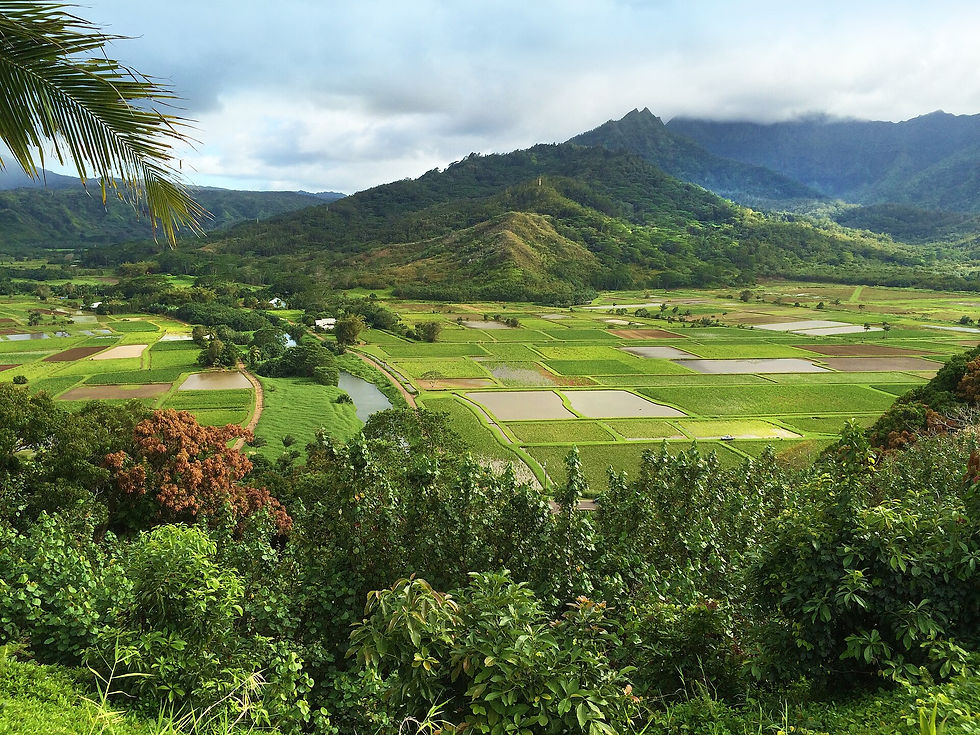
The Hanalei River valley behind the town is the part of Hanalei a lot of first-time visitors don't think to ask about, focused as they are on the bay itself — but it's a real part of the town's character, with taro fields and mountain views that most visitors never see because nobody suggested they look. This is exactly the kind of detail that separates a listing genuinely written for Hanalei from one that could describe any North Shore beach town.
A brief, honest guest-book mention of the valley — that it's visible from certain vantage points in town, or worth a short detour for guests staying more than a couple of days — adds real, specific texture without requiring the guide to overstate what's actually easy to access on a short visit.
This is also a genuinely useful detail for the remote-work and extended-stay guest described elsewhere in this cluster — someone staying two or more weeks has time to explore beyond the bay in a way a three-night vacationer typically doesn't. A guest book that saves a valley recommendation specifically for longer-staying guests, rather than front-loading it into every guest's first-day orientation, matches the suggestion to the guest who actually has time to use it.
The Haʻena Day Trip: Labeled Clearly as a Day Trip
Haʻena State Park, at the end of the road past Hanalei, is the North Shore's most popular further-out destination — trailheads, dramatic coastline, and access points that draw visitors well beyond Hanalei's own town limits. It's a legitimate, worthwhile day trip from a Hanalei base, and the cluster's who-books-a-Hanalei-rental post names this specifically as one of the town's real guest personas.
The park runs its own visitor reservation and shuttle system for both entry and parking, and those rules are exactly the kind of detail that needs to be confirmed at the point of writing rather than assumed current — reservation systems for high-traffic Hawaii parks get adjusted, and a guide that repeats last year's process is going to send a guest to a gate they can't get through. The important framing point for a Hanalei-focused guide is simpler than the specific rules: Haʻena is a day trip from Hanalei, not part of Hanalei itself, and guide copy should keep that distinction clear rather than blurring the two towns together the way a regional guide with Hanalei in the headline sometimes does.
It's worth telling guests plainly that the drive out to Haʻena, and the trailheads and coastline beyond it, are a genuinely different experience from a Hanalei town day — more remote, less amenity-dense, and dependent on whatever reservation system is currently in place. Framing it honestly as "the further-out day trip" rather than implying it's a quick, casual add-on sets a guest up to actually plan for it, rather than treating it as an afterthought and running into a closed reservation window.
Practical Notes for a Guest Book, Not a Regional Guide
This guide is deliberately built around Hanalei specifically — it is not a regional North Shore Kauaʻi guide with Hanalei's name attached to broaden its search reach. That distinction matters for a host pulling from this content: copy that tries to cover the whole North Shore under a Hanalei headline reads as unfocused to a guest who's specifically searching for Hanalei information, and it undercuts the same town-specific identity that the rest of this content cluster is built around.
It also matters for how this guide relates to the cluster's other comparison posts — the Hanalei-versus-Princeville pieces exist specifically because that blending happens so often in general Kauaʻi content. This guide is the positive version of that same discipline: rather than explaining what Hanalei isn't, it just describes what Hanalei actually is, in the order a local host would walk a guest through it.
Any specific hours, parking details, or reservation requirements referenced anywhere in a listing's guest book should be pulled from the current, live source at the point they're published — not carried forward from an earlier version of this guide or a prior season's information. Small local businesses and public facilities change hours more often than a listing's static content tends to get updated, and a guest arriving to a closed door because of stale guide copy is a preventable, avoidable problem.
It's also worth being honest about scope. A single blog post or guest-book document can't function as a real-time source of truth for every hour and reservation rule in town — its job is to orient a guest toward the right places and the right sequence, while pointing them to official, current sources for anything time-sensitive at the point they're actually planning that specific activity. Treating this guide as a starting map rather than a live operations manual keeps expectations realistic on both sides.
A Sample Four-Day Sequence, Not a Rigid Itinerary
It can help a guest-book reader to see this guide's order applied to an actual stay length, rather than just described as a general sequence. A first day centered on the bay itself — orientation, the short walk down from lodging, an easy swim if conditions allow — gives a guest an easy, low-effort start rather than an ambitious first-day plan on top of travel fatigue. A second day can widen out to the pier and a slower walk through town, pairing well with an evening visit specifically, once the guest has already gotten oriented to the bay the day before.
A third day is a reasonable point to introduce the river valley for a guest who's shown interest in seeing more of the town than the beach itself — this is naturally later in a stay because it requires the guest to already feel oriented and unhurried, which rarely describes a first full day after travel. The Haʻena day trip fits best toward the end of a stay of this length, both because it requires the most advance logistics of anything on this list and because a guest is better positioned to handle a more remote, less amenity-dense day once they've settled in.
None of this is meant as a rigid script — a shorter stay compresses it, a longer one spreads it out further, and a returning guest may want to skip straight to the valley or the day trip on day one. The value of laying it out this way in a guest book isn't prescribing an itinerary; it's giving a guest who has no idea where to start a sensible default they can deviate from, rather than a guest staring at an unordered list of attractions with no sense of which to prioritize on which day.
Using This as Listing Copy Material
The most direct, practical use of a guide like this is as raw material for a listing's own description and guest-book sections — not copied verbatim, but mined for the specific, accurate, Hanalei-particular details that make listing copy read as genuinely local rather than templated. A line about the bay's seasonal conditions, or the pier as a specific landmark, does more differentiating work in a listing description than a generic "steps from paradise" line ever will.
This is exactly the kind of content a marketing review checks for accuracy and specificity when auditing an existing listing — whether the guest-facing copy actually reflects Hanalei's real geography and real seasonal patterns, or whether it's leaned on safe, generic Hawaii language that could describe several other towns just as easily.
For a host maintaining more than one property, or planning to expand a content presence beyond a single listing description, this guide is also a reasonable foundation for a standalone blog post or landing page aimed at guests still deciding whether to book — separate from the guest-book material that only reaches guests who've already confirmed a reservation. The two serve different readers at different points in the booking journey, and it's worth keeping that distinction in mind when deciding how much of this content belongs pre-booking versus post-booking.
Related Reading
More The Complete Visitors Guide to Hanalei, HI, From Hosts Who Live It host reading on desks, calendars, and listing clarity.
Hanalei, HI Short-Term Rental Market Report: The 2026 Town Year
How to Market a Hanalei Stay Without Borrowing Princeville's Copy
Hanalei, HI Short-Term Rental Rules: The County of Kauaʻi Desk
Hanalei's Real Shoulder Season: Pricing the Trough, Not the Postcard
DIY vs. Hire: Fixing a Hanalei Listing That Still Reads Generic
Buying a Hanalei Rental in 2026: Underwrite This Town's Own Year
Hanalei Tourism Data for Hosts: Visitor Counts Aren't Occupancy
What It Actually Costs to Start a Legal Hanalei Short-Term Rental
Financing a Hanalei Rental: What a DSCR Lender Actually Wants to See
Hanalei vs. Princeville: Two Towns, Two Very Different Trips
Hanalei vs. Princeville: Town Bay Inventory vs. Resort Condo Stock
Frequently Asked Questions
What's the best way to describe Hanalei Bay to guests?
Note both its central role in the town's identity and its seasonal variability — winter swell brings bigger surf and stronger currents than the calmer conditions later in spring and summer, which matters for how families and less experienced swimmers should plan their visit.
Is Hanalei Pier worth mentioning specifically in listing copy?
Yes — it's the town's most recognizable landmark and a useful orientation point for guests. Naming it specifically, rather than a generic 'walk to the beach' line, helps guests navigate on arrival and signals genuinely local knowledge.
Should Haʻena State Park be described as part of Hanalei?
No — it should be clearly labeled as a day trip from Hanalei, not folded into the town itself. Blurring the two misrepresents both the geography and what a guest should expect logistically.
How current do Haʻena park reservation details need to be in guide content?
Very current — the park's visitor reservation and shuttle system gets adjusted periodically, and any specific rule referenced in guest-facing content needs to be confirmed at the point of publishing, not carried forward from a previous version.
What's the risk of writing a regional North Shore guide instead of a Hanalei-specific one?
It reads as unfocused to a guest specifically searching for Hanalei information, and undercuts the town-specific identity that differentiates a Hanalei listing from a Princeville or generic North Shore one.
What part of Hanalei do most visitors miss?
The river valley behind the town — taro fields and mountain views that a lot of first-time visitors never see because they're focused entirely on the bay. It's a detail that adds genuine, specific character to listing copy.
Can I use this guide's content directly in my listing description?
Use it as source material for specific, accurate details — not copied verbatim. Mining it for Hanalei-particular facts (seasonal bay conditions, the pier as a landmark) does more for a listing's differentiation than reproducing generic guide text.
How often should hours and logistics in a Hanalei guest book be checked?
Regularly — small local businesses and public facilities change hours more often than static listing content tends to get updated. Treat any hours or reservation detail as something to periodically reverify, not a permanent fact.
Does this guide cover legal or permit information for hosts?
No — this is a visitor-facing geography and logistics guide. Legal and permit questions are covered in this cluster's dedicated rules post and should be confirmed directly with Kauaʻi Planning. This is not legal advice.
Why does this guide separate the bay, pier, and valley from the Haʻena day trip so deliberately?
Because conflating a destination further up the road with Hanalei itself misrepresents the town to guests planning a visit, and it's the same kind of blending mistake that shows up in market data when Hanalei and Princeville figures get mixed together.
Work with Crest & Cove Creative
A generic North Shore guide with Hanalei's name attached tells a searching guest nothing they couldn't find in a dozen other listings. Name the failure mode the guest can check on the listing.
A marketing review checks whether your listing's guest-book and description content actually reflects Hanalei's real geography, not borrowed regional copy. Ask for one. Send the live listing draft and the facts you can actually cite.
Reach out at crestcove.co or (256) 998-7502.


Comments