
Arrival-Night Access Drills Every Independent Host Needs

Updated: Aug 27
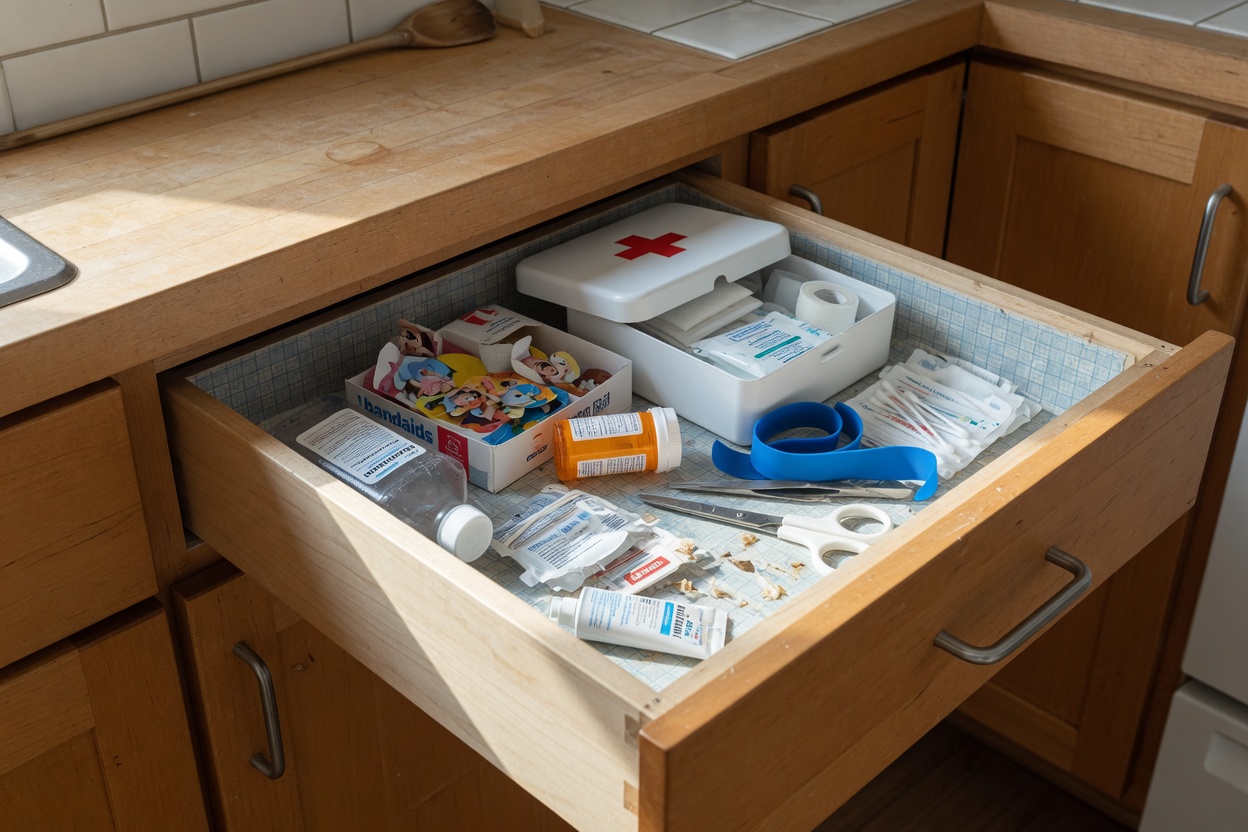
An access failure on arrival night has a specific shape: a guest standing at a dark front door, phone battery at twenty percent, typing a code that does not work, with no idea whether to call the host, wait, or start searching for a locksmith. It is one of the most common ways a five-star stay turns into a one-star review, and it almost never happens because a host was careless. It happens because a listing promised something the host never actually tested.
"Easy self check-in" is a claim. A host who has personally walked the arrival sequence after dark, with a phone at low battery, parking where a guest would actually park, has tested it. The gap between those two things is exactly where midnight lockout calls come from, and it is closable with one honest dry run rather than another round of reassuring listing copy.
This piece is a practical checklist, not a promise of a specific booking lift or fee schedule. It covers how to test a door code or lockbox before it fails on a guest, what actually belongs in a backup-contact plan, where parking instructions need to live, and how to sequence arrival-night information so a tired guest finds what they need first. This is not legal advice.
The Core Failure This Drill Is Meant to Prevent
An access failure on arrival night means a guest who cannot get into the property because a code was not tested, parking was not clearly marked, or no backup contact was reachable when something did not work as advertised. It is a preventable failure, not a random one, and it is almost always traceable to a specific gap: a battery that died, a code that was never rechecked after a reprogram, or a parking spot that made sense to the host but not to someone arriving for the first time in the dark.
Soft, always-works listing language, phrases like "seamless check-in" or "you'll have no trouble finding us", is exactly the kind of copy that sets up this failure. It reassures a guest right up until the moment the code does not work, and then it becomes the thing the guest remembers most: the listing promised something and it was not true when it mattered.
The fix is not more reassuring language. It is testing the actual arrival sequence the way a guest will actually experience it, then writing down only what has been verified to work, and building one specific fallback for the moment when it does not.
Test the Code Before Every Guest, Not Just Once at Setup
A door code or lockbox should be tested before every new guest's check-in window, not just once when it was first installed. Batteries die on their own schedule, codes get reprogrammed and sometimes only partially save, and a lockbox mechanism that worked cleanly in January can stick or jam in July heat. None of that is visible from inside the house during the week; it only shows up when someone actually tries the door the way a guest will.
A five-minute test on the afternoon of arrival catches the overwhelming majority of these failures before they become a ten o'clock phone call. That means physically walking to the door, entering the exact code a guest will be given, and confirming it opens on the first try, not assuming it still works because it worked last month.
This is also the moment to check anything adjacent to the code itself: does the porch light turn on automatically or does a guest need to find a switch in the dark, is the house number visible from the street at night, and does the lock respond the same way in current weather as it did the last time it was tested. Small environmental details change how a system that worked in daylight performs after sunset.
What Actually Belongs in a Backup-Contact Plan
A real backup-contact plan is a named person who can physically reach the property within a reasonable window, not a phone number that simply rings to voicemail after hours. That person needs to know the code, the parking situation, and any quirks of the specific lock in use, not just a general instruction to "help out if something goes wrong."
Guests should be told exactly when to call the backup contact versus when to message the host directly, so a stranded guest is not left guessing which channel will actually get a response fastest. Ambiguity at eleven at night is the enemy here; a guest should never have to choose between two vague options while standing outside in the dark.
It is worth actually testing this contact the same way the code gets tested: confirm the person is reachable at the phone number listed, that they remember the current code (not last season's), and that they genuinely know how to get into the property themselves if a guest cannot. A backup contact who has to be walked through the process for the first time during an actual emergency is not a functioning backup plan.
Parking Instructions Cannot Live Only in a Pre-Arrival Message
Parking instructions belong in more than one place: the pre-arrival message, the listing's house rules, and ideally a physical sign or note visible from the driveway itself. A guest arriving after dark, tired from travel, and possibly navigating an unfamiliar street is the least likely person to scroll back through a message thread looking for where to park.
This matters more than it might seem, because a guest circling the block looking for parking is already frustrated before they ever reach the front door, and that frustration compounds quickly if the door code then does not work either. Solving parking clearly is one of the cheapest, easiest fixes available to any host, and it removes one entire category of arrival-night stress before it starts.
A simple physical marker, a reflective house number, a sign at the correct driveway entrance, or a designated spot clearly separate from a neighbor's, does more to prevent a bad first impression than another paragraph of listing copy describing how easy check-in supposedly is.
Sequence Access Information Before Quiet Hours and House Rules
Access instructions should arrive first, clearly, in both the check-in message and the listing itself, ahead of any reminder about quiet hours or general house rules. A guest who cannot get inside has no immediate use for a quiet-hours reminder; burying the door code under several paragraphs of other policy text is a common, avoidable way hosts create their own midnight phone calls.
The most useful check-in message is short and ordered by what a guest actually needs at each moment: where to park first, then how to find the door, then the exact code, then what to do if the code does not work, and only after all of that, the general house rules. Anything that delays the access information is working against the guest at the exact moment they need it most.
This same sequencing logic should carry over to the listing's own written fields, not just the private message thread. A guest skimming the listing before booking, or re-reading it while standing at the door, should be able to find access information quickly without digging through unrelated marketing language first.
Five Anti-Patterns Worth Naming and Avoiding
A handful of specific patterns show up again and again around arrival-night failures: promising an arrival experience the property cannot actually deliver, pausing guest communication to work on a broader planning document instead of fixing the immediate problem, measuring success only through vanity metrics like review star averages rather than actual complaint patterns, copying another property's arrival language without verifying it matches this specific door and driveway, and quoting an occupancy or booking lift figure nobody can actually audit.
Any one of these five is recoverable on its own, but they tend to compound: a host who copies generic arrival language, does not test it, and then measures success only by star rating can go a long time without realizing a specific failure keeps recurring, because the overall rating stays acceptable even while individual guests hit the same access problem.
The corrective in every case is the same: prefer one honest, specific rewrite of the actual arrival instructions over a broader rebrand or a new round of marketing language. A single accurate paragraph about the door code and parking spot does more real work than an entire new welcome page built around reassurance instead of verified fact.
What to Do Immediately After Any Arrival-Night Failure
When an access failure does happen, the first move is fixing the specific point of failure the same day, not adding it to a general to-do list for later: reprogram the code, replace the lockbox battery, repaint a faded parking line, or fix whatever the actual mechanical cause turned out to be. A delayed fix means the very next guest can hit the identical problem.
The second move, just as important, is updating the listing's written instructions so future guests do not encounter the same gap. An unwritten fix protects only the guest who happened to complain; the guest after them, who never says anything and simply leaves a quieter, lower rating, is the one most hosts never hear from directly.
It is worth resisting the urge to treat one failure as proof that the whole arrival system needs an overhaul. Correct the specific stay, answer any open guest messages honestly, and only then decide whether the underlying process genuinely needs broader changes or whether this was a single, now-fixed point of failure.
Does a Smart Lock Solve This Problem on Its Own?
A smart lock does not eliminate the need for a tested backup contact. Smart locks fail in their own specific ways, dead batteries, lost Wi-Fi connectivity, an app that will not sync at the exact moment a guest needs it to, and a guest standing in the dark does not particularly care why the technology failed, only that someone can get them inside promptly.
If anything, a smart lock adds an additional layer worth testing specifically: does the lock still function with a physical backup code if the app or Wi-Fi is unavailable, and does the host or backup contact actually know that physical code without needing to look it up under pressure. A system with no offline fallback is a system with exactly one point of failure standing between a guest and the front door.
A tested backup contact remains the fallback for any access method, smart or purely physical, because it is the one part of the system that does not depend on batteries, signal strength, or an app server staying online at the right moment.
A Simple Seasonal Drill Worth Repeating
The most reliable way to catch access problems before a guest does is to physically walk the exact path a guest will take, from parking, to the front door, to code entry, to finding the lights, once per season and again after any change to the property. Doing this at the same time of day or night a guest is actually likely to arrive matters more than it might seem, since problems that are invisible in daylight often only appear under real arrival conditions.
A faded house number, a code that sticks in cold weather, a porch light on a timer that does not match actual sunset times as the seasons shift, these are the kinds of small, cumulative issues that a daytime glance at the property will never surface, but that a guest arriving at nine at night in January will hit immediately.
At roughly thirty days after any change to the property, it is worth re-reading the listing's own arrival claims against the actual questions guests have been asking, and at ninety days, dropping any language that keeps producing the same clarifying question. If guests keep asking where to park despite a listing that claims parking is easy, that repeated question is the clearest possible signal the copy has not caught up to reality yet.
When This Work Is Actually Finished
This drill does not require an elaborate new system, a smart-home overhaul, or a professionally produced welcome video. It requires one accurate paragraph about the door code, one clearly marked parking spot, and one backup contact who has actually been tested, not just listed. Independent hosts do not need a larger operational playbook to keep a clear Saturday running smoothly; they need the specific, verified facts that prevent the one failure most likely to actually happen.
The work is finished, for now, when arrival matches what the listing and messages actually promise and guest inquiries about access have gone quiet. If that quiet holds, additional arrival-night documentation is optional rather than necessary; add more only when a specific, named gap shows up again, not as a preventive exercise for its own sake.
Occupancy numbers alone will not prove this work succeeded if accuracy complaints are still rising in the background. The better test is simpler and more direct: are guests still asking the same access question they were asking three months ago? If not, the drill worked. If so, it is worth repeating before the next booking window opens rather than after the next bad review lands.
Related Reading
More independent-host reading on honest listing copy, distribution, and when hiring help is worth it.
Frequently Asked Questions
What is the core failure this page is meant to help hosts prevent?
An access failure on arrival night: a guest who cannot get in because a code was not tested, parking was not marked, or no backup contact was reachable when something did not work. The fix is testing codes, confirming parking instructions, and having a backup contact process in place before guests need them, not after a midnight lockout call.
How often should a host actually test the door code or lockbox?
Before every new guest's check-in window, not just once at setup. Batteries die, codes get reprogrammed, and a lockbox that worked in January can jam in July heat. A five-minute test the afternoon of arrival catches most failures before they become a ten p.m. phone call.
What belongs in a backup-contact plan for arrival night?
A named person who can physically reach the property within a reasonable window, not just a phone number that rings to voicemail. That person should know the code, the parking situation, and any quirks of the lock, and guests should be told exactly when to call them versus when to message the host directly.
Should parking instructions live only in the pre-arrival message?
No. Parking instructions should also be in the listing's house rules and, ideally, a printed sign or note visible from the driveway. A guest arriving after dark, tired from travel, is the least likely person to scroll back through a message thread to find where to park.
What's the difference between a smooth-sounding listing and a tested one?
A listing that promises easy self check-in is a claim; a host who has personally walked the arrival sequence in the dark, with a phone at low battery, has tested it. The gap between the two is exactly where midnight lockout calls come from, and it is closable with one dry run per season.
What should a host do immediately after any arrival-night failure?
Fix the specific point of failure, reprogram the code, replace the lockbox battery, repaint a faded parking line, the same day, not on a general to-do list. Then update the listing's written instructions so the next guest does not hit the same gap, since an unwritten fix only protects the guest who complained.
Does a smart lock eliminate the need for a backup contact?
No. Smart locks fail too, dead batteries, lost Wi-Fi, an app that will not sync, and a guest standing in the dark does not care why the tech failed, only that someone can get them inside. A tested backup contact is the fallback for any access method, smart or physical.
How should quiet-hours and access instructions be sequenced for a late arrival?
Access instructions should arrive first, clearly, in the check-in message and the listing itself, before any reminder about quiet hours or house rules. A guest who cannot get in has no use for a quiet-hours reminder yet, and burying the door code under other text is a common way hosts create their own midnight calls.
What's a simple way to catch access problems before they reach a guest?
Walk the exact path a guest will take, parking, front door, code entry, lights, once per season and after any change to the property, ideally at the same time of day or night a guest is likely to arrive. Problems invisible in daylight, like a faded house number or a code that sticks in cold weather, often only show up when tested the way a guest will actually experience it.
How can a host tell whether this drill actually worked?
The clearest signal is whether guests stop asking the same access question they were asking a few months earlier. Occupancy or star ratings alone will not prove the work succeeded if accuracy complaints are still quietly rising, so track the specific question, not just the overall score.
Is a smart lock or camera system required to fix arrival-night failures?
No. The fixes that matter most, a tested code, a clearly marked parking spot, a reachable backup contact, work with any lock type, smart or purely physical. Technology can help, but it does not replace the actual physical test of walking the arrival sequence yourself.
Work with Crest & Cove Creative
A listing that promises always-smooth check-in without naming the door code, parking spot, and backup contact is setting up a midnight emergency. Test it yourself before a guest tests it for you.
We rewrite arrival copy around the codes, parking, and backup contact hosts have actually tested, so first-night instructions hold instead of just sounding reassuring. Start at crestcove.co or call (256) 998-7502. Send the live listing draft and the facts you can actually cite.
Reach out at crestcove.co or (256) 998-7502.


Comments