
Shoot Listing Video That Still Tells the Truth at Check-In

Updated: Aug 27
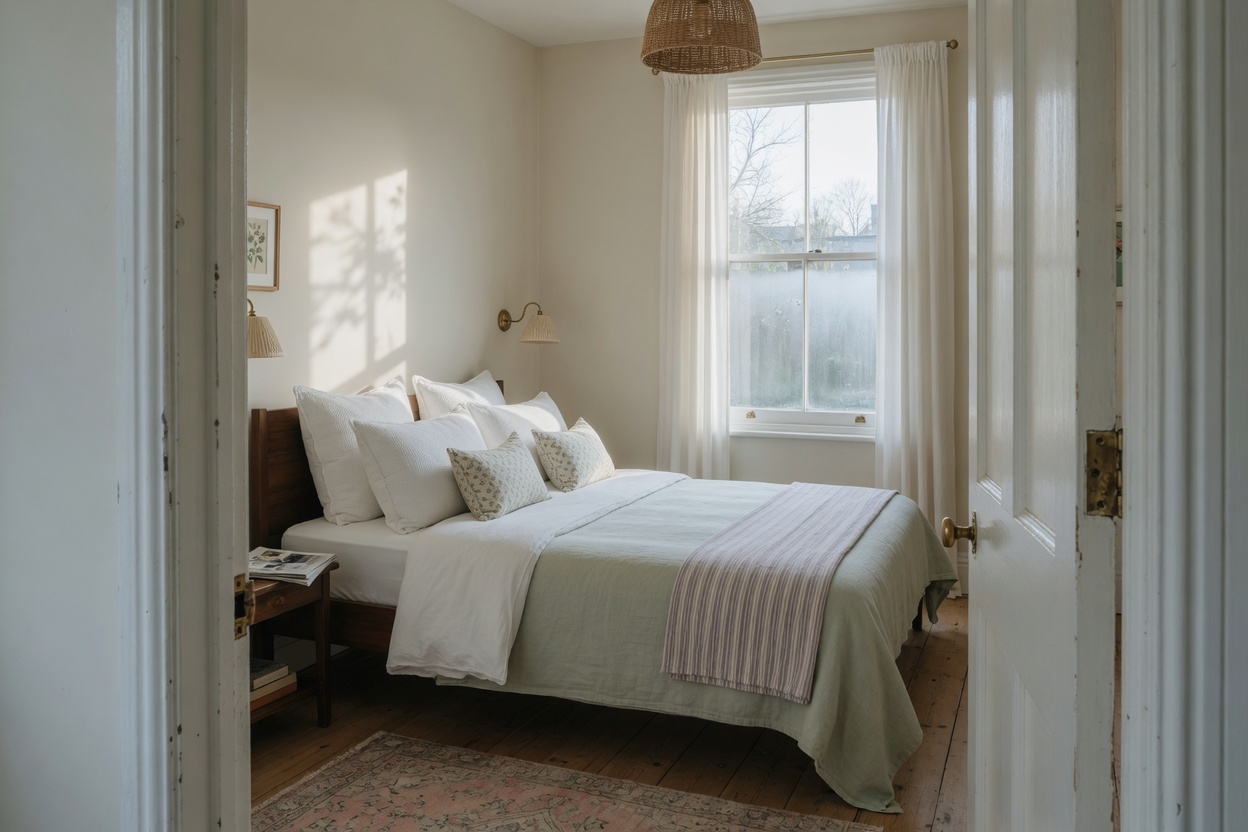
Short-form video sells a stay before a guest ever reads the listing description. A fifteen-second walkthrough can do more to close a booking than three paragraphs of copy, which is exactly why the footage has to hold up once a guest is standing in the actual room. A clip that shows the bedroom as it looks today, a pool as it is genuinely usable this week, and a view as it is actually visible from the porch protects the booking all the way through checkout. A clip that borrows an old shoot, a different season, or a neighboring unit does not create a booking that would not otherwise have happened; it just moves the guest's disappointment from the search results page to the first ten minutes on site.
This page stays on the practical marketing question: how to film and caption listing video without misleading guests, what actually counts as a misrepresentation versus a harmless wide-angle shortcut, the specific filming habits that generate complaints, and a repeatable pre-publish check any host can run before hitting upload. It is marketing guidance about public proof, not insurance or legal advice about liability. This is not legal advice.
Why misleading video costs more than it earns
A video that oversells a property does not guess new demand out of nothing. It borrows a booking from a guest who would have chosen something closer to accurate if they had seen it, and it convinces a fence-sitter to book a stay they will start second-guessing before they even finish unpacking. That second-guessing shows up in a pre-arrival message asking to confirm the pool is really private, then in an in-stay complaint once they discover it is not, then in the review that follows. Each of those touchpoints costs a host real time and, often, real money, far more than the extra minute it would have taken to shoot the clip honestly in the first place.
Direct-booking pages and OTA listings both depend on a kind of trust a guest cannot fully verify until they arrive. A walkthrough video is one of the few available formats that can genuinely close that gap early: real stairs filmed as they are, real counter space shown at its actual size, real distance from porch to water walked out on camera rather than implied. Hosts who use video this way consistently see fewer "is this really what I booked" messages landing in their inbox during a stay.
Hosts who paper over a shortcoming with clever editing or a well-chosen angle do not eliminate the guest's question, they just relocate it. Instead of arriving in a pre-booking message a host can answer calmly and honestly, the question arrives as a complaint sent from the property itself, usually after dark, usually with less patience attached to it.
There is also a compounding cost across a guest's full stay that a single misleading clip rarely gets credit for. A guest who arrives already suspicious that one detail was oversold, a view, a pool, an amenity, tends to scrutinize everything else more closely too, checking whether the kitchen matches the photos, whether the bed count is accurate, whether the noise level matches what was implied. One honest video habit builds a baseline of trust that carries through the entire stay, not just the moment of arrival.
What actually counts as misleading, and what does not
Wide-angle lenses are standard practice across the industry, and most guests intuitively understand that a room can look somewhat larger on video than it feels in person, the same way listing photos have always used a slightly wide lens to show a full room in one frame. That is not the line that matters. What crosses into genuinely misleading territory is anything that changes what a guest reasonably expects to receive: furniture that will not actually be there when they arrive, a view that is not visible from the spot the camera implies, or an amenity that is not currently available at all.
A useful three-part test before publishing any clip: Does this exact shot exist right now, in this specific unit, in the current season? Would a reasonable guest watching it conclude something that is not true, for instance that a shared hot tub is private to their unit? And if that same guest stood in the exact spot the camera stood, holding the video open on their phone for comparison, would they nod in recognition, or would they feel like they were shown something else entirely?
That third question is the one that catches the most subtle problems, because it does not require intent to deceive. A host who genuinely forgot to update a video after a renovation is not lying, but the guest standing in a room that no longer matches the clip does not experience the difference between an honest mistake and a deliberate one. The fix, and the standard, is the same either way.
Lighting and time of day sit in a genuine gray zone worth naming directly. A video shot at golden hour to show a room at its most flattering is standard practice and not misleading on its own, the same way a listing photo taken in good light is not dishonest. The line moves only when the lighting choice is paired with a claim, implying a view or ambiance exists at all hours that in reality only appears for twenty minutes at sunset.
Five video mistakes that generate the most complaints
The same handful of shortcuts show up across a huge share of the complaints hosts actually receive about video. Filming in one favorable season, usually summer, and leaving that clip up year-round regardless of when a guest will actually stay. Reusing older footage after a renovation quietly changed the furniture, the paint, or the floor plan, so the video is technically of the same address but no longer of the same interior. Showing a shared pool, dock, hot tub, or laundry room in a way that implies exclusive access, without ever saying the word shared. Cutting away from a busy road, a shared driveway, or a stair without a handrail simply because it is not the most flattering angle, rather than because it is not true. And using stock or AI-generated b-roll of a similar-looking property in place of footage of the actual unit a guest is booking.
Any single one of these can be a genuinely honest mistake the first time it happens, an old video nobody thought to update, a shared amenity nobody thought to caption. Left uncorrected across multiple guest stays, though, each one becomes a recurring pre-arrival question, a predictable review line, or eventually a partial-refund request that costs far more in time and money than fixing the original clip would have.
The fix for all five is nearly always cheaper than the guest issue it prevents: eight to fifteen seconds of honest footage, or one clear caption, resolves most of them without requiring a full reshoot of the property.
A sixth pattern worth naming separately, because it is easy to miss: filming a unit that is genuinely representative but not the specific one a guest will actually receive, common with multi-unit properties where hosts film the nicest of several similar units and let it stand in for all of them. If unit assignment is not guaranteed at booking, either film each unit honestly or caption clearly that the video shows a representative, not guaranteed, unit.
One listing, one fix
Consider a three-bedroom cabin with a shared gravel driveway and a covered porch, a real property, a real problem worth walking through in detail. The original walkthrough video panned quickly past the driveway on its way to the porch and lingered there instead, so the shared parking situation never actually appeared on screen. Guests kept messaging before arrival to ask whether parking was private, and a handful of reviews mentioned genuine surprise at pulling in to find another car already there.
The fix was not a full reshoot of the property. It was eight additional seconds of footage showing the actual driveway, paired with a simple on-screen caption: shared gravel driveway, space for both cabins. The written house rules had already disclosed this detail in text, but the video had been quietly contradicting it by omission, showing everything except the one thing guests kept asking about.
After the update, pre-arrival parking questions dropped noticeably, and the review lines mentioning surprise about parking stopped appearing entirely. The lesson generalizes well beyond this one cabin: the fix for most misleading video is not a full production overhaul, it is finding and filling the single specific gap between what the clip shows and what the house rules already say in writing.
A pre-publish honesty checklist worth running on every clip
Before publishing or re-publishing any listing video, confirm four things directly. Every shot exists in the unit today, not in a past version before a renovation or a future version you are planning but have not completed. Shared spaces are shown as shared, or explicitly captioned as shared, never implied as private through careful framing. Seasonal features, a pool, a fire pit, a dock, are filmed in season or clearly captioned with their current availability if filmed out of season. And known friction points, road noise, a steep stair, the absence of an elevator, thin walls between rooms, get at least a second of honest footage or a plain caption rather than being edited out entirely.
The caption itself should never guess a view count, a ranking claim, or an occupancy figure that has no real source behind it; those numbers belong on pages built to cite them properly, not as unsourced text laid over a walkthrough clip. If the video and the written listing description ever disagree with each other, on square footage, on amenity availability, on anything specific, fix the video to match the listing rather than the reverse, since the listing description is usually the more carefully maintained and more legally relevant document of the two.
When the video genuinely does not need to change
Most listings, once they have been through an honest review, do not actually need a full overhaul. They need one careful look with fresh eyes, ideally from someone who has not watched the clip fifty times and stopped noticing what it actually shows. If the walkthrough already displays current rooms accurately, names shared spaces as shared, and does not promise anything the house rules contradict, the right move is to leave it alone.
Recutting an already-accurate video purely to chase a newer editing trend, a trendier transition style, a different pacing, is time that is almost always better spent elsewhere: answering the inbox, or addressing a maintenance item a recent guest actually flagged. Save the reshoot budget and the time investment for a genuine change that matters, a real renovation, a removed amenity, or a season shift that has made the existing clip no longer match what a guest will actually walk into.
How this differs from a simple photo update
Video carries a different kind of risk than a still photo, because motion and duration create an implicit promise a single image does not. A photo of a kitchen invites a guest to imagine the room; a video walking through that same kitchen implies the guest is seeing the actual, current, complete space in real time, which raises the bar for accuracy noticeably higher than a curated photo gallery does.
This is also why video ages faster than photography in terms of accuracy risk. A dated photo of a kitchen that has since been repainted a different color is a minor mismatch a guest will likely forgive. A video walkthrough of that same outdated kitchen, complete with furniture and fixtures that no longer exist, reads as a much larger gap between promise and reality, because the format itself claims to be showing a guest exactly what they will get, not an artistic impression of it.
This higher bar is worth treating as an advantage rather than a burden once a host internalizes it. A property that consistently passes the honest-video standard earns a specific kind of trust that a photo-only listing cannot replicate as quickly, because a guest who watches an accurate walkthrough arrives with fewer open questions, which tends to show up as fewer pre-arrival messages and a smoother check-in overall.
Related Reading
Related reading for Using Video Without hosts: same-town spine first, then nearby geo lines. Skip costume national dumps that do not underwrite this driveway.
Frequently Asked Questions
What actually counts as a misleading listing video?
Any shot or caption that leads a guest to expect something they will not actually get: a different season shown as current, a shared space filmed as though it were private, a removed amenity still appearing on screen, or an old renovation that no longer matches what a guest finds on arrival. Wide-angle lenses alone are not the problem. Guests complain specifically when the walkthrough contradicts either the house rules or the written listing description they booked against.
How often should a listing video actually be reshot?
Reshoot when the unit itself changes, a renovation, new furniture, a removed amenity, or when the season shown in the existing clip no longer matches what a guest will actually walk into. There is no fixed calendar for this. A spring gallery still running summer pool footage, or a furnished room that has since been remodeled and no longer exists, are the two most common triggers. If nothing material has changed and the walkthrough still matches the live listing, leave it and spend the hour on something else.
Do I need to show every single flaw in the walkthrough?
No. You need to show or caption anything that would genuinely change a guest's decision to book, particularly shared spaces, access quirks, noticeable noise, parking arrangements, and any view that depends heavily on the season. Hiding a small cracked floor tile is meaningfully different from filming a shared driveway as though it were private and exclusive to the guest's unit. Honesty here means disclosing decision-changing facts, not producing a complete inventory of every cosmetic imperfection.
Does an honest video actually hurt bookings compared to an aspirational one?
An honest video can reduce impulse bookings from guests who were realistically never going to be satisfied anyway, but it consistently tends to reduce cancellations, negative reviews, and refund disputes overall. Aspirational footage that contradicts the actual Saturday-night stay tends to cost a host more after arrival than it ever earned in extra clicks during search. The walkthrough a guest can genuinely rely on outperforms the polished reel that quietly falls apart at check-in.
What should I do if I already have a video that oversells the listing?
Re-cut or recaption it before publishing anything new elsewhere. The fix is usually as small as adding a few seconds of honest footage or one clear caption naming the shared space, season, or missing amenity the original clip glossed over. Pull the clip from both the OTA and any direct-booking site until the oversell is corrected. Leaving a misleading video live while you plan a full replacement shoot keeps the exact refund risk you already know is sitting there.
Does video length or production polish affect how honest it reads to a guest?
Not directly, and often the relationship runs the opposite direction. A rougher, more obviously real walkthrough can actually read as more trustworthy than an overly polished one, because a guest can more easily map the rooms they see to the rooms described in the listing. Heavy polish that hides shared access or implies a private view that does not exist is what genuinely fails, not the video's length or production value on its own.
Should video captions simply repeat what is already in the listing description?
They should match the listing description, not repeat it word for word as though copying and pasting. If the house rules mention a shared driveway or a quiet-hours policy, the video captions should never contradict that language, even implicitly through framing. Captions exist to clarify what the camera lens compresses or leaves out entirely, season, sharing arrangements, access routes, so the video and the written listing stay one single honest promise a guest can actually rely on.
What is the fastest way to audit an existing video for accuracy?
The fastest reliable method is watching the video once straight through with the current house rules and listing description open side by side on another screen. Flag anything appearing on screen that is not also confirmed true in writing, and separately flag anything true in writing that the clip quietly skips entirely. Shared amenity shots, seasonal cues, and access claims are consistently the most common misses. Fix those specific frames or captions before spending any time filming new footage.
Can I reuse last summer's pool footage for a listing shown in winter?
Not without a clear, visible caption noting that the pool is currently closed for the season, and even with a caption, many hosts find it safer to simply pull that clip entirely until the pool reopens. Guests who watch a full, sparkling-pool walkthrough in January frequently arrive genuinely expecting water. A seasonal mismatch like this is one of the fastest, most avoidable ways an otherwise honest listing turns into an uncomfortable refund conversation.
How should a buyer evaluating a property read its listing video during diligence?
A buyer should watch the walkthrough directly against the written house rules and ask specifically whether shared spaces, access arrangements, and seasonal features still genuinely match each other. If the video hides a shared driveway, implies a private amenity that is not actually private, or keeps summer pool water visible on a listing being marketed for winter, that combination is worth treating as unfinished marketing work, a signal to dig further before underwriting the property as a finished, reliable product.
Does this guidance apply the same way to short-form social video as it does to the listing page's own walkthrough?
Yes, and arguably it matters even more there, since a TikTok or Reel is often the very first thing a prospective guest sees, well before they ever reach the full listing description or house rules. A short clip that oversells to earn a share or a save creates the exact same at-arrival gap this whole guide addresses, just with an earlier, wider audience seeing the mismatch before the guest who actually books ever gets to read the fine print.
Work with Crest & Cove Creative
A pool clip filmed once last July still gets shown to a guest checking in this January to a locked, drained pool. That gap between the video and the actual arrival is what turns a five-star booking into a refund.
Most listing video problems are not dishonest, they are just outdated: a shared driveway that never got its own caption, a renovation the clip forgot to catch up to. We help hosts run the honest audit and fix the specific seconds of footage actually causing the complaints.
Reach out at crestcove.co or (256) 998-7502.


Comments