
Do You Need A Direct Booking Site For A Georgia Stay


This page assumes listing copy and platform SEO are already happening for a Georgia stay — the question here is not whether marketing is needed at all, but whether a direct booking site is the next file, or whether listing work should still come first. Those are different answers for different hosts, and guessing wrong in either direction wastes real money.
A host who buys a site and thinks they bought listing rank has paid for the wrong file. A host who buys listing help and thinks they bought a booking engine has done the same thing in reverse. This page is built to keep those two purchases distinct before either one gets made.
None of this changes much whether the property sits on the coast, in the North Georgia mountains, or on a lake. The specific geography changes the guest and the season; it does not change the underlying test for whether an owned site is worth building yet.
The Coast Weekend That Keeps Paying Full Platform Fees
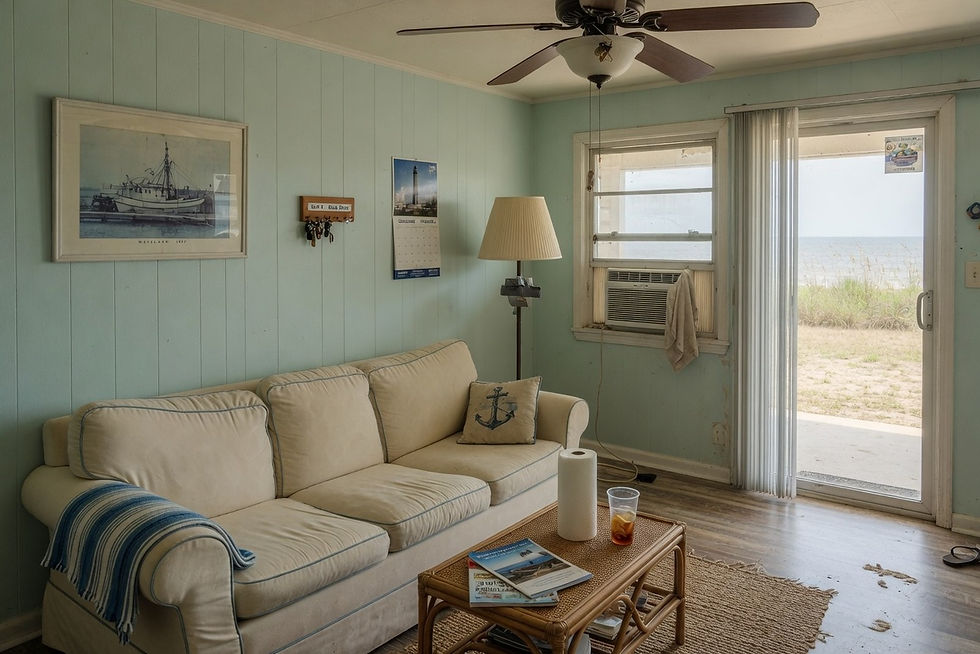
If a host already has listing copy and still pays full platform fees on repeat coast weekends — the same guests coming back, still booking through the platform every time — an owned site may be the next file worth building. That repeat pattern is the clearest signal an owned booking option would actually get used.
The same logic applies to a North Georgia mountain cabin with a loyal following, or a lake-town unit with regulars who return every summer. The specific region matters less than the underlying pattern: guests who already trust the property, still routed entirely through platform fees.
It is worth checking this signal against actual messages rather than assumptions. A host who can point to specific guests who have asked, directly, whether the same week is available again next year has a much stronger case for an owned site than a host who simply believes their guests would probably come back if asked. The first is a confirmed pattern; the second is a guess dressed up as a signal.
A useful exercise is going back through the last twelve months of guest messages and counting how many came from a name you recognize from a prior stay. That number, whatever it turns out to be, is a more honest starting point for this decision than a general sense of the property being popular, since it separates guests who are actually rebooking from guests who simply left a nice review and never came back.
What Boutique Shops Build That Listing Recuts Don't
Listing help recuts the platform tile and does not replace an independently owned site — the two solve different problems and should be treated as separate purchases, even when the same agency handles both. Boutique STR shops and some generalists sell owned sites specifically; not every agency that recuts listings also builds independent booking engines.
A host evaluating a pitch should confirm directly which of the two is actually being offered, since the language used to describe either service can sound similar even when the underlying deliverable is completely different. Ask what specifically gets delivered: a refreshed listing tile inside the platform's own pages, or an independently owned site with its own domain and its own booking or inquiry flow. A vendor should be able to answer that question in one sentence without hedging, and a pitch that stays vague on this point is worth pushing on before any contract gets signed.
One practical way to confirm this: ask to see a finished example of each. A listing recut should be visible as an actual, live Airbnb or Vrbo listing the agency has worked on. An owned site should be visible as an actual, independently hosted website with its own domain and its own booking or inquiry flow. If an agency can only point to one of the two, that tells you which service they are actually equipped to deliver.
Do You Actually Keep A Repeat-Guest List?
Send the listing and whether a repeat-guest list already exists — even an informal one kept in a notes app or spreadsheet. That detail is one of the clearest signals of outgrowing listing-only marketing: regulars, an existing list, or a second unit that would benefit from sharing one owned search presence.
If a repeat-guest list does not exist yet, that is not disqualifying on its own, but it does suggest listing work is still the more urgent priority — an owned site built before there is an audience to reach with it tends to sit underused.
Two Ways To Buy The Wrong File
The mistake runs in both directions equally often. A host who buys a site and thinks they bought listing rank has paid for the wrong file — an owned site does not automatically improve platform search ranking. A host who buys listing help and thinks they bought a booking engine has made the same mistake in reverse — a recut listing does not create a repeat-guest booking flow.
Confirming which purchase is actually being made, in writing, before signing, avoids both versions of this mistake. It is a simple question that a surprising number of pitches never actually answer directly, and getting it in writing before any money changes hands protects both sides of the conversation if expectations later diverge from what was actually delivered.
Where This Page Assumes You Already Are
This page assumes listing copy and SEO work are already underway for the property in question — it is not the right starting point for a host whose listing itself still needs the first round of attention. If that describes your situation, listing work is the more accurate next step, not a direct booking site.
Send the listing and whether a repeat-guest list already exists, and we will say plainly whether a direct booking site is the next file or whether it is still premature for this specific Georgia property. That answer depends less on total review count and more on whether real, identifiable guests come back — a pattern just as visible on a lake-town cabin as a busier coast rental. There is no cost to asking, and a straight no is just as useful as a yes — it saves the trouble of building a site the guest base isn't ready to use yet.
What Actually Goes Into Building A Direct Site
A direct booking site is not just a static page describing the property — it typically needs a working booking or inquiry flow, availability that stays in sync with the platform calendar, and content that names the actual coast, mountain, or lake-town location a guest is searching for, not a generic Georgia description reused from a listing.
That combination is a meaningfully bigger build than a listing recut, which is part of why it tends to make sense only once there is an existing audience — repeat guests or a guest list — ready to actually use it rather than a site sitting idle waiting for its first visitor.
The content side of the build matters as much as the technical side. A coast property, a mountain cabin, and a lake-town unit are searched for with different language by different guests, and a site that treats all three the same way undersells whichever one it was not actually written for.
The Two Timing Mistakes Hosts Make
The first common mistake is building a direct booking site too early, before there is a repeat-guest base large enough to justify it, resulting in an owned asset that costs money to maintain but rarely gets used. The second mistake runs the other direction: waiting too long after the signals are already present, meaning continued full platform fees on guests who would have gladly booked direct.
Neither mistake is really about the site itself — both come down to timing the decision against what the actual guest base looks like, rather than against a general sense of "probably time" or "not there yet." The first version costs money every month a site sits mostly unused; the second version costs money every booking that still routes through a platform fee that a repeat guest would have skipped gladly. Reviewing actual guest messages from the past year, rather than going on instinct, is the more reliable way to land the timing correctly in either direction.
Where Owned Search Fits Into This Decision
A direct booking site and an independent Google-ranked page are related but not identical purchases. A direct booking site is built primarily to convert an existing repeat-guest audience; owned search is built primarily to find new guests through Google who have not yet heard of the property, whether they are searching for the coast, the mountains, or a lake town.
A host can reasonably build one without the other, though the two eventually complement each other well: a site built for owned search can also serve as the direct booking site once a repeat-guest base develops, provided the underlying build supports both purposes from the start.
Keeping A Direct Site Running After Launch
A direct booking site is not a one-time build that then runs itself indefinitely. Keeping availability accurate, keeping seasonal content current for the coast, mountains, or lake town, and keeping the booking or inquiry flow working all require some ongoing attention, even if less than the initial build required.
A host evaluating whether to build one should ask specifically what ongoing maintenance is included in the initial quote versus billed separately later, since an unmaintained direct site can quietly become a liability rather than the asset it was meant to be. This is not legal advice, and none of this substitutes for reading an actual contract before signing it.
What a Georgia Booking Page Should Get Right on Tax and Registration
A direct booking checkout should show applicable state sales tax, and any local or county-level lodging tax, clearly and itemized before a guest pays, rather than folding it into a single total revealed only at the last step. Requirements can differ by county, and a coast property, a North Georgia mountain cabin, and a lake-town unit may not all sit under identical local rules even though they share a state.
Confirm current rates and registration requirements directly with the Georgia Department of Revenue and the relevant county office before finalizing checkout copy or advertising language, rather than assuming a previous season's figures still apply. A direct site that gets this detail right, and shows it plainly rather than burying it, tends to build more guest trust than one focused only on photography.
This also matters for how a direct site is positioned against the listing it sits alongside. A guest comparing the two is, in effect, comparing how much they trust each version of the same property, and a direct site that handles the basic compliance and tax details as carefully as the photos and copy reads as the more credible of the two, not just the more convenient one.
It's worth revisiting this section of the site at least once a year, not just at launch. Local tax rates and registration requirements can change, and a page that was accurate when it launched two years ago is not automatically still accurate today. Treating the compliance section of a direct site as something to check periodically, the same way you'd check listing pricing, keeps it from quietly going stale alongside everything else that does get updated regularly.
Related Reading
These neighboring Crest & Cove Creative posts stay on the same marketing desk for independent hosts - listing clarity, owned search, and direct-booking choices without mixing in finance or legal work.
Nevada Hosts: Who Actually Does STR Marketing Across This Map
Iowa Hosts: Who Actually Does STR Marketing Across This Map?
Why Every Robbinsville, NC Cabin Owner Needs a Direct Booking Site
DIY or Hire? Marketing a White Salmon or Bingen Rental in 2026
DIY Can Run a Kahuku Listing. It Usually Can't Sell the Town.
Frequently Asked Questions
How do I know if I need a direct booking site for my Georgia rental?
Look for regulars who would book again, a repeat-guest list you already keep even informally, or a second unit that would benefit from one shared owned search presence instead of two separate listings. Without those signals present, listing work is often still the priority, since a direct booking site needs an existing audience to actually be worth the investment.
Does a direct booking site replace my platform listing?
No. Listing help recuts the platform tile and an owned site does not replace it. The two work together — the listing still drives new-guest discovery through the platform's own search results, while the owned site serves repeat guests who already know the property and want a way to book directly without paying a platform fee again.
What's the clearest sign I'm ready for a direct booking site?
Already having listing copy in place and still paying full platform fees on repeat coast, mountain, or lake-town weekends from guests who would happily book direct if given the option. That confirmed repeat pattern, rather than a general sense that guests would probably return, is the strongest signal that an owned site would actually get used.
I don't have a repeat-guest list yet. Am I ready for a direct booking site?
Probably not yet. An owned site built before there is an audience to reach with it tends to sit underused, since it has no built-in traffic plan of its own. Listing work and guest-relationship habits are usually the more urgent priority first, and starting even an informal list costs nothing while building the exact foundation a site would later need.
What's the most common mistake hosts make with this decision?
Buying a site and assuming it improves platform listing rank, or buying listing help and assuming it creates a repeat-guest booking engine. Both are the wrong file for the actual need, and both mistakes usually come from an agency pitch that never clearly separated the two services in the first place before the host signed anything.
Who sells owned direct booking sites for Georgia hosts?
Boutique STR shops and some generalists build owned sites specifically, though not every agency that recuts listings also builds independent booking engines. Confirm which is actually being offered before signing, and ask to see a finished, independently hosted example rather than assuming the pitch matches the actual deliverable, since the two services get described in similar-sounding language even when the underlying work is completely different.
Does this apply the same way to coast, mountain, and lake-town properties?
Yes, the underlying pattern matters more than the specific Georgia region. Repeat guests who already trust the property but are still routed entirely through platform fees is the signal to watch for, whether that property sits on the coast, in a North Georgia mountain town, or on a lake with a loyal summer following. The region changes the guest and the season; it doesn't change the underlying test.
What should I send to get a straight answer?
The current listing and whether you already keep a repeat-guest list, even informally in a spreadsheet or notes app. That combination is usually enough to tell whether a direct booking site is the next file worth building, or whether listing work and guest-relationship habits still need attention before that investment makes sense for this specific property and season.
Does this page assume my listing is already in good shape?
Yes. This page assumes listing copy and SEO work are already underway. If your listing itself still needs attention, that is the more accurate next step before a direct booking site, since an owned site built on top of an unfinished listing foundation just adds a second thing to maintain without fixing the underlying gap in guest discovery.
Is a direct booking site worth it for a small Georgia lake-town rental?
Potentially, if there are regulars or a repeat-guest list already in place. Size of the market matters less than whether an existing audience would actually use the direct option, though a smaller lake town will naturally take longer to build search visibility than a well-known coastal destination would, so expectations around timeline should be set accordingly from the start.
Work with Crest & Cove Creative
A repeat guest who still pays full platform fees every visit is the clearest signal a Georgia host is ready for an owned booking site. Ask for a marketing-only read of the listing.
Crest and Cove Creative will tell you plainly whether a direct booking site is your next file or whether listing work should still come first. Send your listing and whether you already keep a repeat-guest list, and we'll give you a straight answer.
Reach out at crestcove.co or (256) 998-7502.


Comments