
Greenville, SC Tourism Data: $2.5 Billion, 33% Hotel Growth, and What
- Thomas Garner

- Aug 10
- 11 min read
Updated: 3 days ago
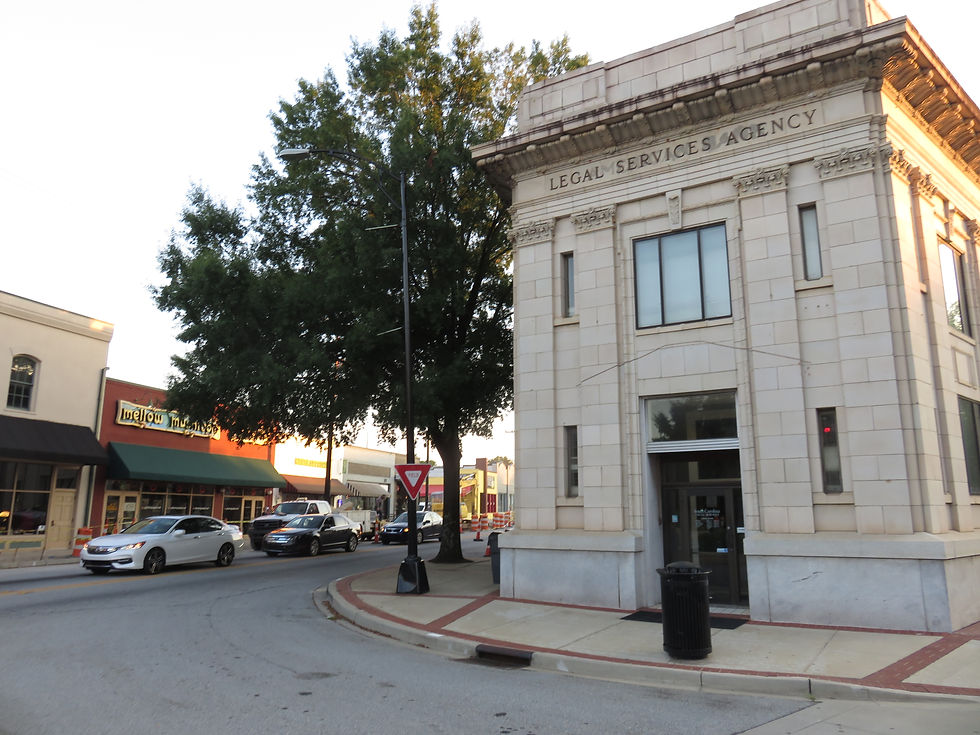
Greenville's tourism economy posted its strongest results on record in the most recent reporting cycle. Visit GreenvilleSC's calendar-year 2024 annual visitation report puts total visitor economic impact across Greenville County at $2.5 billion, a milestone the destination marketing organization credits to several consecutive years of post-pandemic growth in one of Upstate South Carolina's fastest-growing visitor markets.
That spending translated directly into public revenue and local employment. Visitors paid $201 million in state and local taxes in 2024, $106 million to the state and $95 million to local governments, while supporting roughly 1 in every 25 jobs countywide and funding $655 million in personal income for residents working in tourism-connected industries, according to Visit GreenvilleSC's report.
None of that is short-term rental booking revenue, and it shouldn't be mistaken for it. This piece exists to establish, with real sourced numbers, how large and how fast-growing the broader visitor economy is that Greenville STR demand sits inside — and to be precise about which data set is measuring which thing, because two separate reports get cited about this market and they're not interchangeable. This is not legal advice.
City vs. County: Two Real Data Sets, Not One
It's worth being precise about where Greenville's tourism numbers actually come from, because they come from two separate sources measuring two different things. The $2.5 billion figure above is Visit GreenvilleSC's county-wide, calendar-year total. A separate, city-specific data set, presented to Greenville City Council in August 2024 and covering the fiscal year running July 2023 through June 2024, put advertising-influenced travel spending — visitor spending the organization's own marketing is credited with generating — at $939 million, a 15% year-over-year increase.
City-level visitor tax revenue for that same fiscal year hit $45.4 million, split between $30.2 million in hospitality taxes and $15.2 million in accommodations taxes. Neither the $2.5 billion county figure nor the $939 million city figure is short-term rental booking revenue, and hosts evaluating Greenville shouldn't treat either one as a stand-in for it. Both measure how much money visitors as a whole put into the local economy across every category — hotels, restaurants, retail, recreation, transportation — not what an individual Airbnb or Vrbo listing earns.
For STR-specific figures, this cluster's own market report, covering Greenville's short-term rental performance directly, and the companion piece on whether Greenville is a good short-term rental investment, cover listing-level data. This post's job is narrower and more specific: establishing the scale of the broader visitor economy that STR demand draws from, not estimating what share of it lands on any given listing.
Hotel Performance and Room-Night Growth
The fiscal-year 2024 hotel numbers are where Greenville's tourism growth shows up most concretely. The city booked 95,064 hotel room nights in FY2024, up 33% year over year, and citywide hotel revenue grew 5.4% — a pace Visit GreenvilleSC says outperformed Charleston, Columbia, Savannah, and Asheville over the same period. Downtown hotels did even better: revenue there grew 11.4%, more than double the 6.8% growth rate for city hotels overall, a sign that demand is concentrating in the walkable downtown core rather than spreading evenly across the metro.
The growth isn't a one-year blip, either. Visit GreenvilleSC's presentation projected 121,568 hotel room nights already booked across the next four years, including roughly 60,000 room nights tied to the 2028 U.S. Bowling Congress championship — one of several large group and sports-tourism events increasingly choosing Greenville as a destination.
That combination — a 33% jump in room nights booked in a single fiscal year, plus a multi-year pipeline already on the books — describes a hotel market whose demand curve is still climbing, not one that peaked and is now leveling off. For a host thinking about Greenville, that trajectory matters more than any single year's headline number.
Occupancy and Rate Trends
Independent hospitality research backs up the demand story, with a caveat worth naming directly. According to HVS's coverage of Upstate South Carolina's hospitality sector, area hotel occupancy grew about 12% in 2022 with average daily rate up over 16%, before both metrics moderated in 2023 — occupancy up roughly 1%, ADR up over 7%. That's a market that grew fast, then settled into a steadier, more normal growth rate the following year, which is a healthier long-term pattern than a single spike that doesn't hold.
The 2024 data is harder to read cleanly. Hurricane Helene hit the region in late September 2024, and the atypically high occupancy and ADR growth recorded from late 2024 into early 2025 is expected to normalize as those storm-driven effects wash out of the year-over-year comparisons. Any host citing 2024's tail-end numbers as a clean baseline should factor that caveat in rather than treating a storm-driven spike as ordinary demand.
Hotel supply growth has also slowed sharply. HVS notes only two economy-chain hotels have opened since mid-2023, with one additional property currently under construction. That matters directly for STR hosts, because a supply-constrained hotel market has less room to absorb Greenville's growing visitor volume on its own — every additional visitor arriving into a market that isn't adding hotel rooms at pace has to find lodging somewhere else.
The Demand Drivers Behind the Growth
Greenville's visitor and business-travel base rests on a mix of steady corporate anchors and an increasingly built-out downtown. BMW Manufacturing Co.'s plant just outside Greenville in Spartanburg County — one of BMW's largest manufacturing facilities worldwide — and Michelin North America, headquartered in Greenville, both keep a consistent flow of corporate, supplier, and conference travel moving through the market independent of tourist season, a pattern HVS's research connects to the area's historically business-travel-driven hotel demand.
Downtown redevelopment has added the leisure side of that equation over the past several years. Unity Park's roughly 60 acres of green space along the Reedy River, Fluor Field, home of the Greenville Drive minor-league baseball team, and the Peace Center's touring Broadway and concert programming all draw repeat downtown visitors, while the Swamp Rabbit Trail pulls in the outdoor-recreation crowd HVS credits with the market's broader shift toward leisure demand.
Greenville's event calendar adds compressed, high-occupancy weekends on top of that steady base. Artisphere runs May 8–10, 2026. Euphoria Greenville, the city's food-and-music festival, runs September 17–20, 2026. And Fall for Greenville, one of downtown's largest street festivals, runs October 9–12, 2026. Each of these compresses a large volume of visitors into a short window, which is exactly the kind of demand spike a supply-constrained hotel market struggles to absorb on its own.
What This Means for STR Hosts
The mechanism connecting county-wide visitor spending to an individual host's booking calendar is straightforward, even without a Greenville-specific STR occupancy study to cite directly: a market posting 33% hotel room-night growth against a hotel supply that's barely expanding is a market where overflow demand increasingly has to land somewhere else, and short-term rentals are the obvious release valve. That's especially true during compressed-demand weekends like Fall for Greenville or Euphoria, when hotel rooms downtown sell out well in advance.
The steady, non-seasonal side of that demand — BMW- and Michelin-linked business travel, conference and supplier visits — matters just as much for a host's calendar as the festival spikes. A market with Greenville's employer base has a real structural advantage over a purely leisure-driven destination, because it isn't relying entirely on festival weekends and summer tourism to fill quieter weeks. Positioning a listing specifically toward that steadier, less seasonal business-traveler and remote-worker segment is a different strategy than chasing festival-weekend premiums, and both are legitimate ways to read the same underlying data.
A host weighing a Greenville purchase or a repricing strategy should treat the county and city figures above as evidence of a genuinely growing, structurally advantaged visitor economy — not as a number that translates directly into a specific occupancy rate for any one property. The two forces working in a host's favor here are the same two things driving hotels: a fast-growing volume of visitors, and a hotel supply that isn't growing nearly as fast to absorb them.
It's also worth noting where the two demand types diverge in what they need from a listing. The festival-weekend and sports-tourism traveler is booking a specific, dated window and is more likely to compare listings directly against a sold-out hotel alternative, which rewards clear proximity-to-downtown positioning and honest photos of what a walk to the festival footprint actually looks like. The BMW- and Michelin-linked business traveler is often booking on shorter notice, for a different set of amenities — reliable Wi-Fi, a workspace, proximity to the Spartanburg County corridor or downtown offices — and isn't reading the same listing copy the same way a family booking Fall for Greenville weekend would. Treating both audiences with one generic listing description leaves value on the table in both directions.
How the Two Demand Sides Should Show Up in Listing Strategy
For the festival and event-driven side of Greenville's calendar, the practical move is naming the specific event directly in listing copy — Artisphere, Euphoria, Fall for Greenville — rather than a generic reference to a busy downtown weekend, since guests searching for that exact weekend are often deciding between the last available hotel rooms and a short-term rental at a comparable or better price. Given that downtown hotel revenue grew 11.4% against 6.8% for the city overall, proximity to the walkable downtown core is worth foregrounding directly rather than leaving it implied.
For the steadier, non-seasonal side — driven by BMW Manufacturing's Spartanburg County plant and Michelin's Greenville headquarters — the opportunity is less about matching a festival premium and more about capturing a traveler who books shorter stays, values reliability over spectacle, and fills the calendar weeks that don't have an event attached to them. A host who only markets toward festival weekends is implicitly ceding that entire steadier demand pool, which — given a hotel market adding supply as slowly as HVS describes — represents real, bookable volume being left unaddressed.
A Record Year for Greenville's Visitor Economy
Stepping back, the shape of Greenville's 2024 numbers is worth naming plainly: a $2.5 billion county-wide total, a $939 million city-specific figure growing at 15% year over year, $201 million in state and local tax revenue, and $45.4 million in city visitor tax revenue split between hospitality and accommodations taxes. Taken together, those figures describe a destination marketing organization reporting its strongest results on record, not a modest incremental gain from a mature, flat market.
That distinction matters for how a host should read the rest of the numbers in this piece. A market posting a record year across multiple independent metrics — county economic impact, city advertising-influenced spending, hotel room-night growth, and hotel revenue growth — is different from a market where one number happens to look good in isolation. Visit GreenvilleSC's report and the city's own FY2024 presentation are two separate data collections arriving at the same broad conclusion from different angles, which is part of why the underlying growth story reads as more than a one-off.
None of that changes the core caution running through this piece: a record year for the visitor economy as a whole is not the same claim as a record year for any specific short-term rental listing. The purpose of establishing how strong and how broad-based this growth is, is to give a Greenville host accurate context for their own market — not to suggest that a rising county-wide tide lifts every individual calendar by the same amount.
Reading This Data Without Overreading It
A word of caution belongs here too. The $2.5 billion county figure and the $939 million city figure both aggregate every visitor category and every source — tourist, business traveler, day-tripper — so neither can be cleanly broken down into the share attributable to short-term rental guests specifically. Anyone who tells you precisely what percentage of that $2.5 billion lands on Airbnb and Vrbo listings is estimating, not citing a real published breakdown.
This piece also couldn't independently verify some numbers reported elsewhere for Greenville's 2025 performance, including specific airport-passenger and restaurant-spending figures cited in secondary coverage of Visit GreenvilleSC's data. Where a figure couldn't be confirmed against a primary source, it's been left out here rather than repeated as fact simply because it appeared somewhere else.
Treat the numbers above as evidence of a genuinely growing, resilient visitor economy worth planning around — not as a substitute for property-specific research or STR-platform data before a pricing or purchase decision. County and city visitor-spending totals tell you the size and direction of the market a Greenville host is operating inside; they don't replace the listing-level data a real underwriting decision needs.
Related Reading
Keep reading on Crest & Cove , same-cluster pages and the listing system we use nationwide:how-to-market-a-short-term-rental-in-destin-fl-the-world-s-luckiest-fishing-village-playbook·str-platform-fee-comparison-what-airbnb-vrbo-and-booking-com-actually-cost-mountain-cabin-operato·The Fifty-Year Overnight Success Story: Greenville's Short-Term Rental Market Report.
Frequently Asked Questions
What is Greenville, SC's tourism data for short-term rental hosts?
Greenville County's tourism economy generated $2.5 billion in total economic impact in 2024, per Visit GreenvilleSC's annual visitation report, while the City of Greenville separately reported $939 million in advertising-influenced visitor spending and 95,064 hotel room nights booked in fiscal year 2024, up 33% year over year. Neither figure is short-term rental booking revenue; both measure the broader visitor economy that STR demand sits inside.
How much economic impact does tourism have on Greenville County?
Visitors generated $2.5 billion in total economic impact across Greenville County in 2024, supporting 1 in every 25 jobs and $655 million in personal income, and generating $201 million in state and local taxes — $106 million to the state and $95 million to local governments — according to Visit GreenvilleSC's most recent annual report.
Is county-wide visitor spending the same as short-term rental revenue?
No. County-level visitor spending, like Greenville's $2.5 billion 2024 figure, aggregates total tourist spending across hotels, restaurants, retail, recreation, and transportation. It doesn't isolate what individual Airbnb or Vrbo listings earn; for that, see this cluster's market report on Greenville's short-term rental performance directly.
How fast is Greenville's hotel demand growing?
In fiscal year 2024, Greenville hotels booked 95,064 room nights, up 33% year over year, with citywide hotel revenue up 5.4% and downtown hotel revenue up 11.4% — growth Visit GreenvilleSC says outpaced Charleston, Columbia, Savannah, and Asheville over the same period.
What's driving Greenville's steady visitor and business-travel demand?
Downtown redevelopment anchors like Unity Park, Fluor Field, and the Peace Center draw leisure visitors, while major employers including BMW Manufacturing (Spartanburg County) and Michelin North America's Greenville headquarters sustain a steady base of business travel — a mix HVS's Upstate South Carolina hospitality research credits with the market's post-pandemic hotel-demand growth.
What events compress high demand into Greenville's calendar?
Artisphere (May 8–10, 2026), Euphoria Greenville (September 17–20, 2026), and Fall for Greenville (October 9–12, 2026) are named on the city's 2026 event calendar. Each draws a large volume of visitors into a short downtown window, the kind of spike a supply-constrained hotel market struggles to absorb without overflow into short-term rentals.
Why does slow hotel supply growth matter for STR hosts?
HVS notes only two economy-chain hotels have opened in Greenville since mid-2023, with one more under construction. Against 33% hotel room-night growth, that means a supply-constrained hotel market has less room to absorb the city's growing visitor volume on its own — overflow demand has somewhere else to go.
Did Hurricane Helene affect Greenville's 2024 tourism data?
Yes. Hurricane Helene hit the region in late September 2024, and the unusually high occupancy and ADR growth recorded from late 2024 into early 2025 is expected to normalize as storm-driven effects wash out of year-over-year comparisons. Treat that stretch as an anomaly rather than a clean baseline.
Does Greenville have future hotel demand already booked?
Yes. Visit GreenvilleSC's presentation projected 121,568 hotel room nights already booked across the next four years, including roughly 60,000 room nights tied to the 2028 U.S. Bowling Congress championship — one of several large group and sports-tourism events increasingly choosing Greenville.
What can't be confirmed about Greenville's tourism numbers?
Some 2025 figures reported elsewhere for Greenville, including specific airport-passenger and restaurant-spending numbers cited in secondary coverage, couldn't be independently verified against a primary source for this post and are left out rather than repeated as fact.
Should a host use the $2.5 billion figure to estimate their own listing's revenue?
No. The $2.5 billion county figure and the $939 million city figure both aggregate every visitor category and source, so neither can be cleanly broken down into a share attributable to short-term rental guests specifically. Use listing-level STR data — like this cluster's own Greenville market report — for that instead.
Work with Crest & Cove Creative
Greenville's hotels booked 33% more room nights last year. They barely added any rooms to do it. That gap has to go somewhere — and it's landing on short-term rentals.
We help Greenville hosts position their calendars around both sides of this demand curve — festival-weekend spikes like Fall for Greenville and Euphoria, and the steady BMW- and Michelin-linked business travel that fills quieter weeks. Send us your live listing and we'll help you read this data against your actual calendar — reach out at crestcove.co or (256) 998-7502.
Reach out at crestcove.co or (256) 998-7502.



Comments