
Much Does Cost Start Peak Occupancy Is Not the Year

Updated: Aug 28
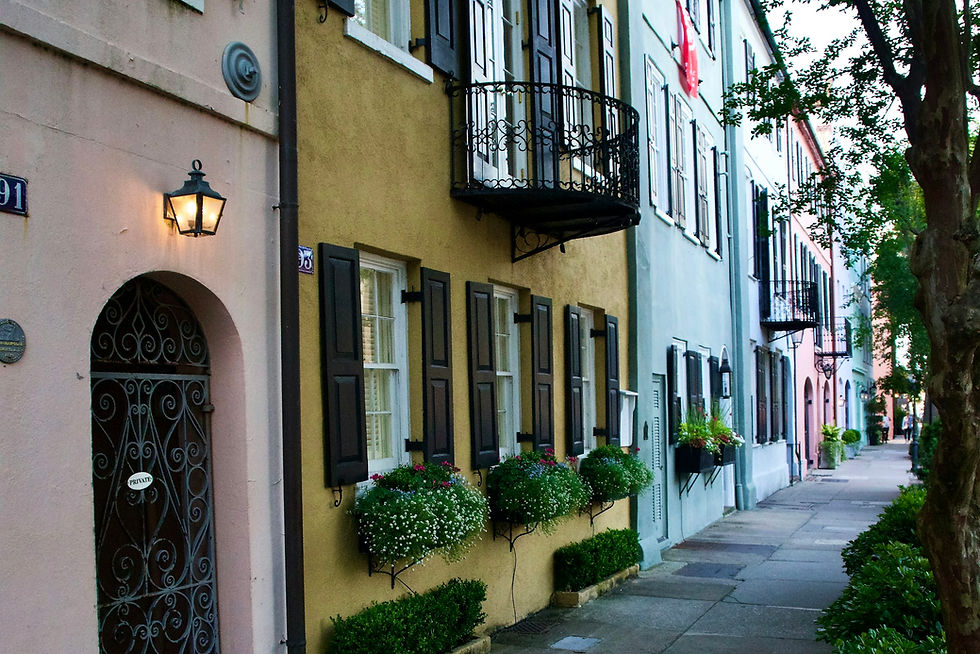
How much does it actually cost to start a short-term rental in Charleston, South Carolina? Ask five different owners and you'll get five different numbers. A renovated single-family home two blocks off the Battery has nothing in common, cost-wise, with a turnkey condo on Johns Island — and the gap has only widened since the City of Charleston built its short-term rental (STR) permit system around three distinct property categories, each with its own path to approval.
This guide walks through the real components of a Charleston STR startup budget: property acquisition cost context, what the three STR permit categories mean for your application, furnishing a 1-3 unit property, insurance — including the flood coverage question that matters here more than in most Southeast markets — the Board of Architectural Review (BAR) process if you're working with a historic building, a realistic startup timeline, and the ongoing costs once you're licensed and booking guests.
One note before we start: specific dollar figures for permit fees, insurance premiums, and renovation costs change over time and vary block by block in Charleston. Where a number depends on your exact property, category, or timing, we'll point you to where to verify it rather than guess.
The Real Answer: It Depends on Your Permit Category
Charleston doesn't issue one type of STR permit — it issues three, and which one applies to your property is the single biggest variable in your startup budget.
Category 1 covers properties on the peninsula that are individually listed on a historic register. Category 2 covers peninsula properties that are at least 50 years old but not necessarily register-listed. Category 3 covers everything off the peninsula — Daniel Island, James Island, Johns Island, and West Ashley. Each category allows exactly one STR permit per property, regardless of how many units the building contains, so a duplex or triplex doesn't multiply your permit capacity. There's also a separate STR Overlay Zone that governs bed-and-breakfast and commercial-scale STR permits — a different track entirely from the three residential categories above, worth knowing about if you're weighing a larger operation. For the full rule set, see ourcomplete guide to City of Charleston short-term rental rules.
Property Acquisition Costs: What to Actually Budget For
We won't invent a per-square-foot number for Charleston real estate — pricing on the peninsula alone can swing block to block depending on proximity to the Battery, flood elevation, historic designation, and whether a house needs BAR-approved renovation or is already turnkey. Off-peninsula neighborhoods that fall under Category 3 — Daniel Island, James Island, Johns Island, and West Ashley — tend to price lower than peninsula properties, but they're still Charleston-market pricing, not a discount market. The most useful exercise before you set a budget is pulling current MLS comps for the specific block or neighborhood you're considering, not a citywide average, since a citywide average will mislead you in either direction depending on which pocket you land in.
If you're still deciding where in the Charleston area to buy, ourinvestment-selection guidewalks through how to compare neighborhoods by long-term STR performance rather than sticker price alone — this post picks up where that one leaves off, focused specifically on what it costs to get a property from closing to your first guest.
Charleston's Three STR Permit Categories — What Each One Costs to Apply For
Every category requires a business license and an STR permit application through the City of Charleston, and every category is subject to the same one-permit-per-property cap. Where the categories really diverge is in the paperwork and review layered on top of the base application.
Category 1 properties — those on a historic register — generally carry the heaviest documentation burden, since the city and often the state historic preservation office want to confirm the property's registered status and condition before signing off. Category 2 properties, simply 50 years or older, usually move through a lighter version of that same review, though age alone can still trigger a historic-district look depending on the property's exact location and any planned exterior work. Category 3 properties, being off-peninsula and outside any historic-district overlay, typically have the most straightforward path from application to approval, with no BAR layer to navigate.
Application fees themselves are set — and periodically revised — by the City of Charleston's Business License and STR office, so treat any number you see elsewhere as a starting point to verify, not a final figure. Ourfull regulatory breakdownwalks through the current application process category by category and links directly to the city's official fee schedule.
BAR Approval and Historic Renovation Costs (Category 1 & 2)
If your property is a Category 1 register-listed building, or a Category 2 property old enough to sit inside one of Charleston's historic districts, any exterior work visible from the street — siding, windows, roofing, paint color, added decks or ramps — typically requires a pass through the Board of Architectural Review before you can pull a building permit for it. Interior renovations generally fall outside BAR's jurisdiction, but almost any renovation aimed at getting a historic property STR-ready touches the exterior somewhere: a new HVAC condenser needs screening, a fire-code exit needs a compliant door, an accessibility ramp needs a design the board will weigh in on.
Two things to budget for beyond the renovation itself. First, time: BAR review can add weeks to months to a renovation timeline depending on whether your project qualifies for staff-level approval or needs a full board hearing, and that delay is itself a cost if you're carrying a mortgage on a property that isn't generating income yet. Second, materials: historic districts frequently require specific materials — wood windows instead of vinyl, particular paint palettes, matching-profile siding — that generally cost more than the standard version of the same fix. Neither of these is a number we'll invent here, since it depends entirely on your property's condition and the scope of work, but building a contingency line for both time and materials is standard practice for anyone renovating inside Charleston's historic districts.
Furnishing and Setup for a 1-3 Unit Property
Furnishing costs scale with unit count, size, and the finish level you're aiming for, and any single number thrown around online should be treated skeptically — it depends heavily on whether you're sourcing new or secondhand furniture, how much of the work you do yourself, and whether you're targeting a budget-friendly unit or a fully styled, photography-ready one. Get itemized quotes from local vendors before finalizing a number, and running 2-3 units generally lets you find some efficiency buying core items like linens and small appliances in bulk rather than sourcing each unit individually.
A working checklist for what to budget for, unit by unit:
Bedroom sets scaled to sleeping capacity, plus quality mattresses
Full kitchen setup: cookware and dishware for max guest count, plus basic appliances
Linens and towels for at least two full turnovers per unit
Wi-Fi router and mesh coverage sized to the unit's square footage
Smart lock and self-check-in hardware
Smoke, CO, and where applicable, water-leak detectors that meet current code
Furnished patio or porch seating if the unit has outdoor space
Starter supply kit: toiletries, coffee, and cleaning supplies for the first several turns
Insurance — Including Charleston's Flood Reality
A standard homeowners policy typically excludes short-term rental use, so budget for a dedicated STR or landlord policy with commercial liability coverage from the start — insuring a property as an STR after a claim has already happened is a much worse position to be in than paying for the right policy up front.
Flood coverage deserves its own line item in Charleston specifically. Much of the peninsula and a number of the marsh-adjacent, low-lying pockets of the off-peninsula neighborhoods (Category 3 areas like James Island and parts of West Ashley) sit inside FEMA-mapped flood zones, and standard property insurance generally does not cover flood damage at all — it has to be added separately, either through the National Flood Insurance Program or a private flood carrier. Premiums for flood coverage vary enormously based on your property's exact flood zone designation, its elevation relative to the base flood elevation, and whether it has a current elevation certificate, so there's no honest single number to quote here.
What is worth doing before you close on a property: pull the FEMA flood zone designation and, if there's any ambiguity, get an elevation certificate as part of due diligence rather than after you already own the property. Lenders will often require flood insurance anyway if the property sits in a mapped zone, so this typically isn't optional in practice even where it's not legally mandatory.
Permits and Licensing: What You'll Actually Need in Hand
Beyond the STR permit itself, expect to hold a City of Charleston business license, and depending on your category and location, potentially additional sign-off tied to zoning or historic-district status. Keep every document from the process — the permit itself, any BAR approvals, inspection reports — since renewal cycles and periodic compliance checks will ask for them again.
Startup Timeline: Closing to First Guest
There's no single Charleston-wide timeline, because the categories genuinely move at different speeds. As a general shape: expect the STR permit and business license process itself to take a handful of weeks once your application is complete and correct. Add meaningful time on top of that if your property needs BAR approval for any exterior work — that review cycle alone can run from a few weeks for staff-level approval to a few months if your project needs a full board hearing. Insurance binding, once you know your flood-zone status and have quotes in hand, typically moves faster than the permit process. Furnishing and staging timelines depend entirely on vendor lead times and how much work you're doing yourself, but budgeting several weeks for delivery, assembly, and a walk-through before your first guest arrives is realistic for most hosts.
Put together: a Category 3 property that doesn't need renovation can realistically go from closing to bookable in a couple of months. A Category 1 or 2 property needing BAR-approved renovation work should be budgeted with a much longer runway — plan in quarters, not weeks, and build your acquisition financing accordingly.
Ongoing Costs Once You're Operating
Startup cost is only the first budget. Once you're licensed and booking, expect recurring costs across several categories:
STR permit renewal fees, on whatever cycle the city sets
STR/landlord insurance premiums, including flood coverage if applicable, paid annually or in installments
South Carolina state accommodations tax and any applicable local/county accommodations tax, collected on every booking
Platform fees from Airbnb, VRBO, or your booking channel of choice
Professional cleaning and turnover costs between every stay
Utilities, internet, and any HOA or historic-district compliance fees
A maintenance and repair reserve, particularly important for older peninsula properties
Property management or software tools if you're not self-managing full time
Ongoing marketing and listing optimization
South Carolina's accommodations tax structure applies at both the state and local level, and Charleston layers its own local requirements on top — confirm your exact combined rate and filing cadence with the SC Department of Revenue and the City of Charleston's finance office directly, since this is exactly the kind of figure that changes and that you don't want to get wrong.
Common Startup-Budget Mistakes Charleston Hosts Make
A few patterns come up often enough among Charleston hosts that they're worth calling out directly.
Buying before confirming the permit category.A property that looks like a great STR on paper can turn out to be Category 1 or 2 with real BAR obligations attached — confirm category and any historic-district status as part of due diligence, not after closing.
Underestimating the renovation timeline on Category 1 and 2 properties.BAR review is a real scheduling variable, not a formality, and it's one of the more common reasons a projected opening date slips by months.
Skipping the flood-zone check.Whether or not flood insurance is legally required for a given property, skipping the FEMA flood-zone lookup during due diligence is one of the more expensive mistakes a Charleston buyer can make, since it affects both insurance cost and, in a real flood event, the property itself.
Budgeting furnishing off a generic online number.Furnishing estimates online are usually written for a generic market, not Charleston's mix of historic-property quirks — older HVAC systems, non-standard window sizes, limited off-street parking — that can add unexpected line items.
Assuming one permit covers the whole building.With the one-permit-per-property cap, a plan to license multiple units on a single multi-unit lot won't work under current rules — confirm this before it becomes part of your financial model.
Related Reading
Keep reading on same-cluster Crest & Cove pages that stay on labeled local lines without costume-corridor copy.
Frequently Asked Questions
Which of Charleston's three STR permit categories will my property fall into?
It depends on two things: whether your property is on the peninsula, and if so, whether it's individually listed on a historic register. Peninsula properties on a historic register fall under Category 1. Peninsula properties that are at least 50 years old but not register-listed fall under Category 2. Everything off the peninsula — Daniel Island, James Island, Johns Island, and West Ashley — falls under Category 3. Confirm your property's exact status with the city before assuming a category, since register status in particular isn't always obvious from the outside.
Does my Category 2 property automatically need Board of Architectural Review approval?
Not automatically, but often in practice. Category 2 covers peninsula properties 50 years or older, and much of the Charleston peninsula sits inside a historic-district overlay regardless of a specific property's register status. If you're planning any exterior work — new siding, windows, a deck, an accessibility ramp — check with the city on whether your specific address falls inside a BAR-reviewed district before finalizing a renovation budget or timeline.
Can I get more than one STR permit if my property has multiple units?
Charleston caps STR permits at one per property regardless of category, so a duplex, triplex, or larger multi-unit building doesn't get to run multiple licensed short-term units on the same lot. If your investment plan depends on operating several STR units, you'll need separate properties, not separate units on one property. Each category allows exactly one STR permit per property, regardless of how many units the building contains, so a duplex or triplex doesn't multiply your permit capacity.
Is flood insurance actually required to operate a Charleston STR?
It's not universally mandated by the city, but it's often required by your lender if the property sits inside a FEMA-mapped flood zone, and much of the Charleston peninsula and several off-peninsula neighborhoods do. Even where it isn't strictly required, standard property insurance typically excludes flood damage entirely, so most hosts in mapped zones carry it regardless of whether a lender mandates it.
How long does it typically take to go from closing to your first guest?
For a Category 3 property that doesn't need renovation, a couple of months is a realistic general timeline once you factor in permit processing, insurance binding, and furnishing. For a Category 1 or 2 property that needs BAR-approved exterior renovation, plan in quarters rather than weeks — the board review cycle alone can add anywhere from a few weeks to a few months on top of the base permit timeline.
Are Category 3 (off-peninsula) properties cheaper to start up than peninsula properties?
Generally, yes, on two fronts: acquisition pricing tends to run lower off-peninsula than on the peninsula, and Category 3 properties skip the BAR review layer entirely since they're outside the historic-district overlay. That said, off-peninsula doesn't mean cheap — it's still Charleston-market real estate, and some Category 3 neighborhoods carry their own flood-zone insurance considerations.
Where can I find the current STR permit application fees?
Directly from the City of Charleston's Business License and Short-Term Rental office, since fees are set and periodically revised at the city level rather than published in a single static source elsewhere. Our regulatory guide links to the city's current application materials and walks through what to expect category by category. Application fees themselves are set — and periodically revised — by the City of Charleston's Business License and STR office, so treat any number you see elsewhere as a starting point to verify, not a final figure.
Do short-term rental licenses transfer with the deed?
Do not invent a town permit fee this page did not confirm. A renovated single-family home two blocks off the Battery has nothing in common, cost-wise, with a turnkey condo on Johns Island — and the gap has only widened since the City of Charleston built its short-term rental (STR) permit system around three distinct property categories, each with its own path to approval.
Work with Crest & Cove Creative
Write this town's year. Do not file another market's number as this stay.
Reach out at crestcove.co or (256) 998-7502.



Comments