
Is an STR Marketing Agency Worth It for Bend Central Oregon Hosts

Updated: Aug 28
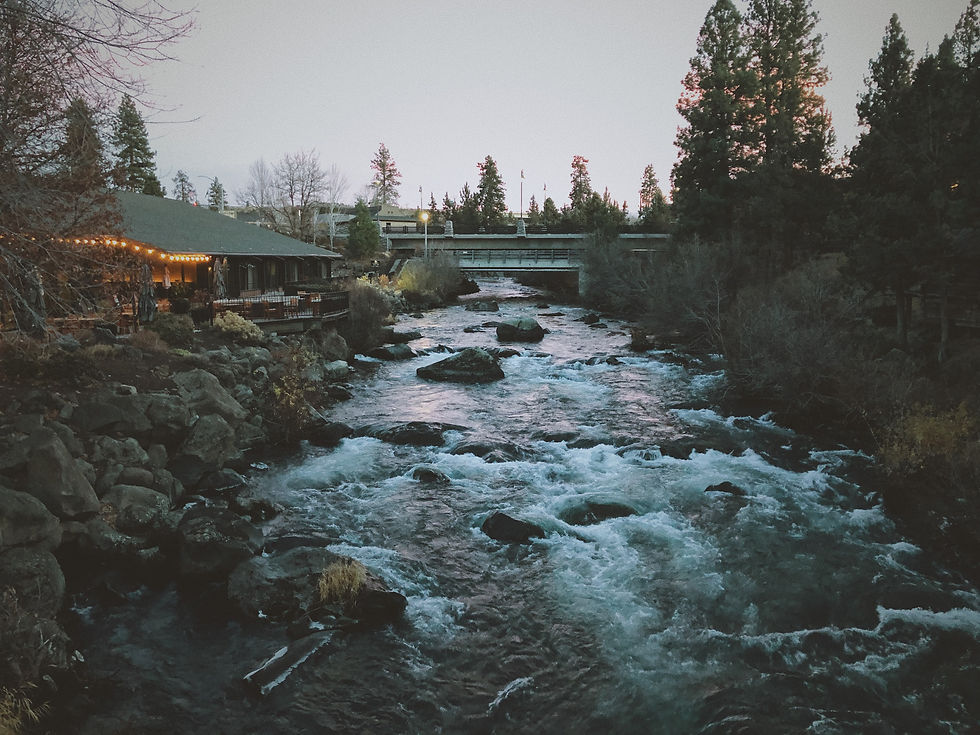
If you own a short-term rental in Bend or Sisters, you already know this isn't a market where a generic listing coasts. Bend is one of Oregon's most established vacation-rental markets — a real property-management scene, meaningful permit friction on the supply side, and a guest base that shows up for entirely different reasons depending on the month. Sisters, twenty minutes up the road, is a quieter, more fragmented version of the same opportunity. Owners in both towns are asking a version of the same question: is it worth paying someone to market this property, or can I handle it myself?
The honest answer depends less on your budget than on two things most owners underweight: how permit-constrained your specific market actually is, and how many of the four demand seasons your listing is currently capturing versus leaving on the table. The honest failure mode isn't laziness — it's that most self-managing owners set up a strong listing once at launch and then never revisit it, so it slowly drifts out of step with which season is actually driving demand.
The permit picture, accurately stated
It's worth correcting a common misconception up front, because it changes the marketing calculus: Bend does not run a hard numerical cap on short-term rental permits. What it runs is a density control. Bend's Type II short-term rental permits — the category covering most non-owner-occupied, whole-house rentals — are subject to a 500-foot separation requirement in residential and most mixed-use zones outside the Old Mill District. Two Type II rentals can't sit within 500 feet of each other. That buffer was doubled by the Bend City Council on October 5, 2022, up from the 250-foot standard the city had used since 2015 — a deliberate tightening that dropped the share of eligible residential properties from roughly two-thirds to under half. Type I permits, which cover owner-occupied units and more limited/infrequent rentals, follow a lighter standard and aren't subject to the same spacing buffer. The practical effect is the same as a cap in already-saturated neighborhoods — no new Type II permits are available there — while newer or lower-density neighborhoods may still have room. It's a geography-based ceiling, not a citywide number, and there's no publicly available current count of exactly how many Type I versus Type II licenses are active today — the scarcity is real but best described qualitatively rather than with a specific figure.
Sisters runs a comparable mechanism at a smaller scale, on its own separate timeline. The city expanded its own STR concentration limit from 250 feet to 500 feet under Ordinance No. 540 in 2024 — two years after Bend made the same jump — and charges a $500 application fee for a new operating license. Unincorporated Deschutes County, by contrast, effectively prohibits new short-term rental stays outside the cities — a rule that doesn't touch Bend, Sisters, Redmond, or La Pine directly, but underscores how much stricter the areas surrounding both towns have become.
What this means for you as an owner: if you already hold a valid Bend or Sisters permit, you're sitting on inventory that's genuinely harder to replicate today than it was to originally license. That scarcity doesn't do your marketing for you, but it does mean the ceiling on how much a well-marketed listing can earn relative to a poorly marketed one in the same 500-foot radius is higher than in an unrestricted market — there's a fixed, known set of competitors, not an unlimited one.
The four-season demand stack, and why one listing description can't carry it
Bend and Sisters share a demand base most single-season mountain or beach towns don't have. Winter brings skiers and snowboarders headed to Mt. Bachelor. Spring through fall brings one of the most recognized mountain-biking trail networks in the Pacific Northwest. Bend's brewery scene — real, dense, and part of the town's identity well beyond a marketing talking point — pulls a beer-tourism crowd that overlaps with almost every other season. And the Deschutes River running through downtown adds a summer float-and-paddle audience on top of all of it.
That's four distinct guest personas, each searching with different intent, each responding to different photography and different headline language. A listing photographed once, with one static description leading with "cozy mountain retreat," is functionally invisible to three of those four audiences. A ski-season guest wants to know how close you are to Bachelor and whether there's gear storage. A summer biker wants trailhead proximity named specifically. A brewery-district guest wants walkability spelled out. None of that is served by generic scenery language, and none of it fixes itself — it requires someone to actively reposition the listing as the calendar turns.
Your real options as a Bend or Sisters owner
The entrenched local PM/brokerage route. Bend has a genuine, established property-management scene — companies handling full-service management typically charge somewhere in the 20–35% of gross booking range, with some full-service operators landing near the top of that band and lighter-touch or "half-service" managers (handling booking and guest communication but not cleaning/maintenance) closer to 10–15%. This route makes the most sense if you want someone else to own the entire operation — bookings, guest communication, cleaning coordination, and marketing all bundled — and you're willing to give up 20%+ of revenue for that convenience. It's the most expensive option and the one where marketing quality varies most by which specific company you pick; some entrenched PMs market every property in their portfolio with near-identical templates.
A lighter-touch listing service. Positioned between full management and pure DIY, these services (often in the 10–15% range) typically handle platform listing optimization and booking coordination without taking over cleaning or on-the-ground operations. This can work well if you already have reliable local turnover help and mainly need someone managing the booking calendar and platform presence — but seasonal repositioning (the four-audience problem above) still isn't guaranteed unless you confirm it specifically.
Doing it yourself. Fully viable if you have real photography skills or a willingness to hire a photographer seasonally, the bandwidth to rewrite copy and swap hero images four times a year, and enough comfort with each platform's SEO mechanics to know what actually moves search placement. The honest failure mode isn't laziness — it's that most self-managing owners set up a strong listing once at launch and then never revisit it, so it slowly drifts out of step with which season is actually driving demand.
A flat-fee marketing-only retainer. This is the option most owners in an already-licensed, permit-scarce market like Bend or Sisters haven't been offered, because most of the local industry is built around full management. A marketing-only engagement — positioning, photography direction, seasonal copy and image rotation, listing SEO — without taking a cut of every booking, is a different cost structure entirely: a predictable monthly or project fee instead of a percentage that scales with your revenue. For an owner who already handles bookings and cleaning logistics competently but knows their listing is underselling itself outside of peak ski season, this is usually the most direct way to close the four-season gap without handing over 20–30% of top-line revenue indefinitely.
Reading the field honestly
Bend's field is genuinely more contested than Sisters'. With an established PM scene and permit-limited but still meaningful inventory, standing out in Bend requires sharper differentiation — real seasonal photography, specific trail and brewery-district language, a listing that reads like it was built by someone who knows the neighborhood rather than templated. Sisters, with lower PM penetration and a smaller, more fragmented ownership base, rewards a lower bar: being genuinely findable, professional, and specific is often enough to separate you from a field that mostly isn't doing that yet.
Neither market rewards an one-time listing setup and neglect. The permit friction protects you from unlimited new competition showing up next door, but it doesn't protect you from the licensed competitor two doors down out-marketing you across all four seasons while your listing still leads with a photo from the day you launched. The honest answer depends less on your budget than on two things most owners underweight: how permit-constrained your specific market actually is, and how many of the four demand seasons your listing is currently capturing versus leaving on the table.
Related Reading
Keep reading on same-cluster Crest & Cove pages that stay on labeled local lines without costume-corridor copy.
Snoqualmie, WA STR Report 2026: Two Cells, I-no usable published year
Raymond South Bend, WA STR Market Report for Independent Hosts
Bend Sisters, OR STR Market Report 2026: What Hosts Should Underwrite
How to Market a Short-Term Rental in Bend Sisters Standing Out
How to Market a Short-Term Rental in Raymond or South Bend Selling
How to Market a Short-Term Rental in Steinhatchee FL the Scalloping
Is Bend Central Oregon a Good Short Term Rental Investment in 2026
Is Raymond or South Bend a Good Short Term Rental Investment, IN
Is an STR Marketing Agency Worth It for Raymond South Bend Hosts
Frequently Asked Questions
Does Bend have a strict numerical cap on short-term rental permits?
Bend uses a 500-foot separation requirement for Type II short-term rental permits in residential and most mixed-use zones, which functions as a density ceiling in already-saturated neighborhoods rather than a citywide numeric cap. That separation distance was doubled from 250 feet to 500 feet by the Bend City Council in October 2022. Type I permits, covering owner-occupied and more limited rentals, follow a different standard and aren't subject to the same buffer.
Is Sisters regulated the same way as Bend?
Similarly in structure, on a different timeline and at a smaller scale. Sisters expanded its own STR concentration limit from 250 feet to 500 feet under a 2024 ordinance — two years after Bend made the equivalent change in October 2022 — and charges a $500 application fee for a new operating license, but the city's overall inventory and competitive density are smaller than Bend's.
Can I short-term rent a property in unincorporated Deschutes County?
New short-term rental stays are effectively prohibited in unincorporated areas of the county under a county order; this restriction does not apply within the city limits of Bend, Sisters, Redmond, or La Pine, which each set their own rules. Unincorporated Deschutes County, by contrast, effectively prohibits new short-term rental stays outside the cities — a rule that doesn't touch Bend, Sisters, Redmond, or La Pine directly, but underscores how much stricter the areas surrounding both towns have become.
How much do local property managers in Bend typically charge?
Full-service management generally falls in the 20–35% of gross booking revenue range depending on the company and service level, with lighter-touch or half-service options often in the 10–15% range. Rates vary by company and should be confirmed directly before signing. Bend has a genuine, established property-management scene — companies handling full-service management typically charge somewhere in the 20–35% of gross booking range, with some full-service operators landing near the top of that band and lighter-touch or "half-service" managers (handling booking and guest communication but not cleaning/maintenance) closer to 10–15%.
What's the difference between a full-service PM and a marketing-only retainer?
A full-service PM typically bundles bookings, guest communication, cleaning coordination, and marketing into one percentage-of-revenue fee. A marketing-only retainer covers positioning, photography, and listing content for a flat fee, while the owner continues handling bookings and on-the-ground operations independently. Positioned between full management and pure DIY, these services (often in the 10–15% range) typically handle platform listing optimization and booking coordination without taking over cleaning or on-the-ground operations.
Why does the four-season demand stack matter for marketing specifically?
Because Bend and Sisters draw genuinely different guest types by season — skiers headed to Mt. Bachelor, spring-to-fall mountain bikers, brewery-district visitors, and summer river guests — a single static listing description and photo set can't speak effectively to all four. Seasonal repositioning of images and copy is what captures demand across the full calendar instead of just the peak season.
Is there an active local Facebook community for Bend or Central Oregon short-term rental hosts?
There is an organized presence, though it's more formal than a casual peer group: the Central Oregon Vacation Rental Alliance (COVRA) operates as a membership-based advocacy organization for the region's vacation rental industry, with an associated Facebook footprint. It functions more as industry advocacy and education than as an informal word-of-mouth referral network, so it doesn't necessarily replace organic search as the way most individual hosts find marketing help.
Should a Sisters owner take a different approach than a Bend owner?
Bend's more established, permit-limited field rewards sharper differentiation to stand out among more sophisticated competitors. Sisters' smaller, more fragmented, lower-PM-penetration market rewards simply being professional, specific, and findable, since fewer listings there are currently doing that well. Sisters, with lower PM penetration and a smaller, more fragmented ownership base, rewards a lower bar: being genuinely findable, professional, and specific is often enough to separate you from a field that mostly isn't doing that yet.
Do short-term rental licenses transfer with the deed?
If you own a short-term rental in Bend or Sisters, you already know this isn't a market where a generic listing coasts. This is the option most owners in an already-licensed, permit-scarce market like Bend or Sisters haven't been offered, because most of the local industry is built around full management.
Work with Crest & Cove Creative
Keep going on Crest & Cove: the Crest & Cove intro · local SEO keywords that actually book · the five elements of a converting hero · how to compare STR marketing agencies · OTA fees without leftover occupancy lifts · Bend and Sisters against AirROI pins · Oregon mountain gorge against AirROI pins · Destin against AirROI, not leftover year.
Reach out at crestcove.co or (256) 998-7502.


Comments