
Is the Long Beach Peninsula a Good Short Term Rental Investment, IN

Updated: Aug 28
If you've spent any time researching Washington coast vacation rental markets, you already know the two names everyone throws around: the San Juan Islands and Whidbey Island. Both are beautiful, both are well-documented, and both are increasingly expensive to break into — inventory is tight, competition for listings is fierce, and a growing share of units are already managed by regional and national property management brands with scale advantages an independent buyer can't easily match.
The Long Beach Peninsula, stretching along Washington's southwest coast in Pacific County, rarely comes up in the same conversation. That's arguably the point. This is a market that gets a fraction of the attention its geography and history would suggest it deserves, and for an investor willing to do real diligence rather than chase the obvious answer, that gap is worth examining closely.
This isn't a "hidden gem, buy now" pitch. The peninsula has real constraints — a seasonal, drive-market-dependent demand base and a regulatory environment that can disqualify a property before you ever get to the financial questions. What follows is a point-by-point look at the case for the Long Beach Peninsula as a 2026 STR investment, and an equally direct look at what could go wrong.
The Scarcity Thesis: Oldest Beach Resort Area, Longest Undeveloped Beach
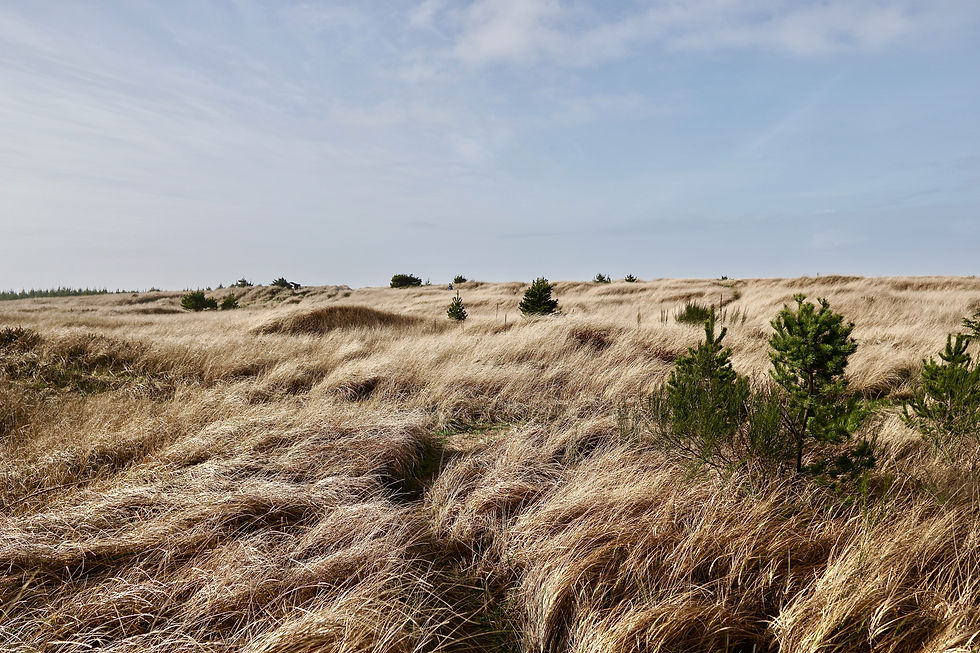
The Long Beach Peninsula holds a specific distinction: it's the oldest beach resort area on the Pacific Coast, with a tourism history that predates most of what people think of as "the West Coast beach town." Visitors have been coming here since the late 1800s, drawn by what's often described as one of the longest stretches of beach in the United States — roughly 28 miles of largely undeveloped, drivable sand running the length of the peninsula.
That combination — long history, long beach, low development density — is unusual. Most coastal markets with this kind of tourism pedigree get built out over a century of demand. The Long Beach Peninsula largely hasn't. Much of the shoreline remains open, public, and free of the dense condo and resort development that defines markets like Myrtle Beach or the Outer Banks. For an investor, that matters less as a scenic detail and more as a structural fact: an undeveloped coastline in a market with a proven, century-plus history of demand is not something that gets recreated. It's inventory that either exists or doesn't, and here, it still does.
That scarcity is the foundation of the case. Everything else in this post builds on it. The Long Beach Peninsula holds a specific distinction: it's the oldest beach resort area on the Pacific Coast, with a tourism history that predates most of what people think of as "the West Coast beach town." Visitors have been coming here since the late 1800s, drawn by what's often described as one of the longest stretches of beach in the United States — roughly 28 miles of largely undeveloped, drivable sand running the length of the peninsula.
Near-Absence of National Property Managers: A Marketing Window, Not a Demand Signal
One of the more counterintuitive things about the Long Beach Peninsula is how little presence the large national and regional STR management brands have here compared to other Washington coastal markets. On its face, that might read as a red flag — if the big operators haven't moved in, maybe the demand isn't there. This is a market where the diligence burden shifts more onto the buyer, because the data infrastructure that other markets take for granted simply isn't as built out here yet.
That's the wrong read, and it's worth being precise about why. National PM companies expand into markets based on scalability, brand-name recognition among owners, and ease of standardized operations — not purely on guest demand. Fragmented ownership, a smaller year-round population, and a market that hasn't been "discovered" by institutional capital all make it a lower priority for a national brand's expansion roadmap, even when the underlying guest demand is solid.
For an independent operator, that absence is an opening, not a warning sign. It means less competition for search visibility, less price compression from professionally optimized competing listings, and more room to build a standalone brand rather than compete within a marketplace algorithm dominated by a handful of large management portfolios. This is precisely the kind of market where direct-booking and organic search strategy can outperform relying on OTA placement alone — because the field isn't already crowded with competitors doing the same thing at scale.
Fragmented Ownership: Real Opportunity, Real Caution
The flip side of "no national PM presence" is fragmented, largely independent ownership across the peninsula's cottage and beach-house stock. That fragmentation cuts two ways, and a serious buyer should hold both at once. That substance requires a vacation rental license and, for septic-system properties, both an annual operation-and-maintenance agreement and a third-party inspection every three years — manageable compliance costs for a serious operator (the county-level fire/life-safety inspection cadence wasn't clearly documented in available public sources and should be confirmed directly with the county).
The opportunity: fragmented ownership generally means less institutional capital bidding up comparable sales, and less of the price compression you see in markets where investment funds or large PM roll-ups have been actively acquiring inventory. There's more room for an individual buyer to find a property priced on local fundamentals rather than institutional appetite. It means less competition for search visibility, less price compression from professionally optimized competing listings, and more room to build a standalone brand rather than compete within a marketplace algorithm dominated by a handful of large management portfolios.
The caution: fragmentation also means thinner comparable sales data. With fewer large, professionally-managed transactions and fewer standardized listings to benchmark against, pulling a confident revenue comp for a specific property here is genuinely harder than it would be in a market with dense PM coverage and public performance dashboards. We'd flag this directly: any revenue projection you're handed for a Long Beach Peninsula property deserves extra scrutiny, and you should treat published market-wide STR revenue averages for this area with real skepticism until you've verified the underlying data source and sample size. This is a market where the diligence burden shifts more onto the buyer, because the data infrastructure that other markets take for granted simply isn't as built out here yet.
Oyster and Cranberry Heritage: An Unrealized Branding Asset
Pacific County isn't just a beach destination — it's one of the country's most historically significant oyster-farming regions, centered on Willapa Bay, and the peninsula sits alongside a working cranberry-bog agricultural heritage that dates back generations. Both are authentic, deep, and locally significant. Neither is being used, in any consistent way, as a branding or differentiation lever by current STR owners.
Walk through listings on the peninsula today, and you'll mostly find generic "cozy beach cottage" positioning — accurate, but interchangeable with thousands of other coastal listings nationwide. A property that leaned deliberately into the oyster-farming and cranberry-heritage story — through photography, listing copy, on-site guest experiences, local partnerships, and content that actually explains what makes this place different — would be doing something almost no current competitor is doing well.
This is upside-down, not a guarantee. It requires real investment in brand-building, not just a paragraph in the listing description. But for a buyer willing to build that story properly, it's a genuine white space in a market that otherwise looks, on paper, like every other small coastal town. A property that leaned deliberately into the oyster-farming and cranberry-heritage story — through photography, listing copy, on-site guest experiences, local partnerships, and content that actually explains what makes this place different — would be doing something almost no current competitor is doing well.
The Honest Caveats: Seasonality and Drive-Market Dependence
The demand base here is real, but it isn't the same shape as a fly-in destination. The Long Beach Peninsula draws primarily from the Portland and Seattle metro areas — a two- to three-hour drive for most of its visitors. That's a genuine strength in one sense: it's not dependent on airline capacity, fuel prices, or the kind of long-haul travel volatility that can hit fly-in markets hard. Drive-market demand tends to be stickier and more recession-resistant than discretionary long-haul travel.
But it also means the demand curve is more seasonal and more tied to regional weather and economic conditions than in a year-round destination market. Shoulder-season and winter occupancy on the Washington coast is a real planning consideration, not an afterthought. Any investor modeling returns here should build a seasonally realistic occupancy curve rather than annualizing a strong August week.
The Zoning Ban: Your First Due-Diligence Step, Not Your Last
This is the single most important section of this post, and it needs to be read before anything above it gets acted on. This has to be the first thing you check on any specific property you're considering, before you run a single revenue projection, before you talk to a lender, before you get emotionally attached to a listing photo.
Pacific County has regulated short-term rentals under Ordinance 184B, though its provisions were later folded into the county's consolidated zoning ordinance (No. 194) — "184B" is now more of a historical reference point than a standalone current document, even though the substance carries forward. That substance requires a vacation rental license and, for septic-system properties, both an annual operation-and-maintenance agreement and a third-party inspection every three years — manageable compliance costs for a serious operator (the county-level fire/life-safety inspection cadence wasn't clearly documented in available public sources and should be confirmed directly with the county). But the ordinance also does something that isn't a mere compliance cost: it bans new short-term rentals outright on parcels zoned R-1.
That's not a fee, a permit delay, or a paperwork hurdle. It's a hard disqualifier. A property that looks financially attractive on every other dimension — price, location, condition, story — can be completely unusable as an STR if it sits on an R-1 parcel. This has to be the first thing you check on any specific property you're considering, before you run a single revenue projection, before you talk to a lender, before you get emotionally attached to a listing photo. Confirm the zoning designation for the actual parcel, not the general area, and do so directly with Pacific County rather than relying on a listing agent's characterization.
If you're specifically looking inside Long Beach city limits, there's an additional overlay to clear: the city caps STRs at one per parcel, requires an annual fire and life-safety inspection (a shorter cycle than the county's), and its 10-guest occupancy formula mirrors the county's own standard. Active code enforcement against unlicensed and non-compliant listings on the peninsula is well documented locally — a specific "problem Airbnbs" crackdown narrative with that exact framing, however, traces most clearly to news coverage of Long Beach, California, a different and unrelated city, so that framing shouldn't be assumed to describe Long Beach, Washington, without direct confirmation. Regardless, an existing STR registration on a property you're considering should be verified as current and in good standing, rather than assumed to transfer cleanly or reflect a permissive environment peninsula-wide.
The takeaway: don't let the scarcity thesis or the heritage-branding upside pull you past this step. Zoning and licensing status is a pass/fail gate. Everything else in this post is a reason to look seriously at the Long Beach Peninsula — this section is the reason to look carefully before you commit. If that describes your investment thesis, the Long Beach Peninsula deserves a serious look in 2026.
Who This Investment Fits
Based on everything above, the Long Beach Peninsula makes the most sense for a specific kind of buyer, not every STR investor:. Everything else in this post is a reason to look seriously at the Long Beach Peninsula — this section is the reason to look carefully before you commit. Active code enforcement against unlicensed and non-compliant listings on the peninsula is well documented locally — a specific "problem Airbnbs" crackdown narrative with that exact framing, however, traces most clearly to news coverage of Long Beach, California, a different and unrelated city, so that framing shouldn't be assumed to describe Long Beach, Washington, without direct confirmation.
Someone who wants a defensible, story-driven property rather than a commodity beach rental — the oyster-and-cranberry heritage angle only pays off if you're willing to actually build a brand around it.
Someone comfortable with a smaller, regionally-sourced, seasonal guest base rather than year-round fly-in tourism volume.
Someone who will do real, parcel-specific zoning and licensing diligence before purchase — not someone looking for a market where the rules are loose or unenforced.
Someone drawn to a market with less institutional and national-brand competition, who sees that as an opening for direct booking and organic visibility rather than a warning sign.
If that describes your investment thesis, the Long Beach Peninsula deserves a serious look in 2026. If you're looking for a turnkey, data-rich market with abundant comps and a permissive regulatory environment, this isn't that market — and it's honest to say so upfront. We'd flag this directly: any revenue projection you're handed for a Long Beach Peninsula property deserves extra scrutiny, and you should treat published market-wide STR revenue averages for this area with real skepticism until you've verified the underlying data source and sample size.
Keep going on Crest & Cove: the Crest & Cove intro · local SEO keywords that actually book · the five elements of a converting hero · how to compare STR marketing agencies · Asheville paddling spots worth the drive · Long Beach Peninsula against AirROI $34,834 · Washington outer coast against AirROI pins · Destin against AirROI, not leftover year.
Related Reading
Keep reading on same-cluster Crest & Cove pages that stay on labeled local lines without costume-corridor copy.
Long Beach Island NJ STR Market Report 2026: Family-Cottage Culture
Long Beach Peninsula, WA STR Market Report for Independent Hosts
How to Market a Short Term Rental on the Long Beach Peninsula
Is Long Beach Island (LBI) a Good Short-Term Rental Investment in
Long Beach Peninsula Agency: Costs Without Invented Occupancy
DIY vs Hire Marketing for Should Long Beach Peninsula Hosts Manage
Long Beach Island STR Shoulder Season Strategy for STR Hosts
Long Beach Island Remote Work Rental Guide for Independent Hosts
Hocking Hills Remote Worker Long Stay Bookings for Independent Hosts
Youtube Long Form Tours Guides and Authority: Independent Host Guide
DIY vs. Hire in Many, LA: Why Independent Hosts Still Run Most Listings
DIY or Hire in Depoe Bay: What the Numbers Say for STR hosts
Work with Crest & Cove Creative
Long Beach Peninsula is $34,834. Crest & Cove writes the AirROI year.crestcove.co or (256) 998-7502.
Crest & Cove Creative partners with independent hosts nationwide — focused on listing quality, organic search visibility, and direct booking growth. If your property isn't reaching the guests it should be, that's exactly the kind of problem we solve. Reach out directly at crestcove.co or call (256) 998-7502 — we'll take an honest look at where your listing stands and tell you plainly whether we can help. Reach out at crestcove.co or (256) 998-7502.
Frequently Asked Questions
Is the Long Beach Peninsula, WA, a good place to buy a vacation rental?
It can be, for the right buyer — someone drawn to a scarcity-driven market with less national-brand competition, comfortable with seasonal drive-market demand, and willing to clear Pacific County's zoning requirements before purchase. It's not a fit for buyers expecting year-round fly-in demand or dense comparable sales data. The Long Beach Peninsula holds a specific distinction: it's the oldest beach resort area on the Pacific Coast, with a tourism history that predates most of what people think of as "the West Coast beach town." Visitors have been coming here since the late 1800s, drawn by what's often described as one of the longest stretches of beach in the United States.
Can I run an Airbnb on the Long Beach Peninsula?
It depends entirely on the parcel's zoning. Pacific County's vacation rental ordinance (historically numbered 184B, now folded into the county's consolidated zoning ordinance No. 194) bans new short-term rentals on R-1-zoned parcels, so confirming zoning on the specific property — not the general area — is the essential first step before assuming an Airbnb is possible.
What is Pacific County Ordinance 184B?
It's the county's short-term rental regulatory framework, though its provisions have since been folded into the county's consolidated zoning ordinance (No. 194) — "184B" is now a historical reference rather than a standalone current document. Its substance requires a vacation rental license and, for septic-system properties, both an annual operation-and-maintenance agreement and a third-party inspection every three years. It also prohibits new short-term rentals on R-1-zoned parcels.
Are there extra rules inside Long Beach city limits specifically?
Within the city of Long Beach, there's an additional cap of one short-term rental per parcel, an annual fire and life-safety inspection requirement, and active code enforcement targeting non-compliant listings. Buyers should verify that any existing STR registration is current before assuming it will transfer with the property. If you're specifically looking inside Long Beach city limits, there's an additional overlay to clear: the city caps STRs at one per parcel, requires an annual fire and life-safety inspection (a shorter cycle than the county's), and its 10-guest occupancy formula mirrors the county's own standard.
Why don't more national property management companies operate on the Long Beach Peninsula?
National PM expansion tends to follow scalability and brand recognition rather than purely guest demand. A smaller year-round population and fragmented ownership make it a lower priority for large operators' expansion plans — which leaves more room for independent owners to compete on visibility and direct bookings rather than against dense PM-managed listing inventory. Fragmented ownership, a smaller year-round population, and a market that hasn't been "discovered" by institutional capital all make it a lower priority for a national brand's expansion roadmap, even when the underlying guest demand is solid.
How reliable is Long Beach Peninsula's tourism demand compared to fly-in coastal markets?
Demand here is primarily driven by the market, with customers drawn from Portland and Seattle. That makes it less exposed to airline capacity or long-haul travel volatility, but more seasonal and regionally weather-dependent than a year-round fly-in destination. But it also means the demand curve is more seasonal and more tied to regional weather and economic conditions than in a year-round destination market.
What makes the oyster-and-cranberry heritage relevant to STR marketing?
Willapa Bay's oyster-farming history and the peninsula's cranberry-bog agriculture are authentic, differentiated local stories that almost no current listings use in their branding. For an owner willing to build content and positioning around it, it's an underused way to stand out in a market of otherwise generic "beach cottage" listings. A property that leaned deliberately into the oyster-farming and cranberry-heritage story — through photography, listing copy, on-site guest experiences, local partnerships, and content that actually explains what makes this place different — would be doing something almost no current competitor is doing well.
Is there good comparable sales and revenue data available for Long Beach Peninsula STRs?
Not as much as in more institutionally developed markets. Fragmented, largely independent ownership results in thinner public performance data, so buyers should treat market-wide revenue averages with caution and verify the underlying source of any projection before relying on it. We'd flag this directly: any revenue projection you're handed for a Long Beach Peninsula property deserves extra scrutiny, and you should treat published market-wide STR revenue averages for this area with real skepticism until you've verified the underlying data source and sample size.
About the Authors
Crest & Cove Creative is a short-term rental marketing agency founded by Thomas Garner and Jacob Mishalanie. We build direct-booking brands, listing-optimization systems, and market-specific content strategies for independent STR operators nationwide, including emerging corridors such as Washington's Outer Coast. Keep going on Crest & Cove: the Crest & Cove intro · local SEO keywords that actually book · the five elements of a converting hero · how to compare STR marketing agencies · Asheville paddling spots worth the drive · Long Beach Peninsula against AirROI $34,834 · Washington outer coast against AirROI pins · Destin against AirROI, not leftover year.
Sources
Pacific County, WA — Ordinance 184B (short-term/vacation rental licensing, septic O&M and fire/life-safety inspection requirements, R-1 zoning restriction on new short-term rentals), later folded into the county's consolidated zoning ordinance No. 194: cited per verified brief facts; buyers should confirm current ordinance text directly with Pacific County Community Development before relying on it for a purchase decision, as local ordinances are amended over time.
City of Long Beach, WA — municipal short-term rental overlay (one-per-parcel cap, 10-guest occupancy limit, active code enforcement): cited per verified brief facts; confirm current municipal code directly with the City of Long Beach.
Long Beach Peninsula tourism history and beach length (the oldest Pacific Coast beach resort area, approximately 28 miles of beach): general regional tourism and historical characterization; treated as background context rather than a load-bearing investment figure.
Willapa Bay oyster-farming heritage and Pacific County cranberry agriculture: regional historical and agricultural context.
No dollar-figure revenue, occupancy percentage, or comparable-sale price data is cited in this post. Given the caution regarding fragmented ownership noted above, any such figures for this specific market should be independently verified against current, source-attributed data before being used in an investment decision.



Comments