
How to Market a Short Term Rental on the Long Beach Peninsula

Updated: Aug 28

If your listing description starts with "Welcome to the Washington coast," you're already losing the booking to a competitor who said something specific. The Long Beach Peninsula isn't a generic stretch of Pacific Northwest shoreline — it's oyster boats working the tideflats of Willapa Bay, cranberry bogs turning red in October, and 28 miles of open beach that guests from Portland and Seattle can't find anywhere closer to home. Most hosts in this market undersell all three.
This isn't a philosophical piece about branding. It's a tactical playbook: what to photograph, what to write, which words to put in your title, and how to talk to the drive-market audience that actually books here. If you manage your own listing on the peninsula — whether you're in Long Beach, Ocean Park, Seaview, Nahcotta, Oysterville, or Ilwaco — this is the version of "market your rental" you can act on this week.
One caveat before you spend a dollar on marketing: confirm your compliance status first. Pacific County's vacation rental ordinance (historically 184B, now part of the county's consolidated zoning ordinance) and, if you're inside city limits, Long Beach's own rental cap can shut down a listing that's driving great traffic. We'll cover exactly what to check near the end, but do that check before you touch your photos or your title.
Lead with Oyster and Cranberry Heritage, Not "Coastal Charm"
"Coastal charm" is the phrase every listing on every ocean in America uses. It tells a guest nothing. The Long Beach Peninsula has an actual working heritage most hosts never put into words: Willapa Bay produces a meaningful share of the oysters grown in the United States, and the peninsula's cranberry bogs have been farmed since the 1880s. That's a story guests from Portland and Seattle — many of whom already eat at restaurants sourcing Willapa Bay oysters — will recognize and respond to.
Concrete ways to use it:. Structure your digital or printed guidebook around the three differentiators: oyster/cranberry heritage, the open beach, and your specific town's character. The Long Beach Peninsula isn't a generic stretch of Pacific Northwest shoreline — it's oyster boats working the tideflats of Willapa Bay, cranberry bogs turning red in October, and 28 miles of open beach that guests from Portland and Seattle can't find anywhere closer to home.
Listing title formula: "[Town] Cottage Near Willapa Bay Oyster Farms | Steps to [Beach Access Point]" beats "Cozy Beach House on the Washington Coast" on every axis — it's more specific, it's more searchable, and it signals a destination a guest can picture.
First paragraph of your description: Open with the heritage, not the house. Example: "Long Beach Peninsula has been oyster and cranberry country since before Washington was a state. Willapa Bay's tideflats are a few minutes from your door, and in October the cranberry bogs turn the peninsula red." Then transition into the property.
Guidebook content: Dedicate a full page (digital or printed) to "Willapa Bay Oysters" and one to "Cranberry Season" if guests are visiting September through November. List a couple of specific things guests can do — visiting an oyster farm stand, driving past the bogs on Sandridge Road, timing a trip to the (unverified — confirm current dates) Cranberry Harvest Festival in October. Don't invent business names you haven't confirmed are still operating; if you're not sure a specific oyster farm or tasting room is currently open to visitors, describe the activity generically ("several oyster farms along the bay sell fresh product directly to visitors") rather than naming one that may have changed hands or hours.
Photography: Get a shot of the oyster tideflats at low tide if your property is anywhere near Willapa Bay — even a five-minute drive counts as "near" for listing purposes. If you're farther from the bay side and closer to the ocean beach, use a cranberry bog shot in fall instead, or lean harder into the beach angle covered next.
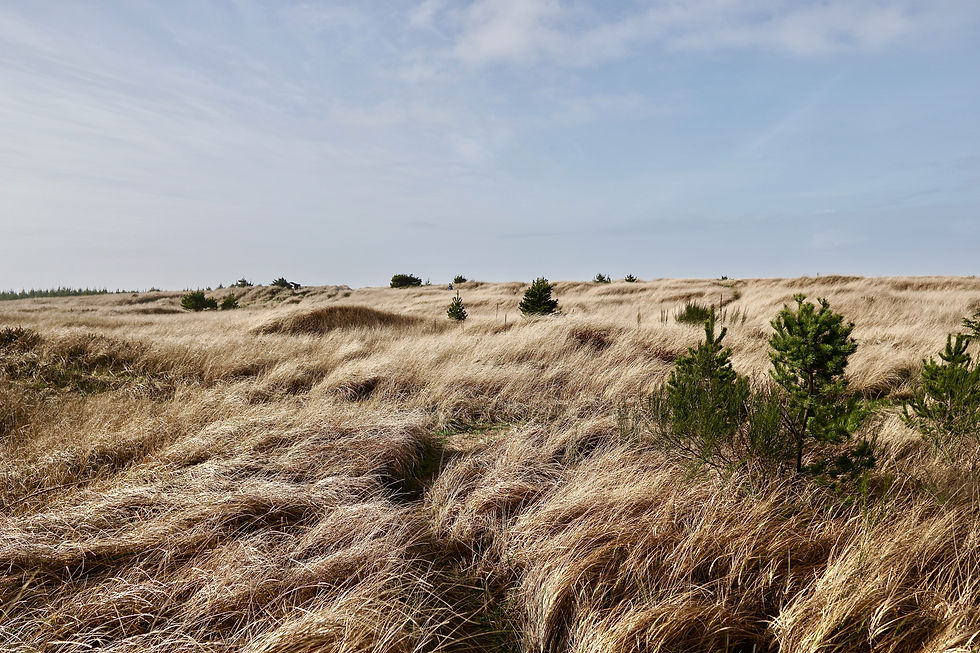
Photograph the Beach as Open Space, Not a Resort Amenity
Most Pacific Northwest coastal listings photograph the beach the way a resort in Florida photographs its pool: tight crops, beach chairs staged just so, an umbrella in the corner. This is the single most important photo in your gallery because it's the one thing a Cannon Beach or Seaside listing can't offer at the same scale. The Long Beach Peninsula's real differentiator is its long, open, largely undeveloped beach — you can walk for miles without hitting a boardwalk, a hotel tower, or a crowd.
That's the wrong instinct here. The Long Beach Peninsula's real differentiator is its long, open, largely undeveloped beach — you can walk for miles without hitting a boardwalk, a hotel tower, or a crowd. Sell the emptiness, not the amenities. "Long Beach Peninsula" is a real search term, and you should use it, but it's also a 28-mile stretch covering several distinct towns with different characters: Long Beach itself (the touristy hub, boardwalk, kite festival energy), Ocean Park (quieter, more residential), Nahcotta and Oysterville (bay-side, oyster country, historic), Seaview (walkable, close to Long Beach's amenities but calmer), and Ilwaco (the working harbor town near the Columbia River mouth).
Shot list that actually communicates this:. One shot of a guest (with permission, ideally a model or past guest) walking alone or with a dog, small in the frame — this does more to communicate "you'll have space to think" than any close-up ever will. Most Pacific Northwest coastal listings photograph the beach the way a resort in Florida photographs its pool: tight crops, beach chairs staged just so, an umbrella in the corner.
1. Wide horizontal shot, low angle, no people — beach extending to a vanishing point in both directions. This is the single most important photo in your gallery because it's the one thing a Cannon Beach or Seaside listing can't offer at the same scale. 2. A shot taken at golden hour with long shadows — the openness reads even more dramatically when the light is low and horizontal. 3. A driftwood or dune grass foreground shot — gives depth without adding clutter, and signals "undeveloped" without you having to say the word. 4. One shot of a guest (with permission, ideally a model or past guest) walking alone or with a dog, small in the frame — this does more to communicate "you'll have space to think" than any close-up ever will. 5. A beach access point sign or path from your property, if you have one — practical proof of proximity that also reinforces walkability.
In your copy, replace generic language with sensory specifics: instead of "beautiful beach access," write "28 miles of open beach — walk twenty minutes, and you won't see another group." Instead of "steps from the ocean," specify the actual access point by name if there is one (a numbered approach road, a named beach access) — precision reads as credibility.
Write for the Portland and Seattle Weekend Guest Specifically
The Long Beach Peninsula's core audience is a drive market: Portland is roughly two and a half hours away, Seattle is roughly three and a half hours away. These aren't guests planning an once-a-decade destination trip — many are repeat weekend visitors deciding between your peninsula and a dozen other reachable options (Cannon Beach, Astoria, the Olympic Peninsula, the Oregon coast generally). Your listing needs to win a "where should we go this weekend" decision, not a "where should we go on vacation" decision.
What does that change tactically:. It's a tactical playbook: what to photograph, what to write, which words to put in your title, and how to talk to the drive-market audience that actually books here. A guest searching for a quiet weekend and a guest searching for boardwalk energy want different towns, and a listing that only says "Long Beach Peninsula" fails to signal which one they're getting.
The title and first line should answer "Is this an easy weekend trip?" immediately. Something like "An Easy 2.5-Hour Escape from Portland" or "A Seattle Weekend Away, Without the Seattle Traffic" works harder than describing square footage.
Emphasize low-effort logistics. Drive-market guests care about things vacation-flight guests don't: is there parking for two cars, is it an easy one-tank drive, can they leave Friday after work, and be settled in by dinner? Say so directly.
Build a "regulars" hook into your description and guidebook. Drive-market guests repeat-book more than fly-in guests do. Explicitly invite it: "Many of our guests come back for cranberry season, then again for a quiet January reset." A specific seasonal reason to return converts better than a vague "hope to see you again."
Target off-peak weekends, not just summer. Portland and Seattle guests taking a two-night trip don't need peak summer weather the way a family vacation does. Market shoulder-season and winter storm-watching weekends specifically — "storm watching" is a real, searchable demand pattern on this coast, and empty-beach photography (see above) sells it perfectly.
Use direct-booking incentives aimed at repeat local guests — a small returning-guest discount code shared only through your own guidebook or email list captures Portland/Seattle guests who'd otherwise re-search Airbnb each time and land on a competitor.
Name Your Actual Town — Stop Saying "Long Beach Peninsula" and Nothing Else
"Long Beach Peninsula" is a real search term, and you should use it, but it's also a 28-mile stretch covering several distinct towns with different characters: Long Beach itself (the touristy hub, boardwalk, kite festival energy), Ocean Park (quieter, more residential), Nahcotta and Oysterville (bay-side, oyster country, historic), Seaview (walkable, close to Long Beach's amenities but calmer), and Ilwaco (the working harbor town near the Columbia River mouth). A guest searching for a quiet weekend and a guest searching for boardwalk energy want different towns, and a listing that only says "Long Beach Peninsula" fails to signal which one they're getting.
Fix this directly:. If you manage your own listing on the peninsula — whether you're in Long Beach, Ocean Park, Seaview, Nahcotta, Oysterville, or Ilwaco — this is the version of "market your rental" you can act on this week. The Long Beach Peninsula has an actual working heritage most hosts never put into words: Willapa Bay produces a meaningful share of the oysters grown in the United States, and the peninsula's cranberry bogs have been farmed since the 1880s.
Use your specific town in the title, not just the region. "Ocean Park Cottage" and "Downtown Long Beach Condo" are being searched and converted with a different intent than a listing that only says "Long Beach Peninsula Vacation Rental."
Describe the town's character, not just its location. For Ocean Park or Nahcotta: "quiet, residential, a few minutes' drive from the boardwalk energy of Long Beach." For Seaview: "walk to Long Beach's restaurants and shops without the busiest block of the boardwalk outside your window." For Ilwaco: "based at the harbor, close to charter fishing and the Columbia River mouth." Specificity here also helps you avoid disappointing the wrong guest — someone wanting nightlife-adjacent energy in a quiet Ocean Park cottage is a guest who leaves a mediocre review through no fault of the property.
Reference nearby, named landmarks rather than generic ones. "A ten-minute drive to Cape Disappointment State Park and its lighthouse" is stronger than "near a state park." "Across from the Willapa Bay oyster flats" is stronger than "near the bay."
In FAQs and guidebooks, explicitly compare your town to its neighbors so guests self-select correctly: "Long Beach has the boardwalk, arcade, and restaurants; if you're staying with us in Ocean Park, it's about a 10-minute drive."
Build a Guidebook That Sells the Region, Not Just Your House
A generic "local recommendations" page undersells everything above. Structure your digital or printed guidebook around the three differentiators: oyster/cranberry heritage, the open beach, and your specific town's character. In your copy, replace generic language with sensory specifics: instead of "beautiful beach access," write "28 miles of open beach — walk twenty minutes, and you won't see another group." Instead of "steps from the ocean," specify the actual access point by name if there is one (a numbered approach road, a named beach access) — precision reads as credibility.
A short "Willapa Bay Oyster Country" section explaining the region's oyster history in a few sentences, with a note that fresh oysters are sold at farm stands along the bay (verify current stands before naming any specific one).
A "How to Actually Use 28 Miles of Beach" section with practical details — the nearest access point, whether cars are allowed on the beach in your area (rules vary and change; verify the current status before publishing), and a suggestion for a longer walk for guests who want real solitude.
A "Why [Your Town] Instead of Long Beach Proper" (or vice versa) section that's honest about trade-offs.
A cranberry-season note, if applicable, and a storm-watching note for winter guests.
This kind of guidebook does double duty: it improves guest experience (which shows up in reviews), and it gives you content you can repurpose directly into your listing description and photo captions. Your listing needs to win a "where should we go this weekend" decision, not a "where should we go on vacation" decision. If your listing description starts with "Welcome to the Washington coast," you're already losing the booking to a competitor who said something specific.
Compliance Check Before You Invest in Marketing
None of the above is worth doing if your listing can't legally accept the bookings it generates. Before you invest time or money in a marketing push:. One caveat before you spend a dollar on marketing: confirm your compliance status first. We'll cover exactly what to check near the end, but do that check before you touch your photos or your title.
Confirm your vacation rental license under Pacific County's vacation rental ordinance (historically 184B) is current, not lapsed. For septic-system properties, the ordinance also requires an annual O&M agreement and a third-party inspection every three years — check that both are up to date, not just the license itself. If you're within Long Beach city limits, the city requires a separate annual fire/life-safety inspection.
Confirm your property isn't in R-1 zoning, where new STRs are banned outright. If you're unsure of your zoning designation, that's worth resolving before any marketing spend, not after.
If you're inside Long Beach city limits specifically, confirm you're compliant with the one-STR-per-parcel cap and be aware the city has an active enforcement posture toward "problem" listings — noise or occupancy complaints carry more real risk here than in a jurisdiction with looser enforcement.
None of this is marketing advice, but it's the precondition for marketing advice to matter. A beautifully marketed listing that gets shut down mid-season is a worse outcome than a plain listing that continues to operate. Pacific County's vacation rental ordinance (historically 184B, now part of the county's consolidated zoning ordinance) and, if you're inside city limits, Long Beach's own rental cap can shut down a listing that's driving great traffic.
Keep going on Crest & Cove: the Crest & Cove intro · local SEO keywords that actually book · the five elements of a converting hero · how to compare STR marketing agencies · Asheville paddling spots worth the drive · Long Beach Peninsula against AirROI $34,834 · Long Beach Peninsula investment against AirROI $34,834 · Destin against AirROI, not leftover year.
Frequently Asked Questions
What should I put in my listing title for a Long Beach Peninsula rental?
Lead with your specific town (Long Beach, Ocean Park, Seaview, Nahcotta, Oysterville, or Ilwaco), not just "Long Beach Peninsula," and pair it with one concrete differentiator — proximity to the beach, Willapa Bay, or a named landmark. A title like "Ocean Park Cottage Near Willapa Bay Oyster Farms" outperforms a generic regional title because it's both more searchable and more specific.
How do I photograph a beach that doesn't have obvious amenities to show off?
Photograph the openness itself. Wide horizontal shots at a low angle, with no people, taken at golden hour, communicate the peninsula's true differentiator — miles of undeveloped beach — better than staged beach-chair photography borrowed from a resort playbook. A shot taken at golden hour with long shadows — the openness reads even more dramatically when the light is low and horizontal.
Is it worth mentioning oyster farming if my property isn't on Willapa Bay?
Yes, as long as it's a reasonable drive (a few minutes to roughly 15-20 minutes). Frame it as a nearby experience rather than an on-property feature: "minutes from Willapa Bay's working oyster farms" is honest and still effective. If you're genuinely far from the bay side, lean harder into the open-beach and cranberry-season angles instead.
How should I position my listing specifically for guests in Portland and Seattle?
Emphasize drive time and low-effort logistics in your title and opening line, highlight off-peak and shoulder-season stays (storm watching, cranberry season) since drive-market guests don't need peak summer weather, and build in a reason for repeat visits — a returning-guest discount or a seasonal callback in your guidebook. This kind of guidebook does double duty: it improves guest experience (which shows up in reviews), and it gives you content you can repurpose directly into your listing description and photo captions.
Do I need a business license to operate a short-term rental on the Long Beach Peninsula?
Yes — Pacific County's vacation rental ordinance (historically 184B, now part of the county's consolidated zoning ordinance) requires a vacation rental license, along with (for septic-system properties) an annual O&M agreement and a third-party inspection every three years, and it prohibits new short-term rentals in R-1 zoning. If your property is inside Long Beach city limits, there's also an one-STR-per-parcel cap, an annual fire/life-safety inspection, and active code enforcement against non-compliant listings. Confirm your status is current before investing in marketing.
What's the biggest mistake hosts make when marketing rentals on this stretch of coast?
Using "Long Beach Peninsula" or "Washington coast" as the entire location story instead of naming the actual town and describing what makes that specific stretch of beach and that local heritage different from the next town over. Generic language wins nothing in a market where several towns are competing for the same drive-market search. "Long Beach Peninsula" is a real search term, and you should use it, but it's also a 28-mile stretch covering several distinct towns with different characters: Long Beach itself (the touristy hub, boardwalk, kite festival energy), Ocean Park (quieter, more residential), Nahcotta and Oysterville (bay-side, oyster country, historic), Seaview (walkable, close to Long Beach's amenities but.
What should I photograph first?
The Long Beach Peninsula isn't a generic stretch of Pacific Northwest shoreline — it's oyster boats working the tideflats of Willapa Bay, cranberry bogs turning red in October, and 28 miles of open beach that guests from Portland and Seattle can't find anywhere closer to home. "Long Beach Peninsula" is a real search term, and you should use it, but it's also a 28-mile stretch covering several distinct towns with different characters: Long Beach itself (the touristy hub, boardwalk, kite festival energy), Ocean Park (quieter, more residential), Nahcotta and Oysterville (bay-side, oyster country, historic), Seaview (walkable, close to Long Beach's amenities but calmer), and Ilwaco (the working harbor town near.
How should a host read this: Lead with Oyster and Cranberry Heritage, Not "Coastal Charm"?
Lead with Oyster and Cranberry Heritage, Not "Coastal Charm". Structure your digital or printed guidebook around the three differentiators: oyster/cranberry heritage, the open beach, and your specific town's character. In your copy, replace generic language with sensory specifics: instead of "beautiful beach access," write "28 miles of open beach — walk twenty minutes, and you won't see another group." Instead of "steps from the ocean," specify the actual access point by name if there is one (a numbered approach road, a named beach access) — precision reads as credibility.
Related Reading
Keep reading on same-cluster Crest & Cove pages that stay on labeled local lines without costume-corridor copy.
Miami, FL STR Market Report 2026: What Hosts Should Underwrite
Thomasville, GA Short-Term Rental Market Report: Inside the ~200-Listing Fragmented-Pre…
The Quiet Side Cabin Market: Walland TN Short-Term Rental Report 2026
239 Listings, $36,762 a Year: Fairhope, AL STR Market Report 2026
Harvey Cedars NJ Short-Term Rental Market Profile: LBI's Smallest, Quietest, Highest-AD…
Work with Crest & Cove Creative
Write this town's year. Do not file another market's number as this stay.
Reach out at crestcove.co or (256) 998-7502.


Comments