
Kempton, PA STR Report 2026: No AirROI Data, and Why Reading's $11,474

Updated: Aug 27

Kempton, Pennsylvania - a census-designated place inside Albany Township, Berks County, best known as the home of Hawk Mountain Sanctuary at 1700 Hawk Mountain Road - has no published AirROI short-term rental extract. The dedicated market-report lookup returns empty for Kempton, for Hamburg, and for Albany Township itself.
This is a genuinely different situation than a market with a small-but-published sample. There's no typical year, no ADR, no occupancy figure, and no sample size to cite for this specific place - a genuine data gap worth naming honestly rather than filling in with a neighboring city's figures.
This is not legal advice. It's a practical market report for a Kempton host, buyer, or lender: what's genuinely missing from this specific extract, what Reading's and Pottsville's own separate, published figures actually show, and why neither city's data should be blended into or substituted for Kempton's own missing year.
Kempton's Own Extract Is Empty
Kempton, as its own specific AirROI market, returns no data - no typical year, no ADR, no occupancy, no sample size. This is the single most important fact in this report: there is nothing to quote for Kempton itself, and this piece won't guess a plausible-sounding number to fill that gap.
This absence isn't unique to Kempton specifically - Hamburg (the nearby borough) and Albany Township (the township Kempton sits within) also return empty extracts, along with several other nearby Berks and Schuylkill County places worth naming honestly rather than treating as evidence of anything.
A host or buyer shouldn't interpret this empty extract as evidence the area lacks short-term rental activity - it may simply reflect a data provider's sample-size threshold not being met in this specific rural area, a genuinely different situation from a confirmed, published low-performing market.
The practical rule: treat Kempton's own missing extract as a genuine, important data limitation worth naming directly in any marketing or underwriting material, rather than filling the gap with an guessed figure or a neighboring city's own separate, published data.
Reading's $11,474 Is a City Figure, Not a Ridge Figure
Reading, the Berks County seat, publishes its own confirmed typical year of $11,474 across 79 listings, with ADR at $141, occupancy at 33.6 percent, and RevPAR at $50 - a genuinely different market, both geographically and in character, from Kempton's own rural, Hawk Mountain-adjacent setting.
Reading's own confirmed peak-3 (August, May, October) and its own confirmed hole (February) describe that specific city's own seasonal pattern - a pattern that shouldn't be assumed to describe Kempton's own genuinely different, unpublished calendar.
Reading's own year-over-year figure (minus 17.5 percent) and its own supply growth figure (plus 68.1 percent) are specific to that city's own market dynamics, and citing them alongside a Kempton property without clear labeling risks implying a connection the data doesn't support.
The practical rule: cite Reading's $11,474 typical year only as clearly labeled, separate context about a different, nearby city - never as a stand-in for Kempton's own missing figure, and never blended into a Kempton-specific projection.
Pottsville's $17,715 Is Also a City Figure, Not This Ridge
Pottsville, the Schuylkill County seat, publishes its own confirmed typical year of $17,715 across 21 listings, with ADR at $161, occupancy at 42.7 percent, and RevPAR at $69 - again, a genuinely separate city market from Kempton's own rural setting.
Pottsville's own confirmed peak-3 (June, July, August) is a notably different seasonal pattern from Reading's own confirmed peak-3 - a useful reminder that even these two labeled comparison cities don't share an identical calendar, let alone one that should be assumed to apply to Kempton.
A host or buyer shouldn't average Reading's and Pottsville's figures together to produce some kind of implied "regional" number for Kempton - different sample sizes, different ADRs, different occupancy rates, and different peak seasons make any such average meaningless for Kempton specifically.
The practical rule: cite Pottsville's $17,715 typical year only as clearly labeled, separate context about a different, nearby city - and never combine it with Reading's figure to produce an guessed regional average for Kempton.
Hawk Mountain Sanctuary's Visitor Season Isn't a Peak-3
Hawk Mountain Sanctuary, located at 1700 Hawk Mountain Road, is a genuinely significant regional visitor attraction, well known for its autumn hawk migration viewing - a real, specific reason a guest might search for lodging in the Kempton area.
The sanctuary's own visitor season, including its notable autumn migration viewing period, doesn't itself confirm a specific peak-3 or hole for Kempton's own short-term rental market, since this sample simply doesn't publish that seasonal breakdown for this specific place.
A host shouldn't borrow Reading's confirmed August strength, or Pottsville's confirmed June-July-August peak-3, and apply either to a Kempton property based on the general seasonal logic of hawk-watching visitor traffic - that's still borrowing a separate city's own confirmed data to fill a genuine Kempton-specific gap.
The practical rule: name Hawk Mountain Sanctuary's visitor season honestly as a marketing detail for interested guests, while continuing to acknowledge that Kempton's own actual peak season, hole, and occupancy pattern remain genuinely unconfirmed by this sample.
Confirming the Correct Jurisdiction: Albany Township
Kempton sits as a census-designated place within Albany Township, Berks County - a host or buyer should confirm this specific jurisdiction directly, since a nearby parcel could instead sit within Hamburg Borough or Windsor Township, which would be governed by different local desks.
Albany Township has no public walk-in office - correspondence for local matters goes through the township secretary, Michele Morstatt, at P.O. Box 197, Kempton, PA. A host should confirm current short-term rental permit requirements directly through this channel.
Dedicated short-term rental permit status for Albany Township isn't confirmed in this sample - a host or buyer should reach out directly to the township secretary to confirm whether a specific permit or registration process currently applies.
The practical rule: confirm a specific parcel's actual jurisdiction (Albany Township, Hamburg Borough, or Windsor Township) directly with the relevant local desk, and specifically confirm current short-term rental permit requirements through the Albany Township secretary rather than assuming a confirmed rule this sample doesn't establish.
Why New York Origin Data Doesn't Transfer From Reading or Pottsville
Both Reading and Pottsville show New York as a confirmed guest-origin city on their own separate extracts - a real finding for those two specific cities, but not itself confirmation that Kempton's own guests, whose origin remains unpublished, come predominantly from New York as well.
A host marketing a Kempton property to a hawk-watching audience might reasonably suspect a similar regional draw, but should present this as a reasonable assumption to test against their own direct booking data, not as a confirmed fact borrowed from two separate city extracts.
Reading's own confirmed stay length (6.5 nights) and Pottsville's own confirmed stay length (6.4 nights) are similarly specific to those two cities' own samples, and shouldn't be presented as Kempton's own confirmed booking pattern, which remains unpublished.
The practical rule: treat New York origin, along with stay length and lead time, as unconfirmed for Kempton specifically, even though both labeled comparison cities happen to share similar figures - and build a genuinely Kempton-specific picture from direct booking history over time.
What a Buyer or Lender Should Actually Do Here
A buyer or lender evaluating a Kempton short-term rental property should treat the absence of a published extract as a genuine due-diligence gap, requiring more direct, hands-on verification than a market with a confirmed, published sample would need.
This means requesting direct, documented booking and revenue history from a seller if evaluating an existing short-term rental, rather than relying on any extract-derived figure, since no genuinely Kempton-specific extract figure currently exists to reference.
A buyer or lender should also confirm current permit status directly with the Albany Township secretary as part of due diligence, treating this confirmation as inseparable from the revenue question, since a property without confirmed permit standing carries genuine additional risk regardless of its revenue potential.
The practical rule: for a Kempton property, replace the usual extract-based underwriting approach with direct seller documentation, direct confirmation of permit status with the township, and a genuinely conservative approach to any revenue projection given the confirmed absence of published market data.
How to Photograph and Market Without a Confirmed Calendar
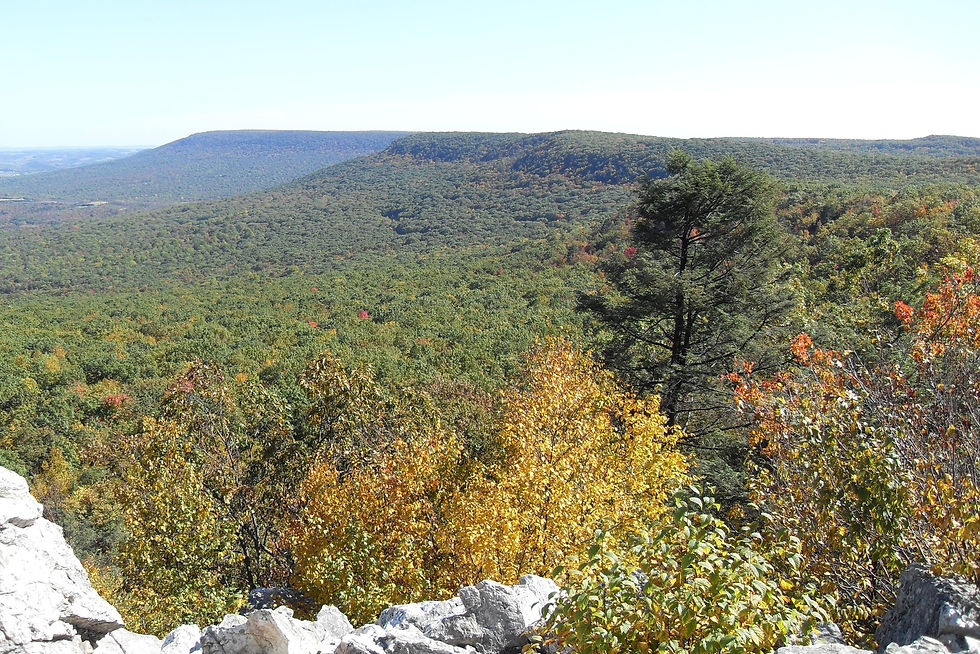
A host marketing a Kempton property can honestly feature Hawk Mountain Sanctuary and the broader ridge landscape in photography and listing copy - these are genuine, real draws worth naming specifically, distinct from any occupancy or revenue claim.
Listing copy shouldn't imply a confirmed peak season by borrowing language that sounds specific to Reading's or Pottsville's own confirmed patterns - phrases suggesting an "August peak" or a "June-through-August season" should be avoided unless a host's own direct booking history actually supports that claim for their specific property.
A host can honestly describe the sanctuary's own visitor season (including its autumn migration viewing period) as a genuine draw for a specific guest segment, without implying this translates into a confirmed occupancy or revenue figure this sample doesn't provide.
The practical rule: build marketing copy around Hawk Mountain Sanctuary's genuine, real appeal, while avoiding any specific seasonal or occupancy claim borrowed from Reading's or Pottsville's own separate, confirmed extracts.
Building Genuine Data From a Host's Own Booking History
A host operating a Kempton short-term rental should track their own booking calendar directly and carefully, since this sample's absence means direct, property-specific data is the only genuinely reliable source of seasonal or occupancy information currently available.
After a full year or more of direct operation, a host will have a genuinely useful, property-specific picture of their own actual peak months, low months, and typical guest origin - information considerably more valuable than any borrowed neighboring-city figure could provide.
A host who shares this direct data, in aggregate or anonymized form, with other Kempton-area hosts, or with a future market-data provider, contributes to eventually closing this genuine data gap for the broader area.
The practical rule: treat direct, property-specific booking history as the primary, most reliable data source for a Kempton short-term rental, given the confirmed absence of any published extract for this specific place.
Professionally Managed Share Is Another City-Only Row
Reading's own confirmed extract shows professionally managed share at 3.8 percent, and a single named manager, Eduardo, appearing on that city's own listing set - a genuine, specific finding for Reading, but not evidence of how Kempton-area properties are managed.
Pottsville's own confirmed professionally managed share sits considerably higher at 14.3 percent, with a different named manager, Savas, appearing across three of that city's own listings - another reminder that even these two labeled comparison cities don't share a consistent management pattern, let alone one that should be assumed for Kempton.
A host or buyer researching property management options near Hawk Mountain shouldn't treat either Eduardo's Reading-based operation or Savas's Pottsville-based one as evidence of who currently manages ridge-area rentals - those are city-specific rows, not a Kempton-area management directory.
The practical rule: if comparing DIY versus professional management for a Kempton property, gather quotes and references directly from managers who actually operate in the Albany Township area, rather than assuming Reading's or Pottsville's confirmed management share applies to this genuinely different, unpublished market.
Thirty-Plus Night Stays Are Also a City-Specific Figure
Reading's own confirmed extract shows thirty-plus-night stays at 13 panel, or 16.5 percent of that city's own listing set - a specific, real figure worth naming, but one that describes Reading's own longer-stay and remote-work guest segment, not Kempton's.
Pottsville's own confirmed thirty-plus-night share is considerably smaller at just 1 panel, or 4.8 percent - yet another example of two labeled comparison cities producing meaningfully different figures, which should discourage treating either one as a stand-in for a third, genuinely unpublished place.
A host marketing a Kempton property toward remote workers or extended-stay guests shouldn't cite Reading's 16.5 percent thirty-plus share as evidence of local demand for that stay pattern - that figure belongs to Reading's own city market, which likely draws a different guest profile than a rural, sanctuary-adjacent property.
The practical rule: if a host wants to understand actual demand for extended stays near Hawk Mountain, that data has to come from their own booking history over time, not from Reading's or Pottsville's own separate, city-specific thirty-plus-night figures.
The Other Empty Towns Around Kempton
Kempton isn't the only nearby place returning an empty extract - Lenhartsville, Kutztown, and Shartlesville, all within a reasonable drive of Hawk Mountain, also return missing page, along with Virginville, New Ringgold, Orwigsburg, and Tamaqua a bit further out toward the Schuylkill County side.
This cluster of empty towns doesn't itself confirm anything about actual short-term rental activity in the broader area - it simply means several nearby data market, likely due to small sample sizes, aren't published by this particular extract provider.
A host or buyer shouldn't treat this cluster of empty towns as proof of a quiet or underdeveloped market, nor should they average the two labeled comparison cities (Reading and Pottsville) across this wider empty cluster to manufacture some kind of implied regional figure - that's still guessing a number the data doesn't support.
The practical rule: name each of these nearby empty towns honestly as its own unconfirmed data point, and resist the urge to blend any of them, or the two labeled city comparisons, into a single manufactured "greater Hawk Mountain area" figure.
Year-Over-Year Trends and Supply Growth Are Also City-Specific
Reading's own confirmed extract shows revenue down 17.5 percent year over year, alongside supply up 68.1 percent - a specific combination suggesting a city market that added listings faster than demand kept pace, a real and useful finding, but one specific to Reading's own market conditions.
Pottsville's own confirmed trend runs in the opposite direction: revenue up 4.2 percent year over year, with a smaller supply increase of 50.0 percent - again, a genuinely different pattern from Reading's, underscoring how much two labeled comparison cities can diverge even while sitting in neighboring counties.
A buyer or lender evaluating a Kempton property shouldn't assume either city's year-over-year trend, or its supply growth rate, describes what's actually happening on the ridge - Kempton's own supply and demand trajectory remains genuinely unpublished and unconfirmed by this sample.
The practical rule: when a financing packet or buyer memo needs a trend line, it should say plainly that Kempton's own year-over-year and supply figures are unconfirmed, rather than importing Reading's declining trend or Pottsville's growing one as if either applied here.
February Hole and 31-Day Lead Time: Two More City-Only Rows
Both Reading and Pottsville confirm February as their own hole month - the slowest point in each city's own booking calendar - and both confirm a 31-day average booking lead time, an unusual coincidence between two otherwise different markets.
That shared February hole and shared 31-day lead time might reasonably suggest a similar pattern could hold for Kempton, but two matching city figures still don't add up to a confirmed third figure - Kempton's own hole month and lead time remain genuinely unpublished.
A host pricing a Kempton property for February, or planning marketing lead time around a 31-day booking window, should treat both as a reasonable starting assumption worth testing against their own direct booking data, not as an established fact borrowed from Reading and Pottsville.
The practical rule: use the shared Reading-Pottsville February hole and 31-day lead time as an informed hypothesis for a Kempton property, while tracking actual booking patterns directly to confirm or revise that assumption over a full season or more.
Reading a Third-Party Claim About Kempton's Market With Skepticism
If a host encounters a third-party summary, agency pitch, or automated tool that confidently states a specific Kempton typical year, peak-3, or occupancy figure, the honest response is to ask directly where that number came from, since this report's own review of the available extract found Kempton's own data genuinely empty.
A claim that happens to match Reading's or Pottsville's own confirmed figures should raise a specific flag - it likely means that separate city's data has been relabeled as Kempton's own, rather than representing a genuinely new, Kempton-specific finding.
This scrutiny matters just as much for automated or AI-generated market summaries, which can smooth over a genuine data gap with a plausible-sounding but ultimately unverified figure if not specifically instructed to name the limitation honestly.
The practical rule: treat any confidently stated Kempton-specific figure from an outside source with direct skepticism, and specifically check whether it matches Reading's or Pottsville's own confirmed figures before accepting it as genuinely Kempton-specific.
Setting Realistic First-Year Expectations Without a Confirmed Baseline
A host launching a first short-term rental near Hawk Mountain without any confirmed local baseline should plan conservatively for the first several months, treating early bookings as data collection rather than a test against some borrowed Reading or Pottsville benchmark.
Because occupancy, ADR, and stay length are all genuinely unconfirmed for Kempton, a new host is better served tracking their own inquiry-to-booking ratio, actual nightly rate achieved, and actual guest origin month by month, building a real baseline rather than measuring against a number that was never actually Kempton's.
A lender or investor reviewing a pro forma for a Kempton property should expect, and accept, wider uncertainty bands than a market with a confirmed extract would carry - that uncertainty is a genuine feature of this specific market's missing data, not a flaw in the analysis.
The practical rule: build a first-year Kempton pro forma around a genuinely conservative range informed by comparable rural, attraction-adjacent markets generally, clearly labeled as an estimate, rather than presenting Reading's or Pottsville's confirmed figures as if they were Kempton's own baseline.
Related Reading
Related reading for Kempton, PA hosts: same-town spine first, then nearby geo lines. Skip costume national dumps that do not underwrite this driveway.
Frequently Asked Questions
Does Kempton have a published AirROI typical year?
No. Kempton's own market extract returns empty, no typical year, ADR, or occupancy figure exists for this specific place. That's a genuine data gap, not a formatting issue, and any packet citing a Kempton-specific dollar figure is citing something that doesn't exist in the published extract.
What about Hamburg or Albany Township?
Both also return empty extracts. There's genuinely no published short-term rental market data for Kempton, Hamburg, or Albany Township individually. A buyer or host working this area should expect to build a pricing picture from direct booking history rather than a published third-party figure.
Can Reading's $11,474 typical year stand in for Kempton?
No. Reading is a separate city with its own confirmed figures on a genuinely different, more urban market. It shouldn't be presented as Kempton's own data in a revenue packet or listing pitch, even as a rough proxy, since the two markets aren't comparable in density or guest profile.
What about Pottsville's $17,715 figure?
It's also a separate city's own confirmed figure, not a substitute for Kempton's genuinely unpublished extract. Pottsville and Reading both have real, city-specific numbers; neither one is evidence of what a Kempton-area property actually earns.
Does Hawk Mountain Sanctuary's autumn migration season confirm a peak-3 for Kempton?
No. Hawk Mountain Sanctuary's fall hawk-migration season is a genuine visitor draw worth mentioning in listing copy, but it doesn't itself confirm Kempton's own unpublished seasonal occupancy pattern. A busy sanctuary weekend is a tourism fact, not a rental-market statistic.
Does guest-origin data from Reading or Pottsville apply to Kempton?
Not confirmed. Origin figures reported for Reading and Pottsville are specific to those two separate cities' own extracts, not proof of who actually books a Kempton-area property. Treating a neighboring city's origin data as Kempton's own would be an unsupported claim.
What jurisdiction governs a Kempton short-term rental?
Albany Township, Berks County, unless a specific parcel sits within Hamburg Borough or Windsor Township instead. Confirming the exact jurisdiction directly with the township is a necessary first step, since the governing office differs by parcel even within the same general area.
How should a buyer evaluate a Kempton property without published extract data?
Request direct seller documentation of the property's own booking history, and confirm current permit status directly with the Albany Township secretary. In the absence of a published market extract, a property's own booking records are the most reliable evidence available.
What's the biggest mistake in a Kempton revenue packet?
Borrowing Reading's or Pottsville's confirmed figures to fill Kempton's own genuine data gap, rather than naming the gap honestly. A packet that presents a neighboring city's number as if it belongs to Kempton misrepresents the property to a buyer or lender, and the gap is better disclosed directly.
Work with Crest & Cove Creative
A packet that pastes Reading's $11,474 typical year onto a Hawk Mountain Road listing is presenting a different city's data as fact. Kempton's own extract returns genuinely empty.
We help Kempton hosts and buyers build honest underwriting from direct booking history instead of a borrowed neighboring city's figures. Send your packet and we'll flag any city data mislabeled as this ridge. Send the live listing draft and the facts you can actually cite.
Reach out at crestcove.co or (256) 998-7502.


Comments