
Who Books a Kempton Rental: Hawkwatch Guests, Not Reading

Updated: Aug 25

Kempton, Pennsylvania sits at the base of Hawk Mountain Sanctuary in Albany Township, and the guest who searches for it has already made a decision that a downtown Reading or Pottsville listing can't answer for them. They typed a ridge name, not a city name, and the listing that wins that search is the one built around the sanctuary and the lookout, not a borrowed skyline.
That distinction matters more here than in a lot of markets, because Kempton itself doesn't publish its own local market data - no confirmed stay length, no local origin breakdown. The nearest published numbers belong to Reading and Pottsville, two real cities close enough to be useful as labeled comparisons and close enough to be dangerous if their numbers get mistaken for Kempton's own.
This is not legal advice. It's a look at who actually books a Kempton-area rental, what the hawkwatch season does and doesn't tell a host about occupancy, and where the honest answer to a guest-profile question is simply that the local data doesn't exist yet.
The Guest Who Types Kempton Isn't Shopping for Reading
A guest who searches "Kempton" or "Hawk Mountain" has already filtered out a downtown stay before they ever open the listing. They're looking for the sanctuary, the lookout trail, and a house close enough to the ridge to make an early hawkwatch morning realistic - not a hotel amenity list or a city skyline view.
That means the first photo, the title, and the opening lines of the listing description are doing real work if they show the ridge - Hawk Mountain Road, the trail, the kind of house a hiker actually sleeps in - and real damage if they lead with anything that reads like a downtown Reading pitch. A guest who clicks through expecting the ridge and sees city staging is a guest who bounces before reading the amenities.
This isn't a case against ever mentioning Reading or Pottsville. Both cities are close enough to be worth a labeled mention for a guest weighing options, or for a host comparing markets. It's a case for keeping the primary identity of the listing anchored to what a Kempton guest actually came for, with any city references clearly kept separate rather than blended into the ridge's own story.
The practical test is simple: would a guest who has already been to Hawk Mountain recognize this listing's photos and copy as describing their own trip, or would they recognize it as a description of a different kind of stay entirely, wearing Kempton's name.
Hawkwatch Names a Season, Not a Guaranteed Booking
Hawk Mountain's autumn migration season, historically running August 15 through December 15, is the single most useful piece of visitor context a Kempton-area listing can carry - and it belongs in the listing as visitor information, not as a stand-in for occupancy or a filled calendar. The 2026 season begins on that same August 15 date, with the Visitor Center open daily from 9 to 5.
Naming that window in the listing description tells a hawkwatch guest that the host understands why they're actually visiting, which builds real trust before a single message gets sent. What it doesn't do is guarantee that the listing books solid from August 15 through December 15 - visitor center hours and a named migration season describe why people come to the area, not how full any specific host's calendar actually runs.
The distinction is worth being explicit about in any marketing copy: visitor-facing facts (the season dates, the sanctuary hours) belong in the section a guest reads while deciding whether this area fits their trip. Booking-facing facts (this listing's own occupancy, its own typical stay pattern) are a separate category, and for Kempton specifically, that second category doesn't have a published local answer yet.
A host writing about the hawkwatch season should feel free to lean into the specificity - the exact date range, the Visitor Center hours, the kind of early-morning trip a serious hawkwatcher plans around. That specificity is what signals a host who actually knows the guest, and it costs nothing in accuracy since it's describing the sanctuary's published schedule, not guessing a booking pattern to match it.
Reading and Pottsville Are Real Neighbors, Not This Market
Reading's published market shows a typical year of $11,474 across 79 listings, and Pottsville's shows $17,715 across 21 listings. Both are real, useful figures - for Reading and Pottsville. Neither one is a Kempton number, and neither should appear in a Kempton listing's market context without being clearly labeled as a different city's data.
Both city extracts also show New York as a notable guest origin. That's a real fact about Reading and Pottsville's guest base, and it is not evidence about who books a Kempton-area rental specifically. A hawkwatch guest driving in for a sanctuary weekend and a guest booking a downtown Reading stay may or may not share an origin pattern - the data simply doesn't say, because Kempton doesn't have its own published origin breakdown.
The risk isn't in knowing these neighboring numbers - it's in letting them quietly stand in for Kempton's own data because Kempton's own data doesn't exist. A host who writes "most guests come from New York" into a Kempton listing description is stating a Reading-and-Pottsville fact as if it were a local one, and a guest who later realizes the claim wasn't actually about this specific ridge has reason to distrust the rest of the listing too.
The useful way to use these neighbor numbers is as a labeled comparison for a host's own market thinking - understanding that nearby cities pull a certain kind of traveler helps contextualize the region - while keeping every dollar figure and every origin claim clearly attributed to the city it actually describes.
Stay Length Is Genuinely Unknown, and That's an Honest Answer
Reading's typical stay runs about 6.5 nights, and Pottsville's runs about 6.4 - both real, city-level figures. Kempton and Albany Township don't have a published stay-length figure of their own, and neither does Hamburg. That gap in the data is worth stating plainly rather than filling with a borrowed city average.
A 6.5-night average from a Reading extract describes a different kind of trip than a hawkwatch weekend typically implies, and there's no evidence it applies to a Kempton-area ridge stay at all. A host setting a minimum-night policy for this market is better served by deciding what stay length the property itself can realistically support - and what pattern of hawkwatch and sanctuary visits actually tends to book it - than by importing a city figure that describes an entirely different kind of guest.
"Unknown" is not a weakness in a host's own market research; it's the accurate description of what's currently published. The same is true for a long-stay or thirty-night-minimum question on this ridge - there's no local figure showing how common that pattern is here, and a host considering that strategy should treat it as untested for this specific market rather than assume a city's numbers translate directly.
The honest approach costs a host nothing in this case, and it's actually a differentiator. A listing description that states its stay-length policy clearly, based on what the property can support, reads as more credible than one that borrows a specific-sounding number from a city with a genuinely different guest profile.
Photograph the Ridge a Guest Can Actually Reach
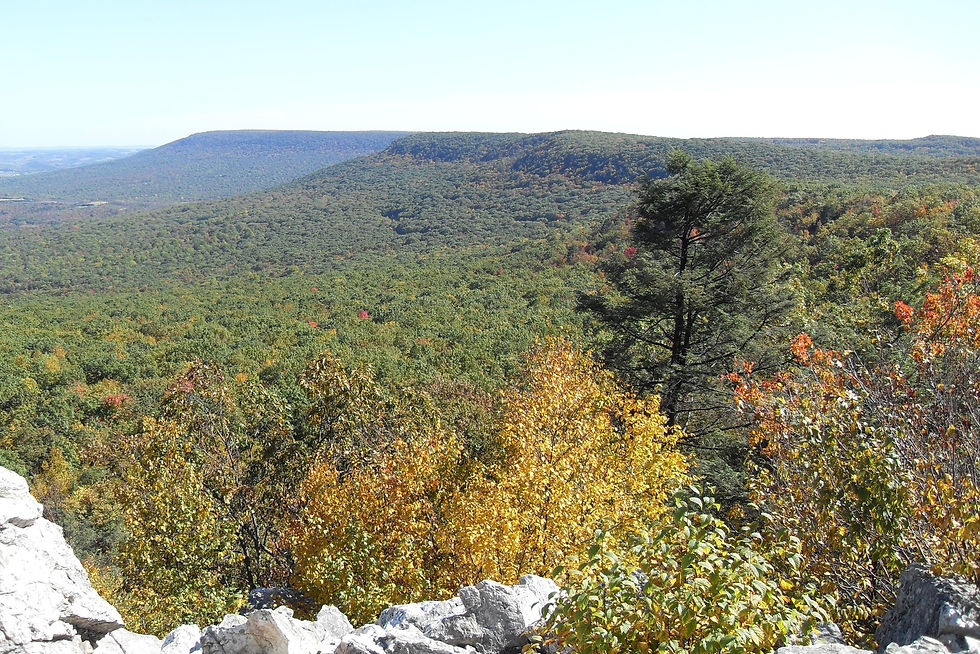
The strongest photo set for this market centers on what a hawkwatch or sanctuary guest can actually get to from the property: the lookout trail, Hawk Mountain Road itself, and - closer to home - the Kempton post office and fire company as markers of the small, specific place this is, rather than an anonymous rural stretch that could be anywhere.
Pair those location photos with honest images of the rooms a guest will actually sleep in after a long hiking day. A hawkwatch guest cares less about styled staging and more about whether there's a comfortable place to collapse after an early-morning climb to North Lookout - clean, functional, and clearly depicted, rather than aspirational.
What doesn't belong in this gallery is a downtown Reading skyline shot, a generic stock-feeling porch scene, or any image that could just as easily describe a listing three counties away. Those images don't add information a Kempton-searching guest is looking for, and they risk implying a level of urban convenience the property doesn't actually offer.
The test for the first photo specifically - the one a search result shows before a guest ever clicks in - is whether someone who has already visited Hawk Mountain would recognize it as describing their own trip. A lookout view, a trailhead sign, or an exterior shot with the ridge visible in the background passes that test in a way a staged interior alone cannot.
Confirm Which Township Desk Actually Covers the Parcel
Albany Township is the governing desk for most Kempton-area properties, with Secretary Michele Morstatt reachable at PO Box 197, Kempton. There's no walk-in office, so any remittance or registration question needs a phone call ahead of time rather than an in-person visit - a detail worth knowing before assuming a quick errand will resolve a compliance question.
Hamburg and Windsor Township are separate desks that apply only if the specific parcel's tax map actually places it in one of those jurisdictions rather than Albany Township. A host shouldn't default to naming Hamburg in marketing copy or compliance planning unless the property's own tax map confirms that's the correct office - guessing based on general area familiarity risks pointing a guest or an inspector toward the wrong desk entirely.
This confirmation matters before any of the guest-facing marketing decisions in this piece, not after. Getting the jurisdiction right is a prerequisite for accurate compliance information, and a listing that states the wrong township by mistake creates a credibility problem that no amount of good photography or FAQ writing solves afterward.
Once the correct desk is confirmed, it becomes the fixed reference point for every other local-rule question - remittance timing, registration renewal, any local ordinance specific to short-term rentals - the same way the property's exact location determines which office actually governs it, regardless of which nearby town name feels more familiar.
This is also the kind of fact worth re-confirming rather than assuming stays fixed indefinitely, since township lines and tax-map designations aren't always the first thing a host thinks to double-check after a few years of operating the same way. A quick call to Albany Township before a busy hawkwatch season starts costs a few minutes and avoids a compliance surprise during the property's busiest guest window.
How This Guest Profile Should Shape a Listing's Own FAQ
A guest deciding between a Kempton-area ridge stay and a downtown Reading or Pottsville hotel is likely to have specific, practical questions that a listing's own FAQ section can answer directly: how far the drive is to North Lookout, whether the Visitor Center hours change outside migration season, and what the property actually offers after a long day on the trail.
Those questions are different from the ones a downtown guest would ask, and answering them specifically - rather than with a generic "close to local attractions" line - signals to a hawkwatch-specific guest that the host understands exactly who they are. A vague answer reads as though the listing was written for a different kind of trip entirely.
It's also worth directly addressing, in plain language, why the listing doesn't cite a specific typical-stay figure or occupancy percentage the way a bigger market's listing might - guests who do their own research may notice the absence and appreciate an honest "this is a smaller market without its own published figures yet" over a suspiciously specific-sounding number that doesn't hold up to a quick search.
That kind of transparency costs a host nothing and tends to build more trust with a research-minded guest than a confident-sounding but unsupported claim would. A hawkwatch guest planning around sunrise conditions and trail access is often the kind of traveler who appreciates precision - and notices when a listing is guessing.
Who This Ridge Rental Actually Fits
This market fits a host who's comfortable writing "unknown" where the data is genuinely unknown, rather than reaching for a Reading or Pottsville figure to fill the gap. It fits a host willing to build marketing around a specific, narrow guest type - the hawkwatch visitor, the sanctuary hiker - instead of a broader, vaguer "nature getaway" pitch that could describe a dozen other towns.
It fits a host who can name August 15 through December 15 as the sanctuary's own published season without implying that window guarantees a filled calendar, and who's willing to call Michele Morstatt ahead of time rather than assume a compliance question will resolve itself. Precision and patience both matter more here than in a market with a thick, well-documented public data set to lean on.
It's a weaker fit for a host who needs a confident, numbers-heavy pitch to feel comfortable marketing a property - the local data simply doesn't support that kind of packet yet, and forcing one by borrowing a neighboring city's figures creates a listing built on facts that don't actually describe this specific ridge.
The guest who books here already knows what they came for. The host's job is matching that guest's actual trip - the sanctuary, the lookout, the early morning on the ridge - rather than dressing the property up as a version of Reading or Pottsville it was never going to be, and rather than borrowing a stay-length or origin figure from either city just to make the listing description feel more complete than the published data actually supports.
Related Reading
Related reading for Kempton hosts: same-town spine first, then nearby geo lines. Skip costume national dumps that do not underwrite this driveway.
Frequently Asked Questions
Who actually searches for a Kempton, Pennsylvania rental?
A guest who types Kempton or Hawk Mountain has already ruled out a downtown stay - they're looking for the sanctuary and the lookout trail, close enough to the ridge for an early hawkwatch morning. Photograph and describe what they can actually reach: Hawk Mountain Road, the trail, and the house they'll sleep in. A listing that leads with city-style staging is answering a question this guest never asked.
Does Hawk Mountain's hawkwatch season guarantee a filled calendar?
No. The season historically runs August 15 through December 15, with the 2026 migration beginning on that same date and the Visitor Center open daily 9 to 5. Those are real, useful facts for the listing's visitor-facing copy, but they describe why people visit the area, not how full any specific host's calendar runs. Keep the season dates and any occupancy claim in separate categories.
Is New York a confirmed origin market for Kempton guests specifically?
No. New York shows up as a notable origin on the Reading and Pottsville market extracts, not on any Kempton-specific data, because Kempton doesn't publish its own origin breakdown. Those two cities are real, labeled neighbors - useful for general regional context, but not evidence about who books a Hawk Mountain-area ridge stay. Stating it as a Kempton fact would be borrowing a claim the local data doesn't make.
What's the typical stay length for a Kempton-area rental?
Unpublished. Reading's typical stay runs about 6.5 nights and Pottsville's about 6.4, but neither Kempton, Albany Township, nor Hamburg has a local figure of its own. A host is better served setting a minimum-stay policy based on what the property can realistically support and what a hawkwatch trip actually looks like, rather than importing a city average that describes a different kind of guest.
Should Reading or Pottsville's numbers be used to describe Kempton guests?
Only as clearly labeled neighbors, never as a substitute. Reading publishes $11,474 on 79 listings; Pottsville publishes $17,715 on 21 listings. Both are real figures for real cities close enough to be useful for context. Folding either one into a Kempton listing's own guest profile or market claims states a fact about the wrong town, and a guest who catches the mismatch has reason to doubt the rest of the listing.
What photos actually match the guest who books this ridge?
The North Lookout trail, Hawk Mountain Road, the Kempton post office and fire company as local markers, and honest images of the rooms a guest will sleep in after a long hike. Skip the downtown skyline shots and generic staged porches - they could describe a listing anywhere and don't answer what a hawkwatch guest is actually trying to confirm before booking.
Which township office actually governs a Kempton-area short-term rental?
Albany Township is the desk for most Kempton-area parcels, reached through Secretary Michele Morstatt at PO Box 197, Kempton - there's no walk-in office, so call ahead for any remittance or registration question. Hamburg or Windsor Township only applies if the specific parcel's tax map confirms it. Confirm the correct desk before finalizing any compliance claim in the listing.
Should a host set a stay minimum without local comparable data?
Yes - base it on what the property itself can realistically support, not on a borrowed city figure. Reading and Pottsville's stay-length averages describe a different kind of trip than a hawkwatch weekend typically involves. Writing an honest, property-specific minimum reads as more credible to a research-minded guest than a suspiciously specific number pulled from a market that doesn't match this one.
Is this market a good fit for every kind of host?
No. It fits a host comfortable stating "unknown" where the data genuinely is unknown, and building marketing around a specific, narrow guest type rather than a vague nature-getaway pitch. It's a weaker fit for a host who needs a numbers-heavy pitch to feel confident, since the local data doesn't support that yet - reaching for a neighboring city's figures to fill the gap creates a listing built on facts that aren't actually about this ridge.
How should a listing handle the lack of published local Kempton data?
State it plainly rather than filling the gap with a Reading or Pottsville number. Guests who research a market on their own sometimes notice when a stay-length or origin claim doesn't hold up, and an honest "this is a smaller market without its own published figures yet" tends to build more trust than a confident-sounding but unsupported claim, especially with the detail-oriented travelers hawkwatch season tends to attract.
Work with Crest & Cove Creative
A Kempton listing that borrows a neighboring city's stay length or origin data describes a guest who was never searching for this ridge. The hawkwatch visitor wants the lookout and the sanctuary, not a city guess dressed up as local.
We help hosts write guest-specific copy that matches who actually types this town into search, without guessing data the market hasn't published. Share your current about section and we'll show you where it's still speaking to the wrong guest.
Reach out at crestcove.co or (256) 998-7502.


Comments