
Maggie Valley vs. Ellijay GA: Which Market Wins on New Host Viability?

Updated: Aug 21
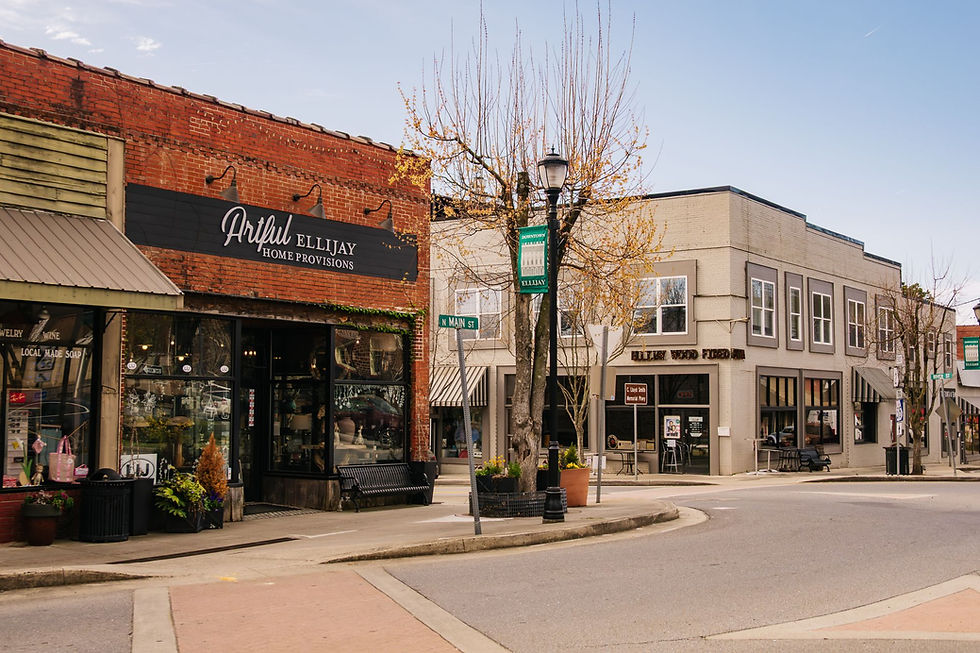
The question that first-time STR investors in the southern Appalachian region most need answered is rarely the one they ask first. They ask about ADR, occupancy rates, and cap rates — the performance metrics that describe what established, well-optimized listings achieve. What they should ask first is something more fundamental: how forgiving is this market for a new listing that doesn't yet have reviews, hasn't yet found its pricing equilibrium, and is operating without the momentum that established listings have spent years building?
That question reframes the Maggie Valley versus Ellijay comparison in ways that headline market data doesn't capture. Both towns appear on shortlists of underrated mountain markets — smaller, less saturated alternatives to Asheville and Blue Ridge, respectively, with lower acquisition costs and what appears to be room for new entrants. Both have genuine demand drivers that support real STR revenue. But their viability for new hosts — specifically for hosts entering the market for the first time without an existing review base, without established pricing data, and without the operational experience that comes from managing a listing through a full annual cycle — differs in ways that matter enormously for the investment decision.
This analysis compares the two markets through the lens of new host viability: how quickly a new listing can reach sustainable occupancy, what the competitive environment demands at entry, what the guest profiles expect, and what the realistic first-year financial picture looks like in each market.
Market Context: Why Both Markets Appear on New Investor Shortlists
Before comparing viability, it helps to understand why both Maggie Valley and Ellijay attract new STR investors in the first place — because the appeal of each market is genuine, even if the execution requirements differ.
Maggie Valley's Appeal
Maggie Valley sits in Haywood County at approximately 2,700 feet in a narrow valley between the Blue Ridge Parkway ridgeline and the Soco Gap pass. Its appeal to new investors centers on several structural advantages: genuine four-season demand drivers (Cataloochee Ski Area in winter, the Blue Ridge Parkway and GSMNP proximity in summer and fall, the Festival Grounds event calendar year-round), a smaller and somewhat supply-constrained market that limits oversaturation, property acquisition costs that remain lower than in Asheville or the Highlands corridor, and a location on US-19 — the primary tourist highway connecting Asheville to Cherokee — that provides passive visibility to millions of travelers annually.
The narrative for new Maggie Valley investors is: affordable entry, genuine demand, manageable competition, and a market that still has room for well-executed new listings. That narrative is broadly accurate — with caveats that this analysis will explore.
Ellijay's Appeal
Ellijay sits in Gilmer County at approximately 1,400 feet in the Cartecay River valley, about 90 miles north of Atlanta via GA-400. Its appeal centers on a different set of advantages: extraordinary proximity to the Atlanta metropolitan area (6 million people within a 90-minute drive), a wine country and apple orchard tourism identity that generates specific seasonal demand, acquisition costs that were historically lower than Blue Ridge (though this gap has narrowed), and a market that has been featured prominently in "best small towns" and "underrated mountain destinations" media coverage that has driven investor and visitor interest.
The narrative for new Ellijay investors is: massive feeder market in Atlanta, growing destination recognition, lower entry cost than Blue Ridge, and a market on an upward trajectory. That narrative is also broadly accurate — and also requires significant caveats.
Competition Density: The Most Consequential Difference for New Hosts
The single most important factor in new host viability isn't ADR, isn't occupancy, isn't acquisition cost. It's competition density — the number and quality of existing listings that a new listing must compete against to capture its share of available demand.
Ellijay's Supply Growth Problem
Ellijay's Gilmer County has experienced substantial STR supply growth over the past several years. The same media coverage and investment narratives that attracted the new investor reading this analysis attracted hundreds of other investors before them. The result is a market where the ratio of STR supply to visitor demand has shifted meaningfully — not to the point of oversaturation that makes the market unviable, but to the point where a new listing enters a more crowded competitive field than it would have three or even two years ago.
In a crowded field, the consequences for a new listing without reviews are specific and measurable. Airbnb and Vrbo's algorithms both favor listings with established review histories — a new listing with zero reviews is algorithmically disadvantaged relative to a comparable listing with 40 five-star reviews, regardless of the new listing's actual quality. In a less competitive market, this disadvantage is offset by the simple fact that there aren't enough established listings to satisfy all demand — some bookings flow to new listings by default. In a market where supply growth has created genuine competition for available bookings, the algorithmic disadvantage of being new is compounded by the competitive pressure of multiple established listings vying for the same guest.
New Ellijay listings that enter the market without strong professional photography, without competitive amenity investment, and without an aggressive launch pricing strategy that compensates for the review deficit often struggle to reach the occupancy needed to cover costs in the first six to twelve months. The ramp-up period — the time between listing launch and sustainable occupancy — is longer and more financially painful in Ellijay than it was when the market was less competitive.
Maggie Valley's Supply Constraint Advantage
Maggie Valley's competitive environment is structurally different, favoring new hosts. The valley's narrow physical footprint — bounded by ridgelines on both sides of US-19, with limited buildable or convertible property inventory — constrains the total supply of suitable cabin properties in a way that Ellijay's broader valley and surrounding hillside terrain does not. New STR listings enter Maggie Valley's market, but the rate of new supply addition is slower than in markets with more available property inventory.
This supply constraint means that a new Maggie Valley listing enters a less crowded competitive field. The algorithmic disadvantage of zero reviews still exists — the platforms' ranking systems don't account for local supply levels — but the practical consequences of that disadvantage are less severe when the total number of competitors is smaller. In a market with 150 competing listings, a new listing with zero reviews needs to outperform 149 established competitors to reach the first page. In a market with 80 competing listings, the same new listing needs to outperform fewer competitors, and the probability of capturing bookings during the ramp-up period is correspondingly higher.
Maggie Valley's supply constraint doesn't make new host entry effortless. It makes it more forgiving — which, for a first-time host navigating the learning curve of pricing, guest communication, cleaning logistics, and listing optimization simultaneously, is a meaningfully different operating environment.
Guest Profile and Booking Behavior: What Each Market's Guests Expect
The guests who book in each market arrive with different expectations, booking habits, and tolerances for the imperfections that new listings inevitably present. Understanding those differences helps new hosts calibrate their launch strategy.
Ellijay's Atlanta Guest Profile
Ellijay's primary feeder market is metropolitan Atlanta — approximately 6 million people within a 90-minute drive. Atlanta-area guests who book north Georgia mountain cabins have established booking habits shaped by years of experience with the Blue Ridge and Ellijay STR markets. They know what a competitive north Georgia cabin looks like, and their expectations reflect that experience.
Amenity expectations are high. In Ellijay's competitive cabin market, hot tubs, fire pits, and game rooms are standard amenities for properties in the two- to four-bedroom category. A cabin without a hot tub is competing against a field where the majority of comparable listings have one — and the guest browsing search results will consistently choose the listing with the hot tub over the one without, all else being equal. For new hosts entering Ellijay, the hot tub isn't optional. It's a competitive requirement.
Advance booking patterns are established. Atlanta-area guests typically book fall foliage and apple festival weekends two to three months in advance. Summer weekends book four to eight weeks ahead. This advance booking behavior rewards listings with early calendar availability and established review profiles that give advance-booking guests confidence in committing. A new listing that launches in August may find that the most valuable fall weekends have already been booked by guests who chose established competitors months earlier.
Platform loyalty skews toward Vrbo. The north Georgia cabin market has historically had strong Vrbo representation, and many Atlanta-area guests have established Vrbo booking habits. New hosts who list only on Airbnb may miss a meaningful share of the Ellijay market's demand. Cross-listing on both platforms from launch day is more important in Ellijay than in markets where Airbnb dominates.
Maggie Valley's More Varied Guest Mix
Maggie Valley's guest profile is more heterogeneous than Ellijay's. The market draws from multiple feeder cities — Charlotte, Atlanta, the South Carolina Upstate, Knoxville, and the broader Southeast — and includes both deliberate destination visitors who specifically chose Maggie Valley and overflow guests from the Asheville and Gatlinburg corridors who couldn't find availability in their first-choice market.
Want to know what's holding your listing back? Get a free STR visibility audit.
This variety creates a booking behavior pattern that is somewhat more favorable for new hosts in two specific ways.
The booking window is more varied. Because Maggie Valley's guests include both advance planners (destination visitors booking foliage and ski weekends) and last-minute bookers (overflow guests from sold-out Asheville or Gatlinburg weekends), the market has a longer effective booking window than Ellijay's predominantly advance-booking pattern. New listings that aren't yet capturing advance bookings due to their review deficit can still capture last-minute overflow bookings that established listings have already filled their calendars around.
Amenity expectations vary by segment. The ski weekend guest has different amenity priorities than the summer GSMNP base-camp family, who has different priorities than the overflow weekend couple from Charlotte. This variation means a new Maggie Valley listing doesn't need to match a single, uniform amenity standard to compete — it can position for the segment its specific amenity configuration serves best. A cabin without a game room can still compete effectively with the couples segment; a cabin without a hot tub can compete for the GSMNP base-camp segment that prioritizes location over amenities.
Startup Costs and First-Year Financial Realism
In both markets, first-time hosts consistently underestimate startup costs and overestimate first-year revenue. Recalibrating these expectations before purchasing is the single most important financial discipline for new STR investors.
The Costs New Hosts Underestimate
Professional photography — $300 to $800 for a full property photo shoot with a photographer experienced in STR listing photography. This is not optional in either market. Listings with professional photography outperform listings with phone photos by margins that are measurable in both click-through rate and booking conversion. Launching without professional photos to save money costs more in lost bookings than the photography investment.
Amenity investment — In Ellijay, a hot tub installation runs $5,000 to $12,000, depending on the unit, the site preparation requirements, and the electrical work involved. A fire pit, outdoor furniture, and game room setup add $2,000 to $5,000. In Maggie Valley, the amenity investment is comparable, though the mandatory floor for competitiveness is slightly lower than in Ellijay's more amenity-saturated market.
Furnishing and staging — A mountain cabin that reads as "unfurnished rental" rather than "curated mountain experience" in listing photos will underperform from day one. New hosts who furnish minimally to reduce costs discover that the cost savings are more than offset by lower booking rates and lower ADR. Budget $8,000 to $20,000 for furnishing and staging a two-to-three-bedroom cabin to listing-competitive standards, depending on the property's existing condition.
The marketing ramp-up period — most new listings don't reach optimal revenue until months 6 through 12 after launch. The first one to three months are the most difficult: zero reviews, no booking history for the algorithm to evaluate, no repeat guests, and no word of mouth. The months three through six period typically shows improvement as early reviews accumulate and the algorithm begins ranking the listing based on performance data. Months six through twelve approach the listing's sustainable performance level as the review profile matures, pricing calibration stabilizes, and the operator's own skills improve through experience.
First-Year Revenue Reality
A new Maggie Valley listing that launches with professional photography, competitive amenities, and an aggressive introductory pricing strategy can beat leftover first-year 45–55% only on purpose. AirROI Maggie Valley year is 36.5% — not leftover 55–70% as the established desk, but sufficient to cover operating costs and begin building toward profitability in year two.
In the current competitive environment, a new Ellijay listing with the same level of preparation should quote AirROI Ellijay 35.0% occupancy first — leftover 40–50% first-year is not the market desk. The lower target reflects the higher competition density: there are simply more established listings absorbing available demand before it reaches new entrants. Hosts who enter Ellijay expecting leftover 60%+ first-year occupancy against AirROI 35.0% that include mature, established listings are planning against a benchmark their new listing is unlikely to reach in year one.
Both of these targets assume the host has invested in professional photography, has installed competitive amenities at launch, has priced aggressively enough during the ramp-up period to generate early bookings and reviews, and has the operational discipline to respond quickly to inquiries and deliver a guest experience that generates five-star reviews from the start.
Acquisition Costs: The Narrowing Gap
The acquisition cost landscape for both markets has evolved in ways that affect the investment calculation.
Ellijay's property prices have risen meaningfully over the past three to four years, driven by the same investor interest that has expanded the STR supply. The acquisition cost advantage that Ellijay once held over Blue Ridge has narrowed, and in some property categories — particularly the well-appointed, amenity-ready cabins most suitable for STR use — the gap has nearly closed. New investors entering Ellijay today are paying more for properties than investors who entered three years ago, while competing in a more crowded market for the same demand.
Maggie Valley still offers relative affordability for mountain cabin properties in western North Carolina, though the pool of suitable cabin properties is smaller than in Ellijay, and turnover is slower. Properties that come to market in Maggie Valley tend to sell to a mix of STR investors and primary or second-home buyers, creating competition for a limited inventory. The acquisition process in Maggie Valley often requires more patience — waiting for the right property rather than choosing from a broad selection — but the price points, when properties do become available, remain competitive relative to the revenue the market can support.
For investors comparing acquisition cost to projected revenue, the key metric is the gross yield ratio — annual projected revenue divided by acquisition cost. In both markets, this ratio has compressed as acquisition costs have risen faster than the potential for revenue growth. But the compression is more pronounced in Ellijay, where acquisition costs have risen while first-year revenue expectations for new listings have decreased due to competition density. Maggie Valley's ratio, while also compressed from historical levels, remains more favorable for new entrants because the first-year revenue trajectory is somewhat more achievable.
Regulatory Risk: Monitor Both Markets
Both Gilmer County (Ellijay) and Haywood County (Maggie Valley) have participated in the regulatory conversations about short-term rental oversight that have swept through mountain communities we work. Neither county has implemented prohibitive restrictions as of the current analysis period, but both have discussed or considered regulations including permit requirements, occupancy limits, noise ordinances, and zoning restrictions that could affect STR operations.
For new investors, the regulatory risk is specific: a regulation implemented after you've purchased a property and begun operating could restrict your ability to rent, increase your compliance costs, or reduce the property's revenue-generating capacity. This risk exists in both markets, and the responsible investment approach is the same in both: verify current zoning rules and permit requirements before purchasing, research any pending regulatory proposals or public hearings, and factor regulatory uncertainty into your risk assessment rather than assuming the current regulatory environment will persist unchanged.
Engaging with local host communities — Facebook groups, local STR associations, property management networks — is the most effective way to stay current on regulatory developments, because formal regulatory changes are typically preceded by months of public discussion that local operators track closely.
The Launch Strategy That Works in Both Markets
Regardless of which market a new host chooses, the launch strategy that produces the fastest ramp-up to sustainable occupancy follows a consistent playbook.
Launch with professional photography from day one. Don't list with phone photos and plan to upgrade later — you only get one chance to make a first impression with the algorithm. The click-through rate data from your first thousand impressions shapes how aggressively the algorithm promotes your listing, and poor photography during that initial window creates a deficit that takes months to recover from.
Price below market for the first 30 to 60 days. The most important currency for a new listing isn't revenue — it's reviews. Aggressive introductory pricing that attracts the first 5 to 10 bookings and generates the first 5 to 10 reviews lays the foundation on which everything else depends. A new listing priced at market rate with zero reviews will lose every comparison to an established listing priced at market rate with 50 reviews. A new listing priced 15 to 20 percent below market, with zero reviews, can win bookings from price-sensitive guests who are willing to take a chance on a new listing in exchange for a rate advantage.
Enable Instant Book on both Airbnb and Vrbo. Instant Book provides a ranking advantage on both platforms, and for a new listing that needs every available algorithmic advantage, the ranking benefit outweighs the screening loss. Use house rules and pre-booking messaging to manage guest quality rather than the Request to Book approval gate.
Respond to every inquiry within one hour from launch day. Response time is a ranking factor that a new host can maximize from the very first message. Unlike review quality (which requires bookings) or conversion rate (which requires impressions), response time is fully within your control from day one.
Build the guest guidebook before launch. The welcome book — with local restaurant recommendations, trail access information, seasonal activity guidance, and property-specific instructions — is what transforms a first-time guest into a five-star reviewer. Don't wait until after your first booking to build it.
The Verdict: Which Market Is Better for New Hosts?
Neither market is guaranteed to be easy to enter. Both require professional execution, adequate capitalization, and realistic first-year expectations. But for a first-time host who executes well, the two markets offer different risk-reward profiles.
Maggie Valley is more forgiving. The smaller supply base means less intense competition during the critical ramp-up period. The genuine four-season demand — ski, Parkway, GSMNP, festivals — means there are revenue opportunities in more months of the year, reducing the pressure to capture every possible booking during a compressed peak season. The more varied guest profile means a new listing that doesn't yet have the perfect amenity configuration can still find its audience. And the corridor's positioning on US-19 provides passive visibility, helping fill calendar gaps during slow periods.
Ellijay rewards hosts who enter at the top of the market. If you're willing to invest in a fully amenity-equipped, professionally photographed, aggressively priced listing from day one — and if you have the financial runway to absorb a longer ramp-up period — Ellijay's Atlanta proximity and growing destination recognition create a market with genuine long-term upside. But the competition density means the margin for error is thinner, and a host who enters Ellijay with a mediocre listing and average execution will struggle more than the same host would in Maggie Valley.
For risk-averse first-time hosts who want the most forgiving entry conditions, Maggie Valley is the stronger choice. For investors with more capital and higher execution confidence who want to play a bigger market with stronger long-term growth potential, Ellijay is viable — but the bar is higher, and the ramp-up is harder.
Crest & Cove Creative works with short-term rental operators and investors across Western North Carolina and North Georgia, including Haywood County and Gilmer County. Reach out to discuss market viability analysis, launch strategy, and listing optimization for new hosts entering either market.
Start with a free visibility audit at crestcove.co/audit.
Frequently Asked Questions
What elevation is Maggie Valley compared to Ellijay?
Maggie Valley sits at approximately 2,700 feet in Haywood County, NC; Ellijay sits at approximately 1,400 feet in the Cartecay River valley in Gilmer County, GA. Ellijay sits in Gilmer County at approximately 1,400 feet in the Cartecay River valley, about 90 miles north of Atlanta via GA-400. Both Gilmer County (Ellijay) and Haywood County (Maggie Valley) have participated in the regulatory conversations about short-term rental oversight that have swept through mountain communities we work.
What are Maggie Valley's demand drivers for STR hosts?
Cataloochee Ski Area in winter, Blue Ridge Parkway and Great Smoky Mountains National Park proximity in summer and fall, the Festival Grounds event calendar year-round, and passive visibility from US-19 traffic between Asheville and Cherokee. Its appeal to new investors centers on several structural advantages: genuine four-season demand drivers (Cataloochee Ski Area in winter, the Blue Ridge Parkway and GSMNP proximity in summer and fall, the Festival Grounds event calendar year-round), a smaller and somewhat supply-constrained market that limits oversaturation, property acquisition costs that remain lower than in Asheville or the Highlands corridor, and a location on US-19 — the primary tourist highway connecting Asheville to Cherokee — that provides.
What are Ellijay's demand drivers for STR hosts?
Extraordinary proximity to Atlanta (6 million people within 90 minutes), a wine country and apple orchard tourism identity, and growing recognition from best-small-town and underrated-mountain-destination media coverage. Its appeal centers on a different set of advantages: extraordinary proximity to the Atlanta metropolitan area (6 million people within a 90-minute drive), a wine country and apple orchard tourism identity that generates specific seasonal demand, acquisition costs that were historically lower than Blue Ridge (though this gap has narrowed), and a market that has been featured prominently in "best small towns" and "underrated mountain destinations" media coverage that has driven investor and visitor interest.
How far is Ellijay from Atlanta?
Approximately 90 miles, about a 90-minute drive via GA-400, putting the entire 6-million-person Atlanta metro within a single weekend-trip radius. Ellijay's primary feeder market is metropolitan Atlanta — approximately 6 million people within a 90-minute drive. If you're willing to invest in a fully amenity-equipped, professionally photographed, aggressively priced listing from day one — and if you have the financial runway to absorb a longer ramp-up period — Ellijay's Atlanta proximity and growing destination recognition create a market with genuine long-term upside.
What's the most important factor for a first-time STR host choosing between these markets?
New host viability -- how quickly a new listing without reviews or established pricing can reach sustainable occupancy -- matters more for first-time investors than headline ADR or occupancy figures from already-optimized listings. This analysis compares the two markets through the lens of new host viability: how quickly a new listing can reach sustainable occupancy, what the competitive environment demands at entry, what the guest profiles expect, and what the realistic first-year financial picture looks like in each market.
Is Maggie Valley or Ellijay a smaller, less saturated market?
Maggie Valley is the more supply-constrained of the two, which limits oversaturation risk for new entrants, while Ellijay's larger Atlanta feeder market has driven faster listing growth and more competitive density. But the competition density means the margin for error is thinner, and a host who enters Ellijay with a mediocre listing and average execution will struggle more than the same host would in Maggie Valley. Keep going on Crest & Cove: Maggie Valley versus Murphy occupancy, the Ellijay AirROI market file, what Maggie Valley visitor spend measures, the Crest & Cove intro, local SEO keywords that actually book, Waynesville and Maggie Valley against AirROI, Ellijay overlooks worth the drive.
What number does DSCR start on here?
The question that first-time STR investors in the southern Appalachian region most need answered is rarely the one they ask first. What they should ask first is something more fundamental: how forgiving is this market for a new listing that doesn't yet have reviews, hasn't yet found its pricing equilibrium, and is operating without the momentum that established listings have spent years building?
How should a host read this: Market Context: Why Both Markets Appear on New Investor Shortlists?
Market Context: Why Both Markets Appear on New Investor Shortlists. This analysis compares the two markets through the lens of new host viability: how quickly a new listing can reach sustainable occupancy, what the competitive environment demands at entry, what the guest profiles expect, and what the realistic first-year financial picture looks like in each market.
Work with Crest & Cove Creative
Write this town's year. Do not file another market's number as this stay.
Reach out at crestcove.co or (256) 998-7502.
Related Reading
Keep reading on Crest & Cove — same-cluster pages and the listing system we use nationwide:
How to Write an Ellijay Airbnb Description That Converts, Not Just Informs
An Ellijay Weekend From Atlanta: I-575, GA-515, and a Highway 52 Saturday
Gilmer County's Host License: What Ellijay Cabin Owners Need Before They List
Pricing Ellijay's Georgia Apple Festival: A Host Calendar for the Two October Weekends
Is Ellijay a Good Short-Term Rental Investment in 2026? One Cabin vs Two
Ellijay's Quiet Months: How Hosts Price January, February, and April
Who Books an Ellijay Cabin: Orchard Weekend, Cartecay, and Cherry Log Porch
A Walk Through Cherry Log: The Hamlet Guests Ask About From Ellijay
City of Ellijay vs East Ellijay: Business License and Lodging Tax on Top of Chapter 45
Dahlonega & North Georgia Wine Country STR Market Report: Wineries, Weddings, and Weekender Stays
Urban vs. Cabin STR Markets in the Southern Appalachians: Yield, Risk, and Regulatory Trade-Offs
Southern Appalachian STR Market Outlook 2027: Where the Smart Money Is Moving Next
Clayton GA STR Market 2026: Lake Rabun, Tallulah Falls, and Rabun County Cabin Performance
Night Photography for Cabins: How Twilight and Fire Pit Shots Drive Emotional Bookings
The North Georgia Airbnb Title Test: 40 Characters That Change Your Booking Rate
The Independent Host Advantage in North Georgia: What Vacation Companies Can't Match


Comments