
Murphy vs Hiwassee: Lakefront AirROI, Not Casino Year

Updated: Aug 27

Murphy sits at the far western edge of North Carolina — so far west that it is closer to Atlanta than to Asheville, closer to Chattanooga than to Charlotte, and closer to the Tennessee and Georgia state lines than to any of the WNC mountain communities that dominate the regional STR investment conversation. This geographic extremity is simultaneously the most misunderstood and most consequential fact about the Murphy and Hiwassee River corridor STR market, because it means the town operates within a demand catchment, a competitive set, and a feeder-market geometry that differ fundamentally from what every other WNC mountain market experiences. Murphy is not an Asheville satellite. It is not a neighbor of Bryson City. It is not competing for the same Charlotte weekend-trip dollar that sustains Black Mountain and Hendersonville. Murphy is, in the most operationally meaningful sense, a North Carolina mountain town that functions as an Atlanta and Chattanooga weekend destination, and the implications of that orientation for STR operators and investors are profound enough to require an entirely different analytical framework than the one applied to the Asheville-centric WNC markets 100 miles to the east.
The town itself is the Cherokee County seat, a community of approximately 1,800 permanent residents in a broad river valley where the Hiwassee River, the Valley River, and several tributary streams converge before flowing northwest into Tennessee and eventually into the Tennessee Valley Authority's impoundment system. The surrounding landscape is defined by the Nantahala National Forest to the north and east, the Chattahoochee National Forest across the Georgia border to the south, and the Cherokee National Forest across the Tennessee border to the west — a ring of public land that provides outdoor recreation access on three sides while simultaneously constraining the developable land supply in ways that benefit existing property holders.
But the defining geographic feature of the Murphy STR market is not the town itself — it is the water. Hiwassee Lake (also called Hiwassee Reservoir), Appalachia Lake, and the Hiwassee River below the dams provide a lakefront and river corridor recreation system that generates the demand driver most directly responsible for Murphy's STR economics: lake recreation tourism. The lake-cabin-and-pontoon-boat vacation that families from Atlanta, Chattanooga, and the broader Southeast plan around is the backbone of the Murphy STR market, and it produces a demand profile — multi-night family stays, peak summer concentration, premium pricing for waterfront access, and a repeat-visit loyalty pattern driven by the lake experience itself — that has more in common with the lake markets of East Tennessee and North Georgia than with the trail-and-downtown mountain markets of the WNC interior.
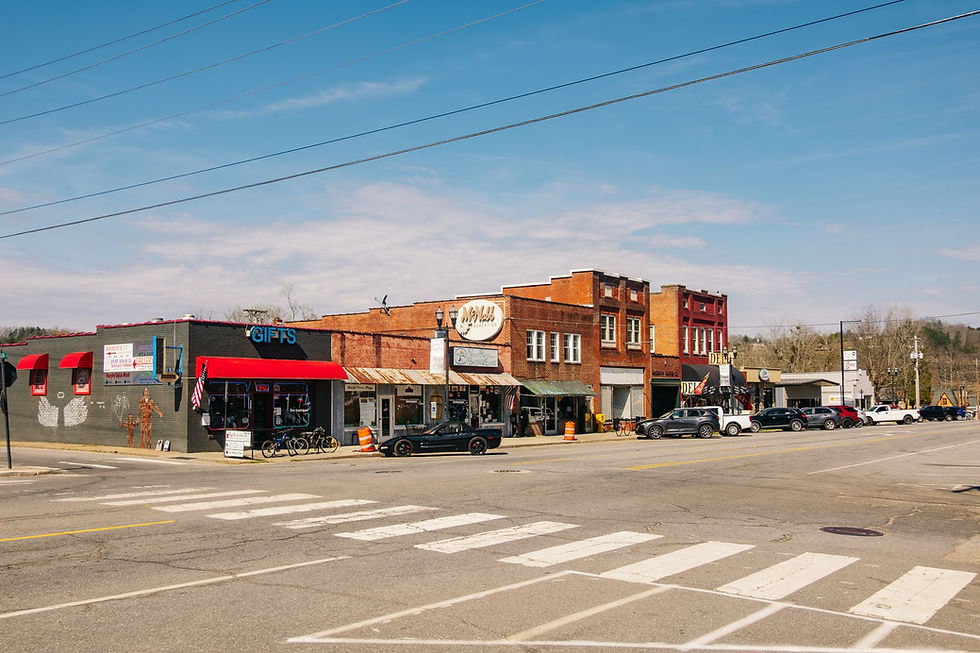
Layered on top of the lake recreation demand are the Harrah's Cherokee Valley River Casino (located in Murphy itself, not in Cherokee), the growing outdoor recreation demand from the surrounding national forest lands, the Appalachian Trail corridor access, and a downtown Murphy commercial district that is in the early-to-middle stages of the revitalization cycle that has transformed WNC small towns from Sylva to Marshall to Old Fort. Together, these demand drivers create a market that is more complex, more multi-dimensional, and more strategically interesting than its remote location and modest national profile suggest.
AirROI's most recent read on the market puts Murphy at $19,187 in annual revenue on a WATCH designation, a $205 average daily rate, and 35.3% occupancy — a profile that reflects the two-clock demand structure described throughout this report: a strongly seasonal lake economy layered over a casino-driven floor. The number that matters most to operators evaluating the market is not the headline occupancy figure but what generates the floor beneath it: casino overflow is visitor traffic, not a leftover 10% winter the way it is in Robbinsville, Hayesville, or Andrews, and understanding that distinction is the difference between pricing Murphy correctly and pricing it as if it were just another small far-western WNC town. This is not legal advice.
The Feeder Market Geometry: Atlanta-Oriented, Not Asheville-Oriented
Understanding who visits Murphy — and from where — is the first analytical step that most assessments of this market get wrong, because the instinct is to evaluate Murphy as a WNC mountain market serving the same Charlotte-and-Piedmont demand base that sustains the Asheville corridor. That instinct is incorrect, and operating on it leads to pricing, positioning, and marketing decisions that miss the market's actual guest base.
Murphy is approximately 2.5 hours from midtown Atlanta via I-575/US-515 through Blue Ridge and the North Georgia mountain corridor — a drive time that places it within the outer boundary of the Atlanta weekend-trip range. For the northern Atlanta suburbs — Alpharetta, Roswell, Cumming, Canton, Dahlonega — the drive time is approximately two hours, which is firmly within the comfortable weekend-getaway threshold that drives spontaneous booking behavior.
The Atlanta feeder market is the single most important demand source for Murphy's STR market, and its significance cannot be overstated. Metropolitan Atlanta's population exceeds 6.2 million, and the northern suburban corridor that serves Murphy's primary feeder zone is one of the most affluent and fastest-growing sections of the metro area. These households have the disposable income for regular mountain getaways, they are familiar with the North Georgia and WNC mountain corridor from years of Blue Ridge and Ellijay trips, and they are increasingly discovering Murphy as a destination that offers what the closer North Georgia markets offer — lake recreation, mountain scenery, cabin lodging — with the added dimension of being across the state line in North Carolina, which provides a psychological sense of greater distance and discovery that a trip to Blue Ridge, now thoroughly familiar to the Atlanta weekend crowd, may no longer provide.
The Atlanta connection also means that Murphy's demand patterns are influenced by Atlanta's calendar rather than Charlotte's or Asheville's. Atlanta's school calendar, holiday patterns, economic conditions, and weather (particularly the heat that drives summer escape behavior) all shape when and how Atlanta households book Murphy getaways. Operators who price their Murphy properties around the WNC tourism calendar without accounting for the Atlanta calendar miss demand signals that are directly relevant to their booking patterns.
Chattanooga is approximately 2.5 hours from Murphy via US-64 and US-74 through the Ocoee River corridor in Tennessee — a scenic, well-maintained, and familiar route for the outdoor recreation community that uses the Ocoee and Hiwassee River systems. The Chattanooga metro area (approximately 580,000 population) provides a secondary feeder market that supplements Atlanta demand, attracting visitors drawn by the same lake recreation and mountain scenery but approaching from a different direction. The Chattanooga feeder is particularly important for the outdoor recreation segment — kayakers, anglers, and whitewater enthusiasts who know the Ocoee and Hiwassee river systems from the Tennessee side and who extend their exploration into the North Carolina sections of the same watershed.
The Tri-Cities region of northeastern Tennessee (Johnson City, Kingsport, Bristol) and the Knoxville metro area provide tertiary feeder markets that are farther from Murphy (approximately 3 to 3.5 hours) but that contribute weekend and vacation demand from populations familiar with the Southern Appalachian lake-and-mountain recreation experience. These feeder markets are less significant than Atlanta and Chattanooga in volume but contribute to the geographic diversification of Murphy's demand base.
Charlotte is approximately 4 hours from Murphy — well beyond the comfortable weekend-trip range that drives spontaneous booking behavior. Asheville is approximately 2.5 hours via US-74, which is within theoretical weekend range but requires a winding mountain drive that is less convenient than the interstate-grade corridors that connect Murphy to Atlanta. The practical implication is that Murphy draws minimally from the Charlotte and Piedmont feeder markets that sustain the eastern WNC mountain communities, and it draws only modestly from the Asheville area. This feeder-market orientation means that Murphy's competitive set is not the other WNC mountain towns — it is the North Georgia mountain markets (Blue Ridge, Ellijay, Hiawassee) and the East Tennessee lake-and-river markets (the Ocoee corridor, Tellico Plains, the Norris Lake area) that compete for the same Atlanta and Chattanooga weekend demand. Operators who position and price their Murphy properties as if they are competing against Bryson City and Waynesville for Charlotte visitors are targeting the wrong audience with the wrong value proposition.
The Lake System: Hiwassee Lake, Appalachia Lake, and the River Corridor
The lake and river system in the Murphy area is the primary demand generator for the STR market, and its characteristics — the size of the water bodies, the type of recreation they support, the shoreline development patterns, and the seasonal dynamics of water levels and recreation activity — shape every dimension of the market from ADR pricing to property positioning to seasonal calendar management.
Hiwassee Lake (Hiwassee Reservoir), impounded by Hiwassee Dam on the Hiwassee River, is the largest water body in the immediate Murphy area — approximately 6,100 acres at full pool with over 163 miles of shoreline. The lake is managed by the Tennessee Valley Authority, which controls water levels for flood management, power generation, and downstream flow regulation. The TVA management regime means that lake levels fluctuate seasonally — higher in summer, when recreation demand peaks, and lower in winter, when the TVA draws down the reservoir for flood storage.
Seasonal lake-level fluctuations are among the most important operational factors for STR operators with lakefront or lake-access properties. At full summer pool, Hiwassee Lake offers excellent conditions for pontoon boating, kayaking, fishing, swimming, and other lake recreation, which drive summer demand. During winter drawdown, the exposed shoreline and reduced water surface area diminish the lake's recreational appeal and visual attractiveness. Properties whose marketing relies heavily on lake-recreation imagery and lake-access amenities must manage guest expectations around seasonal water levels — summer guests will find the lake experience they are expecting, while shoulder-season guests may encounter exposed mud banks and reduced water access that disappoints if not communicated in advance.
Hiwassee Lake's recreational profile emphasizes fishing (bass, walleye, and musky fishing are the primary draws for the angling community), pontoon boating (the lake's calm waters and scenic mountain-rimmed setting are ideal for the leisure boating experience that family groups seek), and kayaking and paddleboarding (the lake's coves and inlets provide protected waters that are accessible to beginners and families with children).
Appalachia Lake, a smaller TVA impoundment upstream of Hiwassee Lake on the Hiwassee River, offers a more intimate, less developed lake recreation environment. The lake's smaller size, more limited shoreline development, and quieter atmosphere appeal to visitors seeking a less crowded water recreation experience than Hiwassee Lake's more popular access areas provide during peak summer weekends. Appalachia Lake's trout fishing is particularly notable — the cold, deep waters support a trout fishery that attracts serious anglers from across the region, and the fishing demand on Appalachia Lake operates on a different seasonal calendar than the warm-water fishing on Hiwassee Lake, providing some calendar diversification for operators positioned to capture both fishing demographics.
The Hiwassee River below the TVA dams — particularly the tailwater section below Hiwassee Dam — provides some of the finest trout fishing in the Southern Appalachian region. The cold, oxygen-rich water released from the dam creates ideal trout habitat, and the river's delayed-harvest sections attract fly-fishing enthusiasts who plan multi-day trips around stream conditions and hatch schedules. Tailwater trout fishing is a specialized but high-value segment for STR operators: anglers who travel specifically for tailwater trout fishing tend to book multi-night stays, travel in small groups of two to four (ideal for two-bedroom STR properties), spend at local restaurants and outfitters, and return repeatedly to fish different conditions across seasons. Properties that emphasize river access, fishing-friendly amenities (rod storage, wader drying space, outdoor cleaning stations), and knowledgeable fishing information in their listing descriptions capture this demand segment at rates that reflect the angler's commitment to the trip rather than the price sensitivity of a casual tourist.
The Valley River, flowing through Murphy before joining the Hiwassee River, provides an in-town water amenity that contributes to the community's character and supports modest tubing and kayaking during the summer months. The Valley River's significance for the STR market is less about generating dedicated recreation demand and more about providing the ambient water presence — the sound of the river, the visual connection to moving water, the riverside walking opportunities — that enhances the overall Murphy visitor experience and supports properties with river-view or river-access positioning.
Harrah's Cherokee Valley River Casino: The Year-Round Demand Anchor
Harrah's Cherokee Valley River Casino and Hotel, located in Murphy on the Valley River, is the second casino operated by the Eastern Band of Cherokee Indians under their tribal-state gaming compact — the sister property to the larger Harrah's Cherokee Casino Resort in Cherokee, approximately 60 miles to the east. The Valley River casino's presence in Murphy is the single most transformative demand factor in the local STR market, and its impact on occupancy rates, seasonal patterns, and revenue consistency distinguishes the Murphy market from every other small-town mountain market in the far-western WNC corridor.
The Valley River casino is a substantial gaming and entertainment facility, though smaller than the Cherokee flagship property. The complex includes a gaming floor with slot machines, electronic gaming devices, and table games, as well as a sportsbook, a hotel tower, multiple restaurants, an entertainment venue that hosts touring musical acts and comedians, a spa, and conference/event spaces. The casino operates 24 hours a day, 365 days a year — the same year-round, never-closing demand generation model that makes the Cherokee casino such a powerful STR market anchor.
The casino demand dynamic in Murphy mirrors what operates in Cherokee, but on a different scale and with a different geographic orientation. The Valley River casino draws its primary visitor base from the Atlanta metro area, the Chattanooga region, and the North Georgia and East Tennessee communities — the same feeder markets that supply Murphy's lake recreation demand, but through a different motivational channel. Casino visitors travel for the gaming and entertainment experience rather than for outdoor recreation, and their demographic profile, spending patterns, and seasonal behavior differ from those of the lake-tourism demographic in ways that create valuable demand diversification. Casino visitors tend to be older (predominantly 40 to 70), travel as couples or small friend groups, are less price-sensitive than budget-conscious family tourists (they have already committed to a gaming budget that makes lodging cost a secondary consideration), and visit with a frequency driven by the Caesars Rewards loyalty program's incentive structure rather than by seasonal tourism patterns.
The casino's year-round operation provides Murphy with a unique demand floor among far-western WNC mountain communities. Robbinsville, Hayesville, and Andrews — the other small towns in the region — have no comparable year-round demand generator, and their winter occupancy rates reflect that absence. Murphy's casino generates visitor traffic in January, February, and March — months when the lake is drawn down, the outdoor recreation is weather-limited, and the tourism infrastructure is operating at reduced capacity — that keeps STR occupancy from dropping to the near-zero levels that operators in non-casino markets experience. The winter demand floor does not approach summer-peak levels, and operators should not build revenue projections that assume strong winter performance, but the difference between a leftover 10% winter occupancy (what many far-western WNC markets experience) and the 20-35% winter occupancy the casino demand can support for well-positioned Murphy properties is meaningful in annual revenue terms — meaningful enough to change the investment math in Murphy's favor when compared against non-casino markets with similar summer performance.
The Valley River casino's entertainment venue hosts touring musical acts, comedians, and special events throughout the year, and each significant entertainment booking generates a demand spike that informs STR operators' pricing. When a nationally recognized performer is scheduled at the casino, the event draws visitors from across the feeder market region who need lodging for the performance night and often for the surrounding nights. The entertainment calendar is publicly available on the casino's website, providing operators with advance notice of demand events they can incorporate into their pricing. The casino's holiday programming — New Year's Eve events, Valentine's Day entertainment, Fourth of July celebrations, Thanksgiving weekend programming — generates demand spikes that overlay on the seasonal tourism calendar, creating compound-demand conditions during holiday periods that support the most aggressive pricing of the year.
Like the Cherokee flagship property, the Valley River casino's hotel does not have sufficient capacity to accommodate all visitors during peak periods — entertainment event nights, holiday weekends, and high-season Saturdays — pushing overflow demand into the surrounding lodging market. STR properties in Murphy that are positioned to capture this overflow demand — properties that mention casino proximity in their listing descriptions, that provide information about the casino entertainment schedule, and that offer the comfort amenities that casino visitors value — benefit from the overflow dynamic at premium rates during the specific nights when the casino hotel is at or near capacity.
The Outdoor Recreation Economy: National Forest, Appalachian Trail, and the Folk School
Murphy's outdoor recreation demand supplements lake and casino demand rather than serving as the primary driver, but the surrounding area's recreation assets are significant and growing in recognition. The Nantahala National Forest envelops the Murphy area on its northern and eastern flanks, providing hundreds of thousands of acres of public land with hiking trails, mountain biking opportunities, fishing streams, waterfall access, and backcountry camping. The Fires Creek area, approximately 15 miles north of Murphy, is a particularly significant recreation zone — the Fires Creek Rim Trail, Fires Creek Bear Trail, and the surrounding trail network provide hiking experiences through old-growth forest and along mountain streams that draw the dedicated outdoor recreation demographic. The Tusquitee Bald area, the Snowbird Mountains, and the broader backcountry north of Murphy provide additional recreation terrain that is less developed, less crowded, and less well-known than the recreation areas closer to Asheville and Bryson City — characteristics that appeal to the experienced outdoor recreationist who values solitude and discovery over trail-infrastructure convenience.
The Appalachian Trail passes through the mountains north of Murphy, and the town serves as a resupply point and trail-town stop for AT hikers — both thru-hikers making the full Georgia-to-Maine journey and section hikers tackling the trail in multi-day segments. Murphy's AT connection is less prominent than Franklin's (which is closer to more heavily traveled AT sections), but it contributes to the town's outdoor recreation identity and generates modest but consistent demand from the hiking community.
The John C. Campbell Folk School, located in Brasstown, approximately 7 miles east of Murphy, is one of the most significant cultural institutions in the far-western WNC region and a demand generator that operates on a mechanism distinct from the tourism and recreation drivers. The folk school offers residential courses in traditional crafts — blacksmithing, woodworking, pottery, weaving, basketry, cooking, music, dance — in week-long and weekend formats that draw students from across the country. The folk school's demand contribution to the Murphy STR market is distinctive: students who do not stay in the school's on-campus housing (which is limited) seek lodging in the Murphy area for the duration of their courses. These are week-long stays at rates that reflect the educational investment rather than the vacation budget — students who have already committed $500 to $1,000 for a week-long course fee are not comparison-shopping nightly lodging rates at the margin. The folk school calendar runs year-round, with programming throughout every season, providing demand during periods when tourism is quiet and the casino is the only other significant demand generator.
The folk school demographic is also high-value in ways that extend beyond the direct lodging revenue. Folk school students are typically educated, culturally engaged, and affluent enough to afford multi-day educational experiences. They dine at Murphy restaurants, shop at local craft galleries, and return for additional courses — often multiple times per year — creating a repeat-visit pattern that builds STR booking history and review momentum.
Downtown Murphy: The Revitalization in Progress
Murphy's downtown is in the middle stages of the revitalization cycle that has transformed WNC small towns across the region, and the current state of that revitalization — what has already been achieved and what remains to be developed — is important context for STR operators and investors assessing the market's trajectory.
Downtown Murphy's commercial corridor along Valley River Avenue and the surrounding blocks has attracted investment that is beginning to give the town center the kind of walkable commercial character that converts day-trippers into overnight guests. The brewing and dining scene has developed genuine anchor establishments — Hoppy Trout Brewing Company has become one of the primary social gathering spaces for both residents and visitors, providing the community hub function that breweries have played in the revitalization of WNC small towns from Sylva to Old Fort. Additional restaurant concepts, coffee shops, and retail establishments have filled vacant storefronts, creating the beginnings of a browsable commercial corridor.
The progress is real but incomplete. Murphy's downtown does not yet match the commercial density or dining quality of Waynesville's Main Street, Sylva's Bridge Park corridor, or Black Mountain's Cherry Street — the comparison would be unfair given the population and investment differentials. But the trajectory is positive, the anchor establishments are in place, and the commercial momentum is evident in the new business openings and property renovations along the downtown corridor.
Properties within walking distance of downtown Murphy benefit from the same walkability premium dynamic visible in other WNC communities, though the premium is more modest in Murphy, given the earlier stage of commercial development. As the downtown dining and entertainment scene deepens, the walkability premium will increase — operators who secure downtown-adjacent properties at current pricing are positioning to capture a growing premium as the commercial ecosystem matures.
The North Georgia Competitive Interaction
Murphy's competitive relationship with the North Georgia mountain markets — Blue Ridge, Ellijay, Hiawassee, Helen, and the broader North Georgia cabin corridor — is the most important competitive dynamic operators must understand, because these markets compete for the same Atlanta weekend demand that constitutes Murphy's primary feeder.
Blue Ridge, Georgia, approximately 45 miles south of Murphy, is the most direct competitor for the Atlanta cabin-vacation market. Blue Ridge has established itself as one of the premier cabin-rental destinations in markets we work, with a mature commercial infrastructure, a downtown that has achieved genuine destination status, and the Blue Ridge Scenic Railway that provides a tourist-train demand generator similar to Bryson City's Great Smoky Mountains Railroad. Blue Ridge's advantages over Murphy in the Atlanta-feeder competition are significant: closer drive time from Atlanta (approximately 1.5 to 2 hours versus Murphy's 2.5 hours), a more developed downtown and dining scene, greater brand recognition among Atlanta households, and a larger and more established STR listing stock that provides the search-result density that platforms' algorithms reward.
Murphy's advantages over Blue Ridge are equally significant but different in character: the lake recreation system (Hiwassee Lake and Appalachia Lake provide a scale of lake recreation that Blue Ridge's smaller Lake Blue Ridge cannot match), the casino (no comparable demand generator exists in the North Georgia mountains), the North Carolina mountain identity (which provides a psychological sense of greater distance and discovery for Atlanta visitors who have already visited Blue Ridge multiple times), the national forest surrounding terrain (the Nantahala Forest's recreation assets are more extensive than the Chattahoochee Forest sections near Blue Ridge), and lower property acquisition costs. The competitive differentiation suggests that Murphy and Blue Ridge serve partially overlapping but meaningfully different guest segments. The visitor who wants a walkable downtown cabin experience with train rides and shopping gravitates toward Blue Ridge. The visitor who wants a lakefront cabin with pontoon boating, casino entertainment, and mountain fishing gravitates toward Murphy. The visitor who has done Blue Ridge enough times and wants something different discovers Murphy as the next step in their mountain exploration.
Hiawassee, Georgia, approximately 30 miles south of Murphy, competes for a similar lakefront-recreation market. Lake Chatuge, the impoundment at Hiawassee, provides lake recreation that overlaps with Hiwassee Lake's offering. Hiawassee's advantages include its proximity to Atlanta and the Georgia Mountain Fairgrounds' event calendar. Murphy's advantages include the casino, the larger lake system, and the more developed downtown and dining scene. Ellijay, approximately 60 miles south of Murphy, competes for Atlanta weekender demand but with a different product positioning — Ellijay's apple orchard identity and its closer proximity to Atlanta appeal to a different set of guest motivations than Murphy's lake-and-casino positioning, so the competition is less direct than the Murphy-Blue Ridge dynamic.
For STR operators in Murphy, the competitive positioning strategy against the North Georgia markets should emphasize what Murphy offers that the Georgia markets do not: the scale of the Hiwassee Lake system, the casino entertainment option, the North Carolina mountain identity, and the value pricing that Murphy's lower property costs support. Listing descriptions that position Murphy as "North Carolina lake country" or "where the mountains meet the lake" capture the specific positioning that sets Murphy apart from the Georgia cabin markets Atlanta visitors already know.
Seasonal Demand Patterns: Lake Summer, Casino Winter
Murphy's seasonal demand calendar is shaped by the interaction between the strongly seasonal lake recreation demand and year-round casino demand, creating a pattern that is more resilient than purely seasonal markets but more variable than year-round urban markets.
The summer peak (Memorial Day through Labor Day) is driven by the convergence of lake recreation at full operation (Hiwassee Lake at summer pool, pontoon boating, swimming, water sports), the casino operating at peak entertainment programming, the Nantahala Forest recreation at maximum accessibility, and the general family-travel demand from the Atlanta and Chattanooga feeder markets. Summer weekends — particularly the Fourth of July, Memorial Day, and Labor Day — see the highest demand and justify the most aggressive pricing. Lakefront and lake-access properties command the largest price premiums during the summer peak because the lake experience is the primary trip motivation for the largest share of summer visitors; properties with boat-dock access, private shoreline, lake views, and proximity to boat ramps achieve ADRs that can be double or more those commanded by non-lake-access properties in the same area.
The fall transition (September through November) sees a gradual decline in demand as the lake recreation season winds down, partially offset by fall foliage tourism along the mountain drives surrounding Murphy, the casino's continued year-round operation, and the folk school's fall programming. Fall foliage in the Murphy area, which occurs at lower elevations than the Blue Ridge Parkway ridgeline, peaks slightly later in the season, providing a two-to-three-week window of enhanced demand from leaf-viewing tourists. The TVA's fall lake-level drawdown begins to reduce the lake's recreational appeal through the fall months, and operators should adjust their marketing emphasis from lake recreation to mountain scenery, foliage, casino entertainment, and folk school programming as the season transitions.
Winter (December through March) is Murphy's softest season, but the casino's year-round operation provides a demand floor that distinguishes the Murphy market from other far-western WNC communities. The casino hotel's holiday programming, entertainment events, and loyalty-program-driven repeat visitation generate weekend demand throughout the winter, keeping well-positioned Murphy properties from the near-total vacancy that non-casino markets experience. The folk school's winter programming provides additional winter demand from the craft-education demographic, and the tailwater trout fishing below Hiwassee Dam operates year-round — trout fishing is often best in cooler months when water temperatures are optimal — providing a niche but consistent winter demand source from the angling community. Operators should price winter conservatively, but should not assume zero demand: AirROI puts the Murphy market's blended annual occupancy at 35.3%, and the casino and folk school demand, combined with tailwater fishing and modest holiday travel, is what keeps a 20-35% winter occupancy floor realistic for actively marketed properties rather than the leftover 10% that non-casino far-western towns settle for.
The spring shoulder (April through May) builds as the lake begins refilling toward summer pool, the forests green with spring growth, the wildflower blooms activate in the Nantahala Forest, and the warming weather reactivates outdoor recreation demand. The lake's rising water level through spring is itself a positive marketing message — "the lake is filling up, summer is coming" — that creates anticipation-driven booking activity from Atlanta families planning their summer lake trips. The folk school's spring programming, the AT thru-hiker passage through the area, and the casino's continued year-round operation provide spring demand supplements that support ADRs above winter levels while the lake recreation season ramps up.
The Submarket Map: Where Properties Perform Differently
Lakefront properties on Hiwassee Lake represent the premium submarket in the Murphy area, commanding the highest ADRs and achieving the strongest summer occupancy rates. The premium reflects the direct lake access — private docks, shoreline, water views — that is the most valuable amenity in a market where lake recreation is the primary demand driver. The lakefront submarket has specific operational considerations operators must manage: TVA lake-level fluctuations affect dock access and shoreline appearance seasonally, dock maintenance and boat lift upkeep require ongoing investment, and the marketing of lakefront properties must honestly represent seasonal water-level variation to avoid guest disappointment — summer-pool photographs that imply year-round conditions create expectation gaps that lead to negative reviews during shoulder seasons when the lake is lower. Properties with boat dock access that can accommodate guest pontoon boat rentals are particularly well-positioned, because the pontoon boating experience is the primary lake recreation activity that drives repeat visitation and the longest average stays; operators who facilitate pontoon rental connections — providing outfitter contact information, pre-booking boat rentals for guests, or maintaining on-dock boats available for guest use — add experiential value that justifies premium pricing and generates the enthusiastic review language that compounds booking demand over time.
Properties on or near Appalachia Lake and the upper Hiwassee River corridor above the main lake serve a different, more specialized demand segment — trout anglers, kayakers, and visitors seeking a quieter, less developed lake experience than Hiwassee Lake's more accessible areas offer. ADRs in this zone are generally lower than premium Hiwassee lakefront properties, reflecting the more remote location and the more specialized guest base, but the fishing demand supports consistent occupancy among anglers who value the proximity to tailwater and lake trout fishing.
Properties in and around downtown Murphy serve the casino overflow demand, the folk school visitor base, and the general mountain getaway visitor who values walkability to downtown dining and the brewery scene. The walkability premium in downtown Murphy is growing as the commercial ecosystem develops, and operators who secure downtown-adjacent properties at current pricing are positioning to capture a premium that will increase as the revitalization progresses. Casino-overflow demand is the most immediately valuable demand source for downtown properties because the casino is located on the Valley River in Murphy, putting downtown properties within easy driving distance of the gaming floor — properties that emphasize proximity to the casino and awareness of the entertainment schedule capture this demand efficiently.
Properties in the Brasstown area near the John C. Campbell Folk School serve the educational-tourism needs of folk school students and the broader cultural-tourism market interested in Appalachian heritage crafts. The folk school demand is distinctive — week-long stays at mid-range rates, year-round booking patterns that are independent of tourism seasonality, and a guest demographic that is culturally engaged and review-positive. Operators in the Brasstown corridor should develop relationships with the folk school's administration and student services to facilitate referrals for students who need off-campus housing; the school's enrollment patterns and course calendar are publicly available, allowing operators to anticipate demand weeks and adjust pricing accordingly.
The communities south and east of Murphy — Peachtree, Marble, and Andrews — provide a more affordable submarket with properties serving the general mountain-cabin and rural-retreat demographics. Andrews, the second-largest community in Cherokee County, has its own modest downtown with dining and retail that serve visitors staying in the area, and the Nantahala River access from Andrews (the river flows through the northern part of the county) provides an outdoor recreation angle that properties in this corridor can market. ADRs in this corridor are among the lowest in the Murphy market, reflecting the greater distance from the lake, the casino, and the downtown commercial amenities, but acquisition costs are proportionally lower, and yield-on-cost metrics can be favorable for operators willing to accept lower rate ceilings in exchange for reduced capital investment.
Supply-Demand Dynamics: Growing Demand, Moderate Supply Growth
Murphy's STR supply-demand balance is favorable for operators, though less dramatically constrained than the Bryson City geographic bottleneck or the Highlands-Cashiers wealth barrier. STR listing stock in the Murphy area has grown as the market has attracted investment, but the growth has been moderate relative to demand intensity during peak periods. Several factors have limited supply growth: Murphy's remote location deters some investors who are accustomed to the accessibility of the Asheville corridor; the lakefront properties that command premium rates are limited by the finite shoreline and the TVA land-management policies that govern development near the impoundments; and the property acquisition costs, while low by WNC standards, are high enough relative to the more remote parcels in the surrounding area to create a natural filter on speculative investment.
The supply that has entered the market is concentrated in the cabin-style properties in the mountain areas surrounding the lake — the standard mountain-cabin listing stock that serves the general getaway demographic. The premium lakefront listing stock — properties with direct dock access and genuine waterfront positioning — has grown more slowly because the shoreline constraint limits the number of properties that can offer true lakefront access.
Demand in Murphy is growing, driven by the Atlanta metro's continued population expansion, the increasing recognition of Murphy as a destination within the Atlanta weekender community, the casino's ongoing operations and investment in entertainment programming, and the folk school's national reputation attracting visitors from beyond the regional feeder markets. Demand growth is most visible during peak summer weekends, when lakefront property listing stock in the Murphy area reaches or approaches full occupancy and the casino hotel operates at capacity. The demand intensity during these peak periods indicates that the market can absorb additional quality listing stock — particularly lakefront and lake-access properties — without the occupancy compression that would signal oversaturation.
Investment Considerations: The Far-Western Opportunity
For investors evaluating the Western North Carolina STR corridor, Murphy and the Hiwassee River area present an investment proposition distinct from that of every other market in the region — one that requires different analytical assumptions, competitive benchmarking, and operational strategies than the Asheville-corridor markets demand.
The Atlanta feeder market is the largest and fastest-growing demand source available to any WNC mountain market. Metropolitan Atlanta's 6.2 million population dwarfs every other feeder market in the Southern Appalachian region, and the northern suburban corridor that feeds Murphy demand is growing faster than the metro as a whole; every new household in Alpharetta, Cumming, or Canton represents a potential Murphy weekender, and the compounding effect of this population growth on Murphy's demand trajectory is the market's most powerful secular trend.
The casino provides year-round demand that no other far-western WNC market can access. Harrah's Cherokee Valley River Casino is a structural demand advantage that transforms Murphy's annual revenue profile by providing a winter occupancy floor and year-round event-driven demand spikes that other small-town mountain markets in the region cannot match, and the casino's investment in facility expansion and entertainment programming signals institutional confidence in continued demand growth. The lake recreation system provides a demand driver that most WNC mountain markets lack: lake recreation is a fundamentally different tourism product than trail-and-downtown mountain tourism, and it generates longer average stays, stronger family repeat-visit patterns, and a premium pricing structure for waterfront properties that land-locked mountain markets cannot access. The Hiwassee Lake system's scale and quality place it among the best lake recreation environments in the Southern Appalachian region.
Acquisition costs are among the lowest in the WNC corridor. Property prices in the Murphy area — including lakefront, downtown, and rural mountain properties — are substantially below comparable investments in the Asheville corridor, the Waynesville-Maggie Valley area, or the Bryson City-Nantahala market. The cost differential creates yield-on-cost opportunities that higher-priced markets have competed away, and it reduces the capital at risk for investors entering the market. The John C. Campbell Folk School provides unique and durable institutional demand: its year-round educational programming generates lodging demand that operates independently of tourism seasonality, serves a high-value guest demographic, and provides week-long booking patterns that most tourism-driven demand sources cannot match. This institutional demand source is not replicable in other markets and provides calendar diversification, strengthening the annual revenue profile.
The competitive positioning against North Georgia markets requires intentional differentiation. Murphy operates in a competitive set that includes Blue Ridge, Ellijay, and Hiawassee — not the WNC interior markets that most WNC STR analyses focus on. Operators who position their Murphy properties with the North Georgia competitive set in mind — emphasizing the lake system's scale, the casino entertainment option, and the North Carolina mountain identity — will capture the Atlanta weekender demand more effectively than operators who position as generic WNC mountain cabins.
The remoteness is both the market's greatest limitation and its most durable protection. Murphy's distance from Asheville, Charlotte, and the established WNC tourism corridor limits the market's visibility, suppresses its ADR ceiling relative to closer-in markets, and deters some investors and visitors who prefer the convenience of the Asheville corridor. But this same remoteness has protected Murphy from the speculative oversaturation that has compressed returns in more accessible markets. The investors and operators who accept the remoteness trade-off and work within it — building their business around the Atlanta and Chattanooga feeder markets rather than trying to force the market into a WNC-corridor framework that does not fit — capture the returns that the remoteness makes possible.
The development trajectory favors patient capital. Murphy's downtown revitalization, the growing outdoor recreation awareness, the casino's continued investment, and the Atlanta feeder market's expansion are all positive trends that suggest property value appreciation and demand growth over the medium and long term. Investors who acquire at current pricing and hold through the development cycle capture both the current rental yield and the appreciation that the market's trajectory supports — a dual-return proposition available now at pricing levels that will not persist once the market's advantages become more widely recognized. Murphy and the Hiwassee River corridor will not feature prominently in WNC STR investment discussions organized around Asheville-centricity, and that organizational bias is precisely why the market remains underpriced relative to its fundamentals. For operators and investors who evaluate markets on the demand drivers that actually exist, the feeder populations that actually visit, and the competitive dynamics that actually operate — rather than on proximity to a city 100 miles away — Murphy offers a combination of lake recreation, casino demand, institutional educational demand, and acquisition economics that is unique in the Western North Carolina mountain corridor.
Related Reading
More independent-host reading on listing copy, calendars, and operable decisions guests can trust.
Frequently Asked Questions
Do I need a permit for a short-term rental in Murphy or Cherokee County, NC?
Cherokee County requires owners renting for fewer than 90 consecutive days to collect occupancy tax — 4% through June 30, 2026, rising to 6% on July 1, 2026 — with monthly reporting. Properties near the Hiwassee River, Appalachia Lake, or other waterways should also check with the county before applying, since floodplain and watershed ordinances may apply to lakefront and river-adjacent parcels.
What draws visitors to Murphy and the Hiwassee River?
Lakefront and pontoon-boat recreation on Hiwassee Lake and Appalachia Lake, tailwater and lake trout fishing, the John C. Campbell Folk School's craft courses, and proximity to Harrah's Cherokee Valley River Casino, which brings a steady Atlanta-and-Chattanooga-area weekend crowd on a schedule that runs independent of the lake season.
How does lakefront inventory perform compared to inland cabins in this market?
Lakefront and river-access properties command a meaningfully higher ADR than inland cabins, the same premium pattern seen at other WNC lake and river markets. The lake-cabin-and-pontoon-boat vacation is the backbone of Murphy's STR demand, and it produces multi-night family stays, peak summer concentration, and a repeat-visit loyalty pattern that inland cabin inventory in the Peachtree-Marble-Andrews corridor does not capture at the same rate.
Does casino proximity affect booking patterns?
Yes. Properties within easy driving distance of the Valley River casino see a shorter-stay, weekend-heavy booking pattern distinct from the multi-night family stays that lake and river guests book, and downtown Murphy properties can pick up premium-rate overflow demand on the specific nights the casino hotel runs near capacity, including touring-act entertainment nights and holiday programming.
What's the busiest season for the Murphy/Hiwassee market?
Memorial Day through Labor Day, when Hiwassee Lake is at full summer pool and lake recreation, casino entertainment, and Nantahala Forest access all peak together. Fall brings a secondary, shorter foliage-driven peak, while the casino's year-round operation keeps winter from collapsing to the near-zero occupancy other far-western WNC towns without a casino experience.
How does this market compare to nearby Blue Ridge, GA?
Blue Ridge is closer to Atlanta (roughly 1.5 to 2 hours versus Murphy's 2.5) and has a more developed downtown, dining scene, and larger STR inventory. Murphy's counters are the larger Hiwassee Lake system, the casino (no equivalent exists in the North Georgia mountains), the North Carolina mountain identity for Atlanta visitors who have already done Blue Ridge, and lower property acquisition costs.
Why does Murphy's winter occupancy hold up better than other far-western WNC towns?
Robbinsville, Hayesville, and Andrews have no comparable year-round demand generator and see winter occupancy fall toward a leftover 10% floor. Murphy's casino operates 24/7, 365 days a year, and its loyalty-program-driven repeat visitation, combined with the folk school's winter craft courses and year-round tailwater trout fishing below Hiwassee Dam, is what supports a 20-35% winter occupancy floor for actively marketed properties instead.
Is the John C. Campbell Folk School a meaningful demand source for STR operators?
Yes, and it's a distinctive one. Students who don't use the school's limited on-campus housing book week-long stays in the Murphy and Brasstown area at rates that reflect their course investment ($500 to $1,000 per week-long course) rather than typical nightly-rate shopping. The programming runs year-round, so it supplements demand in exactly the shoulder and off-season windows when lake tourism is quiet.
Should operators market Murphy as a WNC mountain destination or something else?
Neither Charlotte nor Asheville is the audience. Murphy's actual competitive set is the North Georgia lake-and-cabin markets (Blue Ridge, Ellijay, Hiawassee) and the East Tennessee river markets that also draw the Atlanta and Chattanooga weekend crowd. Listing copy built around "North Carolina lake country" or "where the mountains meet the lake" targets that actual audience more effectively than generic WNC mountain-cabin language aimed at a Charlotte visitor who statistically isn't coming.
How should operators handle the seasonal drop in Hiwassee Lake's water level?
Honestly, in the listing itself. TVA drawdowns lower the lake through fall and winter, exposing shoreline that looks nothing like the summer-pool photos most lakefront listings lead with. Properties that caption seasonal photos accurately and set expectations for shoulder-season water levels avoid the guest disappointment and negative-review risk that comes from marketing a full-pool lake experience during a drawdown month.
Work with Crest & Cove Creative
AirROI puts Murphy at $19,187, $205 ADR, and 35.3% occupancy — and the number that actually explains that blend is the casino's, not the lake's. Name the failure mode the guest can check on the listing.
Crest & Cove Creative helps STR operators turn Murphy and Hiwassee River market intelligence into measurable revenue performance. Reach out at crestcove.co or (256) 998-7502 to review how your listing is positioned against the Atlanta and Chattanooga feeder markets that actually drive this corridor.
Reach out at crestcove.co or (256) 998-7502.


Comments