
Photographing an Old Florida Coastal Cottage: Stilt Houses, Docks, and

Updated: Aug 27

Tampa and Atlanta scallopers routinely book their July week six to nine months ahead, sight unseen, on nothing but the photo set and the listing description. That booking pattern turns photography from a marketing line item into the entire due diligence process a guest gets before they hand over a deposit. Homosassa riverfront runs an AirDNA average daily rate around $252, and Steinhatchee scallop-season cabins clear around $285, respectable rates in a corridor with no big-brand resort propping either number up. What makes those rates hold is trust, and on this coast trust is built almost entirely through the gallery.
The listing whose hero shot shows honest golden-hour light on a Homosassa dock, a real drive-time to Three Sisters Springs, or sugar-white St. George Island sand with no high-rise anywhere in frame wins the click. The stilt cottage relying on iPhone snapshots of a cluttered screened porch shot at noon does not win that click, even priced lower, because the guest has no other way to evaluate the property before arrival.
This is a corridor-specific shoot playbook for the Nature and Forgotten Coast: the frames that actually convert for stilt cottages, riverfront fish camps, springs-area family homes, and no-high-rise beach houses; how to shoot for winter manatee-season families versus summer scallop-season crews; how to sequence the gallery for platform search previews; and the compliance details your captions cannot afford to contradict. This is not legal advice.
The Failure Mode: Shooting Generic Beach When the Market Sells Old Florida
Generic short-term rental photography advice, shoot in natural light, declutter the counters, use a wide lens, fails on this coast not because it's wrong but because it answers a question nobody here is asking. This corridor runs two distinct demand peaks, manatee winter from November 15 through March 31 and scallop summer on a zone-specific window roughly June through September, and guests on both sides of that calendar are booking for a named experience, not a square-footage number. A photo set built around a generic living room and a granite countertop is answering a question a Nature Coast guest never asked.
Each of the four money segments on this coast needs different visual proof, because each guest persona arrives with a different activity intent already locked in before they open your listing. Manatee-season families and dive groups need springs-access context, a kayak staged on the dock, screened-porch lifestyle, an honest sleep count for an 8-plus group, and real drive-time proximity to Three Sisters Springs or the Kings Bay boat ramps. Scallop-season crews need boat-parking width, a fish-cleaning station shown clean and ready, dock cleat lines, proximity to Sea Hag Marina, and cooler-staging space that reads as a working base camp rather than a decorative porch.
Heritage-and-festival couples booking Apalachicola or Cedar Key are shopping for a third thing entirely: walkable downtown context, the Dock Street or Gibson Inn district framing, a screened porch with a coffee setup, and genuine cottage character rather than staged luxury the property cannot actually deliver. Beach-family guests headed to St. George Island or Mexico Beach need an honest Gulf-front or bay-side sightline, proof there is no high-rise in view, state-park beach context, pet-friendly outdoor living, and a multigenerational bunk layout built for a Saturday-to-Saturday family week. Shoot for your segment specifically, or shoot for everyone and convert no one.
The Five Frames That Win the Old-Florida Click
Frame one is the water relationship, shot at golden hour. That means the dock, the riverfront seawall, the stilt-house pilings rising over marsh grass, or the Gulf-front rail, captured 30 to 45 minutes before sunset for riverfront and west-facing product, or at sunrise for oceanfront and east-facing product. Precision matters here in a way it might not elsewhere, because private dock, riverfront view, canal access, bay-side, and true Gulf-front are not interchangeable claims on this coast. Mislabeling a partial water glimpse as Gulf-front does not just misrepresent the listing, it manufactures the exact refund-and-review problem that shows up the moment a guest discovers the gap between the photo and the property on arrival.
Frame two captures the waterfront lifestyle itself: two Adirondack chairs on the dock, a coffee setup on the screened porch, kayaks staged at the river's edge, or a scallop bucket and cooler arranged on the fish-cleaning table. This frame answers the question a guest is actually asking themselves, what will I see each morning, or where do I clean scallops after the boat trip comes in, and it is the frame a generic listing skips entirely because it requires knowing what your specific guest actually does on this property.
Frame three is proof of boating and dock infrastructure, and it needs to be proof, not a bullet point. Guests filtering by dock, boat parking, or waterfront on a platform search are making their decision on these specific frames: the cleat line, the fish-cleaning table, a covered boat lift if you have one, a driveway wide enough for a truck and trailer, and a kayak rack. Scallopers and anglers on this coast book on this frame more directly than on any interior shot in the gallery.
Frame four is walk-to-anchor context, a path shot proving minutes to Dock Street, an honest drive-time to Three Sisters Springs, the approach to Sea Hag Marina, the St. George Island State Park boardwalk, Apalachicola's historic downtown, or the Cape St. George Lighthouse. These sense-of-place shots convert on this coast because the guest is buying a place, not a floor plan, and a listing that only shows the interior is leaving the reason the guest chose this town in the first place entirely off the page.
Frame five is the interior shot that answers your specific segment's question. A wide kitchen shot should show the full appliance suite and cookware in frame. The primary bedroom should show a water view through the door or out toward the lanai wherever that view genuinely exists. For manatee groups, that means a bunk room with a clear, honest sleep count. For heritage cottages, it means original heart-pine floors or a historic architectural detail worth calling out. For St. George Island beach homes, it means a bunk room built to sleep 8 to 12 for a real multigenerational family week.
Golden Hour Here Is Seasonal, and Seasonal Light Is the Product
For riverfront and stilt-house product, Cedar Key, Homosassa, Steinhatchee, and Apalachicola riverfront, west-facing water catches the golden-hour sunset. Cedar Key stilt cottages over the marsh and Steinhatchee river cabins face the light between roughly 5 and 7 p.m. during summer scallop season, which is exactly when the season's booking decisions are being made, so a shoot timed to that window is timed to the exact moment your future guest is deciding.
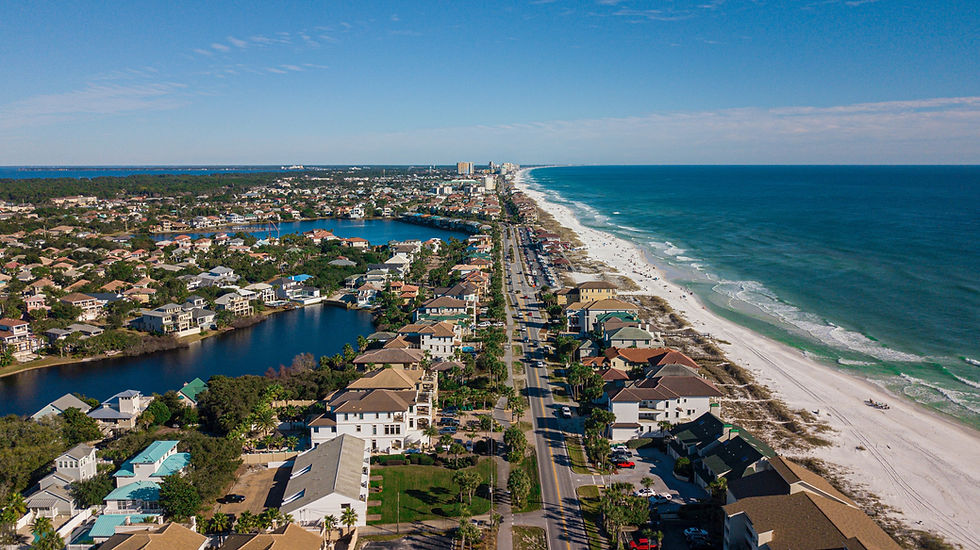
For Gulf-front beach product, St. George Island and Mexico Beach, the east-facing side gets its best light on the balcony at sunrise. Shoot the sugar-white sand and the uncrowded horizon between roughly 6:30 and 7:30 a.m., before beach traffic arrives and clutters the frame with umbrellas and strangers. The no-high-rise skyline is the differentiator worth protecting in every one of these shots, since it is precisely what separates this coast from the crowded high-rise beaches to the south.
Book two sessions on consecutive evenings for riverfront product, or consecutive mornings for Gulf-front product, rather than betting the whole shoot on a single window. Florida weather turns fast, pop-up storms and Gulf humidity are common enough on this coast that a single-session plan is a real gamble, and a rained-out exterior session with no backup night costs an owner an entire scallop season of marketing with commodity thumbnails instead of the shots that were supposed to sell the property.
Product-Specific Shot Lists by Market
Cedar Key stilt cottages and historic-district homes need a stilt-house hero at golden hour with a marsh or Gulf glimpse and Dock Street walkability context, a screened-porch lifestyle frame with a coffee setup, and a walk-to-Dock-Street path frame. Interior wide shots should emphasize cottage character over square footage, since the one-bedroom product here sells charm, not space, and a festival-season variant of the gallery rounds things out for shoulder-season marketing around the Cedar Key Seafood Festival.
Crystal River springs-area and dive-group homes need a dock or canal hero with proximity to Kings Bay and Three Sisters Springs, a kayak fleet staged at the water's edge, and a bunk room with a sleeps-8-plus layout built for multigenerational manatee groups. A screened porch shot at winter golden hour rounds out the set. One caution applies across this entire submarket: never stage or imply swim-with-manatees claims the property or the season cannot actually deliver.
Homosassa riverfront homes with docks need a dock hero at sunset on the Homosassa River, with Monkey Island or marsh context visible in the distance, plus proof of a fish-cleaning station, boat parking, and a kayak-launch frame. Homosassa Springs Wildlife State Park's proximity belongs in the caption. Because riverfront homes here skew older, interior photography should use vertical correction and stay careful around dated fixtures, framing the water relationship rather than letting an outdated bathroom dominate the shot.
Steinhatchee river cabins and fish-camp houses need a dock hero at golden hour with the Steinhatchee River channel and Sea Hag Marina in context, boat parking and scallop-bucket staging on the fish-cleaning table, and a bunk layout for scallop groups sleeping six to ten. Shoot the exterior light in July or August for the summer gallery specifically, since a winter bare-tree dock shot has no place selling scallop season to a guest booking nine months ahead.
St. George Island Gulf-front and bay-side homes need a balcony or dune-crossover hero at sunrise with an honest Gulf sightline and no high-rises anywhere in frame, the structural differentiator this whole market depends on. Add state-park beach context, pet-friendly proof, distance context to the Cape St. George Lighthouse, and a multigenerational bunk room for family weeks. For bay-side product specifically, the framing has to make the bay-side grade unmistakable rather than letting a wide-angle lens imply a Gulf frontage the property does not actually have.
Apalachicola historic-downtown cottages need a porch hero with Gibson Inn district or waterfront walkability context, plus original cottage character, heart-pine floors, historic windows, and a restored kitchen. Skip any beach-out-the-door staging; St. George Island is 20 minutes away, and the caption needs to say that plainly. A fall gallery variant should lean into the Florida Seafood Festival and the historic-district walkability that sets this product apart from the nearby beach markets.
Mexico Beach post-Michael elevated homes need a Gulf-front sunrise shot with uncrowded sand and the same no-high-rise horizon, plus honest documentation of the elevated construction and storm-resilient architecture, framed as resilience rather than disaster exploitation. Canal access and boat-slip proof matter for fishing guests, and proximity to the Mexico Beach Pier belongs in the caption, noting the pier's 2024-2025 rebuild phase. Family-friendly beach culture should carry through the rest of the set.
Staging for Three Booking Segments
For manatee winter, November through March, stage kayaks on the dock, wetsuit hooks in the entry closet, and coffee on the screened porch with cool-morning steam visible in frame. Include a bunk room with a clear sleep count for multigenerational groups and a primary suite with an ensuite bath. Captions should reference the manatee season window of November 15 through March 31, an honest drive time to the springs, and the kayak count actually available on-site.
For scallop summer, zone-specific June through September, coolers and scallop buckets should be staged clean and uncluttered, with the fish-cleaning table guest-ready rather than mid-use. Dock chairs should face sunset, and the driveway frame should show it can accommodate truck-and-trailer width. Captions should reference scallop season by name, the boat-parking count, and the drive time to Sea Hag Marina.
For beach-family summer at St. George Island and Mexico Beach, June through August, organize beach gear visibly in the entry closet, show the outdoor shower and rinse area, and stage a grill and multigenerational dining setup on the porch, with a pet bowl and leash hook where applicable. Captions should give an honest beach-walk time, sleep count, pet policy, and state-park proximity, so the guest arrives with expectations the property actually matches.
Amenity Honesty, Drone Work, and Video
Platform algorithms and guest filters reward amenity honesty specifically, meaning whatever gets tagged has to be shot, not assumed. A mismatch between a tagged amenity and the photo gallery is the fastest path to a three-star review on a coast where guests arrive with a specific activity intent already locked in before they book, so if a listing tags dock access, boat parking, or a fire pit, the gallery needs to prove it exists.
Drone photography earns its cost for riverfront estates with dock infrastructure, Cedar Key stilt-house marsh context, Steinhatchee river-channel proximity to the scallop grounds, and St. George Island beach homes where an aerial shot of uncrowded Gulf frontage and state-park-adjacent dunes converts family planners in a way a ground shot cannot. Confirm FAA Part 107 certification for any commercial drone work, and check the Cedar Keys National Wildlife Refuge's own airspace restrictions before flying anywhere near it.
Twilight exterior shots of the dock or porch, dock lights on, screened-porch glow visible, sky in blue hour, lift click-through more than any interior add-on for riverfront product, and a twilight session budgets at roughly $150 to $300 as an add-on within the same golden-hour shoot. Vertical video running 15 to 30 seconds, a dock pan, a kayak launch, a stilt-house approach, or a Gulf sunrise pan, serves Airbnb's video slots, Instagram, and a direct-booking site hero equally well, and shooting it during the same golden-hour session avoids paying for a second trip entirely.
Gallery Sequencing: The First Five Carry Everything
Platform search previews show only three to five images before a guest ever clicks through, which means sequencing is not a cosmetic choice, it is where most of the conversion happens or doesn't. The order should run: first, the water hero, dock, stilt-house over marsh, riverfront, or Gulf sunrise. Second, waterfront lifestyle or boating proof, chairs on the dock, kayaks, fish-cleaning, boat parking. Third, walk-to-anchor context, Dock Street, Sea Hag Marina, the springs drive time, the state-park boardwalk, or the lighthouse. Fourth, the kitchen or bunk room, providing group capacity for whichever segment the listing is targeting that season. Fifth, any remaining lifestyle or character frame that reinforces the story the first four images already told.
Never lead with a bathroom. Never lead with a bedroom unless it opens to water. Never lead with a generic living room that could be anywhere in Florida, because on this coast that generic room is the single fastest way to lose a guest who is specifically searching for stilt-house, riverfront, or no-high-rise character and finding none of it in your first frame.
One Property, Two Seasonal Heroes
The Nature Coast runs two distinct booking segments that scroll entirely different thumbnails, which is why a single static gallery underperforms here in a way it might not on a coast with one dominant season. Swap the manatee gallery emphasis in from November through April: lead with the screened porch at winter golden hour, a kayak on the dock, the bunk room, springs-proximity context, and a manatee-season caption. Swap the scallop gallery emphasis in from May through September: lead with the dock showing boat and fish-cleaning proof, summer golden hour, Sea Hag Marina context, and a scallop-season caption.
Hosts who maintain two seasonal hero images and rotate gallery order by booking segment report higher click-through than those running a static year-round gallery, and that gap shows up most clearly on Crystal River and Steinhatchee, where the two peaks serve entirely different guest personas booking for entirely different reasons.
Compliance: What Your Photos and Captions Must Not Contradict
Distance honesty has to hold across every caption on this coast: never frame a 15-minute drive to Three Sisters Springs as steps from the springs, never frame Apalachicola's downtown as beachfront, and never frame bay-side St. George Island as Gulf-front. Each of those overstatements is checkable the moment a guest arrives, and each one converts a booking into a review problem.
In Mexico Beach, Bay County's Ordinance 23-18 requires the short-term rental certificate to be displayed on the property, and a photo showing that posted certificate doubles as a trust signal wherever it appears in the gallery or the guest guidebook. In Cedar Key, operators working within city limits need a City of Cedar Key Business Tax Receipt, and compliance-forward hosts reference that licensing in captions where it fits naturally.
Wildlife-refuge sensitivity matters as well: the Cedar Keys National Wildlife Refuge and the manatee sanctuary zones carry real access rules, so photos should never stage or imply a prohibited activity, chasing manatees or flying a drone over refuge islands chief among them. Referencing a DBPR vacation-rental license number in listing copy builds trust with the affluent, repeat eco-and-fishing guests on this coast who pre-research compliance before they ever click book.
DIY Versus Professional: When Each Makes Sense
Hiring a professional makes sense when an owner is entering manatee or scallop peak season still relying on phone photos, when the dock, stilt-house, or Gulf-front relationship is the property's primary selling point, when the property is competing against Evolve-managed Crystal River listing stock or Collins-managed St. George Island homes, or when a post-hurricane refresh is needed to merchandise rebuilt product honestly.
DIY can work when the owner already carries prior real-estate or architectural photography skills, when the product is interior-dominant Apalachicola heritage without a water hero to protect, or when an owner is testing market fit on a Steinhatchee seasonal cabin before committing to a full professional shoot.
A minimum professional package should include an exterior golden-hour session, dock or boat proof, a twilight add-on, and 15 to 20 corrected interior frames. Expect to pay roughly $400 to $900 for corridor rural properties, and $800 to $1,400 for St. George Island Gulf-front or a complex dock estate. One shoot every 18 to 24 months, with seasonal hero swaps in between, is the right cadence for most owners on this coast.
Related Reading
Keep reading on Crest & Cove — same-cluster pages and the listing system we use nationwide: Florida Nature Coast STR Market Report 2026 · How to Market a Rental on St. George Island, FL · How to Market a Short-Term Rental in Destin, FL: The World's Luckiest Fishing Village Playbook.
Frequently Asked Questions
Why does professional photography matter so much on the Nature and Forgotten Coast?
Tampa and Atlanta scallopers routinely book their July weeks six to nine months ahead without ever seeing the property in person. That booking pattern makes the photo set the entire due diligence process the guest gets, not just marketing support, which is what allows Homosassa to hold around $252 ADR and Steinhatchee around $285 with no big-brand resort behind either number.
What's the most common photography mistake hosts make on this coast?
Shooting generic beach imagery instead of the old-Florida character guests are actually searching for: stilt cottages, riverfront docks, springs proximity, and no-high-rise beach views. A corridor-specific shot list built around each town's actual product matters far more here than generic natural-light advice.
How should photo galleries be sequenced for these listings?
The first five frames carry the most weight, since platform search previews show only three to five images before a guest clicks through. Lead with the water hero, then waterfront lifestyle or boating proof, then walk-to-anchor context like Dock Street or Sea Hag Marina, then group-capacity proof, then a supporting lifestyle frame.
How do I photograph a property differently for manatee season versus scallop season?
For manatee winter, November 15 through March 31, lead with the screened porch at winter golden hour, a kayak on the dock, the bunk room, and springs-proximity context. For scallop summer, roughly June through September depending on the zone, lead with the dock showing boat and fish-cleaning proof, summer golden hour, and Sea Hag Marina context. Hosts who rotate both hero sets report higher click-through than those running one static gallery year-round.
What makes a Gulf-front photo different from a bay-side photo on St. George Island?
True Gulf-front, bay-side, canal access, and riverfront are not interchangeable claims on this coast. A bay-side property's framing has to make the bay-side grade unmistakable rather than letting a wide-angle lens imply Gulf frontage that doesn't exist, because mislabeling the water relationship generates refund-and-review problems the moment a guest arrives and sees the gap for themselves.
Should I use a drone for my Old Florida coastal property?
Yes, for riverfront estates with dock infrastructure, Cedar Key stilt-house marsh context, Steinhatchee river-channel proximity to the scallop grounds, and St. George Island beach homes where aerial proof of uncrowded Gulf frontage converts family planners. Commercial drone work requires FAA Part 107 certification, and the Cedar Keys National Wildlife Refuge carries its own airspace restrictions that must be checked before flying.
What should never appear as the lead photo in a listing gallery here?
Never lead with a bathroom, a bedroom that doesn't open to water, or a generic living room that could be anywhere in Florida. On this coast, that generic first frame is the fastest way to lose a guest specifically searching for stilt-house, riverfront, or no-high-rise character.
What compliance details need to match my photos and captions?
Distance honesty has to hold in every caption: never frame a 15-minute drive to Three Sisters Springs as steps from the springs, never frame Apalachicola's downtown as beachfront, and never frame bay-side St. George Island as Gulf-front. In Mexico Beach, Bay County Ordinance 23-18 requires a posted STR certificate, and in Cedar Key, city-limit operators need a City of Cedar Key Business Tax Receipt.
How much does a professional shoot cost on the Nature and Forgotten Coast?
A minimum professional package, exterior golden-hour session, dock or boat proof, a twilight add-on, and 15 to 20 corrected interior frames, typically runs $400 to $900 for corridor rural properties and $800 to $1,400 for St. George Island Gulf-front or a complex dock estate. A twilight add-on alone runs roughly $150 to $300.
How often should I refresh my photo gallery?
One full shoot every 18 to 24 months is the right cadence for most owners on this coast, with seasonal hero swaps in between, manatee-season emphasis from November through April and scallop-season emphasis from May through September, so the gallery always matches the season a guest is currently booking.
Does staging need to change by booking segment?
Yes. Manatee-winter staging emphasizes kayaks, wetsuit hooks, and steam on the screened porch. Scallop-summer staging emphasizes clean coolers, a guest-ready fish-cleaning table, and truck-and-trailer driveway width. Beach-family staging at St. George Island and Mexico Beach emphasizes an organized beach-gear closet, an outdoor shower, and a multigenerational dining setup.
Work with Crest & Cove Creative
A scalloper in Tampa books a Steinhatchee week nine months out having never set foot on the property. On this coast the photo gallery isn't marketing -- it's the entire inspection the guest ever gets.
Crest & Cove Creative builds corridor-specific photography and listing systems for independent hosts on the Nature and Forgotten Coast. Reach out at crestcove.co or call (256) 998-7502. Keep the photographing line labeled. Send the live listing draft and the facts you can actually cite.
Reach out at crestcove.co or (256) 998-7502.


Comments