
Port Jefferson Tourism Data: What Your Listing Really Needs

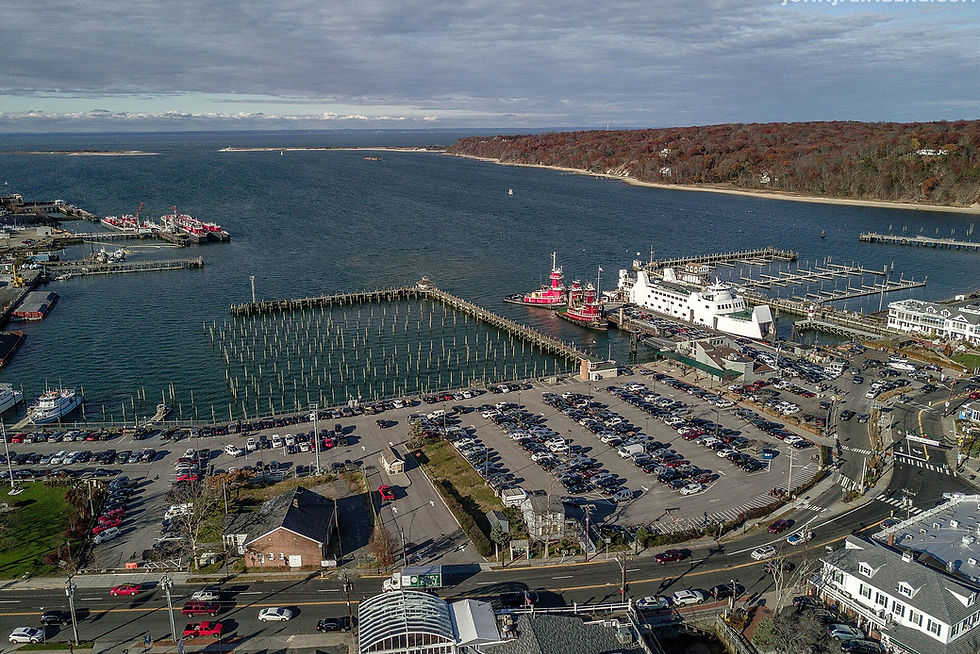
There is a particular kind of confidence that comes from watching a ferry cross the same stretch of water it has crossed since 1883. The Bridgeport & Port Jefferson Steamboat Company still makes that roughly seventy-five-minute run across the Long Island Sound, carrying passengers and vehicles on a schedule that runs year-round, in every season, in weather good and bad. If you host a short-term rental in Port Jefferson, that ferry is probably part of your own mental map of the town, the way it has been part of the town's map for well over a century. It is real infrastructure, and it is worth understanding well. But understanding it well means being honest about what it tells you and what it does not.
This piece is written for hosts who want the texture of Port Jefferson's tourism story -- the ferry, the December festival crowds, the harbor-town branding -- without mistaking any of that texture for occupancy data. Visitor estimates, festival headcounts, and destination marketing copy are genuinely useful for understanding why people come to Port Jefferson. They are not the same category of information as what your calendar actually does across a June or a February. We will walk through each piece of the public record, keep it clearly labeled, and then turn to the numbers that actually describe short-term rental performance in this market -- because that is the data that should shape how you price, how you prepare, and how you talk to guests about the town you are welcoming them into.
This is not legal advice, and none of the marketing guidance on this page replaces reading your own contracts or confirming local rules with the relevant office.
The Ferry Is the Town's Oldest Promise
Some towns build their identity around a single landmark and hope it holds. Port Jefferson did not have to hope. The Bridgeport & Port Jefferson Steamboat Company has been running boats across the Sound since 1883, which means the crossing predates the automobile, both World Wars, and nearly every business currently operating on Main Street. That kind of continuity is rare, and it does real work for a harbor town: it gives Connecticut day-trippers and weekend visitors a reason to treat Port Jefferson as a destination rather than a drive-through, and it gives the harborfront a steady rhythm of arrivals that has nothing to do with any single season or event.
The practical version for hosts is straightforward. A roughly seventy-five-minute crossing with year-round passenger and vehicle service means Port Jefferson is genuinely reachable from the Connecticut side of the Sound, not just from Long Island itself, and that widens your natural guest pool beyond the usual New York City radius. Guests connecting through the ferry terminal are often already thinking about an overnight stay, since a same-day round trip built around ferry timing can be tight. That is a real advantage worth mentioning in a listing description.
What we are not going to do here is put a number on how many people that ferry carries in a year. That figure exists somewhere in the operator's own records, but it was not part of the research pulled for this piece, and inventing a passenger total to sound authoritative would be exactly the wrong move. The honest version is simpler and still useful: the ferry has run reliably for well over a century, it operates every day of the year, and it is a structural reason Port Jefferson draws visitors that has nothing to do with any one weekend or festival. Treat it as a steady undercurrent, not a number you can plug into a revenue model.
The Dickens Festival Is a Headcount, Not an Occupancy Report
If you have hosted in Port Jefferson for more than one December, you already know the Charles Dickens Festival changes the feel of downtown. Storefronts lean into the Victorian theme, carolers work the sidewalks, and the harbor village takes on a specific, cheerful density for one weekend a year. According to organizer materials shared through iloveportjeff, the festival draws an average of about twenty-six thousand people over its two-day run, and the thirtieth annual celebration is dated for December 5 and 6, 2026. That is a milestone year for a tradition that has clearly earned its place on the town calendar.
Here is the distinction that matters for your business: twenty-six thousand people is a visitor estimate for a specific weekend event, generated by festival organizers to describe festival attendance. It is not a short-term rental occupancy figure, and it was not counted by AirDNA or any platform that tracks booking data. Some of those twenty-six thousand people are day-trippers who came off the ferry or drove in for a few hours and left before dinner. Some live close enough that they never needed a bed at all. Treating a festival headcount as proof that a given weekend will fill every listing in town is the kind of leap that leads hosts to price a weekend wrong in either direction.
That does not make the festival irrelevant to your calendar -- it clearly is relevant, and a well-established, growing annual tradition heading into its thirtieth year is worth building a seasonal pricing strategy around. The point is to build that strategy on your own booking history around past Dickens Festival weekends, layered with what the broader market data shows for December demand, rather than on the festival's own visitor-count press release. A headcount tells you the town gets busy. Your calendar tells you what busy means for your specific listing.
A North Shore Downtown, According to the People Who Sell It
Discover Long Island, the region's official tourism marketing organization, describes Port Jefferson the way you would expect a destination marketer to describe a harbor town it wants visitors to fall in love with: a North Shore downtown roughly fifty miles from New York City, built around harbor dining and shopping, with the kind of walkable village character that photographs well and sells well. That is destination marketing language, written to make Port Jefferson sound like a place worth the trip, and on its own terms it does that job effectively.
It is worth reading that kind of copy for what it is rather than mistaking it for a visitor census. Discover Long Island is not publishing an arrivals count when it talks up harbor dining and North Shore charm; it is doing what every regional tourism board does, which is building a case for the destination in the language most likely to move someone from curiosity to a booked trip. That case is genuinely useful to you as a host, because it tells you what story is already being told about the town you operate in, and it hands you language and positioning you can borrow honestly in your own listing copy.
The fifty-mile distance from New York City is a fact worth sitting with, too. It puts Port Jefferson in an interesting middle position -- close enough for a weekend escape without a long drive, far enough to feel like a genuine change of pace from the city, and reachable by a ferry crossing that adds its own sense of occasion to the trip. That combination of proximity and distinctiveness is part of what destination marketing is selling, and it is a legitimate selling point. Just keep it filed as positioning, not as a count of who actually shows up.
What Your Own Market Data Actually Says
Once you set the festival headcount and the destination marketing copy to one side, the number that should carry the most weight in your planning is the one built from actual short-term rental performance. AirDNA's market file for Port Jefferson, drawn from a sample of roughly four hundred two listings, puts a typical year's revenue at about forty-three thousand dollars, with average occupancy near fifty-four percent and an average daily rate around two hundred seventy-three dollars. That is a vendor-sourced, listing-level dataset, and it is the most direct evidence available of what hosting in this market actually produces.
Notice how differently these figures behave compared to the visitor numbers above. Fifty-four percent occupancy is a rate calculated from actual booked nights across real listings -- it moves with seasonality, with pricing decisions, with how a listing is presented, and with the broader rental market, not with a single weekend's festival attendance. A two hundred seventy-three dollar average daily rate reflects what guests are actually paying, aggregated across a real sample, not what a marketing description implies a stay should be worth. These are the numbers that describe your business, in a way that a festival headcount or a fifty-mile distance figure never will.
None of this means the ferry, the festival, or the destination marketing are beside the point. They are almost certainly part of why Port Jefferson supports a fifty-four percent occupancy rate and a two hundred seventy-three dollar rate to begin with -- demand has to come from somewhere, and a historic ferry crossing plus a beloved annual festival plus a genuinely appealing downtown are reasonable explanations for why guests choose this town over another North Shore option. The discipline is in keeping the causal story and the measurement separate: the tourism narrative explains why demand exists, and the AirDNA figures measure what that demand actually converts into for hosts.
The Occupancy Tax Is a Revenue Line, Not a Visitor Count
Suffolk County applies a five and a half percent occupancy tax to lodging stays under thirty days, and that tax applies countywide, which means it covers Port Jefferson short-term rentals along with hotels, motels, and other short-stay lodging across the county. If you host here, you are almost certainly already remitting that tax as part of running a compliant listing, and it shows up in county revenue records as a dollar figure collected over a given period.
It is tempting to look at a rising tax remittance total and read it as evidence that more visitors are coming to the area, and there is probably some real relationship there over a long enough timeline. But a tax remittance figure is fundamentally a revenue measurement, shaped by room rates and the number of taxable nights booked, not a headcount of people. A single high-dollar month could reflect a modest number of stays at elevated rates just as easily as it could reflect a surge in visitor volume. Treat the tax line as an accounting fact you handle correctly and remit on time, not as a tourism trend line you use to forecast demand.
Don't Borrow the Hamptons' Homework
Long Island is a big, varied place, and it is easy for tourism statistics from one part of it to drift into conversations about a completely different part. The Hamptons and Fire Island generate their own substantial visitor and rental data, covering markets with different seasonality, different price points, and a different guest profile than a North Shore ferry town like Port Jefferson. None of those figures describe Port Jefferson, and pasting Hamptons occupancy trends or Fire Island visitor statistics into a Port Jefferson pricing decision will point you in the wrong direction more often than it helps.
This is worth saying plainly because the mistake is an easy one to make. Long Island tourism gets covered as a single regional story in a lot of press coverage and general market commentary, and it is simple to read a Hamptons summer-season headline and assume it applies loosely to any Long Island rental. It does not. Port Jefferson's demand is driven by its own specific mix of factors -- the ferry connection to Connecticut, the December festival tradition, a North Shore downtown identity -- and its own AirDNA figures reflect that specific mix. When you are benchmarking your listing, benchmark against Port Jefferson's own numbers, not against whichever Long Island market happens to be in the news that week.
Turning an Honest Picture Into a Better Listing
None of this is meant to talk you out of leaning on Port Jefferson's tourism story -- quite the opposite. A ferry that has run since 1883, a festival heading into its thirtieth year, and a genuinely appealing North Shore downtown are all real, legitimate reasons for a guest to choose your listing over one somewhere else on Long Island. Use that story generously in your listing description, in your welcome guide, and in how you talk about the town when a guest asks what there is to do. Guests respond to a host who clearly knows and loves the place they are staying.
Where the discipline matters is in your pricing and planning decisions, not your marketing copy. Let the AirDNA figures -- that roughly forty-three-thousand-dollar typical year, that fifty-four percent occupancy, that two hundred seventy-three dollar average daily rate -- anchor your sense of what a realistic year looks like, and layer your own listing's booking history on top of that as you build out a calendar around known high-demand windows like the Dickens Festival weekend. Let the tourism infrastructure -- the ferry schedule, the festival dates, the destination marketing -- inform how you talk about the town, without asking any of it to do the job that only your own occupancy data can do.
Port Jefferson hosts have a genuinely good story to tell, built on more than a century of steady ferry service and a beloved local tradition that keeps growing. Tell that story with confidence. Just keep it in its own lane, separate from the pricing and occupancy decisions that should be built on the numbers that actually measure your business.
Related Reading
These neighboring Crest & Cove Creative posts stay on the same marketing desk for independent hosts - listing clarity, owned search, and direct-booking choices without mixing in finance or legal work.
Frequently Asked Questions
Does the Dickens Festival's twenty-six-thousand-visitor estimate mean my listing will be fully booked that weekend?
No. That figure is a festival attendance estimate from organizer materials, describing total visitors to the two-day event, not short-term rental occupancy. Many attendees are day-trippers who never book an overnight stay. It is a genuine sign of strong demand around the festival dates, worth planning your calendar and pricing around, but it should not replace your own booking history or the market's actual occupancy data when you decide how confidently to price that weekend.
How many passengers does the Port Jefferson ferry carry each year?
We do not have a sourced annual passenger total for the Bridgeport & Port Jefferson Steamboat Company, and it would be a mistake to guess at one. What is well documented is that the ferry has operated since 1883, runs a roughly seventy-five-minute crossing, and provides year-round passenger and vehicle service. That continuity is a meaningful piece of tourism infrastructure on its own, even without an annual ridership figure attached to it.
What does AirDNA's data actually say about hosting in Port Jefferson?
AirDNA's market file, based on a sample of roughly four hundred two listings, shows a typical year's revenue near forty-three thousand dollars, average occupancy around fifty-four percent, and an average daily rate close to two hundred seventy-three dollars. This is listing-level, vendor-sourced booking data, which makes it the most direct evidence of actual short-term rental performance in Port Jefferson, distinct from festival headcounts or destination marketing descriptions of the town.
Is the Suffolk County occupancy tax the same thing as a visitor count?
No. The five and a half percent occupancy tax applies to lodging stays under thirty days across Suffolk County, including Port Jefferson short-term rentals, and it is collected as a revenue figure. A rising or falling remittance total reflects room rates and taxable nights booked, not a headcount of people visiting the area. Hosts should track it as a compliance and accounting obligation, not treat it as a tourism demand indicator.
Should I use Hamptons or Fire Island rental data to price my Port Jefferson listing?
No. The Hamptons and Fire Island are distinct Long Island destinations with their own seasonality, price points, and guest profiles, and their tourism and rental figures do not describe Port Jefferson's market. Port Jefferson's demand is shaped by its own ferry connection, festival calendar, and North Shore downtown identity. Benchmark pricing and occupancy expectations against Port Jefferson-specific data, such as its own AirDNA market file, rather than borrowing numbers from a different destination.
Why does Discover Long Island describe Port Jefferson the way it does?
Discover Long Island is the region's official tourism marketing organization, and its description of Port Jefferson as a North Shore downtown roughly fifty miles from New York City, with harbor dining and shopping, is destination marketing copy meant to attract visitors. It is not a visitor census or arrivals count. Hosts can reasonably borrow that positioning language for their own listing descriptions, since it reflects genuine appeal, while remembering it was written to sell the trip, not measure it.
Is the thirtieth Dickens Festival in 2026 likely to be bigger than usual?
The thirtieth annual Charles Dickens Festival is dated for December 5 and 6, 2026, and milestone anniversaries for long-running local traditions often draw extra attention and promotion. That said, we do not have a sourced attendance projection specific to the thirtieth year beyond the general average of about twenty-six thousand visitors over the two-day event. Hosts planning around that weekend should watch local promotion as the date approaches and rely on their own booking trends alongside it.
How far is Port Jefferson from New York City, and does that matter for bookings?
Discover Long Island positions Port Jefferson as roughly fifty miles from New York City. That distance supports a genuine weekend-getaway market: close enough to reach without a long drive, far enough to feel like a real change of scenery, especially when paired with a ferry crossing that adds a sense of occasion to the trip. It is a meaningful piece of destination positioning, though it should be read as marketing context rather than a substitute for actual booking demand data.
What is the difference between a visitor estimate and short-term rental occupancy?
A visitor estimate, like the Dickens Festival's roughly twenty-six-thousand figure, counts people present at an event or in an area over a period, often including day-trippers and local residents. Short-term rental occupancy, like the fifty-four percent figure from AirDNA, measures the share of available nights actually booked across a sample of listings. They answer different questions, and conflating them -- assuming a big crowd automatically means a fully booked calendar -- is one of the more common pricing mistakes hosts make.
How should I actually use this tourism information when pricing my listing?
Use the ferry's history, the Dickens Festival tradition, and the North Shore downtown positioning to write compelling listing copy and to understand broadly why guests come to Port Jefferson. For pricing and calendar decisions, lean on Port Jefferson-specific booking data, such as AirDNA's occupancy and rate figures, combined with your own listing's history around known high-demand dates. Keep the two categories separate: tourism narrative explains demand, and market data measures what that demand converts into for your business.
Work with Crest & Cove Creative
Your Port Jefferson listing sits a ferry ride away from over a century of steady visitors -- here is how to read that story without mispricing a single weekend. Ask for a marketing-only read of the listing.
Ready to turn Port Jefferson's tourism story into a smarter calendar? Talk to Crest & Cove Creative about building a pricing strategy grounded in your own market data. We stay on listing clarity, photos, SEO, and channel mix for independent hosts, not finance or legal work.
Reach out at crestcove.co or (256) 998-7502.



Comments