
Clear the Regulatory and Lease Gates Before You Market the Stay

Updated: Aug 25
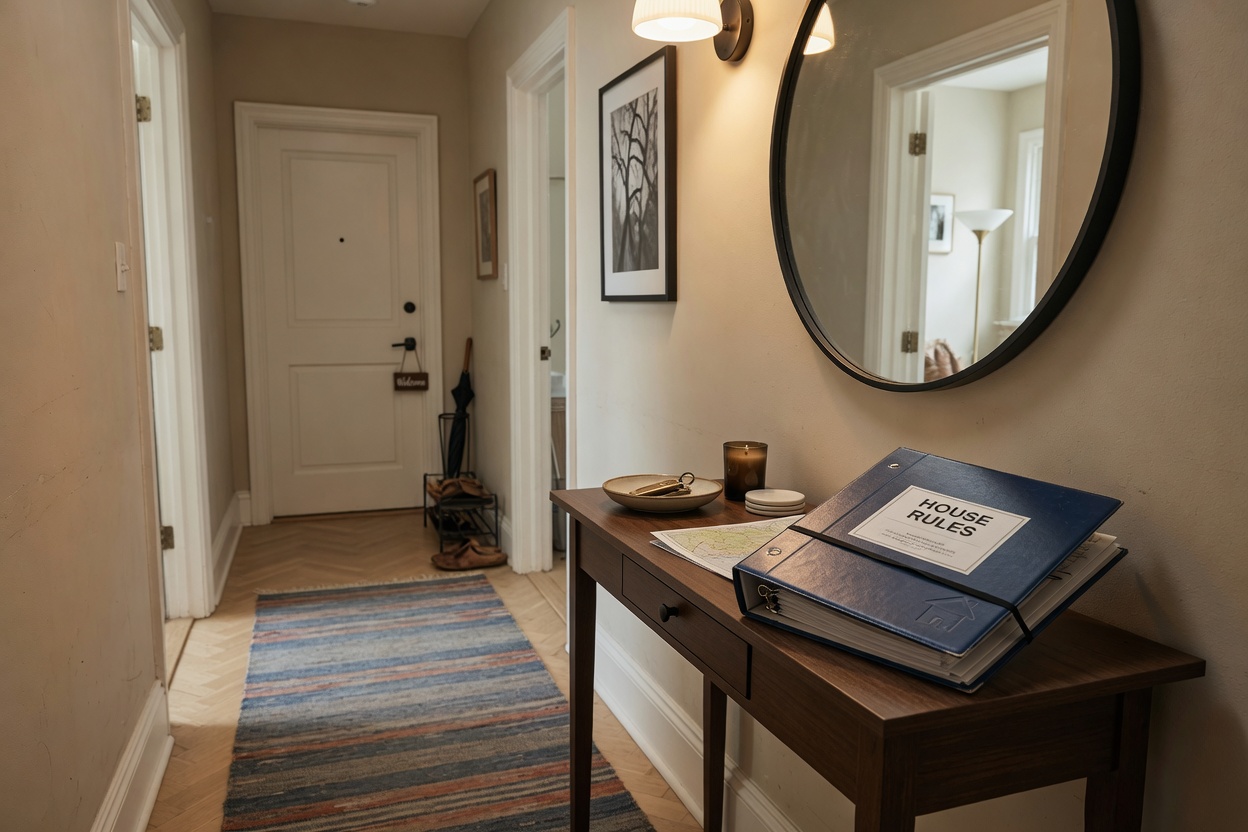
Think of a gate as anything that has to open before a guest's stay can legally or contractually happen the way your listing describes it: a current short-term rental permit, a lease or sublease clause that allows the arrangement, an HOA approval on file, an insurance rider that actually covers paying guests. Marketing spend and marketing time are wasted, sometimes expensively, when they go toward a stay that a closed gate is going to block before or during the reservation. A beautiful new photo set and a refreshed description don't open a gate, they just make more people notice it's closed.
This page stays on the practical sequencing question: what to check, and in what order, before you spend a weekend or a marketing budget on a listing. It will not guess permit outcomes, interpret your specific lease language, or tell you whether your HOA will approve a given use. This is not legal advice. For a lease dispute, a permit denial, or an HOA conflict, the right call is a licensed attorney or the actual office that issued the document, not a marketing checklist. What follows is the order of operations that keeps a marketing push from running ahead of the paperwork that makes the stay real.
Why marketing spend can't fix a closed gate
A gate problem and a marketing problem look similar from the outside, both show up as fewer bookings or more cancellations, but they have opposite fixes. A marketing problem responds to better photos, clearer copy, or a pricing adjustment. A gate problem doesn't respond to any of that, because the obstacle isn't demand or presentation, it's whether the stay is actually allowed to happen as described. Spending marketing effort on a gate problem doesn't just fail to fix it; it actively makes the failure more visible, because now more people are booking a stay that's about to hit the wall.
The clearest version of this is a lease that doesn't permit subletting or short-term guests, paired with a listing that's already live and taking reservations. Every booking made before that gate is resolved is a booking that's carrying real cancellation risk, and a canceled confirmed reservation does more damage to a host's review record and platform standing than never having listed the dates at all.
The same logic applies to a lapsed permit or an HOA approval that expired without renewal. The listing can look identical to last year's (same photos, same copy, same price) while sitting on top of paperwork that no longer supports it. Nothing about the marketing changed; the gate did.
The five anti-patterns that skip the gate check
The most common pattern is promising what Saturday can't keep: writing listing copy this week that describes a stay only possible if a pending approval comes through by the time a guest arrives. Hosts do this optimistically, assuming the gate will open in time, and sometimes it doesn't, leaving a confirmed guest with a stay that can't legally proceed.
The second is pausing guest communication to work on a gate-clearing project, which gets the priority backwards. A guest with an active reservation needs answers about access and arrival regardless of what paperwork is in progress behind the scenes; don't let an internal compliance task become the reason a live guest waits longer than usual for a reply.
The third and fourth are measuring the wrong things: tracking how polished the marketing deck looks, or how many photos got updated, instead of tracking whether the actual gate (permit, lease clause, HOA file) is open or closed. The fifth is copying a neighbor's gate status onto your own situation, assuming that because a nearby property cleared its permit or lease question, yours works the same way. Gates are property-specific and contract-specific; a neighbor clearing theirs tells you nothing certain about yours.
Reading your own paperwork before you read your analytics
The order matters. Before opening a booking dashboard or a marketing calendar, a host should be able to answer three questions from memory or from a document pulled in under five minutes: is the permit current, does the lease or ownership structure allow the arrangement, and is there an active insurance policy that covers short-term paying guests specifically. If any answer is "I think so" rather than "yes, confirmed on [date]," that's the actual next task, not a new photo shoot.
This isn't a one-time check. Leases renew, permits expire on their own cycles, and insurance policies lapse or get restructured without always triggering an obvious notice. A host who checked all three gates a year ago and never checked again is operating on stale confidence, which is a worse position than never having checked at all, because it feels like diligence was already done.
Where the checks genuinely turn up ambiguity, such as lease language that's unclear about subletting, an HOA rule that seems to conflict with itself, or a permit renewal notice that references a process you don't recognize, that's the point to bring in a professional rather than interpret it yourself. Guessing on an ambiguous gate is exactly the kind of decision that should not be made from a marketing seat.
What the public listing fields should say once the gate is open
Once a gate is confirmed open, the listing's public fields should reflect it plainly: a permit number displayed where required, a guest cap that matches what the lease or HOA actually allows, house rules that mention any access or timing restriction tied to the gate itself. This isn't extra legal caution layered on top of marketing. It's the marketing copy simply telling the truth about a situation that's already been verified.
Where a gate imposes a real limitation, such as a lease that caps stays at a certain number of nights per month or an HOA rule that restricts back-to-back bookings, that limitation belongs in the listing copy, not just in a private note to yourself. A guest who books around a restriction they never saw coming is a guest who's about to leave a review about it.
Photos matter here too. If a lease or HOA approval was granted for a specific configuration of the property, and the current photos show something that's since changed (an added structure, a reconfigured space), that mismatch is a gate problem hiding inside a marketing asset, not a purely aesthetic issue.
Dating the gate check like you'd date anything else that matters
Keep a simple running note: which gate you checked, what you confirmed, and the date. "Lease reviewed [date], sublease clause confirmed to allow short-term guests up to [limit]" is a useful record. "Checked the lease, looks fine" is not, it doesn't tell future you what was actually verified or when confidence might have gone stale.
This log becomes especially valuable at renewal time. A lease or HOA approval that's coming up for renewal in sixty days is a gate that's about to close and reopen, and a host who's been logging checks all year will notice the renewal date approaching instead of discovering it's already passed. That's the entire value of the habit, it converts a vague sense that "I should probably check on that" into a specific, dated task on a calendar.
The same log should flag when a gate check surfaced something ambiguous that got referred to a professional, and what came back. That closes the loop and prevents the same ambiguous question from being re-litigated from scratch a year later when memory of the original conversation has faded.
Where guest questions reveal a gate you haven't actually confirmed
Guests ask questions that double as an informal audit of your gates without meaning to. A question about whether a specific date range is available for an extended stay can surface a lease-imposed night cap you hadn't fully internalized. A question about whether a service animal is permitted can surface an HOA pet restriction that conflicts with your listing copy. Treat these questions as data, not just as replies to send and forget.
When a guest question exposes a gap between what the listing says and what the underlying paperwork actually allows, the fix is to correct the listing immediately, not just to answer that one guest correctly and leave the public copy as-is for the next person to ask the same question.
This is also where the priority ordering bites again: a guest waiting on an answer to a gate-adjacent question should never wait longer because a host is mid-project on a broader compliance review. Answer the guest with what you currently know to be true, then go verify and update the listing separately.
What one week of gate-clearing work looks like in practice
Pick the single gate you're least confident about, for most hosts, it's either the lease clause or the HOA approval, since permits tend to have clearer renewal reminders built in. Spend one sitting pulling the actual document and reading the relevant clause in full, not from memory or from a summary someone gave you years ago.
If it checks out, log it with a date and move on. If it's ambiguous, that's the task for the week: get it clarified by the actual counterparty (landlord, HOA board, or a professional) before you spend more marketing effort on a listing that assumes the gate is open.
Resist folding this into a bigger project. A full audit of every gate across every property sounds thorough, but a single confirmed gate this week protects the next booking more than a half-finished audit spread across a month. Scope it small enough to actually finish, then repeat for the next gate next week.
Related Reading
More independent-host reading on honest listing copy, distribution, and when hiring help is worth it.
Frequently Asked Questions
What exactly counts as a 'gate' in this context?
A gate is any legal or contractual condition that has to be satisfied before a short-term stay can happen the way your listing describes it: a current permit, a lease clause allowing subletting or short-term guests, an active HOA approval, or insurance coverage that actually applies to paying guests. If the condition isn't met, the stay isn't really available no matter how good the listing copy looks. Marketing effort spent before the gate is confirmed open is effort spent on a stay that may not actually be bookable.
Is checking my lease before marketing considered legal advice?
No, reading your own lease and noting what it says is just informed marketing preparation. It becomes a legal question the moment the language is ambiguous or you're unsure how a clause applies to your situation; at that point, a landlord conversation or an attorney is the right next step, not a guess. This page describes the habit of checking, not an interpretation of any specific lease language, and it is not legal advice.
How do I know if my HOA approval has actually expired?
Check the approval document itself for an expiration or renewal date, and don't assume it's evergreen just because nothing has changed on your end. Many HOA rental approvals are tied to annual renewal cycles that require an active request, not automatic continuation. If you can't locate the original approval or its terms, contact the HOA management company directly rather than assuming the prior approval still holds.
What should I do if I discover a gate is closed after I've already started marketing?
Pause new bookings for the affected dates immediately, and handle any existing confirmed reservations honestly, including, if necessary, working with the guest and the platform on a resolution rather than letting them arrive to a stay that can't proceed. Then resolve the underlying gate with the actual authority involved before reopening the calendar. Continuing to take bookings on a known-closed gate turns a paperwork problem into a guest-trust problem.
Can I list 'permit pending' and still accept bookings?
This is a judgment call that depends entirely on your specific permit process and how firm the pending timeline actually is, and it's exactly the kind of decision that benefits from a direct conversation with your permitting office rather than a guess. Accepting bookings against a pending gate carries real cancellation risk if the timeline slips. If you do it, be explicit with guests about the contingency rather than silent about it.
How often should I re-check my insurance coverage for short-term guests?
At minimum, whenever the policy renews, since coverage terms and exclusions can change year to year without an obvious notice calling out the short-term-rental-specific language. It's also worth a check any time you significantly change how the property is used or marketed, adding a new bookable space, for instance, since that can shift what the existing policy actually covers.
Should my listing copy mention that a gate exists, like a lease-imposed night cap?
Yes, if the gate creates a real limitation a guest would need to plan around: a maximum stay length, a restriction on certain dates, a guest cap tied to HOA rules. Leaving it out of the public copy just moves the surprise to check-in or to a rejected booking request, which is a worse guest experience than stating the limitation plainly upfront.
What's the difference between a gate problem and a normal booking slowdown?
A normal slowdown responds to marketing changes (better photos, adjusted pricing, refreshed copy) and demand recovers when those change. A gate problem doesn't respond to any of that, because the obstacle is contractual or regulatory, not about presentation or price. If marketing adjustments aren't moving the needle at all, it's worth explicitly checking whether an underlying gate has quietly closed.
Who should actually resolve an ambiguous lease or HOA question, me or a professional?
An ambiguous clause is the signal to bring in the actual counterparty or a licensed professional, not to interpret it yourself from a marketing seat. This page is not legal advice, and lease or HOA language often carries specific legal weight that isn't obvious from a plain reading. Get it clarified in writing from the landlord, HOA board, or attorney, then update your listing to match the clarified answer.
Is it worth building a checklist I reuse for every gate check?
Yes, but keep it simple: which gate, what document you checked, what it said, and the date. A short reusable checklist like that is far more useful than a one-off memory of having "looked into it" at some point. The goal isn't a formal system. It's a dated record you can actually find and trust six months later.
Work with Crest & Cove Creative
A refreshed photo set doesn't reopen a lapsed permit or a lease clause that never allowed guests in the first place, it just sends more traffic toward a gate that's still closed. Name the failure mode the guest can check.
Crest & Cove Creative helps independent hosts sequence marketing work correctly: confirm the gates that make a stay real, then build the listing copy that reflects what's actually true. We're not a legal service and we won't interpret your lease or HOA documents for you, but we know how to translate a confirmed gate into honest, guest-ready copy.
Reach out at crestcove.co or (256) 998-7502.


Comments