
Waynesville vs Nantahala: Seasonal Demand Curves 2026

Updated: Aug 21
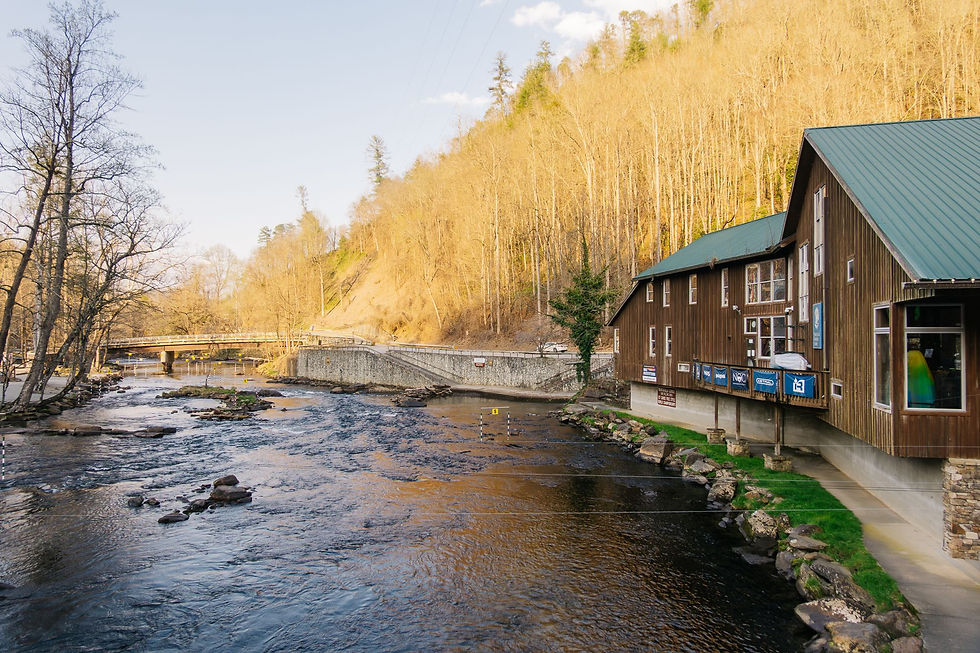
Waynesville and Nantahala are separated by roughly 40 miles of mountain road and share the same broad geographic region of western North Carolina. They appear in the same STR market analyses, show up in the same investor search results, and compete — at least superficially — for the same pool of mountain cabin guests. But the seasonal demand curves that define each market are so fundamentally different that treating them as comparable investment opportunities without understanding those differences is one of the most common analytical errors in WNC STR investing.
One market operates as a genuine four-season destination, with diversified demand that sustains occupancy year-round. The other operates on a compressed seasonal engine that generates intense summer revenue and very little else. Both can produce attractive returns for the right operator with the right expectations — but the pricing strategies, revenue models, acquisition underwriting, and operational approaches that work in one market will fail in the other.
This analysis breaks down the seasonal demand structure of each market, explains what drives the differences, and maps the investment implications for operators choosing between them.
Waynesville's Demand Structure: The Four-Season Mountain Town
Waynesville is the seat of Haywood County, sitting at approximately 2,600 feet in the valley of Richland Creek, with the Great Smoky Mountains to the west and the Blue Ridge Parkway ridgeline accessible within 15 minutes to the north. It is the largest town in Haywood County by population (roughly 10,000 residents) and functions as the commercial and cultural hub for the surrounding mountain communities of Maggie Valley, Canton, Clyde, and Lake Junaluska.
Why Waynesville's Demand Spreads Across the Calendar
The critical characteristic of Waynesville's visitor economy is that it doesn't depend on any single demand driver. Multiple overlapping segments — each with its own seasonality — combine to produce an aggregate demand curve that maintains meaningful occupancy in every month of the year.
Downtown arts and dining. Waynesville's Main Street corridor has developed one of the strongest independent gallery, restaurant, and retail scenes in western North Carolina outside of Asheville. Downtown offers a variety of dining options for visiting guests, hosts a regular rotation of gallery openings and cultural events, and provides a walkable commercial experience that gives guests a reason to book even when outdoor recreation conditions aren't optimal. This commercial infrastructure is the foundation of Waynesville's shoulder-season and off-peak occupancy — guests who might not visit a mountain town purely for hiking or foliage viewing will come for a compelling downtown experience.
Blue Ridge Parkway and GSMNP access. The Parkway's Waterrock Knob section, one of the most scenic stretches in the southern half of the Parkway, is accessible within 20 minutes of downtown Waynesville. The Oconaluftee entrance to Great Smoky Mountains National Park is approximately 30 minutes west via US-19. These two destination assets — the most visited scenic roadway in America and the most visited national park — generate visitor traffic that flows through Waynesville's accommodation market throughout the extended season from spring through fall.
Folkmoot International and cultural programming. Folkmoot, an international folk festival based in Waynesville, draws visitors from across the region during its annual summer programming. The broader cultural calendar — including the Haywood County Arts Council events, the Shelton House museum, and the seasonal programming at the Performing Arts Center — creates accommodation demand from a culturally engaged visitor segment that books for reasons independent of weather and trail conditions.
Lake Junaluska conference demand. Lake Junaluska, the conference and retreat center operated by the Southeastern Jurisdiction of the United Methodist Church, approximately three miles from downtown Waynesville, hosts conferences and retreats throughout the year. When Junaluska's own lodging fills, overflow accommodation demand benefits Waynesville's STR market. This conference demand layer — operating on its own calendar, driven by organizational scheduling rather than recreational tourism patterns — provides occupancy during weeks that the recreational market alone might not fill.
Cataloochee Valley elk viewing. The Cataloochee Valley in Great Smoky Mountains National Park, accessible via a mountain road from the Maggie Valley side, has become an increasingly significant draw for wildlife tourism — particularly during the elk rut in September and October. Waynesville-based guests who combine an elk-viewing excursion with downtown dining and foliage viewing represent a high-value multi-night booking that layers fall wildlife demand onto the existing foliage tourism base.
Waynesville's Seasonal Curve
The aggregate effect of these overlapping demand layers produces a seasonal curve with the following characteristics:
Peak season (May through October) — Strong and sustained, with summer family travel, Parkway visitors, and cultural programming building from May through a plateau in June through August, then rising further into the October foliage peak. October is consistently the highest-demand month, with well-positioned listings achieving occupancy rates above 85% and premium rates that can exceed summer levels by 20 to 30 percent.
Shoulder season (November, March through April) — Meaningful occupancy driven by late-fall visitors who extend beyond the foliage peak, early-spring travelers who want to beat summer crowds, and conference overflow from Lake Junaluska's year-round programming. Shoulder months don't approach peak-season rates, but they generate genuine revenue that contributes meaningfully to annual totals.
Off-peak season (December through February) — The weakest months, but not zero. December holiday bookings — particularly Christmas week and New Year's week — drive premium rates for a concentrated period. January and February are the true troughs, with occupancy rates dropping to their annual lows. However, Waynesville's improved downtown — with restaurants and shops that remain open through winter — provides enough guest-facing infrastructure to support winter weekend bookings from guests seeking a quiet mountain escape. The winter floor is low but not empty.
Nantahala's Demand Structure: The Concentrated Seasonal Engine
The Nantahala Gorge — and specifically the eight-mile stretch of the Nantahala River between Wesser and the Nantahala Outdoor Center — is one of the most commercially significant whitewater recreation corridors in the eastern United States. The Nantahala Outdoor Center, located at the base of the gorge where US-19/74 crosses the river, has operated since 1972 and has built the Nantahala into a nationally recognized adventure recreation destination that draws hundreds of thousands of visitors annually for guided rafting, kayaking, and adventure programming.
Why Nantahala's Demand Is Concentrated
Unlike Waynesville, where multiple independent demand drivers create calendar diversity, Nantahala's visitor economy is dominated by a single engine: whitewater recreation on the Nantahala River. The river and the outdoor recreation infrastructure built around it generate the overwhelming majority of visitor traffic to the gorge, and that traffic follows the river's operational season with high fidelity.
The whitewater season runs roughly from April through October, with water releases from Nantahala Dam creating the controlled flow conditions that make commercial rafting viable. Within that season, summer — June through August — represents the true peak, with weekend demand from family groups, corporate team-building outings, and adventure tourism visitors producing the highest occupancy and ADR for gorge-area STR properties.
There is no comparable off-season demand driver. The Nantahala Gorge does not have a walkable downtown with restaurants and galleries that give guests reasons to visit outside rafting season. It does not have a conference center generating shoulder-season overflow. It does not have a ski area, creating winter demand. The gorge's commercial infrastructure is purpose-built for the adventure recreation season, and much of it operates on a seasonal schedule that closes or reduces hours outside the summer peak.
This isn't a criticism of the Nantahala market — it's a structural description that has direct implications for how operators should model revenue, set expectations, and make investment decisions. The Nantahala is an extraordinary recreation destination that generates intense seasonal demand. It is not a four-season visitor economy, and operators who model it as one will be disappointed by the results.
Nantahala's Seasonal Curve
Peak season (June through August) — Intense weekend demand driven by rafting groups, adventure recreation visitors, and family outdoor tourism. Friday through Sunday occupancy for well-positioned gorge-area properties can approach levels comparable to Waynesville's peak, and summer weekend ADR is competitive with the broader WNC mountain market. Midweek demand exists during peak summer — particularly from group bookings and corporate outings — but the weekday-to-weekend occupancy gap is wider than in markets with more diverse demand drivers.
Extended season (April through May, September through October) — Meaningful but diminished demand. Spring brings early-season rafting visitors and the beginning of the outdoor recreation calendar. Fall brings some foliage tourism traffic — the Nantahala Gorge's fall color, framed by the narrow rock walls and river corridor, is genuinely spectacular — but the absence of town infrastructure limits the conversion of foliage viewers into multi-night guests. A guest can drive through the gorge, admire the color, and continue to Cherokee or Bryson City for dinner and accommodation without stopping. Shoulder-season ADR is typically 30 to 50 percent below summer peak rates.
Off-peak season (November through March) — Genuinely thin. The gorge-area STR market effectively shuts down for winter, with occupancy rates dropping to levels that make revenue from these months marginal at best. Some hardy adventurers and off-season nature seekers book November or March nights, but the volume is insufficient to sustain consistent occupancy. Hosts who budget assuming meaningful winter revenue from a Nantahala-area property will find the reality falls well short.
The Revenue Model Divergence: 12-Month vs. 7-Month Operations
The most consequential practical difference between Waynesville and Nantahala for STR operators is the number of months that meaningfully contribute to annual revenue.
Want to know what's holding your listing back? Get a free STR visibility audit.
Waynesville operators can reasonably build a 12-month revenue model. Every month generates some revenue — some months substantially more than others, but none are zero. The December holiday window, the March through April shoulder season, and even the January through February trough produce booking activity that, cumulatively, adds meaningful annual revenue above what a purely seasonal model would predict.
Nantahala operators should build a 7-month revenue model — April through October — and treat anything earned outside that window as upside rather than budgeted income. The November through March period is too thin to plan around, and an acquisition underwriting model that assumes year-round revenue at any meaningful level will overstate returns by a margin that can make an otherwise marginal deal look attractive.
This distinction directly affects cap rate calculations and acquisition pricing. A Nantahala property with a $45,000 annual gross revenue projection is a different investment proposition depending on whether that $45,000 is achievable from seven months of strong seasonal bookings or whether it assumes twelve months of consistent occupancy that the demand structure can't support. Investors who verify that revenue projections account for the actual seasonal curve — rather than extrapolating peak-month performance across the full year — protect themselves from the most common analytical error in seasonal-market STR investing.
Pricing Strategy: Two Markets, Two Philosophies
The pricing strategies that maximize revenue in Waynesville and Nantahala are as different as their demand curves.
Waynesville: Nuanced Year-Round Calibration
Waynesville rewards dynamic, nuanced pricing that adjusts across multiple seasonal transitions rather than a simple peak-versus-off-peak binary. The highest-performing Waynesville operators typically manage four or five distinct pricing tiers.
October foliage premium — The single highest-rate period, set 20 to 40 percent above standard summer rates for the peak foliage weeks. This premium is supported by genuine demand intensity and the willingness of foliage-seeking guests to pay for well-positioned properties during a narrow, high-demand window.
Summer standard rate — The June through September base rate that reflects the sustained family travel and outdoor recreation demand of the primary season. This is not a discounted rate — it's the market rate for the highest-volume booking period.
Spring and late-fall competitive rates — Pricing set 10 to 20 percent below summer rates to build occupancy momentum in the weeks before and after the primary season. The goal during shoulder months is to fill nights that would otherwise go vacant, using moderate rate reductions to attract the more price-sensitive guest segments that travel during these periods.
Winter rates — Aggressive off-peak pricing for January through February that accepts lower per-night revenue in exchange for occupancy that generates reviews, maintains booking momentum, and prevents the listing from going dark during the slowest weeks. December holiday pricing for Christmas and New Year's is a separate tier — premium rates for those specific weeks, competitive rates for the rest of the month.
Event and calendar premiums — Specific rate adjustments for Folkmoot festival weekends, Lake Junaluska conference periods, and other calendar events that create accommodation demand spikes above the seasonal baseline.
Nantahala: Concentrated Peak Capture
Nantahala rewards a fundamentally different approach: maximizing revenue capture during the compressed peak season and accepting low-yield or vacant periods outside it.
Summer weekend maximization — Friday and Saturday nights during June through August should be priced at the absolute top of the competitive range. The demand exists, the supply in the gorge area is limited, and the adventure recreation guest — who has already committed to a rafting trip costing $50 to $100 per person — is not optimizing for the cheapest possible cabin. Premium summer weekend rates are the primary revenue driver for the annual model.
Summer midweek calibration — Midweek rates during peak summer should be set to fill rather than to maximize per-night revenue. Group bookings and corporate outings create midweek demand, but the volume is lower than on weekends. Competitive rates that attract available midweek demand without leaving nights vacant optimize the peak season's total contribution.
Shoulder season value pricing — April through May and September through October — should be set aggressively low enough to capture available demand without the expectation of premium returns. The goal is occupancy, not rate. A night booked at $95 in September is infinitely more valuable than a night vacant at $160, with nobody willing to pay.
Winter acceptance — November through March — pricing should be set at whatever level attracts the occasional hardy traveler. Many operators choose to close their calendar entirely during winter rather than maintain availability at rates that don't cover cleaning and operational costs.
Acquisition Cost Context: What the Numbers Look Like
The investment analysis for Waynesville versus Nantahala involves different acquisition cost environments that meaningfully affect the return calculations.
Waynesville's STR market has higher visibility among investors, a more established reputation, and a more liquid property market — all of which have pushed acquisition costs higher than in the Nantahala gorge area. A well-positioned two-to-three-bedroom cabin in the Waynesville area with good listing potential typically requires a higher acquisition budget than a comparable property in the Nantahala corridor.
Nantahala's acquisition costs are lower, reflecting a smaller demand base, seasonal concentration, and a more limited buyer pool. For investors with smaller acquisition budgets, Nantahala's lower entry point can make the deal work mathematically even with the compressed revenue season, particularly if the investor plans to use the property personally during the off-season months when rental income would be negligible.
The gross yield comparison — annual gross revenue divided by acquisition cost — is where the analysis gets nuanced. Waynesville's higher annual revenue, spread across 12 months of diverse demand, divided by a higher acquisition cost, produces one yield profile. Nantahala's concentrated seasonal revenue, achievable in seven months, combined with a lower acquisition cost, may produce a comparable or even superior yield percentage, despite the lower absolute revenue — particularly for properties that capture peak summer demand efficiently.
Neither market's yield tells the full story without understanding the operating experience behind it. Waynesville's yield comes with the predictability and operational consistency of year-round demand. Nantahala's yield comes with the volatility of seasonal concentration and winter vacancy, which some operators find stressful and others acceptable.
Guest Quality and Repeat Booking Patterns
The guest profiles in each market differ in ways that affect long-term operational quality and lifetime guest value.
Waynesville attracts a diverse mix of guests — foliage tourists, Parkway travelers, downtown arts visitors, GSMNP base-campers, conference overflow, and winter escape seekers. This diversity means no single guest type dominates, and listings that position themselves broadly capture bookings from multiple segments throughout the year. Repeat booking rates in Waynesville are moderate — the market is large enough that some guests return, but many visitors are one-time destination tourists exploring a different WNC town each year.
Nantahala attracts a more concentrated guest profile — adventure recreation groups, rafting families, outdoor enthusiasts — whose trip motivation is closely tied to the river and outdoor programming. This concentration produces a specific advantage: strong repeat booking potential. Families who have a great rafting weekend at a specific Nantahala cabin are likely to rebook the same property for next summer's trip, because the trip motivation (the river) is fixed and the accommodation preference (a cabin they already know and trust) is sticky. Operators who build relationships with their adventure recreation guests and make rebooking easy can develop a core of repeat bookings that provides revenue predictability even within the seasonal model.
The Decision Framework: Which Market Fits Your Investment Profile?
The Waynesville-versus-Nantahala decision maps to specific investor profiles and preferences.
Choose Waynesville if you want predictable, year-round revenue with lower seasonal volatility. If you want a property that generates income in every month and allows you to build an annual budget with confidence. If you value the operational consistency of diversified demand and the lower stress of knowing that a weak October doesn't destroy your annual model because eleven other months contribute. If you're willing to pay a higher acquisition price for that stability. And if you want a property in a market with a maturing commercial ecosystem that is still improving, where downtown quality, restaurant depth, and cultural programming are trend lines that benefit your listing's destination appeal over time.
Choose Nantahala if you can optimize for a compressed peak season and accept winter vacancy without anxiety. If you plan to use the property personally during the off-season months, converting what would otherwise be dead inventory into personal enjoyment. If you have a smaller acquisition budget and want to enter the WNC STR market at a lower price point. If you're comfortable with the operational intensity of maximizing a seven-month revenue window — pricing aggressively, managing turnover efficiently, and capturing every available booking during the period that matters. And if the adventure recreation guest profile — loyal, repeat-booking, activity-focused — appeals to your hosting style.
Neither choice is objectively superior. The seasonal demand curves determine which market rewards which operating approach. The investors who succeed in either one are those who understand the curve they're operating on and build their strategy to match it.
Crest & Cove Creative works with short-term rental operators and investors across Western North Carolina and North Georgia, including Haywood County and the Nantahala corridor. Reach out to discuss market-specific analysis, seasonal revenue modeling, and acquisition underwriting for either market.
Start with a free visibility audit at crestcove.co/audit.
Frequently Asked Questions
What's the key structural difference between Waynesville and Nantahala as STR markets?
Waynesville operates as a genuine four-season destination with multiple overlapping demand drivers that sustain occupancy year-round, while Nantahala runs on a single concentrated engine — whitewater recreation — that generates intense summer revenue and very little else. One market operates as a genuine four-season destination, with diversified demand that sustains occupancy year-round. The other operates on a compressed seasonal engine that generates intense summer revenue and very little else.
What drives Waynesville's year-round demand?
Downtown arts and dining along Main Street, Blue Ridge Parkway and GSMNP access, the Folkmoot International folk festival, Lake Junaluska conference overflow, and Cataloochee Valley elk-viewing tourism each contribute demand on a different calendar, keeping occupancy meaningful in every month. Event and calendar premiums — Specific rate adjustments for Folkmoot festival weekends, Lake Junaluska conference periods, and other calendar events that create accommodation demand spikes above the seasonal baseline.
When does Nantahala's STR season run?
Roughly April through October, driven by water releases from Nantahala Dam that create the controlled flow conditions commercial rafting needs. Summer (June through August) is the true peak, with weekend demand from family groups and corporate outings. Within that season, summer — June through August — represents the true peak, with weekend demand from family groups, corporate team-building outings, and adventure tourism visitors producing the highest occupancy and ADR for gorge-area STR properties.
How many months of revenue should each market plan around?
Waynesville operators can reasonably build a 12-month revenue model, since every month generates some booking activity. Nantahala operators should budget around a 7-month model (April through October) and treat anything earned outside that window as upside rather than budgeted income. Nantahala operators should build a 7-month revenue model — April through October — and treat anything earned outside that window as upside rather than budgeted income.
When is Waynesville's highest-demand month?
October, driven by the Blue Ridge Parkway fall foliage peak — consistently the highest-demand month with well-positioned properties commanding premium rates. October is consistently the highest-demand month, with well-positioned listings achieving occupancy rates above 85% and premium rates that can exceed summer levels by 20 to 30 percent. October foliage premium — The single highest-rate period, set 20 to 40 percent above standard summer rates for the peak foliage weeks.
How does pricing strategy differ between the two markets?
Waynesville rewards nuanced, multi-tier pricing, with top operators typically managing four or five distinct seasonal tiers, including an October foliage premium set 20 to 40 percent above standard summer rates. Nantahala rewards concentrated peak-capture pricing focused on the summer weekend window. The highest-performing Waynesville operators typically manage four or five distinct pricing tiers. Nantahala's concentrated seasonal revenue, achievable in seven months, combined with a lower acquisition cost, may produce a comparable or even superior yield percentage, despite the lower absolute revenue — particularly for properties that capture peak summer demand efficiently. Keep going on Crest & Cove: the Waynesville AirROI market file, Nantahala overlooks worth the drive, the Bryson City.
Why Waynesville's Demand Spreads Across the Calendar?
But the seasonal demand curves that define each market are so fundamentally different that treating them as comparable investment opportunities without understanding those differences is one of the most common analytical errors in WNC STR investing. Investors who verify that revenue projections account for the actual seasonal curve — rather than extrapolating peak-month performance across the full year — protect themselves from the most common analytical error in seasonal-market STR investing.
Why Nantahala's Demand Is Concentrated?
But the seasonal demand curves that define each market are so fundamentally different that treating them as comparable investment opportunities without understanding those differences is one of the most common analytical errors in WNC STR investing. This analysis breaks down the seasonal demand structure of each market, explains what drives the differences, and maps the investment implications for operators choosing between them.
Work with Crest & Cove Creative
Write this town's year. Do not file another market's number as this stay.
Reach out at crestcove.co or (256) 998-7502.
Related Reading
Keep reading on Crest & Cove — same-cluster pages and the listing system we use nationwide:
Should You Invest in Black Mountain or Chattanooga? The 2-Bedroom Sweet Spot Compared
Waynesville & Maggie Valley STR Market Report: Parkway Gateways, Ski Traffic, and Shoulder Seasons
Repeat Guest Rates Face-Off: Hendersonville Properties vs. Ocoee Properties
Should You Invest in Lake Lure or Lookout Mountain? The Luxury Property Performance Data Decides
Asheville Metro STR Market Report: What Operators and Investors Need to Know Now
Robbinsville, NC Visitor Spending and Tourism: Inside Graham County's Niche Adventure Market
Highlands & Cashiers STR Market Report: Luxury Mountain STRs in a Constrained Supply Market
Cherokee & Qualla Boundary STR Market Report: Casino-Driven Demand and Cultural Tourism Dynamics
Bryson City & Nantahala Gorge STR Market Report: Railroads, Rapids, and Cabin Returns
Sylva, Dillsboro, and Cullowhee STR Market Report: College Town Demand Meets Smoky Mountain Tourism
Hendersonville & Flat Rock STR Market Report: Wine Country, Waterfalls, and Year-Round Demand
Seasonal Demand Curves Face-Off: Black Mountain Properties vs. Cherokee Properties
The Marshall STR Market Report: A Riverside Madison County Town with a Distinct Demand Mix
Nantahala NC vs Blairsville GA: A Directional Comparison on Occupancy Patterns
The Mars Hill STR Market Report: A College-Town Mountain Market Hiding in Plain Sight
Franklin NC vs. Ellijay GA: Which Market Wins on Weekend vs. Weekday Revenue?


Comments