
The Southeast STR Market Report for Independent Hosts

Updated: Aug 28

The Southeast is the most fragmented, independent-host-heavy short-term-rental region in the United States , a drive-to, multi-peak market where roughly 75-95% of listings in the mountain, lake and heritage markets are still owner-operated, even as the trophy coasts sit 60-87% professionally managed. That single split , manager-locked beaches versus fragmented inland premium , is the defining trait of the region and the organizing idea of this report.
This is not a small market. It runs on some of the country's largest tourism economies: Florida set a record ~143 million visitors in 2024, Georgia drew a record 174.2M visitors and $82B in total economic impact, Tennessee posted a fourth straight record at $31.66B in direct visitor spending, and Virginia hit a record $35.1B. The supply is just as deep: Tennessee's Great Smoky Mountains corridor alone holds 25,000+ active STRs around the most-visited U.S. national park, while South Carolina's Grand Strand carries ~17,800-19,500 metro listings , the single largest STR market nationwide , we still work the southern Appalachians, and the same system travels.
But scale and opportunity are not the same thing. The richest markets are frequently the least winnable for an independent host or a marketing-led agency: Anna Maria Island commands ~$899 ADR but is 82.5% professionally managed; North Carolina's Outer Banks runs single managers operating 450-600+ homes; Sea Island posts the state's highest ADR (~$1,680-$1,700) on just ~22 open-market listings. The genuine opportunity sits where premium pricing and fragmentation coexist , Vero Beach (8.2% pro-managed), Lake Oconee ($650-$720 ADR, largest manager ~5% share), Smith Mountain Lake and Lake Anna (~80% independent at Tahoe-tier per-door economics), and Red River Gorge (ranked the 8th-best mountain STR market in the U.S. by AirDNA).
This report maps all of it across 10 states , the Coastal Arc, the Appalachian Spine, the drive-to reservoir economy, and the bourbon-and-heritage small-city South. It benchmarks ADR, occupancy, and per-listing revenue; lays out the state-by-state regulatory patchwork (no statewide preemption in most states, with restrictive city cores pushing the premium play out to the county ring); and identifies, market by market, where the returns and the addressable independent hosts actually are.
Key Takeaways
The Southeast splits sharply by geography: trophy coasts run 60-87% professionally managed (Perdido Key 87%, Anna Maria Island 82.5%, Outer Banks Corolla ~61%), while inland mountain, lake and heritage markets run just 6-48% pro-managed , meaning 75-95% of those listings are owner-operated.
Tennessee's Great Smoky Mountains corridor (Sevierville, Gatlinburg, Pigeon Forge) holds 25,000+ active short-term rentals , roughly 10x the next-largest Tennessee market , and posts the region's highest per-listing revenue, with Gatlinburg 6+ bedroom cabins averaging ~$141,990 per year (Rabbu).
Myrtle Beach / the Grand Strand is the largest STR market in markets we work, with ~17,800-19,500 metro listings, within an 18.2M-visitor, $13.2B-spend Grand Strand economy , yet it was the only major South Carolina arena to decline in 2025 (-3%).
ADR spans a vast range , from value markets near $185 (Apalachicola FL) to ~$899 island-wide on Anna Maria Island (FL) and ~$1,680-$1,700 on Sea Island (GA) , with most workable fragmented-premium markets clustering in the $260-$530 band.
The best fragmentation-plus-premium markets pair low manager penetration with real rate: Vero Beach FL (8.2% pro-managed, top-decile ADR $505 vs $220 median), Lake Oconee GA ($650-$720 ADR, largest manager ~5% share), and Middleburg VA (0.0% pro-managed, $520-$632 ADR).
Lake economies rival mountain-resort markets while remaining independent: Smith Mountain Lake and Lake Anna, VA, post $75K-$140K per door on typical waterfront properties and $200K-$300K+ on trophy homes, while remaining ~80% independent and Vrbo-dominated.
Regulation is a locality-by-locality patchwork with no statewide preemption in Georgia, North Carolina (registration barred, but zoning survives), Virginia, Alabama, Kentucky, Arkansas and Mississippi , while Florida and Tennessee are state-preempted and broadly permissive.
Tourism set records across the region: Georgia 174.2M visitors / $82B impact (2024), Virginia $35.1B (2024), Tennessee $31.66B (2024), Florida ~143M visitors (2024), Kentucky $14.6B / 81.1M visitors (2025) , a deep, drive-to demand base underpinning the market.
Airbnb-only data badly undercounts the inland Southeast: Alabama's Weiss Lake shows just 14 Airbnb-tracked listings versus ~180-310 true cross-platform units, and Arkansas's Calico Rock isn't even ranked by Airbnb trackers despite ~466 Vrbo properties , Vrbo and direct booking dominate lake and cabin markets.
What This Report Covers
The Southeast STR Landscape at a Glance
The Coastal Arc: NC, SC, GA & Florida Beaches
The Appalachian Spine: Mountain-Cabin Country
Lakes & Inland Water: the Drive-To Reservoir Economy
Heritage, Bourbon, Wine & the Small-City South
The Fragmentation Thesis: Why the Southeast Is an Independent-Host Market
The Regulatory Patchwork: STR Rules Across the Southeast
Seasonality & Demand Drivers: the Drive-To, Multi-Peak Calendar
Performance & Investment: ADR, Occupancy & Where the Returns Are
STR Marketing in the AI Era: Visibility, GEO & Direct Booking
2026-2027 Outlook: Where the Southeast STR Market Is Heading
Frequently Asked Questions
The Southeast STR Landscape at a Glance
The Southeast is one of the most structurally fragmented short-term-rental regions in the country and carries deep raw supply: across these ten states, independent owner-operators commonly control80%+ of listings , reaching 100% in the most fragmented towns, in the mountain, lake, and heritage markets that define the region's interior, even as a thin ring of trophy coastlines runs the opposite pattern at 60-87% professional management. It is a drive-to, weekend-anchored, unique-stay economy , cabins, lakefront homes, and historic inns , sitting on a tourism base that has set consecutive records state after state. In 2024 alone, Florida drew ~143M visitors (Florida Governor's Office), Georgia 174.2M (Explore Georgia), and Tennessee 147M visits, with $31.66B in direct spending (TN Dept. of Tourist Development). The defining structural fact for anyone marketing into this region: the highest-dollar coastal markets are the least addressable, while the fragmented interior , where the money is merely good rather than spectacular , is wide open.
The Ten-State Snapshot
The clearest way to read the Southeast is by ADR ceiling, headline market, regulatory posture, and the share of supply in independent hands. The table below reconciles the most-cited providers (AirDNA, AirROI, Airbtics, Rabbu) across all ten state digests.
State | Typical whole-home ADR | Headline / largest STR market | Regulatory posture | Independent-host share (target markets) |
Florida | ~$185-$899 | Panama City Beach (~10,000-19,000 units) | Light-to-moderate; F.S. 509.032 preempts local bans (SB 280 vetoed 2024) | Bimodal: Vero ~92%, Naples ~77% vs. most-managed coasts 13-26% |
Georgia | ~$263-$1,700 | Savannah (~2,280-2,580 units) | No statewide preemption; mountains friendly, coast splits | Mountains/lakes ~80-94%; coast 30-39% |
North Carolina | ~$178-$686 | Asheville/Buncombe (~5,000 county units) | Permissive on caps (GS 160D-1207) but zoning route-arounds | WNC mountains ~80%; OBX coast ~20-39% |
South Carolina | ~$159-$915 | Myrtle Beach (~17,800-19,500 metro) | Bifurcated: restrictive Charleston coast, permissive interior | Interior 75-93%; trophy islands 16-21% |
Tennessee | ~$103-$398 | Sevier County / Smokies (25,000+ units) | Among the most permissive in the U.S. (2018 STR Unit Act) | Metros ~80-88%; Smokies cabin towns ~50% |
Virginia | ~$246-$787 | Charlottesville metro (~1,160 units) | No preemption; locality-by-locality (HB 812) | ~80-100% in lakes, wine, mountain towns |
Alabama | ~$182-$665 | Gulf Shores + Orange Beach (~10,000 units) | No statewide law; lakes permissive, coast/metros tighter | Inland lakes 80-93%; Gulf 26-42% |
Kentucky | ~$144-$356 | Louisville (~2,150-2,275 units) | No preemption; rural register-and-go, metros strict | Rural cabin/lake/bourbon 87-95% |
Arkansas | ~$127-$276 | Hot Springs (~2,400-2,500 metro) | No preemption; restrictive city cores cap supply | 73-98% across Ozark/Ouachita markets |
Mississippi | ~$110-$660 | Oxford (~1,073-1,982 units) | Permissive default; local caps in a few towns | 80-100%; no national manager lock anywhere |
Two patterns jump out. First, ADR ceilings are coastal and trophy-driven , Georgia's Sea Island (~$1,680-$1,700, AirROI), South Carolina's Sullivan's Island ($850-$915), and Florida's Anna Maria Island (~$899) , but every one of those ceilings sits behind a wall of professional management or an outright rental ban. Second, the independent-host column tells the real story: the interior of nearly every state is 80%+ owner-operated.
How Big and How Fast
The Southeast's STR supply is barbell-shaped , a handful of mega-markets hold the bulk of units, then a long tail of fragmented small markets carries the strategic value. Tennessee's Great Smoky Mountains corridor is the colossus: Sevier County alone holds25,000+ active STRs(IMEG, 2025), roughly ten times the next-largest Tennessee market, with the region's highest per-listing revenue (~$54,600/yr in Sevierville, IMEG). South Carolina's Grand Strand holds the coastal volume crown at ~17,800-19,500 Myrtle Beach metro listings, and Florida's Panama City Beach ranges from ~10,000 to ~19,000 listings, depending on the footprint. Alabama concentrates ~10,000 units in just Gulf Shores and Orange Beach. By contrast, the on-thesis interior markets are small-to-mid: AirROI Blue Ridge is $43,385 at 37.8% ·,496 , leftover 1,300-1,450 is not the year; Red River Gorge, KY runs ~691; Natchez, MS sits at ~175-290.
Growth is brisk but uneven, and supply is now outrunning revenue in the maturing markets. Blue Ridge supply grew+36.5% in a single year against only +15.0% revenue, pushing occupancy down −3.4% (AirROI/Chalet) , the textbook maturing-supply squeeze. Sevierville added +44.5% new listings in a year (AirROI), Lake Keowee, SC, +48.2%, and Bluffton, SC, +26.6%. The tourism demand underneath remains record-setting , Virginia hit $35.1B in visitor spending in 2024 (+5.4%, VTC), Kentucky a record $14.6B / 81.1M visitors in 2025 (Spectrum News 1), Arkansas $10.3B direct spend across 52M visitors (ADPHT) , but the supply-side surge means differentiation, not mere presence, now decides which listings win.
Drive-To, Weekend-Peaked, and Highly Seasonal
The Southeast STR market is overwhelmingly a drive-to leisure economy, and its occupancy math reflects that. Blended occupancy across most interior markets runs a moderate27-55%, a high-ADR / moderate-occupancy signature that surprises operators expecting coastal-resort fill rates. North Georgia mountains structurally run ~33-47%; Arkansas's Ozark and Ouachita lakes normalize at 27-40% (Bull Shoals 27.5%, Lake Ouachita 27.7%, per Rabbu/AirDNA); Virginia is explicitly "high-ADR, moderate-occupancy" at mid-30s to low-50s. These are rate-over-occupancy markets with sharp seasonal swings , Corolla, NC earns ~55-65% of annual revenue in June-August, a ~5x peak-to-trough revenue swing (AirROI/Beyond Pricing), and Oxford, MS concentrates its economics into roughly 6-8 SEC-football weekends where 2BR condos near the Square fetch $2,000-$4,500/night against ~27% base occupancy. Event compression is a recurring demand engine: Augusta's Masters week drives a ~178% rate surge to ~$514 ADR (vs. a ~$200 base), and Talladega Superspeedway delivers a $420M annual impact, with 71% of visitors from out of state.
Fragmentation Is the Defining Structural Feature
The single most important structural fact about the Southeast is that, across these ten states, its interior is consistently fragmented while its coast is consistently consolidated. The contrast is stark within nearly every state. In North Carolina, the WNC mountains sit at ~80% independent (Asheville 19.9% pro-managed, Hendersonville 20.4%, both AirROI) while the Outer Banks runs the inverse , Corolla ~60.7% professionally managed, Bald Head ~80%, with single managers like Twiddy running 450-600+ homes. Georgia mirrors it: Jekyll ~70% pro-managed, St. Simons ~64%, Tybee ~61% on the coast, versus 6-48% across the mountains, lakes, and heritage towns. The cleanest independent markets in the entire study are inland , Florida's Vero Beach at just8.2% professionally managed(AirROI), Virginia's Middleburg at0.0%(AirROI), Mississippi's Pascagoula and Cleveland at 0%, South Carolina's Columbia at 6.7%, and Lake Wedowee, AL at ~7.1% (AirDNA). Critically, no single property manager controls any Arkansas market examined , the largest in the ~2,400-listing Hot Springs metro holds just ~6%.
One caveat reshapes any sizing exercise: Airbnb-only data badly undercounts the fragmented interior, because lakehouse and cabin markets skew Vrbo and direct booking. Weiss Lake, AL, shows just 14 Airbnb-tracked listings against ~180-310 true cross-platform units; Calico Rock, AR, isn't even ranked by Airbnb trackers despite ~466 Vrbo properties; and Lake Cumberland, KY, is 62% cross-listed between Airbnb and Vrbo. True supply in these markets routinely runs 2x the Airbnb-only figure.
A Unique-Stay, Not Commodity-Condo, Region
The Southeast's premium tier is overwhelmingly experiential and place-specific rather than commoditized beach condo , which is precisely why brand-led marketing outperforms here. The defining products are the large group cabin (Gatlinburg's 6+BR Smokies cabins average ~$141,990/yr, nearly 5x small units, per Rabbu; the Smokies/lake/plateau stock is 91-99% entire-home), the luxury lakefront home (Smith Mountain Lake and Lake Anna post $75K-$140K typical per-door with trophy homes clearing $200K-$300K+, while staying ~80% independent), and the heritage boutique inn. That last category is a near-greenfield brand play: Natchez bills itself the "Bed & Breakfast Capital of the South" with 40+ antebellum B&Bs sitting atop its lodging pyramid; St. Augustine concentrates ~10 historic boutique inns within walking distance of the Castillo de San Marcos; and Middleburg pairs a Forbes Five-Star resort with a 1728 inn billed as the oldest in America , at 0.0% pro-management.
Genuinely one-of-a-kind inventory recurs throughout: Red River Gorge's cliff-edge cabins, treehouses, and yurts (arguably the deepest unique-stay inventory in the portfolio, with Rogers, KY ranked the 8th-best mountain STR market in the U.S. by AirDNA), Lake Cumberland's 1,500+ rental houseboats (the largest such fleet in the country), and Dahlonega's "Wine Tasting Room Capital of Georgia" vineyard, treehouse, and spa stays. This is a region where the product itself is the story , and where the fragmented owners of that product, almost everywhere inland, market it themselves.
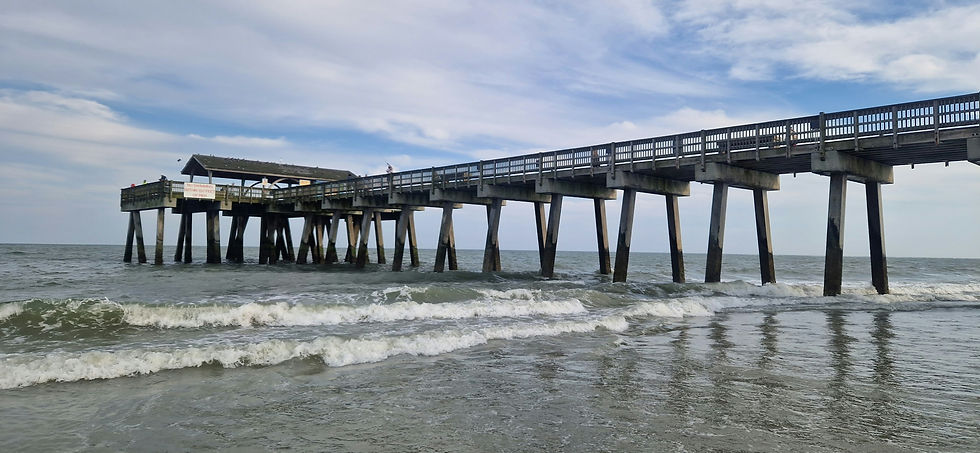
The Coastal Arc: NC, SC, GA & Florida Beaches
The Southeast's Atlantic and Gulf coastline is the highest-dollar, most professionally managed band of the entire region , and, for a marketing agency built to win independent owner-operators, the least addressable. Across the trophy coasts, professional property managers control 60-87% of supply: Perdido Key runs 87% pro-managed, Florida's Anna Maria Island 82.5%, South Carolina's Kiawah Island ~84%, the Isle of Palms ~79%, North Carolina's Bald Head Island ~80%, and Georgia's Jekyll Island ~70% (per the state Findings Summaries, sourced from AirROI/AirDNA). The coastal story is therefore a story of two coasts layered on top of each other: a manager-locked trophy tier that an agency should route around, and a thinner but real set of fragmented, independent-host slices , Vero Beach's unincorporated barrier island, Murrells Inlet, Bluffton, Beaufort, and the southern North Carolina beaches , where premium rate still meets owner-operator addressability.
The Trophy Coasts: Premium and Fragmentation Are Inversely Correlated
On the Southeast's marquee beach islands, the higher the rate, the more manager-locked the market , premium and fragmentation move in opposite directions. South Carolina's four highest-ADR markets are the clearest proof: Sullivan's Island ($850-$915 ADR, ~$91K-$97K revenue per listing) operates under a near-total STR ban dating to 2001-02; Isle of Palms ($768-$823 ADR) is ~79% professionally managed; Kiawah ($615-$651 ADR, top homes earning $162K+) is ~84% manager-locked; and Seabrook sits at ~77% (all per the South Carolina Findings Summary, AirROI). Hilton Head , ~4,500-4,700 active listings at ~61% pro-managed , tightened further in May 2026, layering on a $150/bedroom fee, an individual-name-only ownership rule barring LLCs, and fire-suppression mandates for homes 3,600+ sq ft (Avalara / Town of HHI).
Florida's Panhandle and Gulf islands repeat the pattern at scale. Panama City Beach is the deepest market in the entire Southeast, set at ~10,000-19,000 active units, yet it is ~61% pro-managed, OTA-light (only ~7% book via Airbnb), and a commoditized condo product (Florida Findings Summary). The Panhandle (Destin 67%, 30A 66%, Pensacola Beach 74%) and the Southwest Gulf islands (Sanibel 74%) round out a coast where one or two manager rosters define each market. Anna Maria Island posts the highest ADR in Florida at roughly $899 island-wide and ~$103K revenue per listing , and is 82.5% professionally managed, the structural inverse of an addressable independent market (AirROI). Georgia's Golden Isles tell the same tale: Sea Island commands the state's highest ADR at ~$1,680-$1,700 and ~$78K revenue per listing but is resort/developer-locked with only ~22 open-market listings, while St. Simons (~64% pro-managed) and Tybee (~61%) sit just behind. North Carolina's Outer Banks complete the arc , Corolla is ~60.7% professionally managed with entrenched operators (Twiddy/Village/Sun-type) each running 450-600+ homes (AirROI).
Trophy Market | State | ADR | Pro-Managed Share | Why Skip / Route Around |
Sea Island | GA | ~$1,680-$1,700 | resort-locked (~22 listings) | Single-operator; brand-halo SEO only |
Anna Maria Island | FL | ~$899 | 82.5% | Agency-saturated, not greenfield |
Sullivan's Island | SC | $850-$915 | near-total ban (2001-02) | No legal supply runway |
Isle of Palms | SC | $768-$823 | ~79% | Manager-locked |
Kiawah Island | SC | $615-$651 | ~84% | Trophy coast to route around |
Corolla (OBX) | NC | $564-$615 | ~60.7% | Twiddy/Village/Sun running 450-600+ each |
Hilton Head | SC | (premium) | ~61% | May-2026 LLC ban + per-bedroom fees |
Destin / 30A | FL | $564-$699 (30A) | 67% / 66% | Condo product, severe seasonality |
*Sources: state Findings Summaries citing AirROI / AirDNA / Avalara, TTM through May 2026.*
The Fragmented Slices: Where the Coast Becomes Winnable
The addressable coast is found in the unincorporated barrier islands, the mainland Lowcountry, and the southern beaches , markets running 8-25% pro-managed where premium rate and owner-operator ownership genuinely coexist. Vero Beach is the cleanest example in Florida and the most fragmented market in the entire state set: just 8.2% professionally managed , meaning over 90% of listings are owner-operated , yet 54.6% are Superhosts, and top-decile ADR ($505) runs 2.3x the median ($220) (AirROI, Vero Beach 2026). Long-standing barrier-island height limits keep Vero low-rise and disproportionately boutique by design, and Indian River County bed-tax collections grew to $5.57M in CY2025, up 18.9% over 2024 (Vero News, Feb 2026). The play is to target the unincorporated barrier island and screen out the City of Vero Beach's sub-30-day zoning restrictions.
South Carolina's Lowcountry mainland is the agency's purest coastal greenfield. Bluffton runs ~76% independent (24.1% pro-managed) at $338 ADR and $39,718 revenue per listing (AirROI, TTM Jun 2025-May 2026), anchored by Palmetto Bluff's Montage ultra-luxury (~200 keys on ~20,000 acres) above Old Town's historic boutique inns , and Hilton Head's May-2026 tightening is actively pushing supply across the bridge inland. Beaufort is the most fragmented coastal market in South Carolina at 16.9% pro-managed, with antebellum and Gullah-heritage inns; a new April-2026 city cap converts it into a scarcity/retention play. On the Grand Strand, Murrells Inlet is host-led and ~98% whole-home, permissive under Georgetown County, commanding $350-$410 ADR , roughly a 60% premium over neighboring Myrtle Beach , while Pawleys Island offers an independent stilt-cottage tier ($379-$442 ADR); the discipline is to target the ~46%-non-managed Pawleys side and skip the 77%-managed Litchfield resort core (South Carolina Findings Summary).
Florida's southwest Gulf adds rare scale-plus-fragmentation. Naples (unincorporated Collier / Marco Island) runs ~1,800-2,300 active listings in the core at only 22.7% professionally managed (~77% independent) , a combination of size, premium ($320-$386 ADR per AirROI/AirDNA), and fragmentation almost no trophy coast offers , with Collier County bed-tax collections hitting just under $50 million for the fiscal year ending 9/30/2025 (+13% YoY, Marco News). The caveat is to avoid the City of Naples single-family zones, where STRs are effectively banned under a 30-day minimum. Jupiter's mainland is smaller but textbook under-optimized: ~11.1% pro-managed and only 3.9% Instant Book at a $325-$357 ADR (Florida Findings Summary), within Palm Beach County, which recorded 10.6M visitors and $11.3B impact in FY24-25.
Fragmented Slice | State | ADR | Pro-Managed Share | Edge |
Vero Beach (unincorp.) | FL | $246-$285 (median $220) | 8.2% | >90% owner-operated; top-decile ADR 2.3x median |
Naples (unincorp. Collier) | FL | $320-$386 | 22.7% | Scale + premium + fragmentation |
Bluffton | SC | $338 | 24.1% | Palmetto Bluff luxury + Old Town inns |
Beaufort | SC | (heritage premium) | 16.9% | Most fragmented SC coast |
Murrells Inlet | SC | $350-$410 | host-led, ~98% whole-home | ~60% rate premium over Myrtle Beach |
St. Augustine (City) | FL | $308-$330 | ~29-39% | Year-round demand, +20% revenue growth |
*Sources: AirROI / AirDNA / state Findings Summaries, TTM through May 2026.*
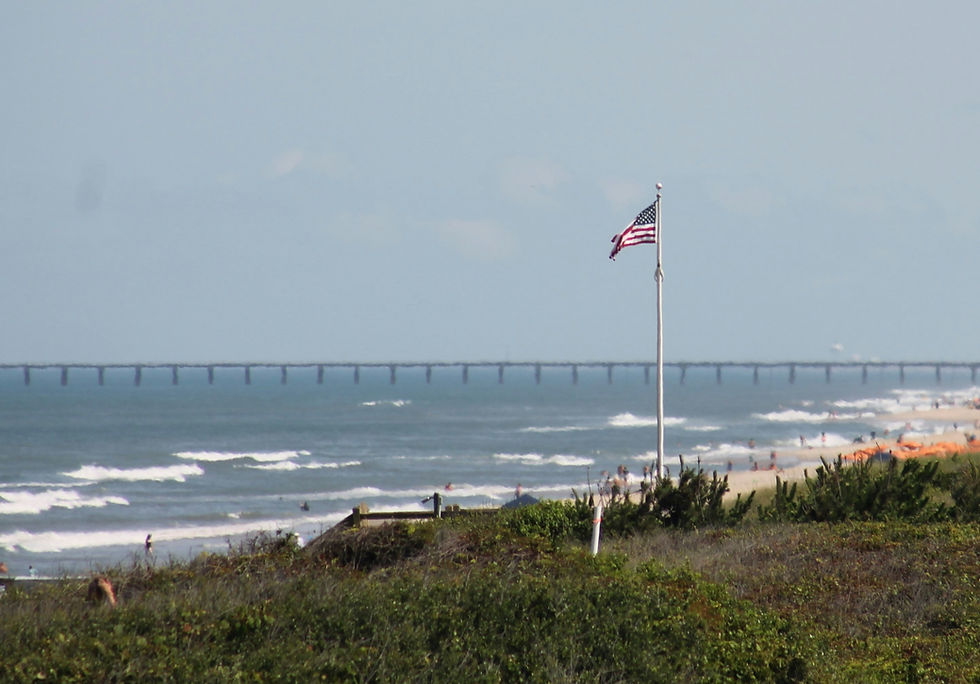
Southern Beaches and the Heritage Exception
North Carolina's southern Brunswick and Crystal Coast beaches are the East Coast's most agency-viable saltwater tier , permissive on registration, fast-growing in supply, and free of any single mega-manager. The state's enabling statute (NC GS 160D-1207, reinforced by *Schroeder v. City of Wilmington*, 2022) bars municipal STR registration, caps, and lotteries, leaving the coast effectively tax-only on compliance (a ~13% guest load: 7% sales + 6% county occupancy). Oak Island runs ~1,430+ units, permissive, with ~46% independent ownership and no dominant manager; Holden Beach ($505 ADR) and Ocean Isle Beach ($611 ADR) are permissive and growing fast (Ocean Isle supply +68.9% YoY on the Airbnb channel), generating a steady stream of new independent owners (North Carolina Findings Summary). Beaufort, NC , distinct from its South Carolina namesake , is the most fragmented coastal town in the state at ~9-22% managed, a heritage anchor for a Crystal Coast cluster, while Emerald Isle remains the deepest single-town pool (~1,400 units) but manager-leaning, so the move is to win its independent Airbnb slice rather than the whole market.
One important data correction governs all coastal sizing: Airbnb-channel managed-share understates true coastal professional management, which routes heavily through Vrbo and proprietary booking sites. Emerald Isle's apparent "~32%" managed share is really 50%+ all-channel, and Ocean Isle's "~43%" is closer to ~67% across channels (North Carolina Findings Summary). Any coastal prospecting pass must reconcile Vrbo plus Airbnb , Airbnb-only data systematically overstates how fragmented a beach market really is.
The heritage-boutique tier is the coast's one consistent brand play above commodity beach product. Augustine's historic downtown is a nationally notable concentration of small boutique inns and B&Bs (~10 true boutique-positioned properties per Airbtics), with Castillo de San Marcos and Flagler-area listings carrying the highest location premiums (+21% and +18%, Airbtics); the city runs only ~29-39% pro-managed at $308-$330 ADR with revenue up ~20.1% YoY (AirROI). Charleston, the elite outlier, posts RevPAR of ~$226-$254 and an AirDNA score of 92/100 inside a $14B, 7.9-million-visitor destination, yet stays ~59% independently managed precisely because the city's owner-occupancy mandate produces live-in hosts rather than portfolios (Charleston_Research.md, AirROI/AirDNA). Beaufort, Bluffton's Old Town, and Pawleys Island add a clustered heritage-inn book of business along the same Lowcountry corridor.
For a marketing agency, the coastal strategy writes itself from the numbers: treat Destin, 30A, the OBX premium, Kiawah, Hilton Head, Sea Island, and Anna Maria as SEO and brand-halo terms only , markets to be *cited in*, not sold into , and concentrate acquisition on the fragmented-premium slices: Naples and Vero in Florida, Bluffton, Beaufort, Murrells Inlet, and Pawleys in South Carolina, and the southern Brunswick and Crystal Coast beaches of North Carolina, where independent owners still control the listing and still need someone to fill it.

The Appalachian Spine: Mountain-Cabin Country
The Appalachian mountain-cabin belt , running from North Georgia up through Western North Carolina, East Tennessee, and the Virginia Blue Ridge and Shenandoah , is the most distinctive and most fragmented stretch of the Southeast short-term-rental map. It is overwhelmingly a whole-home cabin economy, owner-operated at roughly 80% rates across most inland towns, defined by a foliage-driven autumn peak and, in the Smokies, by the highest per-listing revenue in the region. With one consequential exception , Tennessee's Sevier County cabin-company corridor, which is roughly half professionally managed , these are independent-host markets where supply is maturing faster than demand and differentiation has become the deciding edge.
The Landscape: A Cabin-Dominant, Independent-Host Spine
The defining structural fact of the Appalachian spine is that independent hosts control the supply almost everywhere except the Smokies. In Western North Carolina, professional management runs just ~19.9% in Asheville and ~20.4% in Hendersonville (both roughly 80% owner- or self-managed), with the largest single Asheville manager holding only ~106 listings (AirROI/AirDNA). North Georgia's Dahlonega sits at only ~19.3% pro-managed (~80% independent), and Tennessee's fragmented metros run further still , Knoxville at ~11.6% pro-managed (~88% self-managed) and Chattanooga at ~19.4% pro-managed (~80% independent) (AirROI). Virginia is the most fragmented of all: Charlottesville is ~17.3% pro-managed (≈83% independent), Luray/Page County is ~82% self-managed, and Middleburg posts a literal 0.0% professional management (AirROI). The product is cabins, not condos or boutique hotels: Georgia's Blue Ridge is 99% entire-home and 82.9% classified "outdoor/unique" cabins, 53.8% sleeping eight or more (Georgia Findings Summary), and Tennessee's Smokies stock is 91-99% entire-home with "group cabin" capacity (8+ guests) at ~48-57% of supply.
Market | Active STR pool | Whole-home ADR | Pro-managed share | Superhost | Source |
Sevierville, TN | ~6,900 town / ~13,300+ corridor | $375-$398 | ~49.2% | 63.4% | IMEG / AirROI |
Gatlinburg, TN | ~3,800 city / ~6,900 corridor | $260-$375 | ~50% | 57.8% | AirROI / StaySTRA |
Blue Ridge, GA | ~1,300-1,450 | $263-$379 | 47.3% | 70.2% | AirROI / Chalet |
Asheville, NC | ~1,800 core / ~3,000 metro | $225-$256 | ~19.9% | 76.5% | AirROI / AirDNA |
Dahlonega, GA | n/a (see note) | $306 AirROI Dahlonega typical ADR , leftover $297-$310 is not the year. Typical year is $39,962 at 40.1% | ~19.3% | 79.5% | AirROI / AirDNA |
Hendersonville, NC | ~940-970 corridor | ~$205 | 20.4% | 67.9% | AirROI / Rabbu |
Highlands/Cashiers, NC | (mountain ADR ceiling) | $429-$494 | , | , | AirDNA |
Charlottesville, VA | ~1,160 metro / 610-660 core | $270-$311 | ~17.3% | ~70.1% | AirROI / AirDNA |
*Note: The Georgia digest does not report an active-listing count for Dahlonega; AirDNA assigns it a Market Score of 94 (a composite investability metric, not a measure of market size).*
The Smokies Colossus: Highest Revenue, Lowest Fit
Tennessee's Great Smoky Mountains corridor is the national-park cabin colossus of the entire Southeast, and it is a genuine paradox. Sevier County alone holds 25,000+ active short-term rentals and 6,500+ permitted units (IMEG, 2025) , roughly ten times the next-largest Tennessee market , anchored by the most-visited U.S. national park, which drew ~12.2 million visits in 2024 and 11.5 million in 2025 (WBIR/NPS). Sevierville posts the corridor's top per-listing revenue, ranging from $54,600 (IMEG) to $56,523 (AirROI), and revenue scales steeply with size: Gatlinburg's 6+ bedroom cabins average ~$141,990 a year, nearly five times the smallest units (Rabbu). Yet this is the spine's least addressable slice for an independent-host marketing strategy. Sevierville is ~49.2% professionally managed and Gatlinburg ~50% (StaySTRA), with Pigeon Forge near ~51% and Wears Valley ~50.5% , cabin-management companies, not owners, run roughly half the inventory. The corridor is also absorbing a heavy new-host wave: Sevierville town supply grew +44.5% year over year and Gatlinburg +17.7% to +43.1% (depending on provider), pushing occupancy down ~4.5% in Gatlinburg even as the towns added inventory.
The independent counterweight sits in the quieter "Peaceful Side of the Smokies." Townsend is a premium ~459-unit cove market that is 57.5% independent, with a farm-resort and glamping niche, while Wears Valley's top-decile cabins clear $571+ at ~57% independent ownership. Townsend is also a timing play: the town floated a recommended six-month moratorium on new permits in March 2026, a reason for any independent operator there to professionalize ahead of a freeze.
North Georgia: The Cabin Belt and Its Supply Squeeze
North Georgia is the Southeast's most mature mountain-cabin belt, and Blue Ridge is its flagship , the biggest mountain pool in the state at ~1,300-1,450 listings, 47.3% pro-managed, with location premia for Lake Blue Ridge (+28%) and the Scenic Railway corridor (+12%) (AirROI). But Blue Ridge also illustrates the spine-wide squeeze with unusual clarity: supply grew by +36.5% in a single year, while revenue grew only +15.0%, dragging occupancy down by ~3.4% (AirROI/Chalet). When inventory outpaces demand by that margin, undifferentiated cabins compete on price and differentiation becomes the only durable lever.
Dahlonega is the more agency-shaped North Georgia market , ~80% independent, an AirDNA Market Score of 94, and a genuine experiential tier as the self-styled "Wine Tasting Room Capital of Georgia" (eight estate wineries and twelve downtown tasting rooms in the Dahlonega Plateau AVA). Its host base is high-quality but under-optimized: 79.5% Superhost, a 4.92/5 average rating, 70.1% Guest Favorite, yet only ~9.7% on Instant Book (AirROI). Helen , Georgia's #3 most-visited city at ~1.5 million annual visitors , runs ~44-49% pro-managed with an under-built boutique, wine, and spa tier, while Ellijay's January 2026 full STR-license enforcement ($900 unlicensed fine, $250 per ad, inspections) turns compliance into a service hook in a fragmented ~39%-managed cabin-and-apple-country market.
Western North Carolina: Fragmented, Permissive, and Helene-Distorted
Western North Carolina is the purest expression of the fragmented-premium thesis on the spine , and the one most distorted by a single weather event. Hendersonville/Flat Rock is the textbook fit: ~80% independent (20.4% pro-managed), the most permissive WNC regulations, ~940-970 corridor units, and the distinction of being one of only three WNC counties to grow visitor spending through Hurricane Helene (Henderson County tourism impact ~$325M in 2024, per Visit NC/Tourism Economics). Asheville is the largest inland market (~1,800 city-core / ~3,000 metro listings) and ~80% independent at 76.5% Superhost, but it is a differentiation play rather than a volume one: the city banned new whole-home STRs in 2018 through zoning (homestays only, fines up to $500/day), pushing rentable whole-home inventory into unincorporated Buncombe County. Highlands/Cashiers carries the mountain ADR ceiling at $429-$494, with Highlands itself facing a September 2027 amortization that argues for working Cashiers instead.
Every WNC number carries an asterisk. Hurricane Helene (September 27, 2024) cut Buncombe vacation-rental revenue by ~32% in the storm year; Black Mountain's downtown revenues were still down 60-70% a year later; and Lake Lure was literally drained for ~18 months before reopening on May 16, 2026. AirROI Asheville typical year is $32,976 at 42.0% , leftover $33,338 is not the year, up 31.1% year over year (AirROI), is a recovery from a trough, not organic growth , a distinction that matters enormously when setting client expectations.
Virginia's Blue Ridge & Shenandoah: Near-Greenfield Premium
The Virginia segment of the spine is essentially net-new and the most premium-tilted, with a high-ADR, moderate-occupancy signature. Luray/Page County is branded "Virginia's Cabin Capital," ~82% self-managed, with 52.8% of supply in unique/outdoor stays and ~$40,000-$45,000 per door, despite permissive county regulation, and demand outpacing supply (+14.5% revenue) , thesis-perfect cabins. Roanoke is a four-season Blue Ridge metro with 19.5% pro-managed and 70.5% Superhost, a striking automation gap (only 4% Instant Book), and a shrinking regional hotel base , Roanoke lost 600+ rooms , that funnels overflow demand into STRs (Cardinal News/AirROI). Wintergreen inverts the calendar with a winter ski peak that smooths seasonality. And Middleburg is the purest single expression of fragmented-premium anywhere on the spine: 0.0% pro-managed, $520-$632 ADR, 70.7% Superhost, a 4.95 average rating, anchored by a Forbes Five-Star resort and a 1728 inn billed as America's oldest, sitting inside Loudoun , Virginia's #1 tourism-spending county at $4.9 billion in 2024 (AirROI/WTOP/Visit Loudoun).
Foliage-Peak Seasonality and the Marketing Edge
Seasonality is the trait that binds the entire spine: this is October-peak country, where autumn foliage drives the highest-demand weeks of the year and where lower structural occupancy (WNC ~38-56%, North Georgia ~33-47%, Virginia mid-30s to low-50s) reflects a high-ADR rather than a high-utilization model. That profile, combined with ~80% independent ownership and supply growth consistently outpacing revenue, is precisely the environment in which professional marketing determines outcomes. When Blue Ridge adds inventory at +36.5% against +15% revenue, when Dahlonega's 79.5%-Superhost hosts still sit at ~9.7% Instant Book, and when Roanoke's owners run just 4% automation, the fragmented, high-quality, under-optimized independent operator is the defining customer of the Appalachian spine , and direct-booking SEO, listing differentiation, and shoulder-season demand generation are the levers that separate a full October from a full year.

Lakes & Inland Water: the Drive-To Reservoir Economy
The Southeast's short-term-rental reservoir economy is a fragmented, dock-driven, drive-to vacation-home market where independent hosts control roughly 80-93% of the supply, and a private dock on deep water is the single biggest ADR multiplier. Nearly every major lake in the region is a man-made impoundment, and the product is a whole-home lake house rented overwhelmingly to families driving in from Atlanta, Nashville, Charlotte, Birmingham, Washington, or Little Rock. The calendar is sharply summer-weighted, the supply is owner-operated, and the premium tier , 4- to 6-bedroom homes with a private dock, hot tub, and deep-water access , sits far above the market mean. This is the purest expression of the fragmented-premium thesis in the entire portfolio.
The Lakes Out-Rate the Coast , and Stay Independent
On the Southeast's clear-water and deep-water reservoirs, lakefront ADRs routinely match or beat the trophy beach coasts while professional-management penetration stays under 25%. Georgia's Lake Oconee, on the Greensboro/Reynolds side, posts an ADR of $656.60 (up to $719 per property) with a $218.30 RevPAR , the highest non-coastal ADR in Georgia (only Sea Island's resort-locked coast runs higher) , yet it is fully fragmented: the largest manager, Evolve, holds just 7 listings in Greensboro and roughly 23 (~5.4% share) in Eatonton (AirDNA Market Minder). Alabama tells the same story even more starkly: Smith Lake's Arley tier commands a $665 ADR (Rabbu) , about 2.7x the Alabama STR state average of $247 , and Lake Martin's Eclectic submarket runs $462 (AirROI), both beating Gulf Shores and Orange Beach (~$340-$420) while the lakes run 80-93% independent against a 58-74% manager-locked coast.
The fragmentation numbers are the headline. Lake Wedowee, Alabama, is the near-prototype and the documented ceiling: ~7.1% professionally managed, meaning roughly 93% of hosts are independent (AirDNA), with Superhost at 53.6% and Instant Book at just 3.6%. Georgia's Lake Lanier runs ~91% independent (~9% pro-managed, AirROI), Lake Keowee in South Carolina ~81% (19.2% pro-managed, AirROI), and Virginia's Lake Anna ~80% (19.5% pro-managed, AirROI). In Tennessee, the Douglas/Dandridge corridor runs ~70% independent (per the TN digest), while Norris Lake is described only as fragmented (no clean pro-managed share). No single property manager controls any of these markets , the structural opposite of the condo coasts.
Lake | State | Dam authority (external context) | Waterfront ADR | Pro-managed | Per-door revenue |
Lake Oconee (Greensboro) | GA | (Georgia Power , external) | $657-$719 | ~5% (Evolve) | high inland-luxury |
Lake Lanier | GA | (USACE , external) | not in digest | ~9% | not in digest |
Lake Hartwell | GA/SC | (USACE , external) | not in digest | ~19% (Hartwell GA) | not in digest |
Smith Lake (Crane Hill) | AL | (Alabama Power , external) | $443-$665 | data gap (Cullman city ~11%) | Arley tier ~$50K (Rabbu) |
Lake Martin (Eclectic) | AL | (Alabama Power / Russell Lands , external) | $401-$462 | 14-24% | ~$33K-$43K |
Lake Wedowee | AL | (Alabama Power , external) | $280-$311 ($428+ top decile) | ~7.1% | ~$22K-$28K |
Lake Keowee (Seneca) | SC | (Duke Energy , external) | $248-$444 | 19.2% | ~$43K |
Lake Murray | SC | (utility-controlled , external) | dock homes, ~$42K Chapin | 12.2% | ~$42K Chapin lakefront |
Smith Mountain Lake (Penhook) | VA | (Appalachian Power/AEP , external) | $443-$787 | low/data-gap | ~$77K-$140K |
Lake Anna | VA | (utility-controlled , external) | $501-$530 | 19.5% | ~$55K ($200K-$300K+ trophy) |
Norris Lake | TN | (TVA , external) | $300-$400 | data gap (fragmented) | $35K-$70K lakefront |
Lake Cumberland (Somerset) | KY | (USACE , external) | $201-$232 | data-gap | ~$41K |
Hot Springs Tri-Lakes (Hamilton/Catherine/Ouachita) | AR | (utility/USACE , external) | $300-$525+ docks | low | rate-over-occupancy |
Bull Shoals | AR | (USACE , external) | $153-$266 belt | low | rate-over-occupancy (27.5% occ) |
Dock-and-Deep-Water: the Premium Multiplier
A private, permitted dock on deep water is the defining ADR lever in the reservoir economy , the difference between a low-$20Ks-a-year near-lake cabin and a $77K-to-$140K trophy lake house. Virginia's two luxury lakes are the clearest demonstration: Smith Mountain Lake's Penhook submarket , where 52% of listings are 5+ bedrooms , averages a $786.80 ADR and roughly $140K per available listing per year (AirDNA), while the Moneta anchor runs $461.50 ADR and ~$77K/door. Lake Anna's whole-home waterfront averages 6.8 bedrooms, with 80.1% sleeping 8+, a $501-$530 ADR, and trophy homes grossing $200K-$300K+ a year (AirROI/AirDNA). These are Tahoe- and Big-Sky-tier per-door economics on independently owned, frequently Vrbo-listed homes , a rare pairing of luxury yield and fragmentation.
The same dock premium recurs everywhere. On Smith Lake, marketed as a top-3-cleanest U.S. lake, the median lakehouse runs ~$1.19M, and "Sleeps 22/38" group homes are the premium product in a market with essentially no hotels , the STR *is* the lodging economy. Tennessee's Norris Lake adds a niche unique to TVA reservoirs: the multi-bedroom floating home/houseboat, with lakefront revenue running $35K-$70K. And Kentucky's Lake Cumberland claims the rarest inventory class in U.S. lodging , 1,500+ rental houseboats, the largest rental fleet in the country ("Houseboat Capital of the World"), drawing ~4.89 million annual visitors, more than Yellowstone's 2.87M.
Shoreline Ownership: a Real but Externally-Sourced Variable
One consequential variable in reservoir STR is who owns the shoreline, because dock permits are issued by the dam authority, not the county. The research digests do not assign specific authorities to specific lakes , that mapping is general/external knowledge , but the broad pattern is worth flagging as context to verify parcel by parcel:
TheU.S. Army Corps of Engineersis generally associated with lakes such as Lanier, Hartwell, Barkley, and Cumberland, as well as Arkansas's Ouachita, Greers Ferry, and Bull Shoals.
TheTennessee Valley Authorityis generally associated with Norris Lake and the Kentucky Lake/Barkley corridor.
Investor-owned utilitiesare generally associated with the clear-water premium tier , Duke Energy with Lake Keowee, Appalachian Power/AEP with Smith Mountain Lake, and Alabama Power with Smith Lake, Lake Martin, and Lake Wedowee.
What the digests *do* support: on Lake Martin, the digest describes Russell Lands as a single master developer running the Russell Crossroads village (Spring House fine dining) and notes a new 86-room on-lake Spring Hill Suites , a premiumization signal but also a concentration of premium shoreline in a single entity. And Georgia Power's lease-lot regime on Lake Burton/Rabun is the cautionary exception the GA digest flags: rentals are effectively banned on its lease lots, suppressing what would otherwise be Georgia's deepest, most distinctive lakefront tier in the Clayton/Rabun cluster. Drawdown and lake-level swings are also real demand variables , winter pool drawdown and drought years compress the lakefront STR calendar directly, reinforcing the inherent summer concentration , though specific lake-level elasticity studies are outside the research base.
Sharp Seasonality and Local-Patchwork Permitting
Reservoir STR is a rate-over-occupancy, summer-spike business, and 27-40% annual occupancy is normal , not a red flag. Arkansas's Ozark/Ouachita lakes illustrate the floor: Bull Shoals runs at 27.5% occupancy, Lake Ouachita at 27.7%, Greers Ferry at 28-38%, with sticky $153-$266 ADRs and roughly 3x summer revenue swings (AirROI/AirDNA). The Alabama and Virginia lakes cluster at 29-48% (Smith Lake/Crane Hill 39%, Lake Anna ~34-44%, Smith Mountain Lake 42-48%). The exceptions that earn a winter floor are the trout tailwaters (Norris, Mountain Home/Bull Shoals) and the diversified plateau markets like Crossville, where golf, lake, and retiree demand soften the peak.
Regulation, by contrast, is overwhelmingly permissive and almost entirely local , there is no statewide STR regime in any of these seven states. The binding constraints are jurisdictional patchworks: on Lake Lanier, the GA digest notes a "Forsyth regulatory moat" that protects supply, with the Hall side running ~91% independent. Lake Anna's true cap is septic/VDH capacity, not zoning. Lake Keowee's chief friction is private HOA covenants in gated golf communities requiring 30+ day minimums, pushing the addressable universe toward unrestricted Salem/Sunset and open-shoreline parcels. Tennessee's 2018 Short-Term Rental Unit Act makes Norris one of the lowest-regulatory-risk markets in the portfolio, and Bedford County's Smith Mountain Lake north shore runs a light ~$50/yr registration with a 7% TOT. The recurring pattern: a friendly core county sits next to a restrictive one, and an agency that can speak fluently to dock permits, HOA covenants, and county-line compliance differentiates immediately.
Where the Opportunity Concentrates
The strongest reservoir targets pair genuine luxury yield with deep fragmentation and a friendly core jurisdiction. Tier-one inland lakes includeLake Oconee($657-$719 ADR, ~5% manager share, the only lakefront Ritz-Carlton in the U.S.),Lake Lanier(~91% independent, Hall-side estates protected by Forsyth's regulatory moat),Smith Mountain LakeandLake Anna(Tahoe-tier $75K-$140K-per-door economics at ~80% independent),Smith LakeandLake Martinin Alabama,Lake Wedowee(the ~93%-independent prototype, run as an East-Alabama cluster), andLake Keowee(~81% independent against "destination of a lifetime" Jocassee scenery). Tier-two beachheads ,Lake Murray,Norris Lake,Douglas/Dandridge,Cadiz/Grand Riverson Kentucky Lake/Barkley, and the trout-belt lakes aroundMountain Home, Arkansas, round out a pipeline defined by one consistent truth: across markets we work's drive-to reservoirs, the dock-and-deep-water premium is real, the owners are independent, and the marketing layer is wide open.

Heritage, Bourbon, Wine & the Small-City South
The Southeast's heritage, bourbon, and wine corridor is the most fragmented premium short-term-rental tier in the United States, with independent hosts controlling roughly 66-100% of supply across its cultural anchor towns , from Bardstown's bourbon-estate homes (near-zero manager penetration) to Natchez's antebellum B&Bs (~80% independent) to Middleburg's Forbes Five-Star horse country (0.0% professionally managed). Unlike the manager-locked trophy coasts, this is a "book of business" market: small, distinctive, owner-operated properties whose story , not their square footage , is the asset, and whose owners almost never have a marketing partner.
Kentucky's Bourbon Trail and Bluegrass Are a Greenfield Premium Cluster
Kentucky pairs two premium engines no other Southeast state combines: a bourbon-and-Bluegrass heritage belt and the deepest experiential-cabin inventory in the region. The bourbon demand pool is large and affluent , the Kentucky Bourbon Trail drew 2.7 million visitors in 2024, 62% with household incomes over $100K, 76% from out of state, staying 3-5 days and spending $600-$1,400 per trip (Kentucky Bourbon Trail). Statewide tourism set a record at $14.6 billion / 81.1 million visitors in 2025 (Spectrum News 1, June 2026).
Bardstown is the heritage-premium flagship: antebellum boutique inns (Federal and Greek-Revival mansions c.1795-1823) and bourbon-estate group homes earning a ~$269 ADR mean (AirDNA) against an AirDNA Market Score of 96/100, with near-zero manager penetration. Versailles and Woodford County post the highest sustained ADR in the state at $352-$356 entire-home (AirDNA/AirROI) , a castle boutique hotel, Select-Registry historic B&Bs, and horse-farm guesthouses , yet remain ~66% independent (Versailles ~33.8% professionally managed; neighboring Midway just 4.5%, per AirROI). Frankfort adds an unusually durable, low-seasonality premium ($266 ADR, 92% entire-home) on the back of Buffalo Trace allocation pulses and state-capital demand. The one caveat to underwrite: Bardstown's March 2024 moratorium on new in-city conditional-use permits and Woodford's Ordinance 2025-03, which makes rural farm STRs conditional-use rather than by-right.
Virginia and Georgia Wine Country Are Fragmented-Premium by Design
Virginia and Georgia wine country combine genuine vineyard-estate inventory with near-total independent ownership. Charlottesville/Albemarle is authentic Piedmont wine country , the Monticello AVA carries ~33 member wineries , and the market runs ~83% independent (only ~17.3% professionally managed, largest single manager under 5% share), at a $270-$311 ADR inside a $989.8M regional visitor economy (AirROI/Visit Charlottesville). Middleburg, an hour north in DC horse-and-wine country, is the purest expression of the fragmented-premium thesis anywhere in the dataset:0.0% professionally managed, 70.7% Superhost, a 4.95 average rating, $520-$632 ADR , anchored by a 168-room Forbes Five-Star resort, a 22-room inn established in 1728 (billed the oldest continually operated inn in the U.S.), and an 18-room country-estate boutique inn , all sitting in Loudoun County, Virginia's #1 tourism-spending locality at $4.9 billion in 2024 (AirROI; WTOP/Visit Loudoun).
Georgia's answer is Dahlonega, the self-styled "Wine Tasting Room Capital of Georgia" (8 estate wineries + 12 downtown tasting rooms across the Dahlonega Plateau AVA). It is ~80% independent (only ~19.3% professionally managed), carries an AirDNA Market Score of 94, and posts a 79.5% Superhost rate, a 4.92 average rating, and only ~9.7% Instant Book adoption , a textbook under-optimized owner base on durable Atlanta drive demand (AirROI/AirDNA). The supply mix is vineyard resort rooms, treehouses, spa stays, and an organized Inns of Dahlonega B&B association with properties dating to the 1840s-50s.
Mississippi and Arkansas Carry the Deepest Heritage and Unique Stay Stories
Mississippi and Arkansas hold the region's most distinctive heritage and experiential inventory, even where raw volume is thin. Natchez bills itself the "Bed & Breakfast Capital of the South" , 40+ antebellum and Victorian B&Bs, a 90-plus-year Spring/Fall Pilgrimage brand (since 1932) that literally sells "stay in a mansion" (Longwood, Stanton Hall, Dunleith), and ~80% independent hosts at 62.6% Superhost (AirROI). It is a structurally rare U.S. market in which boutique heritage sits at the *top* of the lodging pyramid, and casino-hotels are negligible. Oxford is Mississippi's #1 market by both volume (~1,073-1,982 listings) and ADR ($575-$660), 92% independent, where a 2BR walkable to the Square commanded ~$4,500/night for the Alabama football game and Ole Miss home football drove a record $411.7M in visitor spending in the 2025 regular season alone (AirROI/Ole Miss News). The Delta blues belt , Clarksdale's sharecropper-shack inns and blues hostel, Greenwood's AAA Four-Diamond Alluvian plus Tallahatchie Flats cabins , is, in the data's phrasing, "content gold, commission-thin."
Arkansas's headline is Eureka Springs, a nationally rare treehouse resort + Victorian B&B + luxury cabin trifecta. The Greater Eureka Springs Chamber directory lists 17 hotels/motels against 12 Victorian B&Bs and 51 cabins/cottages/suites , roughly 80% of branded lodging is boutique or independent , with premium operators earning $40K-$60K+ per door inside a $348.2M Carroll County visitor economy (Chamber directory; ADPHT 2024). Bentonville rounds out the state's design-and-bike experiential tier: ~25.1% professionally managed, 80.9% Superhost, by-right regulation, and Crystal Bridges + Walmart corporate demand driving >$1.2 billion in Benton County visitor spending in 2024 (AirROI; Travel & Tour World).

College Towns and SEC Football Are an Event-Revenue Sub-Market
College towns in the heritage South are high-ADR, low-base-occupancy markets whose economics concentrate into a handful of fall weekends. The pattern repeats across the dataset: Oxford runs ~27% base occupancy but a $575-$660 ADR; Fayetteville posts a $240-$280 ADR (peaking ~$284 in October on Razorback football) but hit its 475-license Type-2 cap in December 2023; Aiken's calendar is gated by Masters week (5-night stays ~$6,744); Starkville and Lexington (Keeneland, the Breeders' Cup, Derby overflow) carry the same single-peak signature. These are not volume plays , they are revenue-concentration plays where dynamic pricing around 6-8 weekends, not occupancy, decides the year.
The Heritage/Wine/Bourbon Markets at a Glance
Market | State | ADR | % Pro-Managed | Defining unique-stay tier | Source |
Middleburg | VA | $520-$632 | 0.0% | Forbes Five-Star resort, 1728 inn, estate B&Bs | AirROI/AirDNA |
Versailles/Woodford | KY | $352-$356 | ~33.8% | Castle hotel, Select-Registry B&Bs, horse farms | AirROI/AirDNA |
Charlottesville | VA | $270-$311 | ~17.3% | Monticello AVA vineyard estates | AirROI |
Bardstown | KY | ~$269 | low (not quantified) | Antebellum inns, bourbon-estate homes | AirDNA/Rabbu |
Dahlonega | GA | $297-$310 | ~19.3% | Wine resort, treehouses, 1840s B&Bs | AirROI/AirDNA |
Eureka Springs | AR | ~$196-$216 | low | Treehouses, Victorian B&Bs, cabins | AirDNA/AirROI |
Natchez | MS | $205-$221 | ~20.7% | 40+ antebellum mansion B&Bs | AirROI/AirDNA |
Bentonville | AR | ~$203-$233 | ~25.1% | Design/bike experiential urban homes | AirROI |
Oxford | MS | $575-$660 | ~7.7% | Literary boutique (Graduate, Oliver) | AirROI/AirDNA |
Regulation Protects Incumbents More Than It Threatens Them
Across the heritage South, restrictive city cores function as de facto supply caps, strengthening the pricing power of grandfathered and permitted operators. Eureka Springs' 2022 residential STR ban left only ~two dozen grandfathered residential permits, paradoxically protecting incumbent rates; Hot Springs city runs a 700-unit residential cap; Fayetteville's 475-license cap is already full; Natchez layers a 3% convention tax plus a $2/day occupancy fee; and Mississippi's emerging local-manager mandates (Columbus's Lowndes-resident requirement, Ocean Springs' 115-permit residential cap) actively favor a professionalized partner over a casual absentee host. Kentucky and the wine counties stay broadly register-and-go permissive , Kentucky's bourbon and lake markets score 55-84 on AirDNA's regulation scale , while the binding constraint at Versailles/Woodford and Bardstown is conditional-use permitting on new rural builds, not a usage ban. The recurring move is the same one Charlottesville forces: city owner-occupancy and night caps push the premium whole-home play out to the surrounding county ring.
The Boutique-Inn "Book of Business" Opportunity
The defining commercial opening in the heritage South is a portfolio of small, story-rich, owner-operated boutique inns and B&Bs that almost none of these markets' agencies have consolidated. Natchez alone offers 40+ antebellum B&Bs; Eureka Springs lists 12 Victorian B&Bs and 51 cabins; Dahlonega has an organized Inns of Dahlonega association; Middleburg packs ~210-220 luxury keys into a market with zero professional management.
These properties share a profile tailor-made for a marketing-first agency: high ADR, distinctive inventory, strong Superhost ratings (62-80% across these towns), and conspicuously low optimization (Dahlonega ~9.7% Instant Book, Roanoke ~4% , automation and direct-booking gaps an agency closes immediately). Layered on top is genuine experiential greenfield , Red River Gorge's treehouses, yurts, and domes (~691 fragmented listings, no chain-hotel competition, where Rogers, KY ranked the 8th-best mountain STR market in the U.S. at ~$49K average annual revenue per AirDNA), Lake Cumberland's 1,500+ rental houseboats (the largest such fleet in the country), and Mentone and Mountain View glamping. For an agency built on storytelling, the heritage, bourbon, and wine South is not a scale play , it is the richest roster of brandable, independently owned, premium-by-narrative properties in the entire Southeast.

The Fragmentation Thesis: Why the Southeast Is an Independent-Host Market
The Southeast is the most fragmented short-term-rental region in the United States: across its mountain, lake, and heritage markets, independent owner-operators typically control ~75-95% of supply in the core fragmented markets (with some, like Blue Ridge, running lower), while the institutionally consolidated trophy coasts that dominate the popular imagination of vacation rentals are the exception, not the rule. This is the single most important structural fact about the region's STR economy, and it is the foundation of everything Crest & Cove Creative does. In a fragmented market, no dominant property manager owns the search results, the direct-booking funnel, or the guest relationship , which means visibility is winnable, and a marketing partner, not a management takeover, is the highest-leverage way for an independent host to compete.
The data: inland markets run 75-95% independent, the trophy coasts 60-87% manager-locked
The fragmentation pattern is consistent and measurable across all ten states in this study. The interior mountains, lakes, and heritage towns are overwhelmingly owner-operated, while a thin band of consolidated coastal condo markets is run by a handful of large managers. The contrast is stark enough to organize the entire region around it.
Market | State | % Professionally Managed | % Independent | Source |
Middleburg | VA | 0.0% | ~100% | AirROI |
Conway | AR | 2.4% | ~98% | AirROI |
Lake Wedowee | AL | ~7.1% | ~93% | AirDNA |
Augusta | GA | ~6% | ~94% | Georgia Findings Summary (AirROI) |
Columbia | SC | 6.7% | ~93% | AirROI |
Vero Beach | FL | 8.2% | ~92% | AirROI |
Lake Lanier | GA | ~9% | ~91% | AirROI/AirDNA |
Knoxville | TN | ~11.6% | ~88% | AirROI |
Charlottesville | VA | ~17.3% | ~83% | AirROI/AirDNA |
Lake Keowee | SC | 19.2% | ~81% | AirROI |
Dahlonega | GA | ~19.3% | ~80% | AirROI/AirDNA |
Hendersonville | NC | 20.4% | ~80% | AirROI |
Panama City Beach | FL | ~61% | ~39% | Florida Findings Summary |
Hilton Head Island | SC | ~61% | ~39% | Findings Summary (AirROI) |
Orange Beach | AL | ~74% | ~26% | Alabama Findings Summary |
Anna Maria Island | FL | 82.5% | ~17.5% | AirROI |
Kiawah Island | SC | ~84% | ~16% | AirROI |
The dividing line is not state borders , it is the geography of product type. Whole-home cabins, lakefront houses, and heritage inns are owned by the people who use them and rent them part of the year; high-rise beach condos are bought as yield instruments and handed to managers running hundreds or thousands of units. In Florida, Perdido Key managers control 87% of supply while Vero Beach sits at just 8.2% (Florida Findings Summary; AirROI). In South Carolina, Kiawah Island runs ~84% professionally managed while Columbia, Summerville (~5%), Greenville (~8%), Camden (7.8%), and Aiken (6-10%) sit at the opposite extreme. In Alabama, Gulf Shores and Orange Beach are 58% and 74% manager-run, respectively, while Lake Wedowee is ~93% independent (AirDNA), and the Lake Martin towns are 76-86% owner-operated (AirROI).
Fragmentation is not the same as small: the independent markets carry real ADR
Fragmentation correlates with opportunity, not with weakness. The Southeast's independent-host markets are not low-dollar afterthoughts , many out-earn the consolidated coasts on a nightly rate basis. Lake Oconee, Georgia, is fully fragmented (its largest manager controls roughly 5% of listings) yet commands $650-720 ADR on the Greensboro/Reynolds side (AirDNA), out-pricing every North Georgia mountain market and anchored by the only lakefront Ritz-Carlton in the United States (Georgia Findings Summary). Smith Mountain Lake and Lake Anna in Virginia post Tahoe-tier per-door economics , $75K-$140K on typical waterfront, $200K-$300K+ on trophy homes , while remaining ~80% independent and Vrbo-dominated (AirROI/AirDNA; the independent share is firm for Lake Anna at 19.5% pro-managed, while Smith Mountain Lake's pro-managed share is a flagged data gap in the source). Charleston posts an AirDNA market score of 92/100 and a RevPAR of ~$226-$254 within a $14B visitor economy, yet remains ~59% independently managed because the city's owner-occupancy mandate produces live-in hosts rather than portfolios (AirROI; Explore Charleston). Even in Alabama, the clear-water lakes out-rate the beach: Smith Lake's Arley tier reaches $665 ADR (Rabbu), and Lake Martin's Eclectic submarket $462 (AirROI) , both above Gulf Shores and Orange Beach at ~$340-$420 , and the lakes generally run 80-93% independent.
The defining product across these markets is the whole-home, large-group, distinctive stay , the kind a manager-run condo block cannot replicate and an algorithm cannot commoditize. Tennessee's Smokies and lake markets are 91-99% entire-home cabin stock, with 6+BR Gatlinburg cabins averaging ~$141,990 a year (Rabbu). Kentucky's Red River Gorge is arguably the deepest experiential-cabin inventory in the entire portfolio , treehouses, yurts, domes, and cliff-line lodges where Rogers, KY was ranked the 8th-best mountain STR market in the U.S. by AirDNA (via WHAS11/Business Wire). North Carolina's Highlands-Cashiers, Virginia's Middleburg (a Forbes Five-Star resort plus a 1728 inn billed as America's oldest), and Mississippi's Natchez (the self-styled "Bed & Breakfast Capital of the South," 40+ antebellum B&Bs, ~80% independent) round out a deep, differentiated, owner-held premium tier.
Why fragmentation equals opportunity , for the host and for the marketer
In a fragmented market, no dominant manager owns the search results, so visibility is winnable. This is the operative mechanism of the entire thesis. On a manager-locked coast, a single firm runs 450-600+ homes (the pattern on the Outer Banks, where Corolla is ~61% professionally managed and individual managers like Twiddy and Village each run hundreds of properties), and that firm's brand, direct-booking site, and SEO footprint absorb the bulk of organic demand. An independent owner trying to break in is competing against an incumbent with structural marketing scale advantages. There is no comparable incumbent in Dahlonega, Lake Keowee, Smith Mountain Lake, or Red River Gorge. The largest manager in the ~2,400-listing Hot Springs, Arkansas market holds just ~6% of supply (AirROI/AirDNA); in Asheville, the biggest single manager holds only ~106 of roughly 1,800 city-core listings (AirROI/AirDNA); the two largest managers in Red River Gorge's 691-listing pool together control only ~26% (AirROI/Airbtics). The search-results page in these towns is genuinely open territory.
That openness is compounded by a second, recurring signal: the independents in these markets are demonstrably under-optimized, even as they earn strong reviews. The fingerprint shows up again and again in the data , high Superhost rates paired with near-zero automation and conversion infrastructure. Naples runs 54.2% Superhost but only 9.1% Instant Book (AirROI). Jupiter is ~11.1% professionally managed with just 3.9% Instant Book , textbook under-optimized independents on premium product (AirROI). Roanoke posts a 70.5% Superhost rate but only 4% Instant Book, an automation gap that is itself the agency's edge (Virginia Findings Summary). Dahlonega: 79.5% Superhost, 4.92 average rating, but only ~9.7% Instant Book (AirROI). These are excellent hosts running excellent properties without the marketing, distribution, and direct-booking machinery that a professional partner brings , the exact gap between a five-star review and a fully booked calendar.
The supply dynamics make the timing acute. Independent markets across the region are absorbing fast-growing new-host cohorts that need help the moment they list: Sevierville's town supply grew +44.5% year over year (AirROI), Lake Keowee +48.2% (AirROI), Blue Ridge +36.5% against only +15% revenue growth (AirROI/Chalet), Bluffton +26.6% (AirROI). When supply outruns revenue, occupancy and rate compress, and undifferentiated listings are the first to feel it. That is precisely the maturing-supply squeeze in which professional differentiation stops being optional and becomes the deciding edge.
The strategic conclusion: target fragmented-premium, route around the trophy coasts
The thesis resolves into a clear targeting rule: pursue fragmented, premium, distinctive-stay markets , the mountains, lakes, and heritage towns where independent owners typically hold ~75-95% of supply and no manager owns the funnel , and route around the manager-locked trophy coasts where premium and fragmentation are inversely correlated. The richest coastal markets are, by this logic, the least winnable: Anna Maria Island commands the highest ADR in Florida (~$899) but is 82.5% professionally managed and agency-saturated; Sea Island posts Georgia's top ADR (~$1,680-$1,700) on roughly 22 open-market listings run by a single operator; South Carolina's four highest-ADR markets , Sullivan's Island, Isle of Palms, Kiawah, and Seabrook , are all manager-locked or effectively banned. These are brand-halo search terms to reference, not client bases to build.
The winnable Southeast is inland and independent: North Georgia's cabin belt and inland lakes, Western North Carolina's fragmented mountain towns, the Upstate and Lowcountry-mainland markets of South Carolina, Tennessee's Knoxville and plateau, Virginia's lake and Piedmont premium tier, Kentucky's gorge and bourbon country, Arkansas's Ozark and Ouachita lakes, Alabama's clear-water lakes, and Mississippi's heritage anchors. Across all of them, the structure is the same , owner-operated supply, real ADR, distinctive product, an open search-results page, and a host base that earns five-star reviews but lacks the marketing infrastructure to fill the calendar. That is the market Crest & Cove Creative was built to serve, and fragmentation is the reason the opportunity exists.
The Regulatory Patchwork: STR Rules Across the Southeast
No single rulebook governs short-term rentals in the Southeast , every state regulates locality-by-locality, and the same cabin that is "register-and-go" in one county is banned outright across the city line. For an STR marketing agency, fluency in this patchwork is not back-office trivia; it is a frontline competitive moat. The operator who knows that Asheville banned whole-home rentals through zoning, that Folly Beach is capping licenses at 800, and that Burke County repealed its STR ordinance entirely is the operator who knows where supply is protected, where new owners are flooding in, and where a compliance-plus-marketing bundle wins the deal.
A caveat before the map: STR rules change constantly , moratoria get lifted, caps get raised, ordinances get litigated. Every figure below traces to a cited source as of its stated date, but any operator acting on a specific market must verify the current ordinance with the local jurisdiction before committing.
The Permissive Majority: Mountains, Lakes, and Heritage Towns
Most of the Southeast's fragmented-premium markets are genuinely STR-friendly , registration, a lodging tax, and you are open for business. Tennessee is the most permissive state in the study: the 2018 Short-Term Rental Unit Act (Public Chapter 972) preempts local bans outright, grandfathering legacy operators and limiting local rules to the "least restrictive means," with a low combined lodging tax burden in Sevier County of roughly 12.5-12.75%. North Carolina's coast runs tax-only because state law (GS 160D-1207(c) plus *Schroeder v. City of Wilmington*, 2022) bars municipal STR registration, caps, and lotteries statewide , Burke County (Lake James) went furthest, repealing its STR ordinance entirely in March 2023, leaving one of NC's friendliest markets at just ~6% professionally managed.
The friendly counties recur across the region's best agency markets: Blue Ridge/Fannin in Georgia is certificate-only (city 8% / county 6% excise); Bryson City, NC allows STRs by-right in all zones; Red River Gorge/Slade, KY scores 84 on AirDNA's regulation index; Smith Mountain Lake's Bedford County north shore is registration-based at roughly $50/year and a 7% transient-occupancy tax with no cap; and Alabama's premium lakes , Lake Martin, Smith Lake, Lake Wedowee, Mentone , are all rated "Low" regulation by AirROI. Florida's Forgotten Coast and Nature Coast (Apalachicola, Cedar Key, Crystal River/Homosassa, Steinhatchee) sit under a state preemption (F.S. 509.032) that blocks local bans not grandfathered before June 1, 2011, after the 2024 statewide bill SB 280 was vetoed.
The Restrictive Fringe: Bans, Caps, Owner-Occupancy, and Moratoria
The Southeast's hostile STR regimes cluster predictably in two places: tourist-saturated city cores and trophy coasts where residents pushed back. The single most important example isAsheville, which legally banned new whole-home STRs in 2018 , not through registration (which NC's *Schroeder* ruling forbids) but through zoning, restricting rentable whole-home inventory to resort zoning and unincorporated Buncombe County while the city allows only owner-present homestays and levies fines up to $500/day. Asheville is the archetype of the "literacy moat": the rentable product lives in the county, and an agency that knows the line wins the differentiation play the city's ban created.
The restrictive mechanisms fall into recognizable families:
Mechanism | Representative markets | Detail (as of cited date) |
Whole-home ban / homestay-only | Asheville NC; Boone NC; City of Naples FL; Newport KY | Asheville zoning ban since 2018 ($500/day fines), owner-present homestays only; Newport bans <30-day rentals in all residential zones since March 2022; City of Naples single-family STRs effectively banned (30-day min) |
Near-total STR ban | Sullivan's Island SC | Near-total STR ban since 2001-02 , stricter than a homestay-only carve-out |
License / permit caps | Savannah GA (20% per ward); Folly Beach SC (800); Islamorada FL (331); White County GA (650); Fayetteville AR (475); Little Rock AR (500) | Folly's 800-cap was voter-approved 2023 and upheld by the SC Court of Appeals March 2026, drawing down from ~955; Islamorada's 331 Village licenses are frozen |
Owner-occupancy / night caps | Charleston SC; Charlottesville VA (≥185 days); Blacksburg VA (90 nights); Franklin TN (113 nights); Lexington VA (104/45) | Charlottesville's permit deadline begins March 1, 2026; Charleston's owner-occupancy mandate keeps the peninsula ~59% independent |
Owner-count / housing-share caps | Union County GA (2 licenses/owner + 5% of housing); Ocean Springs MS (115 residential); Hot Springs AR (700-unit residential) | Union County's cap legally protects fragmentation |
Moratoria / phase-outs (live) | Highlands NC (Sept-2027 amortization); Tybee Island GA (phase-out in litigation); Bardstown KY (CUP moratorium); Townsend TN (proposed 6-mo) | Highlands amortization litigation is active; Tybee's ruling is pending |
License freeze | Key West FL (since ~2018) | Grandfathered residential transient licenses now trade for roughly $400,000 , supply is structurally fixed |
A handful of these restrictions paradoxically *help* the right operator. Eureka Springs, AR banned residential STRs in 2022, leaving only ~two dozen grandfathered permits , scarcity that protects incumbent pricing power in a directory that is already ~80% boutique/independent lodging (51 cabins, 12 Victorian B&Bs versus 17 hotels). Local-manager-residency mandates (Columbus and Hattiesburg, MS; Conway, AR's $1M-liability, 24/7-local-rep regime) likewise tilt the field toward a professionalized agency over casual absentee hosts. Where a cap freezes supply (Beaufort SC's April-2026 cap, Cape Charles VA's November-2024 CUP regime), the play shifts from growth to retention and scarcity-pricing.
Corps and Utility Shoreline Rules: The Hidden Lake Layer
On Southeast lakes, the binding constraint is often not the city or county, but the entity that owns the shoreline , a federal agency or a power company , and these rules silently delete inventory that AirDNA still shows as buildable. The clearest case isGeorgia Power's lease-lot lakefront, where rentals are simply banned: this suppresses STR supply on Lake Burton and across the Rabun County lakes (Clayton/Lake Burton cluster), and that Georgia Power lease-lot lakefront must be screened out before any prospecting pass. Jekyll Island is governed by the Jekyll Island Authority, which layers a 3% rent charge on top of the ~11% lodging tax.
The pattern recurs as a capacity ceiling rather than an outright ban elsewhere. OnLake Anna, VA, zoning is permissive (Louisa County: registration plus 7% TOT, no cap), but septic/Virginia Department of Health drainfield capacity is the true binding constraint on new large-group homes , not the ordinance. Lake Lanier is the most-visited US Army Corps of Engineers lake (~10M visitors, ~$5B impact), so its shoreline is federally owned and managed rather than Georgia Power lease-lot land; there, the binding constraint is the Corps' federal shoreline regime plus Forsyth County's regulatory posture, which functions as a moat protecting existing Hall-side supply. The lesson for a marketer is concrete: on lake markets, who owns the shoreline determines whether a "for sale" lakefront lot can ever become a rental, and that question is invisible in listing-platform data.
The Stacking Problem: County vs. City vs. HOA
A single Southeast address can fall under three or four overlapping rule sets at once, and the most restrictive one governs. The town core is routinely the tightest layer, which is precisely why the premium whole-home play so often lives in the surrounding county ring. Virginia is the textbook case: Charlottesville city imposes 185-day owner-occupancy plus a 9% TOT, so the estate/vineyard product migrates to Albemarle County; Blacksburg's 90-night homestay cap pushes the Virginia Tech market to the county ring; Lexington's 104/45-night caps send the play to Rockbridge County. Georgia's Lake Oconee adds a private-development layer , Greene County overlay zoning gates entry even where the county is otherwise friendly.
Tax stacking compounds the rule stacking. Florida's Monroe County (the Keys) carries the state's highest load at 12.5%; North Carolina's Buncombe/Asheville combine to ~13.0% (7% sales + 6% occupancy); Charleston City stacks to 14.0% across seven separate levies; Savannah runs ~15% combined; and Florence, AL reaches roughly 20% all-in (state 5% + city 11% + 4% TID). Tax changes are also a live signal worth tracking: Rappahannock County, VA (Washington, VA) jumps 4%→10% on July 1, 2026, and Spotsylvania (Lake Anna) goes 9%→11% in July 2026 , material enough to reprice a pro forma. A separate Florida structural shift bears watching: a 2025 law lets counties redirect up to ~75% of bed-tax revenue away from tourism marketing (effective July 1, 2025), a risk to DMO budgets and a tailwind for private marketing demand.
Regulation Literacy as a Competitive Moat
Regulatory fluency converts directly into where an agency should and should not spend effort. The friendliest markets are where new independent owners are arriving and need a marketing partner from day one , Burke County, NC (~6% professionally managed, ordinance repealed); the North Georgia certificate-only counties; Tennessee's plateau and metro markets; and the Alabama and Kentucky lake belts. The restrictive markets split into two responses: skip the ones where the cap and the manager-lock compound (Key West, Anna Maria Island, Savannah's full wards), but pursue retention-and-compliance-bundle plays where a freeze protects incumbents (Eureka Springs, Beaufort, Islamorada's broader trade area, Cape Charles).
Two timing signals deserve standing attention because they create immediate demand. First,enforcement onset: Gilmer County/Ellijay, GA began full STR-license enforcement on January 1, 2026 ($900 unlicensed fine, $250/ad, inspections), and Sevier County, TN's 2024 reassessment of non-primary-residence STRs at the 40% commercial ratio (versus 25% residential) both convert quiet markets into compliance-anxious ones overnight , a natural opening for a bundled compliance-plus-marketing pitch. Second,active litigation and pending moratoria, Highlands NC's 2027 amortization, Tybee's phase-out ruling, Iredell County's enjoined Lake Norman ordinance, Bardstown's CUP moratorium, Townsend's proposed 6-month freeze , mark markets where the rules are about to move and where being the operator who already knows the answer is worth more than any keyword. The patchwork is not an obstacle to route around; read correctly, it is the map of where the next clients are.

Seasonality & Demand Drivers: the Drive-To, Multi-Peak Calendar
The Southeast short-term rental economy is overwhelmingly a drive-to market, fed by a ring of large metros , Atlanta, Nashville, Charlotte, Washington, D.C., Richmond, Raleigh, and Louisville , that put most premium leisure destinations within a three- to six-hour weekend drive. This single structural fact shapes everything downstream: demand is impulse- and weekend-weighted, booking windows are short outside event peaks, and revenue is concentrated into a handful of predictable calendar spikes rather than spread evenly across the year. For an operator or a marketing agency, the Southeast is not one season to manage but a stack of overlapping, geographically specific peaks , and the markets that win are the ones that price and market to the right peak at the right moment.
The demand engine is drive-to, not fly-to
Across the region's inland leisure markets, the primary feeder is a single nearby metro reachable by car, and market profiles repeatedly confirm this. North Georgia's cabin and lake belt runs on Atlanta drive demand: Lake Lanier sits 45-60 minutes from the city (Georgia Findings Summary), and Dahlonega, Ellijay, Blue Ridge, and Lake Oconee all cite "durable Atlanta drive" as their core engine. Senoia, the Walking Dead film-tourism town in the Atlanta exurbs, draws primarily on Atlanta drive demand as well (Georgia Findings Summary). Virginia's two flagship lakes are DC-and-Richmond plays , Lake Anna is ~72 miles south of Washington and "within easy drive of Richmond, Fredericksburg, Charlottesville, and Northern Virginia" (virginialakehouses.com), posting ~$4.38M in market revenue on that DC-feeder demand (Virginia Findings); Smith Mountain Lake pulls from Roanoke and Lynchburg (~30-60 minutes) plus a Northern Virginia second-home cohort (Cardinal News). Kentucky's Bardstown is ~42 miles / ~50 minutes from Louisville and ~1h15m from Lexington, with Nashville and Cincinnati as secondary drives (Bardstown research). The practical consequence: these markets live on weekend (Friday-to-Sunday) occupancy, and midweek nights are the structural soft spot operators must fill.
Multi-peak calendars: four distinct seasonal shapes
The Southeast does not have a single seasonal curve , it has four, each in a different month. Confusing one for another is the single most common pricing error.
Market type | Peak engine(s) | Trough | Peak-to-trough revenue swing | Example |
Coastal beach | Summer (Memorial Day-Labor Day) | December-January | ~5-9× (most extreme) | Corolla ~5×; Duck, Oak Island/Holden/Ocean Isle the steepest seasonality in the NC set (NC Findings) |
Mountain cabin | October foliage + July summer (+ Dec holiday) | January-February (or spring "mud season") | ~1.5-2.7× (gentlest) | Gatlinburg double-peak July/October; Asheville ~1.8× (AirROI/AirDNA) |
Inland lake | Summer water sports | January-March | Summer-weighted, single-season | Dandridge/Douglas Lake summer-weighted; Smith Mountain Lake "moderate-high" (AirROI/AirDNA) |
Event/heritage | Specific event weekends | Off-event weeks | Spiky, not seasonal | Augusta ~178% rate surge Masters week (GA Findings) |
The coast is the most violently seasonal market in the region.On the Outer Banks, the entire economy compresses into roughly 16 summer weeks: 55-65% of annual revenue lands in the Memorial-Day-to-Labor-Day window (NC Findings Summary). Corolla earns about $14,626 per listing in July at ~60-64% occupancy against just $2,960 in January at ~18% occupancy , a roughly 5× revenue swing (AirROI/Beyond Pricing/Shoreline OBX). Currituck County, where Corolla sits, collected $19,416,638 in occupancy tax in 2024 (6% rate) on $580.7M in total visitor spending (Sam WalkerOBXNews/Travel & Tour World). These are far-ahead, family-planner markets where summer bookings close months in advance , so the marketing cadence must front-load winter and early-spring campaigns to capture them.
The mountains are the gentlest and the most multi-peaked.The Great Smokies signature is a double peak , July summer plus an October fall-foliage spike , with a December Winterfest/Smoky Mountain Christmas third bump and a Jan-Feb trough. Gatlinburg's July peak occupancy reaches ~80.7% (StaySTRA), and the calendar carries the same October and December secondary peaks before bottoming out in late winter , a multi-peak shape rather than one tall summer spike. Asheville's swing is only ~1.8× (NC Findings). Western North Carolina's High Country ski towns , Banner Elk, Beech, Sugar Mountain , invert into a *two-peak, two-trough* shape, adding a January ski peak to the October foliage peak; Virginia's Wintergreen is similarly ski-inverted with a winter peak that smooths its calendar. Critically, the mountain trough is often spring "mud season" (March-May), not winter , the opposite of the coast.
The lakes sit in between, and trout tailwaters break the pattern.Most inland lakes are single-season summer markets: Tennessee's Dandridge/Douglas Lake (~$327-$368 ADR) and Norris Lake (lakefront revenue ~$35K-$70K) are both summer-weighted lakefront markets that all but empty out in winter (AirROI/AirDNA). But fishing extends the shoulders , Smith Mountain Lake's striped-bass fishery and Alabama/Arkansas trout tailwaters earn a winter floor that pure recreation lakes lack, and Arkansas's Ozark and Ouachita lakes (Bull Shoals, Lake Ouachita, Greers Ferry) sit at 27-40% blended occupancy with ~3× summer revenue swings , a rate-over-occupancy model, not a red flag.
Event spikes: the calendar's exclamation points
Layered atop the seasonal curves are event spikes that can dwarf a market's baseline.The Masters is the single biggest STR-yield event in the United States.Augusta , a ~6% professionally-managed, deeply fragmented market , runs a ~178% rate surge in the second week of April, with ADR jumping to ~$514 from a ~$200 base and the market clearing ~$19-20M in that one April month (Georgia Findings Summary). The Augusta Rule (IRC §280A(g), 14 tax-free days) structurally keeps Masters' homes in the hands of part-time owners, preserving a fragmentation found nowhere else.
Football Saturdays drive their own ferocious spikes. Oxford, Mississippi posts the highest ADR in the state ($575-$660, AirROI/AirDNA) but among the lowest base occupancy (~27%) , the economics live almost entirely on ~6-8 SEC-football weekends, where a 2BR condo walkable to the Square commanded $4,500/night for the Alabama game (Daily Mississippian), and Ole Miss home football drove a record $411.7M in visitor spending in the 2025 regular season, with a single LSU weekend worth $73.8M at 93% hotel occupancy (Ole Miss News). Athens (GA) rides 7-8 UGA Saturdays; Fayetteville (AR) and Starkville (MS) run on Razorback and Bulldog gamedays.
NASCAR and racing reshape entire calendars. Bristol, Tennessee's two NASCAR weekends (April and September) plus the record MLB Speedway Classic create extreme, advance-booked, high-ADR peaks , group homes at $400+/night , atop a ~146,000-seat speedway, in a market that is only ~12% professionally managed (Bristol research). Alabama's Talladega Superspeedway pulls a $420M annual economic impact, 71% out-of-state, across two NASCAR Cup weekends drawing 80,000-250,000 each (Alabama Findings Summary) , national demand landing on a tiny, budget-skewed local STR base.
Festivals and beverage seasons round out the calendar. Helen, Georgia, is GA's #3 most-visited city (~1.5M) and hosts the longest-running U.S. Oktoberfest (Georgia Findings Summary); Dahlonega , Georgia's "Wine Tasting Room Capital" with 8 estate wineries , adds a vineyard/tasting-room draw that layers onto its durable Atlanta drive demand. Kentucky's bourbon engine is distinct and affluent: the Kentucky Bourbon Trail funneled 2.7M visitors in 2024 , 62% with household incomes over $100K, 76% out-of-state , and Bardstown's sold-out Kentucky Bourbon Festival is a marquee September demand spike, with Derby-season overflow from Louisville lifting early May (Bardstown research). Natchez, Mississippi's 90+-year Spring/Fall Pilgrimage and Chincoteague's late-July Pony Swim , which commands a 300-500% rate premium and books a year out (Virginia Findings) , show how a single heritage event can anchor an entire market's revenue.
What it means for pricing and marketing cadence
The operational takeaway is that flat, set-and-forget pricing leaves enormous money on the table, and a single marketing calendar cannot serve four different seasonal shapes. Markets with ~5-9× swings (the coast) demand aggressive dynamic pricing and lead campaigns timed 3-4 months ahead of summer; markets with ~1.5-2.7× swings (the mountains) reward *multi-peak* merchandising , selling October foliage, July family weekends, and December holidays as three separate campaigns rather than one "high season." Event markets like Augusta, Oxford, and Bristol require minimum-stay gates and premium pricing on a handful of dated weekends, with the off-event 46-51 weeks managed as a softer base. And the structural winter and midweek troughs , January-March on the lakes, midweek everywhere in drive-to markets , are precisely where shoulder-season programs, mid-term stays, and fishing/event content earn their keep. The Southeast's multi-peak, drive-to calendar is, in short, a yield-management problem disguised as a marketing problem: the markets that capture the full swing are the ones treating each peak as its own audience, channel, and price.

Performance & Investment: ADR, Occupancy & Where the Returns Are
The Southeast's short-term-rental returns are not where the headlines point. The richest per-night rates and per-door revenue cluster on trophy coasts that are roughly 60-87% professionally managed and increasingly supply-capped, while the most durable owner-operator returns sit inland , on mountain cabin belts, clear-water lakes, and heritage towns where independent hosts still control 75-95% of supply. For an owner-operator choosing where to buy, or an agency choosing where to compete, the investable frontier is the fragmented-premium tier: markets that pair real ADR with a fragmented, addressable host base.
The ADR spectrum runs from $144 to $1,700 , and the ceiling is almost always manager-locked
Across the ten-state region, blended whole-home ADR spans roughly $144 (Owensboro, KY value tier) to $1,680-$1,700 on Georgia's Sea Island , but the very top of that range is structurally closed to independent buyers. Sea Island posts the region's highest ADR (~$1,700) and ~$78K revenue per listing, yet runs as a single-operator resort with only ~22 open-market listings (Georgia Findings Summary). South Carolina's Sullivan's Island commands $850-$915 ADR (AirROI) under a near-total STR ban since 2001-02. Florida's Anna Maria Island leads that state at ~$899 island-wide with ~$103K revenue per listing , and is 82.5% professionally managed (AirROI). The pattern is consistent: on the trophy coast, premium ADR and host fragmentation are inversely correlated.
The investable premium sits one tier down, where high rates coexist with independent ownership. The table below isolates those markets.
Market (State) | ADR | Occupancy | Rev/Listing | Pro-Managed | Source |
Lake Oconee / Greensboro (GA) | $657-$719 | 36% | , | ~5% (largest mgr) | AirDNA |
Smith Lake / Arley (AL) | up to $665 | 16% (annual) | $50,473 | low | Rabbu / AirDNA |
Smith Mountain Lake / Penhook (VA) | $786.80 | 44% | ~$140K | ~independent | AirDNA |
Lake Anna / Mineral (VA) | $501-$530 | 34-44% | $55,079 | 19.5% | AirROI / AirDNA |
Middleburg (VA) | $520-$632 | ~40% | $44K-$56K | 0.0% | AirROI / AirDNA |
Highlands-Cashiers (NC) | $429-$494 | , | , | independent | NC digest |
Versailles / Woodford (KY) | $352-$356 | 43-46% | , | ~33.8% | AirROI / AirDNA |
Lake Keowee / Seneca (SC) | $248-$444 | , | ~$43K | 19.2% | AirROI / Airbtics |
Lake Martin / Eclectic (AL) | $462 | 34.4% | $43,106 | 14-24% | AirROI |
Charleston (SC) | $266-$427 | ~55-65% | $60K-$74K | ~41% | AirROI / AirDNA |
Sevierville (TN) | $375-$398 | 45-58% | $54K-$56K | 49.2% | AirROI / IMEG |
Blue Ridge (GA) | $263-$379 | 40-57% | ~$46K-$60K | 47.3% | AirROI / Chalet |
The two ends of that table tell the strategic story. Virginia's lakes and Middleburg, plus Lake Oconee and the Alabama and Carolina lakes, deliver luxury yield with 0-20% manager penetration , genuinely addressable. Sevierville and Blue Ridge deliver the region's deepest per-door revenue but at ~47-49% manager penetration, meaning roughly half the upside is already locked behind cabin-management companies.
The richest per-door revenue is in the Smokies and on luxury lakes , but yield and fit diverge
Tennessee's Great Smoky Mountains corridor posts the single highest per-listing revenue in the Southeast: Sevierville averages $54,600 (IMEG) to $56,523 (AirROI) per listing, and Gatlinburg's 6+ bedroom group cabins average ~$141,990 per year , nearly 5x small units (Rabbu). Sevier County alone holds 25,000+ active STRs (IMEG 2025), roughly 10x the next-largest Tennessee market. But that revenue comes with ~49-51% professional management, the structural opposite of an addressable independent base.
The luxury-lake tier offers comparable per-door economics with far better fragmentation. Virginia's Smith Mountain Lake and Lake Anna post Tahoe-tier per-door numbers , $75K-$140K on typical waterfront, $200K-$300K+ on trophy homes (AirDNA / AirROI) , while remaining ~80% independent and Vrbo-dominated. Lake Anna's Mineral proxy shows an average annual revenue per listing of $55,079 at ~19.5% professional management (AirROI). Kentucky's Lake Cumberland (~$41K average, Airbtics) carries a one-of-a-kind 1,500+ houseboat rental fleet , the largest in the U.S. South Carolina's Lake Keowee runs ~$42,500-$44,800 per listing at 19.2% pro-managed (AirROI / Airbtics), and Alabama's Lake Martin (Eclectic) returns $43,106 per listing at 14-24% management (AirROI). For a prospective buyer, these lakes deliver Smokies-adjacent yield without the manager wall.
Occupancy is diluting under supply growth , the discriminator now is rate, not nights
Supply is growing faster than revenue across nearly every fragmented inland market, compressing occupancy and making rate discipline the deciding variable. Blue Ridge Supply grew +36.5% in a single year, compared to only +15.0% revenue growth, pushing occupancy down by -3.4% (AirROI / Chalet). Sevierville saw +44.5% supply growth (AirROI). Lake Keowee added +48.2% supply year-over-year (AirROI), Bluffton +26.6% (AirROI), and Naples +25.7% supply against +17.0% revenue (AirROI). Oxford, Mississippi, is the cautionary case: +31.5% supply against -5.4% revenue (AirROI), diluting per-listing returns even as ADR leads the state.
Occupancy itself splits by basis and market type, and buyers should read it carefully:
Market type | Typical occupancy | Read |
Coastal trophy (Corolla NC, Siesta Key FL) | 60-70% available-night | Rate + nights, but manager-locked |
Fragmented WNC mountains (Asheville, Hendersonville) | 38-56% | ~80% independent, ADR-capped |
Luxury lakes (Smith Lake AL, Lake Anna VA, Lake Oconee GA) | 16-48% | Rate-over-occupancy; sticky ADR |
Smokies cabin corridor (Sevierville, Gatlinburg) | 45-65% | High rev, manager-heavy |
Event/college (Oxford MS, Augusta GA, Blacksburg VA) | 24-41% base | Revenue concentrated in a few weekends |
The lakes deserve emphasis: 16-40% annual occupancy is normal, not a red flag. Alabama's Arley (Smith Lake) earns $50,473 per listing at just 16% annual occupancy (Rabbu) because revenue concentrates in a high-summer window. Arkansas's Ozark and Ouachita lakes run 27-40% occupancy (Bull Shoals 27.5%, Lake Ouachita 27.7%) as sticky-ADR, rate-over-nights markets. Event markets are even more concentrated: Augusta spikes to ~$514 ADR Masters week against a ~$200 base (~178% surge), and Oxford 2BR condos walkable to the Square have commanded $4,500/night for the Alabama game against ~27% base-year occupancy.
The unique-stay premium is the most reliable rate lever a buyer can underwrite
A distinctive product commands measurable, repeatable rate premiums that outlast supply growth better than commodity inventory does. The clearest signals: Florida's St. Augustine carries +21% (Castillo de San Marcos area) and +18% (Flagler) location premiums (Airbtics); Georgia's Blue Ridge shows +28% for Lake Blue Ridge frontage and +12% on the Scenic Railway corridor (AirROI); North Carolina's Corolla/Carova wild-horse-sighting properties run ~20-30% above comparable inventory; and Virginia's Chincoteague Pony Swim commands a 300-500% rate premium for its late-July window (Virginia Findings Summary). Scale compounds the premium , Gatlinburg's 6+ bedroom group cabins earn nearly 5x small units (Rabbu), and Lake Anna's large-group homes (average 6.8 bedrooms, 80.1% sleeping 8+) anchor its $200K-$300K+ trophy tier (AirROI).
The deepest experiential inventory sits in markets that are also highly fragmented , the ideal overlap. Kentucky's Red River Gorge (cliff-edge cabins, treehouses, yurts, domes, with essentially no chain-hotel competition) earns ~$44K-$46K per listing; within it, Rogers, KY, was ranked the 8th-best mountain STR market in the U.S. by AirDNA (~$49,000 average revenue, ~10.4% yield). Arkansas's Jasper/Buffalo River is 56.6% outdoor/unique supply at 89% independent (AirROI). Georgia's Dahlonega , the "Wine Tasting Room Capital of Georgia," ~80% independent , earns $37K-$43K per listing with a 94/100 AirDNA Market Score. These are the markets where a differentiation-led strategy converts directly into ADR, precisely because the product cannot be commoditized.
What this means for the owner-operator and the buyer
For the prospective buyer, the highest risk-adjusted returns in the Southeast are on fragmented luxury lakes and in heritage-premium towns, not on the trophy coast. Smith Mountain Lake and Lake Anna deliver $75K-$140K per door at ~80% independent ownership; Lake Oconee out-prices every Georgia mountain market ($657-$719 ADR) with its largest manager controlling ~5% of listings; and Middleburg pairs $520-$632 ADR with 0.0% professional management. Charleston is the elite exception worth its price , RevPAR of $226-$254 and an AirDNA score of 92/100, ~$60K-$74K per listing , and remains ~59% independent because the city's owner-occupancy mandate produces live-in hosts rather than portfolios (Charleston_Research.md). For the existing owner-operator, the data is a directive: in maturing markets where supply outpaces revenue , Blue Ridge, Sevierville, Bluffton, Naples , rate discipline and distinctive positioning, not added nights, are now the deciding edge between a diluting asset and a compounding one.
STR Marketing in the AI Era: Visibility, GEO & Direct Booking
The way travelers and hosts discover short-term rentals has quietly changed under the industry's feet. Search no longer ends at a list of blue links; it ends at an answer. Google's AI Overviews, ChatGPT, Perplexity, and Claude now sit between a question and its destination, synthesizing a single, confident response from whatever sources they judge to be most authoritative, most specific, and most structurally legible. For an STR operator in Blue Ridge or Smith Mountain Lake, that shift is not abstract. It determines whether a prospective guest researching "best dog-friendly cabins near the Toccoa River" ever encounters their listing at all, and whether a host searching "should I hire a property manager in Hot Springs" finds independent, locally grounded guidance or a generic revenue calculator. This is the terrain Crest & Cove Creative was built for.
Generic Data-Platform Pages Dominate STR Search but Answer No Real Question
The first page of nearly every Southeast STR query is owned by national data platforms , AirDNA, Rabbu, AirROI, Airbtics , whose programmatically generated market pages exist for one purpose: to rank. Search "Dahlonega Airbnb data" or "Lake Cumberland short-term rental," and you will find a near-identical template populated with an ADR, an occupancy percentage, and an annualized revenue figure, repeated across thousands of towns with no human ever having visited one of them. These pages are genuinely useful as benchmarks , this very analysis cites them throughout , but they answer a host's *measurement* question, never their *decision* question.
AI Assistants and Google AI Overviews Now Mediate STR Discovery
Generative engines do not rank ten links and step aside; they read the available sources, decide which are trustworthy and specific, and compose one answer that cites a handful. This is why generative engine optimization (GEO) is displacing classic SEO as the discipline that determines visibility. The mechanics reward a different kind of page than the data templates produce. AI systems preferentially surface content that is locally specific, statistically grounded, structurally marked up, and corroborated off-site , and they actively discount thin, duplicative, or purely promotional pages.
That preference is good news for anyone willing to do the genuine local work and bad news for the templates. A page that can state that Lake Anna homes average 6.8 bedrooms with 80.1% sleeping eight or more (AirROI), that Corolla's wild-horse properties command 20-30% rate premiums, that Eureka Springs' lodging directory runs roughly 80% boutique and independent (51 cabins and 12 Victorian B&Bs against 17 hotels), or that Gatlinburg's 6+ bedroom cabins average ~$141,990 a year , nearly five times a small unit (Rabbu) , is a page an AI Overview can lift and attribute with confidence. A generic occupancy figure repeated across 3,000 towns is not.
The levers that earn citations are concrete and reinforce one another:
GEO lever | What it looks like for an STR operator | Why AI engines reward it |
Genuine local depth | Trail names, festival dates, the difference between the Greensboro and Eatonton shores of Lake Oconee | Specificity signals first-hand authority that templates cannot fake |
Statistics with attribution | "~$54,600 revenue per listing in Sevierville (IMEG)"; "$5.57M Indian River bed tax, +18.9% (Vero News)" | Sourced numbers are quotable, verifiable units of answer |
Structured data (schema) | FAQPage, Article, Place, Dataset, and breadcrumb markup on every page | Machine-readable structure lets engines parse and reuse content cleanly |
Off-site brand mentions | The operator named in local press, DMO pages, festival sites, regional roundups | Third-party corroboration is what AI uses to judge authority |
Dense interlinking | A Blue Ridge cabin page linked to the Lake Blue Ridge guide, the Scenic Railway corridor, the foliage-season FAQ | Topical clusters establish subject-matter depth, not isolated pages |
Direct-booking infrastructure | An indexable, schema-marked property site the host actually owns | A page on Airbnb cannot be cited or ranked; a brand site can |
Off-site mentions deserve particular emphasis because they are the most common blind spot. In Crest & Cove's own live citation testing in coastal markets, strong on-site content alone did not earn AI mentions for unbranded queries , the missing ingredient was off-site corroboration: the regional press and directory presence that tell an engine a brand is real and locally authoritative. That was a first-party test rather than independent market data, but it points in the same direction as the published GEO research: content and structure get an operator into the consideration set; off-site reputation is what gets them named in the answer.
Direct Booking Is the Asset the Platforms Cannot Take Away
Every figure in this report that compares "AirROI Airbnb-only" with "AirDNA all-channel" is a reminder of a structural truth: the OTAs do not capture the whole market, and a listing that lives only on Airbnb is invisible to half of the demand that books elsewhere. Inland Alabama makes the point starkly , Weiss Lake shows just 14 Airbnb-tracked listings against an estimated 180-310 true cross-platform units, and Bull Shoals carries roughly 1,005 Vrbo listings (cross-platform data). Across the Arkansas lake belt, Hot Springs runs ~72% on Vrbo, and Grand Rivers in Kentucky is 63% Vrbo-skewed (AirDNA). Lake Cumberland is 62% cross-listed between Airbnb and Vrbo. Markets like Red River Gorge are heavily direct-and-Vrbo because cabins, not chain hotels, *are* the lodging economy.
Operators who depend on a single OTA surrender both their margin and their discoverability. A direct-booking site , indexable, schema-marked, owned outright , is the one asset that compounds: it earns organic and AI-driven traffic the platforms cannot, it is the page a Google AI Overview can actually cite, and it converts the brand searches that good content generates into bookings that carry no OTA commission (host-side OTA fees commonly run in the low-double-digit range depending on the model). In fragmented markets where ~80-93% of hosts are independent, this infrastructure is also the clearest competitive moat available to a small operator, and the one that the data platforms, the OTAs, and the absentee-manager portfolios are all structurally unable to build for them.
The Southeast STR Marketing Partner Built for This Era
The thesis running through this entire report , that the real opportunity sits in the Southeast's fragmented, premium, and unique-stay markets rather than its manager-locked trophy coasts , is also a marketing thesis. The mountain cabin belts of North Georgia and Western North Carolina, the bourbon and Bluegrass heritage towns of Kentucky, the clear-water lakes of Alabama and Virginia, the antebellum B&Bs of Natchez, the treehouses of Eureka Springs and Red River Gorge: these are markets defined by independent owner-operators with genuinely distinctive product and genuinely specific stories, sitting in towns that AI engines reward content for knowing well. They are also the operators no national platform will ever Keep a real page about.
Crest & Cove Creative exists to close that gap. We are the Southeast STR marketing partner that pairs market-level fluency , town by town, regulation by regulation, lake shore by lake shore , with the GEO discipline this era demands: deeply local content, sourced statistics, full structured-data markup, off-site brand building, dense interlinking, and direct-booking infrastructure the operator owns. The data platforms will continue to answer the measurement question. The work worth doing is answering the host's real one, in the markets where a distinctive property and a well-told local story still decide who gets booked. That is the work we do, and the Southeast is the only region where we do it.

2026-2027 Outlook: Where the Southeast STR Market Is Heading
The Southeast short-term rental market is entering a maturation phase defined by four converging forces: supply outpacing demand in the cabin and lake belts, a regulatory patchwork tightening locality by locality, a decisive shift toward experiential and heritage stays as the premium differentiator, and a still-incomplete recovery in Western North Carolina. The through-line for 2026-2027 is the same one the data has surfaced state by state , the region's value is migrating away from manager-locked trophy coasts and toward fragmented, premium inland markets where independent operators control the inventory and marketing decides the winner.
Supply Is Growing Faster Than Demand in the Cabin and Lake Belts
Across the Southeast's mountain and lake markets, short-term rental supply is now growing at two to three times the rate of revenue, compressing per-listing economics and turning the next two years into a differentiation contest rather than a land grab. Blue Ridge, Georgia, is the cleanest example: supply rose by +36.5% in a single year, compared with only +15.0% revenue growth, pushing occupancy down by −3.4% (AirROI/Chalet). Sevierville, Tennessee, absorbed a +44.5% year-over-year supply surge while revenue grew just +12.2% (AirROI), and Gatlinburg's supply climbed +17.7% to +43.1% with occupancy down roughly −4.5% (Airbtics/AirROI). The pattern repeats in the new fragmented territory: Lake Keowee, South Carolina, grew supply +48.2% YoY (AirROI), Bluffton +26.6% (AirROI), Red River Gorge, Kentucky +18.6% in one year and +79.6% over three (Airbtics), and Rogers, Arkansas (NWA) saw supply surge +32-145% off small bases (AirROI).
The signal is not oversupplied everywhere , it is selective saturation. Demand is still outpacing supply in a handful of genuinely underbuilt markets: Luray, Virginia ("Virginia's Cabin Capital," +14.5% revenue), Dahlonega, Georgia (AirDNA Market Score 94), and Red River Gorge, where visitation has passed 1 million a year and is projected to roughly double by 2030 against cabin stock repeatedly described as "underbuilt." But the maturing supply squeeze is now the default condition in the flagship cabin towns, elevating marketing, direct booking, and brand from optional to decisive.
Market | Supply growth (YoY) | Revenue growth (YoY) | Signal | Source |
Blue Ridge, GA | +36.5% | +15.0% | Occupancy −3.4%; maturing | AirROI/Chalet |
Sevierville, TN | +44.5% | +12.2% | New-host surge diluting yield | AirROI |
Lake Keowee, SC | +48.2% | , | Absorption watch | AirROI |
Oxford, MS | +31.5% | −5.4% | Oversupply diluting per-listing rev | AirROI |
Cullman, AL | +39.5% | −2.2% | In-town saturation | AirROI |
Luray, VA | (demand-led) | +14.5% | Underbuilt; demand > supply | AirROI |
Regulation Is Tightening , Unevenly, and Mostly Through Zoning
Short-term rental regulation across markets we work is moving in one direction , tighter , but it is doing so on a locality-by-locality basis, with no statewide preemption in most states and zoning, not registration, as the binding instrument. The result is a fragmented map in which permissive county fringes absorb supply, while city cores impose caps that protect incumbent pricing power. The 2026-2027 calendar is dense with consequential dates: Gilmer County, Georgia (Ellijay) began full STR-license enforcement January 1, 2026 ($900 unlicensed fine); Hilton Head's May 2026 rule change imposed a $150/bedroom fee and required individual-name-only registration (no corporate entities/LLCs); Highlands, North Carolina faces a September 2027 amortization that could eliminate residential-core whole-home STRs entirely; and Charlottesville's owner-occupancy permit regime takes hold with a March 1, 2026 deadline.
Tax structures are tightening in parallel. Florida's 2025 law lets counties redirect up to ~75% of bed-tax revenue away from tourism marketing (effective July 1, 2025) , a structural cut to DMO budgets that shifts the marketing burden onto operators themselves. Rappahannock County, Virginia jumps from 4% to 10% in July 2026; Spotsylvania (Lake Anna) goes 9% to 11% in July 2026. The clearest takeaway for operators: zoning caps in Folly Beach (hard 800-license cap, upheld March 2026), Union County, Georgia (2-per-owner cap), Ocean Springs, Mississippi (115 residential permits), and Eureka Springs, Arkansas (2022 residential ban, ~two dozen grandfathered) increasingly make compliance and professional positioning a competitive moat rather than a cost , incumbents inside a capped market gain scarcity value, and the agencies that can navigate the permit regime win the retention.
The Premium Is Moving to Experiential and Unique Stays
The highest-yielding growth segment in the 2026-2027 Southeast is no longer the commodity beach condo , it is the experiential and heritage stay, where distinctive product commands rate premiums that ordinary inventory cannot touch. The evidence is region-wide. Red River Gorge, Kentucky, has become arguably the deepest unique-stays market in the portfolio , cliff-edge cabins, treehouses, yurts, and geodesic domes, where Rogers, KY, was ranked the 8th-best mountain STR market in the entire U.S. by AirDNA (~$49,000 average annual revenue, 10.4% yield). Lake Anna and Smith Mountain Lake, Virginia, post Tahoe-tier per-door economics ($75K-$140K typical waterfront, $200K-$300K+ on trophy homes) on large-group lake houses. Gatlinburg's 6+ bedroom group cabins average ~$141,990 per year , nearly 5x that of small units (Rabbu).
Heritage and boutique inventory are the parallel engines. Natchez, Mississippi , the self-styled "Bed & Breakfast Capital of the South" with 40+ antebellum B&Bs , is a structurally rare market where heritage stays sit atop the lodging pyramid. Middleburg, Virginia, pairs a Forbes Five-Star resort and a 1728 inn at 0.0% professional management. Dahlonega, Georgia ("Wine Tasting Room Capital of Georgia") and Charlottesville's Monticello AVA wine country round out a pipeline where location premiums are quantifiable: wild-horse-sighting properties in Corolla, North Carolina, command ~20-30% premiums, Chincoteague's Pony Swim drives a 300-500% spike, and Lake Blue Ridge listings carry +28% (AirROI). For 2026-2027, the differentiated stay is where pricing power lives.
Post-Helene Recovery in Western North Carolina Remains Partial
Western North Carolina's STR market is recovering from Hurricane Helene (September 27, 2024) on an uneven, town-by-town basis, and every regional growth figure through 2026 must be read as recovery off a trough rather than organic demand. Buncombe County vacation-rental revenue fell ~32% in the storm year; Asheville's 2024 visitor spending dropped to $2.65B from a ~$3B record, with lodging down 13% (Explore Asheville). A year out, Black Mountain's downtown revenues were still down 60-70% (as of September 2025), and Lake Lure was literally drained for ~18 months before reopening on May 16, 2026. This is why Asheville's reported +31.1% YoY revenue per listing (AirROI) overstates underlying health , it is a rebound from a distorted base.
The recovery has nonetheless revealed durable winners. Hendersonville, Waynesville, and Brevard actually grew visitor spending through Helene , Henderson County was one of only three WNC counties to do so (Visit NC). Those towns enter 2026-2027 as the region's most resilient fragmented markets (~80% independent), while Lake Lure, Chimney Rock, Hot Springs, and Black Mountain remain opportunistic recovery plays to be re-ranked as rebuilds complete. Just across the state line in Virginia, the Virginia Creeper Trail's ~$240M reconstruction (Abingdon/Damascus, est. late 2026) is a parallel catalyst worth tracking for the adjacent Southwest Virginia markets.
The Marketed/Under-Marketed Gap Is Widening
The defining structural opportunity of 2026-2027 is the widening gap between professionally marketed and under-marketed inventory in the Southeast's fragmented core, where 75-93% of listings are independently owned, a large share, yet remain optimization-starved. The fragmentation is extreme and consistent: pro-management runs just 6.7% in Columbia, ~8% in Greenville, 8.2% in Vero Beach, ~7.1% on Lake Wedowee, 0.0% in Middleburg, ~11.6% in Knoxville, and ~19.3% in Dahlonega. These are not passive owners , they are sophisticated enough to earn Superhost status (Dahlonega 79.5%, Middleburg 70.7%, Bentonville 80.9%) yet systematically under-deploy the tools that drive direct demand. Instant Book penetration tells the story: only 9.1% in Naples, 3.9% in Jupiter, 4% in Roanoke, 9.7% in Dahlonega, 12.5% on Lake Anna. As supply growth compresses occupancy, the spread between owners who market and those who merely list will only widen , and that spread is precisely where an agency creates value.
AI-Citation Visibility Becomes a Core Channel
The most consequential new variable for 2026-2027 is the rise of AI-generated search answers, which are reshaping how travelers discover stays and making AI-citation visibility , being named in the answer rather than buried on page two , a first-order marketing priority. As Google AI Overviews and conversational assistants increasingly synthesize "best cabins in Blue Ridge" or "where to stay near Red River Gorge" directly, the operators and markets cited will capture demand that otherwise never reaches a traditional listing page. The early signal is structural: AI Overviews tend to surface properties and markets that earn off-site mentions across third-party content, and schema markup and on-site SEO alone do not close that off-site-mention gap , leaving owners who rank well in traditional search invisible to unbranded AI queries. The implication is structural. In markets with no chain-hotel competition , Red River Gorge, Smith Lake, Lake Oconee , where the STR product *is* the lodging economy, the property that earns the AI citation effectively owns the category. Independent owners, who dominate exactly these fragmented-premium markets, are the least equipped to win that visibility on their own.
That is the convergence point for the next two years: maturing supply, tightening regulation, an experiential premium, and an AI-mediated discovery layer all reward the same thing , distinctive, well-positioned, professionally marketed inventory in fragmented-premium markets. The independent owners who hold that inventory across markets we work's mountains, lakes, and heritage towns are precisely the operators with the most to gain from getting their marketing right, and the least bandwidth to do it alone , which is the gap a focused STR marketing partner is built to close.
Blue Ridge GA against AirROI·the Dahlonega AirROI market file·the Helen AirROI market file·the Crest & Cove intro·local SEO keywords that actually book·the five elements of a converting hero·the Ellijay AirROI market file·how to compare STR marketing agencies.
Frequently Asked Questions
What is the average Airbnb occupancy in the Southeast?
Occupancy in the Southeast typically ranges from 30-68%, depending on market and measurement basis. Drive-to leisure markets that trade rate for occupancy run lower — Arkansas's Ozark and Ouachita lakes sit around 27-40%, and North Georgia mountain markets run about 33-47%. Coastal beach markets lead on realized occupancy (North Carolina's Corolla around 60-61%; Nags Head around 63%), while year-round urban markets like Charleston, Knoxville, and Chattanooga land in the 45-62% range.
Which Southeast markets are the best for short-term rental investment?
The strongest investment markets pair real pricing power with fragmented, independent ownership rather than manager-locked trophy coasts. Top picks include Naples, FL (~$320-$386 ADR, only ~22.7% pro-managed), Vero Beach, FL (8.2% pro-managed), Lake Oconee, GA ($650-$720 ADR), Smith Mountain Lake and Lake Anna, VA (~80% independent), Red River Gorge, KY (ranked 8th-best U.S. mountain market by AirDNA), and Charleston, SC (RevPAR ~$226-$254). The fragmented mountain-and-lake interior consistently out-fragments the coast.
Are short-term rentals legal across the markets this report covers?
Yes, but regulation is a patchwork set locality by locality. Florida and Tennessee preempt local STR bans at the state level, while Georgia, North Carolina, Virginia, Alabama, Kentucky, Arkansas, and Mississippi have no statewide preemption, so each city or county sets its own registration, zoning, cap, and lodging-tax rules. North Carolina specifically bars municipal registration and caps but allows zoning restrictions, which is how Asheville banned new whole-home STRs in 2018.
What is the highest-ADR short-term rental market in the Southeast?
On a sustained island-wide basis, Anna Maria Island, FL, posts the highest ADR at roughly $899, followed by Sea Island, GA (~$1,680-$1,700) and Sullivan's Island, SC ($850-$915) — but all three are manager-locked, banned, or resort-developer-controlled, making them poor targets for independent hosts. Among workable, fragmented markets, the ADR leaders are Lake Oconee, GA, Smith Mountain Lake, VA waterfront, Oxford, MS (football-spiked), and the Florida Keys' Islamorada.
Why is the Southeast considered a fragmented, independent-host market?
Outside the trophy coasts, the overwhelming majority of listings are run by individual owner-operators rather than professional management companies. Professional-management share runs as low as 0.0% in Middleburg, VA, 2.4% in Conway, AR, and roughly 5-8% across markets like Summerville, SC, Augusta, GA, and Vero Beach, FL. Even flagship markets like Dahlonega, GA (~19.3% pro-managed) and Lake Keowee, SC (19.2%) sit around 80% independent — the opposite of manager-locked beaches like Kiawah, SC (~84%).
Which Southeast STR markets should investors avoid or approach with caution?
The manager-locked or supply-frozen trophy coasts and a few capped urban cores. Examples include Key West, FL (residential transient licenses frozen since ~2018), Anna Maria Island, FL (82.5% pro-managed), Sea Island, GA (~22 open-market listings, developer-locked), the Outer Banks, NC (single managers running 450-600+ homes), and Kiawah Island, SC (~84% manager-locked). Panama City Beach, FL is the largest market by volume but runs ~61% pro-managed, commoditized condo product with severe seasonality.
What kind of seasonality does the Southeast STR market have?
It's a drive-to, multi-peak market — most demand arrives by car within a few hours, and many individual markets have more than one annual peak. Beach markets are summer-driven with sharp swings, like North Carolina's Corolla earning roughly 55-65% of annual revenue between June and August. Mountain markets carry dual peaks (summer plus October foliage, with a January ski peak in the High Country), while inland markets like Augusta, GA (Masters week) and Oxford, MS (SEC football) are flattened by specific events instead.
How big is the Southeast short-term rental market overall?
It's one of the deepest STR regions in the country, anchored by record tourism economies. Florida logged a record ~143 million visitors in 2024; Georgia drew a record 174.2 million visitors and $82 billion in economic impact; Tennessee posted $31.66 billion in direct visitor spending; and Kentucky logged a record $14.6 billion and 81.1 million visitors in 2025. Tennessee's Smokies corridor alone holds more than 25,000 active STRs.
Do I need to use Vrbo as well as Airbnb in the Southeast?
For inland lake, cabin, and river markets, yes — Vrbo and direct booking dominate there, and Airbnb-only data badly undercounts true supply. Alabama's Weiss Lake shows just 14 Airbnb-tracked listings versus roughly 180-310 true cross-platform units, and Hot Springs, AR runs about 72% of listings on Vrbo. North Carolina's coast also routes much of its professional management through Vrbo and proprietary sites, so any serious inland-Southeast distribution strategy has to include both platforms.
What are the best Southeast markets for unique or boutique stays?
Kentucky's Red River Gorge is arguably the deepest unique-stays inventory in the region — cliff-edge cabins, treehouses, yurts, and domes with essentially no chain-hotel competition. North Georgia's Dahlonega bills itself as the 'Wine Tasting Room Capital of Georgia' with 8 wineries and vineyard stays, Charleston and Asheville rank among the densest historic-inn and boutique-hotel markets in the U.S., and Natchez, MS calls itself the 'Bed & Breakfast Capital of the South' with 40+ antebellum B&Bs.
What is the core thesis of this Southeast STR report?
That the real opportunity in the Southeast sits in its fragmented, premium, and unique-stay inland markets — not its manager-locked trophy coasts. The split between saturated, professionally managed beach markets and wide-open, independent-friendly mountain, lake, and event-driven towns is the defining structural trait of the region, and it's the organizing idea behind every market comparison in this report.
Related Reading
Keep reading on same-cluster Crest & Cove pages that stay on labeled local lines without costume-corridor copy.
What AI Search Is the New Front Door to Your Rental What Every
Southeast STR Marketing Doesn't Need More Posts — It Needs Fewer
Best Southeast Coastal Markets for Short Term Rental Investment
Chattanooga vs. Asheville: Why a Rivalry Headline Isn't a Pro Forma
Chattanooga vs Blue Ridge: Which STR Market Pays More to Optimize
Southeastern Pennsylvania Heritage Drive STR Market Report 2026
DIY vs. Hire in Many, LA: Why Independent Hosts Still Run Most Listings
DIY or Hire in Depoe Bay: What the Numbers Say for STR hosts
Work with Crest & Cove Creative
Southeast Str Market Report 2026 2027 10 State Guide To Short Term Rental Investment Perform STR marketing in Southeast Str Market Report 2026 2027 10 State Guide To Short Term Rental Investment Perform fails when a costume coastal packet replaces what this driveway can keep overnight. Guests deserve the stay the gallery and house rules can actually hold.
We help independent hosts keep Southeast Str Market Report 2026 2027 10 State Guide To Short Term Rental Investment Perform stay lines in Southeast Str Market Report 2026 2027 10 State Guide To Short Term Rental Investment Perform honest against the overnight they can deliver, with a line this driveway cannot keep left on labeled lines. Decide what you can rewrite yourself this week, then hire only the gap that remains. Send the live Southeast Str Market Report 2026 2027 10 State Guide To Short Term Rental Investment Perform listing if the about block still could sit on the wrong town.
Reach out at crestcove.co or (256) 998-7502.


Comments