
Tallahassee, FL STR Market Report 2026: What Hosts Should Underwrite

Updated: Aug 27
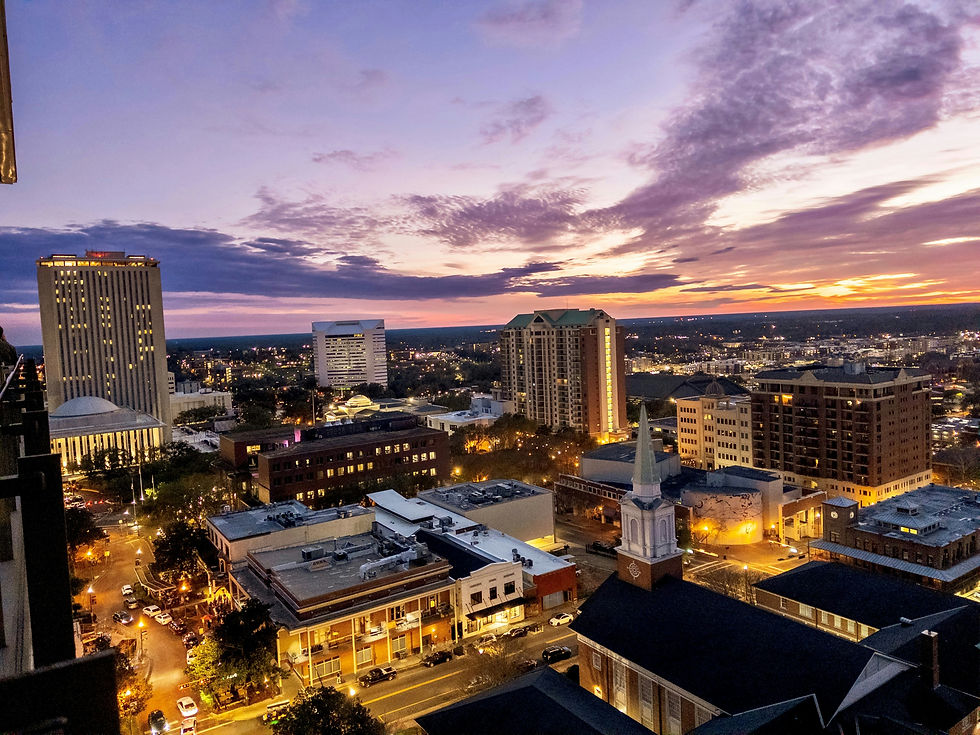
Tallahassee has never had its own dedicated short-term rental market report, despite anchoring an entire regional content hub built around it. That gap ends here. What makes Tallahassee worth a report of its own isn't a single tourism season , it's a genuine dual-persona identity that most competing market analysis never accounts for: the Florida Legislature's annual session drives a lobbyist, staffer, and government-business booking pattern with almost no leisure-market equivalent, while Florida State University's football season drives a completely separate, date-specific surge tied to home-game weekends. A report that treats Tallahassee as a generic "college town with a government building" undersells both of these real, distinct demand engines, and this report is built to name each one plainly instead.
Two Demand Engines, Not One
The Florida Legislature convenes its regular annual session roughly January through March, though special-session years can extend that window well beyond it , verify the current session calendar directly against the Florida Legislature's published schedule before pricing around it, since exact start and end dates shift from year to year. That session brings a wave of lobbyists, legislative staff, and government-adjacent business travelers into Tallahassee for stretches that often run multiple weeks at a time, a booking pattern that looks far more like extended-stay corporate housing demand than typical vacation-rental leisure travel. Florida State University's football season runs on an entirely separate calendar, driving sharp, date-specific demand surges tied to home-game weekends , verify the current season's home schedule directly against FSU's published athletics calendar before setting event-based pricing, since it changes annually. Together, these two engines give Tallahassee a booking calendar unlike almost any other Florida short-term rental market: one driven by session dates, the other by kickoff times, with very little overlap in guest type between them.
What Legislative-Session Demand Looks Like for a Host
A guest booking around the legislative session is fundamentally a different traveler than a typical vacation renter. They're often booking for multi-week or multi-month stretches, arriving on a weekday-heavy schedule rather than a weekend leisure pattern, and expecting the kind of reliable amenities a business traveler needs , strong Wi-Fi, a workable desk setup, and a straightforward commute to the Capitol or nearby state government buildings. A listing that speaks directly to this guest, naming the commute and the workspace rather than defaulting to generic vacation-rental language, has a real advantage during session months over a listing that treats every guest the same way year-round.
What FSU Football Weekends Look Like for a Host
Home-game weekends work in the opposite direction from session demand: short, sharp, date-specific spikes rather than extended stays. This guest is leisure-focused, willing to pay a real premium for proximity to Doak Campbell Stadium on a confirmed game date, and booking a single weekend rather than a multi-week stretch. Pricing around this demand requires knowing the actual home-game schedule for the season in question , a generic "football season is busy" assumption isn't precise enough to capture the real rate premium available on specific dates, and a host who prices flatly across the whole fall season is leaving money on the table on marquee weekends and overpricing the quieter ones in between.
ADR, Occupancy, and Revenue: What's Confirmed and What Isn't
Because Tallahassee has never had its own independently verified market report until this one, hard figures for average daily rate, occupancy, and annual revenue should be treated as needing direct confirmation rather than assumed. Before using any specific number in a pricing or investment decision, pull current data directly from AirDNA, AirROI, or comparable fresh research , and treat any Tallahassee figure carried over from a different Florida market's report in this library as unconfirmed until checked against Tallahassee's own numbers specifically. What can be stated with confidence is the structural pattern: a market with two genuinely separate demand engines, rather than the single tourism season most Florida short-term rental markets run on, tends to support a more resilient occupancy curve across the year than a market leaning on one season alone. The specific ADR and revenue figures that would quantify that advantage for Tallahassee still need to be pulled and verified at the time they're used, not assumed from this report or from a comparable market.
Property Management Competition Landscape
Tallahassee's property-management competition landscape hasn't been independently mapped in this report , whether the market is dominated by a handful of large management companies or fragmented among many small independent operators is a fact worth confirming directly before assuming either structure. What can be said with confidence is that a market with two distinct demand engines rewards operators who actively adjust positioning, photography, and pricing by season rather than running one static strategy year-round, which is a real opening for a smaller, more attentive operator to compete effectively against a larger one running a single generic playbook across the whole calendar.
How Tallahassee's Calendar Compares to a Single-Season Market
Most Florida short-term rental markets run on a single dominant season , a summer beach peak, a winter snowbird stretch, a signature festival weekend. Tallahassee's calendar looks structurally different: a winter-into-spring legislative-session window and a fall football-weekend window that don't compete with each other for the same guest type or the same dates. That's worth naming plainly for anyone comparing Tallahassee to a coastal Florida market or a market like St. Petersburg covered elsewhere in this library , the demand shape itself, not just the raw numbers, is a genuinely different animal here, and a booking strategy built for a single-season market won't transfer cleanly to Tallahassee without adjustment.
Regulatory Posture: An Open Question
Tallahassee's citywide short-term rental permit posture , whether there's a registration requirement, a permit cap, or neither , has not been independently confirmed in this report. The existing three-way regulatory comparison in this library, covering Thomasville, GA, Tallahassee, and St. Petersburg, is the place to check for Tallahassee's specific regulatory facts rather than assuming a favorable or unfavorable backdrop here. Any host or investor evaluating Tallahassee should treat that comparison post as the source of record on compliance requirements before making a decision, rather than inferring a permit posture from this market report.
The Investor Takeaway: A Rare Dual-Engine Pattern
The single most differentiating fact about Tallahassee as a short-term rental market is also the one most competing content never mentions: it has two genuinely separate, non-overlapping demand engines rather than one. A property positioned to capture both the legislative-session extended-stay guest and the FSU football weekend guest has a materially different, more resilient booking calendar than a market running on a single tourism season. That's a real structural advantage worth naming clearly , but it's a framework for evaluating the market, not a substitute for confirming current ADR, occupancy, revenue, and regulatory figures directly before acting on them. This cluster's dedicated investment analysis takes that framework further.
Related Reading
Keep reading in the Tallahassee market spine and nearby towns in the same region: same-cluster pages hosts can use without costume-corridor copy.
DIY vs Hire Marketing for Legislators Football for Independent Hosts
Tallahassee Remote Worker Extended Stay Guide for Independent Hosts
Tallahassee Thomasville Wakulla Springs STR Guide Independent Hosts
Thomasville vs. Tallahassee vs. St. Petersburg: What Actually Differs in Georgia and Fl…
How to Market a Short-Term Rental in Destin FL the World Luckiest
How to Market a Short-Term Rental in Miami, FL for Independent Hosts
Frequently Asked Questions
Does the Florida legislative session affect Tallahassee Airbnb rates?
Yes, it's one of Tallahassee's two core demand engines. The session typically runs January through March, longer in special-session years, and brings a wave of lobbyists, legislative staff, and government-adjacent business travelers booking multi-week or multi-month stretches, a pattern that looks far more like extended-stay corporate housing demand than typical vacation-rental leisure travel. Verify the current year's exact session dates against the Florida Legislature's published calendar before setting session-specific pricing.
How much does an FSU home football game affect Tallahassee rental demand?
Home-game weekends drive short, sharp, date-specific demand spikes distinct from the legislative-session pattern, this guest is leisure-focused and willing to pay a real premium for proximity to Doak Campbell Stadium on a confirmed game date. The exact rate premium depends on the specific matchup, so check FSU's published home schedule for the current season before pricing around it rather than applying a flat football-season markup.
What is Tallahassee's average short-term rental occupancy?
That figure hasn't been independently confirmed for Tallahassee specifically as of this report, since Tallahassee has never had its own independently verified market report until this one. Pull current occupancy data from AirDNA, AirROI, or comparable fresh research before using a specific number for a pricing or investment decision, and treat any figure carried over from a different Florida market's report as unconfirmed until checked against Tallahassee's own numbers.
Does Tallahassee have a short-term rental permit cap?
That hasn't been independently confirmed in this report either, whether there's a registration requirement, a permit cap, or neither. Check the existing three-way regulatory comparison in this library, covering Thomasville, GA, Tallahassee, and St. Petersburg, for Tallahassee's specific permit and registration requirements before making a compliance decision, rather than inferring a posture from this market report.
Is Tallahassee's property-management landscape dominated by a few large companies?
That hasn't been independently mapped in this report either, whether the market is dominated by a handful of large management companies or fragmented among many small independent operators is worth confirming directly. What can be said with confidence is that a market with two distinct demand engines rewards operators who actively adjust positioning, photography, and pricing by season, a real opening for a smaller, more attentive operator to compete against a larger one running one static playbook.
How does Tallahassee's demand calendar compare to a typical Florida market?
Most Florida short-term rental markets run on a single dominant season, a summer beach peak, a winter snowbird stretch, a signature festival weekend. Tallahassee's calendar looks structurally different: a winter-into-spring legislative-session window and a fall football-weekend window that don't compete with each other for the same guest type or the same dates, so a booking strategy built for a single-season market won't transfer cleanly here without adjustment.
What does a legislative-session guest actually need from a listing?
A traveler booking around the session is fundamentally different from a typical vacation renter: multi-week or multi-month stretches, a weekday-heavy arrival pattern rather than weekend leisure, and reliable business-traveler amenities, strong Wi-Fi, a workable desk setup, and a straightforward commute to the Capitol or nearby state government buildings. A listing that names the commute and the workspace directly has a real advantage over one defaulting to generic vacation-rental language.
Is Tallahassee a good short-term rental market compared to other Florida cities?
Its dual-persona demand pattern, legislative session plus FSU football, is a genuinely rare structural advantage most Florida markets don't have, and it tends to support a more resilient occupancy curve across the year than a market leaning on one season alone. Whether that translates into stronger returns for a specific property still depends on confirming current ADR, occupancy, and regulatory figures directly rather than assuming them from this report.
Work with Crest & Cove Creative
Tallahassee listings written for one generic 'college town' guest miss the two real demand engines here: the multi-week legislative-session traveler and the short, date-specific FSU home-game guest.
We help independent hosts write separate listing angles for these two very different travelers instead of one caption trying to speak to both at once. Send your listing for a session-versus-game-day review.
Reach out at crestcove.co or (256) 998-7502.



Comments