
West Asheville Host Guide: Haywood Road Without Hype

Updated: Aug 27
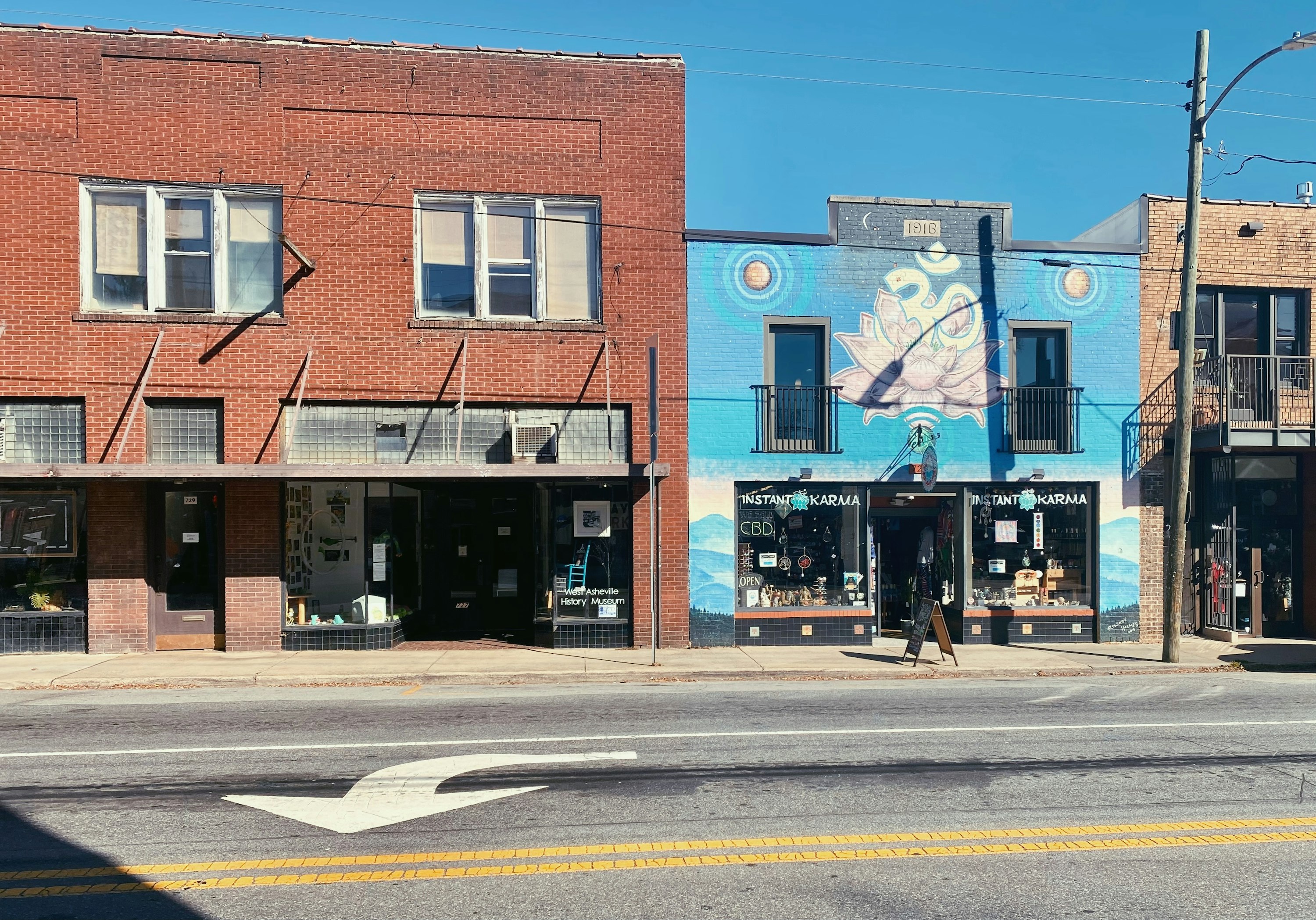
A guest booking a stay near Haywood Road is not shopping the same product as a guest booking a Pisgah trailhead cabin, even though both properties might sit inside Asheville's city limits. One guest wants seclusion and a ridge view; the other wants to walk to a restaurant, a coffee shop, and a record store without getting back in the car. West Asheville is one of the clearest submarket products inside the broader Asheville rental sample precisely because that difference is so legible — and hosts who write generic mountain-cabin copy for a walkable Haywood Road property are leaving that legibility on the table.
This is a guide to selling that specific product honestly: what actually distinguishes a West Asheville stay from South Slope's brewery-district energy or a downtown Pack Square walk, how to price against the labeled Asheville AirROI year without pretending an annual average is a typical week, and what the city's zoning and permit landscape actually requires before a host scales marketing spend on a property that may or may not be cleared for the use being sold.
None of this is theoretical for a market this size. West Asheville competes inside a sample of 1,827 Asheville-area listings, which means a guest looking for a Haywood Road stay has dozens of comparable options open in the same search. The listing that names the corridor specifically, prices its peaks and troughs as separate products, and can actually stand behind its zoning status is the one that wins that comparison — not the one with the prettiest sunset photo of a ridge the guest will never see from their actual front door.
Everything below breaks that work into six pieces: what the product actually is, how to write the description without slipping into brochure language, how to price against the labeled year instead of a flat annual number, what city zoning actually requires versus what a seller's story implies, what a buyer should check before closing on a West Asheville parcel, and how to keep South Slope and West Asheville from blurring into one undifferentiated pitch. This is not legal advice.
What a West Asheville Stay Actually Sells
Haywood Road is a walkable commercial strip — restaurants, independent shops, bars, and neighborhood retail — that feels categorically different from downtown Asheville's tourist density. South Slope, with its cluster of breweries, sits nearby as a related product, but it is not the same product: South Slope leans into brewery-district energy specifically, while West Asheville leans into a broader neighborhood feel built around a wider mix of food, drink, and daily-life retail. A guest can honestly want either experience, but a listing that tries to promise both without picking a primary one usually undersells both.
The listings that convert best in this submarket prove street-level access in the first photos, not the tenth. A hero image of a distant ridge tells a guest they're looking at a cabin listing; a hero image of the walk to Haywood Road tells them they're looking at a neighborhood listing. Naming the actual overnight specifically — a Haywood Road walk, a South Slope base, or a quiet residential block that still reaches the corridor honestly on foot — does more work than any adjective-heavy description of "vibrant local culture."
This distinction matters most for the guest doing exactly the comparison a submarket implies: someone who has already ruled out a remote cabin and is choosing between several walkable options. That guest isn't asking whether Asheville has mountain views — they already know it does. They're asking which specific property gets them to dinner on foot, and a listing that answers that question in its first three photos has already done most of the persuasive work before the guest reads a single sentence of copy.
Writing the Listing Without Brochure Tone
The corridor itself belongs in the title and the about section, not buried three paragraphs into the description after generic mountain language. Daylight photos of the actual walk — the sidewalk, the storefronts, the distance a guest will actually cover on foot — do more to set accurate expectations than any written claim about walkability. House rules need to be clear and specific too, because these are often mixed residential blocks where neighbors notice street parking and late noise in a way that a standalone cabin's neighbors never would.
The failure mode worth naming directly: promising a downtown Pack Square walk when the guest will actually need a ride for every meal. Guests comparing dozens of similar-sounding listings read specificity as a signal of honesty, and a listing that overstates walking distance gets caught the moment the guest opens a map or takes the first walk themselves — which is exactly the kind of gap that shows up in a review instead of a rebooking.
The fix costs nothing and takes ten minutes: walk the actual route from the front door to the corridor, time it, and put that number in the listing. "Six-minute walk to Haywood Road" is a claim a guest can verify and will trust; "walkable to everything Asheville has to offer" is a claim every competing listing also makes, which means it persuades no one and differentiates nothing.
Pricing Against the AirROI Year and Peak-3, Not a Flat Annual Average
AirROI's Asheville market year prints roughly $32,976 in typical annual revenue across a sample of 1,827 listings, at a $257 average daily rate and 42.0% occupancy. West Asheville competes inside that broader Asheville sample rather than as a separate labeled market of its own, which means the number is useful as competitive context, not as a promise that any specific Haywood Road property will clear it. The critical detail is that 42.0% is an annual figure — it is not what a typical week on Haywood Road actually looks like, and pricing every week of the calendar as though it were an average week wastes the peaks and overprices the troughs.
Peak-3 on the labeled AirROI year is October, December, and June. West Asheville still catches real foliage-season and Biltmore-driven demand metro-wide in October and December, and it has something most pure mountain-cabin markets don't: brewery weekend demand out of South Slope that can support midweek shoulder bookings better than a secluded cabin ever could. Pricing those three peak months as their own distinct products, and managing the softer months on their own separate lines rather than blending everything into one annual number, is what turns the AirROI year into a usable pricing tool instead of a single misleading average.
The occupancy tax obligation adds one more line item to this same rate-sheet discipline. Buncombe County's 6% occupancy tax remittance runs on top of whatever nightly rate a host sets, and it needs to be built into the pricing model from the start rather than treated as an afterthought subtracted from revenue after the fact. A host who prices peak-3 correctly but forgets to account for the tax line is still leaving money unaccounted for on paper, even if the booking calendar itself looks healthy, and reconciling that gap after the fact is a far worse conversation to have than building it into the rate sheet up front.
Regulation Literacy for a City-Limits Host
West Asheville sits inside city dynamics that have tightened whole-home short-term rental use under ordinary zoning, which is a materially different regulatory posture than the county-level rules that govern many nearby mountain-cabin markets. Homestay paths and documented grandfathered cases exist, but they require actual paperwork and verification with the city, not an assumption carried over from a seller's story or a neighboring county's more permissive rules. A host or buyer who treats a strong booking weekend as proof the use is cleared is confusing revenue with permit status — two entirely separate questions.
Buncombe County's 6% occupancy tax remittance requirement is a separate obligation from zoning compliance, and confirming one does not confirm the other. Residential blocks in this part of the city are also genuinely sensitive to density complaints from neighbors, which means the regulatory pressure here is not hypothetical — it's an active, ongoing dynamic that a host needs to track, not a one-time box to check at purchase. None of this is legal advice; it's a prompt to verify the specific parcel's status with city Development Services before scaling paid marketing around a use that may not hold up.
The order of operations matters here more than in a lot of markets: verify the permit path first, then build the marketing plan, not the other way around. A host who scales paid traffic or invests in professional photography before confirming the zoning status is spending real money to promote a use that a single neighbor complaint or code enforcement inquiry could shut down. Getting the paperwork right first protects everything built on top of it.
What Buyers Should Diligence on a West Asheville Parcel
The first diligence step is simple: open the live listing and read it as a stranger would. If it still reads like a generic mountain-cabin description while the deal packet assumes walkable-corridor pricing premiums, that gap between the marketing and the actual product is effectively part of the price a buyer is paying — the upside the seller is claiming hasn't been captured yet, and there's no guarantee it will be. Confirming the property's permit and hall status comes next, before any of the revenue assumptions in the packet get taken at face value.
Comparisons should run against nearby permitted peers, not just the metro-wide AirROI average. Neighboring markets like Black Mountain and Maggie Valley have their own labeled AirROI years, and averaging their numbers into a West Asheville underwriting model — or worse, quietly substituting one market's figures for another's — produces a number that doesn't describe any real property. Storm-related access changes are worth checking too: Hurricane Helene affected some Asheville-area corridors and neighboring businesses even where the physical structure itself saw limited damage, and pre-storm brochure claims about the neighborhood shouldn't be recycled without confirming what's actually open and accessible today.
A buyer who does all of this diligence work before closing isn't just protecting the purchase price — they're protecting the marketing budget that comes after it. A property bought on the assumption of walkable-corridor premiums that turns out to have an unresolved permit question, or that's marketed against a neighborhood that's changed since the seller's photos were taken, burns money on both ends: overpaying at purchase and then underperforming on the first year of bookings while the gaps get sorted out. None of that diligence work is exotic — it's a handful of phone calls and a walk down the actual street before the closing date, not after it.
Keeping West Asheville and South Slope as Two Honest, Distinct Products
West Asheville and South Slope are related walkable products, not identical ones, and a listing that tries to claim both without picking a primary promise usually confuses the guest doing the comparison shopping. South Slope's primary draw is brewery-district energy; West Asheville's is a broader neighborhood feel built around Haywood Road's food and retail mix. Some properties can honestly touch both — a stay a short walk from Haywood Road and a short drive from South Slope, say — but even then, the listing should pick one as the primary story so the first photo matches the title.
The same discipline applies to Biltmore. Estate access matters for pricing metro-wide, particularly around December, but it should show up as secondary diligence language, not a title-line slogan on a Haywood Road listing. A West Asheville property that leads with a distant estate while hiding its actual walkable corridor is confusing its own search positioning and leaving its most distinctive selling point — the one that actually separates it from every other Asheville-area cabin — unused.
Ultimately the test is simple and worth running on every listing before it goes live: does the first photo match the title, and does the title match the actual walk a guest will take from the front door? If the answer is yes for Haywood Road, or yes for South Slope, the listing is selling a real, checkable product. If the answer requires a guest to drive somewhere the listing implied they could walk, the gap will surface eventually — in a question before booking, or worse, in a review after checkout that other guests will read before they book anything at all.
Related Reading
Pair with the metro market report, city versus Buncombe rules, the brewery page, and how-to-market for title and photo order.
Frequently Asked Questions
What makes a West Asheville listing different from a generic Asheville mountain cabin?
West Asheville sells walkable Haywood Road neighborhood character and nearby South Slope brewery access, which is a fundamentally different overnight than a secluded Pisgah trailhead cabin. Guests booking this product want food, drink, and street life more than seclusion, and the first photos and title should prove the corridor directly. Generic mountain language wastes that distinction inside a sample of 1,827 competing Asheville listings.
How should hosts use the AirROI Asheville market year when pricing a West Asheville property?
Use it as competitive context, not a guarantee: the labeled year shows roughly $32,976 in typical annual revenue at a $257 ADR and 42.0% occupancy across 1,827 listings. It doesn't promise that any individual Haywood Road property will clear that figure. Price the peak-3 months as their own product and manage soft months on separate lines rather than treating the annual average as a weekly target.
Is West Asheville subject to the same short-term rental rules as the rest of Buncombe County?
No — West Asheville sits inside city limits, where whole-home short-term rental use has tightened under ordinary zoning, a different and generally stricter posture than county-level rules elsewhere. Homestay paths and grandfathered cases exist but require documented verification with city Development Services, not an assumption carried over from a seller's story. This is not legal advice, and the parcel's status should be confirmed before scaling marketing.
Should a West Asheville listing lead with Biltmore Estate?
Only as a secondary detail, not the headline. Biltmore access matters for pricing, especially around December, but the primary listing copy should sell the walkable neighborhood overnight guests are actually booking. Leading with a distant estate while hiding Haywood Road confuses the search and wastes the specific product that separates West Asheville from every other Asheville-area cabin.
How are South Slope and West Asheville different as rental products?
They're related but not identical: South Slope leans into brewery-district energy, while West Asheville leans into a broader Haywood Road neighborhood feel with a wider mix of food and retail. A property can honestly touch both, but the listing should pick one as its primary promise so the first photo matches the title and guests know exactly which overnight they're booking before they open a map.
What parking and noise issues should West Asheville hosts address in their listing?
These are often mixed residential blocks where neighbors notice street parking and late-night noise more than they would near a standalone cabin. Clear, specific house rules belong in the public listing itself, not buried in a welcome binder guests see only after booking. Neighbor complaints also feed directly into the city's existing regulatory pressure on short-term rentals, so being upfront protects the ability to keep operating.
What is Buncombe County's occupancy tax, and is it the same as city zoning approval?
Buncombe County requires a 6% occupancy tax remittance, which is a separate obligation from city zoning compliance — paying the tax doesn't confirm the property's permit status, and having a permit doesn't cover the tax requirement. Both need to be verified independently before treating a strong booking weekend as proof the property's short-term use is fully cleared.
What should a buyer check before purchasing a West Asheville short-term rental?
Start by reading the live listing as a stranger would: if it still reads like a generic mountain cabin while the deal packet assumes walkable-corridor premiums, that marketing gap is effectively part of the price. Then confirm permit and hall status, and compare the property against nearby permitted peers rather than the metro-wide AirROI average alone.
Should West Asheville underwriting use Black Mountain or Maggie Valley market data?
No — those are separate, differently positioned markets with their own labeled AirROI years, and averaging their figures into a West Asheville analysis produces a number that doesn't describe any real property. If a neighboring market is referenced for context at all, it should stay clearly labeled as its own market, not blended into the subject property's projected performance.
Did Hurricane Helene affect how West Asheville should be marketed?
It can, particularly where access routes or neighboring businesses were affected, even in cases where the physical property itself saw limited direct damage. Pre-storm brochure claims about the neighborhood shouldn't be recycled without checking what's actually open and accessible now. Buyers should also still diligence flood and insurance questions for any parcel located near water.
Work with Crest & Cove Creative
Two Asheville listings can share a zip code and still be selling two completely different overnights — and West Asheville hosts who miss that distinction are pricing against the wrong guest. Name the failure mode the guest can check on.
Send your live West Asheville listing to crestcove.co or call (256) 998-7502 for a free audit of whether your title, photos, and pricing actually match the Haywood Road product guests are booking. Name the failure mode the guest can check on the listing.
Reach out at crestcove.co or (256) 998-7502.


Comments