
Costs Start An Airbnb Peak Occupancy Is Not the Year

Updated: Aug 28
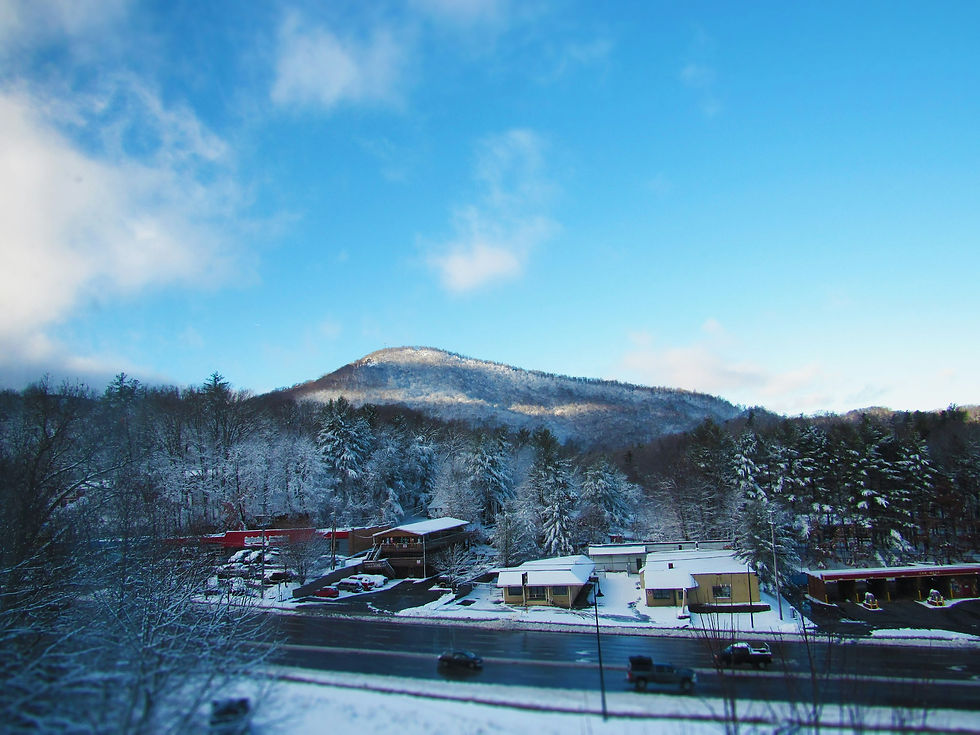
Every Boone, NC Airbnb listing photo of a hot tub glowing against a snowy ridgeline represents a real cash outlay that happened months before the first booking. Between the Town of Boone's permit process, the furnishing standard guests now expect in a ski-and-college-town market, and the insurance and software line items new hosts routinely underbudget, the real first-year cost of starting a short-term rental in Boone is higher — and more specific to this market — than generic "how much does it cost to start an Airbnb" guides suggest.
This is a realistic breakdown of what it actually takes to get a compliant, competitive listing live in Boone, built from the Town of Boone's published short-term rental ordinance and the amenity standard already established by the market's top-performing listings — the $250–$350-per-night hot-tub-and-fireplace properties that fill up on ski weekends and App State football Saturdays. Where a cost depends on your specific property, unit size, or lender, that's flagged explicitly rather than papered over with a single made-up number.
Permits and Compliance: What Boone Actually Requires
Boone regulates short-term rentals through its Unified Development Ordinance, which splits permits into two categories. A homestay rental covers up to two bedrooms in a residence where the owner is the full-time resident and is present for the entire lodger stay — capped at four adults plus children, with no rental signage allowed and a parking requirement of one space per bedroom or one per two adult renters. A vacation rental covers up to six bedrooms in a non-owner-occupied dwelling, requires the primary renter to be at least 21, obligates the operator or agent to respond to complaints or emergencies within two hours, and requires one parking space per bedroom.
Both permit types currently cost $530 annually, per the Town of Boone's short-term rental application, and both require insurance and annual renewal. Zoning eligibility differs meaningfully between the two categories — homestays are permitted across a wider range of residential and commercial districts, while vacation rentals are concentrated in a narrower set of commercial and downtown-adjacent zones — so confirming your specific parcel's zoning designation with the Town of Boone's planning department before you buy or convert a property is a non-negotiable first step, not a formality to handle after closing.
Layer Watauga County's requirements on top of the town's: short-term rentals owe a 6% Room Occupancy Tax on gross rental receipts for stays under 90 days, due monthly and considered late after the 20th. Budget for basic accounting or a short-term rental tax remittance tool from day one — this isn't optional and it isn't an one-time cost, so it belongs in your ongoing operating budget rather than your startup budget alone.
Furnishing for the Ski-and-College-Town Aesthetic
Boone's top-performing listings lean into a specific look — exposed wood, layered textiles, a stone or faux-stone fireplace surround, and functional mudroom space for ski gear and hiking boots — rather than a generic "mountain cabin" template. That aesthetic costs more to execute well than a bare-minimum furnishing pass, but it's also what supports the $250–$350-per-night peak-weekend rates that hot-tub-and-fireplace properties command during ski season and App State home game weekends.
As a directional range rather than a guaranteed figure, furnishing a modest 2-bedroom homestay-style unit to a competitive standard typically runs , while a full 4-to-6-bedroom vacation rental with a hot tub, multiple sleeping zones, and a genuinely photogenic living space can run or more depending on finish level, whether the hot tub is new or existing, and how much of the furniture package is sourced new versus secondhand. These figures vary enormously by property condition and host taste — treat them as a planning range to stress-test against your own quotes, not a number to budget against blindly.
Insurance: The Line Item Hosts Underbudget
Both Boone permit types explicitly require insurance, and a standard homeowner's policy typically does not cover short-term rental activity — most insurers require a dedicated short-term rental or commercial hospitality policy, or a landlord policy with an STR endorsement, once a property is rented out on a recurring transient basis. Annual premiums vary widely by property value, bedroom count, amenities like a hot tub, and carrier, so rather than quote a specific number that won't hold up across different properties, the honest guidance is to get quotes from at least two carriers that explicitly underwrite short-term rentals before finalizing a purchase or conversion budget, and to confirm that liability coverage extends to guest injuries related to snow, ice, and hot tub use — all real exposure in a ski-town market.
Many hosts also carry umbrella liability coverage on top of the base STR policy, given the guest-injury exposure that comes with winter conditions and hot tub amenities specifically. This is worth pricing out with your insurance agent rather than skipping — it's a comparatively small annual cost relative to the liability it protects against. Annual premiums vary widely by property value, bedroom count, amenities like a hot tub, and carrier, so rather than quote a specific number that won't hold up across different properties, the honest guidance is to get quotes from at least two carriers that explicitly underwrite short-term rentals before finalizing a purchase or conversion budget, and to confirm that liability coverage extends to guest injuries related to.
Photography, Listing Setup, and Software
Professional photography is one of the highest-leverage, lowest-cost line items in a Boone STR startup budget — typically $300–$800 for a half-day shoot covering interiors, the view, and seasonal exterior shots, ideally captured in both a snow-season and a green-season condition given how differently the property reads across Boone's two dominant booking seasons. Skipping professional photography to save a few hundred dollars is one of the most common — and most costly — mistakes new hosts in this market make, since listing photos are directly competing against institutional operators like Evolve and Vacasa, both active in Boone, who invest heavily in visual presentation.
If you're self-managing rather than using a full-service property manager, budget for a dynamic pricing tool (tools like PriceLabs or Beyond Pricing typically run $20–$40 per month per listing), a channel manager or direct-booking website if you're building beyond Airbnb and Vrbo, and either a smart lock or professional lockbox system for the two-hour complaint-and-emergency-response requirement that applies to Boone vacation rentals. None of these are large individual costs, but they add up to a few hundred dollars a month in ongoing software overhead that should be modeled into your operating budget, not just your one-time startup number.
Linens, Staging, and Initial Supplies
Beyond big-ticket furniture, budget separately for the consumables and staging details that make listing photos and first-guest impressions land: hotel-grade linens and towels in at least two full sets per bed (so laundry turnaround never leaves a bed unmade), a fully stocked kitchen, welcome-basket and coffee-station supplies, board games and a few local-guidebook touches that support the mountain-town positioning, and exterior staging like a firepit area or Adirondack chairs positioned toward the view. This category typically runs depending on bedroom count and how many amenity touches you're adding, and it's easy to underbudget because no single item feels expensive — it's the volume that adds up.
Putting Together a Realistic First-Year Number
Stacking these categories together — the $530 annual permit, a realistic furnishing budget for the unit size and finish level you're targeting, an STR-specific insurance policy, professional photography, and a few months of software and reserve cash before revenue stabilizes — most new Boone hosts converting an existing property into a compliant, competitively furnished 2-to-4-bedroom listing should plan on a first-year cash outlay somewhere in the broad range of to -plus, with the wide spread driven almost entirely by furnishing scope and whether major systems (hot tub, HVAC, deck) need work. Ground-up purchases or properties requiring larger renovation obviously run well beyond this range and require a project-specific budget, not a blog-post estimate.
Whatever your specific number lands on, hold back a cash reserve equal to at least two to three months of the mortgage or carrying costs beyond your startup budget. Boone's demand is real and diversified, but it is also seasonal and event-driven — a slow shoulder-season stretch between ski season and football season is normal, not a sign something is wrong, and undercapitalized hosts are the ones who make panicked pricing or marketing decisions during that stretch.
Frequently Asked Questions
How much does a Boone, NC short-term rental permit cost?
$530 annually for either a homestay or vacation rental permit, per the Town of Boone's published short-term rental application, with annual renewal required. Both permit types currently cost $530 annually, per the Town of Boone's short-term rental application, and both require insurance and annual renewal. Both Boone permit types explicitly require insurance, and a standard homeowner's policy typically does not cover short-term rental activity — most insurers require a dedicated short-term rental or commercial hospitality policy, or a landlord policy with an STR endorsement, once a property is rented out on a recurring transient basis.
What's the difference between a homestay and a vacation rental permit in Boone?
A homestay covers up to two bedrooms in an owner-occupied residence where the operator is present for the full stay; a vacation rental covers up to six bedrooms in a non-owner-occupied property with a minimum 21-year-old primary renter and a two-hour emergency response requirement. A homestay rental covers up to two bedrooms in a residence where the owner is the full-time resident and is present for the entire lodger stay — capped at four adults plus children, with no rental signage allowed and a parking requirement of one space per bedroom or one per two adult renters.
Are short-term rentals allowed anywhere in Boone?
Not automatically — zoning eligibility varies by district and permit type, with vacation rentals concentrated in a narrower set of zones than homestays. Confirm your specific parcel's zoning with the Town of Boone's planning department before purchasing or converting a property. Zoning eligibility differs meaningfully between the two categories — homestays are permitted across a wider range of residential and commercial districts, while vacation rentals are concentrated in a narrower set of commercial and downtown-adjacent zones — so confirming your specific parcel's zoning designation with the Town of Boone's planning department before you buy or convert a property is a non-negotiable first step, not a formality to handle after closing.
What is Watauga County's room occupancy tax rate?
6% of gross short-term rental receipts on stays under 90 days, due monthly and considered late after the 20th of each month. Layer Watauga County's requirements on top of the town's: short-term rentals owe a 6% Room Occupancy Tax on gross rental receipts for stays under 90 days, due monthly and considered late after the 20th.
Does a regular homeowner's insurance policy cover an Airbnb in Boone?
Most standard homeowner's policies exclude short-term rental activity, so hosts generally need a dedicated short-term rental or landlord policy with an STR endorsement — confirm this directly with your carrier before listing. Between the Town of Boone's permit process, the furnishing standard guests now expect in a ski-and-college-town market, and the insurance and software line items new hosts routinely underbudget, the real first-year cost of starting a short-term rental in Boone is higher — and more specific to this market — than generic "how much does it cost to start an Airbnb" guides suggest.
Why do hot tubs and fireplaces matter so much for Boone listings?
They directly support the market's peak-weekend rate ceiling — well-positioned properties with both amenities can command $250–$350 per night during ski season and App State football weekends, compared to lower baseline rates without them. That aesthetic costs more to execute well than a bare-minimum furnishing pass, but it's also what supports the $250–$350-per-night peak-weekend rates that hot-tub-and-fireplace properties command during ski season and App State home game weekends.
Is professional photography worth the cost for a Boone Airbnb?
Yes — at roughly $300–$800 for a half-day shoot, it's one of the lowest-cost, highest-impact line items, especially competing for visibility against institutional operators like Evolve and Vacasa in the same market. Professional photography is one of the highest-leverage, lowest-cost line items in a Boone STR startup budget — typically $300–$800 for a half-day shoot covering interiors, the view, and seasonal exterior shots, ideally captured in both a snow-season and a green-season condition given how differently the property reads across Boone's two dominant booking seasons.
Who helps Boone STR hosts with listing strategy and marketing?
Crest & Cove Creative provides short-term rental marketing, SEO, and direct-booking strategy for Boone and High Country hosts looking to reduce reliance on OTA visibility alone. Thomas Garner and Jacob Mishalanie lead content and strategy at Crest & Cove Creative, a short-term rental marketing agency focused on independent hosts across the Southeast's mountain and coastal markets, including the North Carolina High Country.
Keep going on Crest & Cove:the Crest & Cove intro·local SEO keywords that actually book·the five elements of a converting hero·how to compare STR marketing agencies·OTA fees without leftover occupancy lifts·this cluster against named-town AirROI pins·Destin against AirROI, not leftover year·prior cluster against AirROI pins.
Related Reading
Keep reading in the Boone market spine and nearby towns in the same region: same-cluster pages hosts can use without costume-corridor copy.
This Market Host Guide: What Guests Actually Ask for Independent Hosts
Boone Overlooks: What to Put in the Listing for Independent Hosts
Finance Boone Nc Peak Occupancy Is Not the Year Peak Occupancy Is Not
Boone, NC Visitor Spending and Tourism: High Country Hub Economics
Linville Falls STR Market Report: Bedroom Mix, Seasonality, and the
Your Airbnb Linville Falls Marketing: AirROI Pins, Not Leftover
Your Airbnb Beech Mountain Marketing: AirROI Pins, Not Leftover
What It Actually Costs to Start an STR in Beech Mountain, NC
What It Actually Costs to Start an STR in Linville Falls, NC
Work with Crest & Cove Creative
Peak occupancy is not the year. Named-town AirROI pins only.crestcove.coor(256) 998-7502.
Peak occupancy is not the year. Named-town AirROI pins only.crestcove.coor(256) 998-7502.
Peak occupancy is not the year. Named-town AirROI pins only.crestcove.coor(256) 998-7502.
Peak occupancy is not the year. Named-town AirROI pins only.crestcove.coor(256) 998-7502. Reach out at crestcove.co or (256) 998-7502.
About the Authors
Thomas Garner and Jacob Mishalanie lead content and strategy at Crest & Cove Creative, a short-term rental marketing agency focused on independent hosts across the Southeast's mountain and coastal markets, including the North Carolina High Country. Between the Town of Boone's permit process, the furnishing standard guests now expect in a ski-and-college-town market, and the insurance and software line items new hosts routinely underbudget, the real first-year cost of starting a short-term rental in Boone is higher — and more specific to this market — than generic "how much does it cost to start an Airbnb" guides suggest.


Comments