
Your Airbnb Linville Falls Marketing: AirROI Pins, Not Leftover

Updated: Aug 28

A well-run Linville Falls listing and a poorly marketed one can sit on the exact same road, with the exact same view, and post occupancy numbers 15-20 points apart. In a 235-listing market this seasonal, marketing execution is the single biggest lever an owner controls that isn't fixed by the property itself — the location doesn't change, but how well you communicate it does.
This walks through what actually moves bookings for a Linville Falls listing in 2026: title and description, amenity tagging, photography, pricing around the October foliage peak, direct-booking infrastructure, and review generation — grounded in the same market data underlying our Linville Falls Market Report. Our Linville Falls Market Report identifies six distinct guest segments in this geography, and the strongest-converting listings tailor their description and photo selection to whichever segment they're actually trying to win, rather than writing generically to all of them at once.
Write a Listing Title and Description That Actually Rank
A quick gut check before you publish any title or description change: read it back and ask whether it would mean anything to someone who has never heard of Linville Falls. If the answer is no — if it reads as generic mountain-cabin copy that could describe a thousand other listings — it's not yet doing the specific, landmark-anchored work this market rewards.
Name the landmarks explicitly: Linville Falls, Linville Gorge, Table Rock, Hawksbill, Grandfather Mountain, Blue Ridge Parkway MP 316, Wiseman's View. These are real search-intent terms guests type into Airbnb and Google both, and listings that name them directly rank for those queries far more often than ones that lean on generic phrases like "mountain retreat" or "cozy cabin getaway.".
Name the drive-market cities too:Charlotte, Asheville, Winston-Salem, Greensboro, Knoxville, Hickory. "Distance from" language — a straightforward line like "2 hours 15 minutes from Charlotte" — helps drive-market guests self-qualify and search-match to your listing. These are real search-intent terms guests type into Airbnb and Google both, and listings that name them directly rank for those queries far more often than ones that lean on generic phrases like "mountain retreat" or "cozy cabin getaway.".
Lead your description with what makes the property distinctive within this specific market, not generic mountain-cabin language. A retreat-capable 4BR+ property should say so explicitly — gathering table seats 12, dedicated meeting space — since that's the underserved niche identified in our market report. A hiker-focused smaller property should lean into proximity to Table Rock or Hawksbill trailheads rather than competing on generic coziness against every other cabin in the market.
Amenity Tagging: The Invisible Lever Most Hosts Skip
Amenity tags aren't decorative — they're a primary filter mechanism guests use to narrow a search, and platforms' own search algorithms weight tagged amenities in ranking. A property with a hot tub, fireplace, or specific view type that isn't explicitly tagged is invisible to guests filtering for exactly that feature, even if the amenity is clearly shown in photos.
Priority tags for this market:hot tub (correlates with the strongest ADR premium in this market, +$45-$75), fireplace, fire pit, mountain view or long-range view, pet-friendly (a meaningful differentiator given Linville Gorge's hiker traffic often travels with dogs), and Wi-Fi/Starlink specifically called out given the area's connectivity reputation — guests actively search for confirmation that a remote property has reliable internet.
Audit your tags quarterly. Platforms periodically add new tag categories, and a listing that hasn't been updated in a year is often missing tags that didn't exist at launch but now materially affect search visibility. The most common mistake is treating the listing as an one-time setup task rather than an ongoing asset that needs quarterly attention — pricing, photos, and tags all drift out of date as the market and platforms change.
Photography That Actually Sells a North Carolina Mountain Cabin
If the property has a genuine long-range view, the cover photo should be that view, shot at twilight or golden hour, not a daytime exterior shot of the cabin itself. If there's no meaningful view, lead with the strongest interior asset — a stone fireplace, a hot tub, a dramatic living room — rather than a generic cabin-exterior cover. Generic exterior covers underperform by 30-45% in this market according to comparative click-through data across similar High Country listings.
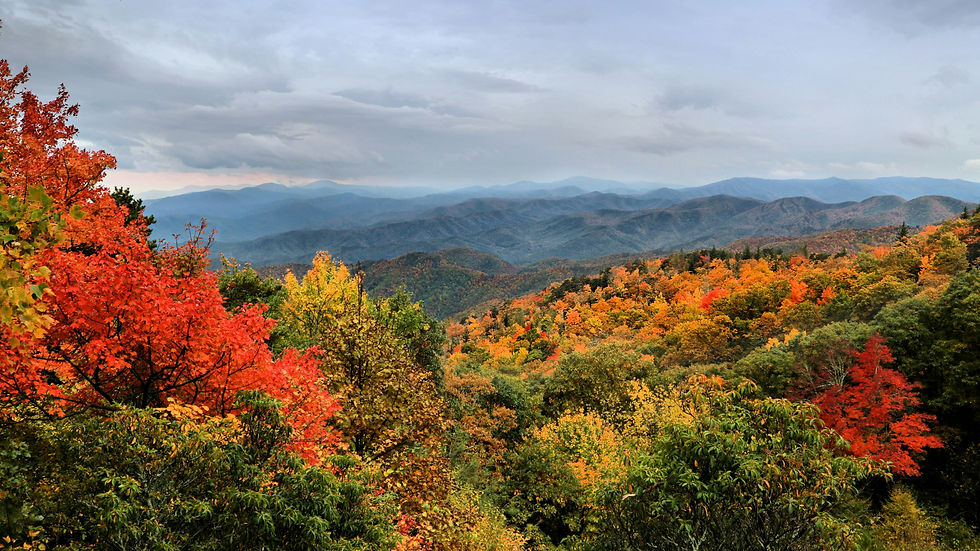
Seasonal rotation matters:most hosts leave static photos year-round, losing a real conversion signal. A cover photo showing October foliage during the actual foliage window, and a winter-appropriate cozy-interior cover during the January-February trough, measurably improves the search-to-booking conversion rate by matching what a guest is currently picturing for their trip. Static year-round pricing leaves real money on the table in both directions — underpriced during the roughly two-week foliage peak, and overpriced during a deep off-season where any booking beats an empty night.
Drone photography is close to essential for a property this close to the Parkway and the gorge — it's the single best way to visually communicate proximity to Linville Falls and Linville Gorge that a ground-level shot can't convey. Budget for a return shoot during peak foliage if your initial photography happened outside that window; the ROI on a dedicated October reshoot is consistently strong in this market.
Pricing Around the October Foliage Peak and Deep Off-Season
Linville Falls' seasonality is more pronounced than nearly any other High Country NC market. October occupancy regularly clears 85%, while January and February combined produce only 7-8% of annual revenue. Static year-round pricing leaves real money on the table in both directions — underpriced during the roughly two-week foliage peak, and overpriced during a deep off-season where any booking beats an empty night.
A practical framework:raise rates meaningfully in the weeks leading into the Oct 10-22 foliage window as booking lead time compresses and demand becomes less price-sensitive, then drop rates aggressively for January-February and market explicitly to the smaller off-season audience — winter hikers, photographers chasing dark-sky conditions, and long-stay remote workers — rather than leaving the calendar priced for a peak-season guest who isn't searching in February.
Build a Direct-Booking Presence Beyond the Platforms
Only about 11% of active listings in this market have a functional direct-booking website, which means the direct-booking opportunity here is genuinely underexploited relative to more saturated markets. Operators with a mature direct-booking presence capture 15-30% of bookings through direct channels by year two, eliminating the 15-20% platform fee on those bookings and building a guest-relationship data asset the platforms don't give you access to.
A direct-booking site doesn't need to be elaborate to work — it needs a clear description, real photography, transparent pricing, and basic search visibility for your property's specific landmark and drive-market terms. Repeat guests, referred guests, and guests who found you through organic search for "Linville Falls cabin rental" are the highest-value segment to route toward a direct channel rather than back through a platform.
Turn Guests Into Reviews That Actually Move the Needle
Review velocity is a measurable competitive advantage in this market. Top-quartile reviewed listings — 60-plus reviews — run 58-68% occupancy and command a 12-20% ADR premium over the median, while bottom-quartile listings with under 20 reviews or a rating at or below 4.5 run 35-45% occupancy and price 10-18% below median. The gap compounds: more reviews drive more bookings, which drive more reviews.
What actually generates reviews:a response within 30 minutes of a guest message, enforced cleanliness standards, and a deliberate but not pushy review-request message sent within 24 hours of checkout, timed to land while the trip is still fresh. New listings that execute this consistently in year one typically climb into the top quartile within 12-18 months.
Marketing to the Six Guest Archetypes in This Market
Our Linville Falls Market Report identifies six distinct guest segments in this geography, and the strongest-converting listings tailor their description and photo selection to whichever segment they're actually trying to win, rather than writing generically to all of them at once. A property positioned for waterfall-and-Parkway weekend tourists — the largest segment — should emphasize proximity to the falls, short hikes, and small-town dining. A property targeting Linville Gorge hikers and climbers should lead with proximity to Table Rock and Hawksbill trailheads, gear-friendly practicalities, and a straightforward, unfussy interior rather than a luxury pitch.
Multi-generational family retreats and corporate/church retreatsreward a genuinely different pitch: gathering-table capacity, dedicated meeting space, and catering-capable kitchens photographed and described explicitly, since these guests book 90-240 days out and are evaluating your property specifically against other retreat-capable venues, not against generic 2BR couples cabins. A retreat-capable 4BR+ property should say so explicitly — gathering table seats 12, dedicated meeting space — since that's the underserved niche identified in our market report.
SEO Basics for a Linville Falls Direct-Booking Page
If you're building a direct-booking presence, a handful of on-page fundamentals do most of the work. Use your property's actual location terms — Linville Falls, Avery County, Blue Ridge Parkway milepost 316 — in your page title and first paragraph, not buried at the bottom. Add a simple FAQ section answering the questions guests actually ask (distance from the falls, cell coverage, what's nearby) since search engines increasingly surface FAQ-formatted content directly in results. And claim and complete a Google Business Profile for the property if your platform and local regulations allow it — it's a meaningful, free visibility channel that most individual STR owners in this market haven't set up.
Local backlinks matter more than volume:a mention from a Linville Falls-area tourism site, a Blue Ridge Parkway travel blog, or a local business directory carries more search weight for this kind of geographically-specific listing than a large number of generic, unrelated links would. Local partnerships are underused in this market:a relationship with a Linville Falls-area guide service, a Grandfather Mountain ticket partnership, or a local winery offering a discount code for your guests costs little to set up and gives guests a genuine reason to book directly with you rather than through a platform, while also generating the kind of local backlink that helps a direct-booking site's search visibility.
Common Marketing Mistakes Linville Falls Hosts Make
The most common mistake is treating the listing as an one-time setup task rather than an ongoing asset that needs quarterly attention — pricing, photos, and tags all drift out of date as the market and platforms change. The second is under-differentiating: describing a 4BR+ retreat property with the same generic language as a 2BR couples cabin, missing the chance to compete for the higher-value, less price-sensitive retreat segment. The third is ignoring the off-season entirely — static peak-season photography and pricing left in place through January and February actively suppresses the bookings that are still available in this market's deepest trough.
Social Proof and Off-Platform Visibility
Beyond the listing itself, a modest social and local-visibility presence compounds the effect of everything above. A simple Instagram account showing seasonal photography — the October foliage window, a snowy Parkway overlook, a summer evening on the porch — gives past and prospective guests a reason to follow along and refer friends, and it doubles as a low-cost source of fresh, authentic photography beyond a single professional shoot.
Local partnerships are underused in this market:a relationship with a Linville Falls-area guide service, a Grandfather Mountain ticket partnership, or a local winery offering a discount code for your guests costs little to set up and gives guests a genuine reason to book directly with you rather than through a platform, while also generating the kind of local backlink that helps a direct-booking site's search visibility.
None of this replaces a strong listing — it supplements one. An owner with excellent photography, tight amenity tagging, and smart seasonal pricing who also builds a small local-visibility presence around the property tends to out-earn an otherwise identical property that treats marketing as the listing page alone. This walks through what actually moves bookings for a Linville Falls listing in 2026: title and description, amenity tagging, photography, pricing around the October foliage peak, direct-booking infrastructure, and review generation — grounded in the same market data underlying our Linville Falls Market Report.
Putting the Pieces Together
Treat this as a working checklist rather than an one-time project: revisit titles and tags each quarter, refresh photography around season changes, adjust pricing ahead of the October window rather than during it, and track review velocity as a leading indicator of whether the whole system is working — not just a lagging measure of past guest satisfaction.
None of these levers work in isolation. A beautifully photographed listing with generic amenity tags still loses search visibility to a well-tagged competitor. A well-priced calendar with weak photography still underconverts on click-through. The operators who consistently outperform the market median in Linville Falls are the ones executing all six of these levers together, then revisiting them quarterly as the market, the platforms, and the competitive set all continue to shift.
Related Reading
Keep reading in the Linville Falls market spine and nearby towns in the same region: same-cluster pages hosts can use without costume-corridor copy.
Your Airbnb Valle Crucis Marketing: AirROI Pins, Not Leftover
Your Airbnb Beech Mountain Marketing: AirROI Pins, Not Leftover
Is Property Your Valle Agency Math: Costs Without Invented Occupancy
Is Property Your Linville Agency Math: Costs Without Invented
Is a Property Management Agency Worth It for Your Beech Mountain, NC
Property S Right Your DIY Ceiling: AirROI Pins, Not Leftover Occupancy
Property Your Beech Mountain DIY Ceiling: AirROI Pins, Not Leftover
Property Your Linville Falls DIY Ceiling: AirROI Pins, Not Leftover
What It Actually Costs to Start an STR in Linville Falls, NC
Linville Falls STR Market Report: Bedroom Mix, Seasonality, and the
What It Actually Costs to Start an STR in Beech Mountain, NC
Frequently Asked Questions
What should I name my Linville Falls Airbnb listing to rank better?
Name real search-intent landmarks explicitly — Linville Falls, Linville Gorge, Table Rock, Hawksbill, Grandfather Mountain, Blue Ridge Parkway MP 316 — rather than generic phrases like 'mountain retreat.' Listings that name these landmarks directly rank for those specific searches far more often than generically worded ones. These are real search-intent terms guests type into Airbnb and Google both, and listings that name them directly rank for those queries far more often than ones that lean on generic phrases like "mountain retreat" or "cozy cabin getaway.".
What amenities should I make sure are tagged on my Linville Falls listing?
Priority tags include hot tub, fireplace, fire pit, mountain or long-range view, pet-friendly, and Wi-Fi/Starlink specifically called out. Untagged amenities are invisible to guests filtering by that feature even when clearly shown in photos, so audit tags quarterly as platforms add new categories. Priority tags for this market:hot tub (correlates with the strongest ADR premium in this market, +$45-$75), fireplace, fire pit, mountain view or long-range view, pet-friendly (a meaningful differentiator given Linville Gorge's hiker traffic often travels with dogs), and Wi-Fi/Starlink specifically called out given the area's connectivity reputation — guests actively search for confirmation that a remote property has reliable internet.
How much does professional photography cost for a Linville Falls Airbnb?
Budget $600-$1,400 for a full shoot including drone exteriors, twilight shots, and interior staging. A dedicated return shoot during the October foliage window, typically Oct 10-22, is worth the added cost given how much the peak-season cover photo drives click-through. Budget for a return shoot during peak foliage if your initial photography happened outside that window; the ROI on a dedicated October reshoot is consistently strong in this market.
How should I price my Linville Falls listing around the October peak?
Raise rates meaningfully as the roughly two-week foliage window (Oct 10-22) approaches and booking lead time compresses, then drop rates aggressively for the deep January-February off-season and market explicitly to winter hikers, photographers, and long-stay remote workers rather than leaving calendar pricing static year-round. A practical framework:raise rates meaningfully in the weeks leading into the Oct 10-22 foliage window as booking lead time compresses and demand becomes less price-sensitive, then drop rates aggressively for January-February and market explicitly to the smaller off-season audience — winter hikers, photographers chasing dark-sky conditions, and long-stay remote workers — rather than leaving the calendar priced for a peak-season guest who isn't searching in February.
Is a direct-booking website worth building for a Linville Falls Airbnb?
Yes — only about 11% of active listings in this market currently have a functional direct-booking site, leaving real opportunity relative to more saturated markets. Operators with a mature direct-booking presence capture 15-30% of bookings directly by year two, avoiding the 15-20% platform fee on those bookings. Only about 11% of active listings in this market have a functional direct-booking website, which means the direct-booking opportunity here is genuinely underexploited relative to more saturated markets.
How many reviews does a Linville Falls listing need to compete?
Top-quartile listings with 60-plus reviews run 58-68% occupancy and a 12-20% ADR premium over the median, while listings under 20 reviews run 35-45% occupancy. New listings that respond within 30 minutes, enforce cleanliness, and send well-timed review requests typically reach the top quartile within 12-18 months. Top-quartile reviewed listings — 60-plus reviews — run 58-68% occupancy and command a 12-20% ADR premium over the median, while bottom-quartile listings with under 20 reviews or a rating at or below 4.5 run 35-45% occupancy and price 10-18% below median.
How often should I update my Linville Falls Airbnb listing?
Review pricing, photography, and amenity tags at least quarterly — platforms periodically add new tag categories, and seasonal cover-photo rotation (foliage in October, cozy-interior in winter) measurably improves conversion versus static year-round listing content. A cover photo showing October foliage during the actual foliage window, and a winter-appropriate cozy-interior cover during the January-February trough, measurably improves the search-to-booking conversion rate by matching what a guest is currently picturing for their trip.
Should I market my Linville Falls property differently for retreats versus couples?
A 4BR+ retreat-capable property should lead with gathering-table capacity, dedicated meeting space, and catering-capable kitchens, since retreat guests book 90-240 days out and compare against other retreat venues specifically. A 2BR couples property competes on a different axis — views, romantic atmosphere, and proximity to short hikes and dining. Multi-generational family retreats and corporate/church retreatsreward a genuinely different pitch: gathering-table capacity, dedicated meeting space, and catering-capable kitchens photographed and described explicitly, since these guests book 90-240 days out and are evaluating your property specifically against other retreat-capable venues, not against generic 2BR couples cabins.
Is a Google Business Profile worth setting up for a Linville Falls Airbnb?
Yes, where platform terms and local regulations allow it — it's a free, meaningful visibility channel that most individual STR owners in this market haven't claimed, and it helps capture guests searching directly for lodging near Linville Falls rather than only browsing booking platforms. And claim and complete a Google Business Profile for the property if your platform and local regulations allow it — it's a meaningful, free visibility channel that most individual STR owners in this market haven't set up. Keep going on Crest & Cove:the Crest & Cove intro·local SEO keywords that actually book·the five elements of a converting hero·how to compare STR marketing agencies·OTA fees without leftover.
Should I write a Listing Title and Description That Actually Rank?
A well-run Linville Falls listing and a poorly marketed one can sit on the exact same road, with the exact same view, and post occupancy numbers 15-20 points apart. This walks through what actually moves bookings for a Linville Falls listing in 2026: title and description, amenity tagging, photography, pricing around the October foliage peak, direct-booking infrastructure, and review generation — grounded in the same market data underlying our Linville Falls Market Report.
What should I photograph first?
In a 235-listing market this seasonal, marketing execution is the single biggest lever an owner controls that isn't fixed by the property itself — the location doesn't change, but how well you communicate it does. An owner with excellent photography, tight amenity tagging, and smart seasonal pricing who also builds a small local-visibility presence around the property tends to out-earn an otherwise identical property that treats marketing as the listing page alone.
Work with Crest & Cove Creative
Write this town's year. Do not file another market's number as this stay.
Reach out at crestcove.co or (256) 998-7502.

Comments