
Ashland STR Rules: The $25 Town Permit Versus Hanover County's 185-Day

Updated: Aug 27
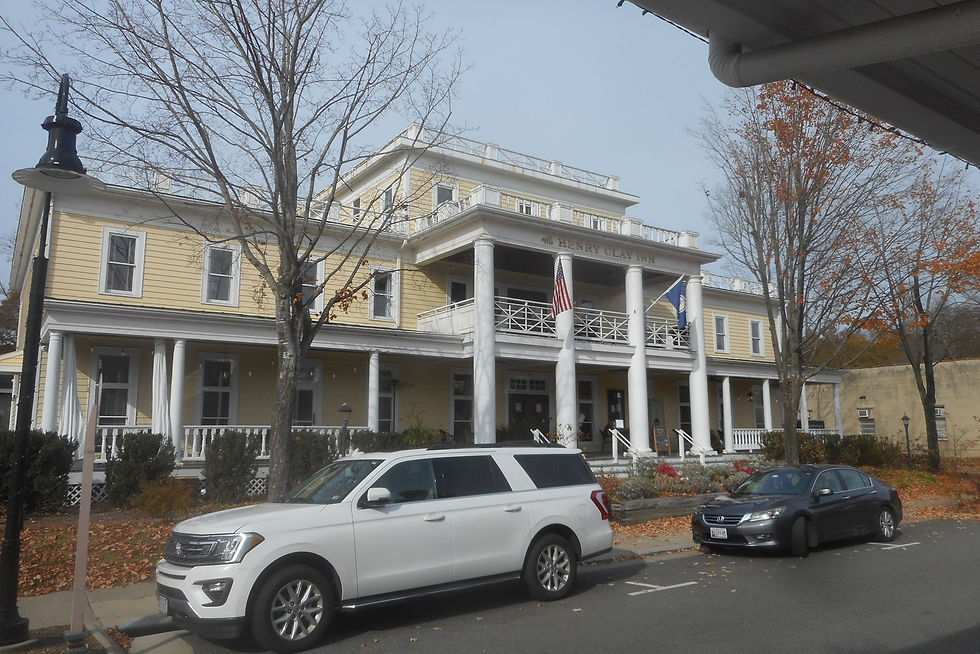
Ashland, Virginia is an incorporated town within Hanover County, sitting on I-95 and US-1. A property's exact location - inside Town of Ashland's own limits, or in unincorporated Hanover County - determines which of two genuinely separate regulatory frameworks applies.
Town of Ashland requires its own Short-Term Rental Permit, administered under Ordinance 2020-02, with a $25 fee, a current business license, and specific operating caps. Unincorporated Hanover County runs an entirely different framework built around either a 185-day primary-residence test or a vacation-rental special exception.
This is not legal advice. It's a practical guide to each of these two frameworks specifically for an Ashland-area host: the correct permit fee, the correct operating caps, and a clear warning against applying Town of Ashland's own $25 permit path to a property that actually sits in unincorporated Hanover County, or vice versa.
Confirm the Parcel Before Assuming Either Framework
Town of Ashland is a genuinely separate incorporated municipality from unincorporated Hanover County - two distinct regulatory frameworks governing short-term rentals, despite sharing the same general county map and the same general I-95/US-1 corridor.
AirROI's own published market data for "Ashland" is a town-named data market - a useful revenue benchmark, but not itself proof that a specific property actually sits within Town of Ashland's own incorporated limits versus unincorporated county land nearby.
Kings Dominion, located specifically in Doswell, is a further, genuinely separate example of nearby Hanover County geography that isn't Town of Ashland - a helpful illustration of why a shared county name doesn't mean a shared regulatory desk.
The practical first step for any Ashland-area host: confirm the property's exact tax-map status and municipal boundary before assuming either the town's $25 permit path or the county's 185-day framework applies.
The Town's Short-Term Rental Permit Costs $25
Town of Ashland's Short-Term Rental Permit application is administered by the town's Planning and Community Development department under Ordinance 2020-02, with a fee of $25, alongside a requirement to hold a current business license.
This $25 fee and business license requirement apply specifically to properties confirmed within Town of Ashland's own incorporated limits - a genuinely separate, much simpler-sounding fee structure than unincorporated Hanover County's own primary-residence or special-exception framework.
A 2026 applicant should confirm the current fee and application requirements directly with the town's Planning department, since a fee schedule published in an earlier ordinance year can be updated between filing periods.
The practical rule: confirm town-limit status first, then pursue this $25 permit plus business license specifically through Town of Ashland's own Planning and Community Development department - not through Hanover County's separate administration.
The Town's Operating Caps: One Unit, 29 Days, Six Adults
Town of Ashland's short-term rental ordinance caps an individual to one residential dwelling unit (including a corporation or partnership) permitted for short-term rental use within the town, with a maximum consecutive rental period of 29 days to any single person or entity.
Additional town-specific operating requirements include: occupancy of not less than 24 hours, unrelated adults capped at six, a minimum renter age of 18, a 24/7 owner-or-designee phone number posted in the unit, and a prohibition on on-property short-term rental advertising signs.
Further requirements include a prohibition on visible RVs, buses, or trailers on the street or in conjunction with the rental, a neighbor-notification requirement when the property shares a wall or driveway with an adjacent parcel, and required smoke and carbon monoxide detectors per the application's safety section.
The practical rule: a town-limit host planning to offer a longer-than-typical stay must still operate within the 29-day consecutive cap and the one-unit-per-person limit - a thirty-plus-night minimum-stay setting on a booking platform doesn't itself override this town ordinance's own 29-day ceiling.
The Town's Transient Occupancy Tax Is 8 Percent, Due by the 20th
Town Code Section 6-32 sets Town of Ashland's transient occupancy tax at 8 percent of lodging charges, with remittance due on or before the 20th day of the month following the month in which the tax was collected.
This 8 percent tax obligation travels specifically with the town's own $25 Short-Term Rental Permit and business license requirement - it's a town-specific tax framework, genuinely distinct from whatever tax obligations might apply to an unincorporated Hanover County short-term rental.
A host should confirm the current remittance procedure directly with the town rather than assuming a prior filing period's process remains unchanged, and should build this fixed 8 percent obligation into pricing regardless of which specific month or season a stay falls within.
The practical rule: town-limit hosts should treat this 8 percent, 20th-of-the-month remittance schedule as a fixed, non-negotiable cost of doing business, confirmed directly and kept current, independent of seasonal pricing strategy.
Unincorporated Hanover County Runs a 185-Day Test Instead
Unincorporated Hanover County defines short-term rental as occupancy of fewer than 30 consecutive days for a charge - a genuinely different framework from the town's own permit-and-fee structure, built instead around two distinct paths: primary residence or vacation rental.
The primary-residence path applies when the owner occupies the property at least 185 days per year on the same GPIN (parcel identification number) as their primary residence - permitted as an accessory use specifically within agricultural and single-family residential districts.
The vacation-rental path applies when the property is not the owner's primary residence, and requires a special exception within those same agricultural and single-family residential districts - a meaningfully more involved approval process than the primary-residence path.
The practical rule: an unincorporated Hanover County host must first determine which of these two paths actually applies to their specific ownership and occupancy situation - the 185-day primary-residence test, or the special-exception vacation-rental path - since Town of Ashland's own $25 permit process doesn't apply here at all.
AirROI's 'Low' Regulation Badge Isn't Either Actual Framework
A booking platform's or data provider's internal "Low" regulation badge or similar scrape-level label is not the same thing as either Town of Ashland's actual Ordinance 2020-02 permit requirements or unincorporated Hanover County's actual 185-day or special-exception framework.
This distinction matters directly: a "Low" badge doesn't specify a $25 fee, doesn't specify an 8 percent tax rate, doesn't specify a 29-day cap, and doesn't specify a 185-day residency threshold - all of which come only from the actual local ordinance and county code, confirmed directly with each respective office.
A host or buyer relying on a platform's generic regulation badge instead of confirming directly with Town of Ashland's Planning department or Hanover County's Planning office is working from an unreliable, non-specific source for a genuinely important compliance decision.
The practical rule: treat any platform-level regulation badge as, at most, a starting prompt to investigate further - never as a substitute for directly confirming the actual town ordinance or county code requirements that apply to a specific parcel.
Why the One-Unit-Per-Person Cap Matters for Multi-Property Hosts
A host who owns or manages more than one residential property specifically within Town of Ashland's own limits needs to read the one-residential-dwelling-unit-per-person cap carefully, since this rule applies to the individual or entity, not simply to each parcel independently.
This cap explicitly extends to a corporation or partnership, meaning a host structuring ownership through a business entity can't use that structure alone to operate multiple short-term rental units within town limits beyond the one permitted.
A host considering expanding their Ashland-area portfolio should confirm directly with the town's Planning department how this cap would apply to their specific ownership structure, well before purchasing an additional property with short-term rental intentions.
The practical rule: a multi-property host should treat this one-unit cap as a genuine ceiling on town-limit short-term rental operations under a single person or entity, and should explore unincorporated county parcels (subject to that framework's own separate rules) if a larger short-term rental portfolio is the specific goal.
What the Neighbor-Notification Requirement Actually Involves
Town of Ashland's neighbor-notification requirement applies specifically when a short-term rental property shares a wall or a driveway with an adjacent parcel - a genuinely narrower trigger than a blanket requirement to notify every neighbor within some fixed radius.
A host should confirm directly with the town's Planning department exactly what this notification must include and how it should be documented, since a permit application that omits this step where it's actually required risks delay or denial.
This requirement exists specifically to address the practical reality of shared-wall or shared-driveway living arrangements, where a short-term rental's guest turnover and noise can more directly affect an immediately adjacent neighbor than a standalone property might.
The practical rule: a host with a shared wall or shared driveway should complete and document this specific notification step as part of their permit application, rather than assuming it's optional or that verbal notice alone satisfies the requirement.
Confirming the 2026 Fee and Application Details Directly
While this pass cites a $25 fee under Ordinance 2020-02, a host should confirm the current 2026 fee amount and application form directly with Town of Ashland's Planning and Community Development department before submitting payment, since municipal fee schedules can be updated between filing periods.
This same direct-confirmation discipline applies to the business license requirement that travels alongside the Short-Term Rental Permit - a host should confirm current business license procedures and any associated fee directly, rather than assuming a prior year's process remains unchanged.
A host should also specifically ask whether any additional 2026 updates have been made to the safety requirements (smoke and carbon monoxide detectors), the advertising-sign prohibition, or the RV/trailer restriction, since these operational details are the type most likely to see periodic administrative refinement.
The practical rule: use this report's cited figures and requirements as a starting reference point, but treat a direct call or visit to Town of Ashland's Planning department as the final, authoritative confirmation before submitting any 2026 permit application.
Building the Compliance Packet
A complete Town of Ashland compliance packet should include the property's confirmed municipal boundary status, the $25 Short-Term Rental Permit application and current business license, confirmation of the 29-day and one-unit caps, and the 8 percent transient occupancy tax remittance schedule under Town Code Section 6-32.
A complete unincorporated Hanover County compliance packet should instead include confirmation of which of the two paths applies (185-day primary residence or vacation-rental special exception), the property's zoning district (agricultural or single-family residential), and confirmation of the county's own occupancy-tax framework.
Each of these two packets requires its own direct confirmation, since neither framework substitutes for the other - a property inside Town of Ashland's limits doesn't need the county's 185-day test, and a property in unincorporated Hanover County can't obtain the town's $25 permit.
The overall discipline: confirm the correct jurisdiction first, then work through the complete requirements specific to that jurisdiction alone, treating any platform badge, informal secondhand summary, or a neighboring property's compliance status as a starting point for research rather than confirmed compliance for a specific parcel.
A host who's purchased an existing short-term rental property, rather than starting one from scratch, should treat this compliance-packet-building process as a fresh confirmation exercise rather than an inheritance from the previous owner - a prior owner's permit, business license, or county approval may need to be re-established under the new owner's name and confirmed current for 2026.
Timing the Application Before a Planned Launch
A host planning to list a property by a specific target date should begin whichever compliance process applies - town permit or county primary-residence/special-exception path - well ahead of that date, since either process can involve processing time beyond a single same-day office visit.
The county's special-exception path in particular, given its more involved approval process compared to the primary-residence test, likely requires more advance planning time than the town's more straightforward $25 permit application.
A host should build this compliance timeline into their overall launch plan alongside furnishing, photography, and listing setup, rather than treating it as a final step to be rushed through immediately before a hoped-for opening date.
The practical rule: contact the relevant office (Town of Ashland Planning, or Hanover County Planning) as early as possible in a launch timeline, specifically asking about current expected processing time for the applicable framework.
Related Reading
Related reading for Ashland hosts: same-town spine first, then nearby geo lines. Skip costume national dumps that do not underwrite this driveway.
Frequently Asked Questions
How much does Town of Ashland's Short-Term Rental Permit cost?
$25, plus a current business license, under Ordinance 2020-02. That fee applies specifically to properties confirmed within Town of Ashland's own incorporated limits, not to parcels in unincorporated Hanover County, which run under a completely separate framework. Confirming which side of that boundary a parcel sits on is the first step before budgeting for either path.
What is the town's maximum consecutive rental period?
29 days to any single person or entity, alongside a one-residential-dwelling-unit-per-person cap. A platform's own thirty-plus-night minimum-stay setting doesn't override this town ordinance's 29-day ceiling, so a host who configures a long-stay minimum on Airbnb or Vrbo still has to keep actual bookings inside the town's own legal limit or risk a compliance issue.
What is the town's transient occupancy tax rate?
8 percent, under Town Code Section 6-32, remitted on or before the 20th of the month following collection. That's separate from the $25 permit fee and business license requirement, and it sits on top of whatever state and county lodging taxes a platform may already be collecting, so a host's net take needs to account for all three layers.
What other operating rules apply within town limits?
Occupancy can't run less than 24 hours, a maximum of six unrelated adults is allowed, minimum renter age is 18, and a 24/7 owner-or-designee phone number must be posted in the unit. On top of that: no on-property advertising signs, no visible RVs, buses, or trailers, required neighbor notification for shared walls or driveways, and required smoke and CO detectors throughout the property.
How does unincorporated Hanover County define short-term rental?
Occupancy of fewer than 30 consecutive days for a charge, a genuinely different framework from the town's permit-and-fee structure. Where the town regulates through a flat $25 permit plus an 8 percent occupancy tax, the county instead routes a host down one of two separate approval paths depending on whether the property is the owner's primary residence.
What is the county's primary-residence path?
The owner must occupy the property at least 185 days per year on the same parcel, identified by its GPIN, as their primary residence. That path is permitted as an accessory use in agricultural and single-family residential zoning districts, which makes it the more straightforward of the two county routes for an owner who genuinely lives on the property most of the year.
What is the county's vacation-rental path?
The route for a property that isn't the owner's primary residence, requiring a special exception within the same agricultural and single-family residential districts used for the primary-residence path. That's a more involved approval process than simply occupying the parcel 185 days a year, and it's the path most investment-only or second-home short-term rentals in unincorporated Hanover County will need to follow.
Does a platform's 'Low' regulation badge indicate actual compliance requirements?
No. It's a generic scrape-level label that doesn't specify the town's $25 fee, its 8 percent tax, or its 29-day cap, nor the county's 185-day primary-residence threshold or special-exception path. A 'Low' badge tells a shopper nothing about which of these two frameworks their specific parcel falls under, so confirming directly with the relevant office is still the only reliable step.
Does being in Hanover County automatically mean the town's rules apply?
No. Kings Dominion, for example, sits in Doswell, Hanover County geography that is genuinely separate from Town of Ashland's own incorporated limits and its specific $25 permit framework. A parcel can be inside Hanover County while sitting entirely outside town limits, or the reverse, which is exactly why boundary confirmation has to come before any compliance paperwork gets filed.
What should a complete compliance packet include?
For town parcels: confirmed boundary status, the $25 permit and current business license, the 29-day consecutive-rental cap confirmation, and the 8 percent transient occupancy tax schedule under Section 6-32. For county parcels: confirmation of which of the two paths applies, the property's zoning district, and the county's own separate tax framework. Both packets start with the same first question: which jurisdiction actually governs this parcel.
Work with Crest & Cove Creative
A host who advertises Town of Ashland's $25 permit on a property that's actually in unincorporated Hanover County is publishing the wrong compliance story. The county runs a 185-day residency test, not a flat permit fee.
We help Ashland-area hosts write listing copy that names the right framework, Town of Ashland or Hanover County, once it's confirmed with the actual office.
Reach out at crestcove.co or (256) 998-7502.


Comments