
Ashland Tourism Data: Kings Dominion Is Demand, Not This Market's

Updated: Aug 27
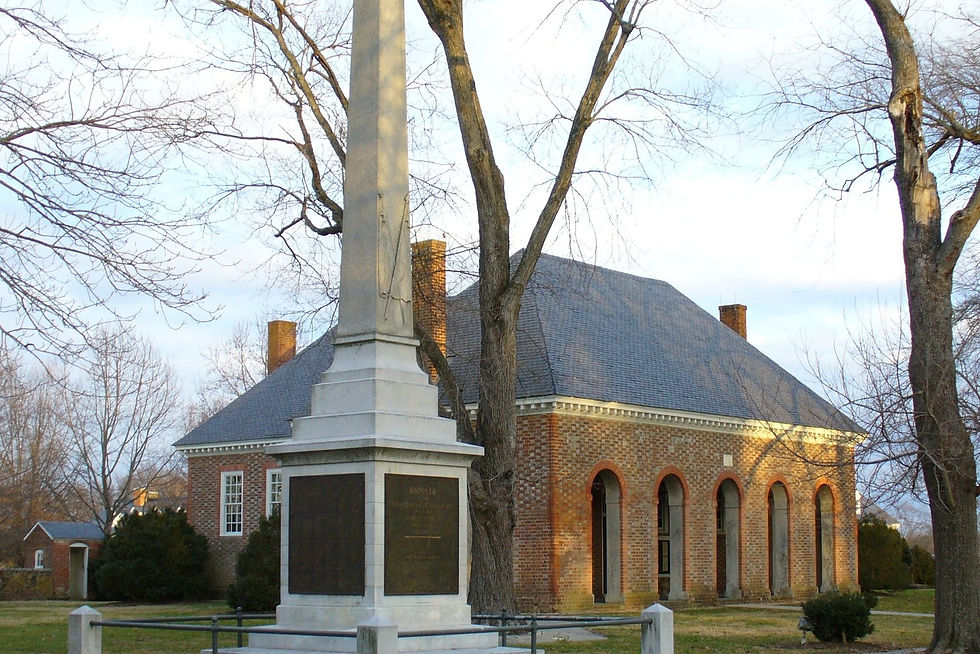
Ashland, Virginia's tourism identity centers on Main Street's walkable downtown, Randolph-Macon College, and its proximity to Kings Dominion - a major amusement park located specifically in Doswell, within Hanover County but outside Town of Ashland's own limits.
This market's actual AirROI sample publishes a typical year of $25,215 across 18 listings for the October 2024 through September 2025 vintage, with ADR at $161 and occupancy at 46.4 percent - figures that describe actual booked nights within Town of Ashland specifically, genuinely distinct from any park visitor-volume figure.
This is not legal advice. It's a practical guide for an Ashland host: how to name Kings Dominion, Randolph-Macon's campus calendar, and Main Street honestly in a listing description, while keeping this market's actual $25,215 typical year and its April hole as the figures that actually govern pricing.
Kings Dominion's Opening Day Is Demand, Not Occupancy
Kings Dominion's 2026 Opening Day is confirmed as Saturday, March 21, on the park's live page, after an earlier December 2025 item had listed March 28 - worth confirming directly at the time of writing, since this specific date shifted between announcements.
This Saturday sits within Doswell, Hanover County - genuine visitor demand for the broader area, but not itself occupancy for a Town of Ashland listing. It's also worth noting that March was already part of this market's confirmed peak-3 independent of this specific park date.
A broker memo or marketing packet that divides Opening Day's park gate count by this market's 18 listings, implying some connection to occupancy, is performing a calculation the underlying extract doesn't support - park attendance and this market's own booked-night data are separate measurements entirely.
The practical rule: name Kings Dominion's Opening Day specifically and accurately as a reason a guest might point their car toward Hanover County, while keeping this market's actual $25,215 typical year and 46.4 percent occupancy as the figures that describe this specific town's own booked nights.
July Fireworks Are Landscape, Not This Market's Occupancy
Kings Dominion's 2026 drone and fireworks show runs Friday through Sunday from July 10 through August 9 - a genuine, dated visitor attraction that happens to fall entirely within July, this market's already-confirmed single peak month.
This overlap is worth framing accurately: July was already this market's strongest month before this specific fireworks schedule is factored in. The show is a genuine reason a specific guest might choose a particular weekend, not the underlying cause of July's overall strength.
A host shouldn't inflate every July night's rate around this specific weekend show schedule alone - July's peak status was already established by this market's broader data, and treating August 9 (the show's final date) as a hard cutoff for premium pricing risks mispricing the rest of the month.
The practical rule: name the fireworks schedule specifically for guests planning around those exact dates, while continuing to price all of July as this market's confirmed peak month based on its own broader data, not solely around the show's specific start and end dates.
Randolph-Macon's Campus Calendar Is Landscape, Not the Extract
Randolph-Macon College is genuine, walkable local landscape - parents' weekends, move-in days, and home football games are all real, specific reasons a guest might choose Ashland over a Richmond-area alternative, worth naming directly in a listing description.
None of these campus-calendar events directly convert into a measurable, quotable share of this market's actual occupancy - a busy campus Saturday doesn't itself confirm a filled February, even though February happens to sit within this market's confirmed peak-3.
This market's genuinely small 18-listing sample means a host shouldn't inflate an assumed "college town premium" without direct evidence from this market's own actual booking data specifically supporting that claim during a given campus event.
The practical rule: name Randolph-Macon's campus calendar specifically as genuine local landscape worth featuring, while keeping any occupancy or revenue claim tied strictly to this market's own confirmed $25,215 typical year and its named April hole.
New York Origin Isn't This Market's ADR
New York is this market's leading guest-origin city according to the published extract - genuinely useful demand-side context describing where guests are traveling from, worth knowing for marketing and advertising targeting decisions.
This origin data doesn't itself describe this market's ADR of $161 or its occupancy of 46.4 percent - a guest traveling from New York still pays this specific town's own established rate, not a rate tied to their city of origin.
Domestic travelers make up roughly 96 percent of this market's guest-profile block - a genuinely useful composition detail, though a specific New York-guest percentage isn't published and shouldn't be estimated or guessed in marketing copy.
The practical rule: use New York as this market's own confirmed leading origin city for marketing decisions, while keeping this fact entirely separate from any ADR, occupancy, or rate-setting decision, which should be based only on this market's own published figures.
Keeping Visitor Spend Off the Host Extract
Tourism-adjacent visitor-spend figures - what park-goers and campus visitors collectively spend on tickets, meals, and lodging across the broader Hanover County area - describe a genuinely different measurement from this market's own short-term rental occupancy and revenue data.
This market's transient occupancy tax, set at 8 percent under Town Code Section 6-32 and remitted on or before the 20th of the following month, is itself a tax remittance figure - worth confirming and complying with directly, but also not itself a measure of occupancy.
A marketing memo that treats this 8 percent remittance rate, or any broader visitor-spend headline, as evidence supporting a higher assumed occupancy figure is applying a calculation this market's own data doesn't support.
The practical rule: keep any visitor-spend total, park-attendance figure, or tax remittance rate in its own clearly labeled category, entirely separate from this market's own confirmed $25,215 typical year and 46.4 percent occupancy figure.
Don't Steal a Richmond Calendar
Richmond, roughly fifteen to twenty minutes south, is genuinely the satellite drive for Ashland guests, not the source of this market's own occupancy or revenue data - and Richmond's own separately published figures use a later, August 2025 through July 2026 vintage.
Richmond's own confirmed peak-3 (October, March, and May) and its own named hole (July) run on a genuinely different seasonal pattern than Ashland's own confirmed peak-3 (July, March, and February) and its own hole (April) - two separate calendars that shouldn't be flattened together.
It's worth noting specifically that July, Ashland's own peak month, is actually Richmond's own named hole on its later vintage - a genuinely useful, specific illustration of why these two markets' calendars shouldn't be treated as interchangeable despite the short driving distance between them.
The practical rule: name Richmond specifically and only as the satellite drive for Ashland guests, and never apply Richmond's own seasonal pattern, origin-city data, or year-over-year trend to an Ashland-specific marketing or pricing decision.
Mechanicsville and Glen Allen Are Also Separate market
Mechanicsville and Glen Allen, both nearby Hanover County-area communities, publish their own separate figures on the same later, August-2025-through-July-2026 vintage used for Richmond - Mechanicsville's own peak-3 runs November, March, and August with a July hole, while Glen Allen's runs October, August, and May, also with a July hole.
Both of these neighboring market share July as their own named hole - directly opposite Ashland's own confirmed July peak status, a genuinely useful, specific illustration of why blending these markets together would produce a badly inaccurate combined calendar.
This distinction matters directly for any regional tourism packet or marketing document that treats the broader Hanover County area as a single undifferentiated market - each named town-level market carries its own genuinely separate seasonal pattern worth preserving individually.
The practical rule: cite Mechanicsville's and Glen Allen's figures only as clearly labeled neighbor-comparison context on their own separate later vintage, and never let their own July-hole pattern imply anything about Ashland's own confirmed July-peak status.
Photographing Main Street Without Borrowing the Park
A host whose property sits within genuine walking distance of Main Street has a real, specific selling point worth photographing directly - storefronts, the train depot, and the walkable downtown character that distinguishes Ashland from a generic highway-corridor stay.
A listing that leads with a Kings Dominion roller coaster photo, when the actual property sits on a quiet residential street with no meaningful park view, is describing a different experience than what the guest will actually find upon arrival.
This distinction matters specifically because Doswell and Town of Ashland are genuinely separate places - a guest expecting proximity to the park based on listing photography, but arriving at a Main Street property with a real drive still ahead of them, will register that gap immediately.
The practical rule: photograph and describe a property's actual, specific relationship to Main Street, Randolph-Macon, and (if genuinely relevant) Kings Dominion honestly - never substituting one for another based on which photographs better.
What Charter Events and One-Off Dates Actually Tell a Host
A specific home football game, a particular parents' weekend, or Opening Day at Kings Dominion are each genuine, dated reasons a specific guest might book a specific weekend - worth confirming current dates directly before printing them in any listing description.
None of these individual dated events, taken alone, converts into a specific, quotable occupancy or revenue figure for that particular weekend - a host shouldn't assume a specific home game automatically fills a specific weekend without direct evidence from their own actual booking history.
These specific dated events are, however, genuinely useful for framing a property's identity beyond a single generic "near Richmond" pitch - a guest specifically planning around one of these dates benefits from a listing that names it directly and confirms current details.
The practical rule: name specific dated events accurately and confirm current details directly before publishing them, while continuing to build overall pricing strategy from this market's own confirmed peak-3 and hole rather than any single date's assumed demand.
Setting Honest Expectations for the April Hole
A host marketing a stay during April, this market's clearly named low point, should set guest expectations honestly: a quieter Main Street town experience, rather than an implied park-season or campus-event atmosphere the market's own data doesn't support for that specific month.
This honest framing can still genuinely appeal to the right guest - someone specifically seeking a quieter visit to Randolph-Macon, a lower-cost off-peak rate, or simply a calmer Main Street stay away from July's fireworks crowds.
A host shouldn't assume that a longer minimum-stay setting alone will independently reverse this market's named April softness - six listings on this sample have already set a thirty-plus-night minimum, without that setting itself constituting evidence of filled occupancy during this specific month.
The practical rule: market April honestly as this town's genuine quieter stretch, price it accordingly below the confirmed July-March-February peak-3, and avoid implying seasonal demand strength this market's own data doesn't actually support for that specific month.
How a Host Should Actually Read Tourism Copy
The most useful way to read tourism copy - park dates, campus events, and Richmond-adjacent visitor volume - is as draft material for an honest, specific guest guide, not as a substitute for this market's own confirmed short-term rental performance data.
Kings Dominion's Opening Day, its summer fireworks schedule, and Randolph-Macon's campus calendar can all appear specifically and accurately in a listing description when they genuinely align with a guest's planned stay dates.
None of this tourism-landscape content should ever be allowed to overwrite or imply something different from this market's own confirmed $25,215 typical year, its 46.4 percent occupancy, or its clearly named April hole.
The practical rule: treat tourism copy and short-term rental market data as two genuinely separate categories of information, useful together but never substitutable for each other, and always sourced back to their own separate, confirmed origin and vintage.
Host-Useful Depth for ashland-tourism-data-str-hosts , Section 12
Wrong first-screen story. Expand that verified line into a public listing change guests can already read , title, about, house rules, or first photo.
Failure mode reminder: Wrong first-screen story. Rewrite the opening object before stacking another campaign or tool.
Date the edit and tie the next inbox theme to the line you changed. Cause and effect beats a vague brand refresh.
do not guess lifts, fees, dates, or ranking weights the research pack does not source. Keep neighbor figures on labeled lines when quoted.
Related Reading
Related reading for Ashland Tourism Data hosts: same-town spine first, then nearby geo lines. Skip costume national dumps that do not underwrite this driveway.
Frequently Asked Questions
Is Kings Dominion's Opening Day occupancy for an Ashland listing?
No. Opening Day, confirmed for March 21, 2026, is genuine visitor demand in Doswell, a separate Hanover County location from Town of Ashland. March was already part of this market's confirmed peak-3 independent of that specific park date, so Opening Day is a reason for a specific weekend to book, not the source of March's underlying strength across this market's own 18-listing extract.
What is Ashland's actual typical year?
$25,215 across 18 listings for the October 2024 through September 2025 vintage, with ADR at $161 and occupancy at 46.4 percent. That's the number to underwrite from directly, rather than a blended Richmond, Mechanicsville, or Glen Allen figure pulled from a different reporting period, since those neighboring towns run on a later August 2025 through July 2026 vintage.
Do the July fireworks explain why July is this market's peak month?
No. July was already this market's confirmed peak month before the July 10 through August 9, 2026 fireworks schedule is factored in at all. The show is a genuine reason for a specific weekend to book, but the underlying strength shows up across the full month on this market's own extract, not only on the dated fireworks weekends themselves.
Does Randolph-Macon's campus calendar drive measurable occupancy?
It's genuine local landscape worth naming in a listing description, but on this market's small 18-listing sample it shouldn't be inflated into an assumed premium without direct supporting evidence from this market's own data. The campus calendar fits comfortably inside the confirmed peak-3 of July, March, and February rather than functioning as its own separate demand driver.
Does New York origin mean this market's ADR is higher?
No. New York is this market's leading origin city on the guest-profile data, but that describes where guests are traveling from, not this market's actual $161 ADR. Origin city and average daily rate are two separate figures in this extract, and one doesn't predict or explain the other on an 18-listing sample this size.
Should visitor-spend or tax figures be added to this market's occupancy?
No. Tourism-adjacent visitor spend and the town's 8 percent transient occupancy tax under Town Code Section 6-32 are separate measurements from this market's own $25,215 typical year and 46.4 percent occupancy. Blending a county-wide or town-wide spending figure into a single listing's occupancy number produces a misleading picture rather than a clearer one.
Can Richmond's seasonal calendar describe Ashland?
No. Richmond's own peak-3 runs October, March, and May, with July as Richmond's named hole, which sits directly opposite Ashland's own peak-3 of July, March, and February and Ashland's own hole in April. The two markets sit fifteen to twenty minutes apart, but their booking calendars genuinely don't match.
Do Mechanicsville and Glen Allen share Ashland's July peak?
No. Both neighboring towns name July as their own hole on their later vintage extract, directly opposite Ashland's confirmed July-peak status on this market's own October 2024 through September 2025 data. A host with listings across all three towns needs three distinct pricing calendars rather than one shared Hanover County assumption.
What is Ashland's actual named hole?
April, with June and September sitting in the same broader low stretch, the direct counterpart to this market's confirmed July-March-February peak-3. A host pricing flat across the calendar risks under-pricing the confirmed peak months while over-relying on rate cuts to fill a month that this market's own data shows as structurally quiet.
How should a host read Kings Dominion and campus tourism copy?
As draft material for an honest guest guide, genuine and worth featuring in a listing description when specific dates align with a guest's stay, but never as a substitute for this market's own confirmed $25,215 typical year or its April hole. Tourism context adds color; it doesn't replace the underlying occupancy and rate data this market's own extract already provides.
Work with Crest & Cove Creative
A broker memo that divides Kings Dominion's park attendance by Ashland's 18 listings has performed a calculation this market's own data doesn't support. Park headcount and booked nights are two different measurements entirely.
We help Ashland hosts separate genuine park and campus tourism content from this market's actual booking data. Send us your current listing and we'll flag any line that blurs visitor demand with occupancy. Send the live listing draft and the facts you can actually cite.
Reach out at crestcove.co or (256) 998-7502.


Comments