
250 Listings and a Ferry: Avalon Short-Term Rental Report 2026

Updated: Aug 27
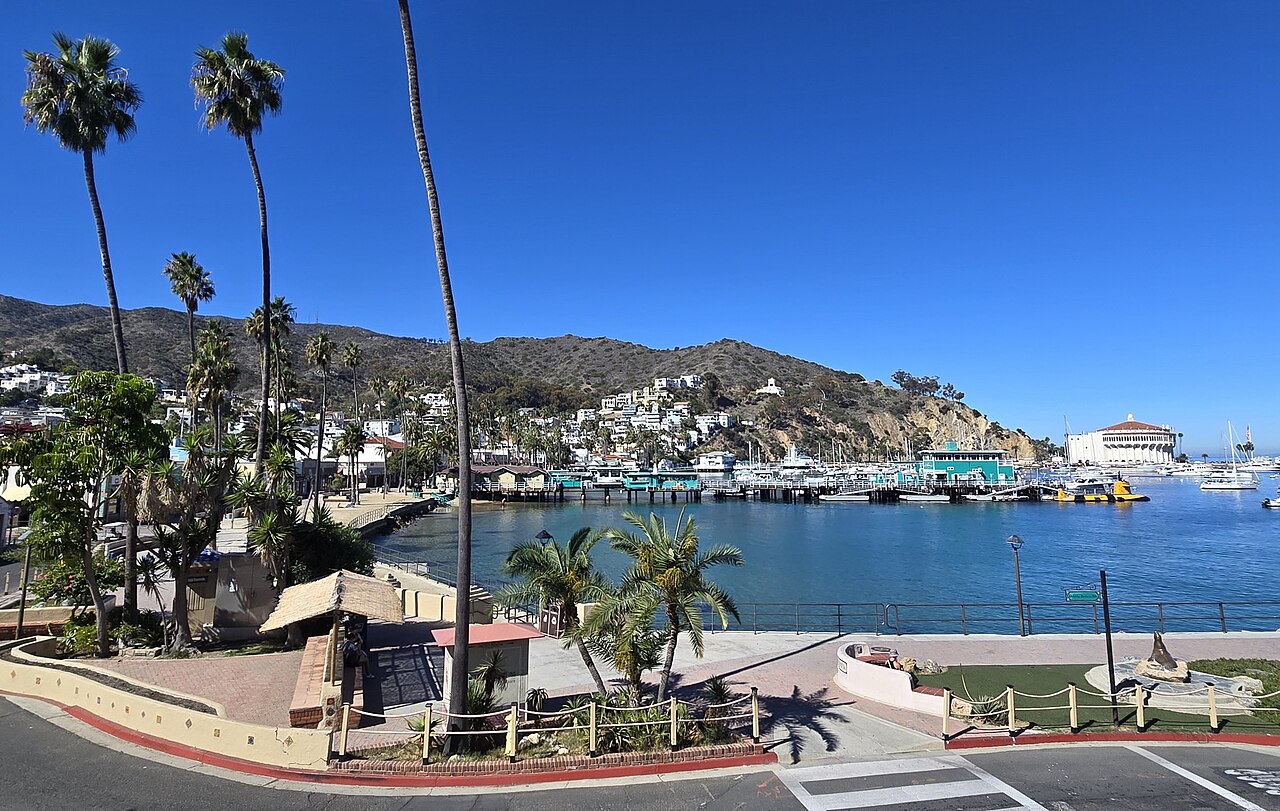
Avalon is a two-hundred-fifty-listing ferry market on the AirROI extract dated 2026-08-08. The cell is not a mainland beach sample and it is not a seventy-percent resort. Annual revenue for a typical active unit lands at $77,042 with a median month of $6,908, an ADR of $721, occupancy of 35.2 percent, and RevPAR of $256. Those figures are the underwriting spine for every other post in this cluster. They belong to the City of Avalon, the only incorporated town on Santa Catalina Island in Los Angeles County, reached by Catalina Express from Long Beach in about an hour, from San Pedro, and from Dana Point in about an hour and a half, with the Catalina Flyer from Newport as another mainland gate. There is no regular San Diego ferry into Avalon.
Hosts who expect seventy percent occupancy will misread this cell on the first pass. Thirty-five point two percent occupancy is a ferry weekend with a real January hole, not a year-round resort. The year clears forty-five thousand, and the median month clears as well. Supply rose 13.6 percent while revenue moved minus 4.3 percent, a crowded plateau rather than a boom. Peak months are August, June, and September, and the soft months are January, February, and December. Summer is not the hole, and winter is.
This report names what the numbers say, how the island calendar runs, what the product looks like, and what this market is not. The Transient Rental License, the twelve percent TOT, and the purchase thesis get full treatment in the rules and investment pieces. If you need the ordinance path before you list, start with theAvalon STR rules guide. If you are underwriting a purchase against these medians, use theinvestment underwrite. For the soft months in more depth, see theshoulder-season calendar.
What the AirROI extract says for Avalon
The AirROI Avalon page, updated 2026-08-08, reports two hundred fifty active listings. Average daily rate sits at $721, and occupancy is 35.2 percent. RevPAR is $256. Annual revenue for the active unit lands at $77,042, and the median month is $6,908. Both the year and the median clear. Those figures are the locked inputs for this cluster. They are not island visitor-spend totals, and they are not a single operator's portfolio year. They are marketplace medians for active, bookable units in the current set.
Supply rose 13.6 percent, and revenue moved minus 4.3 percent. In a two-hundred-fifty-unit harbor town, that pair is more inventory competing for a slightly thinner total pie, not a collapse and not a free boom. Superhost status sits at 26.8 percent, and guest Favorite share is 26.0 percent. Entire homes are 99.2 percent of the stock. Average stay length is 3.2 nights and average lead time is seventy days, so the booking conversation is planned island travel, not same-week impulse. Cleaning fees show a median of $364, already 14.7 percent of gross on the extract. Use that median. The average cleaning figure is secondary and does not belong in a rate card as the primary number.
Treat the extract as a competitive set, not a promise. AirROI's Low Keep and any licensed-share vendor flag are product labels, not City of Avalon law and not the Transient Rental License. The ordinance path is a city license map, not a vendor badge. The extract is the marketplace path. Confusing the two is how operators underwrite a listing that cannot legally open for weekend nights. The numbers below assume an active, bookable unit in the current set. They do not assume you can join that set tomorrow with a free new license on purchase under a new-TRL moratorium window.
Peak months are August, June, and September
The seasonal spine of this cell is simple and locked. Peak month is August. The three strongest months are August, June, and September. The three weakest months are January, February, and December. That order is not a marketing suggestion. It is the calendar pattern hosts should price against when they build a year of rates and minimum stays. Peak-season averages on the extract land near $11,256 monthly revenue, 47.1 percent occupancy, and an ADR near $782. Low-season averages sit near $4,927, 27.9 percent occupancy, and an ADR near $626.
Notice that late summer and early fall carry the year. Hosts who imported a desert-dead-summer story or a mainland beach calendar will treat September as a leftover and then watch the extract prove them wrong. August is the high. June and September sit inside the peak three. Notice also that low-season ADR does not collapse as hard as some hosts expect. Guests who still book in winter are not always hunting for the cheapest night on the map. They are fewer, and they leave more dark nights between ferry weekends from Los Angeles and San Diego.
For a deeper cut on the soft months, use the shoulder-season calendar in this cluster. This market report only needs you to lock the peak-three and low-three labels before you Keep a rate card. Leave out unverified a winter wine package. Leave out unverified a San Diego ferry. Harbor light, Casino silhouette from a distance, and a planned trip from the mainland are honest August, June, and September products. They are not weekend adjectives pasted onto a story the guest cannot legally live without a Transient Rental License.
Occupancy at 35.2 percent is a ferry weekend, not a 70 percent resort
Thirty-five point two percent occupancy means well under half the available nights clear and more than half do not, on average, across the year. In a resort with conference demand and year-round air service, operators often underwrite toward the high sixties or low seventies. Avalon is not that product. The harbor pulls strong August, June, and September demand from domestic guests, with Los Angeles first and San Diego second. It does not fill every midweek night in January at the same rate. Ferry weekend with a real winter hole is the honest frame.
RevPAR of $256 is the bridge between ADR and occupancy. At $721 ADR and 35.2 percent occupancy, the math is consistent with a market that earns real money on the nights it books and leaves real gaps on the nights it does not. Annual revenue of $77,042 and a median month of $6,908 describe a blended year, not twelve Augusts. Both clear. If your expense stack assumes full-year resort occupancy, the model will break in the first January and it will break again in December when ferry demand thins and the house sits dark between booked weekends.
Read Superhost at 26.8 percent and Guest Favorite at 26.0 percent next to occupancy, not instead of it. Quality share is real but not saturated. Guests who do book still have options that look polished in a two-hundred-fifty-listing set. Filling the remaining dark nights is not a matter of dropping the house into Instant Book and waiting. It is a matter of matching the calendar to the demand that actually exists, then defending rate on the harbor months that carry the year, inside a legal product that splits between two-night and thirty-plus minimums.
Product mix: two-bed volume and a real 30-plus share
Two-bedroom units are 45.6 percent of the extract, and one- and two-bedroom stock together is 66.8 percent. Units with three or more bedrooms are 30.8 percent. Homes that sleep six guests are 45.6 percent. Homes that sleep six or more are 68.4 percent. Average guests per stay land near 5.7. Entire homes dominate at 99.2 percent, with houses at 51.2 percent. The volume product for this cell is the well-presented two-bedroom house aimed at a small group coming for harbor time, not a hotel room and not a mainland beach condo.
Larger houses are present, not the only core. Thirty point eight percent of the stock is three bedrooms or more, and more than two-thirds of homes sleep six or more. That mix supports families and small groups without turning a two-hundred-fifty-listing harbor town into only couple inventory. When you position a larger property, you are still selling Avalon and the island, not a Long Beach weekend with an island name. Floor plans, parking, and quiet hours still have to match a small city where flats, Bahia Vista, Canyon Terrace, and Sol Vista typically allow no guest vehicle.
The minimum-stay mix matters as much as bedroom count. Forty-seven point two percent of listings already show a thirty-plus-night minimum. Two-night minimums appear on 45.2 percent, and one-night minimums sit at only 4.8 percent. That is a split product market, not a pure weekend cell and not a pure midterm cell. The Transient Rental License is the under-thirty path. Thirty-plus nights are a different product with different copy. If you are choosing which unit type to market hardest, start with honest house product and a calendar that matches the license, not a pitch you cannot advertise.
Instant Book is limited and the cell is already split
Instant Book sits at 27.2 percent. Most hosts in this cell still gate the calendar. Average stay is 3.2 nights, and lead time averages seventy days. Minimum-stay rules split in a way that matters for underwriting: 47.2 percent of listings show a thirty-plus-night minimum, 45.2 percent show two nights, and only 4.8 percent allow one-night stays. That is already a dual-product market with a real short-stay slice next to a real midterm slice. It is not a pure impulse cell.
The 3.2-night average stay and seventy-day lead time together suggest planned trips, not last-minute app scrolls for most revenue. Guests are 98.6 percent domestic, with Los Angeles first and San Diego second. They know the ferry well enough to book weeks ahead for peak months. Instant Book at 27.2 percent fits a host base that still wants a message thread before many bookings lock, especially when the house sits next to neighbors who care about quiet and when the on-island representative has to answer at any hour.
The 47.2 percent already on thirty-plus-night minimums is a structural fact, not a tip. Midterm and remote-work style stays are already nearly half the competitive set. The 45.2 percent on two-night minimums is the other volume path, and it needs a Transient Rental License for under-thirty nights. If your house is a two-night product, you are joining the licensed short-stay path. If it is a thirty-night product, you are joining the other half. Price and minimums should follow which guest you can actually serve without a citation.
Catalina Vacations is concentration, not your year
On the operator side of the extract, Catalina Vacations appears with one hundred twenty-four listings and combined revenue of $6,645,418 at 25.1 percent occupancy. Evolve appears with sixteen listings and $1,469,193, and amber appears with five listings and $865,323. Those are their books on this pull, not your pro forma, not a median you can divide by listing count, and not a franchise map of the harbor. Treat them as craft and concentration context only. Professional management share sits at 44.0 percent across the cell.
Name concentration matters because photo quality and review depth in a two-hundred-fifty-unit set can be driven by a large island operator. It does not mean a new host must hire the same name to reach the median. It means the visual and operational bar in search results is already set by people who know harbor light and house craft, not by a national template pasted onto a beach house. When you compare your draft listing to the top of the sort, you are often comparing against that concentrated craft.
Do not underwrite your year as any multi-listing operator total on the extract. Underwrite one unit against $77,042 and $6,908, then decide whether marketing support, cleaning, or a full management split belongs in the expense stack. Portfolio revenue on the extract is a competitive-context number. It is not transferable income. A 4.69 average rating further shows that the cash medians already sit inside a review-sensitive set with a thick management layer, so a new listing's ramp is about trust, legal product, and calendar honesty as much as about ADR.
Conservancy land is the housing gate, not a listing ban
City of Avalon is an incorporated Los Angeles County city and the only incorporated town on Santa Catalina Island. The Catalina Island Conservancy protects about eighty-eight percent of the island. That is a land fact from Love Catalina and the Conservancy. It caps new housing stock across the island. It does not mean Avalon has no short-term rentals. Two hundred fifty active listings on the extract prove the marketplace path is real inside the town.
Stays of thirty days or less are treated as transient rental use. That use is allowed in any zone with a Transient Rental License, a business license, and TOT registration. The license does not transfer on sale. New licenses sit under a moratorium window cited in council materials as Ordinance 1228-25, adopted October 21, 2025, with a review task through October 31, 2029. Screenshot live status the week you underwrite. Existing licenses are not a free new license on a purchase.
This market report will not restate every fee and bedroom rule. The ordinance path and the purchase thesis sit in their own posts in this cluster. Two Harbors is an unincorporated village on the west end with a different clerk. AirROI Low is not the Transient Rental License, and marketplace density does not override a license no.
What this market is not
This is not a mainland beach town. Listing copy that leads with a Long Beach weekend, a San Diego ferry that does not run on a regular schedule into Avalon, or a borrowed coastal condo is writing for a different corridor and a different guest. The demand origin is Los Angeles and San Diego taking the ferry toward harbor light, Casino silhouette from a distance, Descanso water, and a house you actually sit in after the last boat. Keep the product language on Avalon and the island. In one sentence of shape only, some guests treat the ferry threshold the way Shelter Island guests treat a water-gate weekend. That is atmosphere, not a San Diego underwrite and not a borrowed rate card.
This is also not the investment memo. A house can sit on $721 ADR and still fail if the parcel cannot list under thirty nights without a Transient Rental License, if a purchase cannot reapply under the moratorium, or if the house only works as a second home with occasional August weekends you cannot legally sell. The investment post owns purchase underwriting, vacant-risk in January through December lows, and the license that dies on sale. This report owns the competitive set: two hundred fifty listings, $721 ADR, 35.2 percent occupancy, $256 RevPAR, $77,042 annual, $6,908 median month, peak three of August, June, and September.
If you remember only one frame from the extract, remember this. Avalon is a mid-size, high-ADR, moderate-to-low-occupancy ferry cell with a real January hole, a real professional photo bar next to Catalina Vacations, limited Instant Book, rising supply against a slight revenue drop, and a Transient Rental License that makes under-thirty nights a papered path rather than a free weekend. Price the calendar you have. Market the harbor and the house you actually own. Leave the ordinance and the purchase thesis to the posts built for them. Your job is to decide whether this house belongs in the two-hundred-fifty-listing set as a legal product.
Related Reading
More Avalon, Santa Catalina Island, and Catalina Island, California reading already live on Crest & Cove.
Avalon STR Rules: the Transient Rental License, 12% TOT, and the 24/7 Island Rep
How to Market an Avalon Stay: Harbor, Casino Light, and the Ferry Threshold
DIY vs Hire in Avalon: Craft Against Catalina Vacations, Not a Franchise Gap
44% PM and 124 Catalina Vacations Homes: Is an Agency Worth It in Avalon?
Is Avalon a Good STR Investment in 2026? $77,042 and a License That Does Not Transfer
Catalina Island Tourism Spending and Avalon Hosts: What the Visitor Dollar Measures
The Complete Visitor's Guide to Avalon and Santa Catalina Island
What It Actually Costs to Start a Legal Rental in Avalon, CA
Financing an Avalon House: DSCR on $6,908 and a Ferry Calendar
Frequently Asked Questions
How many active short-term rental listings does Avalon have?
Avalon runs about 250 listings on the current AirROI extract. Annual revenue for a typical active unit lands at $77,042, with a median month of $6,908, an ADR of $721, occupancy of 35.2 percent, and RevPAR of $256.
Why is Avalon's occupancy only 35.2 percent if it's a popular destination?
A 35.2 percent occupancy rate reflects a ferry-weekend market, not a year-round 70 percent resort pattern. Guests reach Avalon by boat, which naturally concentrates demand into weekends and specific peak months rather than spreading bookings evenly across the calendar.
What are Avalon's peak months?
The peak months are August, June, and September, per the current extract. January, February, and December sit as the low months, so pricing should reflect that real seasonal spread rather than a flat rate across all twelve months.
Does one operator dominate the Avalon short-term rental market?
Catalina Vacations is the largest identified operator, representing real concentration in the market, but its scale is a competitive fact to know, not a reason an independent host can't compete. Accurate, unit-specific listing copy remains fully available regardless of a competitor's portfolio size.
Does Conservancy land limit new short-term rental listings in Avalon?
Conservancy land functions as a housing gate, not a listing ban. It constrains where new housing, and therefore new listings, can be built, but it doesn't prohibit existing eligible properties from operating as short-term rentals.
What's the typical cleaning fee for an Avalon rental, and how much does it eat into revenue?
Cleaning fees show a median of $364 on the current extract, already 14.7 percent of gross revenue. That's a meaningful share worth factoring into both pricing strategy and any revenue projection, since cleaning costs scale with the model but not necessarily with ADR.
What's the mix of stay lengths in the Avalon market?
The product mix leans on two-bedroom volume alongside a real 30-plus-night share of listings. That split suggests two distinct guest products coexisting in this market, weekend leisure stays and longer-stay guests, rather than one uniform booking pattern.
Is Instant Book widely available for Avalon listings?
No, Instant Book is limited in this market, and the listing cell itself is already split into distinct segments. That's worth knowing when setting booking-flow expectations, since it reflects how hosts in this specific market currently manage reservation requests.
What does 'this market is not' actually mean for Avalon hosts?
The report is explicit about drawing a boundary around what the data does and doesn't support, avoiding overstated claims about occupancy, revenue, or demand beyond what the 250-listing extract actually shows. That discipline keeps underwriting and marketing claims honest rather than inflated.
What's the median monthly revenue for an Avalon listing?
The median month is $6,908, against an annual figure of $77,042 for a typical active unit. Using the median month, rather than a single peak-week snapshot, gives a more realistic month-to-month revenue expectation for budgeting and pricing decisions.
Work with Crest & Cove Creative
Catalina Vacations alone runs 124 of Avalon's roughly 250 listings at 25.1 percent occupancy, so generic ferry-town copy is competing against an operator that size. An independent host's listing needs to name what one specific unit can actually deliver.
We help Avalon hosts write listing copy that stands out against Catalina Vacations-scale competition, priced and worded around this exact unit's numbers, not the island average.
Reach out at crestcove.co or (256) 998-7502.


Comments