
Beacon vs Cold Spring Short Term Rental for Independent Hosts

Updated: Aug 28
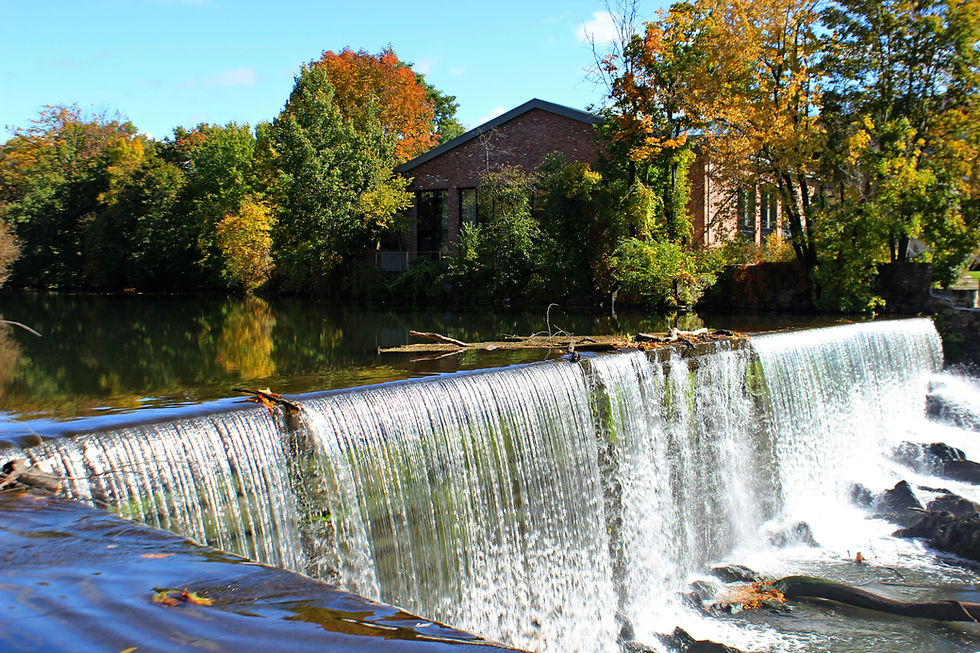
Beacon and Cold Spring sit two stops apart on the same Metro-North line, close enough that visitors treat them as a single day out from the city. Hosts and investors evaluating either town should not make the same mistake. These are two genuinely different short-term rental markets wearing the same "Hudson Highlands weekend getaway" label — different listing counts, different rates, different guest bases, different regulatory pictures, and different risk profiles. Anyone comparing the two towns for a purchase or a listing strategy needs to understand where they diverge, not just where they overlap.
The numbers, side by side
Start with what's actually measurable. Beacon is a city with 184 active short-term rental listings, a $267 average daily rate, and named-town occupancy pins as of 2026-07-31. Average annual revenue per listing runs about — up a striking 25.2% year-over-year, driven mostly by rising occupancy rather than rising rates, since ADR actually dipped slightly over the same period.
Cold Spring is a village, smaller and pricier. It carries 88 active listings, a notably higher $335 ADR, and named-town occupancy pins as of 2026-07-31. Average annual revenue lands around — up 13.9% year-over-year on the back of that higher rate, even as occupancy and revenue-per-available-room both softened somewhat over the same stretch.
Put plainly: Beacon is the bigger, faster-growing, lower-rate market. Cold Spring is the smaller, higher-rate, more selective one. Both towns sit just under the /year mark that would put them solidly above this region's typical viability line, and both are growing — which matters more than either number sitting a little short on its own. Neither town reads as a thin, single-season market propped up by one good month; both show real, multi-driver demand across the calendar.
Why Beacon and Cold Spring attract genuinely different guests
The revenue numbers reflect two different demand bases, not just two different town sizes.
Beacon's anchor is Dia:Beacon, the contemporary-art museum housed in a converted 1929 Nabisco box-printing factory, drawing an estimated 65,000–70,000 visitors a year. It's open year-round, Thursday or Friday through Monday, with reduced winter hours because its galleries rely on natural skylight rather than artificial lighting. That gives Beacon something few Hudson Valley towns have: a genuinely indoor, less-seasonal demand anchor. Add Beacon's Main Street gallery-and-antiques corridor and its monthly "Second Saturday" art walk, and the picture is a design-literate, gallery-hopping guest who books a Beacon stay the way they'd book a city weekend — regardless of season or weather.
Cold Spring's identity runs in a different direction entirely: heritage and institutional tourism. Its Main Street antique-shop corridor is the village's calling card, and it sits directly across the river from West Point, whose own garrison page states the academy draws over two million visitors a year. West Point's graduation week — typically late May — creates a real, calendar-precise demand spike; Cold Spring's own short-term rental review committee has specifically flagged that week as needing special one-time-permit handling, which is about as direct a confirmation of real demand pressure as this market offers. Add Boscobel House and Gardens in nearby Garrison — a historic house-and-gardens attraction in its own right — plus the Hudson Valley Shakespeare Festival, which left its old outdoor-tent home at Boscobel after 2021 and now performs on its own permanent Garrison campus, and Cold Spring's calendar leans more toward institutional visits and seasonal events than Beacon's steadier, more indoor rhythm.
One landmark deserves a direct correction, since a lot of hiking and travel content online still gets this wrong: Breakneck Ridge, the single most iconic scramble-hike in the Lower Hudson Valley, has been closed since April 21, 2025, for construction of the Hudson Highlands Fjord Trail's Breakneck Connector and Bridge, with reopening currently expected sometime in 2027 (estimates range from spring to mid-2027 — verify current status at publish). Listings on either side of the river that still market a Breakneck Ridge hike are making a stale, easily checked claim. The open, walkable alternative right now is Bull Hill (Mount Taurus) and Little Stony Point, both reachable on foot from the Cold Spring train station and both drawing real hiking traffic in Breakneck Ridge's absence.
Two different regulatory pictures, and neither is settled
The rulebook is where Beacon and Cold Spring diverge most sharply — and where the comparison matters most for anyone trying to plan more than a season ahead.
Beacon's law, in effect since 2020, isn't a cap on the number of listings at all. It's a per-unit limit: the rental must be the owner's or tenant's primary residence, accessory dwelling units can't be rented as short-term stays, and each unit is capped at 30 consecutive days and 100 total days a year. In theory, that means Beacon's supply is about as open as the market will bear. In practice, enforcement is weak — city officials have told the City Council that fewer than half of the roughly 96 identified short-term rentals in Beacon are actually registered — and that weak enforcement is exactly what's now under pressure. The City Council has been actively discussing raising the current violation fine and asking platforms like Airbnb and Vrbo to delist unregistered units. Beacon's opportunity today is real: there's room to operate without hitting a hard numeric ceiling. Its risk is also real: enforcement could tighten meaningfully within the same window this content is live.
Cold Spring runs the opposite structure. Its 2021 law caps total permits village-wide at 49, allocated by lottery — a genuine numeric ceiling, at least on paper. That cap has gone effectively unenforced since it was adopted, and a stalled, multi-year revision has been under discussion that would reduce the cap further to 40 permits, add an owner-occupancy requirement, and end the lottery system. None of that revision has been adopted as of this writing. So Cold Spring's real, current rule is best described as unsettled: a cap exists on the books, isn't being enforced, and could tighten in ways that reward whoever already holds a permit once the village finally acts.
There's a third variable most comparisons of this pair miss entirely: the Town of Philipstown, the unincorporated area surrounding the Village of Cold Spring (including Garrison), currently has no short-term rental law at all. That's about to change — the Town Board is expected to formally introduce Philipstown's first-ever ordinance around early August 2026, with a public hearing to follow. A property just outside the village boundary, in other words, is operating under neither Beacon's rules nor Cold Spring's — a distinction worth knowing, since "Cold Spring" gets used colloquially to describe the whole area even though the village line is a real regulatory boundary.
What this means for a buyer or host choosing between them
The practical read is that Beacon and Cold Spring reward different strategies, not that one is simply better than the other.
Beacon favors a volume-and-differentiation approach: a larger, faster-growing field of listings, room to operate under a per-unit day-limit rather than a hard cap, and essentially no confirmed named professional-management competitor in the city itself. A host who can market well — sharp photography, positioning that speaks to Dia:Beacon's art-crowd visitor rather than generic "cozy getaway" language — is competing in a market that's genuinely underserved on the marketing side, even as the town's enforcement picture tightens around it.
Cold Spring favors a higher-rate, lower-volume approach in a smaller field, but one with real professional competition already present: Alluvion Vacations and Home Sweet Hudson both list Cold Spring as a confirmed service area. Neither is dominant, and neither amounts to saturation, but a Cold Spring host isn't operating in a vacuum the way a Beacon host currently is. The village's stalled cap cuts both ways — it's a scarcity signal that could reward existing operators once enforcement finally arrives, and it's also a source of years-long uncertainty that has arguably already pushed some hosts to delist, a plausible piece of why Cold Spring's listing count has contracted somewhat more sharply year-over-year than Beacon's.
Neither town is the obviously "better" bet, and any claim that one has more room to grow than the other should be read as directional rather than settled — both regulatory pictures are genuinely still in motion. What's clear is that a host or investor comparing these two towns should be comparing two different businesses, not two versions of the same one: a bigger, faster-growing, weakly-enforced city market on one side of the river's rail line, and a smaller, pricier, more heritage-driven village market with a nominal cap and real competition on the other.
Related Reading
Keep reading in the Cold Spring market spine and nearby towns in the same region: same-cluster pages hosts can use without costume-corridor copy.
How to Market a STR in Beacon Cold Spring, NY for Independent Hosts
Is a Marketing Agency Worth It Beacon Cold Spring Independent Hosts
DIY vs. Hire STR Marketing in Beacon Cold Spring: When to Stop Alone
Beacon Cold Spring NY Short Term Rental Market for Independent Hosts
Beacon Cold Spring Philipsto Rules: Clerks, Not Occupancy Ranking
Philipstown STR Law Beacon Cold Spring Investment Independent Hosts
Hudson Valley Wedding Weeken DIY Ceiling: AirROI Pins, Not Leftover
Hudson Rhinebeck Report: AirROI Pins, Not Leftover Occupancy
Hudson Rhinebeck 1 Report: AirROI Pins, Not Leftover Occupancy
Beacon, NY vs Cold Spring: What Independent Hosts Should Fix First
Frequently Asked Questions
Is Beacon or Cold Spring a better short-term rental market?
Neither is categorically better — they reward different strategies. Beacon offers a larger, faster-growing field with weaker enforcement and no confirmed named management competition, favoring volume and marketing differentiation. Cold Spring offers a smaller field with a notably higher ADR, real (if modest) professional competition, and a nominal permit cap that isn't currently enforced but could tighten. The right choice depends on whether a host wants scale in a bigger pool or a premium position in a smaller one.
Does Cold Spring actually enforce its 49-permit cap?
The cap has gone effectively unenforced since it was adopted in 2021, and a proposed revision that would reduce it to 40 permits, add an owner-occupancy requirement, and end the lottery has been under discussion for years without being adopted. Anyone relying on the exact current rule should verify it directly with the Village Clerk's office, since the on-paper cap and the actual enforced rule are not the same thing right now.
Is Breakneck Ridge open for hiking near Cold Spring?
Breakneck Ridge, along with its Wilkinson Memorial and Lower Brook trailheads and the seasonal Metro-North Breakneck Ridge station, has been closed since April 21, 2025, for Hudson Highlands Fjord Trail construction, with reopening currently expected sometime in 2027 (estimates range from spring to mid-2027 — verify current status at publish). Bull Hill (Mount Taurus) and Little Stony Point, both walkable from the Cold Spring train station, are the open alternative right now.
What's the difference between the Village of Cold Spring and the Town of Philipstown for short-term rental rules?
They're separate jurisdictions with separate rules. The Village of Cold Spring is a distinct incorporated area governed by its own 2021 permit-cap law. The surrounding Town of Philipstown, which includes Garrison, currently has no short-term rental law at all — its first-ever ordinance is expected to be formally introduced around early August 2026. A property outside the village boundary but inside Philipstown is not currently governed by Cold Spring's rules.
Why is Beacon's listing count falling even without a hard cap?
Beacon's contraction looks more like an enforcement effect than a supply cap. City officials have confirmed that a significant share of identified short-term rentals aren't registered, and the City Council has been actively discussing stricter enforcement — higher fines and asking platforms to delist unregistered units. That kind of compliance pressure can push marginal or unregistered hosts to delist even without any formal limit on the number of permits available. Keep going on Crest & Cove:the Crest & Cove intro·local SEO keywords that actually book·the five elements of a converting hero·how to compare STR marketing agencies·Asheville paddling spots worth the drive·this cluster against named-town AirROI pins·Destin against AirROI, not leftover.
Why Beacon and Cold Spring attract genuinely different guests?
Beacon and Cold Spring sit two stops apart on the same Metro-North line, close enough that visitors treat them as a single day out from the city. What's clear is that a host or investor comparing these two towns should be comparing two different businesses, not two versions of the same one: a bigger, faster-growing, weakly-enforced city market on one side of the river's rail line, and a smaller, pricier, more heritage-driven village market with a nominal cap and real competition on the other.
What this means for a buyer or host choosing between them?
Beacon and Cold Spring sit two stops apart on the same Metro-North line, close enough that visitors treat them as a single day out from the city. Neither is dominant, and neither amounts to saturation, but a Cold Spring host isn't operating in a vacuum the way a Beacon host currently is. A property just outside the village boundary, in other words, is operating under neither Beacon's rules nor Cold Spring's — a distinction worth knowing, since "Cold Spring" gets used colloquially to describe the whole area even though the village line is a real regulatory boundary.
How should a host read this: The numbers, side by side?
Neither town is the obviously "better" bet, and any claim that one has more room to grow than the other should be read as directional rather than settled — both regulatory pictures are genuinely still in motion. A host who can market well — sharp photography, positioning that speaks to Dia:Beacon's art-crowd visitor rather than generic "cozy getaway" language — is competing in a market that's genuinely underserved on the marketing side, even as the town's enforcement picture tightens around it.
Work with Crest & Cove Creative
Write this town's year. Do not file another market's number as this stay.
Reach out at crestcove.co or (256) 998-7502.



Comments