
The Complete Visitors Guide to Islamorada: Highway, Not Key West

Updated: Aug 27

Islamorada is the Village of Islands, made up of five keys - Plantation, Windley, Upper Matecumbe, Lower Matecumbe, and Indian Key - reached by driving the Overseas Highway south from the mainland through Key Largo. Guests who search specifically for Islamorada are looking for Robbie's, the History of Diving Museum, the Green Turtle Inn, Theater of the Sea on Windley, and Anne's Beach - not a Key West itinerary with a different caption.
The published market sample for Islamorada shows a typical year of $46,255 across 368 listings, with ADR at $650 and occupancy at 30.4 percent. Peak-3 is March, February, and April, with March as the strongest month, and September as the clear low point. Average stay runs 6.2 nights, with New York as the leading guest origin.
This is not legal advice, and it's not a rent roll dressed up as a guest guide. It's a practical visitors guide to the actual village - the highway mile, the museum, the Inn, Robbie's, and Anne's Beach - written so a host can build an accurate, specific itinerary rather than a generic Florida Keys description that could just as easily describe Key West or Key Largo, two genuinely different destinations along the same general highway.
Arrive on the Overseas Highway, Not a Borrowed Key West Fantasy
The honest arrival story for an Islamorada guest is the drive itself: the Overseas Highway, carrying a car from the mainland through Key Largo and into this specific village of five keys. That drive is worth naming specifically in a guest guide, rather than skipped over in favor of imagery that belongs to a different Keys destination entirely.
New York shows up as this market's leading guest origin, with roughly 92 percent of guests being domestic overall. That's genuinely useful context for understanding who's traveling to Islamorada - it's not, however, a reason to write the listing as if it were a metro getaway with a Keys caption slapped on top. The actual destination, once the drive ends, is this specific village.
A guest guide that opens with Duval Street or generalized "Key West vibes" language is promising an experience the Islamorada drive doesn't actually deliver. The honest approach names the specific highway mile a listing sits near, and treats the arrival itself - the drive through Key Largo, the moment the car actually stops here - as the beginning of the stay.
Average stay length in this market is 6.2 nights with a 93-day average booking lead time - a genuine village week, not a quick highway pass-through. That stay begins the moment the guest arrives in the village, and the guest guide should reflect that this is a multi-day home base, not a single-day highway stop on the way to somewhere else.
Walk the Village First: The Museum, the Inn, the Highway Mile
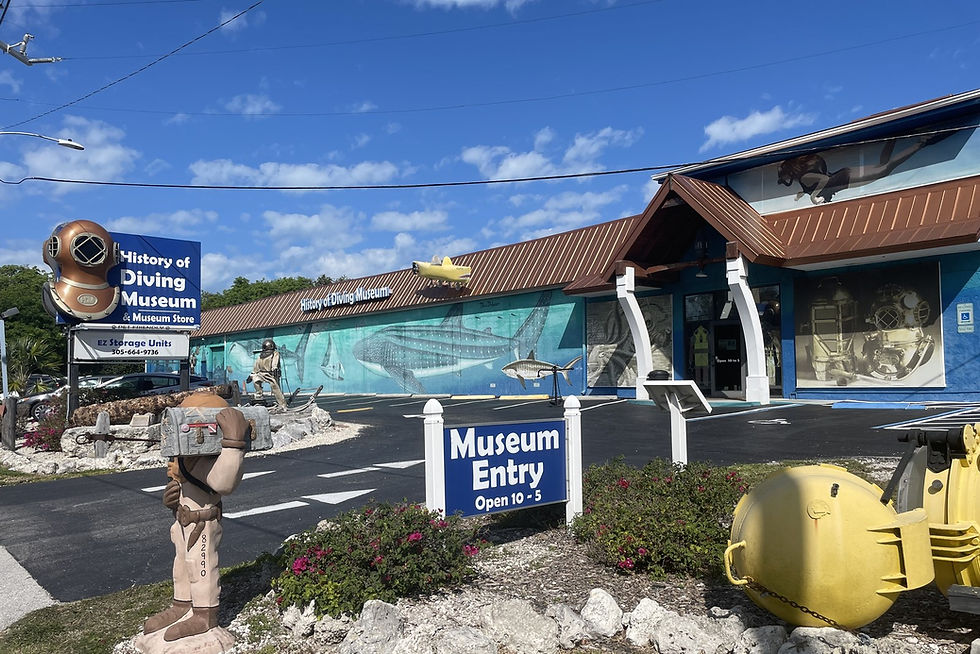
The village itself - its named commercial stretch along the Overseas Highway, the History of Diving Museum, and the Green Turtle Inn - deserves the first hours of any Islamorada stay, before a guest heads out for a flats charter or gets talked into a same-day Key West detour that undersells the village they actually booked.
The History of Diving Museum and the Green Turtle Inn are both real, specific, nameable stops worth including directly in a guest guide. Naming them accurately - rather than describing the village generically as "quaint Keys shops and dining" - gives a guest something concrete to plan around and helps the listing read as unmistakably Islamorada rather than any of several similar-sounding Keys towns.
This village-first approach also protects the listing's own identity. A guest guide that only shows water and a porch view could describe several different Keys properties; a guide that specifically names the museum, the Inn, and the actual highway mile can only describe this one village, which is exactly the kind of specificity that helps the right guest recognize their destination.
The village walk works in every one of the market's named months, not just the March-February-April peak-3. A September visitor, arriving during this market's genuine low point, still gets the same real museum and the same real Inn - the village itself doesn't become less worth walking just because the calendar shows softer demand that month.
Anne's Beach Is a Real Stop - Confirm Hours Before You Promise It
Anne's Beach, on Lower Matecumbe, is a genuine, specific stop worth naming directly in a guest guide - distinct from a generic "nearby beach access" mention. It's landscape and visitor identity, not an occupancy or revenue figure, and it deserves to be treated with the same specificity as the village's other named landmarks.
Hours and tide conditions at Anne's Beach change, and a guest guide that reuses a prior season's hours without reconfirming them risks sending a guest to a closed or inaccessible spot. The safer approach is confirming current hours and access directly before promising a specific beach experience in listing copy, and being ready to redirect a guest back toward the village if beach conditions on a given day don't cooperate.
None of this changes the market's underlying figures. Typical revenue remains $46,255, occupancy 30.4 percent, ADR $650 - a nice beach day on a Tuesday in any given month doesn't move those figures, and a guest guide shouldn't imply that beach access alone is evidence of a stronger market than the data actually shows.
The practical rule for Anne's Beach: name it specifically, confirm its hours and access before promising a wade to a guest, and treat any confirmed access as genuinely useful guest-guide content - separate entirely from any claim about the property's own occupancy or revenue performance.
Robbie's Tarpon Feeding: Real Water, Not a Year-Round Guarantee
Robbie's, with its marina and its well-known tarpon feeding, is a genuinely famous piece of Islamorada's visitor landscape - a real, dated attraction worth naming specifically. It's also worth being clear that this is a specific, weather- and schedule-dependent activity, not a guaranteed daily fixture that a listing can promise without checking first.
Calling the marina directly to confirm current hours before promising a tarpon feeding in listing copy is a simple, worthwhile step. Hours and weather-related closures shift, and a guest guide that copies a prior season's schedule risks sending a guest to a closed dock - which then becomes the host's problem to smooth over on a Saturday rather than a genuinely pleasant surprise.
A busy afternoon at Robbie's, however photogenic, isn't evidence of this market's broader occupancy or revenue performance. The published $46,255 typical year and 30.4 percent occupancy already reflect a full year that includes both busy and quiet days at every landmark in the village - a single dock full of visitors doesn't shift those underlying figures.
The practical approach: name Robbie's specifically, confirm current hours before promising a specific experience, and have a genuine backup plan - a return to the village walk, the museum, or the Inn - ready for a guest if the feeding happens to be closed on the day of their visit.
Eating in a 368-Listing Village, Not a Key West Food Scene
Islamorada eats like the village it actually is - a 368-listing market, not a metro food scene borrowed from Key West or New York. A guest guide's dining recommendations should name a specific counter or restaurant a host has genuinely visited, rather than generic "great local dining" language that could describe dozens of other Keys or coastal towns.
The Green Turtle Inn is worth naming as a real village landmark, though it functions here as landscape and identity rather than as an occupancy or revenue data point - hotel and boutique share in this market sits at 16.6 percent, a separate scrape fact from the Inn's specific role in a guest's village walk.
New York guests, as this market's leading origin, will naturally compare Islamorada's dining to what they left behind in a much larger metro - and the honest approach isn't trying to out-compete that comparison with inflated claims, but telling the truth about a genuine five-key highway village's actual dining scene.
Capacity for eight or more guests is this market's most common house-size setting, at about 32.9 percent of the sample - worth keeping in mind when recommending dining options, since a larger group's needs (reservations, seating capacity) differ from a couple's, and an accurate guest guide should account for the actual group size a specific listing serves.
Confirm Which Desk Owns the Parcel Before You Advertise
Islamorada operates as the Village of Islamorada, with its own vacation rental license requirement - reported at $1,325 - handled through the village's licensing portal. Village Planning can be reached at (305) 664-6498 for parcel-specific questions. This is a genuinely different process from the county's unincorporated path.
Unincorporated Monroe County parcels, as opposed to those within Village of Islamorada limits, follow a separate Special Vacation Rental process with a reported $490 initial fee - a meaningfully different desk from the Village's own licensing requirement, and one that shouldn't be assumed to apply to a Village-limits parcel.
Monroe County's Tourist Development Tax, at 5 percent, is a separate county-level tax obligation, distinct from the Village's own $1,325 license fee - both may apply together depending on the parcel, and neither substitutes for the other. Florida DBPR public lodging licensing, under FS 509, applies statewide as an additional, separate requirement.
The practical rule before advertising any Islamorada-area listing: confirm the parcel's actual tax map designation - Village of Islamorada versus unincorporated Monroe County - and contact the matching office directly, rather than assuming based on general area or borrowing a neighboring jurisdiction's registration process.
Don't Let Key West or Key Largo Blend Into This Village
Key West is a genuinely different island with its own distinct identity, guest base, and market data - not an interchangeable stand-in for Islamorada regardless of how close the two might seem on a Keys road trip itinerary. A guest guide that borrows Key West's Duval Street imagery is describing a destination the guest won't actually find on this specific drive.
Key Largo, a genuinely different market along the same highway corridor, publishes its own figures - $45,955 typical revenue across 833 listings, with Miami (rather than New York) as its leading origin, and its own thirty-plus-night minimum share of 32.7 percent, compared to Islamorada's 10.9 percent. Both markets happen to peak in March, but that shared peak month doesn't make the two interchangeable.
A guest who specifically searched for Islamorada wants this village's specific landmarks - Robbie's, the museum, the Inn, Anne's Beach - not a same-day Key West side trip dressed up as the main event, and not Key Largo's different guest-origin pattern or booking-minimum behavior mistakenly applied to an Islamorada listing.
The discipline that keeps all three markets honest: name Islamorada specifically when that's the actual village, keep Key West and Key Largo's own figures clearly labeled to their own islands, and never let a shared regional highway or a shared peak month blur the boundary between three genuinely different markets.
Writing the Walk Without Costume Copy
A complete, honest Islamorada guest guide arrives on the Overseas Highway on purpose, walks the village first (the museum, the Inn, the highway mile), names Anne's Beach as its own confirmed stop, treats Robbie's tarpon feeding as a real but schedule-dependent attraction, and eats at a specific, named counter rather than a generic Keys description.
It keeps New York in its proper place as this market's leading guest origin - useful context, not the village's own identity - and it keeps Key West and Key Largo entirely on their own separate pages, never blended into Islamorada's own itinerary or market figures.
It confirms the correct licensing desk (Village of Islamorada versus unincorporated Monroe County) before any marketing copy goes live, and it treats every landmark - Robbie's, the museum, Anne's Beach, the Inn - as genuine visitor identity worth naming specifically, while keeping the market's own published year ($46,255 on 368 listings) entirely separate from any of that tourism-driven imagery.
The test for any line going into an Islamorada guest guide: could this sentence be pasted onto a Key West or Key Largo listing without anyone noticing? If yes, it hasn't actually described Islamorada. The guide that survives that test is the one that still reads distinctly as this specific five-key village once every borrowed Keys generality has been removed, and that same discipline holds regardless of which month a guest happens to be booking.
Related Reading
Related reading for Islamorada hosts: same-town spine first, then nearby geo lines. Skip costume national dumps that do not underwrite this driveway.
Frequently Asked Questions
How do guests actually travel to Islamorada?
By driving the Overseas Highway south from the mainland through Key Largo into the Village of Islamorada's five keys. New York is this market's leading guest origin, but that's a demand fact, not the actual arrival experience — the honest guest guide names the highway mile and treats the drive itself as the start of the stay.
What should the first day of an Islamorada stay include?
The village walk itself — the History of Diving Museum and the Green Turtle Inn — before heading out for a flats charter or a same-day Key West detour. Naming these specific landmarks helps a guest guide read as unmistakably Islamorada rather than a generic Keys description.
Do Anne's Beach hours need to be confirmed before promising it in a listing?
Yes. Hours and tide conditions change, and reusing a prior season's schedule risks sending a guest to a closed or inaccessible beach. Confirm current hours and access directly, and have a village-walk backup plan ready in case beach conditions don't cooperate on a given day.
Is Robbie's tarpon feeding available every day?
Not guaranteed — hours and weather-related closures shift. Confirm current hours directly with the marina before promising a specific feeding experience in listing copy, and keep the village walk or museum as a genuine backup plan if the feeding happens to be closed.
Should Islamorada dining recommendations mimic Key West or New York?
No. Islamorada eats like the 368-listing village it actually is. Name a specific, real counter or restaurant rather than generic "great local dining" language, and account for the market's common eight-plus-guest household size when making recommendations.
Which office handles vacation rental licensing for an Islamorada parcel?
It depends on the parcel's exact location. Village of Islamorada parcels go through the Village's own licensing process (reported at $1,325), with Village Planning reachable at (305) 664-6498. Unincorporated Monroe County parcels follow a separate Special Vacation Rental path with a reported $490 initial fee.
Can Key West's identity be used to market an Islamorada listing?
No. Key West is a genuinely different island with its own identity and market data. A guest guide borrowing Duval Street imagery is describing a destination the guest won't find on the actual Islamorada drive, and risks losing the guest who specifically searched for this village.
How does Islamorada's market compare to Key Largo's?
They're different markets along the same highway corridor. Key Largo publishes $45,955 on 833 listings with Miami as its leading origin, versus Islamorada's $46,255 on 368 listings with New York as its origin. Both peak in March, but that shared peak month doesn't make the two markets interchangeable.
What's the actual stay length pattern for Islamorada?
Average stay is 6.2 nights with a 93-day average booking lead time — a genuine village week rather than a quick highway stop. About 10.9 percent of listings set a thirty-plus-night minimum, a notably lower share than neighboring Key Largo's 32.7 percent.
What's the single best test for an honest Islamorada guest guide?
Ask whether a given sentence could be pasted onto a Key West or Key Largo listing without anyone noticing. If it could, it hasn't actually described Islamorada. The guide that passes this test names the actual highway mile, the actual landmarks, and the actual confirmed hours specific to this village.
Work with Crest & Cove Creative
A guest guide that opens with Duval Street language is promising an island the Islamorada drive doesn't actually deliver. Guests who typed this village want Robbie's, the museum, and Anne's Beach - not a borrowed Key West afternoon.
We help hosts write Islamorada guest guides that name this specific village's real landmarks and confirmed hours instead of generic Keys language. Send us your current guide and we'll flag every line that could describe the wrong island.
Reach out at crestcove.co or (256) 998-7502.


Comments