
Construction Photos vs. Guest-Ready Shots: Know the Line

Updated: Aug 25
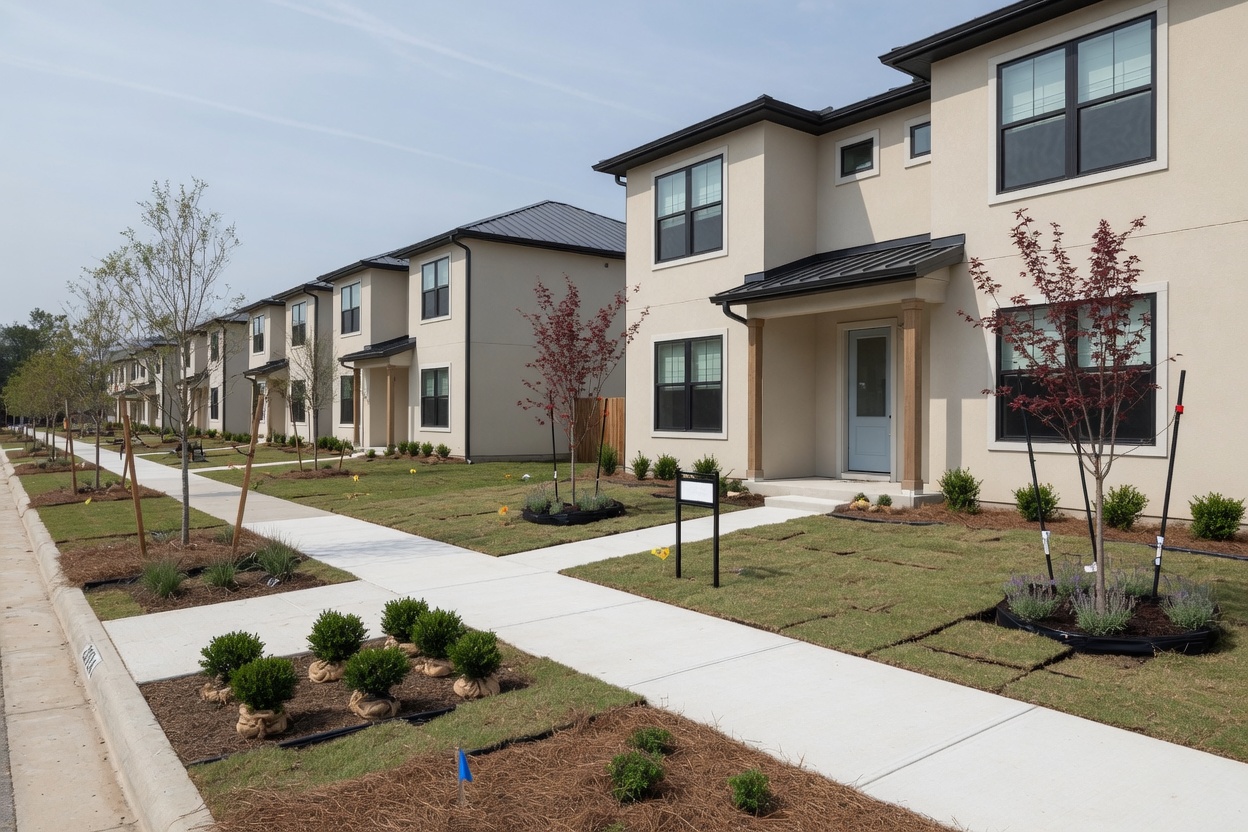
A host finishing a renovation wants to get the listing live as soon as possible, and the photos available are the ones taken during the last week of work: a beautiful new kitchen, framed by a stack of leftover tile boxes in the corner and a drop cloth still on part of the floor. The instinct is understandable, the house is close enough, and waiting another two weeks for a fully staged shoot feels like lost booking time. The problem is what that gallery actually communicates to a guest who has no context for "almost done." They see a construction site with nice countertops, not a finished home.
The line between construction photography and guest-ready photography isn't about photo quality, a phone photo of a genuinely finished room beats a professional photo of an unfinished one. It's about whether the space in the frame is the space a guest will actually walk into on arrival. Getting this wrong doesn't just create a mismatch between expectation and reality, it actively works against the listing, because a gallery with visible construction elements reads as unfinished even when the actual living spaces are complete. This page stays on host-useful clarity about the actual line. It will not guess at booking or ranking lifts tied to photo timing, and any question about permits or occupancy timelines belongs with a qualified professional. This is not legal advice.
What follows covers how to tell when a space is actually guest-ready, how to sequence photography around a renovation instead of racing it, the anti-patterns that create a mismatched gallery, and when a listing's current photos are already doing their job.
What 'guest-ready' actually means for a photo
A space is guest-ready when a stranger walking into that room, with zero context about the renovation timeline, would see exactly what the photo shows: no tools, no material stacked in a corner waiting for a next phase, no protective covering on a floor or counter, no unfinished trim or exposed subfloor anywhere in frame. The test isn't whether the room is functionally usable, plenty of rooms are usable before they're fully finished, it's whether the visual details in the photo match what a guest will actually experience without any explanation needed.
This standard applies room by room, not to the house as a whole. A kitchen can be fully guest-ready while a guest bathroom two doors down still needs trim work. The right move in that situation is photographing the finished kitchen for the listing and leaving the unfinished bathroom out of the gallery entirely until it's actually done, rather than either delaying the whole listing or including a photo that undersells the space.
Lighting and staging still matter within that standard, a guest-ready room photographed poorly still looks worse than it is, but they're secondary. A well-lit photo of an unfinished space is still an unfinished-space photo. A phone photo of a genuinely complete room, taken in good daylight with the bed made and the counters cleared, does more for a listing than a professional shot of a room that isn't actually done yet.
Sequencing photography around the renovation instead of racing it
The better approach for a host mid-renovation is sequencing photography to match completion, room by room, rather than treating photography as a single event that has to happen the moment the listing needs to go live. As each room reaches genuinely guest-ready status, photograph it and add it to the gallery. This produces a gallery that grows in accuracy over time instead of one that's fully populated but partially misleading from day one.
If the listing needs to go live before every room is finished, the honest move is publishing with the rooms that are actually ready and being direct in the about section about which spaces are still in progress, rather than filling the gap with construction-adjacent photos that imply more completeness than exists. A shorter gallery of genuinely finished rooms builds more trust than a full gallery with one or two photos that don't match reality.
This sequencing also protects against the more subtle version of the problem: a photo taken during a rushed "good enough" moment between construction phases, when a room looks temporarily presentable but isn't actually finished, a countertop installed but the backsplash not yet done, for example. That kind of photo ages badly fast, and a guest who books based on it and arrives during the actual unfinished period gets exactly the mismatch this whole page is about preventing.
Five anti-patterns in construction-to-ready photo transitions
The first is publishing photos that include visible tools, material stacks, or protective coverings, treating "mostly done" as equivalent to "guest-ready" when a stranger with no context would read the space very differently.
The second is photographing a room during a temporarily presentable moment mid-renovation, rather than waiting for actual completion, which produces a photo that looks finished today and won't match the space two weeks from now.
The third is delaying the entire listing launch until every single room is finished, rather than launching with the rooms that are genuinely ready and being direct about which spaces are still in progress.
The fourth is measuring gallery quality by photo count or professional polish rather than by whether every photo in the gallery matches what a guest will actually see.
The fifth is reusing pre-renovation photos of a space that's since changed significantly, which creates the same mismatch problem in the opposite direction, a photo too old rather than too early.
The pattern to avoid: a polished gallery, one photo that gives it away
The most damaging version of this failure isn't a gallery full of obviously unfinished rooms, it's a gallery that's mostly accurate with one or two photos that quietly undercut it. A guest who arrives and finds the kitchen exactly as photographed, but the primary bathroom clearly mid-renovation despite a photo that made it look finished, doesn't just note that one discrepancy. They start questioning whether anything else in the listing was accurately represented, which damages trust well beyond the single room in question.
The corrective move is a straightforward audit: go through every photo currently in the gallery and confirm, room by room, that it still matches the current state of the space. Renovations often continue in phases even after a listing goes live, a host adding a deck, finishing a basement, and it's easy for the gallery to drift out of sync with the actual house without anyone noticing until a guest points it out.
This audit is worth repeating any time meaningful work happens on the property, not just at initial launch. A gallery that was fully accurate at launch but hasn't been checked since a subsequent renovation phase carries the same risk as one that was rushed from the start.
When the current gallery is already fully guest-ready
If every room currently in the listing gallery matches what a guest actually experiences on arrival, and no renovation work is currently in progress that would change that, there's nothing further to do here. A finished, accurate gallery doesn't need a refresh just because it's been a while since the last photo shoot.
The one exception worth flagging even on an otherwise finished listing is furniture or decor that's changed since the photos were taken, a new couch, a repainted wall, since that's a smaller-scale version of the same guest-ready standard. It doesn't require professional reshoot, but it does deserve an honest phone photo update so the gallery stays current.
Stopping here, once the gallery matches reality, is the correct outcome. There's no ongoing photography task list to work through on a listing that's already accurate; the job resumes only when the actual space changes again.
A 30 and 90-day check on gallery accuracy
At thirty days, particularly for a listing that recently launched mid-renovation, confirm whether any additional rooms have reached guest-ready status and should be added, and whether any photo already in the gallery has started to drift from the current state of the space.
At ninety days, audit the full gallery against the current property one more time, especially if any renovation work has continued since launch. Drop or replace any photo that no longer matches what a guest would actually see, rather than letting a single outdated image sit in the gallery because the rest of it still looks fine.
Occupancy alone doesn't confirm the gallery is accurate, a listing can keep booking even with one misleading photo if demand is strong enough in the market. Watch instead for arrival-related complaints specifically referencing a mismatch between a photo and the actual space, since that's the direct signal the gallery needs attention.
Using the renovation itself as content, without misrepresenting the finished product
There's a legitimate, separate use for construction-phase photography that doesn't involve the main listing gallery at all: documenting the renovation as its own content, a before-and-after story, a social post about the work that went into the space. That kind of content can genuinely build interest and trust in a host's brand, as long as it's clearly presented as renovation documentation and kept out of the actual booking gallery a guest evaluates when deciding whether to reserve the space.
The distinction that matters is context. A construction photo captioned as "the transformation so far" on a social account is honest content about a process. The same photo dropped into the listing gallery without that context reads as a representation of what a guest will actually see, which is exactly the mismatch this page is about avoiding. The photo itself isn't the problem; where it's placed and what it implies is.
Hosts who enjoy sharing the renovation process have a real opportunity here to build audience and interest well before the listing is guest-ready, as long as that content stays clearly separated from the actual booking gallery until every room in it has reached the guest-ready standard described earlier on this page.
Coordinating photo timing with contractors and renovation crews
A practical obstacle to sequencing photography around actual completion is that renovation timelines shift, a contractor finishes early, or a delay pushes a room's completion back by weeks, and the photography plan needs to flex with it rather than being scheduled rigidly in advance. Building in a buffer, checking a room's actual status a day or two before a planned shoot rather than trusting an original schedule, avoids the awkward outcome of showing up to photograph a room that isn't quite as finished as the calendar assumed.
It's worth asking a contractor or crew directly, near the end of a room's work, for a heads-up when final cleanup is genuinely complete, tools and materials cleared, protective coverings removed, rather than relying on a general sense of when a phase is supposed to wrap. Crews are often focused on the technical completion of the work rather than the visual, guest-ready standard a listing needs, so that specific ask, "let me know when it's fully cleared out, not just functionally done", closes a gap that otherwise falls on the host to catch after the fact.
This coordination is a small process fix, but it directly prevents the most common cause of a rushed, not-quite-ready photo making it into the gallery: photographing on the original schedule instead of the room's actual, current state.
What to do when the listing has to go live with an unfinished common space
Sometimes the timeline doesn't allow for waiting on every space, particularly shared or common areas that affect the whole property, an unfinished exterior, a yard still under landscaping work. In that case, the most honest approach is naming the specific ongoing work directly in the listing's about section, rather than either avoiding the topic entirely or trying to photograph around it in a way that implies completion that hasn't happened.
A short, plain sentence, "landscaping in the side yard is still in progress and expected to finish by [timeframe]", sets an accurate expectation without requiring the whole listing to wait on that one detail. Guests generally accept a clearly disclosed limitation far better than they accept discovering an undisclosed one on arrival, the same principle that shows up throughout this whole page in different forms.
Once the disclosed work actually finishes, update both the about section and the gallery the same day, removing the disclosure and adding the now-accurate photo. A disclosure that stays in the listing long after the work is actually done is its own small inaccuracy, just in the opposite direction of the original problem.
Setting guest expectations honestly when timelines shift
Renovation timelines slip more often than not, and a listing that disclosed a specific completion date for an ongoing project needs a plan for what happens if that date moves. The worst version of this is silence, leaving an outdated timeline in the listing while the actual work quietly runs long, which a guest discovers only on arrival when the promised finished space still isn't done.
The better approach is treating the disclosed timeline the same way any other listing fact gets treated: update it the moment it changes, even if the update is simply extending the estimated date rather than announcing full completion. A guest who sees an honestly updated timeline trusts the listing considerably more than one who arrives to find a stale promise that was never corrected.
This kind of update costs a host almost nothing, a single sentence edited in the about section, and prevents the exact kind of arrival-day disappointment that a guest is far more likely to write a negative review about than the underlying delay itself.
Related Reading
More independent-host reading on honest listing copy, distribution, and when hiring help is worth it.
Frequently Asked Questions
What actually makes a room 'guest-ready' for photography?
A stranger with zero context about any renovation should see, in the photo, exactly what they'll experience on arrival: no visible tools, no material stacked for a later phase, no protective floor or counter coverings, no unfinished trim in frame. Functional usability isn't the same standard, a room can be usable before it's actually guest-ready to photograph.
Should a host wait until an entire property is finished before launching the listing?
Not necessarily. Launching with the rooms that are genuinely guest-ready, while being direct in the about section about which spaces are still in progress, tends to build more trust than either delaying the whole listing or filling the gap with construction-adjacent photos that overstate completeness. This approach also gives the host real photos to work with from day one instead of relying on renderings or stock imagery.
Why is one misleading photo in an otherwise accurate gallery so damaging?
A guest who catches a single mismatch, a room that looked finished in the photo but wasn't on arrival, tends to question the accuracy of the entire gallery, not just that one room. The damage isn't proportional to the size of the discrepancy; it's proportional to how much it undermines trust in everything else on the listing.
How often should a host audit gallery photos against the actual property?
At minimum every 90 days, and immediately after any meaningful renovation or furniture change. Renovations often continue in phases even after a listing is live, and it's easy for the gallery to drift out of sync with the current house without anyone noticing until a guest flags the difference. Setting a recurring reminder tied to a normal review cadence prevents this from becoming a task that quietly never happens.
What are the most common mistakes hosts make transitioning from construction to guest-ready photos?
Publishing photos with visible tools or material stacks, photographing a room during a temporarily presentable moment rather than actual completion, delaying the entire listing until everything is finished, prioritizing photo count over accuracy, and reusing pre-renovation photos of a space that's since changed. Most of these mistakes come from urgency, wanting the listing live sooner, rather than any intent to mislead a future guest.
Does professional photography quality matter more than photo timing?
No. A well-lit, professionally shot photo of an unfinished space is still a photo of an unfinished space. A simple, accurate phone photo of a genuinely completed room, taken in good light with the space actually set up, does more for the listing than polished photography of a room that isn't done yet. A host choosing between the two priorities should always choose accuracy first and polish second.
Can this page estimate how photo accuracy affects booking or ranking?
No. There's no reliable way to attribute a specific booking or ranking outcome to gallery accuracy without controlled data the host doesn't have. Watch instead for arrival-related complaints that specifically reference a mismatch between a listing photo and the actual space, that's the direct signal worth tracking. The more direct and reliable measure is simply whether guest arrival experiences match what the gallery promised.
What should a host do about a room that's finished but hasn't been reshot?
If the room's actual state still matches what's already in the gallery, there's no urgency. If furniture, paint, or layout has changed since the last photo, even a simple, honest phone-photo update keeps the gallery current without requiring a full professional reshoot. Even a same-day phone photo, taken with reasonable lighting, closes this gap without requiring a scheduled professional shoot.
Is it acceptable to include one 'coming soon' room in the gallery with a note?
It's better to leave an unfinished room out of the gallery entirely until it's actually guest-ready, rather than including a photo with a caveat a guest may not read carefully. A shorter, fully accurate gallery outperforms a longer one that includes a caveated exception. Guests skimming a gallery quickly are unlikely to register a caveat the way the host intends, which makes the omission the safer choice.
When is a listing's gallery already in good enough shape to leave alone?
When every photo currently in the gallery matches what a guest actually experiences on arrival and no active renovation is underway. At that point, only furniture or decor changes need occasional, simple updates, not a scheduled reshoot on a listing that's already accurate. At that point, ongoing attention only needs to catch furniture or decor changes, not a scheduled reshoot of an already-accurate gallery.
Work with Crest & Cove Creative
A gallery photo taken mid-renovation sets an expectation the actual stay can't meet on arrival day. Photograph each room only once it's genuinely guest-ready, not once it's close enough.
We help independent hosts sequence a photo gallery so it grows in accuracy alongside a renovation instead of racing to publish before the house is actually ready. Tell us which rooms are still in progress, and we'll help you plan the gallery around them.
Reach out at crestcove.co or (256) 998-7502.


Comments