
Sell the Unit That's Finished, Not the Render That Isn't

Updated: Aug 27
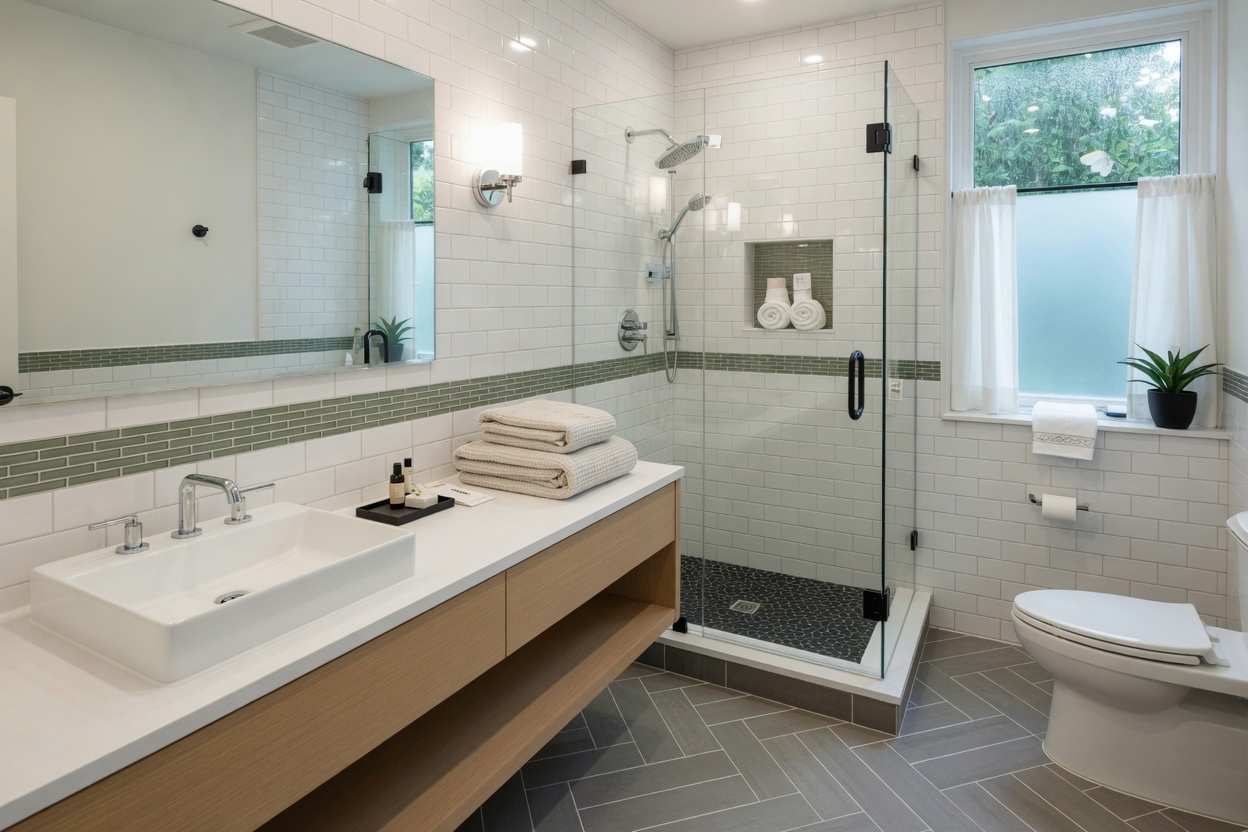
Purpose-built and new-construction short-term rentals have a marketing problem no resale property has: there's often a genuinely beautiful set of renders available before the actual rooms are finished, and it's tempting to use them because they photograph better than a half-finished space and a half-empty listing calendar. The renders aren't the problem by themselves. The problem is when they get mixed into the live booking gallery without a label, so a guest can't tell which photo shows the room they're about to sleep in and which one shows a phase that opens next spring.
This post covers the present-tense discipline that new-construction marketing actually needs: what's finished right now, what's labeled clearly as a render or a future phase, and what shared amenities are genuinely open versus still fenced off behind construction tape. It skips guessing pre-lease occupancy or ADR numbers for a property that hasn't built a booking history yet, because there's nothing real to report until guests have actually stayed. This is not legal advice, and any permitting or occupancy questions for a new build belong with a qualified local professional, not a marketing page.
The discipline covered here applies whether you're a single-unit host in a new development or the marketing lead for a multi-phase project — the underlying rule doesn't change with scale. What's true for one bookable unit is true for fifty: describe only what a guest can use this week, and label everything else.
Renders sell a promise; guests book a room
A render is a useful sales tool during pre-construction, when there's genuinely nothing else to show. The trouble starts when that same render keeps living on the live booking page after the unit opens, sitting next to real photos with no distinction between the two. A guest scrolling through the gallery has no reliable way to know that the gorgeous pool deck shot is a rendering of a phase that opens in eight months, not the pool they'll be swimming in this weekend.
This isn't a hypothetical mismatch — it's the most common complaint pattern in new-construction reviews. A guest books based on a gallery that looks finished, arrives to find half of it is still under construction or hasn't opened yet, and writes a review that mentions the mismatch specifically, because it's the kind of thing that colors the whole stay even when the actual room they slept in was fine.
The fix is a labeling discipline, not a ban on renders. If a render is still useful for showing a future amenity, keep it, but mark it clearly as a rendering of what's coming, separate from the current live gallery. A guest who sees a labeled render understands the timeline. A guest who sees an unlabeled render assumes it's today.
What counts as "live" and what doesn't
Present-tense marketing means only photographing and describing what a guest can actually use this week. A finished bedroom with furniture in it is live. A finished bedroom that still has painters' tape on the trim is not, no matter how close it is to done. The distinction matters because guests don't book based on how close something is to finished — they book based on what they're told is ready, and they hold the listing to that word.
Shared amenities deserve the same scrutiny, maybe more, because they're often the last thing to finish in a phased development and the first thing a marketing photo wants to feature. A pool that's been poured but not filled, a fitness room with equipment still in boxes, a clubhouse that's structurally complete but not staffed or unlocked — none of those are live amenities yet, even if they photograph beautifully with the right lighting.
When in doubt, the test is simple: could a guest walk up to this amenity today and use it the way the listing describes? If the answer is no, it doesn't belong in the live gallery or the live description, no matter how close "almost done" feels to the team building it.
Construction noise and access limits belong on the listing, not just in an internal memo
Phased developments mean ongoing construction noise, work trucks, and sometimes limited access to certain areas even after a specific unit is finished and bookable. That's a normal part of buying or booking into a new build — but it's only fair to guests if it's disclosed on the public listing, not just known internally by whoever's managing the property.
A guest who books a new-construction unit without knowing framing crews start at 7am on the next phase over is going to be annoyed by something that wasn't actually hidden maliciously — it just never made it from the property manager's head onto the public page. That's an easy gap to close: a plain sentence in the listing description about active construction nearby, expected noise windows, and any areas still off-limits.
This kind of disclosure protects the host as much as the guest. A review that says "wish I'd known about the construction noise" is a preventable one-star hit; a listing that says it upfront turns the same fact into an expectation the guest can plan around, which usually means it doesn't show up as a complaint at all.
Don't let the launch campaign pause the inbox
New-construction launches tend to come with a marketing push — a soft-open campaign, a series of announcement posts, sometimes a waitlist. All of that is legitimate work, but it's easy for it to eat the attention that should be going to actual guest messages during exactly the period when new guests are most likely to have questions about a property that's still finishing up.
A guest booking a brand-new unit is more likely than a guest booking an established one to have specific questions — is the pool open yet, is the elevator running, what's the parking situation during construction — and a slow inbox response during launch week compounds the uncertainty that comes with staying somewhere still being built. Treat inbox coverage as a fixed cost of the launch, not something that gets squeezed by the campaign calendar.
If the launch requires more marketing hours than usual, that's a good argument for bringing in extra help on the inbox side specifically, not for letting response times slip while the campaign runs.
Waitlist signups aren't the metric that matters once the doors open
Pre-launch, a waitlist number is a reasonable proxy for interest — it's genuinely useful to know how many people want to book before there's anything to book yet. But once the unit is live, that same number stops being the signal that matters. What matters is whether the guests who actually check in find the property matches what they were shown before they booked.
A property with a long waitlist and a gallery full of unlabeled renders can still produce a wave of disappointed early reviews, because waitlist size measures interest, not accuracy. Track something closer to the real signal instead: how many guest messages in the first weeks are asking about discrepancies between what was shown and what's actually open, and whether that number is dropping as the gallery gets updated to match reality.
This shift in what you're measuring is worth making deliberately, because the habits that built a strong waitlist — hype, renders, future-phase excitement — are exactly the habits that need to be dialed back once real guests start walking through the door.
Reviews from early guests are diagnostic, not just feedback
The first wave of reviews after a new phase opens carries more information than reviews for an established property typically do, because early guests are the ones actually testing whether the gap between marketing and reality is real. If several early reviews independently mention the same discrepancy — a pool that wasn't actually open, a noise level the listing didn't warn about — that's not bad luck, it's a pattern telling you exactly which claim needs fixing before the next wave of guests arrives.
Treat this feedback with more urgency than you would for an established listing's occasional complaint, because a new-construction property is still actively shaping its reputation, and a run of accuracy complaints in the first few months can set a review-score trajectory that's expensive to reverse later. Read early reviews specifically for mismatch language — words like "wasn't what the photos showed" or "didn't realize" — and treat every instance as a direct edit request for the listing.
This diagnostic value disappears if the gallery and description have already been corrected by the time a second or third wave of guests arrives, which is exactly the outcome you want. Early reviews doing their job looks like accuracy complaints appearing once, getting fixed, and then not repeating — not a pattern that persists because nobody read the reviews as signal.
Update the gallery every time a phase opens — this is not a one-time task
New-construction marketing isn't a project with a finish line; it's an ongoing maintenance job for as long as the development is still phasing in new amenities. Every time a new pool, clubhouse, or building phase opens, the gallery and description need a refresh to reflect it — not eventually, but close to the actual opening date, because a stale brochure after move-in creates the exact same support burden as an early unlabeled render.
This is easy to let slip because the hard marketing push usually happens pre-launch, and attention naturally drops once the initial campaign is done. But guests booking six months after opening are just as sensitive to a mismatch between the listing and reality as guests booking during launch week — arguably more so, because they have less patience for "it's still new" as an excuse.
Build a simple trigger into your process: any time a phase opens, that's the cue to update the public listing the same week, not the same quarter. Treat it with the same urgency as any other change to an operable fact.
Coordinating with the builder or developer on marketing timing
If you're marketing a unit within a larger development you don't fully control, the timing of phase openings often lives with a builder or developer, not with you directly. That creates a specific risk: your listing content depends on information from a party whose priorities — sales momentum, investor updates — aren't the same as your priority, which is guest accuracy at the moment of booking.
Build a simple, direct line of communication with whoever controls the construction schedule, and ask specifically to be notified when an amenity moves from under-construction to open, not just when the developer's marketing team decides to publicize it. Those two moments aren't always the same, and the gap between them is exactly where an unlabeled render problem tends to originate.
If you can't get reliable, timely updates from the development side, treat that as a reason to be more conservative in your own listing — describe less rather than more, and update only once you've personally confirmed an amenity is usable, not once you've heard it's expected to be.
Present-tense marketing is a discipline, not a one-time edit
The core habit this whole post is built around is simple to state and genuinely hard to keep up: describe only what's true right now, label anything that's a future promise, and update both the second either one changes. It's tempting to lean on the polish of a render or the excitement of a coming amenity because it photographs and reads better than the honest, sometimes unglamorous state of a property mid-construction.
But the guests who book new construction are making a bet on a promise the same way any buyer or renter does, and the listing is the only place that promise gets written down in a form they can hold you to. A present-tense listing that undersells slightly is a much better problem to have than a future-tense listing that oversells and leaves guests writing about the gap in a public review.
Run the 30/90-day check the same way you would on any other listing: does every amenity claim map to something a guest can actually use this week? Has any future-phase language snuck back into the live booking page? Catching that drift early is cheaper than fixing the review that comes after.
Related Reading
More independent-host reading on honest photos, amenity claims, distribution, and listing basics that still match arrival.
Frequently Asked Questions
Can I use architectural renders in my listing before the unit is finished?
Yes, but only clearly labeled as renders and kept separate from live photos once the unit opens. Once a guest can actually book the space, any render still in the gallery needs to be marked as a future phase, not blended in as if it shows what they'll see this weekend — the label is what turns an honest sales tool into a misleading one or keeps it honest.
What should I do about shared amenities that aren't open yet?
Leave them out of the live listing description and gallery entirely until a guest could actually walk up and use them today. A pool that's poured but not filled, or a clubhouse that's built but unstaffed, isn't a live amenity yet no matter how finished it looks in a photo, and including it early sets an expectation the property can't meet at check-in.
Do I need to mention ongoing construction noise on the listing?
Yes, if it's genuinely present and would affect a guest's stay. A short, plain sentence about active construction nearby and expected noise windows turns a potential complaint into an expectation guests can plan around, which is a much better outcome for everyone than letting the guest discover it unannounced on the first morning of their stay.
How do I handle guest questions during a busy launch week?
Treat inbox coverage as a fixed cost of launching, separate from the marketing campaign's budget and attention. New-construction guests tend to have more specific questions than usual, and a slow reply during exactly that period compounds the uncertainty of staying somewhere still being finished, so plan staffing for it explicitly rather than assuming the campaign team will absorb the load.
Is waitlist size a good measure of how the launch is going?
It's a fair pre-launch signal of interest, but it stops being the metric that matters once guests are actually checking in. After launch, track whether early guest messages are flagging mismatches between the listing and reality, and whether that number drops as the gallery gets updated — that's the signal that actually reflects guest experience once the doors are open.
How often should I update the gallery as new phases open?
The same week a new phase opens, not on a quarterly schedule. A stale gallery after move-in creates the same guest confusion as an unlabeled render before move-in, and the fix is just as simple: update the public listing close to the actual opening date rather than letting it wait for a broader content refresh later on.
What's the biggest review risk specific to new-construction properties?
A gallery that mixes unlabeled renders or future-phase photos with the current live space. Guests who book based on an unlabeled render and arrive to find it unfinished write about the mismatch specifically, and it colors the review even when the room they actually slept in was fine and functioned exactly as described. Fix the labeling before the review, not after it's already public.
Should I report occupancy or ADR numbers for a brand-new listing?
Not until there's an actual booking history to report honestly. Inventing pre-lease performance numbers for a property that hasn't hosted guests yet isn't something this framework supports, and it sets an expectation the listing can't back up yet — wait until real stays produce real numbers before publishing any figures publicly. Patience here protects credibility more than an early number would help it.
Do I need legal guidance for anything related to a new-construction STR launch?
This isn't legal advice. Permitting, occupancy certification, and any local rules specific to new construction should be confirmed with a qualified local professional before launch, separate from the marketing and gallery work covered here, since those requirements vary significantly by jurisdiction, phase, and the type of development involved. Confirm early, since permitting timelines can affect your actual launch date.
What's the simplest rule to keep new-construction marketing honest?
Describe only what's true right now, and label anything that's a promise about the future. Update both the moment either one changes — that single habit prevents most of the review problems that come from launching a beautiful gallery ahead of a finished property, and it scales cleanly as the development phases in over time.
Work with Crest & Cove Creative
New-construction listings often mix unlabeled renders with live photos, so guests book a promise instead of a finished room and the mismatch shows up in reviews. The fix is present-tense discipline, not better renders.
Crest & Cove Creative can help you audit a new-construction gallery for present-tense accuracy before launch or after a phase opens. Reach out at crestcove.co or call (256) 998-7502 to get your listing checked against what's actually open this week.
Reach out at crestcove.co or (256) 998-7502.


Comments