
Marketing a Remote-Worker Stay in Copper Harbor Without Guessing at

Updated: Aug 27
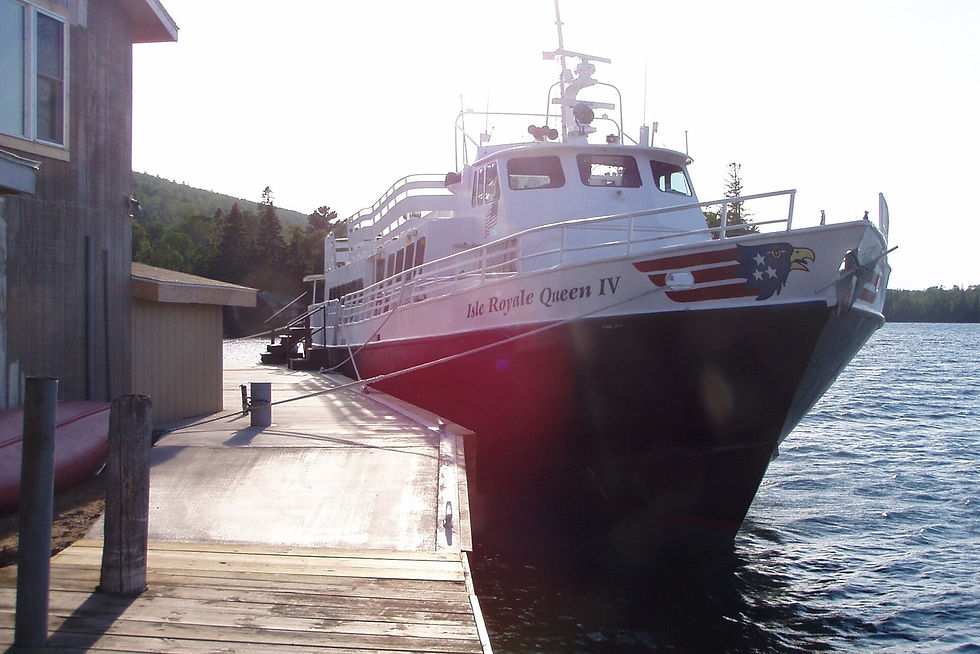
Copper Harbor sits at the literal tip of the Keweenaw Peninsula, and its short-term rental market is small enough that every listing matters to the average: 11 active listings, a typical annual revenue of $41,088. That's a real number worth knowing before you build any remote-worker marketing angle around this town, because a sample that small also means the town's average stay length, its booking lead time, and the share of its listings that are professionally managed are all currently unpublished. That's not a gap to paper over with a guess; it's information you don't have yet, and pretending otherwise in a listing pitch is how a remote worker ends up in a house with worse internet than the description promised.
Remote-worker marketing lives or dies on specifics that a guest can verify the moment they open their laptop. A stock photo of a laptop on a dock doesn't tell anyone whether a video call will hold up. What does is a photo of the actual desk, the actual chair, and the actual outlet a guest will use, backed by an upload-speed test run from that exact spot. In a market as small and as remote as Copper Harbor, that kind of specificity isn't optional polish, it's the entire pitch.
That same discipline needs to extend to every number attached to the listing, not just the internet claim. A remote worker deciding whether a multi-week Copper Harbor stay is realistic is weighing connectivity, cost, and what the surrounding town actually offers during a long stay, and every one of those factors deserves the same standard: confirmed for this specific property and this specific town, or clearly flagged as not yet known. This is not legal advice.
What Copper Harbor's Data Actually Confirms
The confirmed figure for Copper Harbor is $41,088 in typical annual revenue across 11 active listings. That's the whole confirmed picture on the revenue side. Average length of stay, the share of month-plus (30-day-and-longer) bookings, average booking lead time, and the share of professionally managed listings are all currently unpublished for this specific town. In a market this small, that's expected: an 11-listing sample doesn't generate the kind of statistically stable secondary metrics that a 150-listing market does.
The honest response to that gap is to say plainly, in your own marketing, what you don't yet know, rather than filling the blank with a plausible-sounding number pulled from somewhere else. A remote worker evaluating Copper Harbor deserves to know that stay-length data isn't published for this town yet, not a confident-sounding fabricated average that happens to look reassuring on a landing page.
Eagle Harbor's 30-Plus Figure Belongs to Eagle Harbor
Nearby Eagle Harbor has its own published 30-plus stay share, reported at 57.9 percent, a genuinely striking number for long-stay remote-worker demand. That figure describes Eagle Harbor specifically. It does not describe Copper Harbor, and it's a mistake, even an understandable one given how close the two towns sit on the map, to let that number slide into Copper Harbor marketing copy as if the two markets share a guest base and a booking pattern.
These are two separate Keweenaw towns with two separate datasets. If you're building a remote-worker pitch for Copper Harbor specifically, the 57.9 percent Eagle Harbor figure has no place in it, no matter how tempting it is to borrow a strong-looking number from fifteen minutes down the road.
The Minneapolis Origin Story Is Also Eagle Harbor's, Not Copper Harbor's
Guest-origin data pointing to Minneapolis and the broader Twin Cities as a source market is associated with Eagle Harbor in the available research, not with Copper Harbor. Copper Harbor's own guest-origin pattern is currently unpublished. A Twin Cities-flavored marketing caption, referencing a fast drive up from Minneapolis or a Twin Cities remote-work crowd, doesn't belong on a Copper Harbor listing unless and until Copper Harbor's own origin data actually confirms that pattern.
This distinction matters practically, not just for accuracy's sake. A marketing angle built on the wrong origin city targets the wrong audience with the wrong assumptions about drive time, seasonal travel patterns, and what that audience is actually looking for. Get the origin data right for the specific town, or leave the origin claim out of the pitch entirely until it's confirmed.
Photograph the Desk You've Actually Tested, Not a Stock Setup
For a remote-worker stay, the single most convincing piece of marketing content is a photograph of the actual desk, chair, and power outlet a guest will use, paired with an upload-speed test run from that exact location. A generic stock photo of a laptop and a coffee cup tells a prospective guest nothing verifiable. A specific photo of this house's workspace, taken by someone who has actually sat there and tested the connection, tells them everything they need to decide whether this is the right place to run a full workday.
This also means not borrowing someone else's infrastructure story. Don't caption a photo of the Houghton public library's workspace as if it's this house's setup, and don't caption Eagle Harbor's fiber connection as if it describes this driveway's internet. If you haven't personally sat in the chair and tested the upload speed at this specific address, don't promise a remote worker that the week will go smoothly.
How Copper Harbor Compares to Two Nearby Towns, on Their Own Lines
A nearby township reports a 4.4-night average stay on $34,109 in typical revenue across 19 listings. Houghton, the larger Keweenaw hub with Michigan Tech nearby, reports a 3.3-night average stay on $31,015 across 68 listings. Both of those figures are useful context for understanding the broader Keweenaw short-term rental landscape, and both are explicitly separate from Copper Harbor's own $41,088 figure across 11 listings.
Keep these three towns on three separate lines when you're building comparative marketing content or advising a prospective owner. Houghton is a bigger, more college-town-driven market with a shorter typical stay; the nearby township sits in between; Copper Harbor is smaller, more remote, and currently missing the stay-length data that would let you compare it directly on that specific metric. Blending them into one "Keweenaw average" erases exactly the differences a remote-worker guest would want to know about before booking.
The Michigan Use Tax Detail Actually Matters for Month-Plus Stays
Michigan applies a 6 percent use tax to stays under 30 days. That single detail is directly relevant to remote-worker marketing, because it means a stay structured at 30 days or longer is treated differently from a tax standpoint than a two-week stay. If you're specifically courting the long-stay remote-worker audience, that 30-day threshold is worth being precise about in your own booking terms and your own pricing structure, not just as a piece of trivia but as something that affects what a guest actually pays.
For county-level short-term rental questions specific to this part of the Keweenaw, the county STR rules line is (906) 337-3471. Confirm current local requirements directly with that desk before finalizing marketing claims about permitted stay lengths or licensing status, rather than relying on a secondhand summary.
Don't Let a Quiet Winter Month Read as Occupancy
Copper Harbor, like much of the Keweenaw, has a genuinely quiet stretch during ice-fishing season and the deeper winter months. A quiet desk during that stretch, meaning low visible activity or inquiry volume, isn't the same thing as a filled or even partially filled month, and it shouldn't get described that way in marketing copy aimed at owners or in projections built for a prospective host. If winter occupancy data for Copper Harbor specifically isn't published, don't imply a number by describing the season in vague, optimistic terms that suggest more activity than the confirmed data supports.
The more useful approach, given how much of Copper Harbor's secondary data remains unpublished, is to be specific about what is confirmed (the $41,088 typical annual revenue across 11 listings) and clearly note what isn't (stay length, lead time, professionally managed share, and winter occupancy specifics) rather than smoothing over the gaps with confident-sounding language.
What an 11-Listing Market Means for Your Own Expectations
An 11-listing dataset is small enough that the $41,088 typical annual revenue figure should be read as a real but limited-sample benchmark, not a precise prediction for any single property. In a market this size, one or two exceptionally strong or exceptionally weak listings can shift the average more noticeably than they would in a market with dozens or hundreds of comparable properties. That's not a reason to distrust the number; it's a reason to treat it as a general orientation point rather than a guarantee, and to expect your own listing's actual performance to potentially sit meaningfully above or below it depending on your specific location, view, and workspace setup.
It also means Copper Harbor rewards a different kind of marketing discipline than a larger market would. In a 150-listing market, a single mediocre listing gets lost in the noise. In an 11-listing market, every listing's photos, copy, and honesty about what's actually confirmed versus unpublished carries more relative weight, both for guests comparing the handful of available options and for owners evaluating whether the market is worth entering at all.
Building Marketing Copy Around What's Missing, Not Around a Guess
There's a version of remote-worker marketing copy that fills every gap with a confident-sounding placeholder: an assumed stay length, an assumed origin market, an assumed occupancy pattern for the slow season. That version reads well until a guest or an owner checks it against reality. The more durable version names, plainly, what's confirmed for Copper Harbor specifically, the $41,088 typical revenue across 11 listings, and treats everything else, stay length, lead time, professionally managed share, winter occupancy, and guest origin, as open questions worth tracking in your own booking data rather than filling with someone else's numbers.
Over a season or two of actually operating a Copper Harbor listing, a host or manager can build their own real answers to those open questions: their own average stay length, their own sense of where inquiries actually originate, their own read on how the ice-fishing-season months perform. That's slower than borrowing Eagle Harbor's or Houghton's figures, but it produces numbers that are actually yours to stand behind.
A Worked Example: Two Versions of the Same Listing Description
Picture two versions of a Copper Harbor remote-worker listing description. The first reads: "Fast fiber internet, ideal for month-long remote work stays, popular with Twin Cities professionals." Every claim in that sentence, the fiber speed, the month-long-stay framing, the Minneapolis connection, belongs to a different town's confirmed data, Eagle Harbor's or an assumption dressed up as fact, not Copper Harbor's own dataset. A guest who books based on that sentence and finds a slower connection or a different guest mix than promised has a legitimate reason to feel misled, even if no single word was intentionally dishonest.
The second version reads something closer to: "Upload speed tested from the main-floor desk on the date listed; we're still building a full season of our own booking data on typical length of stay, so we're not quoting one yet." That version is less flashy, and it's also something the listing can actually stand behind when a guest checks it against their real experience. In a market as small as Copper Harbor's 11 listings, that kind of specific, checkable honesty is a genuine competitive advantage, not just an ethical nicety.
Work With Crest & Cove Creative
Marketing a remote-worker stay in a market as small and specific as Copper Harbor means resisting the pull of borrowed numbers from Eagle Harbor, Houghton, or a nearby township, and building the pitch instead around what this specific driveway can actually confirm: a tested desk, a tested connection, and an honest accounting of what the published data does and doesn't say.
Reach out at crestcove.co or call (256) 998-7502 to have your Copper Harbor remote-worker listing reviewed for exactly this kind of specificity, before another host's fiber connection or another town's stay-length average ends up in your copy by accident.
Related Reading
More Copper Harbor, Michigan reading already live on Crest & Cove.
Frequently Asked Questions
What's the confirmed typical annual revenue for a Copper Harbor short-term rental?
The published figure is $41,088 in typical annual revenue across 11 active listings. That's the confirmed top-line number for this specific, small market.
Is Copper Harbor's average stay length published?
No, average stay length for Copper Harbor specifically is currently unpublished, along with average booking lead time and the share of professionally managed listings. Given the small 11-listing sample, it's more honest to say this data isn't available yet than to estimate it from a nearby town.
Can I use Eagle Harbor's 57.9 percent long-stay figure for a Copper Harbor listing?
No. That figure describes Eagle Harbor specifically, a separate nearby Keweenaw town with its own dataset. Copper Harbor's own share of 30-plus-day stays is unpublished, and applying Eagle Harbor's number to Copper Harbor marketing would misrepresent this town's actual, currently unconfirmed pattern.
Does Minneapolis send a lot of remote-worker guests to Copper Harbor?
The Minneapolis/Twin Cities origin data available in the research is associated with Eagle Harbor, not Copper Harbor. Copper Harbor's own guest-origin pattern is unpublished, so a Twin Cities-focused marketing angle shouldn't be applied to a Copper Harbor listing without its own confirmed origin data.
What should remote-worker listing photos actually show?
The most convincing photos show the actual desk, chair, and power outlet a guest will use, ideally paired with a genuine upload-speed test taken from that spot. A generic stock photo of a laptop tells a prospective remote-work guest nothing they can verify.
How does Copper Harbor compare to Houghton for a remote-worker pitch?
Houghton, the larger Keweenaw hub near Michigan Tech, reports a 3.3-night average stay on $31,015 in typical revenue across 68 listings, a notably different profile than Copper Harbor's smaller, currently stay-length-unpublished 11-listing market. The two shouldn't be blended into a single Keweenaw average.
Why does the 30-day threshold for Michigan use tax matter for remote-worker stays?
Michigan applies a 6 percent use tax to stays under 30 days, meaning a stay booked at 30 days or longer is treated differently for tax purposes than a shorter stay. If you're specifically marketing to long-stay remote workers, this threshold should be reflected clearly in your own booking terms and pricing.
Who do I call for county short-term rental rules near Copper Harbor?
The county STR rules line is (906) 337-3471. Confirm current local licensing and stay-length requirements directly with that desk rather than relying on a general summary, since local rules can change.
Is Copper Harbor's winter occupancy known?
Winter and ice-fishing-season occupancy specifics for Copper Harbor aren't confirmed in the published data. A quiet desk or low visible booking activity during that stretch shouldn't be described in marketing copy as if it represents a specific occupancy figure, since no such figure is currently published for this town.
What's the one thing I should never do when marketing this specific listing?
Never caption a photo or a claim from a different town, such as Houghton's library workspace or Eagle Harbor's fiber connection, as if it describes this Copper Harbor house. If you haven't personally tested the desk and the connection at this address, don't promise a remote worker that it will hold up.
Work with Crest & Cove Creative
Copper Harbor's remote-worker pitch only works if the desk in the photo is the desk the guest actually sits at not a borrowed one from fifteen minutes down the road. Name the failure mode the guest can check on the.
Reach out to Crest & Cove Creative at crestcove.co or (256) 998-7502 to get your Copper Harbor remote-worker listing built around a tested workspace, not a neighboring town's numbers. Name the failure mode the guest can check on the listing.
Reach out at crestcove.co or (256) 998-7502.


Comments