
Copper Harbor vs Eagle Harbor: Call the Right CUP Desk

Updated: Aug 27
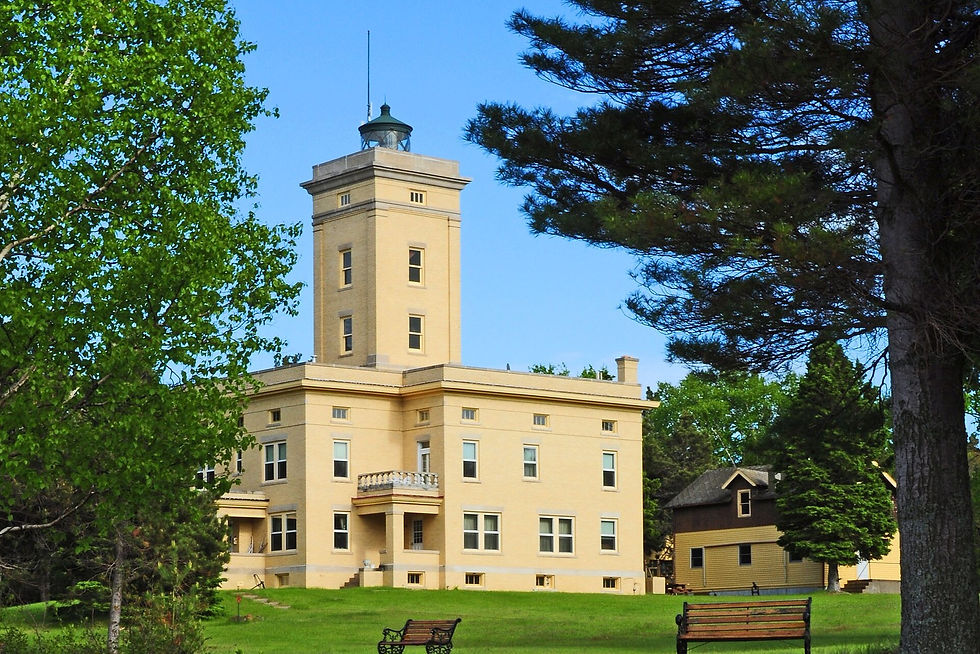
The Keweenaw Peninsula packs several distinct short-term rental jurisdictions into a small, remote stretch of Michigan's Upper Peninsula, and two of the most commonly confused are Copper Harbor and Eagle Harbor. They sound similar, they sit on the same peninsula, and they both trade on the same rugged, end-of-the-road Lake Superior identity in tourism marketing — but they are governed by different township and county desks, with different permit processes, different fees, and different revenue years, and a host who calls the wrong office or advertises under the wrong permit is building a listing on top of a mistake that will surface the moment anyone checks.
Copper Harbor's conditional use permit runs through Keweenaw County zoning, reachable at 906-337-3471, based at 5095 Fourth Street in Eagle River — not through Grant Township hall, which sits at a different address and a different phone number, 906-289-4292, and handles different township business entirely. Eagle Harbor Township runs its own, separate permit process on its own timeline. Confusing these desks, or worse, advertising under one town's permit status while operating in the other's jurisdiction, is the single most consequential marketing error a Keweenaw host can make, because it is not just a copywriting mistake — it can mean the listing is not actually legal to operate as advertised.
This guide keeps the two towns, their two permit desks, and their two revenue years on separate, labeled lines, and names exactly who to call and what to bring before advertising either one. Related reading for Keweenaw hosts should follow the same-town-first logic laid out below rather than defaulting to a generic peninsula-wide overview. This is not legal advice.
Call the County Desk, Not the Township Hall
The Copper Harbor conditional use permit is a Keweenaw County zoning matter, not a Grant Township matter, even though Copper Harbor itself sits within Grant Township's geographic boundary. County zoning, reachable at 906-337-3471, is based at 5095 Fourth Street in Eagle River, and that is the desk that handles the CUP application, fee, and renewal process for a Copper Harbor short-term rental. Rebecca Hernandez has been the contact who answers that line, and the CUP process for the current cycle started July 1, 2024 — a date worth confirming still applies before assuming it as current.
Grant Township hall, at P.O. Box 76 in Copper Harbor, reachable at 906-289-4292, is a separate desk handling separate township business, and it is not where a host files or renews the Copper Harbor CUP. A host who calls Grant Township hall looking for permit information will reach a real, staffed township office — just not the one that processes the actual conditional use permit. This mix-up is common enough, given that both offices sit within a few miles of each other and both deal with some form of Copper Harbor local governance, that it is worth stating plainly and repeatedly in any Copper Harbor host guide: the CUP desk is county zoning at 906-337-3471, not the township hall.
Confirm the Current Fee Before You Advertise
The zoning permit fee for a change of use is $50, a figure that shows up consistently in the county's own documentation, but a host should still call and confirm the current 2026 fee directly rather than assuming it has stayed flat, since municipal fee schedules do shift over time. do not guess or estimate a different figure if the county desk quotes something else at the time of the call — treat whatever the county states as current as the number to use, and update any published listing or marketing material that references the fee if it has changed.
This same confirm-before-advertising discipline applies to the CUP's actual status for a specific parcel. A permit fee being $50 does not mean every Copper Harbor property automatically qualifies for a CUP; zoning eligibility, parcel-specific conditions, and the CUP application itself are separate questions from the fee schedule, and a host should confirm all of them with the county desk before publishing a listing that assumes the permit is in hand.
Eagle Harbor Township Runs Its Own Permit, on Its Own Timeline
Eagle Harbor is a separate township from both Copper Harbor and Grant Township, with its own permit process that started on a different date — May 1, 2024, distinct from the July 1, 2024 start of Copper Harbor's county-run CUP cycle. A host operating in Eagle Harbor should not assume the Copper Harbor process, timeline, fee, or contact applies to their property; Eagle Harbor Township is its own desk, with its own application requirements, and confirming those requirements means contacting Eagle Harbor Township directly rather than county zoning or Grant Township hall.
The revenue figures for the two markets are similarly distinct and should stay on separate lines in any marketing or buyer material. Eagle Harbor's typical year runs about $34,109, a figure that belongs to Eagle Harbor specifically and should never be quoted as describing a Copper Harbor property, and the reverse is equally true.
Do Not Blend the Peninsula's Township Years
The Keweenaw Peninsula includes several distinct townships beyond just Copper Harbor's Grant Township and Eagle Harbor Township, each with its own revenue figure that should stay labeled and separate. Copper Harbor's later-year extract shows about $41,088 across 11 listings, with an average daily rate of $308 — a small sample size worth treating with appropriate caution, since 11 listings is a narrow enough base that a single property's performance can meaningfully swing the average. Allouez Township published about $43,741, on its own separate line, and Houghton, a later, larger market further down the peninsula, published about $31,015 — a figure the local clerk's office does not itself print or officially confirm, worth flagging as a third-party data point rather than a municipal record.
None of these figures should be averaged together into a single "Keweenaw Peninsula" number for a buyer packet or a pricing conversation. Each township runs its own permit process, its own fee schedule, and its own tourism season, and blending the numbers erases exactly the local specificity a buyer or a host actually needs to make a real decision about a specific parcel in a specific township.
What to Bring to the County Desk
A host preparing to call or visit Keweenaw County zoning at 5095 Fourth Street in Eagle River should have the parcel number ready, along with any prior CUP documentation if the property has operated as a short-term rental before under a previous owner. The clerk's office works from the parcel and the address, not from a general description of the property or its marketing name, so having that specific information ready before the call saves a second round-trip. Confirm the current 2026 fee, the CUP's status for the specific parcel, and any remaining zoning questions in that same call rather than assuming any detail carries over unchanged from a prior year's process. Write the confirmed answers down and date them, since the next renewal cycle will need the same information again.
Michigan's use tax applies at 6 percent for stays under 30 days, a state-level tax obligation separate from the county's zoning and CUP process — a host should confirm this obligation with a qualified tax professional rather than treating this page as tax guidance, since the zoning desk handles land-use permitting, not state tax compliance, and the two offices do not share information automatically on a host's behalf.
Read the Season Before You Set a Rate
The Keweenaw Peninsula's strongest tourism months run July through September, with July, August, and September carrying the bulk of the season's revenue, and November marking the clear seasonal low point as the peninsula's remote, weather-dependent tourism season narrows sharply into the colder months. A host pricing either a Copper Harbor or Eagle Harbor listing should treat that summer stretch as the period carrying most of the year's income, and treat shoulder and off-season months as a separate pricing conversation rather than a flat extension of peak summer rates.
Why This Confusion Keeps Happening
The Copper Harbor and Grant Township mix-up is not a rare fluke — it recurs because the two offices genuinely sit close together, both handle some form of local governance touching Copper Harbor properties, and neither name obviously signals which one processes a short-term rental permit versus which one handles other township business. A host new to the area, or a remote owner managing a Copper Harbor property from out of state, has no obvious way to guess that the CUP lives with the county rather than the township without either being told directly or discovering it the hard way after a call to the wrong desk. That is exactly why this distinction belongs in host-facing marketing content rather than assumed as common knowledge: it is a genuinely non-obvious fact about how Keweenaw County structures its permitting authority.
The same structural confusion shows up, in a different form, between Eagle Harbor Township and the broader Eagle Harbor area name, which some visitors and even some hosts associate loosely with Copper Harbor given the shared 'harbor' naming convention and the peninsula's compact geography. Eagle Harbor is its own township with its own governance, sitting at a meaningful distance from Copper Harbor along the peninsula's shoreline, and a listing that blurs the two by name risks setting guest expectations for one town's walkability or amenities while the property actually sits in the other.
A Marketing Partner Does Not Replace the Permit Call
It is worth stating plainly what a marketing partner can and cannot do for a Copper Harbor or Eagle Harbor host: writing clear, accurate listing copy, sourcing better photography, and building a pricing strategy around the actual season are marketing work. Confirming CUP eligibility for a specific parcel, filing the permit application, and paying the correct fee to the correct desk are the host's own responsibility, and no amount of marketing polish changes whether a property is legally permitted to operate. A host should treat the permit confirmation step as a prerequisite that happens before any marketing investment, not a parallel task that can be sorted out later while the listing is already live and taking bookings.
This ordering matters because reversing it creates real risk: a listing marketed and booking guests before the CUP status is confirmed is a listing that could be forced to cancel confirmed reservations if the permit application is denied or delayed, which damages guest trust and platform standing in a way that is much harder to repair than simply waiting for permit confirmation before the first listing photo goes live.
Related Reading for Copper Harbor and Eagle Harbor Hosts
The right order for related content on either town is same-town spine first — other Copper Harbor-specific or Eagle Harbor-specific pages — before reaching for nearby geo lines like Allouez Township or Houghton. Skip costume national content that treats the Keweenaw Peninsula as a generic "remote lake getaway" without naming the actual township, the actual permit desk, or the actual season. A guest who searched Copper Harbor or Eagle Harbor by name is looking for a house on this specific stretch of the peninsula, not a generalized northern lake retreat, and the strongest related content reinforces that specificity rather than diluting it with a broader, less useful geo net that blurs township lines the same way a mismatched permit call does.
Related Reading
Related reading for Copper Harbor Eagle hosts: same-town spine first, then nearby geo lines. Skip costume national dumps that do not underwrite this driveway.
Frequently Asked Questions
Where do I file a Copper Harbor short-term rental CUP?
Keweenaw County zoning, reachable at 906-337-3471 and based at 5095 Fourth Street in Eagle River, handles the Copper Harbor conditional use permit — not Grant Township hall. The current CUP cycle started July 1, 2024; confirm current status directly with the county before advertising.
Is Grant Township hall the same as the Copper Harbor CUP desk?
No. Grant Township hall, at P.O. Box 76 in Copper Harbor and reachable at 906-289-4292, is a separate township office handling separate business. The conditional use permit for a Copper Harbor short-term rental is processed through Keweenaw County zoning, not through the township hall.
What is the current zoning permit fee for a change of use in Copper Harbor?
The documented fee is $50, but confirm the current 2026 figure directly with county zoning at 906-337-3471 before advertising, since municipal fee schedules can shift. do not guess or assume a different number if the county quotes something else at the time of your call.
Is Eagle Harbor Township's permit process the same as Copper Harbor's?
No. Eagle Harbor Township runs its own separate permit process that started May 1, 2024, distinct from Copper Harbor's county-run CUP cycle that started July 1, 2024. Confirm Eagle Harbor's requirements directly with Eagle Harbor Township, not with Keweenaw County zoning or Grant Township hall.
Can I cite Copper Harbor's revenue figure for an Eagle Harbor listing?
No. Eagle Harbor's typical year runs about $34,109, a separate figure from Copper Harbor's roughly $41,088 across 11 listings. These are two different townships with two different markets, and their revenue figures should stay on separate, labeled lines in any pricing or buyer material.
How big is the Copper Harbor listing sample, and does that matter?
The later-year Copper Harbor extract covers about 11 listings, with an $308 average daily rate. That is a small sample size, meaning a single property's unusual performance can meaningfully swing the reported average — treat the $41,088 figure with that caution in mind rather than as a precise market-wide benchmark.
Should I average Copper Harbor, Eagle Harbor, Allouez, and Houghton into one peninsula figure?
No. Each township runs its own permit process, fee schedule, and tourism season. Allouez Township's roughly $43,741 and Houghton's roughly $31,015 are separate figures from Copper Harbor's and Eagle Harbor's numbers, and blending them into one 'Keweenaw' average erases the local specificity a buyer or host actually needs.
What should I bring when I call Keweenaw County zoning about a CUP?
Have the parcel number ready, along with any prior CUP documentation if the property operated as a short-term rental under a previous owner. The county works from the parcel and address, not a marketing description, so having that information ready before the call saves a follow-up round-trip.
Does Michigan's use tax apply to a Keweenaw Peninsula short-term rental?
Michigan use tax applies at 6 percent for stays under 30 days, a state-level obligation separate from the county's zoning and CUP process. Confirm this specific obligation with a qualified tax professional rather than treating a zoning conversation as tax guidance.
Which months are strongest for Keweenaw Peninsula bookings?
July, August, and September carry the bulk of the season's revenue, with November marking the clear seasonal low point as the peninsula's tourism season narrows sharply going into the colder months. Price the summer stretch as the primary revenue window and treat shoulder months separately.
What related content should a Copper Harbor or Eagle Harbor listing link to?
Same-town content first — other pages specific to Copper Harbor or Eagle Harbor — before reaching for nearby geo content like Allouez Township or Houghton. Avoid generic 'remote lake getaway' content that does not name the actual township, permit desk, or season.
Work with Crest & Cove Creative
Copper Harbor's CUP runs through county zoning, not Grant Township hall — call the wrong desk and you get a real answer for the wrong jurisdiction. Eagle Harbor is a separate township with its own permit and its own year.
If your Copper Harbor or Eagle Harbor listing still blends township permits or peninsula revenue years, send us the parcel and we will write copy that matches the desk you actually need to call. Reach out at crestcove.co or (256) 998-7502.
Reach out at crestcove.co or (256) 998-7502.


Comments