
DIY vs Hire Marketing for Should Bend Sisters Hosts Manage Their Own

Updated: Aug 28
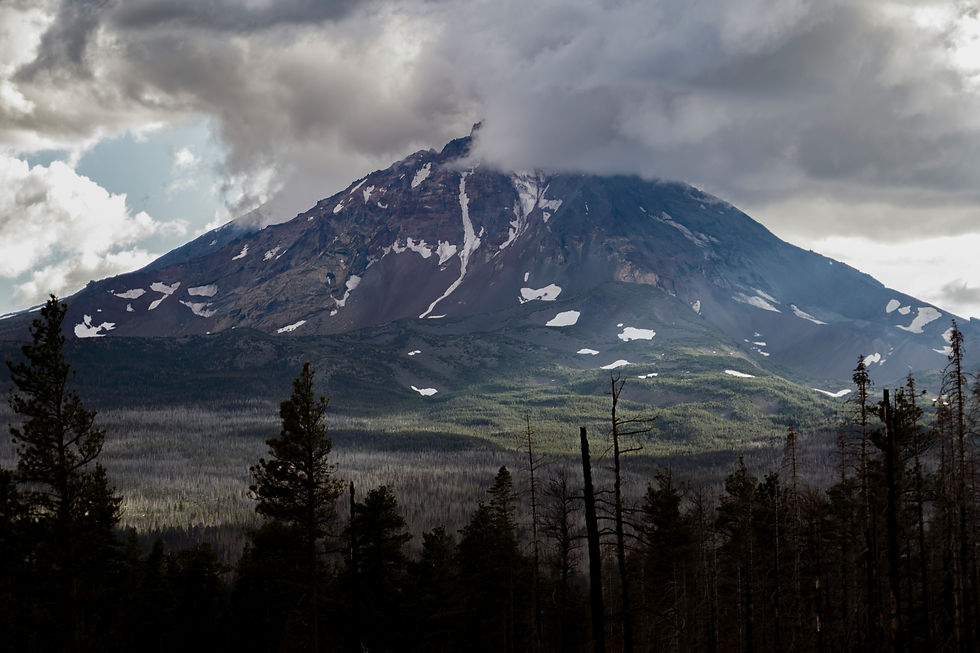
If you're hosting a short-term rental in Bend or Sisters, you've probably already asked yourself this question at least once a season: is it worth paying someone to handle my marketing, or can I keep doing this myself? It's a fair question, and it deserves an honest answer instead of a sales pitch. The honest answer starts with what this specific market actually demands from a listing — and Bend/Sisters demands more than almost any single-season destination, because it isn't a single-season destination at all.
Central Oregon runs on a four-season outdoor stack: skiing and snowboarding at Mt. Bachelor in winter, an extensive mountain-biking trail network (Bend sits inside 300+ miles of singletrack) through spring and summer, a brewery-dense identity built around the Bend Ale Trail's 30-plus taprooms, and the Deschutes River running straight through town for paddling, tubing, and riverside recreation nearly year-round. A host in Portland or Denver marketing a single ski-condo listing has one season to sell. A host in Bend or Sisters has four distinct audiences arriving at different times of year, each searching for something different, each responding to different photography and different language. That's the whole crux of the DIY-vs-hire question: it's not about whether you're capable of writing a listing description. It's about whether one listing description, written once, can actually do the job.
What "Marketing a Bend or Sisters Listing" Really Requires
A generic listing — "cozy mountain retreat, close to everything" — technically describes almost any property in Central Oregon, which is exactly the problem. It doesn't tell a winter skier that the property sits fifteen minutes from Mt. Bachelor's lift lines. It doesn't tell a mountain biker which trailhead is closest, or a brewery-hopping weekend group that they can walk to three taprooms from the front door. It doesn't tell a July rafting family that the Deschutes River access point is a five-minute drive. Each of those searchers is looking for specificity, and a listing that speaks to all of them equally speaks to none of them well.
Doing this properly means treating your listing as four listings that happen to live at the same address:. The honest answer starts with what this specific market actually demands from a listing — and Bend/Sisters demands more than almost any single-season destination, because it isn't a single-season destination at all. If you're hosting a short-term rental in Bend or Sisters, you've probably already asked yourself this question at least once a season: is it worth paying someone to handle my marketing, or can I keep doing this myself?
Winter (roughly November–April): Hero images need snow, proximity framing to Mt. Bachelor matters more than almost anything else in the description, and copy should speak directly to skiers and snowboarders — drive time to the mountain, gear storage, après-ski amenities like a hot tub or fireplace. If you have a good camera (or a willing friend with one), a working knowledge of what makes a photo actually sell a season — snow on the mountain in winter shots, green trail access in summer shots, natural light rather than harsh midday sun — and the discipline to actually revisit your listing four times a year instead of once, you can do this yourself and do it well.
Spring/Summer (roughly May–September): This is trail season. Photography should show the property in green, ideally with visual cues to nearby trailheads or bike-friendly features (bike storage, a hose-down area, proximity to the actual singletrack). Copy should name specific trail systems where you can do so accurately, not just "close to biking.". Brewery and river season (overlapping spring through fall): A property within walking or short driving distance of the Bend Ale Trail or a Deschutes River access point should say so by name.
Brewery and river season (overlapping spring through fall): A property within walking or short driving distance of the Bend Ale Trail or a Deschutes River access point should say so by name. This is a distinct guest — often a group booking, often less outdoor-gear-focused and more experience-focused — and the photography and amenity emphasis (proximity to downtown, walkability, group-friendly layout) should reflect that.
Shoulder seasons: Bend and Sisters get real shoulder-season demand too, and a smart repositioning cycle uses that transition window to refresh photos and copy before the next peak season arrives, rather than waiting until bookings have already started to slip. If the honest self-assessment points toward bringing in help — even just for the photography piece rather than full-service marketing — it's worth knowing what that costs in real terms.
That's four seasonal repositioning cycles a year, not one listing write-up you do at setup and leave alone. Each cycle realistically involves: new or reselected hero photography that matches the season, a rewritten or re-emphasized description, updated headline framing, and often a pass at how the listing is positioned in search and on-platform SEO. Multiply that by two very different competitive fields — Bend proper, which is the larger, higher-volume market with a real, established property-management scene and meaningful competitive density, and Sisters, the smaller, more fragmented, lower-PM-penetration adjacent town where the game is more about being findable and professional at all than out-competing a dense field — and the workload looks different depending on which town you're in, but it doesn't go away in either one.
The Honest Case for DIY
None of this is impossible for a host to do alone. If you have a good camera (or a willing friend with one), a working knowledge of what makes a photo actually sell a season — snow on the mountain in winter shots, green trail access in summer shots, natural light rather than harsh midday sun — and the discipline to actually revisit your listing four times a year instead of once, you can do this yourself and do it well. Plenty of hosts do. The skills involved (photography, copywriting, basic on-platform SEO) are all learnable, and none of them require professional certification.
What DIY actually requires isn't talent, though. It's time and follow-through. A single seasonal repositioning cycle — shooting new photos, rewriting copy, adjusting headline and amenity emphasis, updating pricing and minimum-stay logic to match the season — is realistically a multi-hour task done right, and it has to happen roughly every three months to keep pace with the calendar. Hosts who treat their listing as "set once, done" are the ones losing off-peak demand, not because they lack the skill to reposition seasonally, but because they never got back to it after the initial setup.
So the real question isn't "can I do this myself" — it's "will I actually do this myself, four times a year, on schedule, for as long as I own this property." Be honest about your own track record here. If you're the kind of owner who updates pricing calendars regularly and enjoys the marketing side of hosting, DIY is a legitimate, cost-effective path in this market. If your listing photos are still the ones from move-in day two years ago, that's useful information too — not a moral failing, just a signal about where your actual bandwidth goes.
What Professional Photography Actually Costs
If the honest self-assessment points toward bringing in help — even just for the photography piece rather than full-service marketing — it's worth knowing what that costs in real terms. Professional real estate and short-term-rental photography typically runs in the range of $150–$550 per shoot depending on property size, with many photographers pricing around $350 for a standard-size home. Some services price a shoot at roughly three times a property's nightly rate, which scales the cost to what the property can actually support. For a Bend or Sisters property doing four seasonal shoots a year, that's a real, recurring line item — not an one-time setup cost — and it should be budgeted as such rather than treated as a single "hire a photographer" checkbox.
That cost matters more in this market than it might elsewhere, because Bend's supply side is genuinely constrained: the city's STR permit structure limits how much new competing inventory can enter the market. That cuts two ways for an existing host. It means you're not facing an unlimited flood of new competitors, which is a real advantage. But it also means the properties already licensed and operating in Bend are worth defending seriously, since buy-in to add more licensed inventory is itself expensive and scarce — the listings already in the game are the ones worth investing in.
Sisters doesn't carry that same permit-cap dynamic, which is part of why it reads as the lower-barrier, more fragmented option for a host who wants outdoor-recreation demand without Bend's more crowded, more contested field. Multiply that by two very different competitive fields — Bend proper, which is the larger, higher-volume market with a real, established property-management scene and meaningful competitive density, and Sisters, the smaller, more fragmented, lower-PM-penetration adjacent town where the game is more about being findable and professional at all than out-competing a dense field — and the workload looks different depending on which town you're in, but it doesn't go away in either one.
Where the Math Tips Toward Hiring Help
The case for bringing in professional marketing help gets stronger the wider the gap grows between what your listing needs and what you're actually delivering. A few honest signals worth checking against yourself:. But taken together, they're a reasonable checklist for deciding whether the recurring cost of professional help is worth it relative to the recurring cost — in missed off-peak bookings, in falling behind Bend's more competitive field, in your own time — of continuing to do it alone.
You've missed at least one seasonal repositioning window in the last year (photos or copy that still reflect a different season than the one you're currently in).
You're competing directly in Bend proper, where the field is denser and sharper differentiation matters more than it does in Sisters.
You own more than one property and the time cost of doing this four times a year, per listing, has become genuinely unmanageable.
You know your photography or copywriting isn't strong, and you've been putting off fixing it rather than actively working on it.
None of these are automatic disqualifiers for staying DIY. But taken together, they're a reasonable checklist for deciding whether the recurring cost of professional help is worth it relative to the recurring cost — in missed off-peak bookings, in falling behind Bend's more competitive field, in your own time — of continuing to do it alone.
Keep going on Crest & Cove: the Crest & Cove intro · local SEO keywords that actually book · the five elements of a converting hero · how to compare STR marketing agencies · OTA fees without leftover occupancy lifts · Bend and Sisters against AirROI pins · Oregon mountain gorge against AirROI pins · Destin against AirROI, not leftover year.
Related Reading
Keep reading on same-cluster Crest & Cove pages that stay on labeled local lines without costume-corridor copy.
Bend Sisters, OR STR Market Report 2026: What Hosts Should Underwrite
How to Market a Short-Term Rental in Raymond or South Bend Selling
Is Bend Central Oregon a Good Short Term Rental Investment in 2026
Is Raymond or South Bend a Good Short Term Rental Investment, IN
Is an STR Marketing Agency Worth It for Raymond South Bend Hosts
Is an STR Marketing Agency Worth It for Bend Central Oregon Hosts
DIY vs Hire Marketing for Should Raymond or South Bend Hosts Manage
Coastal Bend Tourism Data: Visitor Spending and What It Means for STR
Frequently Asked Questions
How many times a year should I actually update my Bend or Sisters listing?
Realistically four times, aligned to the market's seasonal demand shifts: winter (ski), spring/summer (mountain biking and trail access), brewery-and-river season (which overlaps spring through fall), and a shoulder-season refresh to transition between peaks. Skipping a cycle typically means missing that season's specific search traffic. If you have a good camera (or a willing friend with one), a working knowledge of what makes a photo actually sell a season — snow on the mountain in winter shots, green trail access in summer shots, natural light rather than harsh midday sun — and the discipline to actually revisit your listing four times a year instead of once, you can do this yourself.
Is Bend or Sisters the better market for a DIY host?
Sisters is generally the friendlier DIY environment because the field is smaller and less saturated — being findable and professionally presented goes further there. Bend's larger, more established property-management scene and permit-capped competitive field usually reward sharper, more consistent marketing execution. Multiply that by two very different competitive fields — Bend proper, which is the larger, higher-volume market with a real, established property-management scene and meaningful competitive density, and Sisters, the smaller, more fragmented, lower-PM-penetration adjacent town where the game is more about being findable and professional at all than out-competing a dense field — and the workload looks different depending on which town you're in, but it doesn't go.
Do I need a professional photographer, or can I shoot my own seasonal photos?
You can shoot your own photos if you understand what each season needs to communicate visually — snow and mountain proximity in winter, green trail access in summer, walkability to breweries or river access in the warm months. The skill gap that usually shows up in DIY photography is inconsistent light, missing seasonal cues, and photos that don't get updated after the first shoot.
What does professional vacation rental photography typically cost?
Pricing generally runs in the $150–$550 range per shoot depending on property size, with some photographers pricing around three times a property's nightly rate for a full package. Since Bend/Sisters marketing benefits from four seasonal shoots a year, it's worth budgeting this as a recurring cost rather than an one-time expense. Professional real estate and short-term-rental photography typically runs in the range of $150–$550 per shoot depending on property size, with many photographers pricing around $350 for a standard-size home.
Does Bend's STR permit cap affect whether marketing is worth the investment?
Because the permit cap limits how much new licensed competition can enter Bend, the properties already operating there are relatively scarce and worth protecting with real marketing investment — you're not facing unlimited new competition, but the listings that are in the market benefit from standing out within it. But it also means the properties already licensed and operating in Bend are worth defending seriously, since buy-in to add more licensed inventory is itself expensive and scarce — the listings already in the game are the ones worth investing in.
What's the biggest DIY mistake hosts make in this market?
Treating the listing as an one-time setup task instead of a seasonal one. A property marketed identically in July and January is speaking to only half its actual audience for most of the year, which is the single most common and most fixable gap in Bend and Sisters listings. For a Bend or Sisters property doing four seasonal shoots a year, that's a real, recurring line item — not an one-time setup cost — and it should be budgeted as such rather than treated as a single "hire a photographer" checkbox.
What "Marketing a Bend or Sisters Listing" Really Requires?
If you're hosting a short-term rental in Bend or Sisters, you've probably already asked yourself this question at least once a season: is it worth paying someone to handle my marketing, or can I keep doing this myself? If you have a good camera (or a willing friend with one), a working knowledge of what makes a photo actually sell a season — snow on the mountain in winter shots, green trail access in summer shots, natural light rather than harsh midday sun — and the discipline to actually revisit your listing four times a year instead of once, you can do this yourself and do it well.
What Professional Photography Actually Costs?
The honest answer starts with what this specific market actually demands from a listing — and Bend/Sisters demands more than almost any single-season destination, because it isn't a single-season destination at all. Multiply that by two very different competitive fields — Bend proper, which is the larger, higher-volume market with a real, established property-management scene and meaningful competitive density, and Sisters, the smaller, more fragmented, lower-PM-penetration adjacent town where the game is more about being findable and professional at all than out-competing a dense field — and the workload looks different depending on which town you're in, but it doesn't go away in either one.
Where the Math Tips Toward Hiring Help?
Copy should name specific trail systems where you can do so accurately, not just "close to biking.". If the honest self-assessment points toward bringing in help — even just for the photography piece rather than full-service marketing — it's worth knowing what that costs in real terms. Shoulder seasons: Bend and Sisters get real shoulder-season demand too, and a smart repositioning cycle uses that transition window to refresh photos and copy before the next peak season arrives, rather than waiting until bookings have already started to slip.
Does a 30-night setting fill the slow month?
A 30-night minimum is a platform filter. Typical stay on these extracts is still a short trip. The filter is not a filled slow month and it is not a remote-work product you did not photograph. A single seasonal repositioning cycle — shooting new photos, rewriting copy, adjusting headline and amenity emphasis, updating pricing and minimum-stay logic to match the season — is realistically a multi-hour task done right, and it has to happen roughly every three months to keep pace with the calendar.
Do short-term rental licenses transfer with the deed?
Do not invent a town permit fee this page did not confirm. Professional real estate and short-term-rental photography typically runs in the range of $150–$550 per shoot depending on property size, with many photographers pricing around $350 for a standard-size home.
Work with Crest & Cove Creative
Write this town's year. Do not file another market's number as this stay.
Reach out at crestcove.co or (256) 998-7502.


Comments