
Dundee, Oregon Short-Term Rental Market Report 2026

Updated: Aug 27
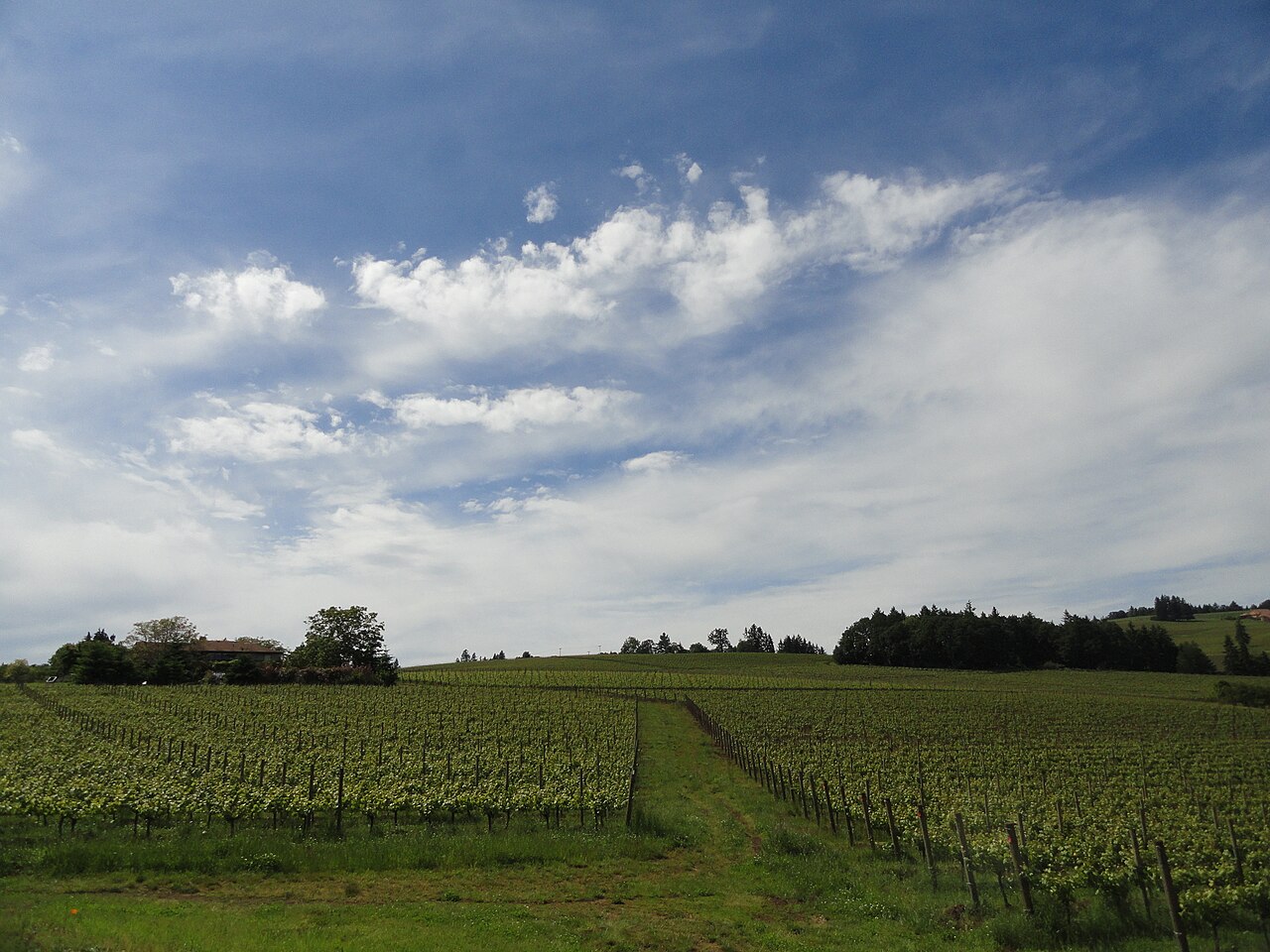
Dundee is a small town built around a big idea: Willamette Valley Pinot Noir, tasted a short drive from Portland. That idea has produced a real but modest short-term rental market, and the extract behind this report counts a modest number of active listings across Dundee and the surrounding wine country. Anyone pricing a stay here, or deciding whether to buy into the market, needs to see that number next to the revenue and occupancy figures that come with it, not next to a coastal or mountain-town comp that has nothing to do with a wine-tasting weekend.
The headline figures from the extract are straightforward: a typical active unit brings in $49,109 a year, with a median month of $3,428, an average daily rate of $429, occupancy of 34.3 percent, and RevPAR of $170. Those numbers describe a destination that fills up hard around a handful of weekends and stays quiet the rest of the year. This report walks through what that pattern means for pricing, staffing, and expectations, using only the figures in the current extract.
None of this is a criticism of Dundee as a market. A small wine town isn't trying to be Cannon Beach or Bend, and its numbers shouldn't be read against either of those markets' curves. It's a small, specific market with a specific calendar, and the value of a report like this one is in describing that calendar accurately enough that a host can plan a real year around it, rather than an imagined one borrowed from somewhere else on the Oregon map. This is not legal advice.
What the AirROI extract actually shows for a Dundee unit
Start with the full set of numbers together, because any one of them read alone can mislead. Annual revenue for the typical active unit is $49,109. The median month is $3,428, which is a useful number precisely because it is not an average pulled up by the one or two best weekends of the year. Average daily rate sits at $429, which is a wine-country rate driven by demand concentrated into a short calendar rather than by luxury positioning across the board. Occupancy is 34.3 percent, and RevPAR - revenue per available night, blending rate and occupancy into one figure - is $170.
Cleaning fees in this market run a median of $200 and an average of $264, and 91.8 percent of listings in the extract charge one. That fee already represents 15.1 percent of gross revenue on the extract, which is worth sitting with for a moment: for every dollar a Dundee host collects, roughly fifteen cents of it is showing up as a cleaning line rather than nightly rate. A host who prices the cleaning fee as an afterthought, instead of as a real share of the guest's total spend, is underpricing the actual cost of running the property and overpricing what the guest sees at checkout.
It's also worth noticing the gap between the average cleaning fee of $264 and the median of $200. A gap that size usually means a handful of larger properties in the extract are charging a meaningfully higher fee, pulling the average above what a typical listing actually charges. A host sizing their own cleaning fee against this market should anchor to the median first, then adjust up only if their property's bedroom count and guest capacity genuinely justify a longer, more expensive turnover.
Occupancy at 34.3 percent is a wine-tasting weekend, not a resort curve
Thirty-four point three percent occupancy sounds low if the comparison in your head is a beach resort or a ski town running two or three high seasons a year. It is not low for what Dundee actually is: a wine-tourism day-trip and weekend destination built around tasting rooms, harvest events, and a handful of marquee weekends. The math works differently here. A wine-country guest books two or three nights around a specific weekend - a tasting event, a wedding at one of the valley's vineyards, a harvest visit - and the rest of the calendar simply does not generate the same pull.
That means the ADR of $429 is doing more of the revenue work than occupancy is. A host chasing a resort-style occupancy target in this market, by dropping rate to fill more nights, is fighting the actual shape of demand rather than working with it. The extract's RevPAR of $170 is the number that reflects the real trade-off between rate and occupancy in this specific market, and it is the number worth tracking month over month rather than occupancy alone.
The temptation to discount toward a fuller calendar is understandable, especially for a new host comparing their own occupancy against a bigger, more familiar market. But discounting into the quiet months named in the extract - January and February - rarely produces enough incremental demand to offset the lower rate, because the demand simply isn't circulating those months in the volume a discount would need to attract. The better lever in a market shaped like this one is protecting rate during the named peaks and accepting the quiet stretch as a planned part of the calendar rather than a problem to discount away.
It's worth stating the RevPAR figure again on its own, because it does the job occupancy and ADR can't do individually: $170 is the actual per-available-night yield a Dundee property is producing once rate and occupancy are blended together. Tracking that single number extract to extract is a more reliable early signal of whether a listing's performance is improving or slipping than watching occupancy alone, which can move for reasons - like a slightly longer average stay - that don't actually reflect a change in overall demand.
Peak months are August, September, and May - and the calendar has a real winter hole
The extract names August, September, and May as the peak months for Dundee. That lines up with harvest season, the tail of summer travel, and the shoulder-season wine events that draw visitors before the valley's weather turns. January and February show up in the extract as the soft months, and any host who has run a listing here through a full year already knows what that means: a real revenue hole in the dead of winter, not a slow trickle.
The practical implication is that a Dundee host's marketing calendar and pricing calendar should mirror the extract, not fight it. Rate should flex hard around the named peak months, and the winter hole should be planned for rather than papered over with a flat annual rate that overprices summer and underprices nothing in January. Guests searching for a winter wine-country escape exist, but the extract says they are not showing up in the volume that would justify pricing January like August.
For a host building a content or marketing calendar around this extract, the same logic applies to photography and listing copy, not just price. Photos and descriptions that lean into harvest-season color and late-summer light will resonate with the months where demand is actually concentrated. A listing that spends its best photography budget staging a cozy winter scene is putting effort into the exact months the extract identifies as soft, rather than the ones carrying the year.
May's presence on the peak-months list alongside August and September is worth calling out specifically, since it's easy to assume a wine-country calendar peaks only around harvest. May's spring bloom and early-season tasting-room events are pulling real demand of their own, which means a Dundee host's pricing calendar should treat the year as having two distinct high-demand windows - a spring one and a late-summer one - rather than a single late-summer peak with a long ramp-up beforehand.
Product mix: three-plus bedrooms and six-to-eight guest capacity is where the volume sits
The extract identifies three-plus-bedroom units and six-to-eight-guest capacity as the volume segment of this market. That fits the way wine-country trips actually get booked: groups of friends or extended family splitting a tasting-room itinerary across a long weekend, not solo travelers or couples on a two-person getaway. A one-bedroom cottage can still work in Dundee, but it is competing for a narrower slice of demand than a property built to sleep a group comfortably.
For a host deciding how to position an existing property, or weighing a purchase, this is the segment the extract says the market is actually rewarding. A listing description, photo set, and amenity list built around a group wine-weekend - enough parking, enough counter space for a shared breakfast, a table that seats the whole group - speaks directly to where the volume already is, rather than to a segment the extract doesn't show much of.
This also has a direct bearing on the cleaning-fee math covered earlier. A three-plus-bedroom property serving six to eight guests generates more laundry, more turnover time, and more wear than a smaller unit, which is part of why the extract's average cleaning fee sits meaningfully above its median. A host in this segment shouldn't undercharge on cleaning just because a smaller Dundee listing nearby charges less - the two properties are doing different amounts of work between guests.
Instant Book is rare, the average stay is 3.3 nights, and a fifth of listings already run long-term
Two details in the extract describe how bookings actually move in this market. Instant Book is uncommon among Dundee listings, which suggests hosts here are leaning toward request-to-book, likely to screen for groups and events rather than accept anonymous same-day bookings sight unseen. Average length of stay is 3.3 nights, consistent with a long-weekend wine trip rather than a week-long vacation.
At the same time, 20.5 percent of listings in the extract are already running 30-plus-night stays. That is a meaningful share of the market pursuing monthly or extended stays alongside the weekend-trip crowd, and it points to a bifurcated market: short, high-rate wine weekends on one side, and longer-term stays filling in shoulder and off-season calendar gaps on the other. A host modeling revenue off only the short-stay side of that pattern is missing a real piece of how a fifth of the market is actually filling nights.
The request-to-book preference and the long-stay share are likely connected. A host screening bookings by hand has more room to say yes to a thirty-day stay request during January or February than a listing running pure Instant Book, which tends to optimize for quick, anonymous turnover rather than a longer, lower-maintenance booking. For a host trying to smooth out the named winter hole, actively soliciting extended stays during the off-season - rather than treating the calendar as either full-price or empty - is a strategy the extract's own numbers already support.
ITrip and Destination Willamette show up as concentration, not a preview of your own year
The extract flags ITrip and Destination Willamette as two property managers with a visible footprint in this market. That is useful context, not a benchmark to chase: a portfolio manager running multiple units under one brand can move average figures in ways that don't map cleanly onto a single independently owned property. If a chunk of the the listings counted here in the extract sits under one or two management umbrellas, the market-wide averages reported here are partly a reflection of how those managers price and position their portfolios, not a guarantee of what any individual host's year will look like.
The practical takeaway is to treat the market averages in this report as a starting reference point, then adjust for how your specific property compares - bedroom count, proximity to tasting rooms, whether it's self-managed or under one of the managers with concentrated share. A single independent listing competing against a professionally managed portfolio needs a sharper, more specific value proposition than "we're also in Dundee."
This is where a self-managed listing can actually compete on something a larger portfolio can't easily replicate: specificity and personal presence. A managed portfolio spread across multiple towns and multiple owners tends to describe amenities in general terms that work across every listing in the brand. An independent host who can speak precisely to one property, one driveway, and one host's actual availability for guest questions has a real point of difference, not just a smaller operation.
The supply gate here is administrative, not demand
The extract describes the local permitting process - by its own account, effectively four staff handling short-term rental administration - as the actual constraint on how fast new supply can enter this market. That is a different growth story than a market where demand is capped. It means the the listings counted here counted in this extract are not necessarily the ceiling of guest demand; they may simply be the number of properties that have made it through a limited administrative pipeline.
For a host already operating in Dundee, that's a mild tailwind: new competitors can't flood in overnight, because the bottleneck is process, not appetite. For someone considering entering the market, it's a reason to start the permitting conversation early and treat the timeline as a real planning variable, not an afterthought to handle after the property is already listed.
It also means the supply-side story in this report should be read cautiously if it changes suddenly. If the permitting office adds staff, streamlines its process, or clears a backlog, the current-listing figure could move faster than the underlying demand does, and a host who assumed slow, administratively-gated growth would need to revisit that assumption. Nothing in the current extract points to that happening, but it's the kind of structural change worth watching for specifically, since it would affect supply more directly than any seasonal shift.
It's a useful distinction to keep in mind when comparing this market to a nearby town with a different permitting structure. Two wine-country towns can have identical guest demand and still show very different listing counts simply because one has a faster or slower administrative pipeline. Reading the extract's this figure as pure demand, without accounting for the four-clerk supply gate behind it, risks under- or over-estimating how much room this specific market actually has left.
Supply grew 12.3 percent while revenue fell 13.6 percent on the same extract - a watch, not a boom
One of the more important pairings in the extract is this: supply moved up 12.3 percent while revenue moved down 13.6 percent over the same period. Read together, that is not a growth story and it is not a collapse story - it is a market where more listings came online while the revenue pie split more ways, or softened, or both. In a small wine town, that pair is worth watching closely rather than reacting to sharply in either direction.
A host who sees new listings appear nearby and assumes the market is booming, or who sees a soft month and assumes the market is dying, is reading half the picture. The extract's own pairing argues for treating this as a market in a watch phase: worth tracking extract to extract, not worth a dramatic pricing or investment decision based on one data point.
The most useful response to a pairing like this is patience paired with attention. A host already in the market should keep an eye on their own occupancy and rate relative to the prior period, rather than reacting to any single competitor's new listing. Someone weighing whether to enter the market should treat the negative revenue movement as a reason to underwrite conservatively - using the median month rather than an optimistic best-case figure - rather than as a reason to avoid the market outright.
It's also a reminder that the listings counted in this extract are not identical competitors. Some sit under concentrated management, some are three-plus-bedroom group properties, some are smaller units competing for a narrower slice of demand. A supply increase of 12.3 percent spread unevenly across those different segments can affect a given host's actual competitive set very differently than the market-wide average suggests.
What this market is not
It is worth being precise about what this Dundee extract is not. It is not a county-wide visitor-spending total, and it is not the portfolio year of any single operator - it is a snapshot of active short-term rental listings in this specific extract. It is also not a river-cabin market and not a high-occupancy resort: the 34.3 percent occupancy figure is a wine-tasting-weekend number, with a real winter hole in January and February, not a smoothed year-round curve.
Getting this distinction right matters for anyone using this report to plan. A pricing strategy borrowed from a coastal cabin market or a resort town will misread both the peak-season intensity and the winter softness that actually define Dundee. The numbers in this extract describe this market on its own terms - a compact wine-country calendar with a handful of strong weekends carrying the year - and any strategy built on them should stay just as specific.
That specificity is the entire value of a report like this one. A generic short-term rental strategy applied to Dundee will get the calendar wrong, the product mix wrong, and the cleaning-fee math wrong, because it wasn't built from this market's actual numbers in the first place. Every figure here - the $49,109 annual revenue, the $429 ADR, the 34.3 percent occupancy, the named peak and soft months - exists to replace a generic assumption with the real shape of demand in this specific this wine-country market.
Related Reading
More Dundee, Newberg, Mc Minnville, and Yamhill County, Oregon reading already live on Crest & Cove.
Wine Country STR Rules: Dundee, Newberg, Mc Minnville, and Yamhill County
How to Market a Willamette Valley Airbnb: Tasting Itinerary, Not a Day Trip
DIY vs Hire in Dundee: Local Voice Against ITrip and Destination Willamette
ITrip, Destination Willamette, and a 37% PM Layer: Is an Agency Worth It?
Is Dundee Wine Country a Good STR Investment in 2026? $3,428 Is the Watch Line
Dundee Shoulder Season: August and September Are Not January
A 28-Night Dundee House for Portland and Seattle Remote Workers
Who Books a Dundee Rental: Tasting Weekend and the Wedding House
Yamhill County Tourism Spending and Wine-Country Hosts: What the Visitor Dollar Measures
The Complete Visitor's Guide to Dundee, Newberg, and Mc Minnville
What It Actually Costs to Start an Airbnb in Dundee Wine Country, OR
Financing a Willamette Valley House: DSCR on $3,428 and 34.3% Occupancy
Frequently Asked Questions
What does a typical Dundee short-term rental actually earn in a year?
The extract puts annual revenue for a typical active unit at $49,109, with a median month of $3,428. Those two figures together matter more than either alone, because the median month shows that revenue isn't evenly spread - it's concentrated around the named peak months rather than smoothed across twelve months. A host modeling cash flow should plan around that unevenness rather than dividing the annual figure by twelve.
Why is occupancy only 34.3 percent if rates are as high as $429 a night?
Dundee's short-term rental demand is built around wine-tasting weekends and a handful of marquee events, not year-round tourism. Guests book a concentrated long weekend rather than a full week, so the calendar fills hard around August, September, and May and stays quiet the rest of the year. The $429 average daily rate reflects strong demand during those windows; it isn't meant to imply the property is full most nights.
How much should a Dundee host budget for cleaning fees?
The extract shows a median cleaning fee of $200 and an average of $264, with 91.8 percent of listings in the market charging one. That fee already represents about 15.1 percent of gross revenue on the extract, so it should be treated as a real cost-and-revenue line in pricing decisions, not a minor add-on tacked onto checkout.
What time of year should a Dundee host expect the slowest bookings?
January and February show up in the extract as the soft months, consistent with wine country's natural off-season once harvest and tasting-room traffic taper off. Hosts should plan maintenance, deep cleaning, and any renovation work for this window rather than assuming steady bookings will carry through winter. A calendar built around August, September, and May peaks, with January and February treated as maintenance time rather than lost revenue, matches the shape this extract actually shows.
What size property performs best in this market?
The extract identifies three-plus-bedroom units with six-to-eight-guest capacity as the strongest volume segment. That fits how wine-country trips are typically booked, groups of friends or extended family sharing a long weekend of tasting-room visits, rather than solo travelers or couples looking for a compact getaway. A smaller one- or two-bedroom unit can still work in this market, but it competes for a narrower slice of demand than the group-size product the extract points to.
Should a Dundee host turn on Instant Book?
The extract shows Instant Book is uncommon among Dundee listings, suggesting many hosts prefer request-to-book so they can screen groups and events before confirming. That's a reasonable approach in a market where average stays run 3.3 nights and often involve larger groups, but it's a host-by-host decision based on how much screening each property actually needs.
Are ITrip and Destination Willamette worth watching as a benchmark?
They're worth noting as the managers with visible concentration in this market's listing base, but their portfolio-level numbers shouldn't be read as a preview of what any single independently owned property will earn. A professionally managed multi-unit portfolio can move average figures in ways that don't map directly onto one self-managed listing, so treat the market averages in this report as a starting point to adjust from, not a target to hit exactly.
Why does the extract call the permitting process a supply gate?
The extract describes a limited local administrative capacity - effectively four staff handling short-term rental permitting - as the actual constraint on how quickly new listings can come online, rather than a lack of guest demand. That means the listings counted here may reflect what has cleared a slow pipeline more than the true ceiling of market interest, which matters for anyone timing an entry into this market.
What does it mean that supply grew 12.3 percent while revenue fell 13.6 percent?
Read together, those two figures describe a market in a watch phase rather than a clear boom or bust. More listings came online over the period the extract covers, while revenue across the market moved down over the same window - which could reflect a softer season, more listings splitting the same demand, or both. It's a pairing worth tracking in future extracts rather than reacting to with a single sharp pricing move.
Is 20.5 percent of listings running 30-plus-night stays a sign hosts should shift toward long-term rentals?
It's a sign that a real share of this market is already filling calendar gaps with extended stays alongside the short wine-weekend bookings, which is useful context for anyone trying to smooth out the January-February hole. It isn't a signal to abandon the short-stay strategy that drives the market's higher ADR; it's more evidence that a blended approach already exists here and can be worth testing during the named soft months specifically.
Work with Crest & Cove Creative
A $429 average rate and a calendar that lives or dies on three named months. Dundee's short-term rental market rewards hosts who read it on its own terms, not on a borrowed coastal or resort template.
If you're pricing a Dundee or greater Willamette Valley property against this extract and want a second set of eyes on where your listing actually sits, Crest & Cove Creative will walk through the numbers with you. Reach out at crestcove.co or call (256) 998-7502 for a straight read on what's working and what isn't.
Reach out at crestcove.co or (256) 998-7502.


Comments