
DIY vs Hire in Dundee: Voice Against ITrip and Destination Willamette

Updated: Aug 27
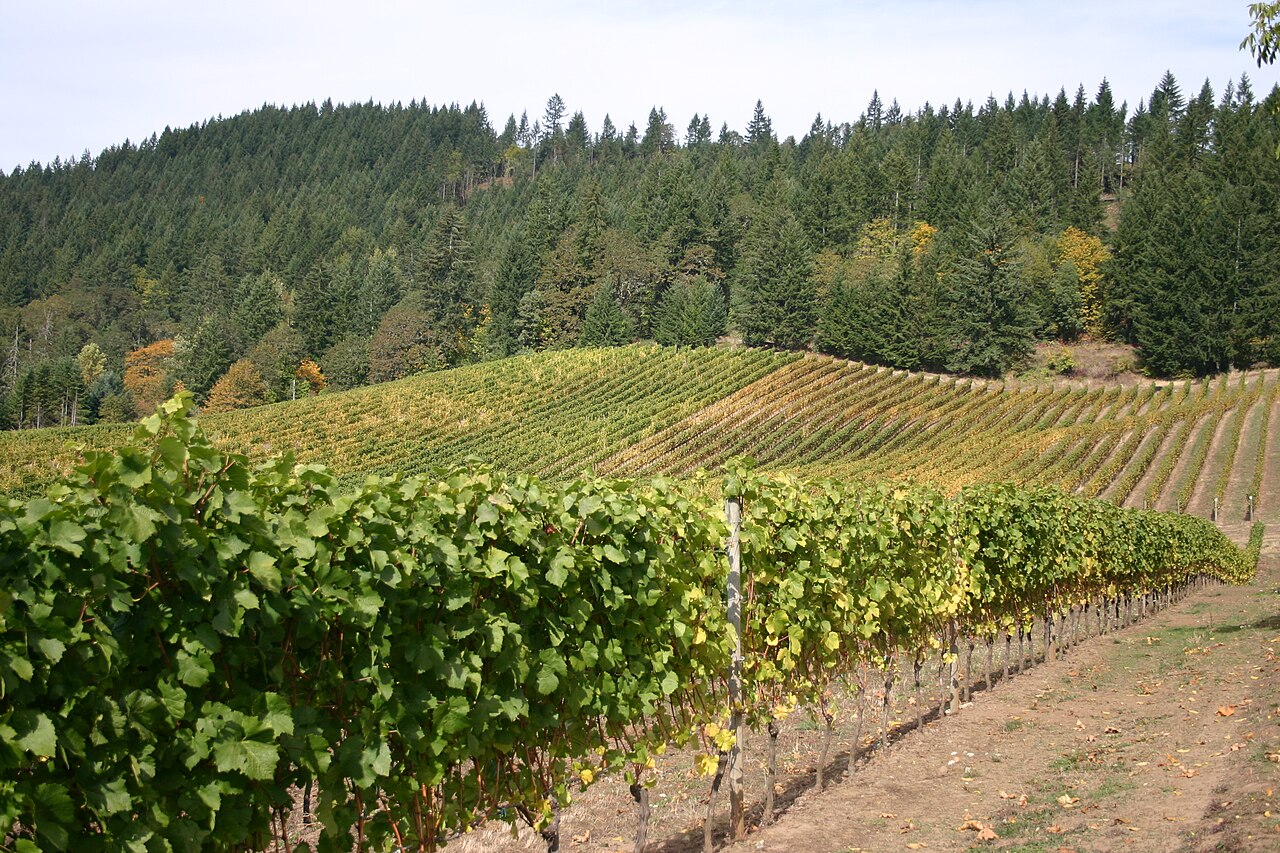
Running a Dundee short-term rental yourself is still a common path, but it is not the empty path in this cell. Professional management share on the AirROI extract is 37 percent. ITrip Vacations and Destination Willamette already concentrate a real book of listings. That does not mean every task should leave your calendar on day one. It means the craft gap that actually moves bookings here is vineyard light, honest house copy, and calendar discipline, not a twenty percent chat desk you hire before the first picture is right.
This post is for hosts who want a clean split between what to keep and what to hire. Stay close to seasonal pricing against August, September, and May versus January, February, and March, to guest messaging, and to parcel honesty if the four clerks and the tax desks are not yet clean. Hire a photographer who can shoot this vine light and this house. Match the floor plan to the bed count you advertise. Hire cleaning as cleaning, because 15.1 percent of gross is already leaving through that line.
Treat concentrated operators on the extract as photo competition, not as a review of their entire companies. Pair the craft decisions here withhow to market a Dundee Airbnb, thePM economics post, and themarket report. If you only fix one thing this quarter, fix the images and the published market year language before you shop management contracts. The tasting town already has managers. It still needs a house that sounds like Dundee.
The market is not empty of managers
Thirty-seven percent professional management is a real layer on a seventy-three-listing wine town, not a rounding error and not a claim that nobody manages here. ITrip Vacations appears with ten listings and $759,399 combined revenue. Destination Willamette appears with fourteen and $563,280, and lance appears with two and $454,632. Four Nines has one listing and $363,161, and cascadia Getaways appears with one listing. Those lines are their books on the 2026-08-08 pull. They are not your year and not proof that every house must sit inside a brand.
Owner-operators still define a large share of the guest experience. Superhost share is 71.2 percent and Guest Favorite share is 58.9 percent across the full cell, which means quality is not exclusive to the multi-listing names. The honest DIY frame is narrower than a slogan about a manager-free valley. You are competing in a market that already has concentrated craft and a thick management layer. You are also still allowed to run one house well without paying for a fourteen-home machine.
Read that concentration as a photo and review bar, then return to one door. Underwrite your year against $49,109 and the $3,428 median month in themarket report, not against anyone's portfolio total. A DIY host who copies a multi-listing brand voice will sound rented. A DIY host who studies how those pages prove vines and a real house will sound ready. The bar is public, and your year is still one house.
What a host should still keep
Nobody knows your constraints like you do, and peak months are August, September, and May. Soft months are January, February, and March, and october is not a locked peak. A spreadsheet you update monthly will beat a generic dynamic-pricing default that thinks every wine town behaves like a seventy percent resort with conference midweeks. Set base rates, weekend deltas, and minimum stays yourself until you have at least one full seasonal cycle of data from your own house. Owner blocks and cleaner gaps belong on that same sheet.
DIY calendar work includes blocking owner use, holding turnover days when cleaners are scarce, and deciding when a thirty-plus-night minimum helps winter more than it hurts peak. On the extract, 46.6 percent of listings run two-night minimums, 28.8 percent allow one-night stays, and 20.5 percent already run thirty-plus-night minimums. That split is a menu, not a mandate. Your job is to pick the lane that matches how the house actually books for Portland and Seattle guests who plan about fifty-nine days ahead on average.
Stay DIY on guest messages while the listing is young. Average stay length is 3.3 nights and Instant Book is only 9.6 percent, so most hosts still talk before the calendar locks. Templates help, but the final answers about parking, tasting-room distance, quiet hours, and wedding-group rules should sound like someone who has stood in the driveway at night. Stay DIY on parcel honesty as well. No marketer should imply nights under thirty days on a rural ADU or a house still missing the right clerk.
Where ITrip and Destination Willamette set the photo bar
On the extract, ITrip at ten listings and Destination Willamette at fourteen set a visible share of what guests see when they sort the valley. Those pages train the eye, and how tight are the opening images. How clearly do they sell vines versus a generic interior. How much copy is local versus leftover day-trip residue. Use that public presentation as competition analysis, and then improve your own page. You are not hiring them by studying them. You are learning the bar the guest already has.
Do not turn this section into a review of any company. Do not assume their portfolio revenue is your future. Professional management is 37 percent of the cell, which still leaves most listings outside a full-service machine. Your goal is to look like you belong in the top of a seventy-three-listing search set, not to clone a multi-listing brand voice that does not match a single primary home. A photographer who mostly shoots river cabins or downtown condos will bring the wrong reflexes even if the portfolio looks expensive.
Brief the shoot with the marketing product, not with a prop list alone. You want a tasting-weekend story and an honest house story visible in the set, plus winter capability if the house has fireplace or quiet-month strengths. You want every bedroom that matches the floor plan. You want the outdoor threshold, the vine or garden reality, and the parking footprint. You do not want a hero frame that sells a different geography. For composition language, lean on themarketing brief.
Cleaning at 15.1 percent of gross is already a hire
Turnover quality is non-negotiable at $429 ADR territory. Cleaning fees on the extract show a median of $200 and an average of $264, with 91.8 percent of listings charging the line, and that fee already represents 15.1 percent of gross. Hiring a cleaner or a cleaning team is not the same as hiring a property manager. Cleaning is a defined scope: schedule, checklist, linen standard, supply restock, and photo proof if you want it. Property management is pricing, guest recovery, vendor coordination, and often a revenue share.
Keep a Dundee-specific checklist. Stemware and tasting leftovers, bathroom film after hot days, kitchen grease after a six-to-eight-guest weekend, and pollen on the porch all belong on it. Your fee should fund the checklist you actually require. If it cannot, either raise the fee, shrink the scope honestly, or accept owner-assisted turnovers. Average stay is 3.3 nights and average guests land near 5.6, so the house is working harder per booking than an one-bed cottage market.
Keep DIY inspection after the first dozen turnovers even when cleaners are excellent. A twenty-minute walkthrough on change days teaches you what guests destroy and what photos still mislead. When you later evaluate a management pitch, you will know whether they are selling cleaning you already solved or operations you truly lack.PM postruns the percentage math. This post only needs you to stop calling every vendor a manager, and to treat 15.1 percent of gross as a hire you already made.
Voice versus a 20 percent split on $3,428
National short-term rental conversations often toss around twenty percent full service as if it were physics. In this valley you should ask, not assume. On a $3,428 median month, twenty percent is about $686 before you argue what revenue base the contract uses. On $49,109 annual, twenty percent is about $9,822 if the fee applies to that whole top line. Those figures are illustrative arithmetic on the extract medians, not a quote from a wine-country company and not a promise that any local manager charges twenty percent.
Voice is the thing a split does not automatically buy. Guests in this cell are 97.4 percent domestic, Portland then Seattle, booking a planned 3.3-night stay. They can tell when a reply could have been sent from any county. If you still have time to answer parking, tasting-loop, and house-rule questions in your own nouns, that voice is an asset. Paying twenty percent to replace it with a polite generic desk is a bad trade unless distance or volume has already broken your response time.
If a pitch avoids arithmetic and leans only on fear, pause. Distance owners have real coordination costs, and fear alone still is not a fee schedule. Compute the split on $3,428 and $49,109, then decide. If you cannot get a written scope that maps to those dollars, you do not have a management decision yet. You have a brochure, and craft first. Split second. A brochure that will not do the napkin math is already telling you what kind of partner it would be.
When DIY breaks on a 73-listing wine town
DIY fails when pride replaces a notebook. If you never log which discounts converted and which empty midweeks were fantasy, you are not managing a calendar. You are hoping. Keep a simple note each month: ADR realized, occupancy nights, and what you changed. Occupancy at 34.3 percent already means empty nights are normal. Panic discounting in February is how you train August guests to wait. The extract already told you February is soft. Your job is not to invent a secret October pulse.
DIY also breaks on distance and on exception handling. If you live in Portland or Seattle and cannot cover a lockout, a cleaner no-show, or a winter inbox, the listing will bleed reviews in a set that already sits at 4.89, 71.2 percent Superhost, and 58.9 percent Guest Favorite. Instant Book at 9.6 percent means the message thread is still the front door. A host who disappears for two days during a fifty-nine-day lead-time conversation loses the booking to a page that answered.
Compliance breaks DIY in a different way. If the dwelling is a rural ADU, if a Newberg permit dies on sale, or if Dundee Type II and TLT registration are missing, no amount of photo craft fixes the gap. Do not hire a marketer to imply an use the house cannot carry. Do not hire a cleaner for a launch date that assumes paper you do not hold. The four clerks exist so launch spend follows paper, not the other way around.
A targeted hire list, not a franchise
Owners often need a stack rather than a monolith. Photographer plus cleaner plus occasional handyman plus a co-host for messages can undercut full-service percent fees while covering the failure points that actually wake you up. Marketing help can sit beside that stack without taking operations. Crest & Cove's interest in this cluster is marketing clarity for hosts who want the listing to sound like Dundee. We do not manage Yamhill wine country. Keep the keys and the calendar unless distance has already proven you cannot.
Compare hybrid monthly costs to the illustrative twenty percent question on $3,428. If a cleaner, software, and limited co-host hours cost less than the percent split and still protect reviews, hybrid wins. If your travel schedule makes even hybrid coordination fail, full service may win even at a higher sticker. The extract cannot choose for you. It can only remind you that 37 percent already pay a management layer and that the rest still run leaner owner stacks.
Avoid double paying. Owners sometimes hire full service and separately keep paying for tasks the contract already includes. Read the scope. Then read it again after peak season when invoices get creative. A hybrid stack also keeps exit options open. If a co-host relationship sours, you still own the listing voice and the photo set. If a full-service firm controls every channel login and every vendor relationship, switching costs rise in a wine town where review banks already matter.
How to decide in one afternoon
Sit down with four numbers and one map. The numbers are $429 ADR, 34.3 percent occupancy, $49,109 annual, and the $3,428 median month. The map is the parcel: Dundee Type II versus Newberg Special Use versus Mc Minnville land use versus unincorporated Yamhill, and whether state and local TLT registration are done. If the map is red, stop hiring for launch. If the map is green, Keep two columns. Left column: calendar, guest voice, and compliance you will keep. Right column: photos, cleaning, and any coverage you cannot staff.
Days one to thirty after you can legally list: finish compliance files, shoot photos, Keep tasting-loop and house copy, set the peak-three and winter rate skeleton, and take guest messages yourself. Days thirty to sixty: lock a cleaner with a written checklist, refine minimum stays based on real inquiries, and replace any photo that guests keep misunderstanding. Days sixty to ninety: decide whether messaging volume or travel distance is breaking your response time. Only then reopen the hire-versus-DIY question for operations support.
Reassess the split each spring and each November. Spring asks whether August, September, and May are staffed for turnovers. November asks whether winter messaging and thirty-plus-night rules still match reality. A good DIY host changes the hire map twice a year without drama. A burned-out host changes nothing until reviews slip, then overcorrects into a full-service contract that still cannot fix stale photos. Polish the craft, and leave the borrowed river templates in the trash. Let the vines and the house do the selling that templates never will.
Related Reading
More Dundee, Newberg, Mc Minnville, and Yamhill County, Oregon reading already live on Crest & Cove.
73 Listings in Dundee: Willamette Valley Wine Country STR Report 2026
Wine Country STR Rules: Dundee, Newberg, Mc Minnville, and Yamhill County
How to Market a Willamette Valley Airbnb: Tasting Itinerary, Not a Day Trip
ITrip, Destination Willamette, and a 37% PM Layer: Is an Agency Worth It?
Is Dundee Wine Country a Good STR Investment in 2026? $3,428 Is the Watch Line
Dundee Shoulder Season: August and September Are Not January
A 28-Night Dundee House for Portland and Seattle Remote Workers
Who Books a Dundee Rental: Tasting Weekend and the Wedding House
Yamhill County Tourism Spending and Wine-Country Hosts: What the Visitor Dollar Measures
The Complete Visitor's Guide to Dundee, Newberg, and Mc Minnville
What It Actually Costs to Start an Airbnb in Dundee Wine Country, OR
Financing a Willamette Valley House: DSCR on $3,428 and 34.3% Occupancy
Frequently Asked Questions
Is Dundee empty of property managers?
No. Professional management covers about 37 percent of the extract, with iTrip Vacations appearing at ten listings and $759,399 combined revenue, and Destination Willamette at fourteen listings and $563,280. Owner-operators still run a large share of the market, and Superhost share sits at 71.2 percent.
What should a Dundee host keep in-house on this wine-country tasting loop?
Seasonal pricing decisions around the August-September-May peak versus the January-February-March low season, guest messaging while a listing is still building reviews, and parcel-level honesty on local tax registration. Instant Book is only 9.6 percent and average lead time is 59 days, so the message thread is still the front door for most bookings.
How should a host use iTrip or Destination Willamette's listings in a DIY plan?
As a photo and craft benchmark, not as a company review or a revenue projection. Their public listings show how vines, house light, and local copy get photographed and written; a host can study that craft and shoot their own house without treating $759,399 or $563,280 as transferable income.
Why is cleaning already effectively a hire in this market?
The median cleaning fee is $200 and the average is $264, with 91.8 percent of listings charging the line - already about 15.1 percent of gross revenue. That's a defined, checklist-based hire rather than a full property-management split, and it matters more here since average stay is only 3.3 nights with average party size near 5.6 guests, meaning turnovers happen often.
What does a full 20 percent management split cost on this market's numbers?
On a $3,428 median month, roughly $686; on $49,109 in annual revenue, about $9,822 if applied to the full top line. Those are illustrative calculations from the extract, not a local quote - get written scope before trading listing voice for a generic account.
When does DIY typically break down for a host in a market this size?
When a host stops logging what actually booked, when distance leaves lockouts or cleaner no-shows uncovered, or when marketing gets hired out for a rural property that's missing its clerk paperwork. With occupancy around 34.3 percent, empty nights are normal here - panic discounting in the slow months tends to train guests to wait rather than book early.
What's a practical first-hire list for a Dundee wine-country host?
A photographer, a cleaner, occasional handyman coverage, and a co-host for guest messages if distance is already causing missed responses. That hybrid stack can be compared directly against a 20 percent split on the market's $3,428 median month before committing to full-service management.
How can a host decide between DIY and hiring in one afternoon?
Compute the 20 percent split on the $3,428 median month and $49,109 annual figure, then compare it to the cost of a photographer, cleaner, and limited co-host hours. If that lighter stack costs less than the percentage split while still covering the failure points that cause missed bookings, the hybrid approach wins.
Work with Crest & Cove Creative
ITrip Vacations and Destination Willamette set the photo bar on a 73-listing Dundee wine-town search page, with professional management holding 37 percent of the cell. A phone-dump gallery next to those pages reads as the wrong door.
We help Dundee hosts build a listing that holds up next to ITrip and Destination Willamette's inventory instead of guessing which craft gaps actually cost bookings. Send your current photos and description to start.
Reach out at crestcove.co or (256) 998-7502.


Comments