
North Georgia Fly Fishing: Trout Streams from a Cabin Base

Updated: Aug 27
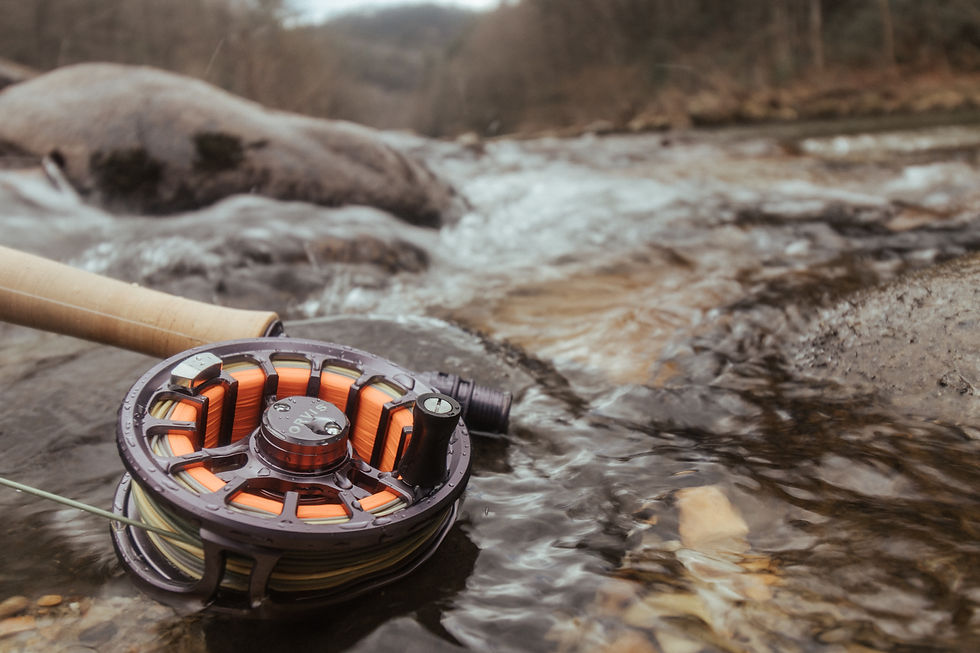
North Georgia holds some of the finest trout fishing in the eastern United States, and the region's mountain communities have known it for generations. The headwaters of the Chattahoochee, the Toccoa, the Conasauga, the Jacks River, the Cartecay, the Chestatee, and the tributaries of the Chattooga system all run cold, clear, and well-oxygenated off the granite and quartzite ridges of the Blue Ridge - exactly the water chemistry wild and stocked trout need. The Georgia Department of Natural Resources Wildlife Resources Division manages these streams with a mix of put-and-take stocking for general anglers and special-regulation designations on wild-trout and catch-and-release water that draw the fly-fishing community specifically.
For cabin guests who already fly fish, or who've been curious and want an introduction in a genuinely spectacular setting, North Georgia offers a real range of water types, access models, and guided-trip options - one of the most complete trout-fishing destinations in the country. This guide covers the major trout streams reachable from the North Georgia cabin corridor, the state trout regulations that shape where and how a guest can fish, the guided operators serving the market, and why a cabin near any of this water has a specific, underused listing asset sitting right outside the door. This is not legal advice.
The Toccoa River: The Blue-Ribbon Tailwater
The Toccoa River below Blue Ridge Dam - the tailwater section flowing from the Georgia Power dam on Lake Blue Ridge down through the Blue Ridge and Mineral Bluff communities - is the signature trout stream in the North Georgia mountain corridor and one of the most technically demanding, productive tailwaters in the country. The dam release holds water temperature at a consistent 50-60 degrees year-round, letting trout survive and grow through Georgia summers that would push a natural stream too warm. That consistency produces rainbow and brown trout of exceptional size by Georgia standards, averaging 12-16 inches with occasional catches past 20 inches - genuinely trophy-class water for the Southeast.
The Toccoa tailwater is managed as a trophy section under special regulations: artificial lures only, a 15-inch minimum size limit, and a two-fish daily creel. Those rules protect the large-fish population that makes the water exceptional, but they also demand a level of technical skill - matching hatch presentations, mending a drift line through fast-water runs - that most beginners will find rough going without instruction. It's water best fished with a guide who knows the current dam release schedule (water level shifts wading conditions significantly) and the seasonal hatch patterns that trigger surface feeding.
The Toccoa above Blue Ridge Lake - the wild-water section running through the mountains above the reservoir - is a different experience entirely: smaller fish, more technical wading, far less pressure, and the remote mountain-stream character that fly fishers chasing a wilderness feel prefer over the tailwater's easier access. The upper Toccoa runs through the Chattahoochee National Forest in Fannin County, with trail access at several points along US-76 and forest roads. Brook trout, the only trout species native to Georgia's mountains, hold in the highest-elevation tributaries of this upper system - a specific target for anglers who want a wild, native fish in the exact habitat it evolved in.
The contrast between the two Toccoa sections is worth spelling out for a guest deciding where to spend a day, because they genuinely reward different goals. A guest chasing a trophy-class brown or rainbow, comfortable with a technical presentation and willing to fish alongside other anglers on a popular tailwater, belongs below the dam. A guest who wants solitude, smaller wild fish, and a true mountain-stream setting - and who's fine hiking in on forest roads rather than parking at a formal access point - belongs above the lake. Recommending the wrong section for a guest's actual goal is a common mismatch that a cabin host with local knowledge can head off with a single conversation at check-in.
Dukes Creek and the Chestatee: Dahlonega-Area Trout Streams
Dukes Creek in White County - a Chattahoochee tributary running through the Smithgall Woods State Park conservation area east of Helen - is one of Georgia's designated trout streams and one of the few managed primarily for wild-trout conservation. It runs under a strict special-regulation regime: artificial lures only, catch-and-release only, and limited daily access by reservation through Smithgall Woods, with a 12-angler daily rod limit that keeps the stream from ever feeling crowded. That reservation system and catch-and-release rule protect a wild rainbow and brown trout population that's exceptional for a Georgia stream in both size and density, and serious fly fishers plan trips around it specifically for that quality.
The Chestatee River, flowing through Lumpkin County below Dahlonega on the site of the historic Georgia gold rush, is a more accessible public-access stream that mixes stocked and wild fish in the sections below the old mining-influenced upper reaches. It's a wade-fishing river with multiple public access points off US-19 and state roads, requiring only a standard Georgia trout license and no reservation - a genuinely easier entry point than Dukes Creek while still offering quality trout habitat. Its proximity to Dahlonega makes it the default trout-fishing recommendation for guests staying in Lumpkin County cabins.
The two streams work well as a paired recommendation for a Dahlonega-area cabin host: the Chestatee for a guest who wants to fish the same afternoon they arrive without planning a reservation, and Dukes Creek for a guest willing to book ahead for a shot at genuinely wild, dense trout water inside a state conservation area. Framing both options in a guidebook - rather than naming only one - lets a guest self-select based on how much lead time they have and how serious their fishing goals are for the trip.
The Conasauga and Jacks River: Remote Wilderness Trout
The Conasauga River and Jacks River system in the Cohutta Wilderness of Murray and Gilmer Counties is the most remote and physically demanding trout fishing in North Georgia - and arguably the most rewarding for an angler who values solitude, wild fish, and water the crowds never reach. The Cohutta Wilderness designation bars motorized vehicles, so getting to the best water on the Conasauga and Jacks means hiking 4 to 8 miles on rough trail. That physical filter effectively screens out casual pressure, leaving the water to a small, committed community of backcountry anglers who return again and again because the fishing genuinely holds up.
Wild rainbow and brown trout in the Conasauga and Jacks system behave differently than fish in stocked, accessible streams - they haven't been conditioned by regular human presence, and they respond to technical presentations with a selectivity that rewards skill and punishes carelessness. An experienced fly fisher willing to make the hike into the Cohutta Wilderness will find water as good as anything in the southern Appalachians, with pools and runs holding fish in the 10-16 inch range and the occasional wilderness brown past 18 inches - the specific prize the backcountry fishing community seeks out.
This is not beginner water, and a cabin host recommending it should say so plainly. The hike alone rules out a casual afternoon trip, and the technical demands of presenting to wary, unstocked fish mean a guest without backcountry fly-fishing experience is more likely to come back frustrated than rewarded. It's the right recommendation for a guest who specifically asks about it or who mentions a backcountry fishing background - not a default suggestion for every angler staying at a property near the Cohutta Wilderness boundary.
Guided Fly Fishing: The Best Entry Point for New Anglers
North Georgia's fly-fishing guide community is well established and specifically oriented toward helping Atlanta-metro visitors and cabin guests access the region's trout water with the equipment, knowledge, and instruction that separate a successful trip from a frustrating one. Guided trips run primarily on the Toccoa tailwater, Dukes Creek, and the Chattahoochee headwaters - the region's most productive and accessible guided-fishing venues.
Trip formats range from full-day wade trips (4-8 hours on a single stream, with instruction in casting, reading water, and presentation for beginners) up to multi-day packages that pair lodging, often at cabin properties, with consecutive guided days on different waters. For a beginner, a guided half-day trip is the ideal introduction: enough time to learn fly-casting basics, make real presentations in real trout habitat, and land fish with guided help, without the physical toll of a full-day wade on technical mountain water. Most North Georgia guides provide all equipment - rod, reel, waders, boots - so a client without their own gear can book a fully self-contained trip.
Specific guided operators serving the North Georgia cabin corridor include Cohutta Fishing Company (Blue Ridge area, Toccoa tailwater specialists) and Unicoi Outfitters (Helen area, Chattahoochee headwaters and Dukes Creek access), alongside multiple independent guides permitted on Smithgall Woods and the Chattahoochee National Forest trout streams. Reservation lead time shifts by season - peak months (April, June, September, and October) typically need booking two to four weeks out, while summer and winter trips tend to have shorter lead times and more open availability. A cabin host whose property sits in the Toccoa or Chestatee drainage can add a named guide recommendation to their guidebook as one of the highest-value pieces of local knowledge they can offer a fishing-oriented guest.
Georgia Trout Fishing Regulations: What Guests Need to Know
Georgia DNR trout regulations apply statewide, with stream-specific special rules layered on top for designated trout water. The basics: a Georgia fishing license is required for anglers 16 and older, and a separate Georgia trout license is required on all trout streams, on top of the basic fishing license. Both are available online at georgiawildlife.com or at sporting-goods stores in the mountain communities. The standard statewide rule set - an 8-trout daily creel limit, no size limit, bait and artificial lures both permitted - covers most streams, while special-regulation waters like Dukes Creek, the Toccoa tailwater's trophy section, and certain Chattahoochee National Forest headwater tributaries carry their own artificial-lures-only, catch-and-release, or size-limit rules.
The Georgia DNR Fishing Guide, available as a PDF at georgiawildlife.com, carries the complete current regulation list, including every stream-specific special rule. Any angler fishing North Georgia water should check that current-year guide before heading out, since stream classifications and special-regulation boundaries get updated periodically and don't always match older descriptions still circulating online. Fly shops in the region, including Unicoi Outfitters in Helen, stock current regulation guides and can answer specific questions about a given stream's status on the spot.
For Cabin Hosts: Fly Fishing as a Listing Asset
The fly-fishing guest is a specific, high-value segment in the North Georgia cabin market - typically traveling in a small group of two to four anglers, booking midweek as readily as weekends since guided trips run on weekdays, staying multiple nights to fish multiple streams, and returning to the same property repeatedly once a good relationship with a guide and a productive stream is established. A cabin within easy driving distance of the Toccoa tailwater, Dukes Creek, or a Cohutta Wilderness access point that never mentions fishing in its listing is leaving a segment-specific demand signal sitting on the table.
Adding a single paragraph naming proximity to a specific stream, plus a named guide recommendation in the in-stay guidebook, captures this guest segment at essentially zero additional acquisition cost. A generic "near the mountains" listing description does nothing for a guest actively searching for a cabin near trout water; naming the Toccoa tailwater, Dukes Creek, or the Cohutta Wilderness by name is the difference between showing up in that guest's search and getting skipped for a competing listing that did the work of naming its water.
The guidebook itself is worth treating as a second listing asset, separate from the public-facing description. A property page might reasonably name one or two nearby streams to stay concise, but the in-stay guidebook has room for the fuller picture: which stream suits a beginner versus an experienced angler, which guide operator the host has an actual relationship with, current license requirements, and a note on seasonal booking lead times for guided trips. A returning fishing guest remembers a host who handed them a genuinely useful local guide over one who handed them a generic county tourism brochure, and that's the kind of detail that turns a first-time booking into a repeat one.
Related Reading
More independent-host reading on listing copy, calendars, and operable decisions guests can trust.
Frequently Asked Questions
What is North Georgia's signature trout stream?
The Toccoa River tailwater below Blue Ridge Dam, running through the Blue Ridge and Mineral Bluff communities, is North Georgia's signature trout water. It's managed as a trophy section under special regulations - artificial lures only, a 15-inch minimum size, and a two-fish daily creel - and the dam's cold-water release holds trout at exceptional size for the region, with fish regularly running 12 to 16 inches and occasional catches past 20.
Where can guests fish for wild trout near Dahlonega?
Dukes Creek in White County, a Chattahoochee tributary running through Smithgall Woods State Park, is the primary wild-trout destination near Dahlonega, though it requires a reservation and runs under catch-and-release, artificial-lures-only rules. The Chestatee River below Dahlonega is the more accessible alternative, mixing stocked and wild fish with public wade-fishing access and no reservation required.
What's the most remote fly fishing in North Georgia?
The Conasauga and Jacks River system in the Cohutta Wilderness of Murray and Gilmer Counties is the most remote water in the region. Reaching the best sections requires a 4-to-8-mile hike on rough trail, since the wilderness designation bars motorized access. That effort filters out casual pressure and leaves wild, wary rainbow and brown trout for the small community of backcountry anglers who make the trip.
Should a beginner hire a fishing guide in North Georgia?
Yes, especially on technical water like the Toccoa tailwater. The region's guide community is well established and geared specifically toward helping visiting cabin guests learn casting, reading water, and presentation with proper equipment. A guided half-day wade trip is the standard entry point for a beginner, giving enough time to learn the basics and make real presentations without the physical toll of a full-day trip on demanding water.
What guide trip lengths are typically available?
Options range from full-day wade trips - four to eight hours on a single stream, ideal for beginners learning casting and presentation - up to multi-day packages that combine cabin lodging with consecutive guided days on different streams. Most North Georgia guides supply all equipment, including rods, reels, waders, and boots, so a guest without their own gear can book a fully self-contained trip.
What makes the upper Toccoa different from the tailwater below the dam?
The upper Toccoa, running through the mountains above Blue Ridge Lake, offers smaller fish, more technical wading, and far less fishing pressure than the trophy-managed tailwater downstream. It has a remote, mountain-stream character that fly fishers seeking a wilderness feel tend to prefer, and it holds Georgia's only native trout species, brook trout, in its highest-elevation tributaries.
Do I need a special license to fish North Georgia's trout streams?
Yes. Anglers 16 and older need a standard Georgia fishing license plus a separate Georgia trout license, required on all trout streams regardless of the basic license. Both are available online at georgiawildlife.com or at sporting-goods stores throughout the mountain communities. Special-regulation streams like Dukes Creek and the Toccoa's trophy section carry additional rules on top of the license requirement.
When should a guest book a guided fly-fishing trip in North Georgia?
Peak months - April, June, September, and October - typically require booking two to four weeks in advance given guide demand. Summer and winter trips generally have shorter lead times and more open availability. A cabin host expecting a fishing-focused guest during peak season should flag the lead time directly, since a last-minute peak-season booking may not find an available guide.
How should a cabin host near trout water market that access to fishing guests?
Name the specific water - the Toccoa tailwater, Dukes Creek, or a Cohutta Wilderness access point - directly in the listing rather than a generic mountain description, and add a named local guide recommendation to the in-stay guidebook. Fly-fishing guests are a specific, high-value segment that books multi-night stays and returns once they've found a productive stream and guide relationship, and a listing that never names its nearby water misses that entire segment.
Work with Crest & Cove Creative
A cabin near the Toccoa tailwater or Dukes Creek that never names the water in its listing is skipping a specific, repeat-booking guest segment for free. Name the failure mode the guest can check on the listing.
We help North Georgia cabin hosts turn nearby trout water into real listing copy, not a vague mountain-getaway line. Reach out at crestcove.co or (256) 998-7502. Send the live listing draft and the facts you can actually cite.
Reach out at crestcove.co or (256) 998-7502.


Comments